

5 Signs a School Investigation Is Turning Into Retaliation
School investigations are often presented as neutral fact-finding processes meant to protect students, staff, and the institution. For educators and school employees, however, these investigations can quickly feel personal and threatening. What starts as a routine inquiry can slowly shift into something far more serious: retaliation.
At Masterly Legal Solutions, we regularly hear from teachers, administrators, and school employees who sense that an investigation is no longer fair. When your rights are ignored and adverse actions begin to pile up, it may be time to recognize the warning signs. Understanding how retaliation develops is essential to protecting your career, reputation, and financial stability.
Why School Investigations Carry Unique Risks
Unlike many private workplaces, schools operate under intense public scrutiny and layered regulations. Federal laws, state laws, and internal district policies all intersect during an investigation. This complexity creates opportunities for misuse of authority.
School districts may act quickly to reduce perceived liability, sometimes at the expense of employee rights. When fear of complaints, media attention, or federal agencies drives decisions, employees may face retaliation for simply speaking up. Laws protect employees, but those protections are only effective when enforced.
Retaliation in the Education Workplace
Retaliation occurs when an employer punishes an employee for engaging in legally protected conduct. In schools, this often follows reporting discrimination, sexual harassment, or other unlawful behavior. Retaliatory actions may be subtle at first, making them difficult to identify.
Workplace retaliation cases in education frequently involve changes to job duties, sudden discipline, or administrative leave. Even actions framed as “temporary” can become long-term harm. Recognizing early signs helps employees respond before damage escalates.
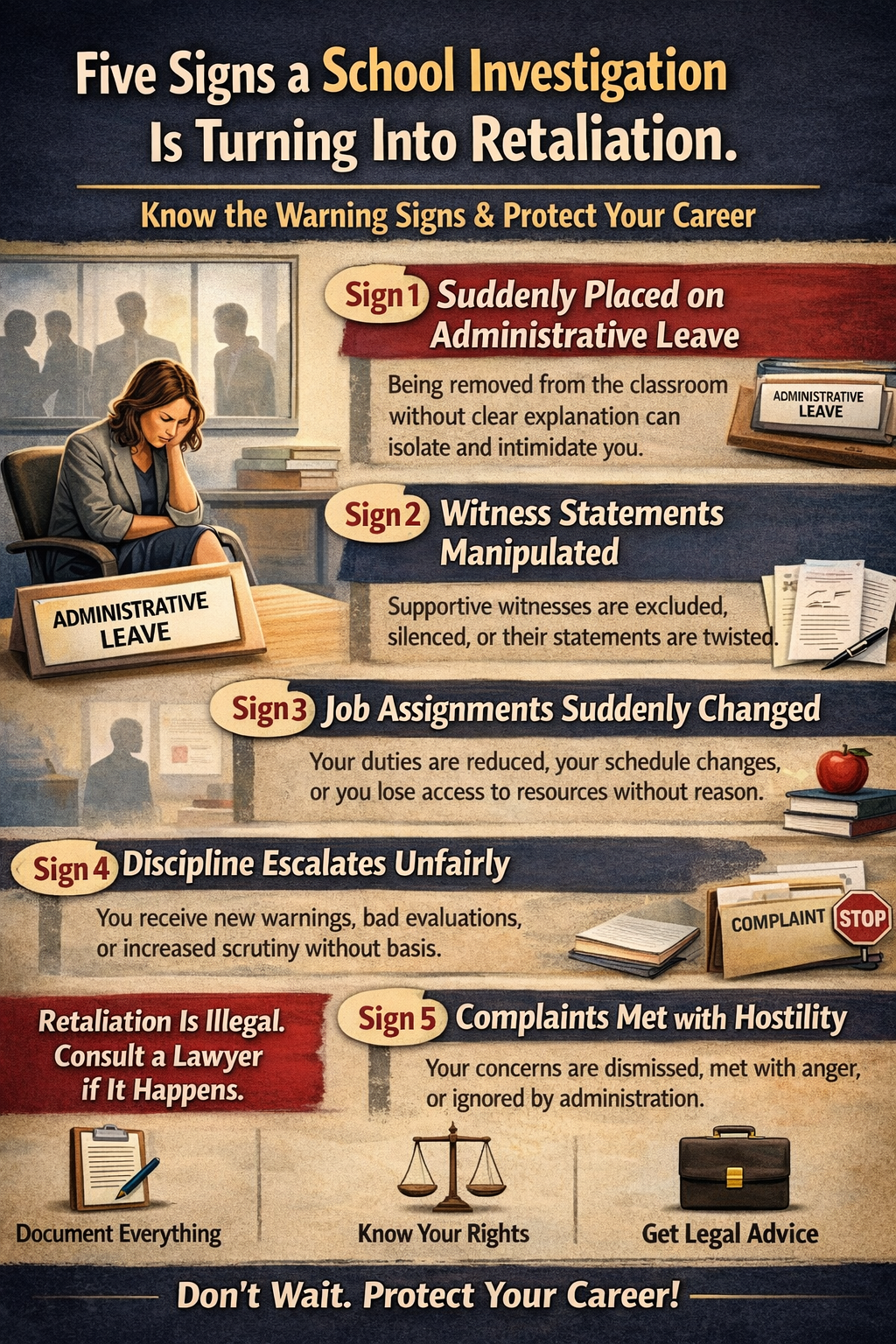
Sign One: You Are Suddenly Placed on Administrative Leave
One of the most common warning signs is being placed on administrative leave without a clear explanation. While administrative leave may be part of an investigation, timing matters. If it follows reporting discrimination or whistleblower retaliation concerns, it raises red flags.
Paid administrative leave or paid leave does not automatically make the action lawful. Removing an employee from the workplace can still be an adverse employment action under employment law. Unpaid leave or extended leave can also impact health insurance and financial security.
How Leave Is Used as a Retaliatory Tool
School districts sometimes justify placing employees on leave as a precaution. In reality, placing employees away from campus can isolate them from other employees and witnesses. This separation can weaken the employee’s ability to defend themselves.
When administrative leave stretches on without updates, it may signal retaliation cases in progress. Employment lawyers often see leave used to pressure employees into resigning or accepting unfair outcomes.
Sign Two: Witness Statements Are Ignored or Manipulated
A fair investigation should consider witness statements from all relevant parties. If supportive witnesses are dismissed or excluded, the process may no longer be neutral. Selective evidence gathering is a common sign of unfair treatment.
When administrators rely only on statements that support disciplinary action, the investigation may be turning retaliatory. Employment discrimination cases often hinge on whether evidence was handled objectively. This is especially concerning when a co worker or supervisor’s account is given more weight without justification.
The Role of Bias in School Investigations
Bias can creep into investigations when decision-makers fear complaints or public backlash. Direct discrimination or retaliation may not be openly stated, but it can influence outcomes. Employment practices that ignore contradictory evidence often violate federal and state laws.
Title VII, Title IX, the Civil Rights Act, and the Americans with Disabilities Act require fairness. When schools ignore these standards, legal protections may be triggered.
Sign Three: Your Job Assignments or Duties Change
A sudden change in job assignments is another warning sign. Removing responsibilities, reassigning classes, or limiting access to resources can be retaliatory. These changes may appear minor but can significantly affect career progression.
Employment decisions that reduce visibility or authority often follow reporting discrimination. Even when pay remains the same, altered job duties can qualify as adverse employment action. Retaliation lawyers frequently identify this pattern in school-related cases.
When Changes Affect Your Personal Life
Changes at work often spill into an employee’s personal life. Increased stress, schedule disruptions, and financial uncertainty can follow. When job changes create undue hardship, they may violate labor laws and employment contracts.
Reasonable accommodations must still be considered, particularly for employees protected under the disabilities act or those with family member responsibilities. An employer’s decision to ignore these needs may strengthen a retaliation claim.
Sign Four: Discipline Escalates Without Justification
Another major sign is escalating disciplinary action that seems disconnected from actual performance. Negative performance reviews appearing for the first time after reporting discrimination are especially concerning. Documentation often tells the story.
Disciplinary action that contradicts prior evaluations may support discrimination claims or retaliation cases. Schools must follow company policies and employment contracts when disciplining employees. Deviations from those standards can be evidence of unlawful conduct.
When Discipline Becomes a Setup for Termination
In many cases, retaliation builds toward wrongful termination. A pattern of write-ups, warnings, or forced leave may precede being wrongfully terminated. Employment attorneys often see this progression in education workplaces.
Wrongful termination claims may arise under federal laws, state employment laws, or the discrimination in employment act. Age discrimination in employment and sex discrimination are also common in school settings.
Sign Five: Complaints Are Met With Hostility or Silence
When reporting discrimination leads to hostility instead of resolution, retaliation may already be occurring. Employer denies wrongdoing while failing to address concerns is a troubling sign. Silence from administration can be just as damaging as overt punishment.
Sexual harassment, gender discrimination, and discrimination based on sexual orientation or national origin must be taken seriously. Retaliatory actions following such complaints may violate Title VII and other federal laws.
The Impact of Retaliation on Educators
Retaliation can derail years of professional dedication. Emotional stress, reputational harm, and economic damages are common outcomes. Some employees also experience emotional distress damages due to prolonged investigations and unfair treatment.
Unfair treatment may also discourage other employees from coming forward. This chilling effect undermines school safety and accountability. Laws protect employees precisely to prevent this outcome.
Federal and State Protections for School Employees
Federal and state laws provide multiple layers of protection. The Civil Rights Act, Title VII, the Americans with Disabilities Act, and the age discrimination in employment act all apply to school employees. State laws may offer additional remedies.
Employees may file complaints with the Equal Employment Opportunity Commission or a state agency. Federal agencies and state agencies play a critical role in enforcing these protections. Understanding which law applies requires experienced lawyers.
When to Speak With a Retaliation Lawyer
Early legal counsel can make a significant difference. A retaliation lawyer can assess whether actions rise to the level of unlawful retaliation. Many retaliation cases depend on timing, documentation, and employer intent.
An initial consultation allows employees to understand their options without committing to legal action. Employment lawyers can explain legal fees, attorney fees, and potential outcomes clearly. This knowledge empowers informed decisions.
Building a Strong Workplace Retaliation Case
Strong cases rely on records, emails, evaluations, and witness statements. Keeping detailed notes is critical. Employment attorneys use this information to pursue justice effectively.
Some cases resolve through settlement negotiations, while others require formal legal action. Remedies may include reinstatement, punitive damages, or economic damages. Each case is unique.
Why Experience Matters in School Retaliation Cases
School-related retaliation cases require familiarity with education systems and labor laws. Experienced lawyers understand how school districts operate and how investigations are structured. This insight helps challenge unfair processes.
Employment discrimination cases in schools often involve multiple legal frameworks. Skilled legal counsel ensures no protection is overlooked. This is especially important in districts like school districts Houston, where policies and oversight can be complex.
Protecting Your Future as an Educator
Facing retaliation can feel isolating, but you are not alone. Laws protect employees who stand up against discrimination and unfair treatment. Recognizing the signs early allows you to protect your career and personal well-being.
Taking action does not mean conflict is inevitable. It means asserting your rights and ensuring the process remains fair. For many educators, this step restores confidence and control.
Recognizing Workplace Discrimination in School Settings
Workplace discrimination in schools can take many forms and is not always obvious at first glance. Educators and staff may experience unfair treatment based on age, gender, national origin, disability, or other protected characteristics. These actions can affect assignments, evaluations, discipline, or access to opportunities, even when performance has not changed. When workplace discrimination is ignored or minimized during an investigation, it often creates the foundation for retaliation and long-term career harm.
The Role of Human Resources During School Investigations
Human resources is typically responsible for managing complaints, investigations, and policy enforcement within a school district. While HR is expected to act as a neutral party, its primary role is often to protect the institution rather than the employee. When human resources fails to address concerns fairly, delays responses, or dismisses evidence, it may signal that the process is no longer impartial. Understanding how HR functions during an investigation can help employees recognize when additional legal guidance may be necessary.
How Employment Discrimination Claims Are Handled in Houston School Districts
In school districts Houston and across Texas, employment discrimination cases often involve complex issues such as age discrimination, gender discrimination, and violations of established company policies. When an employer denies that discrimination occurred, employees may feel dismissed or powerless, even when real harm exists. This is where experienced employment lawyers and employment attorneys play a critical role by evaluating discrimination claims under employment law and determining whether federal agencies should be involved. These cases can result in economic damages, especially when unfair decisions affect pay, promotions, or long-term career stability, making knowledgeable legal support essential.
Contact Masterly Legal Solutions for Support
If you believe a school investigation is turning into retaliation, we encourage you to reach out. At Masterly Legal Solutions, we offer a free consultation to discuss your situation and explain how federal and state laws may apply. Our team works with educators across Texas, including those connected to school districts Houston, to help them face retaliation with clarity and confidence.
Call us at (972) 236-5051 to schedule your free consultation and take the next step toward protecting your rights.
Disclaimer: This material does not provide legal advice; it is merely meant to be informative. An attorney-client relationship is not established by reading this content. See a knowledgeable lawyer for situation-specific legal advice.


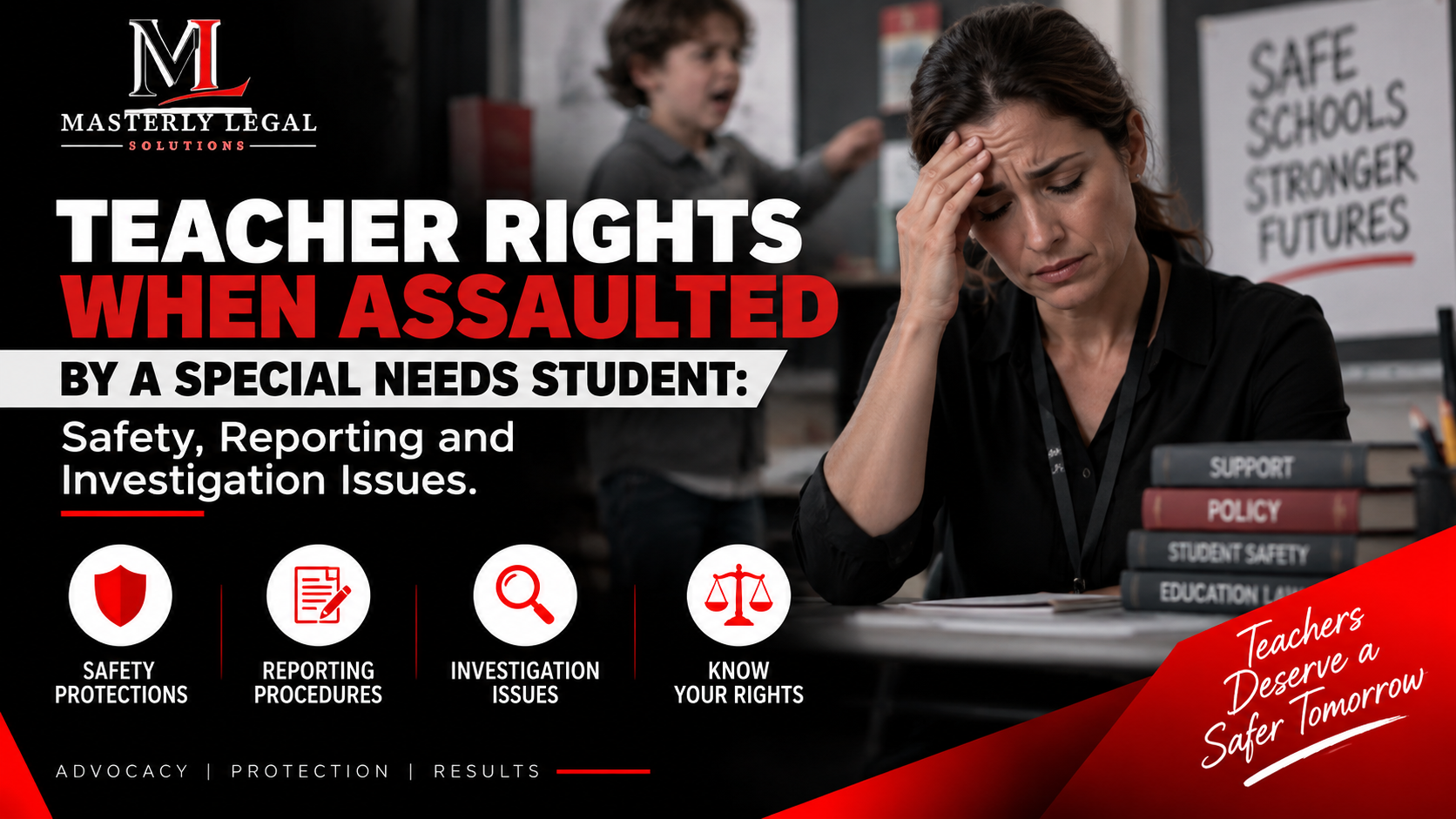
Teacher Rights When Assaulted by a Special Needs Student: Safety, Reporting and Investigation Issues


Looking for Legal & Business Solutions? Contact Us Now
Fill in the form or call us to set up a meeting





