

Can a Job Force You to Resign During a School Investigation? What Teachers Need to Know
When a School Investigation Suddenly Turns Your Life Upside Down
Most educators spend years building their careers, earning certifications, and dedicating themselves to students and their communities. Teachers often believe that if concerns ever arise in the workplace, the school district will handle the matter fairly and professionally. Unfortunately, that is not always what happens. In many situations, an employee may suddenly find themselves facing an investigation without fully understanding the allegations or what rights they still have.
For teachers, few situations are more stressful than being called into a meeting with a supervisor, human resources, or school administrators and learning they are under review. In some cases, the district immediately places the employee on administrative leave while conducting internal reviews. Teachers may feel shocked, embarrassed, and fearful about what this could mean for their future, reputation, teaching certificate, and income.
Many educators quickly discover that school districts sometimes pressure workers into resigning before the investigation is complete. The pressure may come through intimidating meetings, threats about future employment, suggestions that resignation is the “best option,” or warnings about possible disciplinary action. Some employees are led to believe they have no real choice.
At Masterly Legal Solutions, we understand how overwhelming these situations can become. Teachers often contact our office after realizing the district’s actions may not have been as fair or neutral as they first appeared. Speaking with an attorney immediately can help protect your career, your professional reputation, and your future opportunities before mistakes are made that cannot easily be reversed.
Can a Job Force You to Resign During a School Investigation?
Many teachers ask the same difficult question after being accused of alleged misconduct: can a job force you to resign? In most situations, an employer cannot legally force an employee to resign outright. However, school districts and administrators sometimes create intense pressure designed to make resignation feel unavoidable.
This pressure may include:
- Threats of termination
- Suggestions that resignation looks “better”
- Warnings about certification consequences
- Fear of public embarrassment
- Isolation from coworkers
- Immediate removal from campus
- Aggressive investigative meetings
An employee may feel trapped between resigning voluntarily or risking termination and damage to their professional reputation. Unfortunately, many workers make rushed decisions before fully understanding their rights or the long-term consequences of resigning during an investigation.
Teachers should understand that resignation is a serious legal and career decision. Once an employee resigns, it may become more difficult to challenge certain actions later. Speaking with an attorney before signing paperwork or making statements is often critical.
Understanding Administrative Leave in School Investigations
One of the first actions many school districts take during an investigation is placing the employee on administrative leave. This can happen suddenly and without warning. Teachers are often escorted from campus in front of coworkers or students, which can feel humiliating and emotionally devastating.
Administrative leave generally means the employee is temporarily removed from active job duties while the district investigates concerns or allegations. Depending on the circumstances, the district may place the employee on paid administrative leave or unpaid leave.
Paid administrative leave is sometimes presented as a neutral step while the district reviews the matter. However, the experience can still create severe emotional stress for workers and their families. Even when the employee continues to receive pay, the damage to reputation and employee morale can be significant.
Why School Districts Use Investigative Leave
School districts often use investigative leave when they claim an employee’s continued presence could interfere with the investigation or affect the agency's mission. In educational settings, administrators sometimes argue that removing the teacher helps preserve order or maintain student confidence.
Investigative leave may occur after:
- Parent complaints
- Student allegations
- Harassment concerns
- Workplace disputes
- Possible violation of district policies
- Social media incidents
- Safety concerns
In some cases, the district’s response may be appropriate. However, there are also situations where the employer acts too aggressively before reviewing all facts or evidence. Some employees are treated as though they are already guilty before the investigation even begins.
This is one reason why immediate legal guidance matters. For example, teachers in Texas placed on administrative leave often need clear steps and legal support to avoid mistakes that could harm their careers. An attorney can help protect the employee’s rights while the investigation is ongoing.
The Emotional Impact of Administrative Leave
Many teachers describe administrative leave as one of the most painful experiences of their professional lives. Even when the leave is paid, the emotional consequences can be severe. Coworkers may speculate about the situation, rumors can spread quickly, and the employee may feel isolated from the workplace they once enjoyed.
A teacher on administrative leave often worries about:
- Losing their teaching certificate
- Future job opportunities
- Financial stability
- Damage to professional reputation
- Family stress
- Public accusations
- Termination
The negative impact on mental health can become overwhelming, especially when the district provides limited information about the allegations or investigation timeline.
Why Teachers Should Never Rush Into Resigning
Some school districts subtly encourage resignation early in the process. A manager or supervisor may suggest resignation is the “professional” thing to do or imply the employee will avoid additional embarrassment by stepping down quietly.
Teachers should be extremely cautious in these moments. Resigning before understanding the allegations, evidence, or investigation process can create long-term consequences that affect future employment opportunities.
For example, resignation may:
- Affect unemployment eligibility
- Influence future hiring decisions
- Impact certification proceedings
- Limit legal claims
- Create confusion regarding the allegations
An employee should never assume resignation automatically solves the problem. In many situations, districts may still report the allegations to agency officials or state licensing authorities even after the employee resigns.
How School Districts Apply Pressure During Investigations
Pressure during school investigations can take many forms. Sometimes administrators create an environment where the employee feels cornered and unsupported.
Common pressure tactics may include:
- Calling emergency meetings without notice
- Refusing to explain the allegations fully
- Threatening immediate termination
- Suggesting criminal investigations involving police
- Discouraging legal representation
- Imposing unrealistic deadlines
- Increasing emotional pressure
A reasonable employee under these circumstances may feel they have no meaningful choice except resignation. This is why speaking with an attorney early can help restore clarity and protect the employee from rushed decisions.
The Difference Between Administrative Leave and Disciplinary Action
Not every placement on administrative leave means termination is certain. In some situations, districts use leave as a temporary measure while reviewing facts. However, administrative leave can sometimes evolve into formal disciplinary action depending on the outcome of the investigation.
Teachers should understand the distinction between:
- Administrative leave
- Investigative leave
- Safety leave
- Formal discipline
- Termination proceedings
Each process may involve different rights, timelines, and procedures under district regulations and applicable law.
At Masterly Legal Solutions, we help educators understand what stage of the process they are facing and what risks may exist moving forward.
What Happens During Internal Reviews
Internal reviews are common during school investigations. Administrators, human resources personnel, and agency officials may conduct interviews, gather records, review emails, and evaluate witness statements.
Unfortunately, some employees enter these meetings believing they can simply “clear things up” on their own. In reality, statements made during investigations can later be used against the employee in disciplinary proceedings or licensing matters.
For example, an innocent explanation may later be interpreted differently once the district builds its narrative. This is why employees should carefully consider obtaining legal guidance before participating in interviews regarding alleged misconduct.
Human Resources Does Not Always Protect the Employee
Many workers mistakenly believe human resources exists primarily to support employees during investigations. In reality, human resources departments often focus on protecting the employer and minimizing liability for the district.
This does not mean every HR professional acts unfairly. However, employees should understand that HR representatives work for the district, not the individual teacher.
When allegations arise, human resources may coordinate with:
- Agency officials
- Supervisors
- School administrators
- Legal counsel
- Other authorized agency officials
The employee should approach these situations carefully and avoid assuming the district’s interests align with their own.
Administrative Leave and Teacher Certification Risks
One of the biggest concerns teachers face involves protecting their teaching credentials. In some situations, school districts report allegations to state agencies or authorized agency officials responsible for educator certifications.
Even if the employee resigns, the matter may still move forward. Some teachers are shocked to learn resignation does not automatically end the investigation process.
Depending on the circumstances, agency determines whether additional review or disciplinary measures involving certification are necessary. This may include investigations by state boards, licensing authorities, or other federal agencies in rare situations involving serious allegations.
Teachers should not assume they can “move on quietly” without understanding how resignation could affect future teaching opportunities, especially when a Texas Education Agency investigation may still proceed.
The Role of Agency Policies During School Investigations
School districts often rely on agency policies and internal policies when placing workers on administrative leave. These regulations may outline when districts can remove employees from the workplace, conduct investigations, or impose restrictions during reviews.
Some policies are broad and give administrators significant discretion. Others contain specific procedures districts are expected to follow.
An attorney can review whether the district followed:
- Agency policies
- Internal policies
- Applicable regulations
- Contract requirements
- Due process obligations
When districts fail to follow proper procedures, it may strengthen the employee’s legal position, and many educators turn to an education law attorney for expert legal guidance in evaluating policy violations.
What Teachers Should Know About Paid Administrative Leave
Paid administrative leave is often presented as a routine administrative step rather than punishment. However, many employees experience severe anxiety while waiting for updates about the investigation.
Even though the employee continues to receive pay, the uncertainty can become emotionally exhausting. Some teachers remain on leave for brief periods, while others remain away from the workplace for months.
Districts sometimes claim they grant administrative leave to preserve the integrity of the investigation or protect the agency's mission. However, prolonged leave can create additional emotional and financial pressure on the employee, which is one reason every teacher needs a lawyer for legal protection when leave drags on.
How Retaliation Occurs During School Investigations
Retaliation occurs when an employer punishes an employee for engaging in protected activity. In school settings, this may involve reporting discrimination, harassment, safety concerns, or other workplace issues.
Protected activity may include:
- Filing a complaint
- Reporting policy violations
- Participating in investigations
- Opposing harassment
- Reporting safety concerns
- Assisting other employees
Some teachers suddenly face investigations shortly after engaging in protected activity. Timing can become important evidence when evaluating whether retaliation may have occurred, and Texas educators benefit from specialized legal support during these school investigations.
Signs a School District May Be Targeting an Employee
Certain warning signs may suggest the district’s actions go beyond a neutral investigation.
Examples may include:
- Sudden administrative leave after complaints
- Inconsistent treatment compared to other employees
- Increased scrutiny from a supervisor
- Pressure to resign quickly
- Exclusion from meetings
- Aggressive questioning
- Lack of transparency about allegations
While every case is different, these patterns sometimes indicate the employer is attempting to build a case against the employee rather than conduct a fair review.
Safety Leave and Emergency Removal From Campus
Some districts place employees on safety leave when administrators believe the employee’s presence could create disruption or concern in the workplace. In educational settings, districts often cite student welfare or school operations when making these decisions.
Safety leave may be appropriate in limited situations involving serious allegations. However, employees should still understand their rights and the scope of the district’s authority under applicable regulations.
Teachers should ask important questions regarding:
- Duration of leave
- Pay status
- Investigation procedures
- Access to evidence
- Communication restrictions
These details can become important later if disputes arise regarding the district’s conduct, and understanding how experienced education law attorneys navigate TEA investigations and leave decisions can help teachers better protect themselves.
Why Timing Matters During Investigations
Many teachers make critical mistakes during the first few days of an investigation because they panic or assume cooperation alone will resolve the situation.
Early decisions may affect:
- Future legal claims
- Certification proceedings
- Employment opportunities
- Evidence preservation
- Settlement discussions
Speaking with an attorney immediately can help employees avoid errors that may weaken their position later.
Administrative Leave Is Not Always Neutral
Districts often describe administrative leave as non-disciplinary. However, the experience rarely feels neutral to the employee involved.
For example, being escorted off campus, losing access to coworkers, and facing rumors throughout the workplace can create lasting reputational harm. Even if the employee is later cleared, the emotional and professional damage may remain.
Overall employee morale can also suffer when workers see colleagues removed suddenly without explanation.
Investigative Leave Can Affect Future Employment
Future employers often ask whether applicants resigned during investigations or were placed on investigative leave. These questions can become complicated depending on how the separation occurred.
Some employees accept resignation offers believing it will “look better” than termination. In reality, the long-term consequences depend heavily on how the situation is documented and reported.
Teachers should avoid assuming resignation automatically protects their professional future.
Federal Regulations and Administrative Leave Guidance
Certain federal regulations and OPM regulations provide guidance regarding investigative leave and employee protections in government settings. While school districts may operate differently from federal agencies, some administrative principles overlap.
For example, federal personnel management guidance discusses how agencies may grant administrative leave on a time limited basis under certain circumstances.
Federal guidance may address:
- Excused absence procedures
- Brief or short periods of leave
- Notice leave requirements
- Investigative leave limits
- Employee protections
- Agency judgments
Although school districts follow their own policies, understanding broader employment standards can still help employees recognize potential fairness concerns.
Understanding Notice Leave and Excused Absence Policies
Notice leave may occur when an agency head determines the employee should remain away from the workplace temporarily while certain matters are addressed.
In some situations, districts classify leave as an excused absence rather than discipline. The terminology matters because different labels may affect the employee’s rights, pay, and future claims.
Employees should request additional information about:
- Leave classification
- Length of leave
- Investigation status
- Reporting obligations
- Restrictions during leave
The employee should never assume district terminology automatically reflects the true nature of the situation.
How School Districts Justify Administrative Leave
Districts often argue administrative leave is necessary to:
- Protect students
- Preserve evidence
- Maintain order
- Support the agency's mission
- Prevent disruption
- Address possible violation concerns
While some concerns may be legitimate, districts must still act fairly and consistently. Administrative leave should not become a tool for intimidation or retaliation.
The Importance of Preserving Evidence
Employees involved in investigations should preserve records whenever legally permitted, especially in Texas where TEA license defense often depends on detailed documentation. Documentation may become critical later if disputes arise about what occurred during the investigation.
Helpful evidence may include:
- Emails
- Text messages
- Performance evaluations
- Witness information
- Timeline notes
- Complaint records
An attorney can help determine what records may become important in the case.
The Role of Supervisors During School Investigations
A supervisor often plays a major role in shaping how investigations proceed. In some cases, managers genuinely attempt to handle concerns fairly. In others, personal conflicts or workplace politics may influence the process.
Employees sometimes notice changes in how their supervisor treats them after certain complaints or protected activity occurs. Increased scrutiny, hostility, or sudden criticism may indicate larger issues within the workplace.
Workers should carefully document concerning interactions while remaining professional throughout the process.
Administrative Leave Can Create Financial Pressure
Even when the employee remains on paid administrative leave, financial pressure often develops quickly. Teachers may worry about losing future pay, retirement contributions, or coaching stipends.
Some workers begin searching for other employment immediately because they fear termination is inevitable. Others feel pressured into resignation simply to end the emotional stress of uncertainty.
These financial concerns are one reason why legal guidance early in the process can be extremely valuable.
Why Teachers Should Avoid Signing Agreements Too Quickly
School districts sometimes present resignation agreements or settlement documents during investigations. Employees may feel pressured to sign immediately without reviewing the long-term consequences.
These agreements may affect:
- Future employment rights
- Claims against the employer
- Confidentiality obligations
- References
- Certification matters
An employee should never sign important documents without understanding what rights may be waived.
How Retaliation and Harassment Can Overlap
In some situations, teachers face investigations after reporting harassment or participating in other related protected activity. Retaliation may involve increased scrutiny, administrative leave, or disciplinary proceedings.
For example, a teacher who reports workplace harassment may suddenly become the subject of internal reviews shortly afterward. Timing matters in these situations and may support claims involving retaliation.
Protected activity laws exist to help protect workers who report misconduct or participate in investigations in good faith.
School Investigations and Police Involvement
Certain allegations may involve police or outside investigators. This can increase fear and confusion for employees who never expected to face potential criminal scrutiny.
Even when police become involved, teachers still have important rights. Employees should avoid making assumptions about the seriousness of the allegations without first obtaining legal advice.
An attorney can help employees understand:
- Investigation procedures
- Communication risks
- Potential consequences
- Evidence concerns
- Interaction with agency officials
Early representation may help prevent avoidable mistakes during these high-pressure situations.
Administrative Leave and Employee Morale
Administrative leave situations affect more than just the employee involved. Other employees often become fearful about workplace stability, investigations, and how management handles allegations.
Overall employee morale may decline when workers believe investigations are unfair or inconsistent. This can create distrust throughout the workplace and increase anxiety among staff members.
Districts should conduct investigations professionally while respecting the dignity and rights of all workers involved.
How Internal Policies Affect Investigations
Many districts issue internal policies consistent with state and federal requirements regarding investigations and employee leave procedures. However, districts do not always apply these policies consistently.
Employees should understand that policy violations by the district may become important evidence later. For example, failure to follow investigation procedures or notice requirements could affect the fairness of the process.
Reviewing agency policies carefully can help identify procedural concerns.
Brief Periods of Leave Can Still Cause Serious Harm
Some districts argue that investigative leave only lasted brief periods and therefore caused little damage. In reality, even short periods away from the workplace can create severe reputational and emotional harm for educators.
For example, students, parents, and coworkers may begin speculating immediately after a teacher disappears from campus unexpectedly.
Even brief or short periods of administrative leave can create long-term professional consequences.
Understanding Agency Judgments During Investigations
Agency judgments regarding investigations often involve subjective decisions by administrators, managers, and legal departments. Employees should not assume every decision made during the investigation is automatically fair or correct.
For example, administrators may interpret witness statements differently or rely heavily on incomplete information.
An attorney can help evaluate whether agency judgments appear reasonable based on the available evidence and surrounding circumstances.
Examples of Administrative Leave Beyond School Settings
Administrative leave exists in many government and federal workplaces beyond education. Federal agencies sometimes use investigative leave for employees facing allegations involving misconduct or policy concerns.
Federal personnel management systems may involve:
- Presidential memorandum directives
- Executive order requirements
- OPM guidance
- Presidential directive procedures
These examples show how administrative leave has become a widely used employment tool across multiple industries and agencies.
How Some Leave Policies Cover Unusual Situations
Certain agency policies also address unusual forms of leave involving officially sponsored events or special circumstances. For example, some federal policies discuss leave involving blood donations, civic participation, or temporary absences on a calendar year basis.
While these policies may seem unrelated to school investigations, they illustrate how broad administrative leave frameworks can become across various workplaces.
Employees should understand that districts often rely heavily on internal regulations when making leave decisions.
Why Immediate Legal Guidance Matters
The earliest stages of a school investigation are often the most important. Decisions made during the first meetings can affect the employee’s future career, legal claims, and professional reputation.
An attorney may help:
- Protect the employee’s rights
- Review district procedures
- Evaluate retaliation concerns
- Respond to allegations strategically
- Prevent unnecessary mistakes
- Preserve evidence
At Masterly Legal Solutions, we understand the emotional and professional pressure teachers face during investigations. Our firm offers expert education lawyer support for schools and teachers, and we are committed to helping educators protect their careers and futures during these difficult moments.
Teachers Should Not Face School Investigations Alone
Many educators feel isolated once placed on administrative leave. Coworkers may stop communicating, administrators may limit contact, and the employee may feel abandoned by the very institution they served for years.
No teacher should feel forced to navigate these situations alone. Early legal guidance can help employees understand their options before fear, pressure, or confusion leads to harmful decisions.
If you are facing allegations, administrative leave, or pressure to resign, speaking with an attorney immediately may help protect your rights and future opportunities.
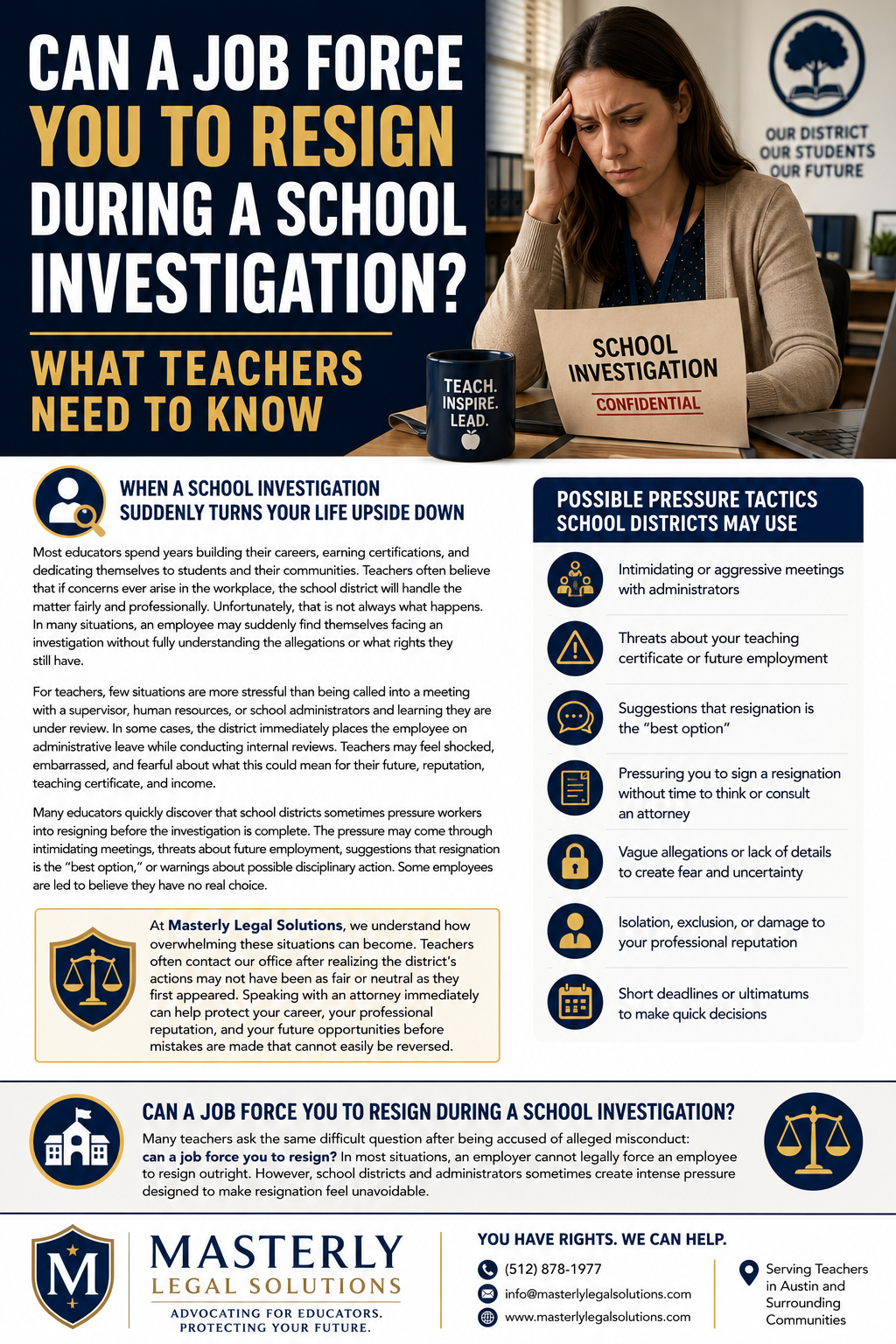
School Investigations Can Affect Both the Employee and Their Professional Reputation
During a school investigation, the emotional and professional impact often extends far beyond the allegations themselves. These situations can affect both the employee and their family, finances, future employment opportunities, and standing within the educational community. Even before an investigation is complete, rumors and speculation may begin spreading throughout the workplace. Teachers who have dedicated years to education may suddenly feel isolated and uncertain about what comes next. At Masterly Legal Solutions, we help educators protect their rights and professional future during these high-pressure situations.
Why Your Employee's Current Position May Be at Risk During an Investigation
When a school district launches an investigation involving alleged misconduct, the employee's current position may immediately come under scrutiny. In some cases, districts remove educators from classrooms or administrative duties before all facts are reviewed. A teacher may be placed on administrative leave, reassigned temporarily, or pressured into resigning altogether. These actions can create significant fear and uncertainty, especially when the district provides limited information about the allegations. Speaking with an attorney early may help employees better understand their rights before major career decisions are made.
How the United States Code Influences Employment Investigations
Certain employment investigations are influenced by standards and protections found within the united states code, particularly when federal employment principles, retaliation protections, or workplace procedures are involved. While public school districts primarily follow state and local regulations, broader federal employment concepts often shape how investigations and employee rights are interpreted. Teachers facing administrative leave or disciplinary proceedings may not realize that some legal protections extend beyond district policies alone. Understanding how federal regulations interact with school employment matters can help employees make more informed decisions during investigations.
Employment Laws Exist to Prohibit Retaliation Against Workers
Federal and state employment laws were created in part to prohibit retaliation against employees who report misconduct, harassment, discrimination, or safety concerns in the workplace. Unfortunately, some school districts still respond negatively when teachers raise concerns or participate in protected activity. Retaliation may involve administrative leave, increased scrutiny, disciplinary action, or pressure to resign before an investigation concludes. Employees should not fear punishment simply because they exercised protected rights under employment law. Legal representation may help workers identify whether retaliatory conduct may have occurred.
Some School District Actions Must Be Specifically Authorized by Policy
In many educational settings, certain investigative actions must be specifically authorized under district procedures, employment contracts, or administrative regulations. For example, districts may need approval before placing employees on extended leave, restricting access to school property, or initiating formal disciplinary proceedings. Teachers often assume administrators can take any action they choose during an investigation, but districts are still expected to follow proper procedures. Reviewing applicable policies carefully can help determine whether the district acted appropriately throughout the investigation process.
Understanding Paid Leave During School Investigations
Many teachers are placed on paid leave while school districts investigate allegations or complaints. Although continuing to receive pay may provide temporary financial stability, the emotional stress associated with leave can still become overwhelming. Employees often worry about future employment, professional reputation, and whether termination may eventually follow. In some cases, districts use paid leave as a temporary administrative measure, while in others it may become part of a broader disciplinary process. Teachers should avoid assuming that paid leave automatically means the district views the matter as minor or informal.
Adverse Action Can Occur Before an Investigation Is Complete
An adverse action does not always require formal termination to create serious legal concerns for an employee. During school investigations, adverse action may include demotions, reassignment, removal from duties, negative evaluations, or pressure to resign. Even temporary actions can affect a teacher’s reputation, future career opportunities, and emotional well-being. Some employees begin experiencing retaliation or professional harm before the investigation is even completed. This is one reason why educators should seek legal guidance early rather than waiting until formal discipline occurs.
Ad Hoc Decisions During Investigations Can Create Serious Problems
Some school investigations become disorganized when administrators begin making ad hoc decisions without following consistent procedures or policies. Teachers may receive conflicting information, unclear instructions, or sudden changes regarding leave status and investigative meetings. These inconsistencies can create confusion and make it difficult for employees to understand what rights they still have during the process. In certain cases, procedural mistakes by the district may later become important in evaluating whether the investigation was handled fairly. Employees should carefully document communications and major developments throughout the investigation.
Other Provision Violations May Affect School Investigation Procedures
In some cases, school districts may overlook an other provision within employment agreements, district regulations, or state education requirements while conducting investigations. Teachers often focus only on the allegations themselves and may not realize procedural violations could also affect the fairness of the process. For example, districts may fail to follow notice requirements, timelines, or reporting obligations required under certain policies. An attorney can help review whether procedural protections were ignored during the investigation or disciplinary process.
Teachers Are Sometimes Moved Into a Less Desirable Position
During or after an investigation, some educators are reassigned into a less desirable position rather than formally terminated. A district may transfer the employee away from preferred grade levels, extracurricular responsibilities, leadership opportunities, or campus assignments. While the district may claim the reassignment is temporary or administrative, the change can still damage the employee’s career trajectory and professional standing. These reassignments sometimes occur even before allegations are fully investigated or proven. Teachers should understand that forced transfers may carry long-term professional consequences, and North Carolina educators in particular often seek misconduct defense focused on protecting their license when reassignment follows an investigation.
Why Educators Often Fight to Protect a Desirable Position
Teachers work hard to earn a desirable position within a school district, especially after years of building relationships with students, parents, and colleagues. Losing that role because of an incomplete or unfair investigation can feel devastating both professionally and personally. Some educators have spent years developing specialized programs, coaching teams, or leading departments before suddenly facing allegations that threaten everything they built. When school districts pressure employees into resigning quickly, workers may not fully understand how much they stand to lose. Early legal guidance can help teachers make informed decisions about protecting their careers.
School Investigations Often Involve Allegations Directly Related to Classroom Duties
Many school investigations involve allegations directly related to classroom management, student interactions, communication practices, or professional conduct. Because these accusations are tied closely to the employee’s daily responsibilities, districts often move quickly to remove teachers from active duties while reviews are ongoing. Even when allegations later prove inaccurate or exaggerated, the investigation itself can still create lasting reputational harm. Teachers should take these situations seriously from the beginning and avoid assuming the matter will resolve on its own without professional legal support from an education lawyer experienced in defending teachers during investigations.
Speak With Masterly Legal Solutions About School Investigations
If you are a teacher facing administrative leave, investigative leave, retaliation, or pressure to resign during a school investigation, Masterly Legal Solutions is here to help. We understand how quickly these situations can escalate and how devastating they can become for educators and their families.
Our team works with teachers and school employees who are facing alleged misconduct investigations, disciplinary action, retaliation concerns, workplace harassment issues, and certification risks. We are committed to helping workers protect their careers, reputations, and futures before critical mistakes are made.
If you are asking yourself, “can a job force you to resign,” now is the time to seek experienced legal guidance. Contact Masterly Legal Solutions at (972) 236-5051 for a free consultation so we can answer your questions, discuss your circumstances, and help you understand what steps may help protect your future.
Disclaimer: This article is provided for informational and educational purposes only and does not constitute legal advice or legal guidance. You do not establish an attorney-client relationship with Masterly Legal Solutions by reading this material.. Every investigation and employment situation involves unique facts and circumstances. Individuals facing administrative leave, workplace investigations, retaliation, or employment disputes should speak directly with a qualified attorney regarding their specific situation.

Teacher Rights When Assaulted by a Special Needs Student: Safety, Reporting and Investigation Issues







Looking for Legal & Business Solutions? Contact Us Now
Fill in the form or call us to set up a meeting