
Can School Investigations Lead to TEA Discipline?
When a Simple Complaint Becomes a Career Threat
For many educators, a workplace complaint can feel like a routine matter at first. However, what begins as an internal concern can quickly escalate into something much more serious. An employee may suddenly find themselves at the center of an investigation, facing uncertainty about their future, their reputation, and even their teaching certification.
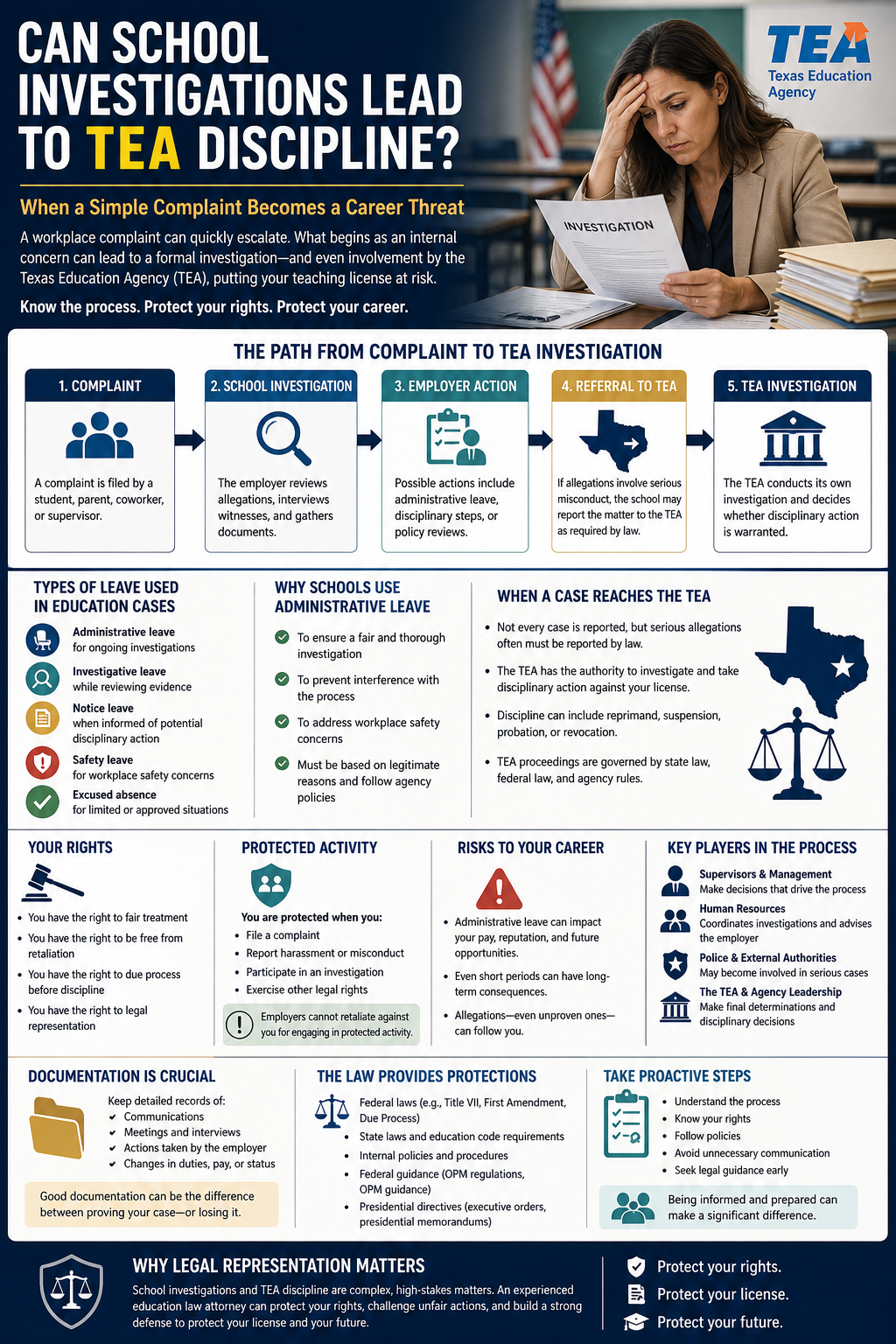
School investigations are not isolated events. In many cases, they can lead directly to involvement by the Texas Education Agency (TEA), placing an educator’s license at risk. Understanding how this process works is essential for any employee who wants to protect their career and respond effectively.
How School Investigations Begin
A school investigation typically starts with a complaint filed by a student, parent, coworker, or supervisor. These complaints can involve alleged misconduct, harassment, or violations of internal policies, including serious issues that can later become Texas Education Agency (TEA) investigations and threaten a teacher’s license. While some complaints are resolved quickly, others trigger a more formal investigation process.
An employer is responsible for reviewing the allegations and determining whether further action is necessary. This may involve interviews, document reviews, and coordination with human resources. In certain circumstances, the situation may escalate beyond the school and involve agency officials or even other authorized agency officials.
The Role of Administrative Leave in School Investigations
One of the most common steps during an investigation is placing an employee on administrative leave. This action is often presented as a neutral measure, but it can have serious consequences. Administrative leave can disrupt an employee’s daily routine, affect their pay, and raise concerns among other workers.
Administrative leave may be implemented for many forms of reasons, including workplace safety, ongoing investigation needs, or concerns about alleged misconduct. Whether it is paid administrative leave or unpaid, the impact on the employee can be significant.
Why Schools Use Administrative Leave During Investigations
Employers often grant administrative leave to create space for a fair investigation. In some cases, administrative leave is used to ensure that the employee does not interfere with the process or influence witnesses. However, not every decision to place someone on administrative leave is justified.
Administrative leave should follow agency policies and be based on legitimate concerns. When an employer uses administrative leave improperly, it may suggest retaliation or an attempt to pressure the employee.
Different Types of Leave Used in Education Cases
During an investigation, several types of leave may come into play. Each type serves a different purpose and carries different implications.
- Administrative leave for ongoing investigations
- Investigative leave while reviewing evidence
- Notice leave when an employee is informed of potential disciplinary action
- Safety leave for workplace safety concerns
- Excused absence for limited or approved situations
Each type of leave must be evaluated carefully to determine whether it is appropriate under the circumstances.
How Investigative Leave Impacts Educators
Investigative leave is often used when an employer believes there may be a possible violation of policy or law. While it may seem like a temporary measure, it can create long-term challenges for an employee. The employee’s current position may be affected, and their professional reputation may suffer.
In some cases, investigative leave is used for brief or short periods. However, even short periods can have a lasting effect, especially when combined with other actions taken by the employer.
When a School Investigation Reaches the TEA
Not every investigation leads to TEA involvement, but many do. When a school determines that the allegations involve serious misconduct, they may report the matter to the agency, creating a situation where Texas educators must act quickly to survive a TEA investigation and protect their license. This is often required under state laws and regulations.
Once the TEA becomes involved, the situation changes significantly. The employee is no longer dealing only with their employer but also with a state agency that has the authority to impose disciplinary action on their license.
The TEA’s Role in Disciplinary Proceedings
The TEA is responsible for overseeing educator certification and enforcing professional standards. When an investigation is referred to the agency, it may conduct its own review. This can include examining evidence, interviewing witnesses, and consulting with authorized agency officials to address common causes of TEA investigations and available teacher protections.
The agency determines whether the alleged misconduct warrants disciplinary action. This process is guided by state law, federal law, and applicable regulations.
How Federal and State Law Influence Investigations
School investigations and TEA proceedings are influenced by a combination of federal and state law. Federal protections, including those found in the United States Code, play a role in safeguarding employee rights. At the same time, state laws outline specific requirements for reporting and handling misconduct.
Employers must follow these legal standards when conducting investigations. Failure to do so may create grounds for challenging the process.
The Importance of Internal Policies and Procedures
Schools are required to issue internal policies consistent with legal requirements. These policies guide how investigations are conducted, how administrative leave is used, and how disciplinary decisions are made.
When an employer fails to follow its internal policies, it may indicate that the process was not handled properly. This can be a key factor in defending against TEA discipline.
The Role of Human Resources in Investigations
Human resources plays a central role in managing workplace investigations. They are responsible for coordinating the process, ensuring compliance with regulations, and advising management on personnel decisions.
However, HR ultimately works for the employer. While they may aim to be fair, their primary responsibility is to protect the institution. This is why employees should consider seeking independent legal guidance.
Administrative Leave and Its Effect on Pay and Wages
One of the most immediate concerns for an employee placed on administrative leave is their pay. In some cases, administrative leave is provided as paid leave, allowing the employee to continue receiving wages. In other cases, the employee may face a loss of income.
Changes in pay and wages can create financial stress and uncertainty. These impacts must be considered when evaluating the fairness of the employer’s actions.
The Risk of Retaliation During Investigations
Retaliation is a serious concern in many school investigations. An employee who files a complaint or engages in protected activity may face negative consequences as a result. Retaliation can take many forms, including placement on administrative leave, changes in responsibilities, or increased scrutiny.
Employers are prohibited from retaliating against employees for engaging in protected activity. However, proving retaliation requires careful documentation and legal analysis.
Recognizing Protected Activity in Education Cases
Protected activity includes actions such as filing a complaint, reporting harassment, or participating in an investigation. Employees who engage in these activities are legally protected from retaliation.
It is important to understand what qualifies as protected activity and how it applies to your situation. This knowledge can help you identify potential violations and protect your rights.
Harassment and Its Connection to Investigations
Harassment often serves as the basis for workplace complaints and investigations. Whether it involves coworkers, supervisors, or others, harassment can create a hostile workplace environment.
When an employee reports harassment, the employer is required to take appropriate action. Failure to do so may result in further legal issues.
The Role of Supervisors and Management
Supervisors and managers play a key role in how investigations are handled. Their decisions can influence whether an employee is placed on administrative leave, how evidence is gathered, and how the situation is resolved.
A supervisor who acts improperly may expose the employer to legal liability. It is essential for management to follow established procedures and act in good faith.
Involvement of Police and External Authorities
In some cases, school investigations may involve police or other external authorities. This is more likely when the allegations involve serious misconduct or potential criminal activity.
The involvement of police can escalate the situation quickly. It is important for employees to understand their rights and seek legal guidance in these circumstances.
How Agency Decisions Are Made
The agency evaluates each case based on the evidence presented. Agency judgments are influenced by the facts, the applicable law, and the agency’s mission. The goal is to maintain professional standards while ensuring fairness.
However, agency judgments are not always correct. Employees have the right to challenge decisions and present their own evidence.
The Impact of Administrative Leave on Your Career
Administrative leave can have a lasting impact on an employee’s career. Even if the investigation does not result in discipline, the experience can affect future opportunities.
Employers may view an employee differently after an investigation, and other workers may form assumptions based on incomplete information. This makes it critical to address the situation proactively.
Handling Alleged Misconduct Effectively
When facing allegations of misconduct, it is important to respond carefully and thoughtfully. The employee should gather evidence, document interactions, and avoid making statements that could be misinterpreted.
A strong response can help protect your rights and improve your chances of a favorable outcome.
Administrative Leave for Brief Periods and Long-Term Effects
Employers may argue that administrative leave was only used for brief periods or short periods. However, even temporary actions can have lasting consequences. The stigma associated with administrative leave can follow an employee long after the investigation ends.
Understanding these effects is important when evaluating the fairness of the employer’s actions.
The Role of Agency Leadership
The agency head may play a significant role in overseeing disciplinary decisions. This individual is responsible for ensuring that actions are consistent with agency policies and the agency’s mission.
When leadership fails to act appropriately, it can undermine the integrity of the process.
Administrative Leave and Officially Sponsored Activities
Administrative leave may also be used for positive purposes, such as participating in officially sponsored programs or blood donations. These uses of administrative leave highlight the importance of applying policies consistently.
When an employee is treated differently, it may indicate a problem with how the policies are being enforced.
Ad Hoc Decisions and Their Risks
Ad hoc decision-making can create inconsistencies in how cases are handled. When employers make decisions without clear guidelines, it increases the risk of unfair treatment.
Employees should be aware of how these decisions are made and whether they align with established policies.
The Importance of Documentation During an Investigation
Documentation is one of the most powerful tools an employee has during an investigation. Keeping records of communications, timelines, and actions taken by the employer can help build a strong defense.
This information can be critical in demonstrating whether the employer acted appropriately.
Federal Guidance and OPM Regulations
Federal guidance, including OPM regulations and OPM guidance, can influence how investigations are conducted. These standards provide a framework for personnel management and ensure that employees are treated fairly.
Employers must adhere to these guidelines when handling investigations.
Presidential Directives and Employment Practices
Presidential directives, including executive orders and presidential memorandums, can shape employment practices in public institutions. These directives provide additional guidance on how agencies should handle personnel matters.
Understanding these directives can help employees identify potential violations.
The Broader Impact on the Workforce
School investigations do not only affect one employee. They can have a ripple effect on the entire workforce. When employees see how investigations are handled, it influences their trust in the institution.
Maintaining fairness and transparency is essential for preserving morale and confidence.
Protecting Your Rights During a School Investigation
Employees should take proactive steps to protect their rights during an investigation. This includes understanding the process, seeking legal guidance, and avoiding actions that could harm their case, especially when educators must follow immediate steps after receiving a TEA investigation notice.
Being informed and prepared can make a significant difference.
Why Legal Representation Matters
Navigating a school investigation and potential TEA discipline is complex. The stakes are high, and the process can be overwhelming, which is why many teachers turn to an education law attorney for expert legal guidance.
Experienced legal representation can help you understand your options, protect your rights, and build a strong defense.
Actions That Must Be Specifically Authorized
In school investigations, any major decision—especially those involving discipline or administrative leave—should be specifically authorized under established policies or law. An employer cannot simply act on assumptions or informal practices when an employee’s career is at stake. When actions are not clearly supported by written policies or legal standards, it raises concerns about fairness and consistency. This becomes especially important when an employee is facing potential TEA discipline, as unauthorized actions can weaken the employer’s position.
Immigration Status and Its Limited Relevance
In most education-related investigations, an employee’s immigration status is not directly related to the allegations being reviewed. Bringing up immigration status in these situations can be inappropriate and may even raise legal concerns. Employers must ensure that their focus remains on the specific allegations and not on unrelated personal factors. When immigration status is used improperly, it may suggest bias or retaliation.
The Importance of Internal Reviews in School Investigations
Internal reviews are a key step in determining how a complaint is handled before it escalates further. These reviews allow the institution to evaluate evidence, interview witnesses, and assess the situation in a structured way. When conducted properly, internal reviews can help resolve issues without involving outside agencies. However, if these reviews are rushed or handled improperly, they may lead to flawed conclusions that impact the employee, particularly in situations where experienced education law services are needed to challenge TEA-related decisions.
Applying Rules Under Any Other Provision
Employers sometimes rely on an other provision within their policies to justify decisions during an investigation. While these provisions may offer flexibility, they must still be applied fairly and consistently. An employee should not be subjected to decisions that appear arbitrary or unsupported. Reviewing how these provisions are used can help identify whether the employer acted appropriately.
Employment Decisions on a Time Limited Basis
Certain actions taken during an investigation may be described as temporary or on a time limited basis. While this may sound less severe, even temporary changes can affect an employee’s reputation and career trajectory. A reassignment or restriction, even if short-term, can still signal concerns about the employee’s conduct. These decisions must be carefully evaluated to determine their true impact.
Tracking Events Over a Calendar Year
Looking at events over a calendar year can provide important context in an investigation. Patterns of behavior, repeated actions, or ongoing issues may become more apparent when viewed over time. This broader perspective can help determine whether the employer’s actions were consistent or if they suggest a deeper problem. For employees, documenting events throughout the year can strengthen their position.
Ensuring Actions Are Directly Related to Allegations
Any action taken by an employer during an investigation should be directly related to the allegations at hand. If decisions appear unrelated or excessive, it may indicate that the employer is acting beyond what is necessary. For example, placing an employee on administrative leave for a minor issue may raise questions about the employer’s intent. Ensuring that actions are proportionate is essential for fairness.
The Role of the Office Environment in Investigations
The office environment can influence how an investigation unfolds. A supportive environment may encourage open communication and fair treatment, while a tense environment can escalate conflicts. When employees feel that the office culture is biased or hostile, it can affect their ability to respond effectively. Addressing these concerns is important for maintaining fairness.
Using an Example to Understand the Process
An example can help illustrate how investigations lead to TEA involvement. Consider an employee who files a complaint about harassment. Shortly after, the employer places the employee on administrative leave and begins an investigation. If the situation is not handled properly, the employer may report the matter to the TEA, leading to potential disciplinary action. This example shows how quickly situations can escalate.
What Happens Generally in TEA-Related Cases
Generally, school investigations follow a structured process that includes reviewing evidence, interviewing witnesses, and making a determination. However, each case is unique, and outcomes can vary based on the circumstances. Understanding the general process can help employees prepare for what lies ahead. Being informed is a key part of protecting your rights.
Understanding What Is Subject to Review
During an investigation, nearly every aspect of an employee’s conduct may be subject to review. This can include communications, performance records, and interactions with students or coworkers. The scope of the review can be broad, depending on the nature of the allegations. Employees should be aware of what may be examined and prepare accordingly.
The Role of Labor Standards in Investigations
Labor standards play an important role in ensuring that employees are treated fairly during investigations. These standards address issues such as wages, working conditions, and employee rights. When an employer fails to follow labor guidelines, it may create additional legal concerns. Employees should understand how these standards apply to their situation.
Involvement of Officers in Serious Cases
In more serious situations, officers or law enforcement may become involved in the investigation. This typically occurs when the allegations involve potential criminal activity. The involvement of officers can significantly change the nature of the case and increase the stakes for the employee. Legal guidance is especially important in these circumstances.
Considering Other Types of Evidence
Investigations often rely on various forms of evidence, including documents, witness statements, and electronic communications. There may also be other types of evidence that provide important context. Evaluating all available information is essential for reaching a fair outcome. Employees should ensure that relevant evidence is considered.
Evaluating the Extent of the Allegations
The extent of the allegations plays a key role in determining how an investigation proceeds. Minor concerns may be resolved internally, while more serious allegations may lead to TEA involvement. Understanding the severity of the situation can help employees anticipate potential outcomes. This evaluation also influences the type of disciplinary action that may be considered and may prompt educators to seek experienced education law representation to defend against discipline.
The Role of the Department in Oversight
The department overseeing the institution may have a role in reviewing or guiding the investigation. This can include ensuring compliance with policies and regulations. Department involvement can add another layer of oversight, which may benefit or complicate the process. Employees should be aware of how these entities influence the investigation and when it may be necessary to involve Texas education lawyers for expert legal help.
Meeting Expectations During an Investigation
Employees are expected to cooperate with investigations and follow instructions provided by their employer. This includes attending meetings, providing information, and maintaining professionalism. However, employees also have the right to protect themselves and seek guidance. Balancing these expectations is essential for navigating the process effectively.
Understanding Paid Administrative Leave in School Investigations
Paid administrative leave is often used during a school investigation when an employer wants to temporarily remove an employee from the workplace while still continuing their pay. While this may sound less severe than unpaid leave, it can still carry serious professional consequences. Being placed on paid administrative leave may signal to other workers that there are concerns about the employee, even before any findings are made. This action must be handled carefully and fairly, especially when the investigation has not yet confirmed any alleged misconduct.
The Role of Personnel Management in Educator Discipline
Personnel management plays a central role in how school investigations are conducted and how decisions are made. This includes overseeing employee conduct, ensuring compliance with regulations, and guiding supervisors through disciplinary processes. Effective personnel management requires consistency, transparency, and adherence to both internal standards and applicable law. When these principles are not followed, it can create confusion, unfair outcomes, and potential legal challenges for the employer, making the support of an education lawyer who represents teachers and schools especially valuable.
Why Agency Policies Matter in Every Investigation
Agency policies provide the framework for how investigations, administrative leave decisions, and disciplinary actions should be handled. These policies are designed to ensure fairness and consistency across all cases involving employees, and they often intersect with Texas TEA investigations and teacher certification help. When an employer fails to follow its own agency policies, it raises concerns about whether the process was handled properly. For educators, understanding these policies can be critical in identifying whether their rights have been respected and whether further action may be necessary.
Contact Us for a Free Consultation
If you are facing a school investigation or have been placed on administrative leave, it is important to act quickly. These situations can escalate rapidly, especially when your certification and professional future are involved. At Masterly Legal Solutions, we understand the pressure educators face and the uncertainty that comes with these challenges.
Our team is committed to helping you protect your career, your reputation, and your rights. Whether you are dealing with an ongoing investigation, concerns about retaliation, or questions about administrative leave, we are here to help you navigate every step of the process.
We encourage you to contact us at (972) 236-5051 for a free consultation. We will listen to your concerns, explain your options, and provide guidance tailored to your situation so you can move forward with confidence.
Disclaimer: This article is for educational purposes only and does not constitute legal advice. Every situation is unique, and you should consult with a qualified attorney to receive advice specific to your circumstances.








Looking for Legal & Business Solutions? Contact Us Now
Fill in the form or call us to set up a meeting