

How CPS Decisions Impact Custody, Visitation, and Family Autonomy
When You First Learn a Report Has Been Filed
Hearing that a report has been made to child protective services can feel overwhelming. Many parents are caught off guard, unsure of what triggered the situation or what will happen next. A single report can quickly turn into a formal investigation, and the uncertainty can create stress for the entire family.
In Texas, even a basic report of suspected abuse or neglect must be taken seriously. The system is designed to prioritize the child’s safety, but that process can sometimes feel confusing or intrusive. Understanding what happens next can help you take the right steps early and avoid costly mistakes.
How the Reporting Process Begins
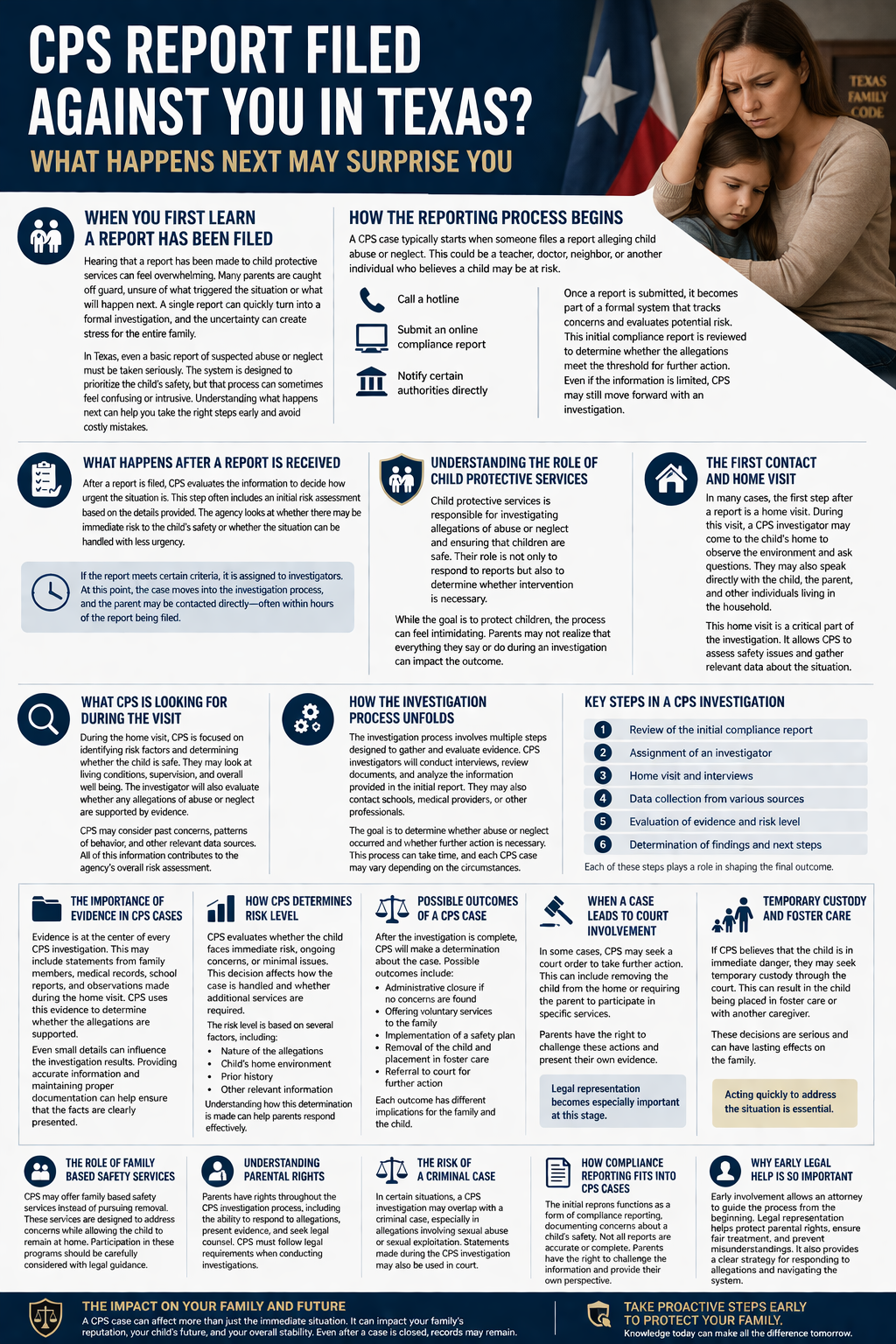
A CPS case typically starts when someone files a report alleging child abuse or neglect. This could be a teacher, doctor, neighbor, or another individual who believes a child may be at risk, and educators in particular may benefit from expert legal support for teachers and schools when their actions are questioned. In fact, ways to report a compliance issue include calling a hotline, submitting an online compliance report, or notifying certain authorities directly.
Once a report is submitted, it becomes part of a formal system that tracks concerns and evaluates potential risk. This initial compliance report is reviewed to determine whether the allegations meet the threshold for further action. Even if the information is limited, CPS may still move forward with an investigation.
What Happens After a CPS Report Is Received
After a report is filed, CPS evaluates the information to decide how urgent the situation is. This step often includes an initial risk assessment based on the details provided. The agency looks at whether there may be immediate risk to the child’s safety or whether the situation can be handled with less urgency.
If the report meets certain criteria, it is assigned to investigators. At this point, the case moves into the investigation process, and the parent may be contacted directly. This can happen quickly, sometimes within hours of the report being filed.
Understanding the Role of Child Protective Services
Child protective services is responsible for investigating allegations of abuse or neglect and ensuring that children are safe. Their role is not only to respond to reports but also to determine whether intervention is necessary. This includes evaluating the child’s home, speaking with family members, and gathering evidence.
While the goal is to protect children, the process can feel intimidating. Parents may not realize that everything they say or do during an investigation can impact the outcome. This is why early awareness and preparation are so important.
The First Contact and Home Visit
In many cases, the first step after a report is a home visit. During this visit, a CPS investigator may come to the child’s home to observe the environment and ask questions. They may also speak directly with the child, the parent, and other individuals living in the household.
This home visit is a critical part of the investigation. It allows CPS to assess safety issues and gather relevant data about the situation. Parents should understand that this interaction is part of a formal process and should be approached carefully.
What CPS Is Looking For During the Visit
During the home visit, CPS is focused on identifying risk factors and determining whether the child is safe. They may look at living conditions, supervision, and overall well being. The investigator will also evaluate whether any allegations of abuse or neglect are supported by evidence.
This evaluation is not limited to one moment in time. CPS may consider past concerns, patterns of behavior, and other relevant data sources. All of this information contributes to the agency’s overall risk assessment.
How the Investigation Process Unfolds
The investigation process involves multiple steps designed to gather and evaluate evidence. CPS investigators will conduct interviews, review documents, and analyze the information provided in the initial report. They may also contact schools, medical providers, or other professionals.
The goal is to determine whether abuse or neglect occurred and whether further action is necessary. This process can take time, and each cps case may vary depending on the circumstances.
Key Steps in a CPS Investigation
While every case is different, most CPS investigations follow a similar structure:
- Review of the initial compliance report
- Assignment of an investigator
- Home visit and interviews
- Data collection from various sources
- Evaluation of evidence and risk level
- Determination of findings and next steps
Each of these steps plays a role in shaping the final outcome.
The Importance of Evidence in CPS Cases
Evidence is at the center of every CPS investigation. This may include statements from family members, medical records, school reports, and observations made during the home visit. CPS uses this evidence to determine whether the allegations are supported.
Parents should be aware that even small details can influence the investigation results. Providing accurate information and maintaining proper documentation can help ensure that the facts are clearly presented.
How CPS Determines Risk Level
One of the most important parts of the process is determining the risk level. CPS evaluates whether the child faces immediate risk, ongoing concerns, or minimal issues. This decision affects how the case is handled and whether additional services are required.
The risk level is based on several factors, including the nature of the allegations, the child’s home environment, and any prior history. Understanding how this determination is made can help parents respond effectively.
Possible Outcomes of a CPS Case
After the investigation is complete, CPS will make a determination about the case. The outcome can vary depending on the findings and the level of risk involved.
Possible outcomes include:
- Administrative closure if no concerns are found
- Offering voluntary services to the family
- Implementation of a safety plan
- Removal of the child and placement in foster care
- Referral to court for further action
Each outcome has different implications for the family and the child.
When a Case Leads to Court Involvement
In some cases, CPS may seek a court order to take further action. This can include removing the child from the home or requiring the parent to participate in specific services. Court involvement adds another layer of complexity to the case.
Parents have the right to challenge these actions and present their own evidence. Legal representation becomes especially important at this stage, and many benefit from legal insights for teachers and education professionals that explain how investigations and disciplinary processes work.
Temporary Custody and Foster Care
If CPS believes that the child is in immediate danger, they may seek temporary custody through the court. This can result in the child being placed in foster care or with another caregiver.
These decisions are serious and can have lasting effects on the family. Acting quickly to address the situation is essential.
The Role of Family Based Safety Services
In some cases, CPS may offer family based safety services instead of pursuing removal. These services are designed to address concerns while allowing the child to remain at home.
This approach focuses on strengthening the family and reducing risk. However, participation in these programs should be carefully considered with legal guidance.
Understanding Parental Rights During an Investigation
Parents have rights throughout the CPS investigation process. These rights include the ability to respond to allegations, present evidence, and seek legal counsel. Understanding these rights is essential for protecting your position.
CPS must follow legal requirements when conducting investigations. If these requirements are not met, it may impact the validity of the findings.
The Risk of a Criminal Case
In certain situations, a CPS investigation may overlap with a criminal case. This is more likely when the allegations involve serious forms of abuse, such as sexual abuse or sexual exploitation.
When this happens, the stakes are significantly higher. Statements made during the CPS investigation may also be used in a criminal context. This makes early legal guidance even more critical.
How Compliance Reporting Fits Into CPS Cases
The concept of a compliance report is not limited to corporate settings. In CPS cases, the initial report functions as a form of compliance reporting, documenting concerns about a child’s safety. Effective compliance reporting ensures that issues are identified and addressed appropriately.
However, not all reports are accurate or complete. Parents have the right to challenge the information and provide their own perspective.
Why Early Legal Help Is So Important
Many parents wait too long to seek legal representation. By the time they do, the investigation may already be well underway. Early involvement allows an attorney to guide the process from the beginning.
Legal representation helps protect parental rights, ensure fair treatment, and prevent misunderstandings. It also provides a clear strategy for responding to allegations and navigating the system, similar to the way an expert education lawyer provides legal support for schools and teachers facing serious investigations.
The Impact on Your Family and Future
A CPS case can affect more than just the immediate situation. It can impact your family’s reputation, your child’s future, and your overall stability. Even after a case is closed, records may remain.
Taking proactive steps early can help minimize these effects and protect your family’s future.
Understanding Child Protective Investigations in Texas
Child protective investigations are the formal process used to evaluate claims involving a child’s safety. These investigations involve gathering facts, interviewing individuals, and reviewing evidence to determine whether abuse or neglect may have occurred, much like how education law attorneys help protect teacher rights when school-based allegations arise. The goal is not only to respond to concerns but also to ensure that the child remains protected throughout the process. Families should understand that this stage is critical and can shape the direction of the entire case.
The Role of Family and Community Resources
During a CPS case, family and community resources can play an important role in supporting both the child and the parents. These resources may include counseling services, parenting programs, or local support networks that help stabilize the home environment, and schools or colleges involved may also rely on higher education law services and legal support to coordinate appropriate responses. When used appropriately, these services can demonstrate a willingness to address concerns and improve conditions. Accessing the right resources early can positively influence how the case is viewed.
Evaluating the Organization's Compliance Posture
In CPS-related matters, the organization’s compliance posture refers to how well the agency follows legal standards and internal guidelines. This includes how reports are handled, how investigations are conducted, and how decisions are made. A strong compliance posture ensures fairness and consistency, while weaknesses may lead to errors or disputes. Understanding this concept can help families recognize whether procedures are being followed properly.
When the Texas Legal Services Center May Be Referenced
The Texas Legal Services Center is one of several organizations that may be referenced when discussing support options for families. While they provide valuable information and assistance, their services may not address every unique situation. Families often benefit from personalized legal guidance that focuses specifically on their case. Knowing where to seek help is an important step in navigating the process.
Monitoring Compliance Status Throughout the Case
Compliance status refers to how a case aligns with legal requirements and procedural expectations at any given time. CPS tracks compliance status to ensure that investigations and decisions follow proper standards. For families, understanding this status can provide insight into how the case is progressing. It can also help identify any potential issues that may need to be addressed.
What Happens During the Investigation Stage
The investigation stage is when CPS actively gathers information and evaluates the allegations. This includes interviews, home visits, and reviewing documents. It is one of the most important phases because the findings made here influence the final outcome. Families should approach this stage carefully and be mindful of how they respond to questions and requests.
Identifying the Alleged Perpetrator
In every CPS case, the agency seeks to identify the alleged perpetrator connected to the report. This individual is the person believed to be responsible for the alleged abuse or neglect. Determining who this is can affect how the case is handled and who may face further scrutiny. It is essential that this determination is based on accurate and reliable information.
The Importance of Relevant Stakeholders
Relevant stakeholders in a CPS case may include parents, extended family members, teachers, and medical professionals. These individuals can provide valuable insight into the child’s environment and well being. Their input may influence how the investigation unfolds and what decisions are made. Understanding who these stakeholders are can help families prepare for the process.
How Risk Managers View CPS Cases
Risk managers, whether within agencies or institutions, evaluate potential liability and safety concerns in CPS-related matters. Their focus is often on identifying risks and ensuring that appropriate steps are taken to reduce harm. This perspective can influence how cases are handled and what actions are recommended. Recognizing this viewpoint can provide additional context for decisions made during the investigation.
Recognizing the Ongoing Process of a CPS Case
A CPS case is not resolved overnight. It is an ongoing process that may involve multiple steps, reviews, and decisions. Families should be prepared for the possibility that the case will evolve over time. Staying informed and engaged throughout the process is essential for protecting your rights and your child’s future.
Reviewing Compliance Posture During the Case
As the case progresses, the agency’s compliance posture may continue to be evaluated. This includes reviewing whether proper procedures were followed and whether decisions were made appropriately. Families can benefit from understanding how these evaluations impact the case. Identifying inconsistencies can be important for building a strong defense.
The Role of the Child's Family in the Investigation
The child’s family plays a central role in any CPS case. Their cooperation, communication, and actions can influence how the investigation is perceived. CPS often looks at the family’s ability to provide a safe and stable environment. Demonstrating a commitment to the child’s well being can be a key factor in the outcome.
Considering Criminal History in CPS Cases
In some cases, CPS may review an individual’s criminal history as part of the investigation. This information can provide context for the allegations and help assess potential risk, just as Texas TEA investigations and teacher certification help focus on how past conduct can affect an educator’s license. However, past issues do not automatically determine the outcome of a case. Each situation must be evaluated based on its specific facts.
Ensuring the Child Remains Safe
The primary goal of CPS is to ensure that the child remains safe. This involves assessing current conditions and determining whether any immediate action is necessary. Safety concerns are taken seriously, and decisions are often made quickly when risk is identified. Families should understand that safety evaluations are at the core of every investigation.
Accessing Legal Aid and Support Options
Some families may explore legal aid as a way to obtain guidance during a CPS case. While these services can provide helpful information, they may not always offer the level of representation needed for complex situations, similar to how teachers need an experienced education attorney when their professional licenses are at stake. Personalized legal support can provide a more comprehensive approach. Choosing the right form of assistance is an important decision.
Addressing Alleged Abuse in CPS Investigations
Alleged abuse is one of the most serious aspects of a CPS case. These claims must be thoroughly investigated and supported by evidence before any conclusions are made, much like TEA investigations into teacher conduct and common causes that can affect an educator’s career. Families have the right to respond and present their side of the story. Addressing these allegations effectively is critical for protecting your rights.
Evaluating the Organization's Adherence to Policies
The organization’s adherence to policies is a key factor in determining whether a CPS case is handled properly. This includes following legal guidelines, internal procedures, and ethical standards. When adherence is lacking, it may raise concerns about the validity of the process. Families should be aware of how these standards are applied.
The Value of Community Resources During CPS Cases
Community resources can provide additional support for families dealing with CPS involvement. These may include counseling services, educational programs, and local organizations. Utilizing these resources can demonstrate a proactive approach to addressing concerns. This can positively influence how the case is viewed.
Considering the Above Factors in Decision-Making
CPS decisions are based on a combination of factors, including evidence, risk assessments, and input from stakeholders. The above factors all contribute to how the case is evaluated, and similar considerations apply when facing university job termination and related legal steps in higher education settings. Understanding how these elements interact can help families better prepare for the process. Being informed allows for more effective decision-making.
Identifying Significant Issues in the Case
Significant issues in a CPS case may include safety concerns, repeated allegations, or lack of cooperation. Identifying these issues early can help families address them before they escalate. Taking proactive steps can make a meaningful difference in the outcome. Legal guidance can help prioritize what matters most.
The Goal to Complete Investigations Thoroughly
CPS aims to complete investigations thoroughly and within required timeframes. This ensures that decisions are based on sufficient evidence and proper review. However, the pressure to complete investigations can sometimes lead to rushed conclusions. Families should ensure that all relevant information is considered.
Understanding References to the Sarbanes Oxley Act
While the Sarbanes Oxley Act is primarily associated with corporate compliance, it is sometimes referenced when discussing reporting systems and accountability. Its principles highlight the importance of accurate reporting and transparency. These concepts can also apply to CPS reporting processes. Understanding these parallels can provide additional insight.
Making Informed Decisions During a CPS Case
Making informed decisions is critical when navigating a CPS case. This includes understanding your rights, evaluating your options, and seeking appropriate guidance, just as respondents must do during the Title IX investigation process to know their rights. Decisions made early in the process can have long-term consequences. Being informed helps protect your family and your future.
The Role of Child Protective Services CPS
Child protective services cps is responsible for investigating reports and ensuring child safety. Their role includes assessing risk, gathering evidence, and making recommendations. Understanding how this agency operates can help families navigate the process more effectively. Awareness reduces uncertainty and helps build confidence.
What to Expect in the Later Stages of a Case
In the later stages of a CPS case, decisions are finalized based on the findings of the investigation. This may include closing the case, offering services, or pursuing further action through the court. Families should be prepared for these outcomes and understand their implications. Planning ahead is essential for moving forward.
Addressing General Allegations in CPS Reports
General allegations may lack specific details but still trigger an investigation. These claims require careful evaluation to determine whether they are supported by evidence. Families should not assume that vague allegations will be dismissed automatically. Responding thoughtfully is important.
The Role of Providing Services to Families
Providing services is one way CPS seeks to address concerns without removing a child from the home. These services may include counseling, education, or other forms of support. The goal is to strengthen families and reduce risk. Understanding how these services work can help families make informed choices.
Contact Us for Guidance on CPS Compliance Reports
If a report has been filed against you, time matters. The decisions made in the early stages of a CPS case can shape everything that follows. At Masterly Legal Solutions, we understand how overwhelming this process can be and how important it is to respond strategically.
Our team is here to help you understand your situation, review the compliance report, and guide you through the investigation process. We work with families to protect their rights, address concerns, and move forward with confidence.
We invite you to contact us at (972) 236-5051 for a free consultation. Let us help you navigate this challenging time, answer your questions, and build a plan that protects your family and your future.
Disclaimer: This article is for educational purposes only and does not constitute legal advice. Every case is unique, and you should consult with a qualified attorney to receive guidance specific to your situation.







Looking for Legal & Business Solutions? Contact Us Now
Fill in the form or call us to set up a meeting