

The Role of Legal Representation During CPS Home Visits and Interviews
When a Knock at the Door Changes Everything
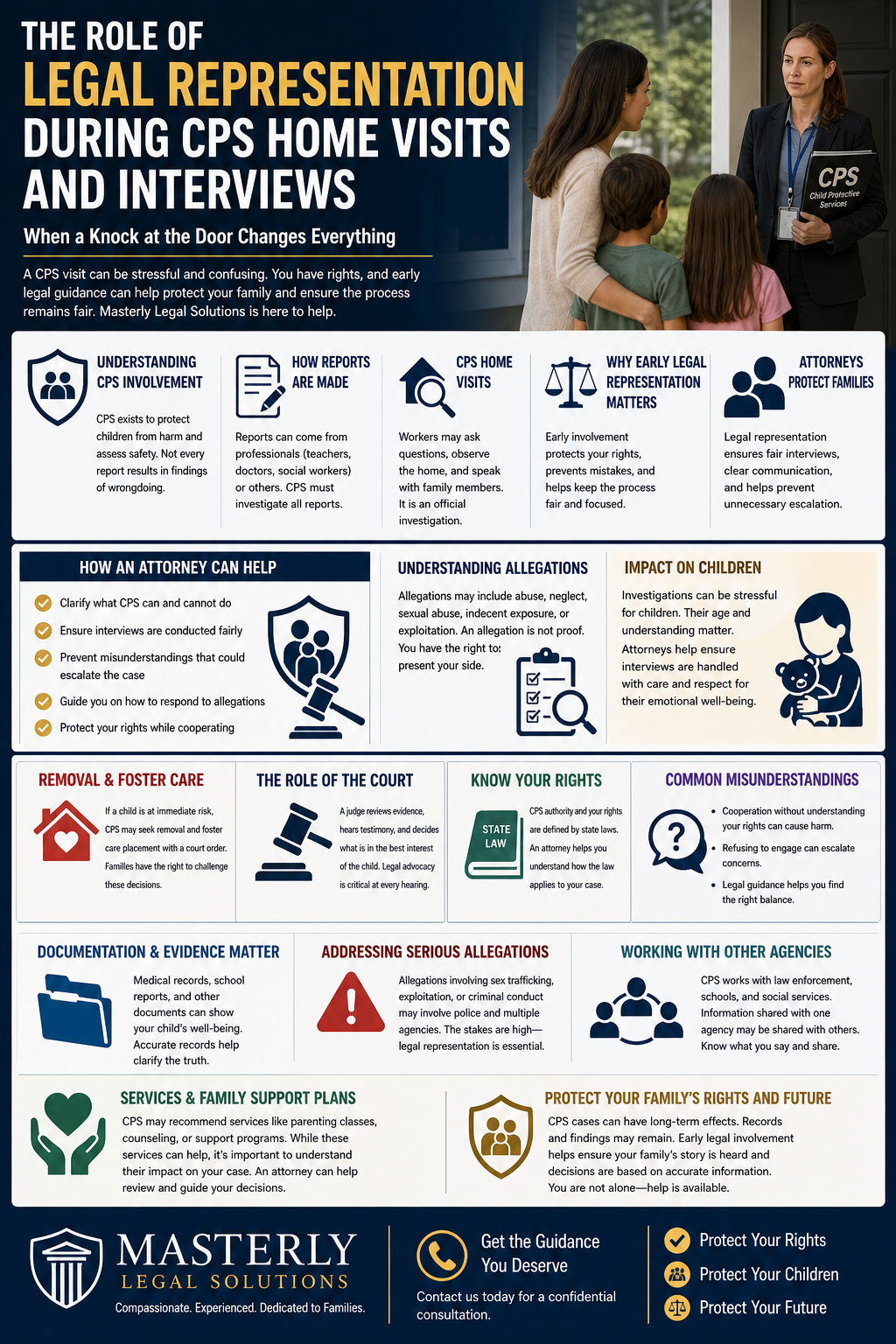
Few moments are as overwhelming for parents as a visit from child protective services. What begins as a knock at the door can quickly turn into a stressful and confusing situation. Many families feel unprepared, unsure of their rights, and concerned about what may happen next. The presence of a cps worker often signals that a report has been filed, and the situation is being taken seriously.
In these moments, early legal guidance is not about being adversarial—it is about protection. Having an attorney involved early helps ensure that your rights are respected and that the process remains fair. At Masterly Legal Solutions, we help families navigate these sensitive situations with clarity and confidence.
Understanding the Purpose of CPS Involvement
Child protective services cps exists to protect children from harm, including child abuse and neglect. Their goal is to investigate concerns, assess safety, and determine whether intervention is necessary. While this mission is important, the process can sometimes feel intrusive or overwhelming for families.
CPS workers are trained to evaluate situations involving suspected child abuse, neglect, or other risks to a child’s well being. However, not every report results in findings of wrongdoing. Understanding the purpose behind cps involvement can help families approach the situation more calmly and effectively.
How Reports to CPS Are Made
A CPS case often begins when a report is filed by someone who believes a child may be at risk. Certain professionals, such as teachers, medical providers, and social services personnel, are required by law to report suspected child abuse and neglect. In other cases, the person making the report may be a neighbor, family member, or someone who notices something concerning.
These reports can involve a wide range of allegations, from neglect to more serious claims like sexual abuse or exploitation. Educators and school staff are often central to these reports, and teachers and school personnel may need dedicated legal support when their actions are questioned. Even if the concerns are unproven, CPS is required to investigate to determine whether the children involved are safe.
What Happens During a CPS Home Visit
A CPS home visit is often the first step in an investigation. During this visit, a cps worker may ask questions, observe the home environment, and speak with parents and children. The goal is to assess whether there is any immediate danger or ongoing risk.
While the visit may seem informal, it is part of an official investigation. Everything said and observed can become part of the case record. This is why having an attorney involved early can help guide families on how to respond appropriately.
Why Early Legal Representation Matters
Many families believe they should wait until a court hearing before contacting an attorney. In reality, early involvement can make a significant difference. Legal representation during CPS interactions helps ensure that families understand their rights and avoid common mistakes.
An attorney can help:
- Clarify what CPS can and cannot do during a visit
- Ensure that interviews are conducted fairly
- Prevent misunderstandings that could escalate the case
- Provide guidance on how to respond to allegations
This proactive approach helps protect both parents and children from unnecessary complications, especially when families are facing false or exaggerated allegations that could be misunderstood during an investigation.
The Role of Attorneys in CPS Interviews
CPS interviews can feel intimidating, especially when sensitive topics are discussed. Questions may involve parenting practices, household routines, and specific allegations of abuse or neglect. Without guidance, families may unintentionally say something that is misunderstood or taken out of context.
An attorney’s role is not to interfere with the process but to ensure that it is conducted fairly. They can help prepare families for interviews, advise on appropriate responses, and be present when necessary to protect their rights.
Protecting Families Without Escalating Conflict
There is a common misconception that involving an attorney will make the situation more adversarial. In reality, early legal involvement often helps de-escalate conflict. When CPS knows that a family is informed and supported, the process tends to remain more structured and respectful.
Legal representation signals that the family is taking the situation seriously and is committed to cooperating within the framework of the law. This can lead to more balanced interactions and better outcomes.
Understanding Allegations of Abuse and Neglect
Allegations in CPS cases can vary widely. Some involve claims of physical harm, while others may relate to neglect or supervision concerns. In more serious cases, allegations may include sexual abuse, indecent exposure, or even issues involving sexually explicit visual material.
It is important to remember that an allegation is not the same as proof. Families have the right to respond to these claims and present their side of the story. An attorney can help ensure that this response is clear, accurate, and supported by evidence.
The Impact of CPS Investigations on Children
CPS investigations can be stressful for children, even when no wrongdoing is found. Interviews, home visits, and discussions about family matters can create confusion and anxiety. The child’s age and level of understanding play a significant role in how they experience the process.
Protecting children during this time is a top priority. Legal guidance can help ensure that interviews are conducted in a way that minimizes stress and respects the child’s emotional needs.
When CPS Considers Removal or Foster Care
In some cases, CPS may determine that a child is at immediate risk and consider removal from the home. This can lead to placement in foster care or with another caregiver. These decisions are not made lightly and typically require a court order.
Families have the right to challenge removal decisions and present evidence in court. Early legal involvement can help prepare for these situations and protect the family’s rights.
The Role of the Court in CPS Cases
When a CPS case escalates, it may move into the court system. A judge will review the evidence, hear court testimony, and determine what actions are in the best interest of the children. This process can include multiple hearings and ongoing oversight.
Having an attorney during this stage is critical. They can present evidence, question witnesses, and advocate for the family’s position.
Understanding State Laws and CPS Authority
CPS operates under state laws that define its authority and responsibilities. These laws outline when CPS can conduct investigations, remove children, and require services. They also establish the rights of parents and families.
Understanding these laws is essential for navigating the process effectively. An experienced attorney can help interpret how these laws apply to your specific situation.
Common Misunderstandings About CPS
Many families enter the CPS process with misconceptions. Some believe that cooperation alone will resolve the issue, while others fear that any interaction will lead to negative outcomes. The truth is often somewhere in between.
For example, cooperating without understanding your rights can sometimes lead to unintended consequences. At the same time, refusing to engage may escalate concerns. Legal guidance helps strike the right balance.
The Importance of Documentation and Evidence
During a CPS investigation, documentation can play a key role. This may include medical records, school reports, or other forms of evidence that demonstrate the child’s well being. Keeping accurate records can help clarify misunderstandings and support your case.
An attorney can help identify what evidence is most relevant and how to present it effectively.
Addressing Serious Allegations
In more serious cases, allegations may involve sex trafficking, exploitation, or other criminal conduct. These situations often involve multiple agencies, including police and other professionals. The stakes are significantly higher, and the process becomes more complex.
Legal representation is essential in these cases. It ensures that the family’s rights are protected while navigating both CPS and potential criminal investigations.
How CPS Works with Other Agencies
CPS does not operate in isolation. They often work closely with law enforcement, schools, and social services, and colleges and universities must also manage overlapping CPS and student‑safety obligations under higher education law. This collaboration helps ensure that all aspects of a child’s safety are addressed.
However, it also means that information shared with one agency may be used by others. Understanding this dynamic is important when responding to questions and providing information.
The Role of Services and Family Support Plans
In some cases, CPS may recommend services or programs designed to strengthen families. These may include parenting classes, counseling, or other forms of support. The goal is to address concerns and reduce risk.
While these services can be helpful, it is important to understand their implications. An attorney can help evaluate whether the proposed plan is appropriate and how it may affect your case.
Protecting Your Family’s Rights and Future
CPS cases can have long-term effects on families. Even after the investigation ends, records and findings may remain. This can impact future opportunities and interactions with agencies.
Taking proactive steps to protect your rights is essential. Early legal involvement helps ensure that your family’s story is heard and that decisions are based on accurate information.
Addressing Concerns Involving Neglected Children
Cases involving neglected children are among the most serious matters handled by child protective services. These situations often arise when there are concerns about a child’s basic needs not being met, including supervision, nutrition, or living conditions, and may intersect with broader planning to protect a child’s long‑term welfare through wills, trusts, and other estate tools. Even when the concerns are unintentional, they can still trigger a CPS investigation. Early legal guidance helps families respond appropriately and demonstrate that they are taking steps to protect their children’s well being.
Determining the Person Responsible in CPS Cases
A central question in any CPS investigation is identifying the person responsible for the child’s care at the time of the alleged incident. This may include parents, guardians, or others who had authority over the child. Determining responsibility can affect how the case proceeds and who may face further scrutiny. An attorney can help clarify these roles and ensure that responsibility is accurately assessed.
Understanding Allegations Involving Development Commits
In some situations, CPS cases may involve concerns about how a child’s development commits or progresses over time. These concerns can relate to emotional, educational, or social growth. While not always tied to abuse or neglect, they can still raise questions during an investigation. Legal representation can help ensure that these concerns are evaluated fairly and with proper context.
When People Notice Signs and Make a Report
Many CPS cases begin when people notice something that raises concern about a child’s safety or well being. This could be a teacher, neighbor, or another individual who feels obligated to report what they observe. While these reports are important, they are not always accurate or complete. Families have the right to respond and provide their side of the story during the investigation.
The Role of Health in CPS Evaluations
A child’s health is often a key factor in CPS investigations. This may include physical health, access to medical care, and overall well being. Concerns about untreated conditions or missed appointments can trigger further review. Providing documentation and clear explanations can help address these issues effectively.
Supporting Youth During CPS Involvement
CPS cases can be particularly stressful for youth, who may not fully understand what is happening. Interviews, home visits, and discussions about family life can create confusion and anxiety. Ensuring that youth feel supported and heard is essential. Legal guidance can help families navigate this process in a way that prioritizes the child’s emotional needs.
The Importance of Education in CPS Cases
Education often plays a role in CPS investigations, especially when concerns involve school attendance or performance. Teachers and school officials may provide information that influences the case. Families should be prepared to address any questions related to education and demonstrate their commitment to their child’s success, including through early planning of key legal documents that protect their children’s future stability.
Oversight by the Department in CPS Matters
The department overseeing child protective services is responsible for ensuring that investigations are conducted properly. This includes reviewing reports, supervising workers, and maintaining compliance with applicable laws. Understanding the department’s role can help families navigate the process more effectively and identify any potential issues.
Using Knowledge to Strengthen Your Position
Having knowledge of the CPS process can make a significant difference in how a case unfolds. Understanding your rights, the investigation steps, and possible outcomes allows you to respond more confidently. Legal representation provides the guidance needed to navigate these complex situations and avoid common mistakes, and many families also benefit from establishing trusts and other planning tools to secure their children’s long‑term financial protection.
When CPS Cases Lead to a Lawsuit
In some circumstances, a CPS case may escalate into a lawsuit, particularly if there are disputes over findings or actions taken by the agency. This can involve challenges to removal decisions or claims of improper conduct, similar to how formal investigation processes in educational settings, such as Title IX matters, require careful navigation and protection of respondents’ rights. Legal representation is critical in these situations to ensure that your rights are protected throughout the process.
Handling Serious Allegations Such as Rape
Allegations involving rape or other severe forms of abuse are handled with the utmost seriousness. These cases often involve multiple agencies, including law enforcement and medical professionals, much like the complex investigations teachers and schools may face in education‑related proceedings where specialized legal defense and compliance guidance are essential. The legal and emotional stakes are extremely high. Families facing such allegations should seek immediate legal guidance to navigate the situation carefully.
Evaluating a Child’s Overall Development
A child’s development is often considered during CPS investigations, including their emotional, social, and physical progress. Concerns about development may arise even in cases where no abuse or neglect is found. Providing context and evidence can help ensure that these evaluations are accurate and fair.
Using a Website to Access CPS Information
Many families turn to a website or online resources to learn more about CPS processes and their rights. While these sources can provide helpful general information, they may not address the specific details of your case. Speaking with an attorney ensures that you receive advice tailored to your situation.
Accessing Resources for Family Support
CPS may recommend various resources to help families address concerns identified during an investigation. These can include counseling, parenting programs, or other support services. Understanding these options and how they affect your case is important. Legal guidance can help you evaluate which resources are appropriate.
Temporary Placement and Shelter Considerations
In certain situations, CPS may place a child in a temporary shelter or alternative living arrangement. This step is typically taken when there are immediate safety concerns. Families have the right to challenge these decisions and present evidence in court. Acting quickly is essential to protect your parental rights.
When Rights or Actions Are Granted by the Court
In CPS cases, certain actions—such as removal, visitation, or service requirements—may be granted by the court. These decisions are based on the evidence presented and the judge’s determination of what is in the child’s best interest. Understanding what has been granted and why is critical for planning your next steps. An attorney can help you respond effectively and advocate for your family.
How a Child Protection Law Firm Supports Families Early
Working with a child protection law firm early in a case can make a meaningful difference for families facing uncertainty. Legal guidance at the beginning of an investigation helps parents understand their rights, avoid common mistakes, and respond in a way that protects their children and their future. Rather than escalating conflict, early involvement is focused on clarity, preparation, and protecting what matters most. Families benefit from having someone who can guide them through each step with confidence and care.
Understanding the Role of Child Protective Services
Child protective services is responsible for responding to reports involving concerns about a child’s safety and well being. When a report is made, the agency may begin an investigation to determine whether intervention is necessary. While their goal is to protect children, the process can feel overwhelming for families who are unfamiliar with how it works. Knowing what to expect can help reduce fear and allow families to respond more effectively.
How Allegations of Child Abuse Are Evaluated
Allegations of child abuse are taken very seriously and are often the primary reason for CPS involvement. These claims can involve physical, emotional, or other forms of harm, and they are carefully reviewed during the investigation process. However, an allegation alone does not mean that abuse has occurred. Families have the right to provide their side of the story and present evidence to address these claims.
What Happens During a Child Protective Services CPS Investigation
A child protective services cps investigation typically involves interviews, home visits, and a review of relevant information. The cps worker may speak with parents, children, and others who have knowledge of the situation. This process is designed to gather facts and assess whether there is any risk to the child. Having legal guidance during this stage can help ensure that the investigation is conducted fairly, and firms that offer broad, client‑centered legal services for individuals and families can provide continuity of support beyond the CPS matter through comprehensive representation across multiple legal areas.
The Broader Role of Protective Services in Family Cases
Protective services extend beyond investigations and may include support programs aimed at helping families address concerns. These services are intended to provide resources, education, and assistance when needed. While they can be helpful, it is important for families to understand how participation in these services may affect their case. Legal guidance can help evaluate whether these options are appropriate.
Focusing on the Best Interest of the Child
In every CPS case, decisions are guided by what is considered to be in the best interest of the child. This standard influences everything from investigation outcomes to court decisions. While the goal is to protect children, it is important that these determinations are based on accurate information and fair evaluation. Families have the right to ensure that their voice is heard in this process.
Contact Us for Support and Guidance
If child protective services has contacted you or you are expecting a home visit, it is important to act early. These situations move quickly, and the decisions made in the early stages can shape the outcome of the entire case. At Masterly Legal Solutions, we are a dedicated child protection law firm focused on helping families protect what matters most.
Our team understands the emotional weight of CPS cases and the importance of approaching them with care, strategy, and clarity. We work closely with families to guide them through interviews, investigations, and court proceedings while protecting their rights every step of the way.
We encourage you to contact us at (972) 236-5051 for a free consultation. We will listen to your concerns, answer your questions, and help you understand your options so you can move forward with confidence and peace of mind.
Disclaimer: This article is for educational purposes only and does not constitute legal advice. Every case is unique, and you should consult with a qualified attorney to receive guidance tailored to your specific circumstances.


Looking for Legal & Business Solutions? Contact Us Now
Fill in the form or call us to set up a meeting