Common Law Trademarks and the Protection You May Not Have
Building a brand takes time, creativity, and investment. You design a logo, select a business name, and begin offering products or services in commerce with confidence. Many business owners assume that simply using a trademark gives them full legal protection. Unfortunately, that assumption can leave your brand exposed in ways you may not realize.
At Masterly Legal Solutions, we often speak with clients who believed their common law trademark rights were enough, rather than pursuing professional trademark registration and brand protection services.. They invested in marketing, printed materials, and online visibility, only to receive a notice from another company claiming superior rights. The gap between what you think you own and what the law actually protects can be costly. Understanding the limits of common law trademarks is essential if you want to truly protect your business.
Understanding What a Common Law Trademark Really Is
A common law trademark arises when you use a mark in commerce without completing federal trademark registration. You may place your logo on products, advertise your business name online, and build customer recognition. In many states, that use can create limited trademark rights. However, those rights are narrow and tied to the geographic area where you actively operate.
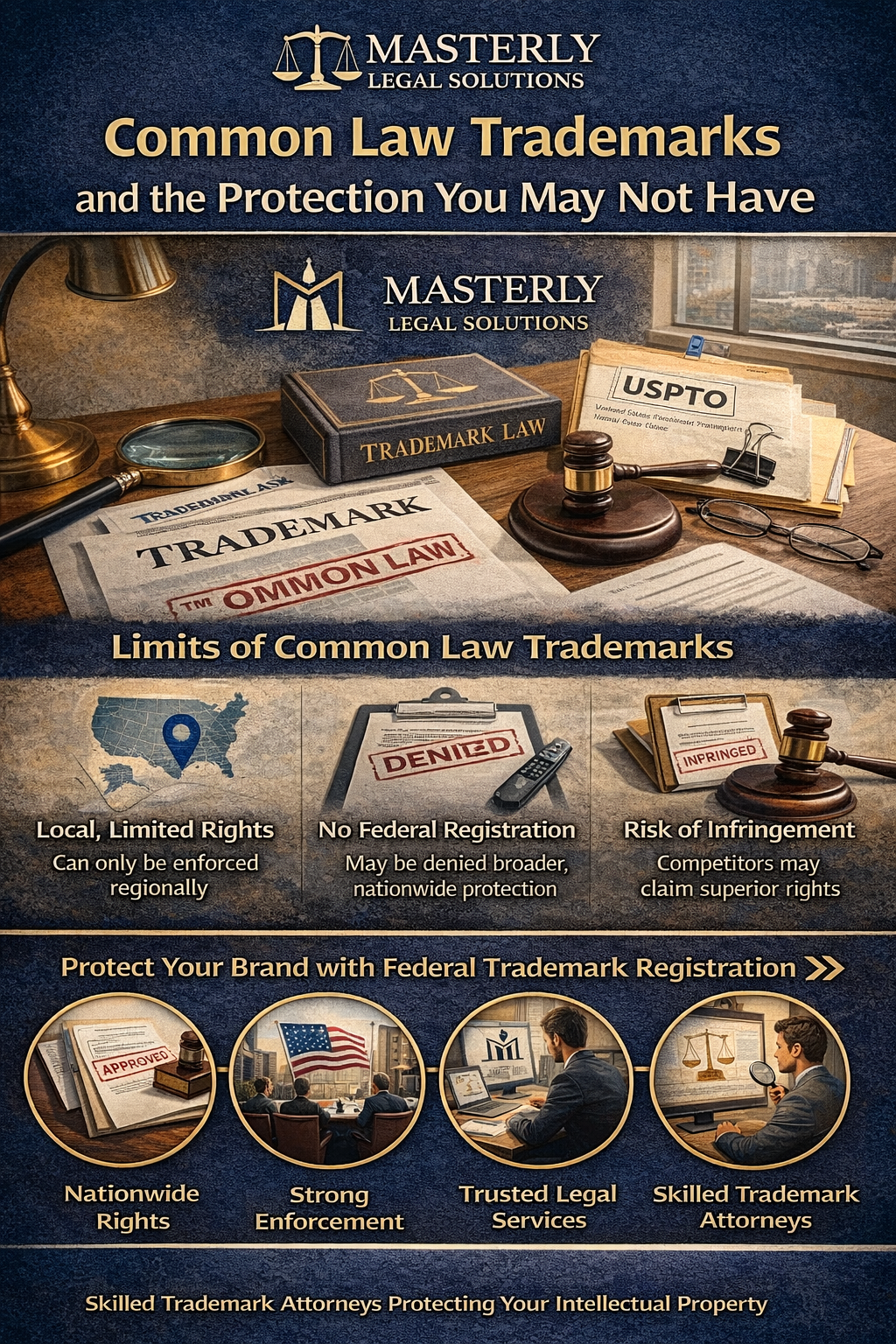
Unlike federal registration through the USPTO, common law rights do not provide nationwide protection. They do not create a public record at the patent and trademark office. While you may feel secure, another trademark applicant could file for the same or similar mark at the federal level and obtain broader rights.
The Illusion of Protection Without Registration
Many business owners believe that first use equals full ownership. While first use can establish some rights, it does not automatically grant the exclusive rights that come with federal registration. Without completing the trademark registration process, your protection may be limited to a small region.
If a competitor files a trademark application with the USPTO and becomes successfully registered, your position weakens. You may face legal challenges or even be forced to rebrand. That situation often surprises owners who assumed that years of use guaranteed security.
The Role of the USPTO in Trademark Protection
The USPTO, formally known as the United States Patent and Trademark Office, is the agency of the department responsible for administering trademark registration in the United States. The states patent and trademark systems operate under federal authority, creating nationwide rights for approved marks. When you register through the trademark office, your rights extend across the country.
The trademark office an agency tasked with examining applications, assigns an examining attorney to review each trademark submission. This examining attorney determines whether your mark meets legal requirements. Without engaging in this formal process, you do not gain the same legal protection.
Geographic Limitations of Common Law Rights
Common law trademark rights are typically confined to the geographic area where you use your mark in commerce. If your business operates only in one city, your rights may not extend beyond that region. Another company in a different state could adopt a similar brand name without immediate conflict.
If that other company files for federal trademark registration, their rights may expand nationwide. You could then receive a letter demanding that you stop using your own logo or business name outside your local market. This is where many business owners realize that common law protection was not enough.
Federal Registration and the Power of the U.S Flag
Once your trademark is federally registered, you gain the right to use the U.S flag symbol ® with your mark. That symbol signals to competitors and customers that your brand is protected under federal trademark law. It also provides constructive notice to others that you claim exclusive rights.
The U.S flag symbol strengthens your enforcement position in cases of infringement. Without registration, you cannot use that symbol. The difference in credibility and legal standing is significant.
The Trademark Registration Process Explained
The trademark registration process involves several structured steps. It begins with a comprehensive trademark search and trademark clearance review to identify potential conflicts. Once the search is complete, a trademark filing is prepared and submitted to the USPTO.
After submission, the examining attorney reviews your trademark application. If issues arise, you may receive an office action requesting clarification or amendments. Responding properly to an office action is critical to moving forward in the registration process.
The Importance of a Thorough Trademark Search
A proper trademark search is more than a quick online check. It involves reviewing the USPTO database, common law sources, and similar brand names that may create confusion. Trademark clearance helps identify risks before you invest in filing.
Without a comprehensive search, you risk additional fees and delays. Filing fees are nonrefundable, even if your application is denied. A trademark lawyer can conduct a detailed search and advise you on the strength of your mark.
Filing Fees and Hidden Additional Fees
Every trademark application requires payment of a filing fee. However, many applicants do not anticipate additional fees that may arise during the process. If you need to amend your application, file a statement of use, or respond to a final refusal, costs can increase.
Additional fees may also apply if your trademark filing requires appeals or extended prosecution. Understanding the financial commitment upfront allows you to plan strategically. A law firm experienced in trademark services can explain these costs clearly.
Office Actions and Final Refusals
An office action is a formal notice from the examining attorney identifying issues with your trademark application. These issues may involve likelihood of confusion, descriptiveness, or technical deficiencies. Responding effectively requires knowledge of trademark law.
If the response does not satisfy the trademark office, you may receive a final refusal. At that stage, options include appeals to the trademark trial and appeal board. Navigating this phase without experienced attorneys can jeopardize your application.
The Trademark Trial and Appeal Board
The trademark trial and appeal board, often referred to as the appeal board, handles disputes related to trademark registration. This includes appeals from final refusals and opposition proceedings. TTAB proceedings can resemble litigation in both structure and complexity.
If another party believes your mark is infringing, they may initiate trademark trial and appeal proceedings. Having a skilled trademark lawyer represent you during appeals can make a critical difference. Litigation at this level requires strategic preparation and strong legal services.
Common Law vs. Federal Trademark Rights
Common law trademark rights offer limited protection based on use. Federal trademark registration creates nationwide rights and legal presumptions of ownership. That distinction can determine the outcome of disputes.
Without federal registration, proving ownership and priority can be difficult. Documentation and evidence become essential. With registration, your certificate serves as official recognition of your rights.
Risks of Relying Only on Use in Commerce
Using your mark in commerce without registration may feel sufficient at first. However, if another trademark applicant files before you, they may gain broader rights. You could be forced into litigation or rebranding.
Relying on common law alone places your brand at risk. A proactive approach through the trademark registration process helps protect your investment. Taking action early often leads to greater long-term success.
Enforcement Challenges Without Registration
Enforcing a common law trademark requires substantial proof. You must demonstrate priority, geographic reach, and actual use. In contrast, federal registration simplifies enforcement and strengthens your position in court.
If someone is infringing your logo or business name, registration allows you to pursue stronger remedies. It also provides leverage in settlement discussions. Without it, enforcement can be more difficult and expensive.
The Value of Experienced Trademark Attorneys
Navigating the trademark process alone can lead to mistakes. Experienced trademark attorneys understand USPTO requirements and common pitfalls. They can guide you from search to filing to approval.
At our firm, Masterly Legal Solutions, we prioritize great communication with clients.. We explain each step clearly and keep you informed throughout the process. Working with a licensed attorney ensures your trademark submission meets legal standards.
Protecting Your Brand and Intellectual Property
Your brand is a valuable form of intellectual property. It represents your reputation, your services, and your relationship with customers. Protecting that brand through federal registration strengthens your position in the marketplace, especially when paired with ongoing general counsel support for your business..
Trademark protection is not just about paperwork. It is about safeguarding the identity of your business. Without proper registration, your brand remains vulnerable.
Avoiding Costly Rebranding
Rebranding can be expensive and disruptive. If you receive a notice alleging infringement, you may have limited time to respond. Redesigning a logo, updating marketing materials, and changing your business name can impact your success.
A proactive trademark registration strategy helps avoid these risks. Investing in proper filing today can prevent larger expenses tomorrow. Legal protection provides stability and confidence.
How Our Law Firm Supports Clients
Masterly Legal Solutions offers comprehensive legal and training services from start to finish.. Our law firm handles trademark search, trademark filing, and responses to office action letters. We represent clients before the USPTO and, when necessary, before the trial and appeal board.
We understand that every business is unique, and our business consulting services help align legal protection with your broader strategy.. Our firm tailors a diverse range of legal services to meet your specific needs.. From initial consultation to final approval, we act on your behalf with precision and care.
The Long-Term Benefits of Registration
Federal registration strengthens your ability to protect and maintain your trademark rights. It enhances credibility with investors and customers. It also supports expansion into new markets.
Once approved, you gain the right to enforce your mark nationwide. That protection can be essential as your business grows. Securing registration today supports long-term success.
Taking the Next Step Toward Protection
If you are relying solely on common law rights, now is the time to reassess your position. The trademark process may seem complex, but experienced attorneys can simplify it. Early action helps prevent disputes and uncertainty.
A knowledgeable trademark lawyer can evaluate your current use, conduct a comprehensive search, and guide you through filing. Protecting your brand requires strategic planning and professional guidance.
Preparing and Reviewing Important Trademark Documents
Every stage of the trademark registration process involves critical documents that must be accurate and complete. From the initial trademark application to responses to an office action, even small errors in documentation can delay approval or lead to rejection. The USPTO requires precise information about the owner, the mark, and the goods or services offered in commerce. Submitting incomplete or inconsistent documents can trigger additional fees or complications. Working with a trademark lawyer helps ensure that every document filed supports your goal of securing strong trademark protection.
Understanding the Publication Phase of Registration
After a trademark application is reviewed and approved by the examining attorney, it moves into the publication phase. During publication, the mark is published in the USPTO’s Official Gazette to provide public notice of your intent to register. This period allows third parties to review the application and file an opposition if they believe the mark may conflict with their rights. If no opposition is filed within the required timeframe, the registration process continues toward approval. Understanding the significance of publication is essential, as challenges at this stage can lead to delays, appeals, or proceedings before the trademark trial and appeal board.
Contact Us for a Free Consultation
If you are unsure whether your common law trademark provides enough protection, we are here to help. Our team at Masterly Legal Solutions offers personalized legal services designed to protect your brand and business name.. A trademark lawyer from our firm can review your situation, explain your options, and help you move forward with confidence.
Contact us at (972) 236-5051 for a free consultation to discuss how our business consulting and support services can complement your trademark strategy.. We will answer your questions, discuss the trademark registration process, and help you determine the best path to secure your rights, including connecting you with the most convenient Masterly Legal Solutions office location.. Protecting your logo and brand today can prevent costly problems tomorrow, and our broader legal and business consulting capabilities allow us to support your organization beyond trademarks..
Disclaimer: This article is provided for educational purposes only and does not constitute legal guidance. Reading this content does not create an attorney-client relationship. For advice regarding your specific situation, please contact a qualified attorney directly.





Teacher Rights When Assaulted by a Special Needs Student: Safety, Reporting and Investigation Issues



Looking for Legal & Business Solutions? Contact Us Now
Fill in the form or call us to set up a meeting