

The Hidden Authority CPS Holds Before Any Court Filing Occurs
When most parents think about cps, they imagine a dramatic courtroom hearing where a judge decides the future of their children. What many families do not realize is that a great deal of power exists long before any court filing ever happens. Child protective services can take action, gather information, and shape the direction of a case without stepping into a courtroom. That early authority often surprises parents who believe they will have more time or more warning.
Understanding how child protection services operate before filing a petition is critical. The department does not wait for a judge to begin its investigation. By the time a hearing is scheduled, much of the groundwork has already been completed. This article explains the administrative power cps holds, what it means for families, and why speaking with an experienced education law attorney early can make a difference..
Understanding the Role of Child Protective Services
Child protective services exist to address reports of child abuse and neglect. Their stated purpose is to protect children from harm and provide services to stabilize families when possible. Each state operates its own division under state law, but the structure is similar across jurisdictions and territories. The department has authority granted by statute to act when concerns about abuse, neglect, or maltreatment are reported.
The agency’s role includes receiving a report, screening that report, and deciding whether to open an investigation. In many states, cps is part of a broader social services system that handles adoption, foster care, and youth support programs. While the mission may sound supportive, the power to intervene in a family’s home carries serious consequences. Parents must understand that child protective services are not neutral observers; they are investigators with the authority to act.
Administrative Power Before Court Involvement
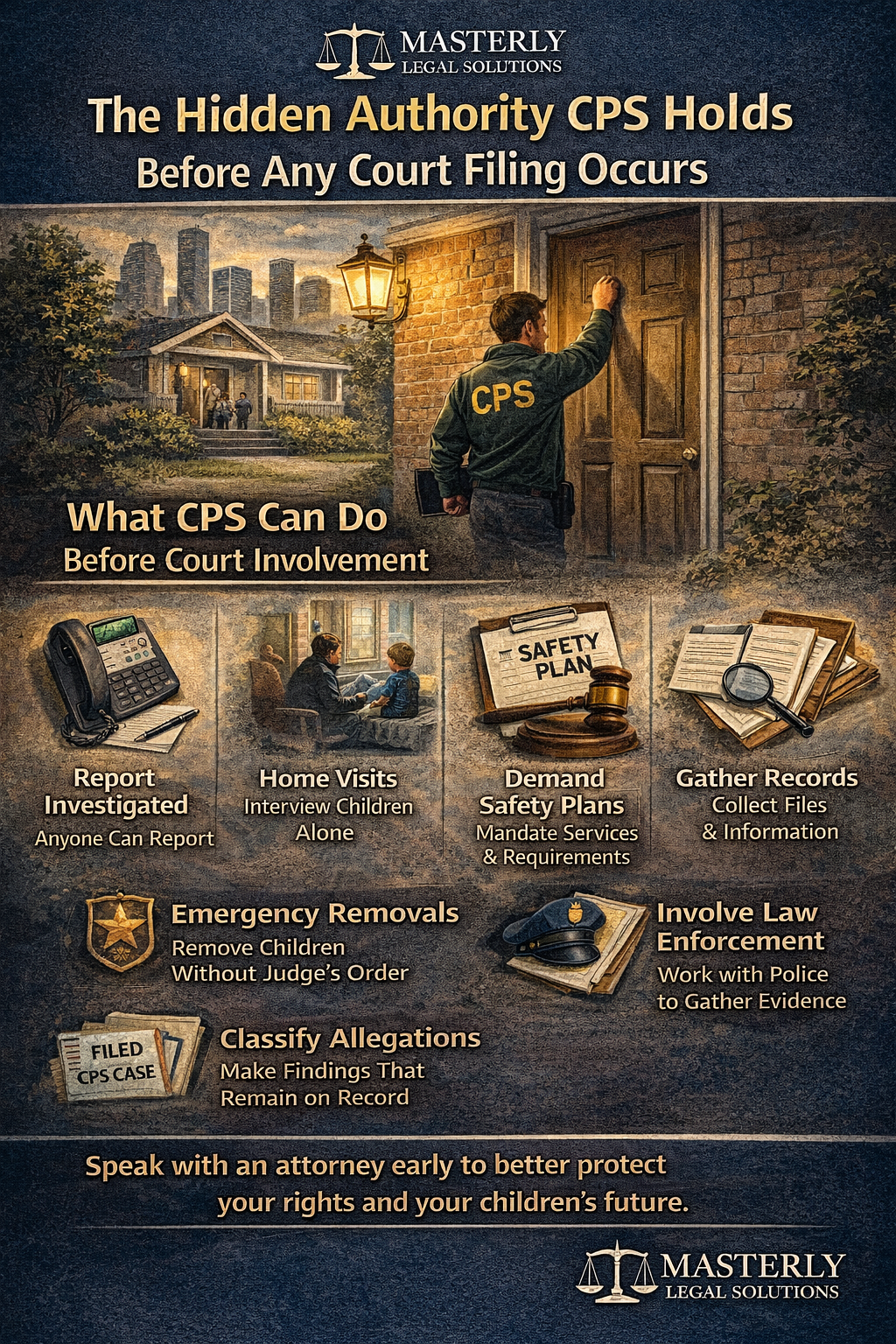
Before any petition is filed in court, cps has the authority to make significant decisions. These actions are administrative, meaning they occur within the agency rather than under a judge’s supervision. Parents often believe their rights will be protected once they reach a courtroom, but many critical steps occur before that stage.
Administrative authority can include entering a home with consent, interviewing children at school, gathering medical records, and coordinating with law enforcement. In some situations, cps may seek emergency removal without first holding a hearing. By the time the case reaches court, the department may have already shaped the narrative that influences the outcome.
How a Report Triggers Agency Action
Every cps case begins with a report. Anyone can make a report of suspected child abuse, including teachers, neighbors, medical professionals, or even anonymous callers. Certain professionals are required by law to report concerns involving child abuse and neglect. Once the department receives the report, it evaluates whether the allegations meet statutory criteria.
If the report is accepted, the agency opens an investigation. This decision alone can alter the course of a family’s life. Even if the allegations are later found to be unsubstantiated, the fact that cps was involved can affect employment, custody matters, and reputations within the community.
Screening and Intake Decisions
The intake division of child protective services has the authority to screen reports in or out. That screening process is often quick and based on limited information. If the allegations involve abuse, neglect, or immediate risk to children, the case may be prioritized for rapid response.
Parents rarely know how these intake decisions are made. They are not present when the department evaluates the credibility of the caller or the seriousness of the claims. Once a case is screened in, the investigation begins, and the administrative machinery is already in motion.
The Initial Investigation Stage
During the investigation stage, cps gathers information to determine whether abuse and neglect occurred. Investigators may interview children separately from their parents. They may also speak with other family members, teachers, doctors, and neighbors. The goal is to determine whether the allegations are credible.
This stage can feel overwhelming. The department may request access to the home, inspect sleeping arrangements, and review disciplinary practices. Even before a judge becomes involved, cps has authority to document its findings and build a case file that can later be used in court.
Home Visits and Interviews
Home visits are a common part of cps investigations. An investigator may appear at a parent’s home without much notice. While parents often feel pressured to cooperate fully, they still have rights under the law.
During interviews, children may be asked about discipline, supervision, and any alleged abuse. These conversations can shape how the department views the family. Statements taken at this stage may later be presented at a hearing, making it critical for parents to understand the significance of every interaction.
Safety Plans Without a Judge
One of the most powerful administrative tools cps uses is the safety plan. A safety plan is often presented as a voluntary agreement designed to protect children. However, these plans can impose serious restrictions on parents.
For example, a safety plan might require one parent to leave the home. It may limit contact between a parent and the children. Although presented as voluntary, parents often feel they have no real choice. Signing such a document can affect future court proceedings.
Voluntary Agreements That Feel Mandatory
Cps workers may say that participation in certain services is voluntary. In practice, refusing can lead to stronger action by the department. Parents may be told that failure to cooperate will result in removal of children or court involvement.
This dynamic creates pressure. Families may agree to counseling, parenting classes, or substance abuse treatment before any hearing occurs. While providing services can be helpful in some cases, agreeing without understanding the legal impact can complicate the situation.
Emergency Removals and Temporary Custody
In certain circumstances, cps may remove children from the home without a prior court order. Emergency removals are justified when the department believes children face immediate danger. After removal, a hearing is typically scheduled quickly.
By the time that hearing occurs, the children may already be placed in foster care or with relatives. The department’s initial report and findings heavily influence the judge’s first impression. This early action can change the course of the entire case.
The Power to Classify Allegations
Another hidden authority lies in how cps classifies allegations. The department may label findings as “reason to believe” abuse, neglect, or maltreatment occurred. That administrative finding can remain on record.
Such classifications may impact employment, professional licenses, and reputation. In some cases, individuals may be referred for additional review or placed on a registry. Challenging these findings often requires timely action and knowledge of state procedures.
Interaction With Law Enforcement
Cps investigations sometimes run parallel with criminal investigations. Law enforcement may be involved if the allegations suggest criminal child abuse. Parents may not realize that statements made to cps can be shared with police.
Because of this overlap, speaking with an attorney early is critical. What begins as a social services inquiry can evolve into a criminal matter or even involve false accusation defense strategies. Understanding the relationship between cps and law enforcement helps families protect their rights..
Administrative Findings and Their Impact
Administrative findings do not require a judge’s approval. Once cps completes its investigation, it may determine that abuse and neglect are substantiated. That finding can follow a parent for years.
Even without a court case, these records may be accessed in certain circumstances. Adoption agencies, licensing boards, and employers working with youth may review such information. The long-term impact underscores why early action matters.
When Services Become Conditions
Providing services is often described as a supportive step. However, when services become conditions that must be completed to avoid removal or further action, the stakes rise. Parents may be required to complete evaluations, counseling, or classes within strict time frames.
Failure to comply can be documented as lack of cooperation. That documentation may later be used in court. Families should understand the purpose of each service and whether participation is truly voluntary or effectively required.
The Role of Social Services Agencies
Cps operates within a broader network of social services. These agencies handle a variety of topics, including foster care, adoption, and youth assistance programs. The division responsible for child protection services often works closely with other departments.
While the stated goal is to protect children and prevent abuse, the authority to intervene can feel intrusive. Families may feel scrutinized in every aspect of their lives. Recognizing how the system functions helps parents respond thoughtfully rather than react emotionally.
Confidentiality and Information Sharing
Many parents assume that conversations with cps are confidential. In reality, information gathered during an investigation may be shared within the department and sometimes with other agencies. Records may be referred to prosecutors or other divisions when necessary.
Understanding how information flows within the system is important. What a parent says in an early interview can shape the narrative in future proceedings. Being informed allows families to make careful decisions about communication.
Parental Rights Before a Hearing
Parents have constitutional rights related to the care and custody of their children. However, those rights can be limited during a cps investigation. Before any hearing, parents may feel uncertain about what they can refuse.
An experienced attorney can help determine what cooperation is required and what is optional. Protecting rights at the earliest step can influence the overall outcome. Waiting until court involvement may limit available options.
The Influence of Policy and Legislation
Over time, bills introduced at the state level have expanded the authority of child protective services. Lawmakers often aim to prevent abuse and strengthen child safety. While well-intentioned, these bills can increase administrative power.
Understanding current state law and how recent bills affect cps procedures is essential. Policies may change how quickly investigations occur or what standards apply. Families benefit from staying informed about the legal landscape, and schools and colleges often rely on higher education law services to stay compliant with evolving requirements..
The Balance Between Protection and Intrusion
There is no question that child abuse and neglect are serious issues. Protecting victims is a vital responsibility of the state. At the same time, the balance between protection and intrusion can be delicate.
When cps acts before court oversight, that balance becomes even more complex. Administrative decisions can have immediate and lasting consequences. Recognizing this tension helps families navigate the process with greater awareness.
How Allegations Shape the Case
Allegations of child abuse, neglect, or maltreatment often frame the entire case. The department documents statements, observations, and conclusions in its report. That report may later be presented to a judge.
If the early narrative is unfavorable, it can be difficult to shift perceptions. This is why early legal guidance is so important. A knowledgeable lawyer can help respond to allegations and clarify misunderstandings before they solidify.
Adoption and Foster Care Implications
When children are removed, cps may place them in foster care or consider kinship placement. In some cases, adoption becomes part of the long-term plan. These decisions may begin administratively before court approval.
Families facing potential adoption proceedings need strong representation. The stakes are incredibly high. Understanding how cps transitions from investigation to permanency planning is critical for protecting parental rights.
Youth Advocacy and Support Services
Cps cases sometimes involve older youth who may have their own perspectives. Social services may provide counseling or other support resources to these children. While support can be beneficial, it can also influence the investigation’s direction.
Parents should remain engaged and informed. They have a responsibility to advocate for their children while ensuring that services are appropriate. Clear communication and legal guidance can help families navigate this stage.
Addressing Claims of Discrimination
Some families worry about discrimination within the system. Concerns about race, economic status, or cultural practices can arise. While the department’s purpose is to protect children, disparities have been reported in various states and territories.
If parents believe discrimination is affecting their case, they should raise the issue promptly. An education law attorney who understands teacher and school investigations can help evaluate whether procedures were followed correctly. Addressing concerns early can help prevent further complications..
The Importance of Early Legal Guidance
Many parents wait to contact a lawyer until they receive notice of a hearing. By that point, the department may have already gathered extensive information. Early involvement by an attorney experienced in education law matters can change how interactions unfold..
Legal counsel can review documents, attend meetings, and advise on communication. They can also help families prepare for potential court proceedings. Taking action at the first sign of an investigation often leads to better outcomes.
Understanding Jurisdiction and Authority
Cps operates within a specific jurisdiction defined by state law. Understanding which court has authority and how the process unfolds is important. Administrative actions taken by the department may later be reviewed by a judge.
Knowing the limits of agency authority helps families respond appropriately. While cps has significant power, it is not unlimited. Legal oversight eventually comes into play, but preparation must begin early.
Preparing for a Possible Hearing
Even before a hearing is scheduled, families should prepare. Gathering records, identifying witnesses, and documenting compliance with services can be helpful. Organization and clarity make a strong impression.
If the case moves forward, preparation will already be underway. Being proactive demonstrates responsibility and commitment to children’s well-being. Courts often look favorably on parents who show consistent effort.
Responding to Administrative Findings
If cps substantiates abuse or neglect, parents may have options to challenge that finding. Appeals or administrative reviews may be available. These processes often have strict deadlines.
Failing to act quickly can limit opportunities for relief. An experienced attorney can determine the best strategy. Challenging an inaccurate finding protects reputation and future opportunities.
The Long-Term Impact on Families
Cps involvement can affect families long after the initial investigation ends. Records may remain accessible for certain purposes. Future reports may be evaluated in light of past findings.
Understanding these long-term implications helps families make informed decisions. Protecting children is essential, but so is protecting parental rights. Early awareness leads to stronger outcomes.
Finding Reliable Information and Answers
Parents often search online for answers when cps becomes involved. While this page provides general information, each case is unique. State laws vary, and procedures differ across jurisdictions.
Reliable legal advice tailored to your situation is invaluable. Asking questions early can prevent mistakes. In times of uncertainty, informed action is the best path forward, whether you are a parent in a cps case or an educator seeking legal support for schools and teachers..
Taking the First Step Toward Protection
Facing allegations of child abuse or neglect is frightening. The system can feel overwhelming and unfamiliar. Yet taking the first step by seeking guidance can change the direction of the case.
An experienced cps attorney understands the department’s procedures. They know how to respond to reports, challenge findings, and advocate for families. Acting quickly demonstrates commitment and responsibility.
Justice and the Broader System
When cps becomes involved, many parents feel as though the system is stacked against them. Yet the goal of the broader legal framework is to promote justice while balancing the safety of children and the rights of families. Courts, attorneys, and oversight agencies are meant to ensure that investigations and administrative actions follow the law. Understanding how justice fits into the cps process can help parents approach the situation with clarity rather than fear. Fair outcomes are more likely when families are informed and represented effectively, just as respondents in campus proceedings benefit from knowing their rights in the Title IX investigation process..
Considering a Child’s Age in CPS Decisions
The age of a child can significantly influence how cps evaluates a report. Younger children may be viewed as more vulnerable, while older youth may be interviewed more extensively about their experiences. Investigators often consider developmental stages when determining whether certain conditions amount to neglect or abuse. Age can also affect decisions about placement, services, and permanency planning. Recognizing how a child’s age impacts the process helps families better understand the department’s reasoning.
How Legal Counsel Can Assist Families Early
One of the most important steps parents can take is to seek guidance from an attorney who can assist them from the beginning. Early involvement allows legal counsel to review reports, explain rights, and help parents respond strategically. Rather than reacting emotionally, families can make informed decisions about interviews, documents, and services. An education law attorney familiar with TEA and school investigations can also communicate directly with cps on the family’s behalf. Having someone to assist during this stressful time often changes the trajectory of a case..
Building a Path Toward Long-Term Success
While cps involvement is challenging, families can work toward long-term success by taking proactive steps. Completing appropriate services, maintaining open communication, and following legal advice can strengthen a parent’s position. Courts often look for evidence of responsibility and commitment to change when evaluating a case. Success does not happen overnight, but steady progress can influence outcomes. With the right strategy and support, families can move forward in a more stable direction, especially when they also address future planning through essential legal documents for families..
Understanding “Sec” References in CPS Documentation
Parents may notice the abbreviation “sec” in cps documents, which typically refers to specific sections of state statutes. These references identify the legal authority under which the department is acting. For example, a document might cite a particular sec of the family code to justify an investigation or removal. Understanding these statutory references is important because they outline the legal standards being applied. An attorney can review these citations and explain what each sec means for your case.
The Human Impact on Real People
Behind every cps file number are real people and real families facing uncertainty. Allegations of abuse or neglect can affect employment, reputation, and emotional well-being. Recognizing the human impact of these investigations reminds us that the process is not just administrative—it deeply affects lives. Families deserve to be treated with respect and fairness throughout the process, just as faculty facing university job termination and related proceedings deserve careful consideration of their rights. Clear information and strong advocacy help ensure that people navigating cps involvement are not left without guidance or support..
Child Protection Services and Their Expanding Authority
Child protection services operate as the government agency tasked with responding to concerns about the welfare of children. While their stated mission is to keep children safe, many parents do not fully understand how much authority the agency has before a court ever becomes involved. From screening reports to initiating investigations and recommending services, child protection services can make influential decisions at an early stage. These administrative actions often shape what happens later in court. Understanding how this agency functions helps families respond strategically rather than emotionally.
Allegations of Child Abuse and Early Intervention
An accusation of child abuse can immediately trigger an investigation, even if the claim is based on limited or inaccurate information. Once a report is accepted, investigators may begin interviews, request access to the home, and collect records. Parents are often surprised at how quickly the process moves and how seriously every statement is documented. Even before a judge reviews the matter, the department may form preliminary conclusions. Because child abuse allegations carry significant weight, early legal guidance can be critical in protecting parental rights.
Efforts to Prevent Abuse Before Court Action
Agencies often emphasize that their goal is to prevent abuse rather than punish families. As part of that effort, they may offer or strongly encourage participation in counseling, parenting classes, or other supportive programs. While these services can be beneficial, parents should understand the legal implications of agreeing to certain conditions. Sometimes participation is presented as voluntary, yet refusal may lead to further action. Knowing how prevention efforts fit into the larger process empowers families to make informed choices.
Addressing Abuse and Neglect Allegations Proactively
Claims involving abuse and neglect are taken seriously by investigators and courts alike. The department may assess supervision, living conditions, discipline methods, and overall home stability when evaluating such allegations. These findings can influence whether children remain in the home or whether additional oversight is imposed. Taking proactive steps—such as gathering documentation, identifying witnesses, and consulting with an attorney—can make a meaningful difference. Responding thoughtfully to abuse and neglect concerns helps families protect both their children and their future.
Contact Us for a Free Consultation
If cps has contacted you, do not wait until a hearing is scheduled. The hidden authority child protective services hold before court filing can shape your entire case. We are here to answer your questions, review your situation, and explain your rights under the law.
Call us at (972) 236-5051 for a free consultation. Speaking with an attorney early can help protect your family, clarify your options, and provide the guidance you need during this difficult time. Every family deserves clear information and strong advocacy when children are involved.
Disclaimer: This article is for educational purposes only and does not constitute legal guidance. Reading this page does not create an attorney-client relationship. For advice specific to your situation, please contact a qualified attorney directly.


Teacher Rights When Assaulted by a Special Needs Student: Safety, Reporting and Investigation Issues


Looking for Legal & Business Solutions? Contact Us Now
Fill in the form or call us to set up a meeting