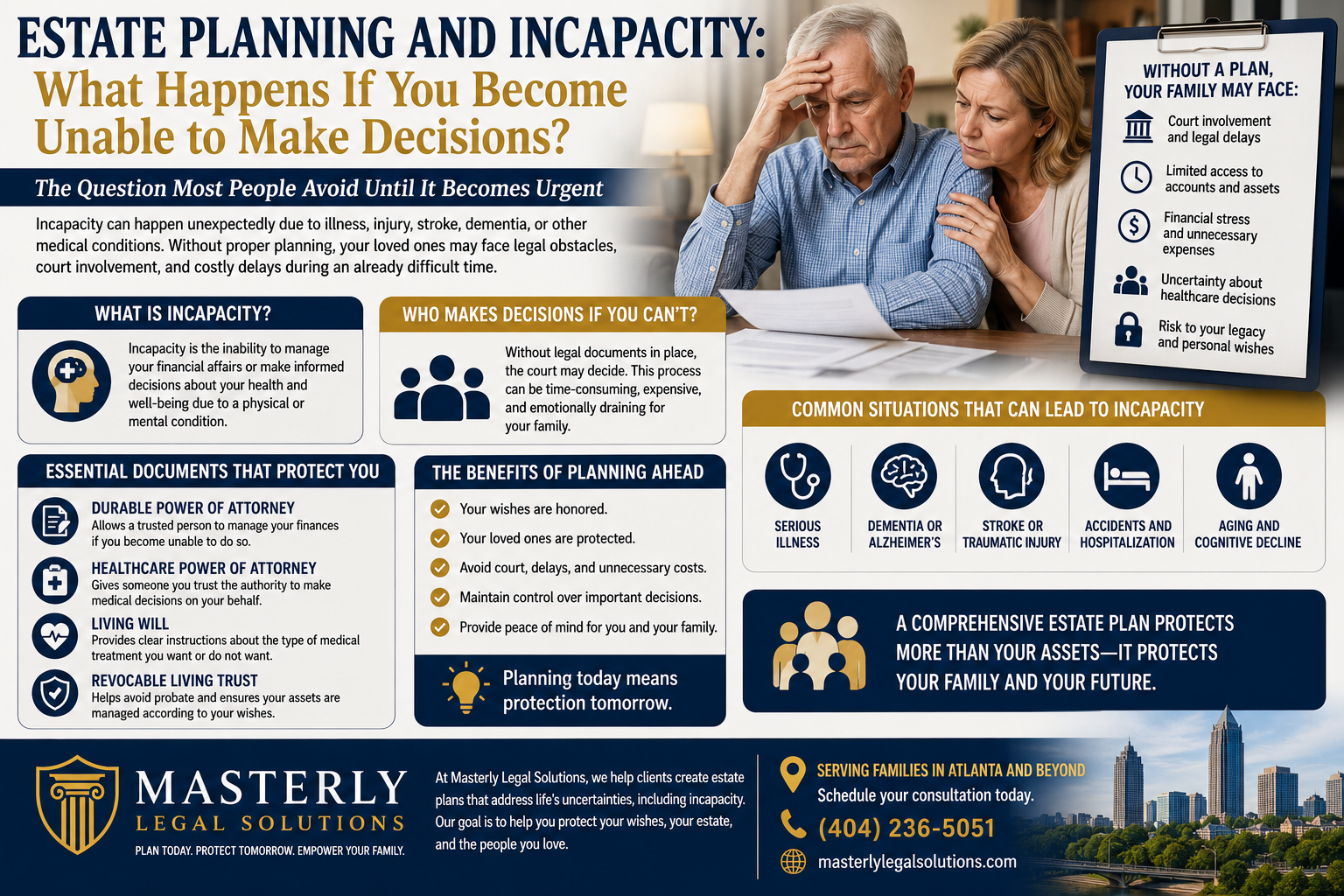
Estate Planning and Incapacity: What Happens If You Become Unable to Make Decisions?
The Question Most People Avoid Until It Becomes Urgent
Most people understand the importance of having a will, but far fewer think about what could happen if they become unable to make decisions during their lifetime. Incapacity can occur unexpectedly due to illness, injury, stroke, dementia, or other medical conditions. When it happens, families are often left scrambling to determine who has the authority to manage finances, make healthcare decisions, and protect important assets.
Many individuals assume a spouse or adult child can automatically step in and handle everything. Unfortunately, that is not always how the law works. Without proper estate planning, loved ones may face legal obstacles, court involvement, and significant delays during an already stressful time.
For families exploring atlanta estate planning options, planning for incapacity is just as important as planning for death. A comprehensive estate plan should address both situations. At Masterly Legal Solutions, we help clients understand how proactive planning can help protect their wishes, preserve their estate, and provide peace of mind for the future.
Why Incapacity Planning Matters
People often associate estate planning with distributing property after death. While that is certainly an important goal, estate planning also involves preparing for situations where a person is still alive but unable to manage personal or financial affairs.
Without proper planning, family members may need to seek court approval before making important decisions. This process can be expensive, time-consuming, and emotionally draining. It may also lead to disagreements among relatives regarding what should happen next.
Planning ahead allows individuals to choose who will act on their behalf rather than leaving those decisions to a judge. It also provides greater confidence that personal wishes will be respected.
Understanding Incapacity
Incapacity generally refers to a situation where an individual lacks the ability to make informed decisions regarding healthcare, finances, or other personal matters. The condition may be temporary or permanent.
Some people become incapacitated after a serious accident. Others may gradually lose decision-making ability because of Alzheimer's disease, dementia, or other medical conditions.
Regardless of the cause, incapacity can affect every aspect of life. Bills still need to be paid, investments managed, medical decisions made, and family responsibilities addressed.
This is why incapacity planning should be part of every estate planning strategy.
Estate Planning Is About More Than Wills
Many people mistakenly believe that wills are all they need. While wills are important, they do not solve incapacity issues because they only take effect after death.
A comprehensive estate planning strategy includes several documents designed to address different situations. These documents help ensure someone can step in when needed without unnecessary court involvement.
An effective plan often includes powers of attorney, healthcare directives, trusts, beneficiary designations, and other legal tools.
The goal is to create a framework that protects both the individual and their family.
What Happens Without a Plan?
When someone becomes unable to make decisions and has no incapacity planning documents in place, family members often face significant challenges.
Banks may refuse to provide access to accounts. Healthcare providers may hesitate to discuss medical information. Financial decisions may be delayed while loved ones seek legal authority.
In many cases, relatives must petition the court for guardianship or conservatorship authority. This can create additional stress, expenses, and delays.
Without planning, the outcome may not reflect the person's wishes.
The Role of Powers of Attorney
One of the most important components of estate planning is a power of attorney.
This document allows a trusted individual to act on behalf of another person regarding financial and legal matters. The designated representative may handle banking, investments, real estate transactions, business operations, and other responsibilities.
A power of attorney can become effective immediately or under specific circumstances outlined in the document.
Having this authority in place can help families avoid unnecessary court proceedings.
Financial Powers of Attorney
Financial powers of attorney are particularly valuable when someone becomes unable to manage personal affairs.
These documents allow a designated individual to pay bills, access accounts, manage investments, file taxes, and conduct other financial activities.
Without a valid power of attorney, family members may encounter significant obstacles when attempting to help.
Many individuals are surprised to learn that even spouses sometimes face limitations without proper documentation.
Choosing the Right Agent
Selecting the right person to serve under a power of attorney is one of the most important decisions in the planning process.
The chosen individual should be trustworthy, responsible, organized, and capable of managing complex matters.
Many people select a spouse, adult child, sibling, or close friend. Others choose professional fiduciaries when family dynamics are complicated.
Careful selection can help reduce future disputes and ensure responsibilities are handled properly.
Healthcare Directives and Medical Decisions
Healthcare directives address situations involving medical treatment and healthcare choices.
These documents allow individuals to communicate their preferences regarding medical care if they become unable to express those wishes themselves.
Healthcare directives can reduce uncertainty and help family members make informed decisions during difficult times.
They also provide valuable guidance to healthcare providers.
Why Healthcare Directives Matter
Medical emergencies often occur without warning.
Family members may suddenly be forced to make life-changing decisions under stressful circumstances.
Healthcare directives provide clarity by documenting the individual's preferences in advance.
This can help reduce conflict among family members while ensuring medical decisions align with personal values and beliefs.
Avoiding Family Conflict
Incapacity frequently creates disagreements among relatives.
One family member may believe a certain treatment is appropriate, while another disagrees. Financial decisions can also become sources of tension.
Clear planning documents help reduce uncertainty and provide guidance when difficult choices arise.
Many families find that proactive planning prevents disputes before they begin.
The Importance of Trusts in Incapacity Planning
Trusts can be powerful tools within an estate planning strategy.
Unlike wills, trusts may provide benefits during a person's lifetime as well as after death.
A properly structured trust can allow a successor trustee to manage assets if the original trustee becomes incapacitated.
This continuity often helps families avoid delays and disruptions.
Revocable Living Trusts and Incapacity
Revocable living trusts are commonly used in atlanta estate planning because they provide flexibility and control.
The creator typically serves as trustee while retaining authority over trust assets.
If incapacity occurs, a successor trustee can step in and continue administering the trust according to its terms.
This transition can occur without the need for extensive court involvement.
Protecting Business Interests During Incapacity
Business owners face unique risks when incapacity occurs.
Without planning, important operations may be disrupted. Employees, vendors, and customers may be affected.
A comprehensive estate plan should address business succession and management authority.
Planning ahead helps ensure the business can continue operating even during unexpected circumstances.
When Family Businesses Face Uncertainty
Many family-owned businesses depend heavily on one individual.
If that person suddenly becomes incapacitated, confusion can quickly follow.
Questions may arise regarding decision-making authority, financial management, and daily operations.
Proper planning helps protect both the business and the family from unnecessary complications.
Understanding Guardianship and Why It Matters
One of the most significant risks of failing to create an incapacity plan is the possibility of guardianship proceedings. Guardianship is a legal process where the court appoints someone to make decisions on behalf of an individual who can no longer make decisions independently.
While guardianship can provide necessary protection in certain situations, it is often more restrictive than many people realize. The court may determine who serves as guardian, what powers they possess, and how decisions are made moving forward.
Many individuals would prefer to select their own decision-makers rather than leaving those choices to a judge.
This is one reason why estate planning remains so important.
How Guardianship Proceedings Begin
When a person becomes unable to manage personal or financial affairs and lacks proper planning documents, family members often must petition the court for guardianship authority.
The court typically requires evidence demonstrating that the individual is incapacitated. Medical evaluations, testimony, and legal filings may all be involved.
The process can become emotionally difficult because family members may disagree about who should serve as guardian.
Court involvement also increases costs and delays.
The Financial Cost of Guardianship
Many people are surprised by the expense associated with guardianship cases.
Court fees, attorney fees, medical evaluations, and ongoing reporting requirements can create substantial financial burdens.
In some cases, these expenses are paid from the incapacitated person's estate.
Effective estate planning often helps families avoid these unnecessary costs while preserving more assets for loved ones.
Court Oversight After Guardianship Is Established
Once guardianship is granted, court oversight frequently continues.
Guardians may be required to submit reports, seek approval for certain transactions, and comply with ongoing legal obligations.
While these safeguards are designed to protect vulnerable individuals, they can also create administrative burdens.
Many families prefer planning strategies that minimize the need for court supervision.
Estate Planning Helps Maintain Personal Control
One of the greatest benefits of estate planning is preserving personal control.
Rather than allowing the court to determine who manages affairs, individuals can make those decisions themselves while they still have capacity.
Planning documents clearly identify trusted decision-makers and establish guidelines for future situations.
This proactive approach often provides greater confidence and peace for everyone involved.
The Relationship Between Probate and Incapacity Planning
Although probate primarily occurs after death, incapacity planning often influences future probate matters.
A well-structured estate plan can simplify administration, reduce complications, and help families avoid unnecessary legal challenges.
Without proper planning, confusion regarding ownership, authority, and decision-making may increase the likelihood of probate disputes.
Planning today can reduce problems tomorrow.
Understanding the Probate Process
The probate process involves administering a deceased person's estate and distributing assets according to applicable law or estate planning documents.
While incapacity planning focuses on lifetime decision-making, many of the same documents work together to create a comprehensive strategy.
Proper planning can reduce probate delays and streamline estate administration.
Families often appreciate having a clear roadmap during difficult times.
Why Probate Concerns Should Not Be Ignored
Many individuals delay planning because they assume probate issues are only relevant later in life.
The reality is that incapacity and death can occur unexpectedly.
Addressing probate concerns as part of a broader estate planning strategy helps create continuity and organization.
This approach often benefits both the individual and future generations.
Elder Law and Long-Term Planning
Elder law frequently overlaps with estate planning and incapacity concerns.
As people age, questions regarding healthcare, long-term care, financial management, and asset protection become increasingly important.
Planning ahead allows individuals to address these issues before a crisis occurs.
Many elder law strategies are designed to preserve independence while preparing for future challenges.
The Importance of Long-Term Care Planning
Long-term care expenses can significantly affect an estate.
Healthcare costs, assisted living expenses, and nursing care may quickly consume accumulated wealth if planning has not occurred.
Incorporating long-term care considerations into an estate planning strategy helps families prepare for potential expenses.
It also reduces uncertainty regarding future care decisions.
Estate Administration During Incapacity
Many people assume estate administration begins only after death.
However, administering financial affairs during incapacity can present similar challenges.
Bills must still be paid, investments monitored, and obligations managed.
Proper planning documents allow designated individuals to handle these responsibilities efficiently.
Protecting Beneficiaries Through Careful Planning
Beneficiaries often depend on thoughtful estate planning to receive intended benefits.
Without proper planning, delays, disputes, and legal complications may affect distributions.
Comprehensive strategies help ensure beneficiaries receive assets according to the individual's wishes.
Protecting loved ones frequently remains one of the primary goals of estate planning.
Preserving Assets for Future Generations
Many families want their estate to benefit future generations rather than being diminished by legal expenses, taxes, or unnecessary complications.
Planning tools such as trusts, powers of attorney, and healthcare directives help support that objective.
A proactive approach helps protect assets while preserving family stability.
The result is often a stronger legacy.
Understanding Taxes and Their Impact
Taxes can significantly affect an estate if planning opportunities are overlooked.
While not every family faces substantial estate taxes, other tax considerations may still apply.
Effective planning helps individuals evaluate strategies designed to preserve wealth and reduce unnecessary tax burdens.
Proper guidance can make a meaningful difference over time.
Tax Planning as Part of Estate Planning
Estate planning is not solely about documents.
It also involves evaluating financial strategies, ownership structures, and long-term objectives.
Tax planning frequently plays an important role in protecting assets and maximizing benefits for loved ones.
Each situation requires careful analysis based on individual goals.
The Executor's Role After Death
An executor is responsible for administering a person's estate after death.
While incapacity planning addresses lifetime concerns, selecting a capable executor remains equally important.
The executor handles probate matters, pays debts, manages estate assets, and distributes property.
Choosing the right individual helps ensure a smoother administration process.
Trustee Responsibilities During Incapacity
Trusts often include successor trustees who assume management responsibilities when incapacity occurs.
These trustees may oversee investments, pay expenses, and administer trust assets according to the trust terms.
Selecting trustworthy individuals for these roles is essential.
Good planning anticipates future responsibilities and identifies qualified decision-makers.
Why Trusts Remain Popular Planning Tools
Trusts continue to be among the most versatile estate planning tools available.
They can provide privacy, continuity, flexibility, and asset management benefits.
Many atlanta estate planning attorneys recommend trusts as part of a comprehensive strategy.
The right trust structure depends on each client's unique circumstances.
Trusts Versus Wills
Both trusts and wills serve important purposes, but they function differently.
Wills generally become effective after death and often require probate proceedings.
Trusts can provide benefits during life, including incapacity protection.
Many comprehensive plans incorporate both trusts and wills to achieve specific goals.
Georgia Estate Planning Considerations
Estate planning laws vary from state to state.
Individuals in Georgia should ensure that their planning documents comply with applicable legal requirements.
Proper drafting helps avoid challenges later and ensures documents function as intended.
State-specific guidance remains an important part of effective planning.
Planning for Families in DeKalb County
Residents of DeKalb County face many of the same estate planning concerns as families throughout Georgia.
However, local court procedures and administrative practices can affect how matters are handled.
Working with professionals familiar with applicable law helps ensure planning documents are properly prepared.
Preparation today often reduces complications later.
Why Atlanta Estate Planning Attorneys Emphasize Incapacity Planning
Many atlanta estate planning attorneys stress that incapacity planning is just as important as planning for death.
Unexpected medical events can affect anyone regardless of age, income, or health history.
Creating a comprehensive plan helps families respond more effectively when challenges arise.
Planning provides both protection and confidence during uncertain times.
Choosing the Right Estate Planning Attorneys
Selecting the right estate planning attorneys can make a significant difference in the quality of your plan. Estate planning is not simply about signing documents. It involves understanding your goals, family dynamics, financial situation, and long-term wishes. Experienced estate planning attorneys can help clients identify risks and create strategies designed to address both expected and unexpected events.
Many people wait until a crisis occurs before seeking legal help. Unfortunately, planning is often most effective when it takes place before a problem develops. Working with an attorney allows individuals to create documents that reflect their wishes while providing protection for loved ones. The right attorney can also help explain complex legal concepts in a way that is easy to understand.
Why Every Law Firm Approaches Estate Planning Differently
Not every law firm handles estate planning the same way. Some firms focus primarily on preparing basic wills, while others take a more comprehensive approach that includes incapacity planning, trusts, business succession, tax considerations, and long-term asset protection. Understanding these differences can help clients choose a firm that aligns with their goals.
At Masterly Legal Solutions, our philosophy is centered on helping clients understand the entire planning process rather than simply completing paperwork. We believe a strong estate plan should address both current concerns and future uncertainties. Every family has unique priorities, and every estate deserves careful consideration.
Protecting Wealth Through Strategic Planning
Building wealth often takes decades of hard work, sacrifice, and careful decision-making. Without proper estate planning, much of that wealth could be exposed to unnecessary expenses, disputes, taxes, or delays. Effective planning helps preserve what individuals have worked so hard to build.
Many families want to ensure their wealth benefits loved ones rather than being diminished through avoidable legal complications. Strategic planning allows clients to evaluate various options for protecting assets while maintaining flexibility. The goal is not only to preserve wealth but also to create a smoother transition for future generations.
Business Owners Face Unique Estate Planning Challenges
Business owners often have concerns that extend beyond personal finances. A business may represent a significant portion of an individual's estate and serve as a primary source of income for the family. Without proper planning, incapacity can create confusion regarding leadership, operations, and ownership.
A comprehensive estate planning strategy should address what happens if a business owner becomes unable to manage day-to-day responsibilities. Identifying successors, delegating authority, and creating contingency plans can help prevent disruptions. Planning ahead also helps protect employees, customers, and business partners.
Business Succession Planning Creates Stability
Business succession planning is one of the most overlooked aspects of estate planning. Many successful entrepreneurs spend years building a company but never formally establish a succession plan. If incapacity occurs unexpectedly, the absence of clear instructions can create uncertainty.
A well-designed succession strategy helps ensure continuity. It allows the business to continue operating while preserving value for the estate and the family. Thoughtful planning provides confidence that the business can move forward even during difficult circumstances.
The Importance of Preserving Your Legacy
For many people, estate planning is ultimately about preserving a legacy. Assets, property, businesses, family traditions, and personal values often represent years of dedication and effort. Planning helps ensure those accomplishments continue to benefit loved ones.
A meaningful legacy involves more than financial wealth. It may include charitable goals, educational opportunities, family values, or business achievements. Estate planning allows individuals to communicate those priorities clearly and intentionally.
Why Trusts Continue to Grow in Popularity
Many clients are surprised to learn how flexible trusts can be. Trusts are no longer used exclusively by wealthy families. Individuals from a wide range of financial backgrounds use trusts to help manage assets, provide incapacity protection, and simplify estate administration.
Trusts may also offer greater privacy than traditional probate proceedings. Depending on the goals of the client, trusts can be tailored to address a variety of concerns. This flexibility has contributed to their growing popularity among Atlanta families and individuals throughout Georgia.
Understanding Different Types of Trusts
Not all trusts serve the same purpose. Some trusts focus on incapacity planning, while others are designed for asset management, charitable giving, tax planning, or beneficiary protection. Choosing the appropriate trust depends on a person's goals and circumstances.
Estate planning attorneys often evaluate several factors before recommending a trust strategy. These factors may include family structure, asset ownership, business interests, and long-term objectives. Careful planning helps ensure the trust supports the overall estate plan.
Helping Clients Navigate Complex Decisions
Estate planning often involves difficult decisions. Individuals may need to determine who will act under powers of attorney, serve as trustee, make healthcare decisions, or administer the estate. These choices require careful thought and consideration.
Our team understands that these conversations can be challenging. We strive to provide straightforward advice that helps clients feel informed and prepared. A clear understanding of available options often makes the planning process much less intimidating.
The Value of Personal Attention
Many people worry that estate planning will feel impersonal or overwhelming. They may fear being treated like just another file or case number. Effective planning requires more than standardized forms and generic recommendations.
Personal attention allows attorneys to understand each client's unique concerns and priorities. A thoughtful approach helps ensure planning documents accurately reflect individual wishes. This level of care often results in greater confidence and peace of mind.
Why Communication Matters During the Planning Process
Strong communication is one of the most important aspects of successful estate planning. Clients should feel comfortable asking questions and discussing concerns openly. Important decisions should never be rushed or misunderstood.
Our team believes in taking the time to communicate clearly and thoroughly. Estate planning documents can affect families for generations, making careful communication essential. The better clients understand their plan, the more confident they typically feel about the future.
Preparing for Life's Unexpected Events
No one can predict the future. Illness, accidents, and other unexpected events can affect even the most carefully organized lives. Estate planning provides a way to prepare for uncertainty while maintaining as much control as possible.
Having a plan in place helps reduce stress during emergencies. Family members are often grateful to have clear instructions when difficult decisions must be made. Planning allows individuals to provide guidance even when they are unable to speak for themselves.
How Estate Planning Supports Loved Ones
One of the primary goals of estate planning is supporting those we care about most. Whether that involves a spouse, children, relatives, business partners, or a loved one with special needs, planning helps create structure and direction.
Families often face significant emotional challenges during times of incapacity or loss. Clear planning documents reduce uncertainty and help loved ones focus on supporting one another rather than resolving legal questions. This can make an enormous difference during stressful periods.
The Role of Compassion in Estate Planning
Estate planning is ultimately about people. While documents and legal requirements are important, the process also involves understanding personal concerns, relationships, and family goals. Compassion plays a significant role in helping clients navigate these sensitive discussions.
At Masterly Legal Solutions, we approach planning with professionalism and compassion. We recognize that conversations about incapacity, healthcare decisions, and long-term planning can be emotional. Our goal is to provide guidance that is both practical and supportive.
Why We Take Pride in Helping Families Plan Ahead
We take pride in helping clients create plans that reflect their values and priorities. Every family is different, and every estate plan should be tailored to the individual's goals. Careful planning helps reduce uncertainty while creating a stronger foundation for the future.
Our dedication to personalized service allows us to build meaningful relationships with clients. We understand that estate planning is not simply a legal transaction. It is an opportunity to help families prepare for life's most important transitions.
The Difference Preparation Can Make
The difference between having a plan and having no plan can be substantial. Without proper documents, loved ones may face court proceedings, delays, uncertainty, and additional expenses. With a comprehensive plan, many of those challenges can be avoided or significantly reduced.
Planning also provides confidence. Individuals know their wishes have been documented, decision-makers have been chosen, and important responsibilities have been addressed. This confidence often brings a sense of peace that extends beyond financial considerations.
Estate Planning Is an Ongoing Process
Many people view estate planning as a one-time event. In reality, planning should evolve as life changes. Marriage, divorce, business growth, retirement, births, deaths, and changes in financial circumstances may all require updates.
Regular reviews help ensure documents remain effective and aligned with current goals. An estate plan should grow and adapt alongside the individual and family it is designed to protect.
Helping Atlanta Families Prepare for the Future
Atlanta estate planning involves more than creating wills and signing documents. It involves helping individuals prepare for unexpected events, preserve assets, protect loved ones, and maintain control over important decisions. Whether someone lives in Atlanta, DeKalb County, or elsewhere in Georgia, thoughtful planning can provide significant benefits.
A well-structured plan addresses both incapacity and death. It creates a framework that supports family members, protects wealth, and reduces uncertainty. The sooner planning begins, the more options are typically available.
Why a Last Will Remains an Essential Estate Planning Tool
While incapacity planning often focuses on powers of attorney and healthcare directives, a last will remains a critical part of a comprehensive estate planning strategy. A last will allows individuals to identify beneficiaries, nominate an executor, and provide instructions regarding how certain assets should be distributed after death. Without a properly drafted will, state law may determine how portions of the estate are handled, which may not reflect the individual's wishes. Including a last will as part of your overall plan helps create greater clarity for your family and loved ones.
Working With an Estate Planning Office That Understands Your Goals
Choosing the right office for estate planning services can make the entire process more comfortable and productive. Estate planning involves personal decisions about family, finances, healthcare, and future wishes, making trust and communication extremely important. A professional office should take the time to understand each client's circumstances and answer questions in a clear and understandable manner. When clients feel heard and supported, they are often better equipped to make informed decisions about their future.
Why Hiring a Lawyer Can Help Avoid Costly Mistakes
Many people attempt to create estate planning documents on their own, only to discover later that important details were overlooked. An experienced lawyer can help identify risks, explain legal requirements, and ensure that documents are properly prepared and executed. Estate planning often involves complex issues related to trusts, taxes, business ownership, healthcare decisions, and asset protection. Working with a lawyer can provide reassurance that your plan is designed to function effectively when it is needed most.
The Importance of Seeking Legal Counsel Before a Crisis Occurs
One of the most valuable steps an individual can take is obtaining legal counsel before incapacity or other unexpected events occur. Waiting until a medical emergency arises can limit available options and place additional stress on family members. Early legal counsel allows individuals to evaluate different planning tools and select strategies that align with their goals. Proactive planning often creates better outcomes than attempting to address issues during a crisis.
The Creation of a Comprehensive Estate Plan
The creation of an effective estate plan involves much more than drafting a few legal documents. It requires careful evaluation of family relationships, financial circumstances, healthcare preferences, and long-term objectives. Through the creation process, individuals can establish powers of attorney, healthcare directives, trusts, wills, and other important planning tools. A well-designed plan helps ensure that decisions will be made according to the individual's wishes if incapacity occurs.
How Mediation Can Help Resolve Family Disputes
In some situations, family disagreements arise regarding estate planning decisions, guardianship concerns, or the administration of trusts and estates. Mediation can provide an alternative approach for resolving disputes without prolonged litigation. Through mediation, parties work with a neutral facilitator to discuss concerns and seek mutually acceptable solutions. This process often helps preserve family relationships while reducing the time and expense associated with court proceedings.
Planning for the Unexpected Protects Your Time and Energy
When incapacity occurs without proper planning, family members may spend significant time and energy navigating legal procedures, court filings, and administrative requirements. These challenges often arise during emotionally difficult periods when loved ones are already under stress. By establishing a comprehensive estate plan in advance, individuals can reduce uncertainty and help their family focus on support and care rather than legal complications. Planning ahead often saves both emotional and financial energy in the future.
Lessons Many Families Learn From a Father’s Experience
Many people begin taking estate planning seriously after watching a father, mother, or other family member experience incapacity without proper preparation. Families often witness firsthand the difficulties that arise when healthcare decisions, financial management, and legal authority are unclear. These experiences can serve as powerful reminders of why planning is so important. Learning from a father's experience or the challenges faced by another loved one may motivate individuals to create a plan before a crisis occurs.
Valuable Insights for Building a Strong Estate Plan
Every estate planning journey provides valuable insights into what matters most to individuals and families. Some people prioritize protecting assets, while others focus on healthcare decisions, business succession, or preserving a family legacy. Gaining insights into potential risks and available planning strategies can help individuals make more informed decisions. Working with experienced professionals allows clients to benefit from practical insights that support long-term planning goals and greater peace of mind.
Creating Confidence for the Road Ahead
Thinking about incapacity is never easy. Most people would rather focus on the present than imagine a future where they are unable to make decisions for themselves. Yet some of the most important acts of care happen when we plan ahead for situations we hope never occur.
Estate planning gives individuals the opportunity to make their wishes known, protect the people they care about, and create a roadmap for uncertain times. By addressing powers of attorney, healthcare directives, trusts, guardianship risks, and long-term planning concerns, families can move forward with greater confidence and peace.
The future is impossible to predict, but preparation allows you to approach it with clarity rather than uncertainty. A thoughtful estate plan can help ensure that your voice continues to be heard, your wishes continue to matter, and your loved ones are supported when they need it most.
Contact Masterly Legal Solutions for a Free Consultation
If you have questions about estate planning, powers of attorney, healthcare directives, trusts, guardianship concerns, probate, estate administration, or protecting your legacy, Masterly Legal Solutions is here to help. Our firm understands that every client has unique goals, concerns, and family circumstances.
We work closely with clients to develop customized planning strategies designed to address both current needs and future challenges. Whether you are creating your first estate plan or updating existing documents, our team is committed to providing professional legal services with personal attention.
Contact Masterly Legal Solutions today at (972) 236-5051 for a free consultation. We can discuss your objectives, answer your questions, and help you understand the options available to protect your estate, family, business interests, and future.
Disclaimer: This article is provided for informational and educational purposes only and should not be considered legal advice. Reading this article does not create an attorney-client relationship with Masterly Legal Solutions. Estate planning laws vary by jurisdiction, and every situation is unique. Individuals seeking legal guidance regarding estate planning, probate, trusts, powers of attorney, healthcare directives, guardianship, taxes, or related matters should consult with a qualified attorney regarding their specific circumstances.


Looking for Legal & Business Solutions? Contact Us Now
Fill in the form or call us to set up a meeting