

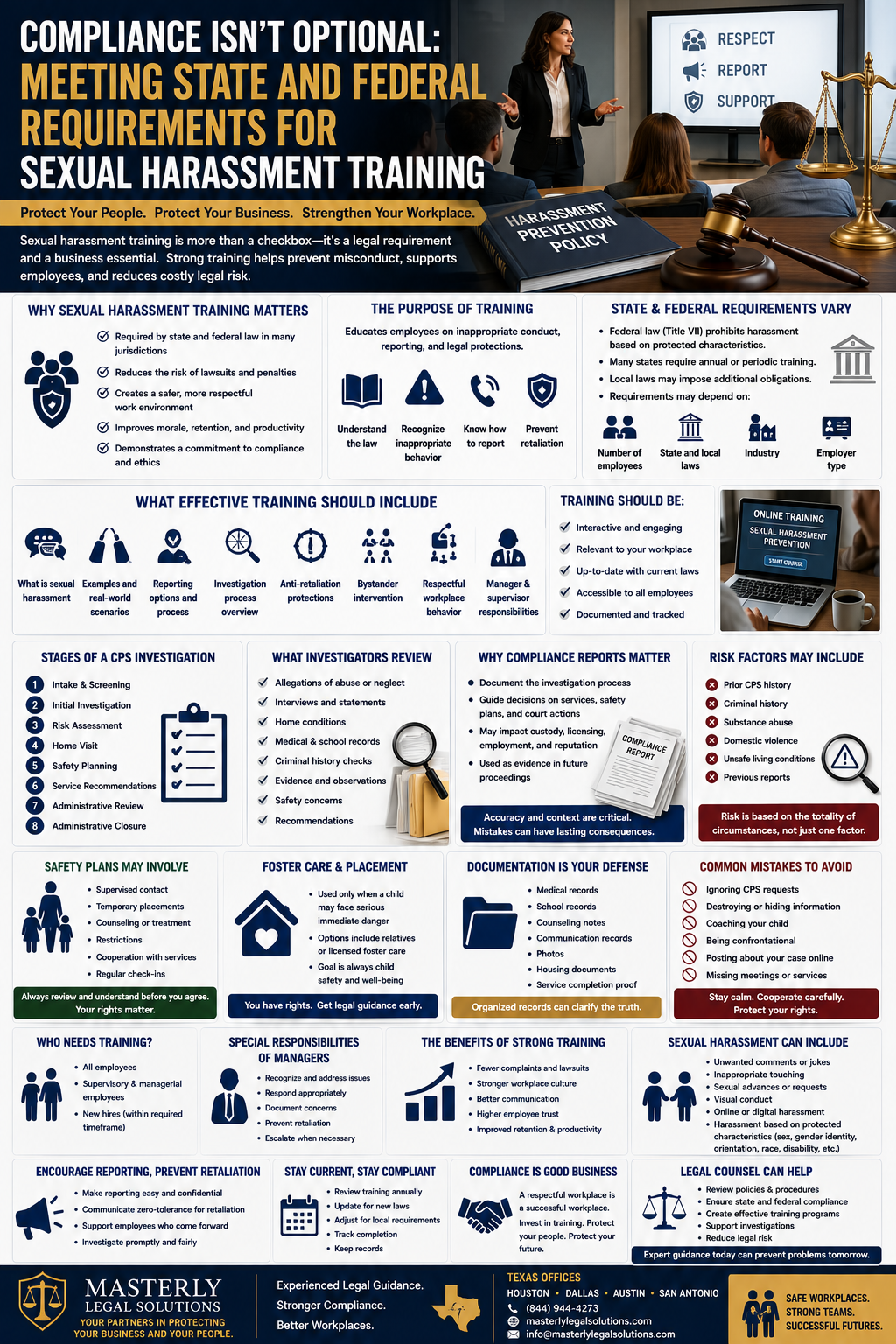
Compliance Isn’t Optional: Meeting State and Federal Requirements for Sexual Harassment Training
Why Sexual Harassment Training Has Become a Business Necessity
Many business owners remember a time when sexual harassment training was treated like a simple human resources formality. Companies often relied on outdated videos, rushed presentations, or employee handbook signatures to satisfy internal policies. Today, that approach is no longer enough. Businesses across the country are facing increasing legal scrutiny regarding workplace harassment prevention training and overall compliance with state and federal law.
Modern employers are expected to do far more than simply distribute policies. Regulators, courts, and employees now expect organizations to create meaningful harassment prevention systems that actively protect workers and reduce legal risk. Companies that ignore sexual harassment training requirements may expose themselves to lawsuits, reputational damage, employee turnover, and costly compliance investigations.
At Masterly Legal Solutions, we work with employers who want to build stronger compliance strategies before legal problems arise. Proper sexual harassment prevention training is not only about avoiding lawsuits. It is also about creating a safer, healthier, and more respectful work environment for everyone involved.
Understanding the Purpose of Sexual Harassment Prevention Training
Sexual harassment prevention training is designed to educate employees about inappropriate conduct, reporting procedures, workplace expectations, and legal protections. Effective training helps employees recognize warning signs of workplace harassment while teaching management how to respond appropriately when concerns arise.
Many organizations mistakenly believe harassment prevention only applies after a serious complaint occurs. In reality, preventive education is one of the most important tools businesses can use to reduce legal exposure and strengthen workplace culture.
Training programs often address:
- Reporting procedures
- Unlawful harassment definitions
- Complaint process expectations
- Bystander intervention training
- Conflict resolution strategies
- Employer re?sponsibilities
- Retaliation protections
- Respectful communication standards
These topics help employees better understand both their rights and their responsibilities within the workplace.
Why State and Federal Requirements Matter
Employers today operate within an increasingly complex system of federal and state regulations involving harassment prevention. Depending on the location, industry, and size of the organization, businesses may face very different compliance obligations.
Certain states now require employers to provide sexual harassment prevention training on a recurring basis. Some local law requirements apply even to smaller businesses with one or more employees, while other states impose obligations once companies reach three or more employees or five or more employees.
Because sexual harassment training requirements vary significantly by jurisdiction, companies should avoid assuming a single policy will satisfy every state law obligation. Businesses operating across multiple states often need customized compliance training strategies to remain legally compliant.
How Federal Law Influences Workplace Harassment Policies
Federal law plays a major role in shaping harassment prevention expectations throughout the country. The Civil Rights Act prohibits certain forms of unlawful discrimination and harassment in the workplace, while the Equal Employment Opportunity Commission encourages employers to implement proactive prevention measures.
The equal employment opportunity commission regularly emphasizes the importance of effective workplace harassment training and early reporting systems. Although federal law does not always mandate annual training in every situation, courts often examine whether employers took reasonable steps to prevent harassment when evaluating liability.
Employers that fail to provide sexual harassment training may struggle to defend themselves during litigation involving workplace misconduct allegations.
Why Sexual Harassment Training Requirements Continue to Expand
Over the past decade, many states have strengthened their sexual harassment training requirements following increased public attention surrounding workplace misconduct. Legislators, advocacy groups, and regulators have pushed employers to adopt stronger workplace harassment prevention training systems to better protect employees.
In states like New York, employers face specific legal obligations regarding annual training, complaint procedures, and policy distribution. Some industries also face heightened scrutiny because of prior misconduct scandals or higher risk environments.
As these laws evolve, businesses that rely on outdated training materials may unknowingly place themselves at legal risk.
New York’s Expanding Harassment Prevention Laws
New York has become one of the most aggressive states regarding harassment prevention requirements. New York employers must comply with detailed sexual harassment prevention training standards designed to educate employees and reduce workplace misconduct.
New York law requires employers to provide sexual harassment prevention training that meets specific standards regarding content, frequency, and employee participation. In many situations, new employees must receive training quickly after beginning employment.
Certain york city employers may also face additional local law obligations beyond statewide requirements. Because these rules continue evolving, businesses operating in New York should regularly review compliance procedures with experienced legal professionals.
How Local Law Requirements Affect Employers
Local law obligations can significantly complicate compliance efforts for businesses operating in multiple cities or counties. A company that complies with statewide rules may still violate city-specific harassment training requirements if leadership fails to review local mandates carefully.
For example, some cities impose broader protections involving gender identity, gender expression, or sexual orientation discrimination. Others require additional complaint process information or expanded reporting protections.
Employers should understand that local law requirements may apply even if the business already complies with broader federal and state regulations.
Why Compliance Training Is About More Than Avoiding Lawsuits
Many employers initially approach compliance training as a defensive legal strategy. While reducing liability is certainly important, effective sexual harassment prevention training also creates operational benefits for the organization itself.
A healthier workplace culture often leads to:
- Lower employee turnover
- Improved morale
- Better communication
- Reduced internal conflict
- Stronger employee trust
- Increased productivity
Companies that prioritize harassment prevention often experience fewer workplace disruptions and stronger long-term organizational stability.
The Real Cost of Ignoring Workplace Harassment
Ignoring workplace harassment rarely makes problems disappear. In fact, unresolved harassment concerns often escalate into larger legal and operational crises over time.
Unaddressed workplace harassment may lead to:
- Lawsuits
- Regulatory investigations
- Public reputation damage
- Employee resignations
- Internal conflict
- Reduced morale
- Productivity losses
Even one poorly handled complaint can significantly damage an organization’s reputation with employees, clients, and the public.
What Effective Sexual Harassment Training Should Include
Not all harassment training programs are equally effective. Some companies rely on outdated presentations that employees rush through without meaningful participation or understanding.
Strong sexual harassment training should include:
- Interactive training components
- Real-world workplace examples
- Reporting guidance
- Prevention strategies
- Retaliation protections
- Complaint procedures
- Supervisory responsibilities
Training content should also reflect current legal standards and workplace realities rather than generic outdated materials.
Why Interactive Training Matters
Interactive training has become increasingly important because employees learn more effectively when they actively participate rather than simply watch prerecorded videos. Interactive programs encourage discussion, scenario analysis, and employee engagement.
Employees are more likely to remember prevention strategies when training includes realistic examples involving inappropriate behavior, conflict resolution, and reporting expectations.
Interactive approaches also help employees recognize subtle forms of workplace harassment that might otherwise go unnoticed.
The Special Responsibilities of Supervisory Employees
Supervisory employees carry additional responsibilities regarding harassment prevention and complaint handling. Managers often become the first people employees approach when problems arise within the workplace.
Because of this leadership role, many states require separate or enhanced training for supervisory employees and managerial employees, underscoring the importance of manager accountability in sexual harassment prevention. Supervisory and managerial employees are often expected to understand:
- Reporting obligations
- Documentation procedures
- Retaliation protections
- Investigation expectations
- Escalation procedures
Poor manager responses frequently create larger legal problems even when the original misconduct could have been addressed early.
Why New Employees Need Early Training
New employees are often unfamiliar with workplace expectations, complaint process procedures, and company reporting systems. Providing early harassment prevention training helps establish clear expectations from the beginning of employment.
Many state laws now require employers to provide training shortly after hiring. Initial training may significantly reduce misunderstandings while helping employees feel safer and more informed within the workplace.
Businesses that delay training may expose themselves to unnecessary risk during the employee onboarding period.
Sexual Harassment Prevention Training Should Address Modern Workplace Risks
Modern workplace harassment prevention training should reflect current workplace realities rather than relying solely on outdated examples. Today’s work environments involve remote communication, social media interactions, digital messaging, and hybrid work arrangements.
Training programs should address:
- Online misconduct
- Digital communication standards
- Inappropriate conduct during remote work
- Social media boundaries
- Virtual meeting expectations
As workplace dynamics evolve, employers must ensure their harassment prevention strategies evolve as well.
The Connection Between Workplace Violence and Harassment Prevention
Workplace violence training and harassment prevention are often closely connected. Targeted HR consulting services and training can help organizations design systems that address both issues. Harassment complaints that go ignored may escalate into hostile confrontations, threats, or unsafe working environments.
Organizations that fail to address workplace harassment early sometimes experience broader workplace violence concerns later. Prevention strategies focused on communication, reporting systems, and respectful conduct often help reduce these risks.
A respectful work environment benefits both employees and employers by reducing tension and encouraging healthier workplace interactions.
How Harassment Prevention Protects Workplace Culture
Strong harassment prevention systems help shape the overall workplace culture of an organization. Employees are more likely to trust leadership when they believe complaints will be handled fairly and professionally.
A healthy workplace culture encourages employees to:
- Report concerns early
- Respect coworkers
- Support accountability
- Address conflict professionally
- Follow company standards
Organizations that tolerate inappropriate behavior often struggle with morale problems and high turnover over time.
Why Training Must Address Different Forms of Harassment
Effective sexual harassment prevention training should explain that harassment can take many forms beyond obvious misconduct. Employees should understand that inappropriate behavior may involve comments, gestures, jokes, physical conduct, or repeated unwanted communication.
Training must also address harassment connected to:
- Sexual orientation
- Gender identity
- Gender expression
- Race
- Religion
- Disability status
Employees often fail to report concerns because they are unsure whether certain conduct violates workplace standards.
The Importance of Complaint Procedures
Complaint procedures are one of the most important parts of any sexual harassment prevention policy. Employees need clear guidance regarding how to report concerns safely and confidentially.
Effective complaint process systems should explain:
- Who employees can contact
- How complaints are investigated
- Retaliation protections
- Documentation procedures
- Confidentiality expectations
Employees are more likely to report concerns when they trust the organization will respond appropriately.
Why Employers Must Educate Employees Consistently
Employers cannot assume employees automatically understand harassment policies simply because they signed handbook acknowledgments during hiring. Ongoing education is necessary to reinforce expectations and keep employees informed about changing legal standards.
Training programs should be updated regularly to reflect:
- New legal developments
- Workplace policy changes
- Emerging workplace risks
- Updated reporting procedures
Consistent education helps employees recognize warning signs and respond appropriately when concerns arise.
How Bystander Intervention Training Helps Prevent Problems
Bystander intervention training teaches employees how to safely respond when they witness harassment or inappropriate conduct involving coworkers. These programs encourage employees to support safer workplace environments without escalating conflict unnecessarily.
Employees who receive such training often feel more confident about:
- Reporting concerns
- Supporting coworkers
- Interrupting inappropriate behavior
- Encouraging accountability
Strong bystander intervention programs can significantly strengthen workplace harassment prevention efforts.
Why Training Materials Must Remain Current
Outdated training materials create serious compliance risks for employers. Laws involving harassment prevention continue evolving, and companies that fail to update training content may unknowingly violate current legal standards.
Training materials should reflect:
- Current state statutory provisions
- Recent court decisions
- Updated reporting systems
- Modern workplace scenarios
Regular reviews help ensure training remains legally compliant and practically effective.
The Risks Facing Employers With Multiple Locations
Employers operating in multiple states face especially difficult compliance challenges because sexual harassment training requirements vary widely between jurisdictions, making ongoing general counsel services for multi-state employers particularly valuable.
A business operating in Texas, New York, and California may need different policies, timelines, and training structures depending on where employees work. Many organizations rely on legal guidance focused on sexual harassment training legal requirements for employers to navigate these differences. Certain states impose annual training mandates while others require specialized content for managerial employees or non supervisory employees.
Companies with multiple locations should avoid assuming a single national policy satisfies every state requirement.
Why Employers Should Treat Harassment Prevention as Risk Management
Harassment prevention should be viewed as an essential part of broader risk management planning. Strategic business consulting for compliance and risk management can help organizations integrate training into broader operational planning. Businesses that ignore compliance obligations often face avoidable legal and operational consequences later.
Strong compliance systems help organizations:
- Reduce litigation exposure
- Improve documentation
- Protect workplace morale
- Demonstrate good faith efforts
- Strengthen reporting systems
Proactive prevention efforts are often significantly less expensive than defending lawsuits or regulatory investigations.
The Importance of Annual Training Requirements
Many states now require annual training for certain employers or industries. Regular sexual harassment training helps reinforce expectations while ensuring employees remain informed about current workplace policies and legal obligations.
Regular training also reminds employees that leadership takes harassment prevention seriously. Organizations that fail to maintain annual training schedules may struggle to defend themselves if complaints arise later.
Employers should carefully track training completion dates and maintain proper records documenting employee participation.
Why Non Supervisory Employees Need Specialized Training
Non supervisory employees often experience workplace harassment differently than managers or executives. Effective harassment prevention training should address the unique experiences and reporting concerns employees may face at different organizational levels.
Employees should understand:
- Reporting rights
- Anti-retaliation protections
- Complaint procedures
- Available support systems
When employees feel informed and supported, organizations are often better able to address concerns before situations escalate further.
Sexual Harassment Prevention Policies Should Be Clear and Accessible
A sexual harassment prevention policy should never be hidden within lengthy employee manuals that workers rarely read. Employees need easy access to clear policies explaining unacceptable conduct and reporting expectations.
Strong policies should define:
- Prohibited behavior
- Reporting procedures
- Investigation processes
- Retaliation protections
- Corrective action standards
Clear communication helps reduce confusion while strengthening accountability throughout the organization.
Why Employers Should Encourage Employees to Report Concerns
Many employees hesitate to report concerns because they fear retaliation, embarrassment, or professional consequences. Employers should actively encourage employees to report concerns early before problems worsen.
Organizations that support open communication often identify issues faster and resolve conflicts more effectively. Leadership should make it clear that retaliation for reporting harassment will not be tolerated.
Encourages employers to create reporting systems that employees trust and feel comfortable using consistently.
The Role of Online Training in Modern Compliance
Online training has become increasingly common as businesses adapt to remote work and distributed workforces. Online training can provide flexibility while helping organizations meet mandatory training requirements efficiently.
However, employers should ensure online systems remain interactive and engaging rather than passive or overly simplistic. Effective online programs should still encourage participation and understanding.
Technical support should also be available so employees can complete required training without unnecessary barriers.
Why Domestic Workers and Smaller Employers Matter Too
Harassment prevention obligations are no longer limited to large corporations. In many jurisdictions, domestic workers and employees working for smaller businesses now receive expanded protections under modern employment laws.
Some state statutory provisions apply even to businesses with one or more employees. Others apply once organizations reach three or more employees or five or more employees.
Smaller businesses often mistakenly assume they are exempt from harassment training obligations when they may still face important compliance responsibilities.
How Workplace Harassment Prevention Training Supports Long-Term Success
Organizations that prioritize workplace harassment prevention training often experience stronger long-term stability. Employees who feel safe and respected are more likely to remain loyal, productive, and engaged within the company, especially when supported by comprehensive legal services and workplace training.
Strong prevention systems also help organizations attract qualified professionals who value healthy work environments. Businesses that ignore harassment concerns may struggle with recruitment, retention, and public reputation.
Effective harassment prevention supports both legal compliance and long-term business growth.
Why Companies Should Review Training Programs Regularly
Harassment prevention strategies should never remain static. Laws, workplace expectations, and organizational risks continue evolving over time.
Employers should regularly review:
- Training content
- Reporting systems
- Investigation procedures
- Compliance documentation
- Policy language
Regular evaluations help ensure training remains effective, current, and legally compliant.
The Corporate Responsibility Behind Harassment Prevention
Compliance is not only about avoiding penalties. Companies have an ethical responsibility to create workplaces where employees feel safe, respected, and protected from unlawful harassment.
Organizations that prioritize prevention demonstrate leadership, accountability, and respect for their workforce. Employees notice when leadership takes harassment concerns seriously rather than treating compliance as a paperwork exercise.
Businesses that invest in meaningful workplace training often build stronger internal trust and healthier professional relationships overall.
How Masterly Legal Solutions Helps Businesses Stay Compliant
At Masterly Legal Solutions, we understand how quickly workplace harassment issues can escalate into serious legal and operational problems for businesses. Our team works with employers to develop effective sexual harassment training strategies that align with current federal and state regulations while supporting healthier workplace environments.
Whether your business needs help reviewing existing policies, updating training materials, implementing compliance training systems, or responding to harassment complaints, our firm is prepared to provide practical legal guidance tailored to your organization’s needs. We help employers navigate complex harassment prevention requirements while reducing legal exposure and strengthening workplace culture.
If your company needs assistance with sexual harassment prevention training, workplace harassment training, compliance policies, or broader employment law concerns, contact Masterly Legal Solutions at (972) 236-5051 for a free consultation. Taking proactive steps today may help protect your employees, your reputation, and your organization’s future.
Disclaimer: This article is provided for informational and educational purposes only and should not be considered legal advice. Reading this article does not create an attorney-client relationship with Masterly Legal Solutions. Sexual harassment training requirements, employment laws, and compliance obligations vary depending on jurisdiction and individual circumstances. Businesses should consult directly with qualified legal professionals regarding their specific compliance responsibilities under federal, state, and local law.








Looking for Legal & Business Solutions? Contact Us Now
Fill in the form or call us to set up a meeting





