

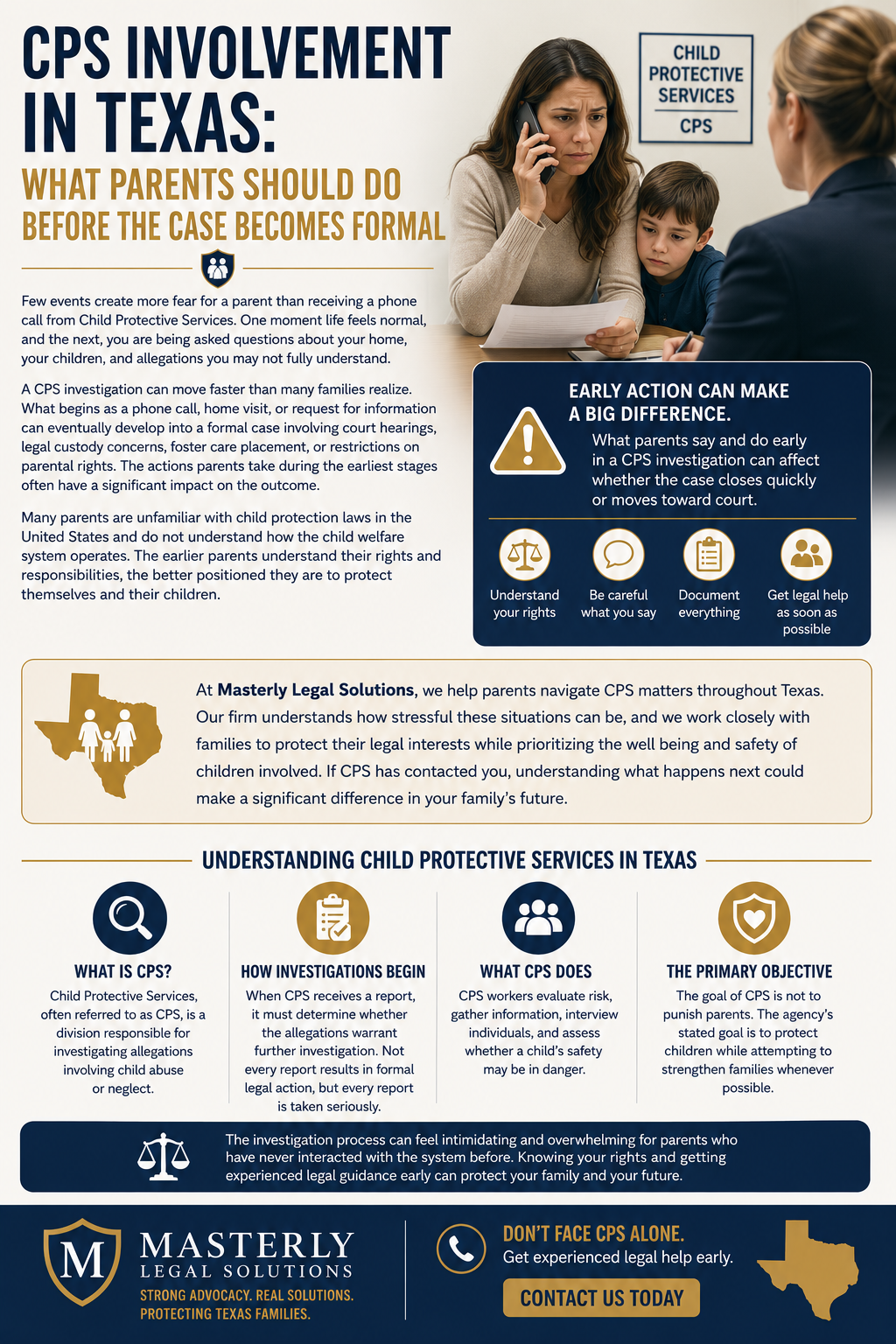
CPS Involvement in Texas: What Parents Should Do Before the Case Becomes Formal
Few events create more fear for a parent than receiving a phone call from Child Protective Services. One moment life feels normal, and the next, you are being asked questions about your home, your children, and allegations you may not fully understand. Many parents immediately assume the worst. Others believe that if they simply cooperate, the situation will quickly disappear. Unfortunately, neither assumption is always correct.
A CPS investigation can move faster than many families realize. What begins as a phone call, home visit, or request for information can eventually develop into a formal case involving court hearings, legal custody concerns, foster care placement, or restrictions on parental rights. The actions parents take during the earliest stages often have a significant impact on the outcome.
Many parents are unfamiliar with child protection laws in the United States and do not understand how the child welfare system operates. This lack of information can lead to costly mistakes, misunderstandings, and decisions that unintentionally make the situation worse. The earlier parents understand their rights and responsibilities, the better positioned they are to protect themselves and their children.
At Masterly Legal Solutions, we help parents navigate CPS matters throughout Texas. Our firm understands how stressful these situations can be, and we work closely with families to protect their legal interests while prioritizing the well being and safety of children involved. If CPS has contacted you, understanding what happens next could make a significant difference in your family's future.
Understanding Child Protective Services in Texas
Child Protective Services, often referred to as CPS, is a division responsible for investigating allegations involving child abuse or neglect. The agency operates as part of a broader network of social services and family services designed to protect children from harm.
When CPS receives a report, it must determine whether the allegations warrant further investigation. Not every report results in formal legal action, but every report is taken seriously. CPS workers are tasked with evaluating risk, gathering information, and assessing whether a child's safety may be in danger.
The primary objective of child protective services CPS is not to punish parents. Instead, the agency's stated goal is to protect children while attempting to strengthen families whenever possible. However, the investigation process can feel intimidating and overwhelming for parents who have never interacted with the system before.
How CPS Cases Usually Begin
Most CPS cases begin when someone reports suspected child abuse or neglect. Texas law requires certain professionals to report suspected abuse when they become aware of information that raises concerns.
Reports can come from many sources, including:
- Teachers
- Doctors
- Nurses
- Counselors
- Social workers
- Law enforcement officers
- Neighbors
- Family members
- Other concerned individuals
The person making the report may remain anonymous in many situations. As a result, parents often do not know who initiated the complaint.
What Happens After a Report Is Made?
Once CPS receives a report, the department evaluates the allegations to determine whether an investigation is necessary. The agency assesses the seriousness of the claims and the potential risk to the child.
If CPS determines that further review is appropriate, an investigator may be assigned to the case. The investigator may contact parents, visit the home, interview children, and gather additional information from schools, doctors, and other professionals.
At this stage, many parents mistakenly believe they are already facing formal legal proceedings. In reality, the investigation phase is often the earliest stage of the process.
Why Early Decisions Matter
The first few days after CPS involvement can be critical. Parents often feel pressured to answer questions immediately, provide documents, or make statements without fully understanding the allegations.
While cooperation can be important, parents should also understand their legal rights. Statements made early in an investigation may later become evidence in court proceedings or influence recommendations made by CPS.
Seeking guidance from a CPS attorney early in the process can help parents understand how to respond appropriately while protecting their interests.
Understanding the Difference Between Allegations and Findings
One of the most important things parents should remember is that an allegation is not proof.
Many reports involve misunderstandings, incomplete information, or accusations that are ultimately unsupported. CPS investigators must determine whether the allegations are credible and whether evidence exists to support the claims.
Unfortunately, parents often panic simply because a report was made. While the situation should be taken seriously, it is equally important to remember that a report alone does not establish wrongdoing.
Common Reasons CPS Becomes Involved
CPS investigations can arise from a wide variety of circumstances.
Allegations of Physical Abuse
Physical abuse allegations often involve claims that a child suffered injuries resulting from the actions of a parent or caregiver.
Investigators may examine medical records, photographs, witness statements, and other evidence to determine what occurred.
Allegations of Neglect
Neglect cases generally involve concerns about whether a child's basic needs are being met. This may include questions regarding supervision, housing, food, education, or medical care.
Neglect allegations can be highly subjective, making legal representation particularly important.
Allegations of Substance Abuse
Substance abuse concerns often trigger CPS involvement when allegations suggest that a child's safety may be affected by a caregiver's conduct.
The agency may seek information regarding treatment, testing, or other circumstances relevant to the child's environment.
Child Sexual Abuse Allegations
Allegations involving child sexual abuse are among the most serious matters handled by CPS.
When such allegations arise, multiple agencies may become involved. Investigators, law enforcement officers, prosecutors, and social workers may all participate in the process.
These cases require careful handling because the consequences can include criminal charges, loss of parental rights, and long-term restrictions affecting the family, particularly when allegations intersect with education law and professional licensing issues for educators.
Cases Involving Sex Trafficking Concerns
Texas authorities take allegations involving sex trafficking extremely seriously.
When investigators suspect exploitation or trafficking activity, they may coordinate with local, state, and federal agencies. The goal is to protect vulnerable youth and remove them from dangerous situations.
These investigations often move quickly and may involve emergency actions intended to protect the child.
Understanding Immediate Threat Determinations
One of the most significant decisions CPS may make involves whether an immediate threat exists.
If investigators believe a child faces immediate danger, they may seek emergency intervention. This can include temporary removal from the home or requests for court involvement.
Immediate threat determinations are often based on limited information gathered during the early stages of the investigation. Because these decisions carry serious consequences, parents should seek legal guidance immediately.
The Importance of Home Visits
A CPS visit can be one of the most stressful moments for a family.
During a visit, investigators may observe living conditions, speak with household members, and evaluate the child's environment. They may ask questions regarding parenting practices, household routines, and family relationships.
Parents should remain calm and respectful during these interactions while also understanding their rights.
What Social Workers Are Looking For
Social workers are generally tasked with assessing safety, risk, and family functioning.
They may evaluate:
- Living conditions
- Parent-child interactions
- Educational needs
- Medical concerns
- Emotional well being
- Supervision practices
The goal is to determine whether the child is safe and whether intervention is necessary.
Why Documentation Matters
Strong documentation can play a major role in CPS investigations, just as thoughtful estate planning for Texas families relies on clear, well-prepared legal documents.
Parents should preserve records that may help explain circumstances or address allegations, similar to the way families organizing trusts and other estate planning documents must keep careful records for future reference. Helpful records may include school records, medical records, counseling records, and communications relevant to the case.
Maintaining organized documentation often helps demonstrate a parent's commitment to the child's welfare.
Understanding Court Orders
In some situations, CPS may seek a court order authorizing certain actions.
Court orders may address issues involving investigations, medical evaluations, interviews, temporary placements, or other matters.
Parents should never ignore court documents or court orders. Failure to comply may create additional legal complications.
When the Court Becomes Involved
Not every CPS investigation results in court involvement.
However, if CPS believes intervention is necessary, the department may ask the court to review the matter. The court then evaluates evidence and determines appropriate next steps.
Court proceedings often involve testimony, legal arguments, and recommendations from multiple parties.
The Importance of Court Testimony
When a CPS case reaches court, testimony can significantly influence the outcome.
Witnesses may include parents, social workers, teachers, doctors, counselors, and other professionals. The court uses this information to evaluate the facts and determine what actions serve the best interest of the child.
Because testimony can affect parental rights and legal custody decisions, preparation is critical.
Understanding Legal Custody Issues
Many parents fear losing legal custody once CPS becomes involved.
While custody concerns can arise, removal is not automatic. Courts generally evaluate numerous factors before making decisions affecting parental rights.
The focus typically remains on the child's safety, stability, and long-term welfare.
The Best Interest Standard
Texas courts frequently rely on the best interest standard when making decisions involving children.
This standard requires the court to consider factors affecting the child's safety, development, emotional needs, and future well being.
The best interest analysis may involve evaluating family relationships, living conditions, educational needs, and other relevant factors.
What Happens If a Child Is Removed?
If a child is removed from the home, temporary placement arrangements may become necessary.
Depending on the circumstances, children may be placed with relatives, foster parents, or other approved caregivers. The placement decision generally seeks to minimize disruption while protecting the child.
Removal does not necessarily mean permanent separation. Many cases focus on creating conditions that allow the child to return home safely.
Understanding Foster Care
Foster care serves as a temporary placement option for children who cannot safely remain in their current environment.
The child welfare system relies heavily on foster families who provide care while legal matters are addressed.
Although foster care is sometimes necessary, the long-term goal in many cases remains family reunification whenever appropriate.
The Role of Foster Parents
Foster parents provide daily care, supervision, and support for children during placement.
They often work closely with social workers, courts, schools, and service providers to address the child's needs.
While foster parents play an important role, they do not automatically receive permanent parental rights over the child.
Services Designed to Strengthen Families
Many CPS cases involve services intended to strengthen families rather than permanently separate them, and some parents may also benefit from addressing essential legal documents for their family's future as part of broader planning.
These services may include:
- Counseling
- Parenting classes
- Education programs
- Substance abuse treatment
- Family support services
Participation in recommended programs may help demonstrate a parent's commitment to addressing concerns.
Why Education Programs Are Often Recommended
Education programs are frequently used to address issues identified during investigations.
Programs may focus on parenting skills, communication, conflict resolution, child development, or other topics relevant to the family's situation.
Completion of these programs may become part of a broader case plan.
Understanding CPS Safety Plans
A safety plan is sometimes implemented before a case becomes formal.
These plans may address supervision, living arrangements, contact restrictions, or other temporary measures intended to reduce risk.
Parents should carefully review any proposed plan before agreeing to its terms, and may want to consider complementary tools such as a power of attorney for their children when appropriate.
What Parents Should Avoid During an Investigation
When CPS becomes involved, emotions often run high. However, certain actions can make the situation more difficult.
Parents should avoid:
- Arguing with investigators
- Destroying records
- Coaching children on what to say
- Ignoring requests from the department
- Posting case details online
Remaining calm and organized often helps protect both the parent and the child.
The Importance of Protecting Parental Rights
Parental rights are among the most significant legal rights recognized under the law, and many families look for comprehensive legal services to protect those rights.
While child protection laws in the United States allow government agencies to intervene when necessary, parents still retain important legal protections.
Understanding those protections can help families make informed decisions throughout the process.
Cases Involving Adoptive Families
Adoptive families may also encounter CPS investigations.
The fact that a family was formed through adoption does not prevent allegations from being investigated. Adoptive parents generally possess the same parental rights and responsibilities as biological parents.
These cases often involve the same procedures and legal standards applied in other CPS matters.
The Increasing Adoptions Act and Child Welfare Efforts
Federal legislation, including measures such as the Increasing Adoptions Act, reflects broader efforts to improve outcomes for children within the child welfare system.
These initiatives seek to promote permanency, support families, and encourage stable placements when reunification is not possible.
Understanding how federal and state policies interact can provide valuable context during CPS proceedings.
Cases Involving Older Youth
The child's age often affects how investigations and court proceedings unfold.
Older youth may have different needs, preferences, and developmental considerations than younger children. Courts and agencies frequently consider age-related factors when evaluating services and placement options.
The child's age may also influence how interviews and assessments are conducted.
Criminal Allegations and CPS Investigations
Some investigations involve allegations that extend beyond family court concerns.
Claims involving sexual abuse, indecent exposure, sexually explicit visual material, or other criminal conduct may result in law enforcement involvement. Police investigations may proceed alongside CPS investigations.
Parents facing these circumstances should seek legal representation immediately.
Why You Need a CPS Lawyer Early
Many parents wait until formal court proceedings begin before contacting a CPS lawyer.
Unfortunately, by that point, important decisions may already have been made. Early legal intervention often allows attorneys to address concerns, communicate with investigators, and help parents avoid common mistakes.
A CPS attorney can explain legal options, review evidence, and help protect parental rights from the outset.
How a CPS Attorney Can Help
An experienced CPS attorney may assist with:
- Responding to allegations
- Reviewing documentation
- Communicating with CPS
- Preparing for hearings
- Protecting parental rights
- Challenging inaccurate information
- Evaluating court orders
Legal representation often provides clarity during a highly stressful time.
Working Toward Reunification
In many situations, the goal is not permanent separation but safe reunification.
Parents who actively participate in services, comply with court requirements, and demonstrate commitment to their children may improve the likelihood of successful reunification.
Each case is unique, but proactive involvement often matters.
How Masterly Legal Solutions Helps Texas Families
At Masterly Legal Solutions, we understand how frightening CPS involvement can be. Our firm represents parents facing CPS investigations, custody disputes, allegations of abuse or neglect, and other family-related legal matters throughout Texas.
We work closely with families to understand their circumstances, assess legal risks, protect parental rights, and develop strategies designed to achieve positive outcomes. Whether you are responding to a report, facing court proceedings, or trying to prevent a case from becoming formal, our team is prepared to help.
We believe every family deserves fair treatment, accurate information, and strong legal advocacy when dealing with government agencies and court systems.
Using the CPS Website and Available Resources
Parents looking for information about CPS procedures may find helpful educational materials through the agency's website and other official resources. These materials often explain investigation procedures, family services, court processes, and available support programs. While a website can provide useful general information, it cannot replace advice tailored to your specific situation. Families facing active CPS investigations should consider speaking directly with an attorney to fully understand their legal rights and options.
Demonstrating Your Commitment to Your Child's Well Being
Parents facing CPS involvement often have an opportunity to demonstrate that they are committed to their child's safety and future success. Following recommendations, participating in services, attending required meetings, and maintaining open communication can show that a parent is committed to addressing concerns. Courts and investigators frequently consider a parent's willingness to cooperate when evaluating future decisions. A proactive approach may help improve outcomes and support efforts toward family reunification.
Why Reports Often Begin When People Notice Warning Signs
Many CPS investigations begin because people notice circumstances that raise concerns about a child's welfare, including in school settings where educators may seek legal support from an education lawyer when allegations arise. Teachers, doctors, neighbors, relatives, and other professionals may observe changes in behavior, unexplained injuries, poor living conditions, or other warning signs. While not every concern results in a substantiated finding, reports are often made out of a desire to protect children from potential harm. Understanding how reports originate can help parents better understand the investigative process.
Learning From Child Welfare Practices Across the Country
Although Texas has its own legal procedures, child protection agencies nationwide often face similar challenges when responding to allegations involving children, just as higher-education institutions face parallel oversight and higher education law compliance requirements to protect students. Communities from major cities to coastal areas such as Virginia Beach continue to evaluate ways to improve child welfare outcomes while protecting family rights. Examining approaches used across different jurisdictions can provide valuable insight into how agencies balance safety concerns with family preservation goals. Regardless of location, protecting children while supporting healthy families remains a central objective.
Child Development Concerns and Family Assessments
In some investigations, CPS evaluates whether a child's physical, emotional, educational, or social development commits the agency to providing additional support or intervention. Investigators may review school performance, medical records, and developmental milestones when assessing a child's overall well being. Developmental concerns do not automatically indicate abuse or neglect, but they may become part of a broader evaluation. Understanding these factors can help parents better respond to questions raised during the investigation process.
What Happens When CPS Suspects Possible Abuse?
When investigators receive information suggesting possible abuse, they must evaluate whether the allegations are credible and whether a child may be at risk. Possible abuse does not automatically mean abuse occurred, but it generally triggers further review and investigation. CPS may interview family members, examine records, and gather evidence before reaching conclusions. Parents should take these concerns seriously while remembering that allegations must be properly investigated before findings are made.
Understanding How State Laws Affect CPS Cases
State laws play a significant role in determining how CPS investigations are conducted and how courts address child protection concerns. Texas law establishes procedures for investigations, emergency removals, court hearings, and parental rights protections. While federal guidelines influence many child welfare programs, state laws often control the specific legal standards applied in individual cases. Understanding these legal requirements can help parents make informed decisions throughout the process.
How the Local Department Handles Reports
Each local department responsible for child welfare services follows procedures established by Texas law when responding to reports of abuse or neglect. Although individual investigations may vary, the department generally evaluates allegations, gathers evidence, interviews relevant individuals, and determines whether additional action is necessary. Parents should understand that decisions are often based on the information available at the time. Early communication with a CPS attorney can help families navigate interactions with the local department more effectively.
Identifying the Person Responsible for a Child's Care
During a CPS investigation, investigators often focus on identifying the person responsible for a child's daily care and supervision. This may include parents, guardians, relatives, or other adults who regularly provide care within the household. Determining who was responsible at the time of an incident can play an important role in evaluating allegations and assigning accountability. Accurate information regarding caregiving responsibilities often helps investigators better understand the circumstances surrounding a report.
Protecting Neglected Children While Preserving Families
The child welfare system is designed to protect neglected children while also recognizing the importance of family relationships whenever possible. When allegations of neglect arise, investigators seek to determine whether a child's basic needs are being met and whether intervention is necessary. The ultimate goal is often to improve conditions so children can safely remain with or return to their parents. Courts and agencies generally prefer solutions that support family stability while ensuring children receive proper care and protection.
The Role of Human Services in Child Protection Cases
Many CPS investigations involve agencies connected to human services programs that support families and children. These organizations may provide counseling, parenting resources, substance abuse treatment, housing assistance, and other forms of support designed to improve a family's situation. In many cases, CPS works alongside human services professionals to identify concerns and create solutions that promote a child's safety and well being. Parents who cooperate with recommended services often demonstrate their willingness to address issues and strengthen their family environment.
Speak With Masterly Legal Solutions Before the Case Becomes Formal
If CPS has contacted you, now is not the time to wait and hope the situation resolves itself. Early action can help protect your family, preserve important evidence, and reduce the risk of misunderstandings that may affect your future. Whether you are concerned about allegations of child abuse, neglect, substance abuse, custody issues, foster care placement, or another CPS-related matter, obtaining experienced legal guidance can make a meaningful difference.
Contact Masterly Legal Solutions at (972) 236-5051 for a free consultation. Our team can answer your questions, explain the investigation process, discuss your legal options, and help you understand how to move forward with confidence. When your family's future is at stake, having knowledgeable legal counsel on your side can provide the support and protection you need during a difficult and uncertain time.
Disclaimer: This article is provided for educational and informational purposes only. It does not constitute legal advice and should not be relied upon as legal guidance for any specific situation. Reading this article does not create an attorney-client relationship. Laws change and every case is unique. If you have questions regarding your circumstances, contact Masterly Legal Solutions directly to discuss your situation with an attorney.






Looking for Legal & Business Solutions? Contact Us Now
Fill in the form or call us to set up a meeting