

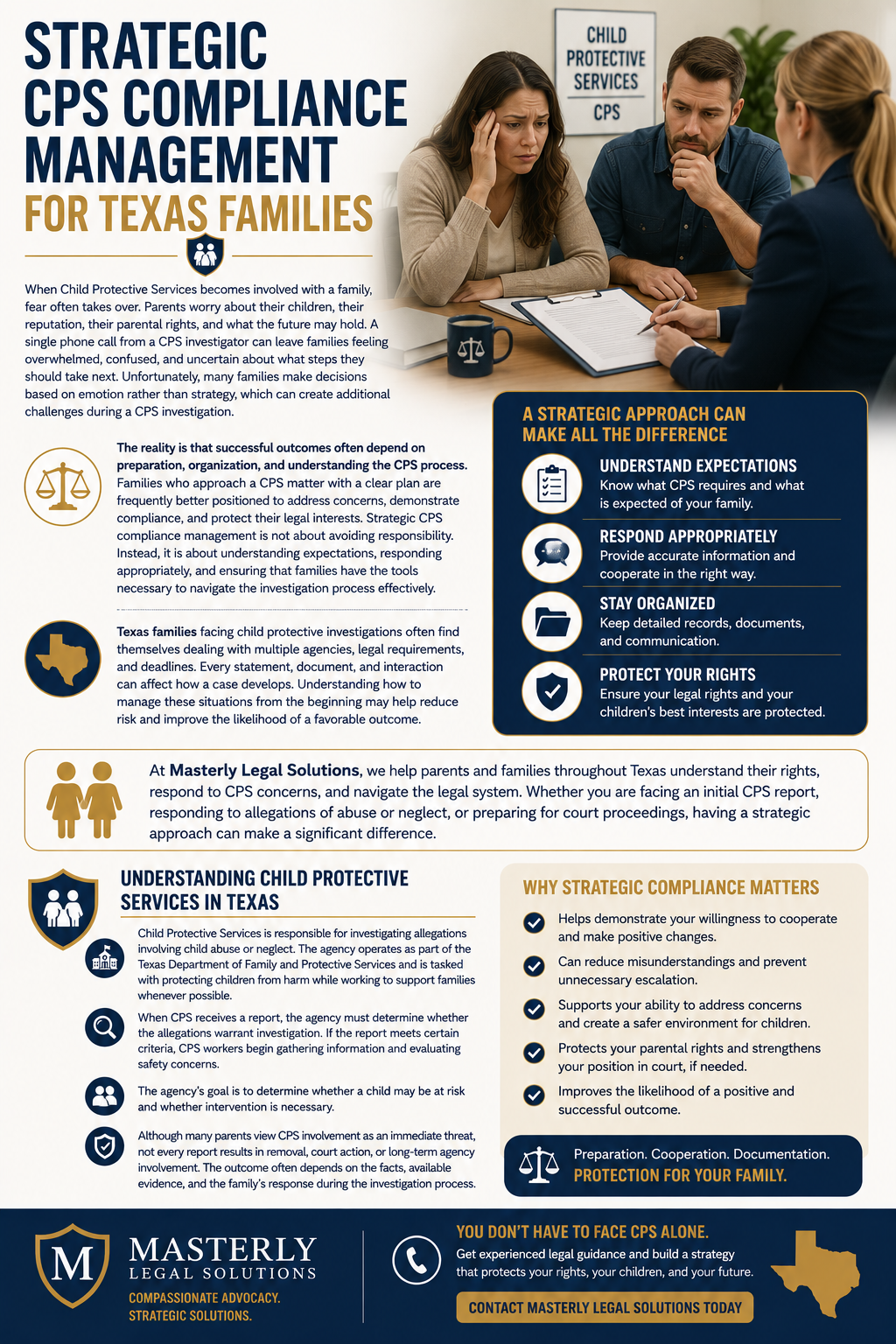
Strategic CPS Compliance Management for Texas Families
When Child Protective Services becomes involved with a family, fear often takes over. Parents worry about their children, their reputation, their parental rights, and what the future may hold. A single phone call from a CPS investigator can leave families feeling overwhelmed, confused, and uncertain about what steps they should take next. Unfortunately, many families make decisions based on emotion rather than strategy, which can create additional challenges during a CPS investigation.
The reality is that successful outcomes often depend on preparation, organization, and understanding the CPS process. Families who approach a CPS matter with a clear plan are frequently better positioned to address concerns, demonstrate compliance, and protect their legal interests. Strategic CPS compliance management is not about avoiding responsibility. Instead, it is about understanding expectations, responding appropriately, and ensuring that families have the tools necessary to navigate the investigation process effectively.
Texas families facing child protective investigations often find themselves dealing with multiple agencies, legal requirements, and deadlines. Every statement, document, and interaction can affect how a case develops. Understanding how to manage these situations from the beginning may help reduce risk and improve the likelihood of a favorable outcome.
At Masterly Legal Solutions, we help parents and families throughout Texas understand their rights, respond to CPS concerns, and navigate the legal system. Whether you are facing an initial CPS report, responding to allegations of abuse or neglect, or preparing for court proceedings, having a strategic approach can make a significant difference.
Understanding Child Protective Services in Texas
Child Protective Services is responsible for investigating allegations involving child abuse or neglect. The agency operates as part of the Texas Department of Family and Protective Services and is tasked with protecting children from harm while working to support families whenever possible.
When CPS receives a report, the agency must determine whether the allegations warrant investigation. If the report meets certain criteria, CPS workers begin gathering information and evaluating safety concerns. The agency's goal is to determine whether a child may be at risk and whether intervention is necessary.
Although many parents view CPS involvement as an immediate threat, not every report results in removal, court action, or long-term agency involvement. The outcome often depends on the facts, available evidence, and the family's response during the investigation process.
What Strategic CPS Compliance Management Means
Strategic CPS compliance management involves proactively addressing concerns raised by CPS while protecting your legal rights and maintaining a clear understanding of the investigation.
Rather than reacting emotionally, families focus on organization, communication, documentation, and legal compliance. This approach helps parents demonstrate cooperation while ensuring that important decisions are made thoughtfully.
A strategic approach may include gathering records, consulting legal counsel, understanding agency expectations, and preparing for each stage of the CPS process.
Why Families Often Feel Overwhelmed
Many parents have never interacted with CPS before receiving a visit or phone call. They may not understand the CPS investigation timeline, their rights, or what the agency is attempting to determine.
Adding to the stress, parents often fear losing custody of their children. The possibility of court proceedings, foster care placement, or allegations becoming public can create significant anxiety.
Understanding the process often helps reduce uncertainty and allows families to focus on making informed decisions rather than reacting out of fear.
How CPS Cases Usually Begin
Most CPS cases begin with a CPS report alleging abuse or neglect. Reports may come from teachers, doctors, counselors, neighbors, relatives, law enforcement officers, or other individuals who believe a child may be at risk.
Certain professionals are legally required to report suspected child abuse or neglect. These mandatory reporting obligations are intended to protect children from serious harm.
Once a report is received, CPS determines whether the allegations warrant further investigation.
The Importance of the Initial Contact
The initial contact with CPS often sets the tone for the entire investigation.
A CPS investigator may call, visit your home, or request a meeting. During this interaction, the investigator will typically explain the allegations and begin gathering information.
Parents should remain calm, respectful, and professional. While cooperation is important, families should also understand that statements made during initial contact may later become part of the case record.
Understanding the CPS Investigation Process
The CPS investigation process involves gathering facts, evaluating safety concerns, and determining whether abuse or neglect may have occurred.
Investigators often review records, interview witnesses, examine living conditions, and assess family circumstances. They may also contact schools, healthcare providers, and other professionals.
The purpose of the investigation is to determine whether intervention is necessary to protect the child.
What Happens During the Investigation Stage
The investigation stage is often one of the most stressful periods for families.
Parents may receive multiple requests for information, interviews, or home visits. CPS workers may ask questions about parenting practices, household routines, medical history, and family relationships.
Although this stage can feel intrusive, understanding its purpose may help families respond more effectively.
Understanding Risk Assessment
Risk assessment plays a central role in child protective investigations.
Investigators evaluate whether a child faces immediate risk, imminent risk, or ongoing safety concerns. They also consider risk factors that may affect the child's safety and well being.
The findings from a risk assessment often influence recommendations regarding services, supervision, and potential court involvement.
Common Risk Factors Investigators Examine
CPS workers evaluate many factors when assessing a family situation.
Examples may include:
- Domestic violence
- Substance abuse
- Criminal history
- Prior neglect reports
- Unsafe living conditions
- Lack of supervision
- Previous CPS involvement
The presence of a risk factor does not automatically mean abuse occurred, but it may prompt further review.
Alleged Abuse Versus Proven Abuse
Parents often assume that CPS involvement means the agency has already concluded that abuse occurred.
In reality, an allegation is simply a claim that requires investigation. CPS must gather evidence and determine whether the information supports the allegations.
Understanding this distinction is important because families sometimes make damaging admissions based on the mistaken belief that the agency has already reached a conclusion.
Investigating Allegations of Child Abuse or Neglect
When investigating allegations, CPS examines available evidence and attempts to determine whether child abuse or neglect occurred.
This may involve reviewing medical records, interviewing family members, examining photographs, and gathering witness statements.
The agency's findings can affect future recommendations and legal decisions, making accurate information critically important.
Child Abuse Allegations and Their Impact
Allegations involving child abuse often receive immediate attention because of the potential for serious harm.
Physical abuse claims may involve injuries, discipline practices, or allegations regarding the child's care. Investigators may seek additional evidence from healthcare providers and other professionals.
Because these allegations carry significant consequences, parents should take them seriously and seek legal representation early.
Sexual Abuse and Sexual Exploitation Investigations
Cases involving sexual abuse or sexual exploitation are among the most serious matters handled by CPS.
These investigations often involve multiple agencies, including law enforcement. An ongoing criminal investigation may occur simultaneously with the CPS investigation.
The consequences of these cases can include criminal charges, court proceedings, and restrictions affecting parental rights.
Understanding Suspected Child Abuse Reports
Not every report involves confirmed abuse. Many cases begin because someone reports suspected child abuse based on observations or concerns.
The person making the report may have incomplete information or may misunderstand the situation. Nevertheless, CPS must evaluate the report and determine whether further action is necessary.
Parents should remember that a report alone does not establish wrongdoing.
The Role of the Alleged Victim
The alleged victim is the child identified in the report as potentially having experienced abuse or neglect.
Investigators often conduct interviews designed to gather information regarding the child's experiences, environment, and safety.
The child's age, developmental level, and ability to communicate may influence how interviews are conducted.
The Role of the Alleged Perpetrator
The alleged perpetrator is the individual accused of causing harm or creating unsafe conditions.
Being identified as an alleged perpetrator does not mean the allegations are true. It simply means CPS is investigating the claims.
Individuals facing such allegations should carefully consider seeking legal counsel before making significant statements.
Evaluating the Child's Living Conditions
A child's living conditions frequently become a major focus during a CPS investigation.
Investigators may evaluate cleanliness, supervision, sleeping arrangements, food availability, and overall safety. The goal is to determine whether the child's home environment supports the child's basic needs.
Conditions are reviewed within the broader context of the family's circumstances.
The Importance of the Child's Safety
The child's safety remains the central focus of nearly every CPS decision.
Whether the agency is reviewing allegations, evaluating services, or making recommendations, protecting children from serious harm remains the primary objective.
Families who understand this focus are often better equipped to demonstrate their commitment to the child's care and well being.
Developing an Effective Safety Plan
In some situations, CPS may recommend or require a safety plan.
A safety plan typically outlines temporary measures intended to address identified concerns while allowing the child to remain safe. These plans may involve supervision requirements, counseling recommendations, or support services.
Parents should fully understand any safety plan before agreeing to its terms.
Temporary Custody and Emergency Actions
When CPS believes a child faces immediate risk, the agency may seek temporary custody arrangements.
Temporary custody decisions are often made quickly and can significantly affect a family's future. Courts may become involved to review evidence and determine whether emergency action is justified.
Parents should seek legal representation immediately if custody concerns arise.
Child's Removal From the Home
One of the most frightening possibilities for any parent is a child's removal.
Removal generally occurs when CPS believes a child faces imminent risk that cannot be addressed through less restrictive means. However, removal is not automatic and requires legal procedures in many situations.
Understanding your rights during this stage is essential.
Foster Care Placement Considerations
If removal occurs, a child may enter foster care temporarily.
The child welfare system seeks placements that support stability and safety while legal matters are addressed. Foster care is often intended to be temporary rather than permanent.
The long-term goal in many cases remains reunification whenever appropriate.
Placement With a Relative or Family Friend
Whenever possible, CPS may consider placement with a relative or family friend.
These placements often allow children to maintain existing relationships and reduce the disruption associated with foster care.
Courts and agencies frequently view these arrangements as beneficial when suitable caregivers are available.
Child's Placement and Long-Term Planning
A child's placement involves more than deciding where the child will stay temporarily.
Investigators and courts often evaluate educational needs, medical care, emotional support, and family relationships when making placement decisions.
The objective is to ensure that the child's safety and development remain protected throughout the process.
Supporting the Child's Education During a CPS Case
A child's education remains important even when CPS becomes involved.
Schools may provide valuable information regarding attendance, academic performance, and behavioral concerns. Maintaining educational stability often benefits children during periods of family stress.
Parents should continue prioritizing educational needs whenever possible.
Community Resources and Family Support
Many families benefit from community resources during a CPS investigation.
These resources may include:
- Counseling programs
- Parenting classes
- Mental health services
- Housing assistance
- Substance abuse treatment
- Child care support
Accessing available support services may demonstrate a family's commitment to addressing concerns.
Family and Community Resources Matter
Family and community resources often play an important role in successful case outcomes, and knowing how to contact Masterly Legal Solutions locations across Texas can help families quickly access legal support when needed.
Strong support networks can help families manage stress, comply with recommendations, and address challenges that contributed to CPS involvement.
CPS may consider these resources when evaluating a family's ability to provide a stable environment.
Voluntary Services and Compliance
Not every CPS case requires court intervention.
Sometimes CPS offers voluntary services intended to help families address concerns without formal legal proceedings. These services may include counseling, parenting education, and other support programs.
Participation can sometimes demonstrate a proactive commitment to improvement.
Parenting Classes and Family Services
Parenting classes are among the most common recommendations made during CPS investigations.
These programs often focus on communication, discipline strategies, child development, and family dynamics. Family services may also include counseling and educational programs.
Completion of recommended services may positively affect how CPS views the family's progress.
Understanding Written Notice Requirements
In many situations, parents are entitled to written notice regarding important actions taken during a CPS investigation.
Written notice may explain allegations, rights, hearings, or agency decisions. Carefully reviewing these documents is essential.
Ignoring notices or deadlines can create significant legal complications.
Court Orders and Compliance Obligations
If the court becomes involved, families may be required to comply with specific court orders.
Court orders can address visitation, services, evaluations, custody arrangements, and other matters. Failure to comply may negatively affect the case.
Families should understand all requirements and seek clarification when necessary.
Court Hearing Preparation
A court hearing can significantly impact the direction of a CPS case.
Preparation often includes gathering documentation, reviewing evidence, identifying witnesses, and understanding legal arguments. Proper preparation helps families present their position effectively.
Experienced legal representation can be invaluable during this stage.
Juvenile Dependency Court Proceedings
Juvenile dependency court handles many cases involving child welfare concerns.
The court evaluates evidence, hears testimony, and determines appropriate actions regarding the child's care and placement.
Decisions made in these proceedings can have lasting effects on families.
Protecting Parental Rights During the CPS Process
Parents retain important legal protections even when CPS becomes involved.
Understanding parental rights is critical when responding to allegations, complying with agency requests, and participating in court proceedings.
Protecting these rights often requires a balance between cooperation and informed legal decision-making.
The Importance of Legal Counsel
Legal counsel can help families understand their rights and obligations throughout the investigation process.
Attorneys assist with reviewing evidence, communicating with agencies, preparing for hearings, and protecting legal interests. Early involvement often allows for more effective planning and case management.
Having professional guidance can reduce uncertainty during a stressful time.
Why Legal Representation Matters
Families facing CPS involvement often encounter complicated legal and procedural issues.
Legal representation helps ensure that parents understand the allegations, evaluate available options, and respond strategically rather than emotionally.
The earlier an attorney becomes involved, the greater the opportunity to address concerns before problems escalate.
How CPS Determines Next Steps
Throughout the investigation process, CPS determines what actions are necessary based on the evidence gathered.
The agency evaluates safety concerns, risk assessments, witness statements, compliance efforts, and service participation. Findings may influence recommendations regarding custody, services, or court involvement.
Every decision contributes to the overall compliance report maintained throughout the case.
Using a Compliance Report to Demonstrate Progress
A compliance report can become a valuable tool for families navigating CPS involvement.
By documenting completed services, participation in programs, attendance at appointments, and cooperation with recommendations, families can demonstrate progress and accountability.
Strategic documentation often helps show a commitment to creating a safe and stable environment for the child and the child's family.
How Masterly Legal Solutions Helps Texas Families
At Masterly Legal Solutions, we understand the fear and uncertainty that often accompany a CPS investigation. Our firm works closely with parents and family members facing allegations of abuse or neglect, child protective investigations, custody concerns, court proceedings, and other family law matters throughout Texas.
We help clients understand the CPS process, evaluate evidence, respond to allegations, prepare for hearings, and protect their parental rights. Whether you are dealing with a CPS report, temporary custody concerns, voluntary placement discussions, or a complex court matter, our team is committed to helping you navigate the situation strategically and effectively.
We believe families deserve strong advocacy, clear communication, and practical solutions when facing government investigations that affect their future, and we offer trust-focused estate planning services to help protect that future beyond the CPS process.
How Child and Family Services Support Case Resolution
Many CPS cases involve recommendations from child and family services designed to address concerns while keeping families together whenever possible. These programs may include counseling, parenting education, substance abuse treatment, and other resources intended to improve family stability. Child and family services often work alongside CPS to help parents address issues identified during an investigation. Demonstrating active participation in these services can show a commitment to protecting a child's well being and strengthening the family unit.
Understanding the Texas Family Code During CPS Cases
The Texas Family Code provides many of the legal rules that govern CPS investigations, parental rights, child custody matters, and court proceedings involving children. Judges, attorneys, and CPS workers frequently rely on provisions within the Texas Family Code when making decisions about a child's care and safety. Understanding how these laws apply can help parents better navigate the investigation process and make informed decisions. Because these legal matters can be complex, families often benefit from seeking experienced legal counsel as early as possible, especially when CPS concerns arise from situations at school where education law and TEA license issues may also be involved.
Responding Appropriately to Allegations of Suspected Abuse
When CPS receives a report involving suspected abuse, investigators are required to evaluate the allegations and determine whether additional action is necessary. Suspected abuse does not automatically mean abuse occurred, but it does trigger a formal review of the circumstances. Parents should take these allegations seriously while remaining calm and cooperative throughout the process. Proper documentation, clear communication, and legal guidance—along with proactive planning tools such as a power of attorney for your children—can help families effectively respond to concerns raised during the investigation.
Using Community Services to Strengthen Families
Community services can provide valuable support for families facing CPS involvement. These services may include counseling programs, educational resources, housing assistance, childcare support, and mental health treatment. Accessing community services can help families address challenges that contributed to CPS concerns while improving overall family stability, just as thoughtful estate planning services for Texas families can protect children’s long-term security beyond the immediate CPS case. In many cases, successful use of community services demonstrates a willingness to take positive steps toward creating a safe and supportive environment for children.
Demonstrating That a Child Is Safe
Throughout a CPS investigation, one of the most important questions is whether the child is safe in their current environment. Investigators evaluate living conditions, supervision, family relationships, and other relevant factors when making this determination. Parents who provide appropriate care, maintain stable living arrangements, and cooperate with reasonable requests often have opportunities to demonstrate that the child is safe. Evidence showing a child's needs are being met can play an important role in the outcome of the case.
Preventing Future Abuse Through Early Intervention
One of the primary goals of the child welfare system is to prevent future abuse before it occurs. CPS and family service providers often recommend programs and support services intended to reduce risk factors and improve family stability. By addressing concerns early, families may be able to create safer environments and avoid more serious interventions later, much like early estate planning in Houston to protect families and assets can prevent future legal complications. Proactive participation in recommended services can demonstrate a commitment to positive change and long-term child safety, just as working with a Dallas estate planning firm to protect your family’s future can demonstrate careful long-term planning.
Speak With Masterly Legal Solutions About Your CPS Matter
A CPS investigation can feel overwhelming, but you do not have to face it alone. The decisions you make during the investigation stage can affect your family, your rights, and your future for years to come. Understanding the process, maintaining compliance, and responding strategically may help protect both your family and your legal interests.
If Child Protective Services has contacted you, if you have received a CPS report, or if you are concerned about allegations involving child abuse or neglect, contact Masterly Legal Solutions at (972) 236-5051 for a free consultation. Our team can answer your questions, review your circumstances, explain your options, and help you develop a plan designed to protect your family. When your children and your future are at stake, having experienced legal guidance can make all the difference.
Disclaimer: This article is provided for educational and informational purposes only. It does not constitute legal advice and should not be relied upon as legal guidance for any specific matter. Reading this article does not create an attorney-client relationship. Every case is different, and individuals should consult directly with an attorney regarding their unique circumstances and legal needs.





Looking for Legal & Business Solutions? Contact Us Now
Fill in the form or call us to set up a meeting