

School Investigations and Retaliation at Work: Know Your Rights as a Teacher
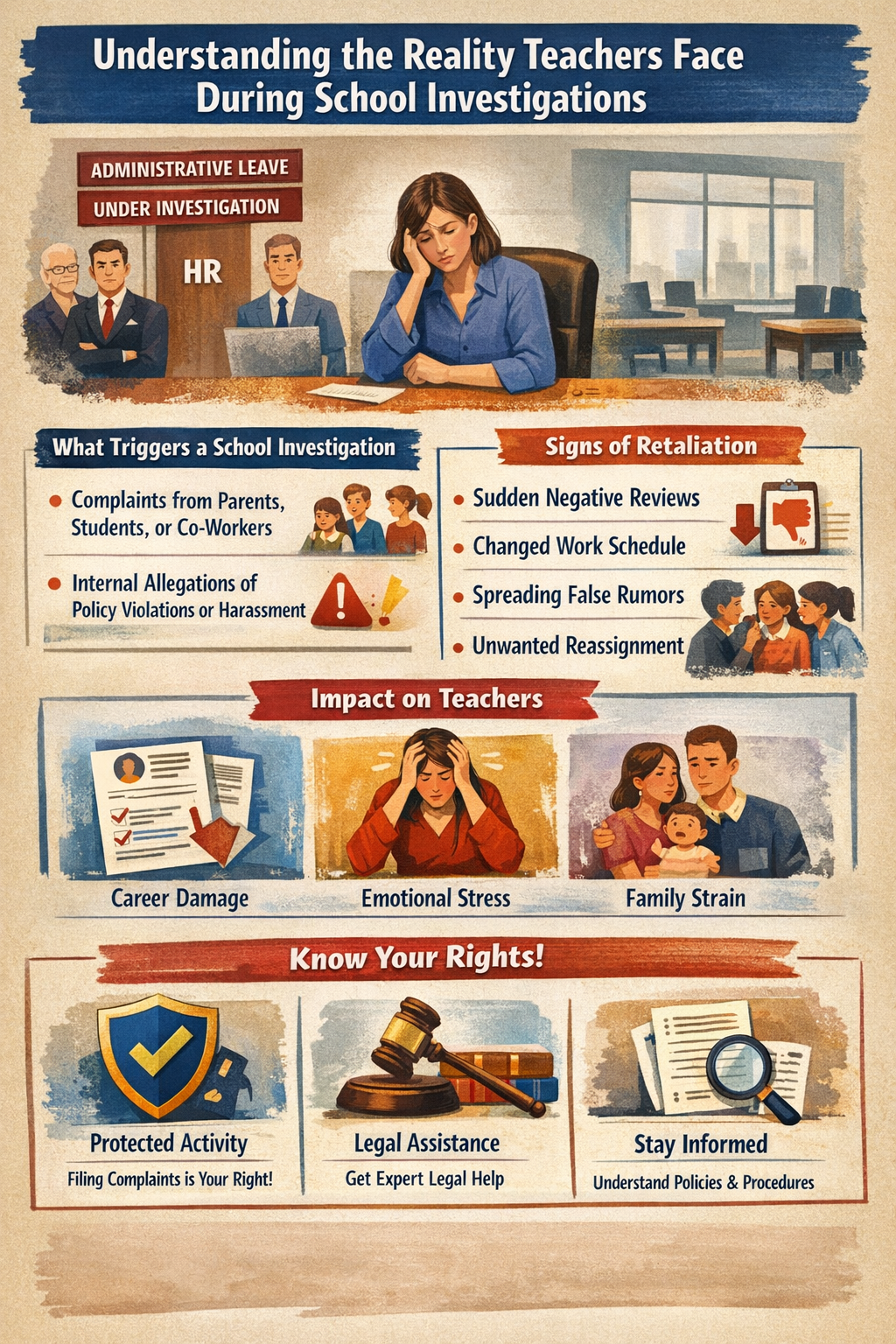
Understanding the Reality Teachers Face During School Investigations
School environments are often viewed as structured and supportive, but when a formal investigation begins, the experience can quickly become overwhelming for any employee. Teachers may suddenly find themselves questioned, monitored, or even removed from their classrooms. What many do not expect is how quickly concerns about retaliation at work can arise during this process. The pressure of navigating policies, procedures, and expectations can leave teachers unsure of their rights.
An investigation in a school setting is not always neutral in practice, even if it is supposed to be. While administrators may claim to follow state laws and federal guidelines, the way an employer handles the situation can significantly impact a teacher’s career. Understanding how these processes work is the first step toward protecting yourself.
What Triggers a School Investigation
A school investigation can begin for many reasons, and not all of them involve wrongdoing by the teacher. Sometimes, a complaint from a parent, student, or co workers can initiate the process. In other cases, an employer investigation may start after internal concerns about policy violations, harassment, or alleged harassment.
These investigations may also arise when a teacher files a complaint involving employment discrimination or workplace issues. For example, reporting unequal pay or uncover potentially discriminatory wages can lead to scrutiny. Even situations involving reporting immigration status or raising concerns about safety may trigger an investigation.
The Role of the Employer During an Investigation
The employer is responsible for managing the investigation, but that authority can sometimes create an imbalance of power. Administrators often control access to information, witnesses, and timelines. This can make it difficult for an employee to fully defend themselves without expert legal support for teachers and schools.
While laws require employers to act fairly, the reality is that employer acts may not always reflect a neutral process. Teachers may feel isolated or pressured to comply without understanding their rights. In some cases, decisions are made quickly, placing employees at risk of disciplinary action or being placed on administrative leave.
Administrative Leave and What It Means for Teachers
Being placed on administrative leave can be one of the most stressful parts of a school investigation. While it may be presented as a routine step, it can carry serious implications. Administrative leave often removes a teacher from their classroom while the investigation continues, which is why many educators consider working with an education law attorney for teachers during this time.
There are situations where paid administrative leave is used, which may include continued pay and benefits. However, even when the leave is paid leave, the stigma associated with being removed from your position can be damaging. Teachers may worry about their reputation, their student's perception, and their future employment.
When Administrative Leave Becomes a Red Flag
Not all administrative leave is handled the same way. In some cases, placing employees on administrative leave is justified for safety or procedural reasons. However, there are times when it may signal deeper issues such as retaliation or discrimination.
For example, if an employee is placed on administrative leave after filing a discrimination claim, it may raise concerns. Similarly, if the leave follows a complaint about harassment or opposing unlawful practices, the timing becomes important. Understanding these patterns can help identify whether the employer is acting for non discriminatory reasons or something else.
Recognizing Retaliation at Work in Schools
Retaliation at work occurs when an employer takes negative action against an employee because they engaged in a protected activity. In schools, this can take many forms and may not always be obvious. Teachers who report concerns or participate in an investigation may notice subtle changes in how they are treated and can benefit from guidance from an experienced retaliation lawyer for workplace retaliation.
These actions may include increased scrutiny, negative performance evaluation, or being reassigned to a less desirable position. In more serious situations, retaliation may involve attempts to terminate workers or damage their professional standing.
Examples of Retaliation Teachers Should Watch For
Understanding real-world examples can help teachers identify retaliation early. Consider the following situations:
- A teacher reports harassment and is later placed on administrative leave without clear justification
- A supervisor begins to spread false rumors about the teacher after a complaint is filed
- The employee’s work schedule is changed to less favorable hours without explanation
- A teacher is moved from a desirable position to a less desirable position after raising concerns
These examples highlight how retaliation can develop during or after an investigation.
Protected Activity and Why It Matters
Under federal laws such as Title VII, employees are protected when they engage in certain activities. This includes filing a complaint, participating in employment discrimination proceedings, or opposing unlawful conduct. These actions are known as protected activity.
When a teacher acts with a reasonable belief that discrimination or harassment has occurred, they are protected from retaliation. This applies even if the investigation does not ultimately prove a violation. Acting in good faith is key in these situations.
How Discrimination and Retaliation Are Connected
Discrimination and retaliation often overlap in school investigations. A teacher may initially report discrimination, only to face retaliation afterward. This creates a complex situation that requires careful handling.
Employment discrimination can involve issues such as disability, religious practice, family responsibilities, or immigration status. When an employee raises concerns about these issues, they are exercising their rights under the law. Retaliation for doing so is prohibited under federal and state laws.
Understanding Employment Discrimination in Schools
Employment discrimination in schools can take many forms. It may involve unequal treatment based on protected characteristics or policies that unfairly impact certain groups. Teachers may notice differences in pay, opportunities, or disciplinary actions and may need assistance from an education law attorney for teachers and administrators.
In some cases, discrimination may involve potentially discriminatory wages or unequal access to resources. Teachers may also experience discrimination related to requesting accommodation for a disability or religious practice. These situations can lead to formal employment discrimination proceedings if not addressed properly.
Harassment and Its Impact on Teachers
Harassment is another issue that often leads to investigations. This can include verbal or physical abuse, inappropriate comments, or unwanted behavior. In some cases, harassment may involve discrimination resisting sexual advances or dealing with alleged harassment from a supervisor or co workers.
When a teacher reports harassment, they expect protection, not retaliation. However, some employers may respond in ways that discourage reporting or create additional stress for the employee.
The Complaint Process and What to Expect
Filing a complaint is often the first step in addressing workplace issues. The complaint process may involve submitting written statements, participating in interviews, and providing evidence. While this process is meant to be fair, it can feel intimidating for many teachers.
Teachers should be prepared for questions, documentation requests, and potential follow-up actions. Harassment answering questions during an investigation can be stressful, especially when the outcome is uncertain.
The Role of Federal and State Laws
Both federal and state laws play a critical role in protecting teachers. Federal laws such as Title VII and the Fair Labor Standards Act establish baseline protections for employees. These laws prohibit retaliation and discrimination in the workplace and interact with processes like retaliation and labor complaints filed with the Department of Labor.
State laws may provide additional protections, depending on the jurisdiction. Making educated selections requires knowing how these rules relate to your circumstances.
How Employers May Justify Their Actions
Employers often claim that their decisions are based on non retaliatory or non discriminatory reasons. For example, they may argue that changes to a teacher’s work schedule or assignment are necessary for operational needs.
However, if these actions occur shortly after a complaint or protected activity, they may be questioned. Purposefully changing job duties or increasing scrutiny can be signs of retaliation, even if the employer claims otherwise.
Warning Signs of Escalating Issues
Teachers should be aware of warning signs that indicate a situation may be worsening and should understand how education law legal services for teachers can help them respond effectively. These signs can include:
- Sudden negative performance evaluation without prior issues
- Increased monitoring of the employee’s work
- Isolation from co workers or exclusion from meetings
- Being placed on administrative leave repeatedly without explanation
Recognizing these patterns early can help teachers take action before such consequences become more severe.
The Impact on Career and Reputation
An investigation can have lasting effects on a teacher’s career. Even if no violation is found, the experience can damage professional relationships and opportunities. Being associated with an investigation may affect future job applicants or career advancement.
Retaliation can make this situation even worse by creating additional challenges. Teachers may find it difficult to rebuild trust or regain their standing within the school community.
When Family and Personal Life Are Affected
Workplace issues do not stay confined to the school. They can affect a teacher’s personal life, including their family member relationships and financial stability. Changes in pay, job status, or stress levels can impact family responsibilities.
In some cases, retaliation may even involve actions that affect a person's spouse or family member negatively. This can add another layer of pressure for teachers navigating an investigation.
Taking Action to Protect Yourself
Teachers facing an investigation should take proactive steps to protect their rights. This includes documenting events, saving communications, and understanding policies. Keeping records of interactions with a supervisor or employer can be critical.
It is also important to remain professional and avoid actions that could be misinterpreted. Acting in good faith and following procedures can strengthen your position if legal action becomes necessary.
The Importance of Legal Guidance
Navigating legal terminology and procedures can be challenging without support. Teachers should not assume that the employer will act in their best interest. Seeking legal guidance early can make a significant difference in the outcome, especially from a firm that focuses on legal support for educators in school investigations.
An experienced legal team can help identify whether retaliation or discrimination is occurring. They can also assist in preparing a defense, responding to allegations, and protecting your career.
How Investigations Can Escalate Quickly
What begins as a routine investigation can quickly escalate into a serious situation. Decisions may be made without full context, and timelines can move faster than expected. Teachers may feel pressured to respond without adequate preparation.
Understanding how investigations unfold can help teachers stay ahead of potential issues. Being proactive rather than reactive is essential in these circumstances.
The Risk of False Allegations
False rumors and accusations can arise during an investigation, especially in high-pressure environments. Teachers may face claims that are not supported by evidence. In some cases, individuals may spread false rumors to influence the outcome, making it critical for educators to understand options like educator misconduct defense to protect a teaching license.
Addressing these situations requires careful handling and strong documentation. Ignoring false allegations can lead to further complications.
The Role of Co Workers and Witnesses
Co workers can play a significant role in an investigation. Their statements and observations may influence the outcome. However, workplace dynamics can affect how individuals respond, particularly in formal processes such as TEA investigations that threaten an educator’s license.
Some co workers may feel hesitant to speak up, while others may provide statements that are not entirely accurate. Understanding this dynamic is important for building a strong case.
When to Seek Legal Representation
There is often a critical window of time during an investigation when legal representation is most effective. Waiting too long can limit your options and make it harder to address issues.
Teachers should consider seeking help if they notice signs of retaliation, discrimination, or unfair treatment. Early intervention can help prevent further damage to your career.
Why Early Action Matters
Taking action early can make a significant difference in the outcome of an investigation. Addressing concerns promptly can prevent escalation and protect your rights.
Delaying action may allow the situation to worsen, leading to more severe consequences. Teachers should not assume that issues will resolve on their own.
How Masterly Legal Solutions Can Help
At Masterly Legal Solutions, we understand the challenges teachers face during school investigations. Our team is experienced in handling cases involving retaliation, discrimination, and workplace issues.
We work closely with clients to evaluate their situation, identify risks, and develop a strategy. Our goal is to protect your career and ensure your rights are upheld throughout the process.
Protecting Your Future Starts Now
Teachers dedicate their careers to supporting students, but when challenges arise, they deserve support as well. Facing an investigation or retaliation can feel overwhelming, but you do not have to navigate it alone.
Taking the right steps now can help safeguard your future and provide clarity during a difficult time.
Alleged Harassment Refusing to Stay Silent
Teachers often face difficult decisions when dealing with alleged harassment refusing to ignore inappropriate conduct in the workplace. Speaking up can feel risky, especially during an ongoing investigation, but remaining silent may allow the situation to worsen. When an employee chooses to report concerns, they are exercising their rights and should be protected under applicable laws. Unfortunately, some employers may respond negatively, which can raise concerns about retaliation and fairness in the process.
Understanding Your Rights Under a Collective Bargaining Agreement
Many teachers are protected by a collective bargaining agreement that outlines their rights, responsibilities, and protections during disciplinary actions or investigations. These agreements generally provide guidance on due process, administrative leave, and grievance procedures. However, not all educators fully understand how these protections apply in real situations. Knowing how your agreement interacts with state laws and federal protections can be critical when navigating a complex investigation.
Taking a Stand to Oppose Discrimination
Teachers who oppose discrimination are engaging in a legally protected activity, even if they are unsure whether a violation has occurred. Acting with a reasonable belief that discrimination is happening is often enough to trigger legal protections. When an employee raises concerns about unfair treatment, they should not be penalized for doing so. However, retaliation can still occur, making it essential to recognize the signs early and respond appropriately.
Preventing Future Discrimination in the Workplace
Addressing workplace concerns is not only about resolving a current issue but also about preventing future discrimination. When teachers take action, they help create a safer and more equitable environment for others. Employers have a responsibility to ensure that complaints are handled properly and that similar issues do not arise again. Failing to address these concerns can lead to repeated problems and long-term consequences for both employees and the organization.
The Role of Federal Agencies in Teacher Protections
Federal agencies play an important role in enforcing workplace protections for teachers and other employees. These agencies oversee compliance with laws related to discrimination, harassment, and retaliation. While many cases are handled internally, teachers may need to involve federal agencies when internal processes fail. Understanding when and how to escalate a matter can make a significant difference in protecting your rights.
Lawsuit Communicating Risks and Realities
When workplace issues escalate, lawsuit communicating becomes a critical part of the process. Teachers may need to formally address their concerns through legal channels, especially when internal efforts have not resolved the issue. This step requires careful documentation and strategic planning. Taking legal action can feel intimidating, but it may be necessary to protect your career and hold an employer accountable.
How School Systems Compare to Private Sectors
While public schools operate under specific regulations, there are similarities between education systems and private sectors when it comes to workplace protections. Employees in both environments are entitled to protections against discrimination and retaliation. However, the procedures and policies may differ depending on the employer and governing laws. Understanding these differences can help teachers better navigate their situation and evaluate comprehensive education law and business consulting legal services.
Recognizing Other Acts of Retaliation
Retaliation does not always appear in obvious ways, and teachers should be aware of other acts that may signal unfair treatment. These actions can include subtle changes in responsibilities, exclusion from meetings, or negative comments about a teacher’s performance. While each situation is unique, recognizing patterns of behavior can help determine whether an employer’s actions are justified or potentially unlawful.
Alleged Harassment Refusing to Stay Silent
Teachers often face difficult decisions when dealing with alleged harassment refusing to ignore inappropriate conduct in the workplace. Speaking up can feel risky, especially during an ongoing investigation, but remaining silent may allow the situation to worsen. When an employee chooses to report concerns, they are exercising their rights and should be protected under applicable laws. Unfortunately, some employers may respond negatively, which can raise concerns about retaliation and fairness in the process.
Understanding Your Rights Under a Collective Bargaining Agreement
Many teachers are protected by a collective bargaining agreement that outlines their rights, responsibilities, and protections during disciplinary actions or investigations. These agreements generally provide guidance on due process, administrative leave, and grievance procedures. However, not all educators fully understand how these protections apply in real situations. Knowing how your agreement interacts with state laws and federal protections can be critical when navigating a complex investigation.
Taking a Stand to Oppose Discrimination
Teachers who oppose discrimination are engaging in a legally protected activity, even if they are unsure whether a violation has occurred. Acting with a reasonable belief that discrimination is happening is often enough to trigger legal protections. When an employee raises concerns about unfair treatment, they should not be penalized for doing so. However, retaliation can still occur, making it essential to recognize the signs early and respond appropriately.
Preventing Future Discrimination in the Workplace
Addressing workplace concerns is not only about resolving a current issue but also about preventing future discrimination. When teachers take action, they help create a safer and more equitable environment for others. Employers have a responsibility to ensure that complaints are handled properly and that similar issues do not arise again. Failing to address these concerns can lead to repeated problems and long-term consequences for both employees and the organization.
The Role of Federal Agencies in Teacher Protections
Federal agencies play an important role in enforcing workplace protections for teachers and other employees. These agencies oversee compliance with laws related to discrimination, harassment, and retaliation. While many cases are handled internally, teachers may need to involve federal agencies when internal processes fail. Understanding when and how to escalate a matter can make a significant difference in protecting your rights.
Lawsuit Communicating Risks and Realities
When workplace issues escalate, lawsuit communicating becomes a critical part of the process. Teachers may need to formally address their concerns through legal channels, especially when internal efforts have not resolved the issue. This step requires careful documentation and strategic planning. Taking legal action can feel intimidating, but it may be necessary to protect your career and hold an employer accountable.
How School Systems Compare to Private Sectors
While public schools operate under specific regulations, there are similarities between education systems and private sectors when it comes to workplace protections. Employees in both environments are entitled to protections against discrimination and retaliation. However, the procedures and policies may differ depending on the employer and governing laws. Understanding these differences can help teachers better navigate their situation and evaluate comprehensive education law and business consulting legal services.
Recognizing Other Acts of Retaliation
Retaliation does not always appear in obvious ways, and teachers should be aware of other acts that may signal unfair treatment. These actions can include subtle changes in responsibilities, exclusion from meetings, or negative comments about a teacher’s performance. While each situation is unique, recognizing patterns of behavior can help determine whether an employer’s actions are justified or potentially unlawful.
How Investigations Can Affect a Person's Work
An investigation can significantly impact a person's work, even before any findings are made. Teachers may experience changes in their daily responsibilities, relationships with co workers, and overall job stability. These disruptions can create stress and uncertainty, making it difficult to focus on teaching responsibilities. Understanding these impacts can help teachers prepare and respond effectively.
The Importance of Transparency Around Salary Information
Concerns about salary information can arise during workplace disputes, particularly when issues of unequal pay or discrimination are involved. Teachers who question pay disparities are often engaging in protected activity. Employers are expected to handle such concerns fairly and without retaliation. Open discussions about pay can be uncomfortable, but they are essential for uncovering potentially discriminatory practices.
What Generally Happens During an Investigation
Teachers often wonder what generally happens during a school investigation and how it may affect them. The process typically involves interviews, document reviews, and administrative decisions that may impact employment status. While procedures are intended to be fair, the experience can feel uncertain and stressful. Being informed about what to expect can help reduce anxiety and improve preparedness.
Maintaining Professionalism and Respect Throughout the Process
Throughout an investigation, maintaining professionalism and respect is essential, even in challenging situations. Teachers should approach every interaction carefully, as their responses may be evaluated as part of the process. Demonstrating professionalism can strengthen credibility and support a teacher’s position. At the same time, it is important to ensure that respect is mutual and that the employee’s rights are upheld.
Speak With Our Team Today About Retaliation at Work
If you believe you are facing retaliation at work during a school investigation, now is the time to take action. Waiting can make the situation more difficult and limit your options. Our team at Masterly Legal Solutions is here to help you understand your rights and explore your next steps.
We offer a free consultation to answer your questions, review your situation, and provide guidance tailored to your circumstances. Every case is different, and having the right legal support can make a meaningful difference.
Call us today at (972) 236-5051 to speak with our team and take the first step toward protecting your career.
This article is for educational purposes only and does not constitute legal advice. For guidance specific to your situation, please contact our office directly.


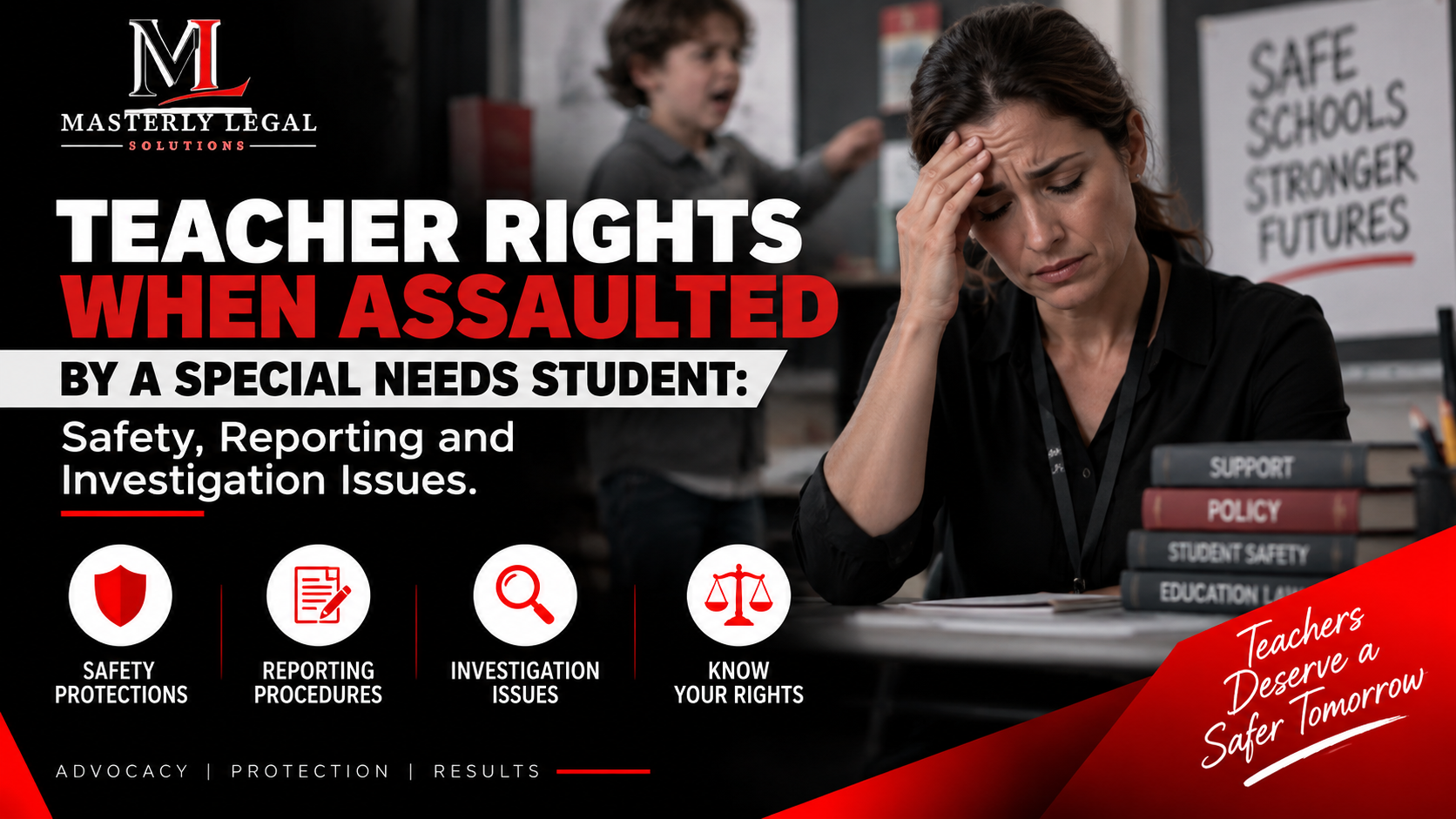
Teacher Rights When Assaulted by a Special Needs Student: Safety, Reporting and Investigation Issues



Looking for Legal & Business Solutions? Contact Us Now
Fill in the form or call us to set up a meeting