
Defending College Professors Facing Serious Allegations
When Allegations Suddenly Threaten a Professor’s Career
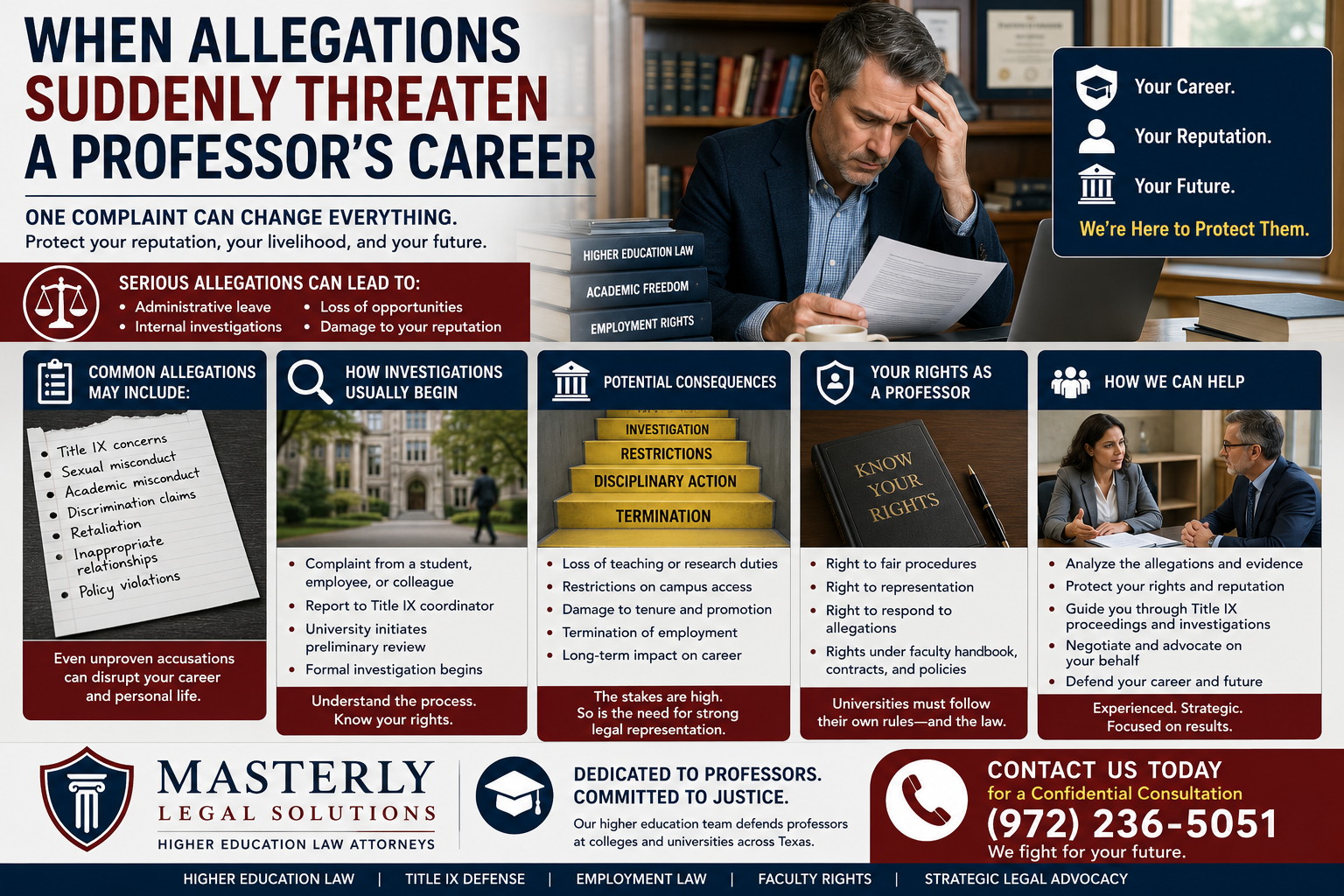
For many professors, years or even decades are spent building a reputation based on scholarship, mentorship, research, and dedication to students. One allegation, however, can suddenly place that entire career at risk. A complaint involving title ix concerns, sexual misconduct allegations, academic misconduct, discrimination claims, or labor and employment issues can escalate quickly inside higher education institutions.
Many professors are shocked by how fast educational institutions react once accusations surface. A faculty member may suddenly be placed on administrative leave, restricted from campus activities, or investigated internally before fully understanding the allegations. In some situations, colleges and universities act aggressively to protect institutional reputation and student safety concerns long before all evidence is reviewed fairly.
At Masterly Legal Solutions, our education team understands how devastating these situations can become for professors, administrators, and higher education professionals. Our experienced attorneys work with university clients, professors, and educational institutions dealing with serious allegations, title ix investigations, employment disputes, and complex legal issues involving higher education.
Serious Allegations Can Change Everything Overnight
Most professors never expect to become the subject of an internal investigation. A complaint from a student, colleague, employee, or student groups can quickly trigger major disciplinary proceedings within colleges and universities.
The allegations may involve sexual harassment, academic misconduct, discrimination based on national origin, title ix complaints, retaliation claims, or accusations involving inappropriate relationships with students. Even before the investigation is completed, the professor’s professional standing may already suffer serious damage.
Higher education institutions often prioritize protecting campus culture, public image, and legal compliance concerns when responding to allegations. Unfortunately, this can leave professors feeling isolated, overwhelmed, and unfairly judged during the process.
A higher education attorney experienced in the Title IX investigation process may help faculty members better understand their rights and responsibilities while responding strategically to these allegations.
How Higher Education Institutions Handle Complaints
Most higher education institutions maintain detailed procedures for investigating faculty complaints. These procedures often appear in faculty handbooks, employment agreements, student handbooks, title ix policies, and institutional compliance programs.
When allegations are reported, colleges and universities frequently involve human resources personnel, title ix coordinators, general counsel offices, outside investigators, or higher education practice group advisors. Depending on the nature of the allegations, federal agencies or government agencies may also become involved.
Educational institutions typically claim the process is neutral and designed to protect everyone involved. However, many professors feel pressure begins immediately after the complaint is filed.
Some professors report being treated as though they are already guilty before the investigation even starts.
Title IX Investigations Create Serious Risks for Professors
Title ix investigations are among the most stressful situations professors may face within the higher education arena. Educational institutions receiving federal funding must comply with title ix regulations involving sexual harassment, sexual misconduct, and discrimination concerns.
A title ix complaint may involve allegations connected to classroom interactions, research relationships, student affairs matters, social media communication, or conduct occurring off campus. Even consensual interactions may become heavily scrutinized once a report is filed.
Higher education clients often discover that title ix proceedings move quickly and involve strict procedural requirements. Professors may face temporary restrictions, no-contact directives, suspension from campus activities, or damage to professional reputation before findings are finalized.
Our higher education team helps professors navigate title ix allegations while protecting their employment relationship, reputation, and future career opportunities.
Sexual Misconduct Allegations Can Damage Academic Careers
Sexual misconduct allegations often create immediate consequences for professors employed at colleges and universities. Educational institutions frequently act aggressively once accusations involve student safety concerns or campus culture issues.
A professor may lose committee assignments, research opportunities, classroom responsibilities, or leadership positions within days of the allegations becoming known. In some situations, professors are instructed not to contact students, coworkers, or student groups while the investigation continues.
Unfortunately, rumors spread quickly throughout educational institutions. Even before findings are issued, students, faculty, and administrators may begin making assumptions about the allegations.
An experienced education lawyer can help professors respond carefully while preserving important legal and employment protections.
Academic Freedom Does Not Always Prevent Investigations
Many professors assume academic freedom protections automatically shield them from disciplinary proceedings. While academic freedom remains an important principle within higher education, it does not prevent colleges and universities from investigating complaints involving faculty conduct.
Educational institutions may still review allegations involving classroom speech, student interactions, grading disputes, research behavior, or controversial public statements. Professors sometimes become the subject of complaints simply because students or coworkers disagree with viewpoints expressed during academic discussions.
In certain situations, the line between protected academic freedom and alleged misconduct becomes highly contested. Universities may face pressure from students, advocacy groups, donors, or government agencies demanding action against faculty members.
Legal guidance becomes especially important when allegations intersect with constitutional rights, employment contracts, and institutional policies.
Colleges and Universities Often Prioritize Institutional Protection
One of the most frustrating realities professors face is realizing colleges and universities often prioritize institutional protection over individual fairness. Educational institutions may fear lawsuits, federal investigations, media attention, or public criticism if they appear slow to respond to complaints.
As a result, universities sometimes move aggressively before fully reviewing all evidence. Professors may feel isolated while administrators focus heavily on legal compliance and public image concerns.
This does not mean every institution acts unfairly, but professors should understand universities often approach these matters from a risk-management perspective rather than solely focusing on the professor’s interests.
Working with a higher education attorney early in the process may help faculty members protect themselves more effectively.
Student Complaints Can Trigger Major Investigations
Many serious investigations begin with a single student complaint. A misunderstanding during office hours, disagreement about grades, classroom dispute, or uncomfortable interaction may escalate into formal allegations involving title ix or student discipline procedures.
Colleges and universities generally encourage students to report concerns immediately. Once a complaint is submitted, educational institutions often begin investigations regardless of whether the allegations appear weak or unsupported initially.
Professors sometimes feel blindsided because they believed normal academic interactions were being misinterpreted. Unfortunately, by the time they learn details of the complaint, the institution may already have begun interviewing witnesses and reviewing records.
Understanding institutional procedures early can become extremely important during these situations.
Faculty Handbooks and Employment Agreements Matter
Faculty handbooks and employment agreements often contain important protections for professors facing investigations. These documents may outline disciplinary procedures, academic freedom rights, grievance processes, collective bargaining obligations, and standards for termination.
Unfortunately, many professors never review these policies carefully until allegations arise. Universities may rely heavily on handbook provisions during disciplinary proceedings.
An attorney familiar with higher education institutions may analyze employment contracts, student handbooks, and faculty policies to determine whether the university followed proper procedures.
These documents often become central evidence during disputes involving termination, discipline, or employment relationship concerns.
Internal Investigations Can Become One-Sided
Internal investigations conducted by colleges and universities are not always as neutral as professors expect. Universities may hire outside investigators or rely on internal personnel connected to the institution’s general counsel office or compliance programs.
Some professors feel investigators focus heavily on allegations while minimizing evidence supporting the faculty member. Witness interviews, email reviews, and student statements may be interpreted selectively during the process.
Because universities are often concerned about legal compliance and institutional liability, professors sometimes believe the outcome is influenced before the investigation concludes.
Experienced attorneys may assist faculty members in preparing responses, reviewing evidence, and protecting their professional interests during these proceedings.
Title IX Compliance Pressures Affect Universities
Educational institutions face significant pressure to maintain title ix compliance under federal law. Colleges and universities risk investigations from federal agencies or loss of funding if they fail to respond aggressively to complaints involving sexual harassment or sexual misconduct.
Because of this pressure, universities sometimes implement strict investigative measures intended to demonstrate compliance rather than ensure fairness for all parties involved.
Professors may feel institutions prioritize appearances over objectivity during title ix investigations. In some situations, administrators fear criticism from advocacy groups, students, or government agencies if they appear too supportive of the accused faculty member.
A higher education attorney may help professors understand how title ix compliance obligations affect university decision-making.
Student Records and Privacy Concerns
Investigations involving professors often include review of student records, classroom communication, academic files, and email correspondence. Educational institutions must balance family educational rights protections with investigative obligations.
Professors may become concerned about privacy issues involving research records, grading communication, or student interactions. Universities may also restrict faculty access to information during the investigation.
Understanding how family educational rights and privacy laws apply during these disputes can become important for both professors and educational institutions.
Sexual Harassment Allegations Carry Long-Term Consequences
Sexual harassment allegations can permanently affect a professor’s reputation, employment opportunities, and future within the higher education sector. Even if the allegations are never substantiated, the existence of the investigation itself may create lasting professional harm.
A professor investigated for sexual harassment may lose research funding, speaking opportunities, committee assignments, or relationships with university clients and colleagues. Future employers may also learn about prior investigations during hiring processes.
Professors facing these allegations should strongly consider obtaining legal representation before participating in interviews or disciplinary proceedings.
Academic Misconduct Investigations Are Increasing
Educational institutions increasingly investigate professors for allegations involving academic misconduct. These complaints may involve grading disputes, plagiarism accusations, research integrity concerns, misuse of grant funding, or inappropriate classroom conduct.
Higher education institutions often take these matters seriously because academic credibility directly affects institutional reputation and accreditation concerns.
Professors accused of academic misconduct may face suspension, loss of tenure opportunities, reputational damage, or termination proceedings. Universities sometimes involve outside reviewers, academic affairs personnel, or general counsel offices during these investigations.
Legal guidance can help professors respond carefully while preserving their professional standing.
Collective Bargaining Rights May Affect Investigations
At many colleges and universities, faculty members are protected through collective bargaining agreements negotiated by unions or faculty organizations. These agreements may provide important procedural safeguards during disciplinary proceedings.
Collective bargaining provisions sometimes address investigation timelines, hearing rights, disciplinary standards, employment contracts, and grievance procedures. Professors should understand whether union protections apply to their situation.
Institutions failing to follow collective bargaining obligations may face disputes before the national labor relations board or federal and state courts.
An attorney familiar with labor and employment issues involving higher education may help professors understand these protections.
Crisis Management Becomes Critical During Public Allegations
When allegations become public, crisis management often becomes just as important as legal defense. Professors may face media attention, online criticism, student protests, or pressure from advocacy groups.
Universities sometimes issue public statements distancing themselves from the faculty member while investigations remain ongoing. This can create immediate reputational damage regardless of the eventual findings.
Professors dealing with public allegations should remain cautious about media communication and social media responses. Statements made publicly may later affect disciplinary proceedings or litigation.
Law firms experienced in crisis management and internal investigations can help professors respond more strategically during these situations.
Educational Institutions Must Follow Federal and State Law
Colleges and universities remain subject to extensive federal and state law obligations involving title ix, disabilities act compliance, labor and employment issues, discrimination protections, and academic policies.
Educational institutions that fail to follow proper procedures during investigations may expose themselves to litigation involving due process concerns, breach of employment agreements, or violations of state and federal law.
Professors facing discipline should carefully evaluate whether the university complied with institutional policies and applicable legal requirements throughout the investigation process.
Discrimination Allegations Can Become Complex
Professors sometimes face allegations involving discrimination based on race, religion, sex, national origin, disability, or protected speech. Educational institutions frequently investigate these complaints under title ix policies, equal employment opportunity commission standards, or internal discrimination procedures.
These investigations often involve sensitive legal issues requiring careful analysis of classroom communication, employment practices, and institutional policies.
Professors may feel educational institutions assume discriminatory intent without fully considering context or academic discussion standards.
Experienced attorneys can help faculty members navigate these highly sensitive matters more effectively.
International Students and Cultural Misunderstandings
Universities serving international students often face additional challenges involving cultural misunderstandings, communication differences, and varying expectations regarding classroom interaction.
Professors may unintentionally become involved in complaints arising from differing cultural perspectives on authority, communication styles, or academic expectations.
Educational institutions sometimes struggle to balance campus culture concerns with academic freedom protections during these situations.
An attorney familiar with higher education legal issues may help professors explain context that institutions initially overlooked.
Academic Medical Centers Face Unique Risks
Academic medical centers frequently involve especially complicated investigations because faculty members often serve both educational and clinical responsibilities simultaneously.
Allegations involving patient interaction, supervision concerns, research compliance, or student training may trigger investigations involving educational institutions, medical boards, and government agencies at the same time.
Professors employed by academic medical centers may face overlapping employment, licensing, and title ix concerns requiring highly strategic legal responses.
Community Colleges Face Similar Challenges
Although many people focus on major universities, community colleges frequently handle serious investigations involving professors as well. Faculty at community colleges may face allegations connected to student discipline, discrimination complaints, title ix concerns, or classroom conduct disputes.
Community colleges often operate with limited legal resources and administrative staffing, which can sometimes create inconsistent investigation procedures.
Professors employed by community colleges still deserve fair treatment, legal compliance protections, and meaningful opportunities to respond to allegations.
Federal Agencies Sometimes Become Involved
Certain allegations may trigger investigations involving federal agencies, especially when complaints involve title ix, discrimination, financial aid misuse, or civil rights investigations.
Educational institutions may face pressure from federal agencies to demonstrate legal compliance and aggressive enforcement of institutional policies.
Professors should understand that university investigations sometimes overlap with external government investigations, creating additional legal risk.
Working with attorneys experienced in higher education law services becomes increasingly important during these situations.
Universities Often Rely on Outside Law Firms
Many educational institutions hire outside law firms to conduct investigations or advise university clients during major disputes. These firms often focus heavily on protecting the institution’s interests and minimizing legal exposure.
Professors sometimes assume investigators are completely independent when, in reality, the attorneys conducting reviews may regularly represent colleges and universities in other matters.
Understanding who the investigators represent can help professors approach the process more strategically.
Student Affairs Offices Play a Major Role
Student affairs departments often become heavily involved during investigations involving faculty conduct. Complaints affecting student life, campus culture, student housing, or student safety concerns frequently involve student affairs personnel.
Professors may interact with administrators unfamiliar with faculty governance or academic freedom principles. This sometimes creates tension between institutional management priorities and academic expectations.
Higher education attorneys often work closely with faculty members to navigate these complicated institutional structures.
Policy Development and Compliance Programs Affect Faculty
Many educational institutions continue revising policy development strategies and compliance programs involving title ix, discrimination prevention, and campus investigations.
While these changes aim to improve legal compliance, professors sometimes struggle to keep up with evolving institutional standards and expectations.
Universities may discipline faculty members under newly revised policies even when the professor believed prior conduct was acceptable under earlier guidelines.
Staying informed about institutional policy changes remains extremely important for faculty working within higher education institutions.
Employment Contracts and Tenure Rights Matter
Tenure protections and employment contracts often become central issues during disciplinary proceedings. Professors with tenure may possess important procedural rights not available to non-tenured faculty members.
Universities generally cannot terminate tenured professors without following specific institutional procedures outlined in employment agreements or faculty policies.
Professors should carefully review employment contracts and institutional handbooks while working with experienced education law attorneys to protect their rights.
Educational Institutions Sometimes Prioritize Optics Over Fairness
One of the most difficult realities professors face is recognizing educational institutions often prioritize public perception during controversial investigations. Universities may fear donor backlash, student protests, media attention, or pressure from advocacy organizations.
As a result, institutions sometimes act aggressively to demonstrate responsiveness even before evidence is fully evaluated. Professors may feel abandoned by administrators they previously trusted.
Protecting yourself during these situations requires preparation, strategic communication, and strong legal advocacy.
Legal Compliance Concerns Influence University Decisions
Universities regularly evaluate allegations through the lens of legal compliance, regulatory compliance, and institutional risk management. Administrators often consult general counsel offices and higher education practice group advisors before making disciplinary decisions.
This means professors may encounter decisions heavily influenced by institutional liability concerns rather than individual fairness considerations.
Understanding how universities evaluate risk can help professors respond more effectively during investigations.
Federal and State Courts Sometimes Review University Actions
Some disciplinary disputes eventually lead to litigation in federal and state courts. Professors may challenge procedural violations, breaches of employment agreements, discrimination concerns, or failures involving state and federal law obligations.
Courts sometimes evaluate whether educational institutions followed fair procedures during investigations and hearings. Universities may also seek summary judgment to dismiss claims before trial.
These cases often involve highly technical legal arguments requiring experienced attorneys with deep understanding of higher education law and institutional procedures.
Professors Should Not Assume Honesty Alone Will Protect Them
Many professors believe full cooperation and honesty automatically guarantee fair treatment during investigations. Unfortunately, educational institutions often focus heavily on protecting themselves during high-risk allegations.
Statements made during interviews may later be interpreted differently than expected. Emails, classroom communication, and prior interactions may also receive intense scrutiny during the process.
Professors should carefully consider obtaining legal guidance before participating in major investigative interviews or disciplinary proceedings.
Our Higher Education Team Helps Professors Protect Their Careers
At Masterly Legal Solutions, our higher education team works with professors, administrators, and higher education clients facing serious allegations within colleges and universities. We understand how quickly investigations can threaten academic careers, professional reputations, and future employment opportunities.
Our education team has experience handling title ix disputes, employment agreements, labor and employment issues, student discipline matters, collective bargaining disputes, and complex legal issues involving educational institutions.
We work closely with professors to analyze institutional procedures, protect legal rights, and respond strategically to allegations affecting their careers.
Supporting College and University Clients Through Complex Legal Challenges
Masterly Legal Solutions works with college and university clients facing serious allegations, employment disputes, and institutional investigations throughout the higher education field. Our education team understands the pressure many educational leaders face while balancing campus safety, employee benefits concerns,
student rights, and compliance obligations under the internal revenue code and other regulatory requirements. We counsel clients and assist institutions ranging from a private college to a major private university, helping numerous institutions respond strategically to sensitive disputes involving faculty members, students, and administrators. Our experienced attorneys focus on providing legal advice that protects the educational environment while helping colleges and universities navigate government contracts, policy concerns, and evolving legal expectations within the higher education community. We also stay informed through organizations and resources connected to the national association of higher education professionals and legal advocates, allowing our team to better serve educational institutions facing rapidly changing challenges.
Private Institutions Face Unique Legal Pressures
Private institutions often face unique legal and public relations challenges when professors become the subject of serious allegations. Unlike some public colleges and universities, a private university or private college may operate under different contractual obligations, internal disciplinary procedures, and institutional policies that can significantly affect how investigations are handled. These educational institutions frequently move quickly to protect their reputation, donor relationships, and campus image, which can sometimes place intense pressure on faculty members before all facts are fully reviewed. Professors working within private institutions should understand that internal policies, employment agreements, and institutional procedures may heavily influence the outcome of disciplinary proceedings, making early legal guidance extremely important.
Contact a Higher Education Attorney Before the Situation Escalates
If you are a professor, administrator, or faculty member facing allegations involving title ix, sexual misconduct, discrimination, academic misconduct, or employment disputes, early legal guidance can make a major difference. Waiting too long to respond may place your reputation, career, and future opportunities at greater risk.
At Masterly Legal Solutions, our experienced attorneys understand the unique challenges professors face within colleges and universities. We assist university clients, professors, and higher education professionals dealing with investigations, disciplinary proceedings, and complex legal compliance concerns throughout the higher education arena.
If you need answers regarding title ix allegations, employment contracts, collective bargaining disputes, student affairs complaints, or internal investigations, contact Masterly Legal Solutions at (972) 236-5051 for a free consultation. Our higher education attorney team is prepared to help you understand your rights, protect your professional standing, and respond strategically during these difficult situations.
Disclaimer: This article is provided for informational purposes only and does not constitute legal advice. Reading this article does not create an attorney-client relationship with Masterly Legal Solutions. Every higher education matter involves unique facts and circumstances, and individuals should consult directly with a qualified attorney regarding their specific legal situation.


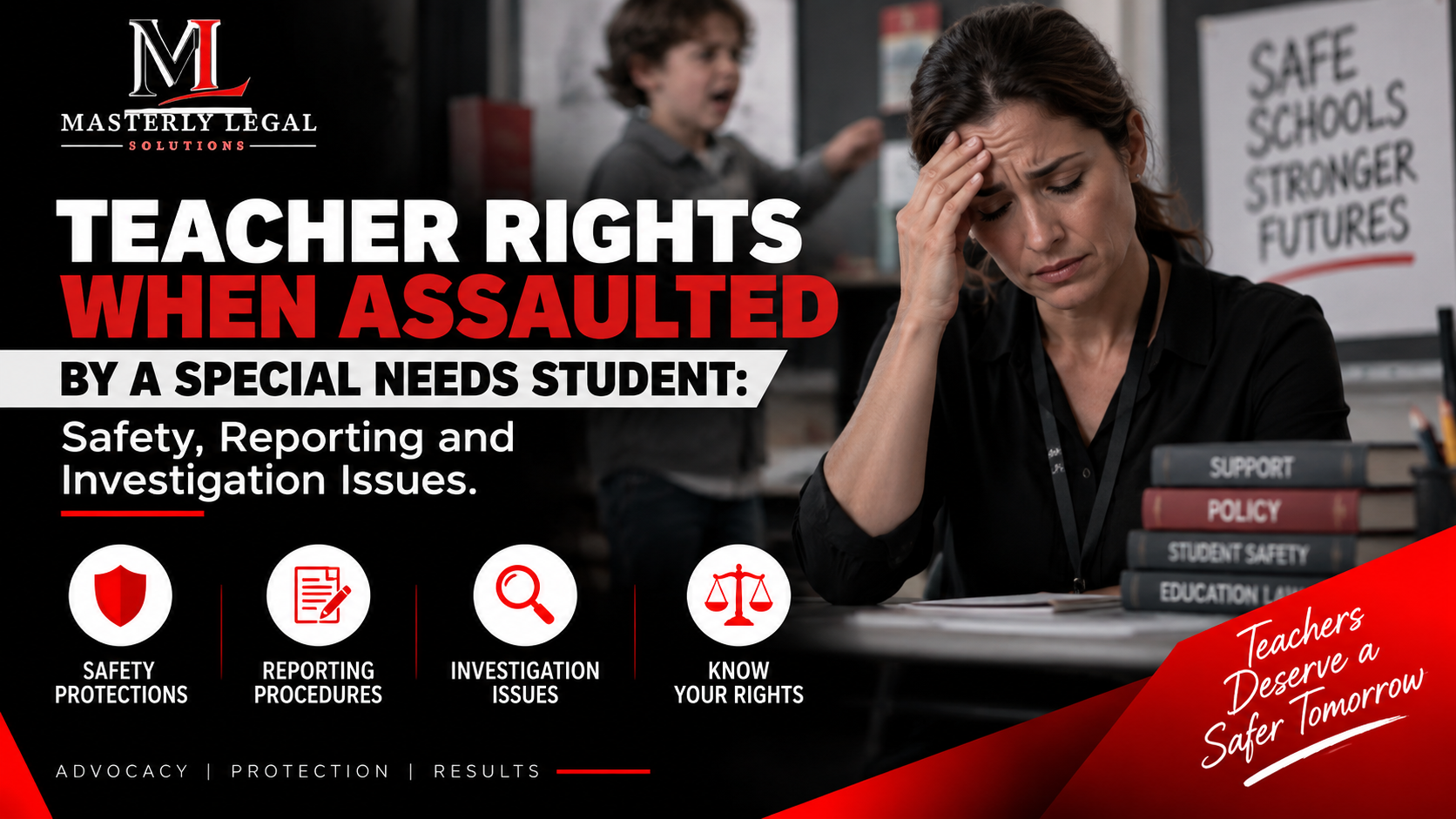
Teacher Rights When Assaulted by a Special Needs Student: Safety, Reporting and Investigation Issues


Looking for Legal & Business Solutions? Contact Us Now
Fill in the form or call us to set up a meeting