

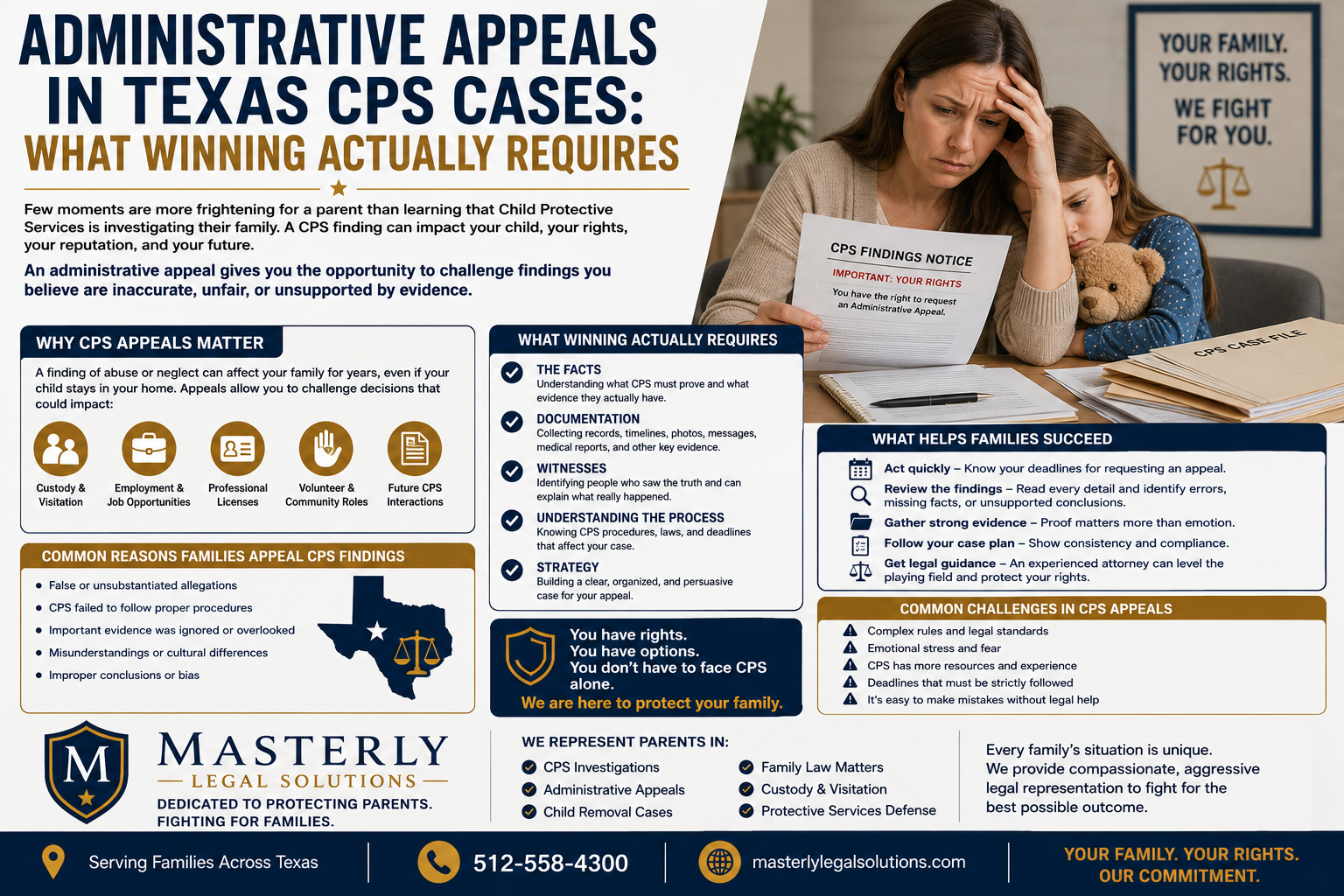
Administrative Appeals in Texas CPS Cases: What Winning Actually Requires
Few moments are more frightening for a parent than learning that Child Protective Services is investigating their family. Many parents feel shocked, confused, and overwhelmed when a cps investigator suddenly contacts them about allegations involving abuse or neglect. Some families believe the situation will clear up quickly if they cooperate, while others immediately fear losing their child, their reputation, and even their parental rights.
What many people do not realize is that administrative appeals in Texas CPS cases are not simply about telling your side of the story. Winning an appeal often requires preparation, strategy, documentation, and a deep understanding of how the investigation process works. A family may truly love and protect their child while still struggling against findings made by child protective services cps during an investigation.
At Masterly Legal Solutions, we understand how emotionally exhausting cps cases can become for parents and family members. False accusations, misunderstandings, incomplete evidence, and procedural mistakes can affect families for years. Whether your case involves alleged abuse, neglect, a safety plan, or findings connected to child protective investigations, understanding what actually helps families succeed during appeals can make a major difference.
Why CPS Appeals Matter More Than Most Parents Realize
Many parents assume the hardest part of the case is the initial investigation. However, the long-term consequences often come after the investigation process is complete. A finding involving child abuse or neglect may affect employment, custody disputes, professional licenses, volunteer opportunities, and future interactions with child protective services.
An appeal gives parents the opportunity to challenge findings they believe are inaccurate, unfair, or unsupported by evidence. Administrative appeals are important because CPS records can follow a family for years. Even when a child remains in the home, negative findings may still create serious legal and personal consequences.
Parents often underestimate how much preparation is required to challenge CPS decisions effectively. Administrative appeals are rarely won through emotion alone. Success usually depends on facts, records, timelines, witness testimony, and legal strategy.
Understanding Child Protective Services in Texas
Child protective services is part of the texas department responsible for investigating reports involving child abuse or neglect. CPS workers investigate allegations involving physical abuse, sexual abuse, neglect, unsafe living conditions, drug exposure, abandonment, and other concerns related to a child's safety.
When reports are made, the state agency must determine whether a child may face immediate danger or serious harm. CPS investigations may involve interviews, home visit requests, medical reviews, school records, and conversations with family members.
In some cases, the investigation ends quickly with no findings. In other situations, CPS may recommend services, implement a safety plan, remove a child from the home, or seek court involvement through juvenile dependency court proceedings.
What Triggers CPS Investigations
CPS investigations may begin after reports from teachers, doctors, neighbors, police, medical staff, relatives, or anonymous callers. Reports involving suspected child abuse are often treated seriously, even when the evidence is incomplete or unclear.
Examples of allegations that may trigger investigations include:
- Claims of physical abuse
- Concerns involving sexual exploitation
- Reports of neglect
- Unsafe living conditions
- Substance abuse concerns
- Domestic violence allegations
- School attendance concerns
- Medical neglect accusations
- Allegations involving inadequate supervision
The state agency is required to investigate reports that may place a child at immediate risk. However, not every report is accurate, and not every allegation reflects actual abuse or neglect.
The Emotional Reality of CPS Cases
Parents involved in cps cases often describe the experience as one of the most stressful moments of their lives. Families may feel judged before the investigation even begins. Some parents fear losing custody, while others worry about how accusations could affect employment or reputation.
A child may also feel frightened and confused during interviews and investigations. When social workers enter the home, children sometimes struggle to understand why strangers are asking personal questions about the family.
Even when allegations are false, the investigation process itself can place enormous pressure on parents. This is one reason legal counsel can become critical during both investigations and administrative appeals.
The CPS Investigation Process Explained
The cps investigation process usually begins when CPS receives a report involving possible abuse or neglect. The report is screened to determine the urgency and potential risk level.
After the report is accepted, cps workers may begin:
- Interviewing the child
- Contacting child's parents
- Conducting a home visit
- Reviewing school or medical records
- Speaking with relatives or witnesses
- Reviewing criminal history
- Evaluating safety concerns
During the investigation stage, CPS attempts to determine whether neglect occurred, whether abuse occurred, and whether the child safe within the current environment.
The investigation process may feel overwhelming because parents are often asked to respond quickly while dealing with emotional stress and uncertainty.
Why Administrative Appeals Become Necessary
Parents may seek administrative appeals when they believe CPS findings are incorrect or unfair. Sometimes families cooperate fully but still receive findings involving abuse or neglect. In other situations, parents feel CPS ignored important evidence or misunderstood the circumstances.
Administrative appeals may challenge:
- Findings of child abuse
- Findings of neglect
- Registry placement
- Investigation conclusions
- Risk assessment decisions
- Safety plan determinations
Winning appeals often requires more than simply disagreeing with CPS. Families must usually demonstrate why the findings are unsupported, inaccurate, or procedurally flawed.
False Allegations Can Affect Entire Families
False accusations involving child abuse or neglect can damage relationships, careers, and emotional well-being. Even when CPS does not remove a child, the investigation itself may create fear and stress throughout the family.
Sometimes allegations arise during divorce disputes, custody conflicts, school disagreements, or family arguments. In other situations, mandatory reporters may misunderstand a situation and make reports based on incomplete information.
An alleged perpetrator may feel powerless once the investigation begins. However, families still have rights throughout cps investigations and administrative appeals.
What Winning an Appeal Actually Requires
Many parents believe that telling the truth alone will automatically resolve the case. Unfortunately, administrative appeals are often more complicated than families expect. Winning generally requires careful preparation and evidence-based arguments.
Successful appeals may involve:
- Detailed documentation
- Witness testimony
- Medical records
- School records
- Timeline analysis
- Expert evaluations
- Procedural challenges
- Cross-examination preparation
Emotions matter because these cases involve children and families, but evidence usually carries the greatest weight during appeals.
Understanding Safety Plans
A safety plan is one of the most misunderstood parts of many cps cases. CPS may ask parents to sign a written agreement outlining restrictions, supervision arrangements, or temporary changes involving the child.
Safety plans may include:
- Supervision requirements
- Restrictions on contact
- Temporary placement arrangements
- Drug test requirements
- Counseling participation
- Monitoring agreements
Many parents sign a safety plan believing it is mandatory when, in some circumstances, it may function more like a voluntary agreement. Families should understand the terms fully before signing documents affecting the child's care.
How Safety Plans Affect Appeals
Safety plans often become important evidence during administrative appeals. CPS may argue that signing the safety plan reflects acknowledgment of safety issues. Parents, however, may argue they signed only because they felt pressured or feared losing custody.
An appeal may examine whether:
- The safety plan was voluntary
- The parent understood the terms
- CPS explained the consequences
- The restrictions were reasonable
- The child faced immediate risk
Because safety plans can significantly affect cps cases, parents should consider consulting legal counsel before agreeing to major restrictions.
Child Protective Investigations Are Not Criminal Trials
One major misconception is that cps investigations work like criminal trials. In reality, child protective investigations operate under different standards and procedures.
A criminal investigation focuses on proving criminal conduct beyond a reasonable doubt. CPS investigations instead focus on evaluating risk factors, child's safety, and potential abuse or neglect concerns.
This distinction matters because CPS may reach findings even when no criminal case is filed. Parents sometimes assume that if police decline charges, CPS findings will automatically disappear. That is not always true.
When CPS and Police Investigate Together
Some cases involve both CPS and police simultaneously, a dual-track process that resembles how educators may face both administrative and legal scrutiny in North Carolina educator misconduct defense cases or Texas TEA investigations into educator misconduct. This commonly occurs in allegations involving sexual abuse, physical abuse, severe neglect, or serious harm to a child.
When police and CPS investigate together, parents should be especially cautious about statements made during interviews. Information shared during child protective services investigations may later affect criminal proceedings.
Families dealing with both a criminal investigation and cps investigations should seek experienced legal guidance quickly. The stakes become much higher when both systems are involved.
Why Documentation Matters During Appeals
Strong documentation often becomes one of the most important factors in successful appeals. Parents should preserve records connected to the investigation process whenever possible.
Helpful documentation may include:
- Medical records
- School records
- Counseling records
- Photographs
- Emails or messages
- Witness statements
- Timeline notes
- Safety plan documents
Administrative appeals frequently focus on whether CPS conclusions are supported by reliable evidence. Thorough records can help challenge inaccurate assumptions or unsupported findings.
The Role of Risk Assessments
Risk assessment tools are often used during cps investigations to evaluate whether a child may face future danger. CPS workers consider various risk factors when making recommendations involving protective services.
These assessments may include:
- Prior CPS history
- Substance abuse concerns
- Criminal history
- Domestic violence allegations
- Mental health concerns
- Home environment issues
While risk assessment tools can help identify genuine concerns, they are not perfect. Parents sometimes feel CPS places too much weight on assumptions rather than actual evidence involving the child.
Parents Rights During CPS Cases
Parents rights remain important throughout the investigation and appeal process. Many families mistakenly believe they must automatically agree to every request made by child protective services.
Parents generally have rights involving, much like educators benefit from education law attorneys who protect their due process rights and specialized education law attorneys protecting rights for students and teachers, including:
- Legal representation
- Court hearings
- Challenging findings
- Reviewing evidence
- Participating in appeals
- Contesting removals
- Requesting reasonable accommodations
Understanding parents rights early can help families avoid mistakes that may complicate appeals later.
Family Based Safety Services Explained
Family based safety services are programs designed to help families address concerns while allowing children to remain in the home whenever possible. CPS may recommend or require services aimed at improving safety and reducing future risk, similar to how schools turn to education lawyers for teachers and institutions or broader education law attorney legal services for schools and educators when addressing systemic concerns.
These services may include:
- Parenting classes
- Counseling
- Substance abuse treatment
- Home monitoring
- Mental health support
- Educational services
Participation in family based safety services does not always mean abuse or neglect occurred. However, CPS may view refusal to participate negatively during ongoing investigations.
Voluntary Agreements Can Still Carry Pressure
Parents are sometimes told that certain arrangements are voluntary. Examples may include voluntary placement agreements or voluntary services offered during investigations.
While technically voluntary, families often feel pressured to agree because they fear losing custody or facing court involvement. Parents may worry that refusing services will make them appear uncooperative.
Administrative appeals sometimes examine whether voluntary agreements were truly voluntary or whether parents felt coerced during the investigation process.
Temporary Custody and Court Orders
When CPS believes a child faces immediate danger, the agency may seek a court order allowing temporary custody or removal from the child's home, a moment when families often realize they should also have essential legal documents for families in place and, for school employees, access to Texas education lawyers offering expert legal help for schools and educators.
Court involvement significantly changes cps cases because judges become responsible for reviewing evidence and making decisions about the child's safety. Juvenile dependency court proceedings may involve multiple hearings, service requirements, and ongoing monitoring.
Parents facing removal proceedings should seek legal counsel immediately because court orders can affect parental rights and long-term custody outcomes.
Juvenile Dependency Court Proceedings
Juvenile dependency court oversees cases involving abuse or neglect allegations affecting children. These proceedings focus on protecting the child while evaluating the family's circumstances.
The juvenile dependency court may review, often alongside related internal investigations and employment or higher education concerns and parallel TEA investigations that threaten an educator’s license and career:
- Removal requests
- Safety plans
- Service requirements
- Placement decisions
- Visitation arrangements
- Permanency planning
Parents may attend multiple hearings while the case remains active. These proceedings can continue for months or longer depending on the circumstances.
Court Hearings and Administrative Appeals Are Different
A court hearing and an administrative appeal are not the same process. Court hearings usually involve judges making legal decisions about custody, services, or protective orders. Administrative appeals instead focus on reviewing CPS findings or investigative conclusions.
Families sometimes confuse these processes, which can create problems when deadlines or procedures are misunderstood. Appeals often involve specific timelines and procedural requirements.
Because cps cases may involve both juvenile dependency court and administrative appeals simultaneously, legal guidance becomes especially important.
Foster Care and Placement Concerns
When children are removed from the home, they may enter foster care temporarily while CPS investigates safety concerns. Removal can be emotionally devastating for both the child and parents.
The state agency may place children with:
- Relatives
- Foster families
- Emergency placements
- Approved caregivers
Parents often feel enormous pressure during these cases because they fear prolonged separation from the child. Appeals and court proceedings may affect how quickly reunification becomes possible.
Service Plans and Compliance Issues
CPS frequently creates service plan requirements during active investigations or court proceedings. Service plans may outline expectations parents must complete before reunification or case closure.
Examples may include:
- Counseling attendance
- Parenting courses
- Drug testing
- Therapy participation
- Supervised visitation
- Psychological evaluations
Parents sometimes feel overwhelmed by service plans, especially when balancing employment, transportation, and childcare responsibilities. Failure to complete services may negatively affect appeals or custody outcomes.
The Importance of Legal Counsel Early
Many families wait too long before speaking with an attorney. Parents sometimes believe cooperation alone will resolve concerns quickly. Unfortunately, statements made early during investigations may later affect administrative appeals or court proceedings.
An attorney can help families:
- Understand their rights
- Review safety plans
- Prepare for interviews
- Respond to allegations
- Evaluate evidence
- Challenge findings
Early legal guidance may help prevent mistakes that weaken a family's position later in the case.
CPS Workers and Human Judgment
CPS workers carry difficult responsibilities. They must investigate reports involving child abuse or neglect while making decisions intended to protect children from harm. However, CPS decisions still involve human judgment, and mistakes can happen.
Some cases involve incomplete evidence, rushed conclusions, or misunderstandings about the child's family situation. Parents may feel CPS focused too heavily on general allegations rather than the full context of the home environment.
Administrative appeals exist partly because investigations are not always perfect. Families deserve the opportunity to challenge findings they believe are inaccurate.
Child Safety Is the Core Focus
Throughout cps investigations and appeals, the central issue is usually the child's safety. CPS focuses on whether a child faces immediate risk, ongoing abuse, neglect, or unsafe conditions.
Parents sometimes feel frustrated because CPS may appear skeptical even when the family believes the allegations are clearly false. However, the agency's legal responsibility is to evaluate whether a child may face danger.
Appeals often require families to demonstrate not only that allegations are weak but also that the child safe within the home environment.
Home Visits and Investigative Pressure
A home visit is often one of the first major events during cps investigations. CPS workers may observe living conditions, interview children, review sleeping arrangements, and ask questions about the family's daily routines.
Parents frequently feel nervous during these visits because they fear every detail may be judged harshly. Minor household issues may feel magnified when viewed through the lens of child protective services.
Families should remain calm, respectful, and thoughtful during interactions with CPS while also understanding their rights during the investigation stage.
Child Abuse Allegations Can Affect Employment
Findings involving child abuse or neglect may affect more than custody matters. Teachers, healthcare workers, childcare providers, counselors, coaches, and other professionals may face employment consequences following CPS findings, sometimes requiring specialized legal support for educators and employees.
Even when no criminal case exists, employers may react negatively to CPS records involving abuse allegations. This is one reason administrative appeals become critically important for many parents and professionals.
Protecting your record can help safeguard both your family and your career opportunities.
Why Appeals Require Strategy
Administrative appeals are rarely successful through emotion alone. Families often feel understandably angry or hurt, but appeals usually require structured legal arguments and factual analysis.
Successful strategies may involve:
- Challenging weak evidence
- Identifying procedural errors
- Presenting expert testimony
- Highlighting inconsistencies
- Demonstrating compliance
- Correcting inaccurate records
Every case is different, and appeals should be tailored to the specific findings and evidence involved.
The Long-Term Impact of CPS Findings
Many parents focus only on immediate custody concerns. However, CPS findings may continue affecting families long after the investigation ends.
Long-term consequences may include:
- Reputation damage
- Employment concerns
- Custody disputes
- Future CPS scrutiny
- Emotional stress
- Family conflict
Because these findings can carry lasting consequences, parents should take appeals seriously from the beginning and consider proactive planning such as powers of attorney and other protections for their children.
Child Protective Services Cases Involving Neglect
Neglect allegations are among the most common issues in cps cases. However, neglect can involve many different situations, ranging from supervision concerns to medical care disputes.
Examples of neglect allegations may involve:
- Inadequate supervision
- Educational neglect
- Unsafe living conditions
- Medical concerns
- Failure to provide necessities
Not every difficult parenting situation constitutes abuse or neglect. Administrative appeals may challenge whether CPS correctly interpreted the circumstances.
When CPS Orders Services
Sometimes CPS may order services or strongly encourage participation in programs during ongoing investigations. Parents may feel confused about whether participation is truly optional.
Providing services can sometimes help families stabilize situations and address concerns. However, parents should still understand how compliance or noncompliance may affect future findings and appeals.
An attorney can help explain whether certain services are voluntary, recommended, or tied to court requirements.
The Role of Court Appointed Attorneys
In some juvenile dependency court proceedings, parents may qualify for a court appointed attorney. Legal representation becomes especially important when parental rights or custody are at risk.
An attorney can help:
- Prepare for hearings
- Review evidence
- Cross-examine witnesses
- Challenge CPS findings
- Protect parental rights
Families should not assume CPS proceedings are informal or minor simply because they are not criminal trials. The consequences can still be life-changing.
How Families Can Strengthen Their Position
Families facing administrative appeals should focus on preparation, organization, and consistency. Emotional reactions are understandable, but careful planning often matters more during appeals, just as teachers under TEA review benefit from experienced education attorneys who understand why teachers need legal representation.
Helpful steps may include:
- Keeping detailed records
- Following court requirements
- Preserving communication
- Attending required services
- Consulting legal counsel
- Remaining cooperative but informed
Appeals are often won through persistence, preparation, and credible evidence rather than dramatic courtroom moments.
Masterly Legal Solutions Helps Families Navigate CPS Appeals
At Masterly Legal Solutions, we understand that cps cases affect every part of a family's life. Parents facing investigations often feel overwhelmed, embarrassed, frightened, and uncertain about what comes next. False allegations, misunderstandings, and incomplete investigations can create enormous emotional strain.
Our team helps families understand the cps investigation process, evaluate appeal options, and protect their rights throughout administrative proceedings as part of comprehensive legal and business services for individuals and organizations. Whether your case involves alleged abuse, neglect, safety plan disputes, juvenile dependency court, or findings affecting your future, we are committed to helping families navigate these difficult situations carefully and strategically.
Every child deserves protection, and every parent deserves a fair opportunity to challenge inaccurate findings, supported when needed by broad, client-centered legal services for families and businesses.
How Child and Family Services Influence CPS Decisions
Many parents do not realize how closely child and family services work with Child Protective Services during active investigations. In some situations, child and family services may recommend counseling, parenting programs, or other forms of family services intended to address concerns raised during the investigation. A cps caseworker may review whether the family is participating in recommended programs while evaluating the child’s overall safety and well-being. These recommendations can become important during administrative appeals because CPS may argue that participation reflects ongoing child safety issues within the home. Families should understand that accepting services does not automatically mean abuse or neglect occurred, especially when parents are cooperating simply to protect their child and avoid further legal complications.
Why Family Law Issues Can Affect CPS Cases
Many cps cases overlap with family law disputes involving divorce, custody battles, visitation disagreements, or conflicts between parents and extended family members. In some situations, allegations of abuse or neglect arise during emotionally charged custody disputes, making it difficult to separate genuine child safety issues from personal conflict between adults. A cps caseworker may become involved after one parent makes allegations against the other, even when there is little supporting evidence. These cases can become especially complicated when courts are already handling custody or visitation matters connected to the child. Families facing both CPS investigations and family law disputes often need experienced legal guidance to protect their parental rights while responding carefully to the investigation process.
The Importance of Complete Investigations in CPS Cases
One of the biggest frustrations families experience during cps cases is the belief that CPS failed to complete investigations thoroughly before reaching conclusions. Parents sometimes feel that cps workers focused too heavily on general allegations while ignoring important evidence that supported the family’s position. A rushed investigation may overlook medical records, witness statements, school information, or explanations that provide critical context about the child’s environment. Families may also feel frustrated when CPS relies on assumptions instead of fully investigating the circumstances surrounding the allegations. During administrative appeals, demonstrating that CPS failed to complete investigations properly may become an important part of challenging findings involving abuse or neglect.
Family Helpline Resources and Support During CPS Investigations
Families involved in CPS investigations often feel isolated and overwhelmed, especially during the early stages of the investigation process, and educators in particular may need legal support for school investigations and TEA license issues or more targeted Texas TEA investigations and teacher certification help. In some situations, parents may seek support through a family helpline, counseling services, community programs, or other resources designed to help families navigate difficult situations involving a child’s safety and well-being. While support programs cannot replace experienced legal representation, they may help parents manage emotional stress and better understand available services during ongoing cps cases. Some family services programs also provide guidance related to parenting support, temporary assistance, or communication strategies during investigations. Parents should remember that seeking support does not automatically mean the allegations are true, especially when families are simply trying to protect their child and maintain stability during a stressful legal process.
Lessons Families Can Learn From Cases Outside Texas
Although CPS laws vary by state, some families compare their experiences to cases in places like southern california, where child protective investigations have also faced criticism regarding investigative procedures and family separation concerns. While Texas law controls cps cases within the state, reviewing broader discussions about protective services can help families understand how investigations may impact parents across the country. In both Texas and southern california, families often report concerns involving rushed conclusions, communication problems, and pressure to agree to safety plans without fully understanding their rights. These situations remind parents how important it is to remain informed, organized, and proactive throughout the investigation and appeals process. Regardless of location, families facing allegations involving abuse or neglect deserve fair investigations and the opportunity to challenge findings they believe are inaccurate or unsupported.
Speak With Masterly Legal Solutions About Your CPS Appeal
If you are dealing with cps investigations, allegations involving abuse or neglect, or administrative appeals connected to child protective services, you do not have to face the process alone. These cases can affect your child, your family, your reputation, and your future for years to come.
Masterly Legal Solutions understands how overwhelming CPS proceedings can become for parents trying to protect their child and preserve their parental rights. Our firm can help answer your questions, review your case, and explain possible legal options involving investigations, safety plans, court hearings, and appeals, while also guiding educators through TEA investigations so Texas teachers can survive and protect their licenses and addressing common causes of TEA investigations and available teacher protections.
Contact Masterly Legal Solutions at (972) 236-5051 for a free consultation. We are committed to helping families understand their rights, respond strategically to CPS allegations, and protect what matters most — their child and their future.
Disclaimer: This article is for educational and informational purposes only and should not be considered legal advice. Reading this article does not create an attorney-client relationship with Masterly Legal Solutions. Every CPS case involves unique facts and circumstances, and individuals should consult qualified legal counsel regarding their specific situation.


Teacher Rights When Assaulted by a Special Needs Student: Safety, Reporting and Investigation Issues


Looking for Legal & Business Solutions? Contact Us Now
Fill in the form or call us to set up a meeting





