

How Fast Administrative Leave Can Turn Into Termination in School Investigations
The Phone Call That Changes Everything
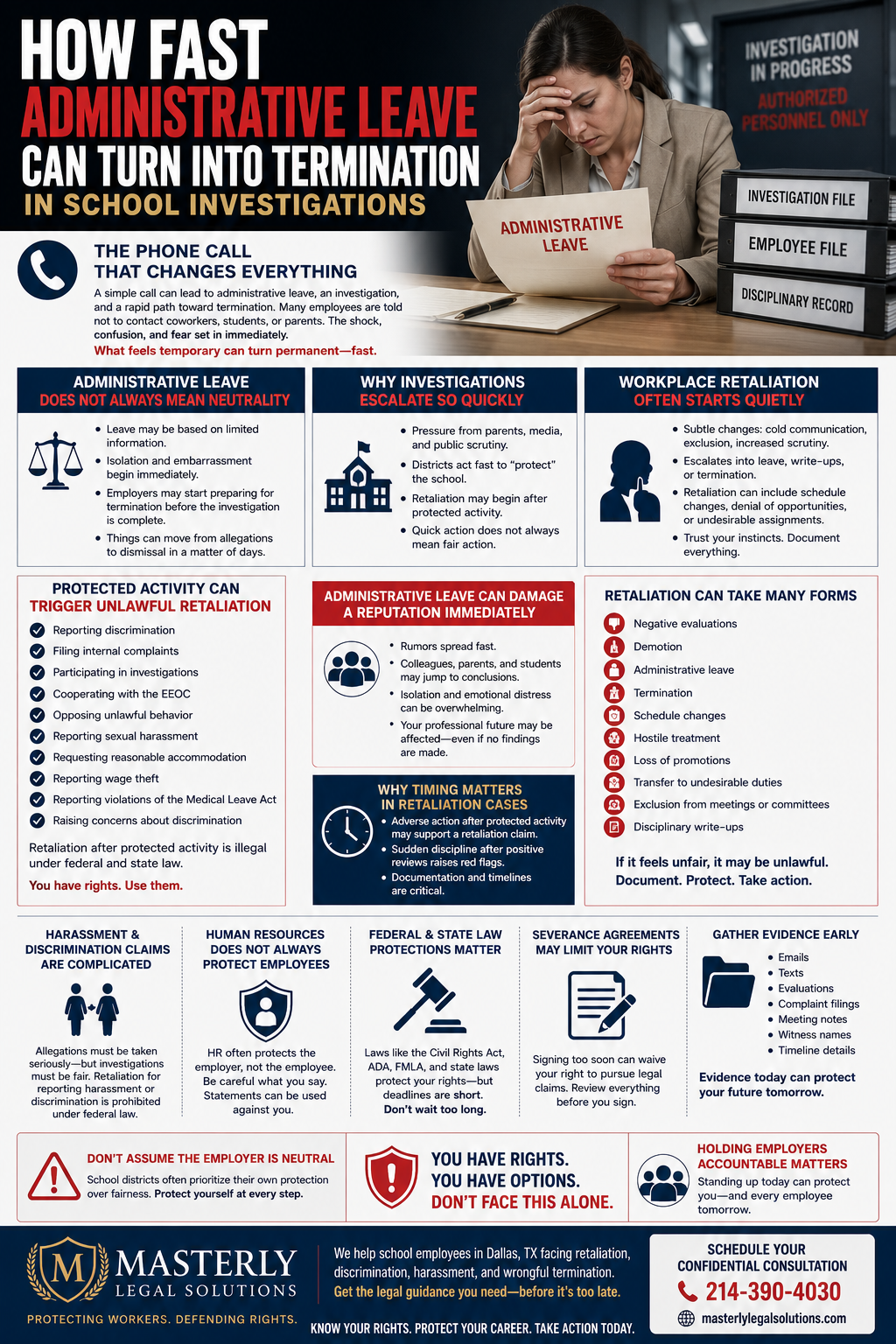
For many school employees, the moment begins with a simple phone call, short meeting, or email from administration. A teacher, counselor, coach, or staff member is suddenly informed they are being placed on administrative leave pending an investigation. In many cases, the employee is told not to contact co workers, students, or parents while the matter is reviewed. The situation can feel confusing, humiliating, and frightening within seconds.
Most employees initially believe administrative leave is temporary and that the truth will eventually clear their name. Unfortunately, school investigations can move quickly, and what begins as a leave decision may rapidly escalate into termination. Some workers are shocked by how little information they receive about the allegations or how quickly the employer begins treating them like they are already guilty.
The emotional impact can be devastating. Employees may fear losing their income, professional reputation, benefits, and future career opportunities all at once. For many Dallas TX school workers, the uncertainty surrounding administrative leave creates legitimate fears about financial stability and long-term employment prospects.
At Masterly Legal Solutions, we understand how overwhelming these situations can become. Our law firm works with employees facing retaliation, discrimination, harassment, and school investigations that threaten both their careers and personal lives, including educators needing legal help with TEA license defense and school investigations.
Administrative Leave Does Not Always Mean Neutrality
Many employees assume administrative leave is simply a neutral step while facts are gathered. In reality, the process is not always fair or unbiased, especially when workers do not fully understand how administrative leave and pay work at their job. Some employers place workers on leave after receiving only limited information or before conducting a full investigation.
An employer may claim the leave is “routine,” yet the employee immediately experiences isolation, embarrassment, and emotional distress. In some situations, school administration begins preparing for termination long before the investigation officially ends.
The speed of the process often catches workers off guard. An employee may go from receiving positive evaluations to facing allegations, suspension, and possible termination within days. This rapid shift can make it difficult for workers to gather evidence or fully understand their workplace rights before critical decisions are made.
Why School Investigations Escalate So Quickly
School districts face pressure from parents, media attention, student safety concerns, and public image issues. Because of this, administrators sometimes react aggressively when allegations arise, even before facts are fully confirmed, and teachers in Texas placed on administrative leave need clear steps to protect themselves.
An employer may believe immediate action protects the school district from criticism or legal exposure. Unfortunately, this can result in unfair treatment toward the employee under investigation.
In some cases, retaliation begins after a worker engages in protected activity such as reporting discrimination, harassment, or workplace misconduct. Instead of addressing the underlying concern, the employer shifts focus toward disciplining the reporting employee.
This type of workplace retaliation can create serious legal issues under federal and state law. Workers should understand that administrative leave is not always as temporary or harmless as it first appears.
Workplace Retaliation Often Starts Quietly
One of the most dangerous aspects of workplace retaliation is how subtle it can appear at the beginning. An employee may notice increased scrutiny from a supervisor or manager after filing a complaint or reporting misconduct.
At first, the changes may seem minor. Communication becomes colder. Meetings happen without the employee present. Small mistakes suddenly receive significant attention. Over time, these retaliatory acts may escalate into administrative leave, disciplinary write-ups, or termination, making guidance from an experienced retaliation lawyer for workplace retaliation claims especially important.
Retaliation may also involve negative schedule changes, exclusion from committees, denial of advancement opportunities, or reassignment to undesirable duties. Many employees second guess themselves and wonder whether they are imagining the unfair treatment.
Unfortunately, employer retaliation is far more common than many workers realize, especially inside school systems where administrators hold significant authority over employment decisions.
Protected Activity Can Trigger Unlawful Retaliation
Employees have legal protections when engaging in protected activity. This means workers generally cannot be punished for reporting misconduct, discrimination, harassment, wage concerns, or safety violations in good faith.
Protected activity may include:
- Reporting discrimination
- Filing internal complaints
- Participating in investigations
- Cooperating with the equal employment opportunity commission
- Opposing unlawful workplace behavior
- Reporting sexual harassment
- Requesting reasonable accommodation
- Reporting wage theft
- Reporting violations involving the medical leave act
- Raising concerns about workplace discrimination
Even though these protections exist under employment law, some employers still retaliate against workers after complaints are filed.
A retaliation claim may arise when an employee experiences adverse employment action after engaging in protected activity. Timing often becomes important evidence when evaluating these cases.
Administrative Leave Can Damage a Reputation Immediately
Even before a formal decision is made, administrative leave can severely damage a worker’s reputation inside the workplace and community. Rumors spread quickly in schools, especially when co workers notice someone suddenly disappears from campus.
Other employees may speculate about the allegations without knowing the facts. Parents and students may begin asking questions, creating additional stress for the worker involved.
In some situations, the employee becomes isolated from colleagues who fear becoming involved in the investigation themselves. This emotional pressure can become overwhelming, particularly when the employee feels powerless to defend themselves publicly.
For Dallas workers employed in education, protecting a professional reputation is often critical to future employment opportunities.
Harassment Complaints Can Become Complicated
Schools must take harassment allegations seriously, but investigations still need to remain fair and objective. Unfortunately, some employers react to complaints by assuming guilt before reviewing all available evidence.
Harassment allegations may involve students, staff members, parents, or administrators. The complexity of these situations can create confusion and emotional tension throughout the workplace.
Some employees who report harassment later face workplace retaliation themselves. A worker who files a complaint about sexual harassment may suddenly receive increased scrutiny or disciplinary pressure from administration, and may benefit from support from a retaliation lawyer offering workplace employment help.
Retaliation connected to harassment complaints is prohibited under federal law and anti discrimination law protections. Employees should not fear punishment simply because they reported misconduct with a good faith belief that violations occurred.
Discrimination Investigations Are Not Always Fair
Discrimination allegations inside schools can involve race, disability, religion, age discrimination, sex, sexual orientation, or national origin concerns. Unfortunately, investigations into these issues are not always handled fairly.
An employer may selectively enforce company policies against one employee while ignoring similar conduct from others. In some situations, the worker reporting discrimination becomes the primary focus of the investigation instead of the underlying misconduct.
Employment discrimination cases often involve subtle patterns of unfair treatment rather than obvious statements or admissions. A supervisor may suddenly begin criticizing job performance after the employee reports concerns about workplace discrimination.
These situations may support a viable retaliation claim depending on the facts involved.
Workplace Retaliation Can Lead to Wrongful Termination
Many employees placed on administrative leave eventually discover the employer intended to terminate them from the beginning. In some situations, the investigation becomes little more than a process used to justify a preplanned decision.
Wrongful termination may occur when an employer fires a worker for engaging in protected activity or because of unlawful discrimination. Employees who report misconduct, cooperate with investigations, or oppose illegal acts may later become targets themselves.
Workplace retaliation cases often involve adverse actions disguised as performance concerns or policy violations. The employer may attempt to create documentation supporting termination after the employee files a complaint.
Because these situations develop quickly, employees should consider speaking with employment lawyers before making major decisions regarding resignation, interviews, or severance agreements.
Human Resources Does Not Always Protect Employees
Many workers assume the human resources department exists primarily to protect employees. In reality, human resources often focuses on protecting the employer from liability exposure, sometimes by relying on outside HR consulting services and workplace training support.
This does not mean every HR representative acts unfairly, but employees should understand the employer’s interests frequently influence the investigation process. Statements made during interviews may later be used to justify discipline or termination.
Workers should remain professional while also understanding their workplace rights throughout the investigation. Seeking legal advice early may help employees avoid mistakes that could weaken future legal claims.
The Emotional Impact of Sudden Leave
Administrative leave creates emotional strain that many workers are unprepared to handle. Employees often feel embarrassed, angry, confused, and isolated after being removed from the workplace.
The uncertainty surrounding employment status can affect sleep, relationships, finances, and mental health. Many workers experience emotional distress while waiting for updates from administration.
Some employees feel pressure to resign simply to escape the stress and humiliation. Unfortunately, resigning too quickly can sometimes hurt a potential retaliation claim or wrongful termination case.
This emotional pressure becomes even worse when the employee fears losing healthcare benefits, retirement contributions, or income needed to support family responsibilities.
Federal and State Law Protections Matter
Several federal and state law protections exist to help workers facing retaliation, harassment, and discrimination in the workplace. Employment law provides safeguards for employees who report misconduct or participate in investigations, and a firm that offers labor and employment counsel alongside internal investigation services can help workers and institutions navigate these protections.
The civil rights act and other anti discrimination law protections prohibit employers from retaliating against workers who engage in protected activity. Federal law also protects workers requesting reasonable accommodation under disabilities act protections.
Employees dealing with fmla leave or medical leave concerns may also receive protections under the medical leave act and related laws.
However, these protections often involve very short deadlines. Waiting too long to seek guidance may negatively affect legal options.
Retaliation Can Happen After Reporting Discrimination
Employees who report discrimination often expect the employer to investigate fairly and resolve the issue professionally. Unfortunately, reporting discrimination sometimes triggers retaliatory conduct instead.
A worker may suddenly face administrative leave, disciplinary action, exclusion from meetings, or increased monitoring shortly after filing complaints. Employer retaliation often appears gradually before escalating into more serious consequences.
Retaliation cases may involve:
- Schedule changes
- Negative evaluations
- Demotion
- Hostile treatment
- Transfer to undesirable duties
- Loss of promotional opportunities
- Administrative leave
- Termination
When an employer retaliated against a worker for engaging in protected activity, legal action may become necessary to hold employers accountable.
The Importance of Gathering Evidence Early
One of the biggest mistakes employees make is waiting too long to gather evidence during school investigations. By the time termination occurs, important documents, emails, or witness memories may already be difficult to access, and the employer may have already conducted an internal review or independent workplace investigation into alleged misconduct.
Employees should carefully preserve:
- Emails
- Text messages
- Evaluations
- Disciplinary notices
- Complaint filings
- Witness names
- Meeting notes
- Timeline details
Gather evidence as early as possible while details remain fresh. Documentation often becomes critical when proving retaliation, harassment, or discrimination claims.
Why Timing Matters in Retaliation Cases
Timing frequently becomes important evidence in retaliation disputes. If adverse employment action occurs shortly after protected activity, the connection may support a retaliation claim.
For example, an employee files a complaint about workplace discrimination and is placed on administrative leave weeks later. That timing may raise serious questions regarding the employer’s motives.
Courts often evaluate whether the employer’s explanation is supported by documentation and consistent with company policies. Sudden discipline after years of positive job performance may also strengthen concerns about retaliation.
School Employees Often Fear Speaking Up
Many employees remain silent about misconduct because they fear retaliation from administrators or supervisors. These fears are often justified.
Workers may worry about losing income, benefits, advancement opportunities, or professional reputation. Some employees stay quiet because they believe the employer will protect administration instead of investigating fairly.
Unfortunately, silence often allows harassment, discrimination, and unfair treatment to continue unchecked within the workplace.
Understanding workplace rights and seeking legal guidance early can help employees protect themselves before the situation escalates further.
Hostile Work Environment Claims in Schools
A hostile work environment may develop when harassment, retaliation, or discriminatory conduct becomes severe or persistent enough to interfere with employment conditions.
Employees experiencing a hostile work environment often feel intimidated, isolated, or emotionally exhausted. The behavior may come from supervisors, co workers, or administrators.
Examples may include repeated humiliation, verbal attacks, unfair scrutiny, exclusion, or retaliatory discipline. When the employer ignores these concerns, legal claims may arise under employment law protections.
Administrative Leave Can Affect Future Employment
Many employees underestimate how much administrative leave can affect future career opportunities. Even when no formal findings occur, future employers may ask questions about gaps in employment or prior investigations.
For teachers and school staff, professional reputation often plays a major role in hiring decisions. False assumptions and rumors may follow an employee long after the investigation ends.
Protecting your professional record during the investigation process is extremely important, especially if termination becomes possible.
Reasonable Accommodation Issues During Investigations
Employees with medical conditions or disabilities may face additional challenges during school investigations. In some cases, performance concerns relate directly to accommodation issues the employer failed to address properly.
Workers requesting reasonable accommodation under federal law should not face retaliation for asserting their rights. Unfortunately, some employers view accommodation requests as inconvenient or disruptive.
Disabilities act protections require employers to consider accommodations in good faith. Punishing workers for requesting accommodations may create additional legal exposure.
Medical Leave and Retaliation Concerns
Employees taking medical leave or fmla leave sometimes return to work only to face increased scrutiny or disciplinary pressure. In certain situations, the employer may view extended leave as inconvenient and begin searching for reasons to remove the worker.
Retaliation connected to medical leave can become a serious employment law issue. Workers should carefully document changes in treatment after returning from approved leave.
An employer participating in retaliatory conduct related to medical leave may violate both federal law and state law protections.
Why Some Employees Wait Too Long
Many workers delay seeking help because they believe the situation will improve on its own. Unfortunately, the longer an employee waits, the more difficult it may become to protect evidence and evaluate legal options.
Some employees fear appearing confrontational or worry they will make matters worse by contacting employment lawyers. Others simply do not realize how quickly administrative leave can turn into termination.
Because retaliation and discrimination claims often involve very short deadlines, early action can be extremely important.
Severance Agreements May Limit Legal Rights
Some employers offer severance agreements shortly before or after termination. Employees under emotional pressure may feel tempted to sign quickly without understanding the long-term consequences.
A severance agreement may waive certain legal claims against the employer. Workers should carefully review these documents before signing anything.
Speaking with lawyers in Dallas before accepting severance terms may help employees better understand their rights and options.
Retaliation Can Affect More Than One Employee
Sometimes retaliation spreads beyond the original worker involved in the complaint. Other employees who support the reporting worker or cooperate with investigations may also experience retaliation.
An employer may attempt to intimidate witnesses or discourage co worker participation in the process. This creates a chilling effect where employees become afraid to report misconduct or cooperate honestly.
These patterns often reveal larger workplace culture problems involving fear, intimidation, and unfair treatment.
Wage Issues Can Also Lead to Retaliation
Not all retaliation cases involve discrimination or harassment. Employees who report wage theft, minimum wage violations, or payroll concerns may also experience retaliatory conduct.
An employer cannot legally punish workers simply because they raised concerns about compensation or employment practices. These protections apply under various federal and state law provisions.
Employees should not fear retaliation for asking questions about wages, overtime, or payroll practices.
Holding Employers Accountable Matters
When retaliation and discrimination go unchallenged, workplace culture often becomes worse over time. Employees lose trust in administration, and misconduct continues unchecked.
Legal action may help hold employers accountable for unlawful conduct. While not every situation results in a lawsuit, workers deserve fair treatment and protection under employment law.
Holding employers accountable can also help protect other employees from experiencing similar mistreatment in the future.
Dallas Workers Should Understand Their Rights
Dallas workers employed in education systems often feel overwhelmed when facing investigations, administrative leave, or sudden disciplinary action. Many employees assume school districts have unlimited authority to make employment decisions without challenge.
However, workers still have legal protections against retaliation, harassment, discrimination, and wrongful termination. Understanding these protections may help employees make informed decisions during stressful situations.
Employees in Dallas TX should not wait until termination occurs before learning about their workplace rights.
Why Legal Guidance Can Make a Difference
A strong legal strategy may help employees respond more effectively during school investigations. Employment lawyers can help workers evaluate documentation, timelines, and potential retaliation concerns before major decisions are made.
An experienced workplace retaliation attorney may identify patterns employees overlooked during emotionally stressful situations. Legal guidance can also help workers understand how federal and state law protections apply to their case.
Seeking an initial consultation early often gives employees more time to protect evidence and evaluate legal options before deadlines expire.
The Role of a Retaliation Lawyer
A retaliation lawyer helps employees understand whether workplace conduct may violate employment law protections. These cases often involve complicated timelines, documentation, and employer explanations.
Workers dealing with administrative leave, retaliation, or discrimination may benefit from speaking with a workplace retaliation attorney before responding to interviews or disciplinary meetings.
Employment lawyers also help employees understand whether they may have a viable retaliation claim based on the circumstances involved.
Why Employees Should Not Assume the Employer Is Neutral
One of the biggest mistakes employees make is assuming the employer is completely neutral during investigations. In reality, school districts often prioritize institutional protection, public image, and liability concerns.
This does not automatically mean every investigation is unfair, but employees should still protect themselves throughout the process. Documentation, legal advice, and careful communication can become critical when careers are at stake.
An employee waits at significant risk when assuming honesty alone will guarantee fairness.
Federal Employees and School Investigations
Federal employees working in educational settings may also face retaliation, discrimination, or hostile work environment concerns during investigations. These workers often operate under additional rules and procedures connected to federal employment protections.
The equal employment opportunity commission may become involved when retaliation or discrimination claims arise involving federal workers. Because these processes can become highly technical, early legal guidance may be especially important, especially when workers are considering retaliation and labor complaints that may be filed with the Department of Labor.
Federal employees should understand that strict filing deadlines frequently apply in these situations.
Medical Care Institutions and Educational Employment
Certain school systems work closely with medical care institutions involving student healthcare services, disability support, or counseling programs. Employees working in these environments may face additional compliance pressures during investigations, particularly where higher education law and institutional compliance issues are involved.
Concerns involving accommodations, disabilities act protections, or medical leave issues can quickly complicate workplace disputes. Employers must still follow anti discrimination law protections even during sensitive investigations involving student care or healthcare responsibilities.
Workers should never assume their legal protections disappear simply because a school claims urgency or public concern.
Contact Masterly Legal Solutions About Administrative Leave and Retaliation
If you have been placed on administrative leave, are facing retaliation, or believe your employer treated you unfairly during a school investigation, Masterly Legal Solutions is here to help. Our legal team understands how quickly workplace situations can escalate from internal complaints to termination, emotional distress, and long-term career damage.
Whether you are dealing with harassment, discrimination, hostile work environment concerns, wrongful termination, or retaliation after protected activity, our law firm can help you better understand your workplace rights and legal options. We know how stressful these situations can become for Dallas workers and their families, especially when income, reputation, and future employment opportunities are at risk.
Do not wait until the situation becomes worse. Many retaliation and discrimination claims involve very short deadlines under federal law and state law protections. Speaking with employment lawyers early may help protect your position and preserve important evidence before critical opportunities are lost.
Contact Masterly Legal Solutions at (972) 236-5051 for an initial consultation. Our workplace retaliation attorney team proudly helps workers in Dallas TX and surrounding communities who are facing administrative leave, workplace retaliation, discrimination, harassment, and unfair treatment from an employer.
Disclaimer: This article is provided for informational and educational purposes only. It should not be considered legal advice and does not create an attorney-client relationship. Every employment situation is different, and outcomes depend on the specific facts involved. If you need legal guidance regarding administrative leave, retaliation, discrimination, or workplace investigations, contact Masterly Legal Solutions directly for advice tailored to your circumstances.




Teacher Rights When Assaulted by a Special Needs Student: Safety, Reporting and Investigation Issues



Looking for Legal & Business Solutions? Contact Us Now
Fill in the form or call us to set up a meeting