

How CPS Risk Assessments Work and Why They Matter to Your Case
When Child Protective Services begins evaluating your family, even routine questions can feel overwhelming. Parents may worry about what investigators are reviewing, how their answers will be interpreted, and whether the findings could affect their children.
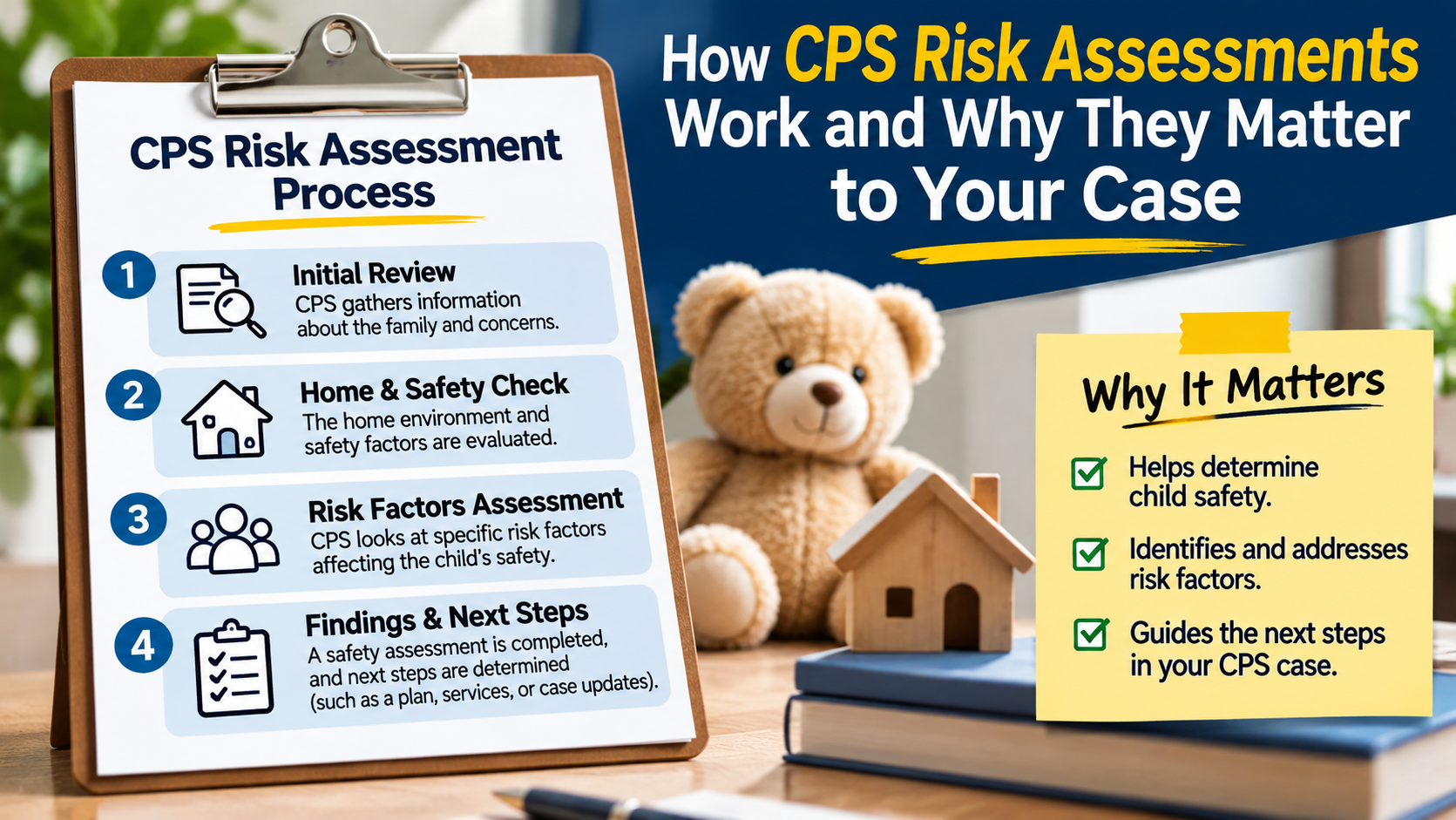
A CPS risk assessment is an important part of many Texas child protection investigations. It helps evaluate the likelihood that a child may experience abuse or neglect in the future. The findings can influence decisions about additional services, ongoing agency involvement, and the direction of a case.
Understanding the purpose of this assessment matters because incomplete information, unclear timelines, or misunderstood family circumstances can affect how concerns are evaluated.
Masterly Legal Solutions provides legal consultation for qualifying Texas CPS matters. Our firm helps parents understand their rights, review relevant documentation, and identify appropriate legal responses during a stressful family situation.
What Is a CPS Risk Assessment in Texas?
A CPS risk assessment is a structured evaluation used by the Texas Department of Family and Protective Services (DFPS), the agency responsible for Child Protective Services in Texas, to assess the likelihood of future child abuse or neglect.
During a child protective investigation, caseworkers may review family circumstances, prior reports, caregiver information, and other risk and protective factors that could affect a child's well-being as part of the broader issue of child maltreatment.
The purpose is to identify potential future risks and determine whether further protective action or services may be appropriate.
National public health data show that over 4 million reports of suspected maltreatment were received in 2018, and about 1 in 3 U.S. children will have a CPS investigation by age 18.
A risk assessment is not the same as a finding that a parent committed abuse or neglect. It also does not automatically mean a child will be removed from the home, and children are not responsible for preventing harm.
How CPS Risk and Protective Factors Affect an Investigation
Investigators may consider several CPS risk factors and protective factors when reviewing a family situation.
These can include prior child welfare concerns, the nature of reported allegations, caregiver behavior, supervision arrangements, and other circumstances identified through the agency's assessment process.
The presence of a risk factor does not necessarily establish wrongdoing. Its significance depends on the facts, the assessment criteria, and the information available to investigators. Risk assessments commonly categorize the likelihood of future maltreatment as low, moderate, or high. Standardized tools, including models such as Structured Decision Making, are often used to promote fairness and consistency in caseworker decisions, although the validity of particular tools can vary by jurisdiction even when they rely on similar foundations.
For example, a family may have experienced a difficult period involving financial stress, housing instability, trouble meeting basic needs, or a change in caregivers.
These circumstances can affect daily life, and issues like food insecurity or loss of public benefits may increase or decrease concern depending on the surrounding facts and available supports. These circumstances should be evaluated in context rather than treated as automatic proof of neglect.
An attorney can help parents understand the allegations and identify information that may be important to an accurate assessment. The assessment does not determine who is responsible for every concern and is not the same as a finding of abuse or neglect.
How a CPS Safety Assessment Differs From a Risk Assessment
A CPS safety assessment focuses on whether a child faces immediate danger and whether protective action is currently necessary, including whether there is a present threat of serious harm.
A risk assessment considers the likelihood of future abuse or neglect, including factors such as the child’s age and developmental vulnerability, the child’s environment, and whether supportive relationships may reduce the likelihood of abusive behaviors.
Both evaluations may occur during a Texas CPS investigation, but they address different questions.
Safety concerns may require immediate protective decisions, while risk findings may influence longer-term recommendations and services. For example, concerns about financial stress or housing instability may also involve difficulty meeting basic needs, including food insecurity, when relevant to the allegations. Poverty is a well-established risk factor for child maltreatment, but hardship alone should still be evaluated in context. Family supports or public benefits may decrease risk and affect daily life in ways that matter to the assessment.
Neither assessment alone determines every legal outcome. Decisions depend on the investigation, applicable law, agency findings, and any court proceedings.
Understanding these differences can help parents better interpret the information they receive from CPS.
Why Accurate Documentation Matters During a CPS Risk Evaluation
Parents involved in a CPS investigation may be asked by the assigned cps worker about past events, living arrangements, medical concerns, school attendance, or interactions with other caregivers.
A cps risk assessment may consider patterns in the home, the child's age, developmental vulnerabilities, and parts of the child's environment, along with records from schools, health providers, or social services.
The separate safety assessment focuses on whether there is immediate danger that could lead to harm if no action is taken.
When important details are missing or dates are unclear, the family's circumstances may be difficult to understand.
Accurate Texas child welfare documentation provides a clearer record of relevant events and supports informed legal review.
Family Records and Relevant Information
Depending on the allegations, useful documents may include:
- Medical records related to the reported concern
- School attendance or educational records
- Existing custody and visitation orders
- Relevant communications with caregivers or service providers
- Documents showing completed services or appointments
- Written notices and correspondence received from CPS
A CPS worker may also gather information through home visits and collateral contacts as part of the risk assessment process.
Not every family needs the same records.
The appropriate documents depend on the concerns being investigated and whether the records are legally relevant, including records tied to education, social services, or a child’s special needs where those issues relate to the allegations.
Complete documentation can also help identify supports that may reduce concerns and help prevent unnecessary family separations.
An attorney can help determine which information deserves attention and whether sensitive records, including health records, should be disclosed.
Why a Clear Timeline Can Matter
A CPS investigation may involve events that occurred over several days, weeks, or months.
A clear chronology can help distinguish confirmed facts from assumptions and identify when particular actions occurred, especially in stressful situations.
For example, a parent may have arranged medical care, contacted a school, or changed a supervision arrangement before receiving notice of the investigation.
These details may be relevant to how family circumstances are understood, including records such as medical records, education records, communications with service providers, and, in some cases, records from social services providers.
Children with special needs may also have additional records that are relevant, depending on the allegations.
Parents should preserve existing evidence accurately and avoid altering documents or attempting to influence another person's account.
Legal counsel can review the available timeline and identify information that may be important to the family's response.
Addressing Incomplete or Disputed Information
Sometimes an investigation involves conflicting accounts from different individuals. CPS investigations can begin within 24 hours of a report, which is why preserving a clear timeline matters.
A parent may disagree with the description of an incident or believe that important facts have been overlooked, especially when allegations involve child neglect, physical abuse, sexual abuse, or multiple forms of alleged maltreatment.
Disagreement alone does not establish that the investigator's conclusions are incorrect.
However, relevant records and credible supporting information may help clarify disputed circumstances.
Professional legal review can help parents distinguish issues that require factual clarification from matters that may call for a formal legal response, and clear timelines are especially important in stressful situations where memories and dates may later be disputed.
Questions Parents Should Consider Before CPS Interviews or Signing Documents
Communication with CPS may have legal consequences, especially when disputed allegations involve child neglect, physical abuse, sexual abuse, or more than one form of alleged maltreatment.
During an investigation, parents may be asked to participate in interviews, provide information, authorize access to records, or consider proposed agreements. If the same allegations also draw attention from the police or relate to an alleged crime, what a parent says and signs can affect a related criminal case, so records and other supporting information may be important for clarifying the dispute.
Texas law recognizes important rights for people who are the subject of a child abuse or neglect investigation.
Understanding those rights can help parents make informed decisions while taking child safety concerns seriously.
Understanding the Child Abuse and Neglect Allegations Being Investigated
Parents should understand the nature of the allegations that CPS is reviewing.
Texas Family Code Section 261.307 provides for written and verbal notice of specified rights and information during covered investigations, including information about known allegations and access to legal counsel.
Some reports involve child abuse and neglect in multiple forms, and some allegations may also involve police or possible crime-related concerns that can affect a related criminal case.
Parents may seek clarification about the investigator's role, the purpose of requested information, and what the agency is asking them to address.
A lawyer can help evaluate the allegations and explain their potential legal significance. Parents may also later have to attend multiple hearings related to a CPS investigation.
Legal Representation During Interviews
Statements provided during a CPS investigation may become part of the agency's records and may be relevant to later proceedings, so parents should understand whether CPS is investigating allegations of child abuse and neglect, whether the report involves multiple forms of alleged maltreatment, and whether the same statements could affect a parallel inquiry by police or a criminal case.
Under Texas law, a person who is the subject of a covered investigation has the right to seek legal counsel and to decline to speak with a department agent without counsel present.
Other rights concerning home entry, interviews, medical records, and examinations may also apply, subject to court orders and applicable exceptions.
Parents should understand that declining a voluntary request does not necessarily end an investigation. CPS may pursue available legal procedures when it believes further action is necessary.
Legal advice can help families understand the consequences of their choices under the circumstances.
Reviewing Documents Before Agreeing to Terms
Parents may receive requests to sign documents concerning interviews, records, services, or temporary family arrangements.
Before signing, it is important to understand what the document means, what responsibilities it creates, and whether it affects existing legal rights.
Texas law recognizes the right to consult an attorney before agreeing to a proposed voluntary safety plan.
A parent should not assume that every document has the same legal effect.
An attorney can review proposed terms, explain potential consequences, and help the parent understand available options.
When Legal Counsel Can Help With CPS Case Preparation
CPS case preparation involves understanding the allegations, reviewing available records, identifying relevant legal rights, and evaluating possible next steps.
Parents may seek legal advice early in an investigation, particularly when the allegations are serious or when agency requests could affect family relationships.
When the Assessment Raises Concerns About Future Risk
A CPS risk assessment may identify factors that the agency believes require continued attention.
Parents may disagree with parts of the assessment or want clarification about its findings.
Legal counsel can review the available information and assess whether the documentation accurately reflects the known circumstances.
A lawyer can also explain available procedures for responding to agency findings when applicable.
When Child Custody or Family Relationships May Be Affected
Some investigations raise concerns about who may care for a child or whether additional protective action is needed.
These issues can become especially complicated when parents are separated, custody orders already exist, or allegations involve multiple caregivers.
An attorney can examine the relevant family court orders and explain how CPS involvement may interact with existing legal arrangements.
If court proceedings begin, representation may involve additional legal responsibilities, hearings, and deadlines.
When a Parent Receives Conflicting Information
Parents may receive information from investigators, service providers, relatives, and other individuals involved in the case.
These communications can create confusion about expectations and legal obligations.
Legal guidance can help distinguish agency requests from court orders and identify which issues require immediate attention.
The goal is not to avoid legitimate child safety concerns, but to help parents understand their rights and respond responsibly.
How Masterly Legal Solutions Supports Parents Facing CPS Risk Assessments
A child protection investigation can affect a family's privacy, daily routines, and sense of security.
For parents, the uncertainty may be just as difficult as the allegations themselves.
Masterly Legal Solutions recognizes the importance of informed legal decisions when families face serious child welfare concerns.
Our approach focuses on understanding the client's circumstances, identifying the relevant legal issues, and reviewing available documentation.
Depending on the scope of representation, legal assistance may include discussing the allegations, evaluating correspondence, reviewing documents, and advising on appropriate responses to investigative requests.
Our firm can also help qualifying clients understand whether further legal representation or court-related assistance may be necessary.
Every CPS matter is different. The outcome depends on the evidence, the child's circumstances, applicable law, and decisions made by the agency or court.
No attorney can guarantee that an assessment will be favorable, an investigation will close, or a particular custody outcome will occur.
The value of legal guidance is helping parents understand the process and make informed decisions while protecting their rights and taking child safety seriously.
How Family Risk Factors, Trauma, and Prevention Research Affect CPS Assessments
A Texas CPS risk assessment may consider family circumstances, caregiver behavior, and factors affecting a child's safety and development. Child welfare professionals examine information about household members, previous reports, possible family violence, and circumstances that could place children at risk. The goal is to identify concerns, prevent child abuse, and determine whether additional protective action or family services may be appropriate. Agencies working in child welfare and human services may also consider how caregivers provide emotional support, maintain nurturing relationships, and demonstrate appropriate parenting skills. These factors should be evaluated in context rather than treated as automatic evidence of abuse or neglect.
Understanding Family Trauma and Long-Term Child Welfare Concerns
Research involving adolescent health, injury prevention, and child development has examined how exposure to trauma, family conflict, and adverse childhood experiences may affect children and adults over time. Public health organizations, including the Centers for Disease Control and Prevention and the National Center for Injury Prevention and Control, study protective factors that support healthier families and communities. Researchers also examine intergenerational continuity, including how harmful experiences and certain behavioral patterns may continue across generations. These findings help explain why child abuse prevention efforts often address individual, family, community, and broader societal levels. However, a family's history of hardship does not, by itself, establish that abuse or neglect has occurred.
What Child Welfare Research Means for Parents Facing CPS
Child welfare research includes studies published in journals such as Children and Youth Services Review, as well as evidence summaries using a systematic review, meta-analysis, or meta-analytic review approach. Researchers, including authors whose surnames contain Van der, have examined various subjects involving childhood adversity, family relationships, and long-term outcomes. These studies can provide general context about risks and protective factors, but they do not determine the facts of an individual Texas CPS case. Parents should not assume that research findings automatically apply to their household or establish their responsibility for an allegation.
For families facing a CPS investigation, the central concern is how the agency evaluates the specific facts, available records, and relevant circumstances. Masterly Legal Solutions can help qualifying Texas parents understand legal concerns arising from a CPS assessment, review relevant documentation, and consider appropriate responses to disputed or incomplete information.
Frequently Asked Questions About CPS Risk Assessment in Texas
Are risk and safety assessments the same?
No. A CPS risk assessment evaluates the likelihood of future abuse or neglect. A CPS safety assessment focuses on immediate danger and whether protective action is currently needed. Both may be part of a Texas child protection investigation.
What information should be documented?
Relevant information may include the timeline of reported events, CPS communications, medical and school records, custody orders, and documents relating to the allegations. Parents should preserve accurate records and consult an attorney before disclosing sensitive information.
Does a CPS risk assessment mean my child will be removed?
No. A risk assessment does not automatically result in removal. CPS decisions depend on the circumstances, immediate safety concerns, applicable legal standards, and whether court involvement is necessary.
Can parents challenge information in a CPS risk assessment?
Parents may provide relevant information and seek legal advice about inaccurate or disputed findings. Available review procedures depend on the type of finding and the stage of the case.
Should I speak with an attorney before a CPS interview?
Legal consultation may be valuable before an interview, especially when allegations are serious or information could affect future proceedings. Texas law recognizes the right to seek counsel during covered CPS investigations.
What does CPS (Child Protective Services) stand for, and what is its role?
CPS stands for Child Protective Services. In Texas, CPS is part of the Department of Family and Protective Services. Its work includes responding to reports of suspected child abuse or neglect and addressing child safety concerns.
Texas CPS Defense Consultation
If your family is facing a CPS risk assessment, concerns about investigative findings, or questions about your rights during a Texas child protection investigation, qualified legal guidance can help you understand your options.
Masterly Legal Solutions welcomes inquiries from Texas parents seeking professional assistance with CPS-related legal concerns.
Our firm can discuss your circumstances, review relevant information, and help determine whether legal representation or additional case preparation services are appropriate.
Call (972) 236-5051 to request a Texas CPS defense consultation.
You can also visit https://www.masterlylegal.com/ to learn more about the firm and submit a qualified legal inquiry.
Contact Masterly Legal Solutions to discuss your CPS concerns and take an informed next step toward addressing your family's legal situation.





Looking for Legal & Business Solutions? Contact Us Now
Fill in the form or call us to set up a meeting