

The Difference Between CPS Investigations and Court Cases in Texas
When Families First Encounter CPS
For many families, the first interaction with child protective services happens unexpectedly. A call, a visit, or a report can suddenly place parents in a difficult situation. In Texas, child protective services cps plays a central role in responding to concerns involving children, especially when allegations of child abuse or neglect arise.
This initial moment often brings confusion and fear. Parents may not understand whether they are facing a cps investigation or something more serious. Knowing the difference between an investigation and a court case is imperative, as each stage carries different risks, responsibilities, and outcomes.
Understanding the Role of Child Protective Services
Child protective services is part of a larger system designed to ensure the safety of children. The department responsible for these services investigates reports of abuse, neglect, or exploitation. Their goal is to determine whether a child is in danger and what steps are necessary to protect them.
Protective services work closely with social services and other agencies to gather information. This may include interviewing family members, reviewing reports, and assessing the home environment. While their role is to protect children, the process can feel overwhelming for families.
What Is a CPS Investigation in Texas
A cps investigation is the first stage after a report is filed. During this phase, cps is actively investigating the claims to determine whether they are valid. The agency collects evidence, interviews parents and children, and evaluates the overall safety of the situation.
This process is not a court case, but it can lead to one. Many families do not realize that how they respond during the investigation can influence whether the case escalates. Taking the right step early can help prevent further complications.
How Reports Trigger Investigations
Investigations typically begin when reports are filed with the department. These reports may come from teachers, medical professionals, or even a concerned family member. Once the report is received, cps must act quickly to assess the situation.
If cps believes there is a risk to the child, they may begin investigating immediately. This urgency is intended to protect children, but it can also create stress for parents who feel unprepared.
The Purpose of Investigating Allegations
The primary goal of investigating is to determine whether the allegations of child abuse or neglect are supported by evidence. CPS evaluates multiple factors, including the child’s home environment, medical history, and interactions with parents.
During this phase, the agency is not making final decisions but gathering information. However, the findings can influence what happens next. This is why it is critical to approach the investigation carefully.
What Happens During a CPS Investigation
During a cps investigation, several steps are taken to assess the child’s safety. Social workers may visit the home, speak with the child, and review relevant records.
Key actions often include:
- Conducting interviews with parents and children
- Reviewing medical and school reports
- Observing the home environment
- Gathering evidence related to the allegations
Each step is designed to build a clearer picture of the situation.
The Importance of Cooperation and Consent
Parents often wonder how much they should cooperate during an investigation. While cooperation is important, understanding when to give consent is equally critical.
Allowing access to the home or agreeing to interviews without legal representation can impact the case. Seeking guidance from an attorney can help parents make informed decisions.
When CPS Believes Action Is Necessary
If cps believes that a child is at risk, they may take additional actions. This can include recommending services, requiring counseling, or in more serious cases, pursuing removal.
These decisions are based on the agency’s assessment of safety and risk. Even if parents disagree, cps has the authority to act when they believe children are in danger.
Transition From Investigation to Court Case
Not all cps investigations lead to court involvement. However, when concerns are significant, the agency may file a case in court. This marks a major shift in the process.
Once a case is filed, the matter moves into a legal setting. This is where dependency proceedings and custody decisions are made.
What Is a CPS Court Case
A cps court case involves formal legal proceedings where a judge reviews the evidence. These cases often focus on dependency, which determines whether a child can safely remain in the home.
Court cases are more structured than investigations. They involve hearings, legal arguments, and decisions that can have long-term effects on families.
The Role of the Court in CPS Cases
The court has the final authority in cps cases. A judge reviews the evidence presented by the department and the parents. Based on this information, the court determines what actions are in the best interests of the child.
This may include decisions about custody, visitation, or reunification. The court’s role is to ensure that the child’s safety is prioritized.
Understanding Dependency Proceedings
Dependency proceedings are a central part of cps court cases. These proceedings determine whether a child is dependent on the state for care and protection.
Parents must present their case during these hearings. The outcome can affect their parental rights and their ability to maintain custody of their children.
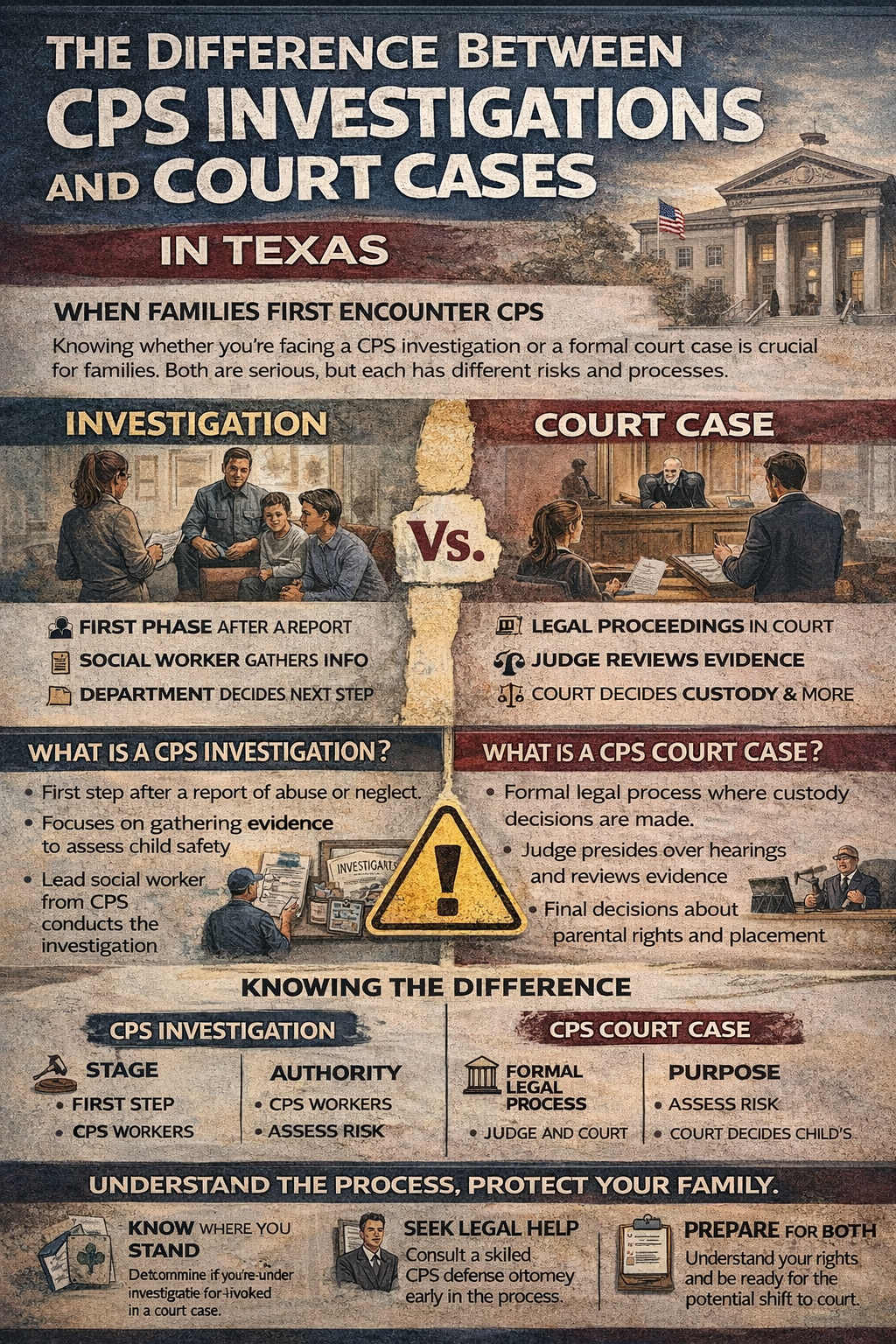
Key Differences Between Investigations and Court Cases
Understanding the differences between investigations and court cases is critical for families.
A cps investigation focuses on gathering information and assessing risk. It is conducted by the agency and does not involve a judge. A court case, on the other hand, involves legal proceedings where decisions are made by the court.
Recognizing this distinction helps parents understand what stage they are in and what steps to take next.
The Impact on Parental Rights
Parental rights can be affected at both stages, but the impact is greater during court proceedings. During an investigation, cps may recommend services or monitor the family.
In a court case, the judge can make binding decisions about custody and reunification. This makes legal representation essential.
The Role of a CPS Defense Attorney
A cps defense attorney plays a critical role in protecting families. During an investigation, an attorney can guide parents on how to respond and what information to provide.
In court cases, the attorney represents the parents, presents evidence, and argues on their behalf. This support is vital in defending families against allegations.
Why Legal Representation Matters Early
Many parents wait too long to seek legal representation. However, having an attorney involved early can prevent mistakes that may lead to escalation.
An attorney provides knowledge and expertise that helps parents navigate both investigations and court proceedings effectively.
The Risk of Child Removal
One of the most serious outcomes of a cps case is the removal of a child from the home. This can occur if cps believes the child is in immediate danger.
Removal is a drastic step and often leads to court involvement. Parents must act quickly to address the situation and work toward reunification.
How Evidence Influences Outcomes
Evidence is a key factor in both investigations and court cases. CPS relies on reports, interviews, and documentation to build their case.
Parents must be prepared to respond with their own evidence. This may include medical records, witness statements, and other relevant information.
The Importance of Reunification Efforts
Reunification is often the goal in cps cases. This process involves working toward bringing the child back into the home safely.
Parents may be required to complete services, attend counseling, or meet specific requirements. Demonstrating commitment to these efforts, and considering tools like a power of attorney for your children, can influence the outcome.
The Role of Social Services and Support Programs
Social services may provide support to families during cps cases. These services are designed to address concerns and improve the home environment.
Participating in these programs can show cooperation and willingness to improve. Working with a Texas-based law firm offering a broad range of legal services can also positively impact the case.
Preparing for CPS Hearings
CPS hearings are an important part of court cases. Parents must be prepared to present their side of the story and respond to the department’s claims.
Preparation includes understanding the process, gathering evidence, and working closely with an attorney.
The Emotional Impact on Families
CPS cases can have a significant emotional impact on families. The stress of the investigation and court proceedings can affect both parents and children.
Providing support and maintaining stability is essential during this time.
How a Proven Track Record Makes a Difference
Working with a law firm that has a proven track record in cps cases can provide confidence and reassurance. Experience in defending families helps ensure that cases are handled effectively.
This expertise can make a difference in achieving a favorable outcome.
Protecting Your Family’s Future
At the heart of every cps case is the future of the family. Protecting children while preserving parental rights requires careful planning and action.
Taking the right steps early, including putting essential legal documents for families before age 40 in place, can help prevent long-term consequences.
Protecting a Child’s Health During CPS Involvement
One of the primary concerns in any cps matter is the child’s health. During both investigations and court proceedings, the agency carefully reviews medical records, living conditions, and overall care. Parents must be prepared to show that their child is receiving proper attention and support. Addressing concerns about the child’s health early can help prevent the situation from escalating.
The Role of a Guardian in CPS Cases
In certain situations, the court may appoint a guardian to represent the best interests of the child. This individual evaluates the circumstances and provides recommendations to the court. A guardian’s input can influence decisions about custody and reunification. Understanding this role helps parents prepare for how their case may develop.
Why Working With a Lawyer Is Essential
Having a lawyer involved can provide clarity and direction during a cps case. A knowledgeable attorney helps parents understand their rights, respond to allegations, and prepare for hearings. An experienced education lawyer providing expert legal support for teachers and schools can also advise families when CPS concerns arise out of school-related issues. Without proper legal guidance, it is easy to make decisions that may negatively impact the outcome. A lawyer can also ensure that the process is handled fairly.
How CPS Cases Affect Families’ Lives
CPS involvement can disrupt the lives of both parents and children. Daily routines may change, and uncertainty can create stress for the entire family. Parents often find themselves balancing responsibilities while navigating a complex legal process. Understanding the potential impact on family lives can help in preparing for what lies ahead.
When CPS Cases Lead to a Lawsuit
In some instances, disputes involving cps may escalate into a lawsuit. This can occur when parents challenge the findings or actions taken by the agency, similar to how educators must respond to Texas TEA investigations and teacher certification issues that can threaten their careers. Legal proceedings add another layer of complexity and require careful preparation. Having strong representation becomes even more important in these situations.
When to Hire an Attorney for CPS Matters
Knowing when to hire an attorney can make a significant difference in the outcome of a case. Many parents wait until the situation worsens, but early action can help prevent escalation. An attorney can guide parents from the beginning, helping them avoid common mistakes. Taking this step early provides a stronger foundation for the case.
Understanding the Importance of a Hearing Schedule
CPS cases often follow a specific schedule for hearings and court appearances. Missing deadlines or failing to prepare can negatively affect the case. Parents must stay organized and aware of all scheduled proceedings. Working with an attorney can help ensure that everything stays on track.
Why Keeping Documentation Matters for Your Case
Maintaining organized records is critical throughout the cps process. Keeping a detailed page of notes, reports, and communications can help clarify misunderstandings. This documentation may be used as evidence during hearings. Staying organized allows parents to present a clearer picture of their situation.
A Note on Communication With CPS
Clear and thoughtful communication with cps is essential. Parents should be mindful of what they say and how they respond to questions. A simple note or statement can sometimes be misunderstood if not properly explained. Seeking guidance before communicating can help avoid complications.
When CPS Comes to Your Door
A visit from cps at your door can feel overwhelming and unexpected. Social workers may request to speak with the child or inspect the home. While cooperation is important, parents should understand their rights before allowing full access. Being prepared for this moment can help prevent unnecessary escalation.
Understanding the Role of DSS in CPS Cases
In some regions, the department of social services, often referred to as dss, works alongside cps. This agency may assist with investigations, services, and case management. Understanding how dss fits into the process helps parents navigate the system more effectively. For example, North Carolina educators facing DSS-related school investigations may also need educator misconduct defense to protect their license. Coordination between agencies can influence the direction of the case.
What Happens When a Child Is Removed From the Home
In serious cases, cps may determine that a child needs to be removed from the home. This decision is typically based on concerns about safety or immediate risk. Removal can lead to court proceedings and dependency hearings. Parents must act quickly to address the situation and work toward reunification.
The Impact of Being Temporarily Removed
When a child is removed, it can create emotional and logistical challenges for the entire family. Parents may have limited contact while the case is ongoing. This period requires patience, compliance with court orders, and active participation in required services. In education settings, respondents in campus proceedings must likewise understand the Title IX investigation process and their rights. Demonstrating commitment can help improve the chances of reunification.
When Parents Are Asked to Leave the Home
In some cases, cps may ask a parent to leave the home instead of removing the child. This approach is sometimes used to reduce immediate risk while keeping the child in a familiar environment. Although less disruptive, it still has serious implications. Parents should understand their rights and responsibilities in this situation.
Speak With Charlotte CPS Guidance You Can Trust
If you are facing a cps investigation or court case, it is important to act quickly and make informed decisions. Situations involving child protective services can escalate without warning, and what you do now can shape the outcome for your children and your family. Whether you are dealing with an investigation, hearings, or concerns about custody, having the right legal guidance can make all the difference.
At Masterly Legal Solutions, our firm is dedicated to defending families and protecting parental rights. We also assist families with Dallas estate planning services and personalized estate plans to safeguard their long-term security. We work closely with our clients to understand their unique situation and provide clear direction every step of the way. If you are searching for guidance similar to what families may look for under charlotte cps concerns, know that experienced support is available to help you navigate this process.
Contact us at (972) 236-5051 for a free consultation. We can also discuss trust-based estate planning services in Texas to help secure your family’s future. Let us help you protect your family, understand your options, and move forward with confidence.
Disclaimer: This article is for informational purposes only and does not constitute legal advice. Every case is unique, and you should consult with a qualified attorney to receive guidance specific to your circumstances.


Teacher Rights When Assaulted by a Special Needs Student: Safety, Reporting and Investigation Issues


Looking for Legal & Business Solutions? Contact Us Now
Fill in the form or call us to set up a meeting