

How a TEA Investigation Can Turn Into a Retaliation Claim
When a professional educator receives notice of an investigation by the Texas Education Agency, the experience can feel overwhelming and isolating. Teachers often enter the education system to serve students, support families, and contribute positively to schools, not to face scrutiny that threatens their career. What many educators do not realize is that a TEA investigation does not exist in a vacuum. In certain situations, it can become the foundation for a retaliation claim that raises serious education law concerns and long-term legal issues.
At Masterly Legal Solutions, we regularly work with teachers, school employees, and other school employees who feel blindsided by administrative actions taken after they raised concerns or exercised their rights. These situations involve complex legal issues where timing, motive, and documentation matter. Understanding how a TEA investigation can evolve into a retaliation claim is often the first step toward protecting your career and your future in public education.
Understanding the Role of the Texas Education Agency
The Texas Education Agency is responsible for overseeing public education and enforcing standards across the state. Its authority reaches into school districts, charter schools, and educational institutions, including certain university programs. When allegations arise involving teachers or staff members, the agency may initiate an investigation to determine whether disciplinary actions are warranted.
These investigations can involve a wide range of education law matters, from classroom conduct to compliance with special education services, Title IX obligations, or school safety concerns. While the agency’s role is regulatory, the impact on educators is personal and professional. Even unfounded complaints can trigger employment consequences that go far beyond the investigation itself.
What Triggers a TEA Investigation
A TEA investigation often begins with a complaint, report, or referral. In many cases, the complaint may come from parents, students, coworkers, or administrators within the school system. Sometimes, investigations arise after educators advocate for students, report misconduct, or challenge unsafe or discriminatory practices in schools and universities.
Common triggers include allegations related to special education, sexual harassment, discrimination, or violations of student rights. Issues involving special needs children, disabilities, and individualized education plans frequently lead to heightened scrutiny. While accountability is important in the education system, investigations are not always handled with fair treatment or due process in mind.
When Advocacy Becomes a Risk
Teachers and education professionals are often advocates by nature. They advocate for students, for parents, and for the integrity of public schools. However, advocacy can sometimes place educators at odds with administrators or school districts. When a teacher raises concerns about civil rights, special education services, or Title IX compliance, those actions may be protected under the law.
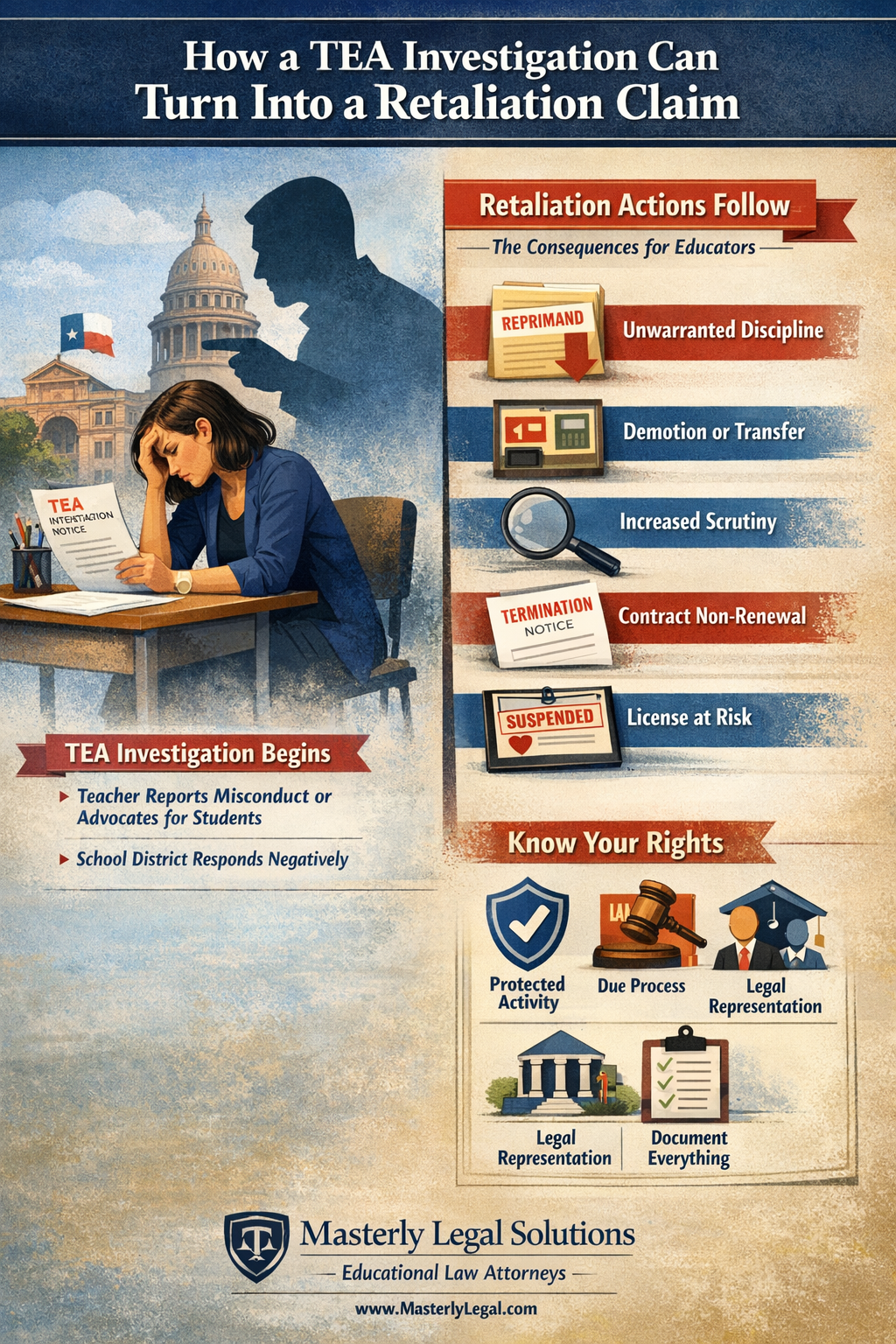
Retaliation can occur when an employer responds negatively to protected activity. In an educational setting, this may include sudden negative evaluations, disciplinary proceedings, reassignment, or termination following a complaint or report. When these actions coincide with or follow a TEA investigation, the line between oversight and retaliation can blur.
Defining Retaliation in Education Law
Retaliation in education law occurs when an educator faces adverse employment actions because they engaged in legally protected conduct. This conduct may include reporting discrimination, participating in due process hearings, assisting in grievance hearings, or advocating for students parents and student rights. Retaliation claims often intersect with employment law and civil rights protections.
The challenge is proving motive. School districts may argue that disciplinary actions were based solely on alleged misconduct. However, experienced education attorneys understand how to analyze timelines, patterns, and internal communications to determine whether retaliation played a role. Such cases require careful legal representation and an in-depth understanding of education law matters.
Common Forms of Retaliation After an Investigation
Retaliation does not always look dramatic at first glance. In many schools and universities, it unfolds subtly over time. Educators may notice changes in how they are treated by administrators or colleagues after an investigation begins or concludes.
Examples of retaliatory conduct may include:
- Unwarranted disciplinary actions or write-ups
- Reassignment to less desirable roles or classrooms
- Increased scrutiny compared to other staff members
- Exclusion from meetings or professional opportunities
- Termination or nonrenewal of contracts
These actions can affect employment stability and professional reputation. When retaliation occurs, it may violate federal law, state regulations, and established principles of due process.
The Intersection of TEA Investigations and Employment
A TEA investigation can directly impact employment status, especially in public schools and charter schools. Administrators may place teachers on leave, initiate disciplinary hearings, or pursue termination while the investigation is pending. In some cases, actions are taken before findings are finalized, raising concerns about fair treatment.
Employment decisions tied to investigations must comply with both education law and employment law standards. When school districts act prematurely or disproportionately, educators may have grounds to challenge those decisions. Legal professionals who focus on education law understand how administrative matters intersect with workplace rights.
Administrative Hearings and Due Process
Administrative hearings play a critical role in disputes involving teachers and school employees. These hearings may occur before a state board, an internal school system panel, or another governing body. Educators are entitled to due process, which includes notice, an opportunity to be heard, and a fair evaluation of evidence.
Retaliation claims often emerge during or after disciplinary hearings and grievance hearings. When procedures are rushed or biased, the integrity of the education system is undermined. An education lawyer can help ensure that procedural protections are respected and that educators are not punished for exercising their rights.
The Role of Documentation in Retaliation Claims
Documentation is one of the most powerful tools in such cases. Emails, performance evaluations, timelines of events, and witness statements can all help establish whether retaliation occurred. Teachers who sense unfair treatment should keep detailed records, even when they hope the situation will resolve on its own.
Education attorneys often emphasize the importance of contemporaneous documentation. When legal matters escalate, these records can make all the difference. They help show patterns of behavior and connect adverse actions to protected conduct.
Special Education and Heightened Risk
Educators involved in special education face unique risks. Advocating for appropriate services, participating in IEP meetings, and ensuring compliance with special education law can place teachers in conflict with administrators or budget priorities. Special education cases frequently involve intense scrutiny and emotional stakes.
When teachers speak up for students with disabilities or special needs children, retaliation may follow in subtle ways. Education lawyers who are well versed in special education and civil rights understand how to navigate these sensitive situations while keeping the best interests of students at the forefront.
Title IX and Civil Rights Considerations
Title IX obligations and broader civil rights protections play a significant role in many retaliation claims. Educators who report sexual harassment, discrimination, or unsafe conditions in schools and universities are engaging in protected activity. Retaliation for such reporting is prohibited under federal law.
Unfortunately, retaliation can still occur, especially when institutions prioritize reputation over accountability. Skilled lawyers who handle education law matters know how to assess whether actions taken against teachers or staff members violate Title IX or other civil rights statutes.
How Retaliation Affects Professional Licenses
Beyond employment, retaliation connected to a TEA investigation can threaten an educator’s professional license. Disciplinary proceedings may be initiated that put certification at risk. Even when allegations lack merit, the process itself can be damaging.
Education attorneys with extensive experience understand how to defend against disciplinary actions while also pursuing retaliation claims when appropriate. Protecting a license requires strategic legal representation that addresses both administrative and employment-related concerns.
The Impact on Students and School Communities
Retaliation does not only harm teachers. It can disrupt the educational setting and negatively affect students and parents. When experienced educators are pushed out or silenced, students lose advocates who understand their needs and rights. This is especially true in special education and public education environments.
Schools and universities function best when educators feel supported and safe to speak up. Retaliation undermines trust within the school system and can have long-term consequences for public schools and educational institutions.
Why Legal Representation Matters Early
One of the most common mistakes educators make is waiting too long to seek legal help. Early involvement of an education lawyer can help prevent a TEA investigation from spiraling into a larger dispute. Lawyers for teachers Texas understand the local landscape and the expectations placed on educators.
An education law firm can provide tailored legal services that address both the investigation and potential retaliation. Early guidance often makes all the difference in preserving employment and protecting rights.
Choosing the Right Education Attorney
Not all attorneys are familiar with the nuances of education law. Education attorneys focus on the unique intersection of law, policy, and practice within schools and universities. They represent teachers, students, parents, and school employees in a wide range of legal matters.
Experienced education attorneys bring insight into how school districts operate and how administrative matters are typically handled. Their role is not only to respond to allegations but also to advocate for fair treatment and due process throughout the process.
The Broader Scope of Education Law Matters
Education law matters extend beyond investigations and retaliation. They include issues related to student rights, representing students, family law overlaps, personal injury claims on campus, and compliance with state and federal regulations. A law firm that focuses on education understands how these issues connect.
Whether the issue involves disciplinary actions, grievance hearings, or due process hearings, legal professionals must consider the broader context of the education system. Each case is unique, and such cases require careful, individualized analysis.
How Masterly Legal Solutions Supports Educators
At Masterly Legal Solutions, we provide legal services focused on education law and employment-related disputes. Our attorneys work closely with clients to understand their goals and concerns. We believe in advocacy that protects both professional integrity and personal well-being.
Our team includes skilled lawyers and education attorneys who are committed to navigating complex legal issues with clarity and care. We understand that these situations are stressful and personal, and we approach every case with respect and diligence.
The Importance of Strategic Advocacy
Effective advocacy requires more than reacting to allegations. It involves anticipating how actions by school districts or the state board may affect long-term outcomes. Education lawyers serve as advocates who guide clients through each stage of the process.
From administrative hearings to negotiations, strategic legal representation can help level the playing field. Educators deserve a voice, especially when facing powerful institutions within the public school system.
Protecting Teachers’ Rights and Careers
Teachers rights are central to a healthy education system. When retaliation occurs, it sends a chilling message to other educators who may hesitate to speak up. Protecting individual rights helps preserve the integrity of schools and universities as a whole.
Legal representation focused on education law can help ensure that retaliation does not go unchecked. By addressing these issues, educators contribute to safer, more equitable learning environments.
Moving Forward After Retaliation
Recovering from retaliation is not easy, but it is possible. With the right support, educators can challenge unfair actions and work toward resolution. Each step forward helps restore confidence and stability.
Education attorneys help clients explore options, whether through formal complaints, negotiations, or litigation when necessary. The goal is not only accountability but also restoring professional standing and peace of mind.
Taking the First Step Toward Protection
Facing a TEA investigation or suspected retaliation can feel daunting, but educators do not have to face it alone. Asking legal questions early can clarify options and reduce uncertainty. Knowledge and preparation are powerful tools in these situations.
By understanding how investigations and retaliation claims intersect, educators are better equipped to protect themselves and their careers. Legal guidance provides a path forward grounded in law, fairness, and advocacy.
Contact Masterly Legal Solutions for Support
If you are a teacher or school employee concerned that a TEA investigation has crossed into retaliation, we invite you to reach out to Masterly Legal Solutions. Our law firm focuses on education law and understands the unique challenges faced by educators across Texas. We offer a free consultation to discuss your situation, answer your legal questions, and explain how tailored legal services may help protect your rights and employment.
Call us at (972) 236-5051 to speak with an education lawyer who can help you evaluate your options and determine the next best step.
Disclaimer: This material does not provide legal advice or direction; it is merely intended for informational purposes. An attorney-client relationship is not established by reading this content. Speak with an experienced lawyer for guidance on your particular circumstance.


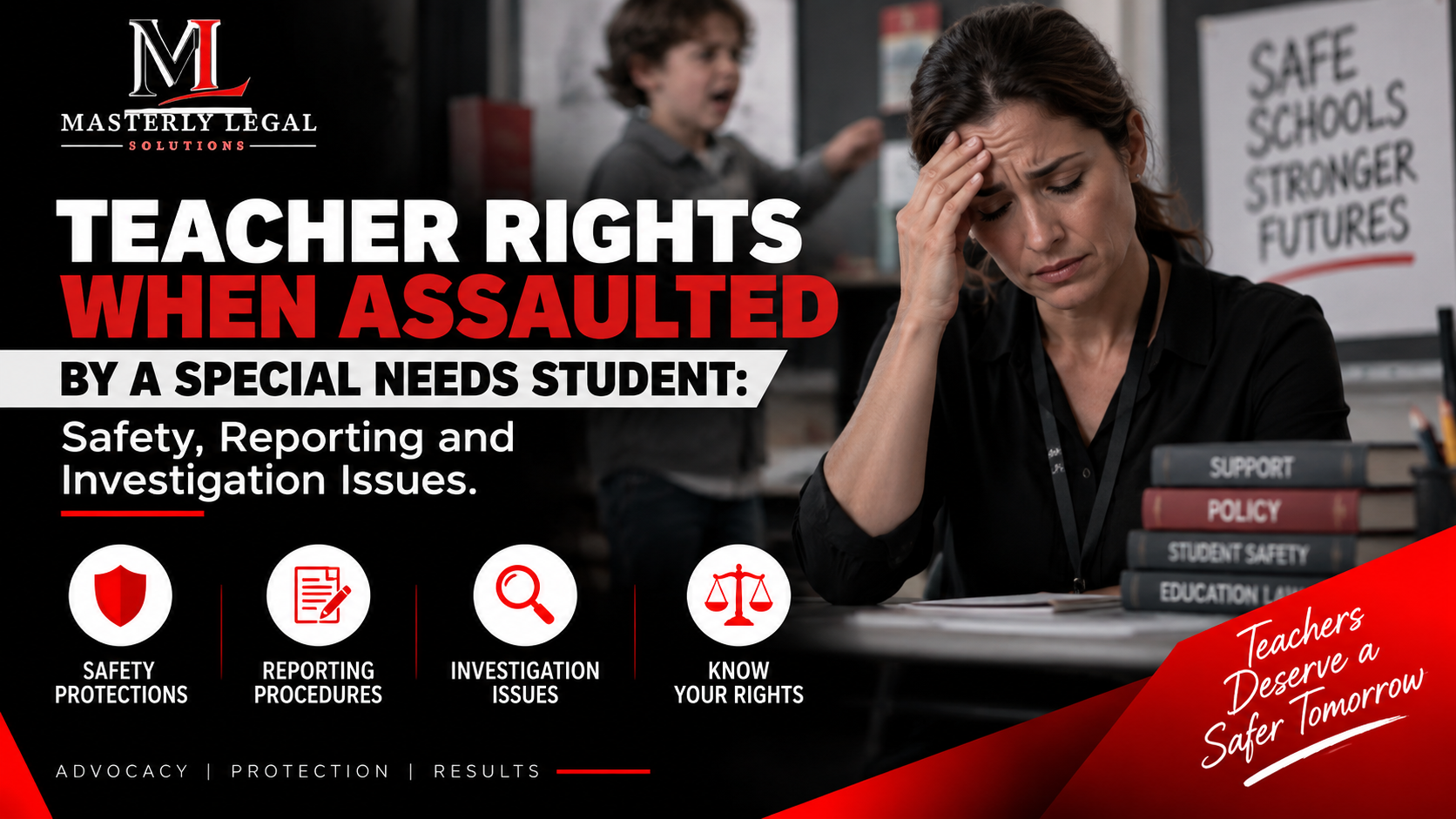
Teacher Rights When Assaulted by a Special Needs Student: Safety, Reporting and Investigation Issues


Looking for Legal & Business Solutions? Contact Us Now
Fill in the form or call us to set up a meeting