

If You’re Placed on Administrative Leave, You May Already Be Facing Retaliation
Being placed on administrative leave can feel confusing, isolating, and unsettling for any employee. Many workers are told it is routine, temporary, or “non-disciplinary,” yet the reality is often far more complicated. In some situations, administrative leave is the first visible sign that retaliation may already be unfolding behind the scenes.
At Masterly Legal Solutions, we regularly speak with workers who sensed something was wrong the moment they were removed from their workplace. When administrative leave follows a complaint, report, or legally protected activity, it raises serious legal concerns. Understanding how retaliation works is the first step toward protecting your career, income, and rights.
Understanding Administrative Leave in the Workplace
Administrative leave generally means an employee is removed from their normal work duties while an employer conducts an investigation. It may be paid administrative leave or unpaid, depending on company policy, employment contracts, and state laws. While employers often frame this step as neutral, context matters greatly.
For a reasonable employee, sudden removal from work can feel punitive, even when labeled otherwise. Being excluded from the workplace can disrupt pay, benefits, professional reputation, and employee morale. When administrative leave follows reporting discrimination or harassment, the timing alone can signal retaliation.
Paid Administrative Leave Does Not Always Mean Protection
Many employers claim that paid administrative leave eliminates harm because the employee continues to receive pay. However, paid time away from work does not automatically protect an employee from unlawful retaliation. Lost opportunities, damaged performance reviews, and stalled career growth can still occur.
Paid administrative leave may also separate workers from other employees and potential witnesses. This isolation can make it harder to defend against false claims or challenge an employer’s narrative. Even when pay continues, the adverse action may still violate employment law.
When Retaliation Occurs After a Complaint
Retaliation occurs when an employer punishes an employee for engaging in protected activity. This includes reporting discrimination, harassment, or illegal practices under federal and state laws. Retaliation can happen quickly, quietly, and in many forms.
An employer may claim administrative leave is part of an investigation, but retaliation occurs when an employer uses that leave to intimidate, silence, or sideline the employee. Federal law and state laws prohibit this conduct, regardless of how the employer labels it.
Protected Activity Under Employment Law
Protected activity includes actions the law encourages employees to take. Reporting discrimination, sexual harassment, or workplace discrimination to human resources or management is legally protected. Participating in an investigation or serving as a witness for a co worker is also protected activity.
Employees are protected when they file a complaint internally or with the Equal Employment Opportunity Commission or a state agency. Even informal reporting discrimination to a supervisor can trigger legal protections. The law focuses on the employee’s action, not whether discrimination is ultimately proven.
Retaliation Can Take Many Forms
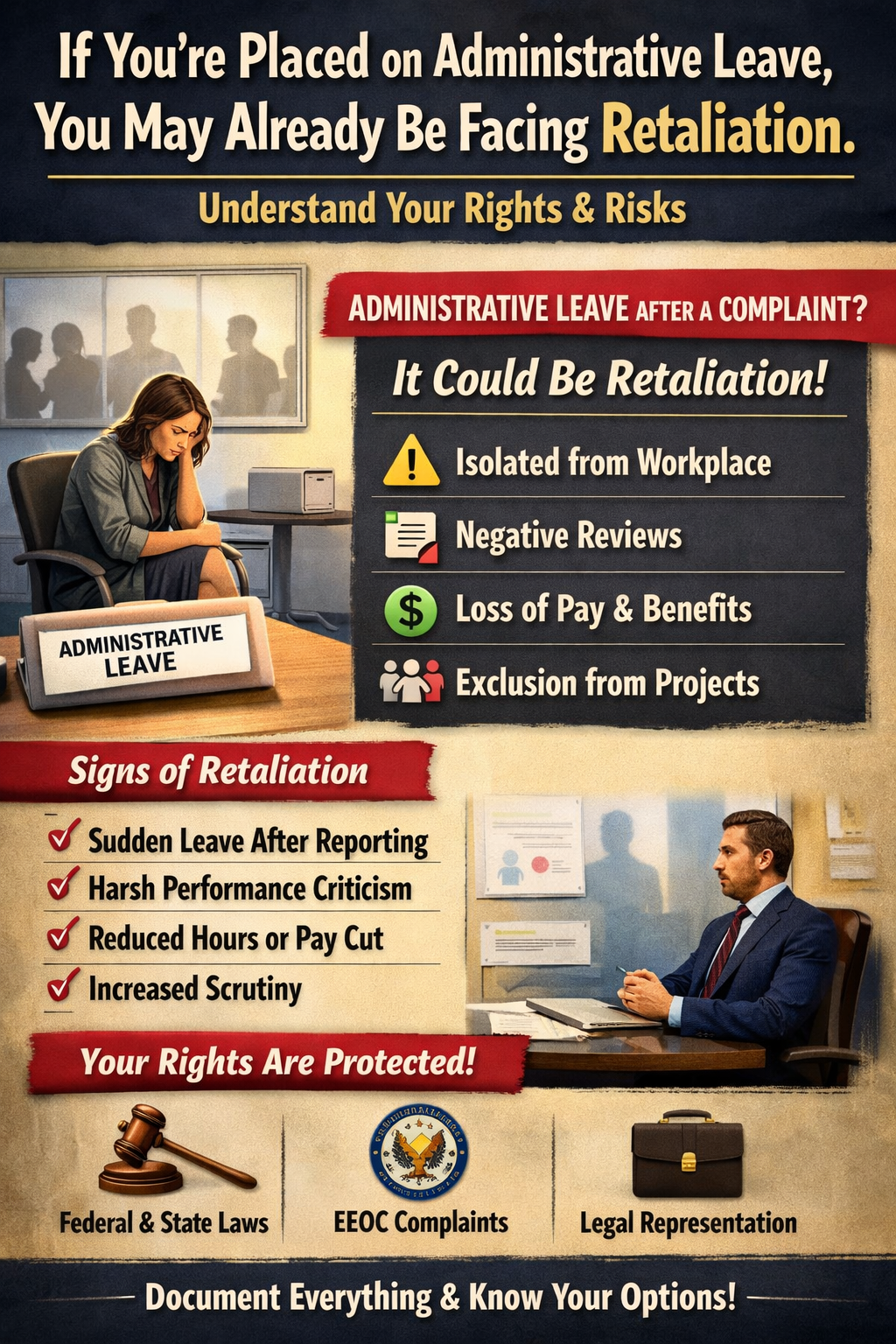
Retaliation does not always look like termination. It can appear subtle at first, making it harder for workers to recognize. Administrative leave is one of the most common early warning signs.
Examples of retaliatory behavior include:
- Sudden administrative leave after a complaint
- Negative performance reviews without justification
- Reduction in pay, benefits, or work hours
- Exclusion from meetings or projects
- Increased scrutiny or hostile treatment
Each example may seem minor alone, but together they can show a clear pattern of retaliation.
Workplace Discrimination Often Triggers Retaliation
Employees who experience workplace discrimination often face retaliation after speaking up. Discrimination based on age, sexual orientation, national origin, or disabilities is prohibited by federal law and state laws. The Civil Rights Act and Title VII are key federal protections in these cases.
When an employer responds to a discrimination complaint by placing the employee on administrative leave, it may be considered retaliatory. The law protects workers from being punished simply for asserting their rights.
Harassment and Retaliation Are Closely Linked
Harassment in the workplace frequently leads to retaliation when employees report it. Sexual harassment, unwanted sexual advances, or hostile behavior from a supervisor or co worker are serious violations of employment law. Reporting this conduct is a legally protected step.
Unfortunately, some employers respond by isolating the employee rather than addressing the harassment. Administrative leave may be used to remove the complainant instead of the harasser. This response can expose the employer to significant legal action.
The Role of Human Resources in Retaliation Cases
Human resources departments are often the first place employees turn when problems arise. While HR should protect workers and enforce the employee handbook, their actions often prioritize the employer. Employees should be cautious and document every interaction.
If human resources places an employee on administrative leave immediately after a complaint, that decision deserves scrutiny. HR involvement does not shield an employer from liability under employment discrimination or retaliation laws.
Investigations Must Be Handled Fairly
Employers have the right to investigate complaints, but investigations must be conducted lawfully. Removing an employee from the workplace should not be used to punish or discourage reporting discrimination. Federal and state laws require fairness and neutrality.
An investigation that targets the reporting employee instead of addressing the alleged misconduct may be unlawful. Employment lawyers often uncover biased investigations designed to justify future discrimination or wrongful termination.
Administrative Leave and Performance Reviews
Performance reviews often change dramatically after an employee engages in protected activity. A history of positive evaluations followed by sudden criticism can be strong evidence of retaliation. Administrative leave may precede negative reviews used to justify termination.
Employers sometimes claim performance issues only after a complaint is filed. This pattern is frequently considered retaliatory under employment law. Documentation becomes critical in these situations.
Wrongful Termination After Administrative Leave
Administrative leave is often the first step toward wrongful termination. Employers may claim the investigation revealed issues, even when no evidence supports those claims. Lost wages, lost benefits, and damage to future employment can follow.
Wrongful termination claims often involve retaliation, discrimination, or both. State laws and federal law provide remedies, including compensation and reinstatement in some cases.
How Federal and State Laws Protect Employees
Federal and state laws work together to protect workers from retaliation. Title VII, the Civil Rights Act, the Disabilities Act, and whistleblower laws all provide legal protections. State laws may offer additional safeguards beyond federal law.
Eligible employees may also have rights under the Medical Leave Act or FMLA leave provisions. Job protected leave, workplace accommodations, and protection from employer punishes behavior are all part of these legal frameworks.
Discrimination Based on Personal Characteristics
Discrimination based on age discrimination, sexual orientation, national origin, or disability is illegal. The law also protects job applicants and current workers alike. Retaliation for opposing discrimination based on these traits is equally unlawful.
Employers may attempt to justify administrative leave as a business necessity or undue hardship. These claims must be supported by evidence and cannot override legally protected rights.
The Impact on Pay and Benefits
Even short periods of administrative leave can affect pay, overtime pay, bonuses, and benefits. Missed work hours and lost wages can accumulate quickly. Some employees also lose access to paid time, health coverage, or retirement contributions.
When an employer refuses to restore pay or benefits after an investigation, it may signal further retaliation. Employment law allows workers to seek recovery for these losses.
The Importance of Documentation
Employees should document every step once retaliation is suspected. Save emails, performance reviews, complaint records, and communications with supervisors or human resources. Identify potential witnesses, including other employees who observed the treatment.
Documentation strengthens legal action and helps employment lawyers evaluate the case. A clear timeline often reveals when retaliation occurs.
Supervisor and Co Worker Involvement
Retaliation may come directly from a supervisor or indirectly through other employees. A hostile co worker environment, exclusion, or intimidation can all contribute to unlawful workplace conditions. Employers are responsible for controlling these behaviors.
If a supervisor encourages retaliation or allows harassment to continue, the employer may be liable. The law does not require physical harm for retaliation to be proven.
Future Discrimination and Career Damage
Administrative leave can follow an employee long after the immediate situation ends. It may affect references, future job opportunities, and professional reputation. This future discrimination is a real concern for many workers.
Employment contracts and internal policies may offer additional protections. Reviewing these documents with employment lawyers can clarify available options.
When to Consider Taking Legal Action
Employees do not have to tolerate retaliation. Taking legal action may be necessary to protect pay, benefits, and long-term employment. Filing with the Equal Employment Opportunity Commission or a state agency is often a required first step.
An initial consultation with employment lawyers can help employees understand their rights. Early advice can prevent costly mistakes and preserve evidence.
Why Legal Guidance Matters Early
Retaliation cases are time-sensitive and fact-specific. Delays can weaken claims or limit remedies under federal law and state laws. Employment lawyers help workers navigate complaints, investigations, and negotiations.
At Masterly Legal Solutions, we focus on protecting employees from illegal practices and unfair treatment. In addition to representing employees, we also provide comprehensive HR consulting services to help businesses navigate employment laws and create fair workplaces. Our goal is to help workers make informed decisions, not react out of fear.
How Employers Are Held Accountable
When retaliation is proven, employers may face serious consequences. Remedies can include compensation for lost wages, restored benefits, and policy changes. Courts also consider the harm to employee morale and workplace culture.
The law is designed to protect workers who speak up. Employers who misuse administrative leave to silence complaints risk significant liability.
Moving Forward With Confidence
Being placed on administrative leave does not mean you have done something wrong. In many cases, it means you exercised your rights under employment law. Recognizing retaliation early allows you to protect yourself and your future.
No employee should feel punished for standing up against discrimination or harassment. Understanding your legal protections empowers you to move forward with confidence.
Contact Masterly Legal Solutions for Trusted Guidance
If you have been placed on administrative leave after reporting discrimination, harassment, or other unlawful conduct, we encourage you to speak with us. At Masterly Legal Solutions, we offer a free consultation to answer your questions and explain your options under federal and state laws. Every situation is different, and early guidance can make a meaningful difference in protecting your pay, benefits, and career. Contact us at (972) 236-5051 to schedule your free consultation and take the next step toward protecting your rights.
Disclaimer: This article is for informational purposes only and does not constitute legal advice. For resources on situations such as when an employer tries to force you to resign or quit your job, please consult appropriate guidance. Reading this content does not create an attorney-client relationship. For legal guidance specific to your situation, consult a qualified employment law attorney.



Teacher Rights When Assaulted by a Special Needs Student: Safety, Reporting and Investigation Issues



Looking for Legal & Business Solutions? Contact Us Now
Fill in the form or call us to set up a meeting





