

How Compliance Tracking Begins Before Parents Realize It
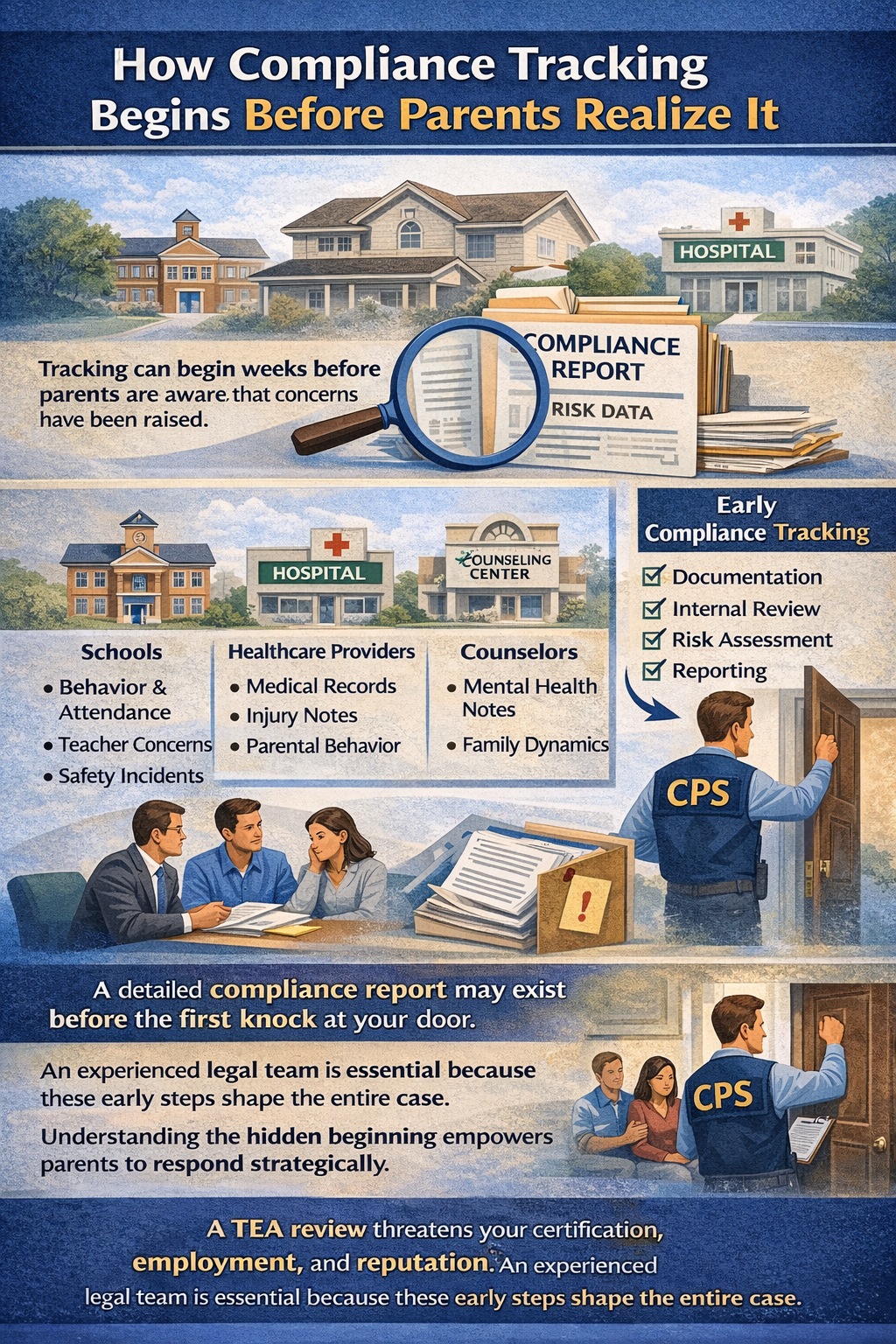
Most parents believe that involvement with child protective services only begins after a report is made. In reality, compliance tracking often starts long before families are aware that concerns have been raised. Schools, healthcare providers, agencies, and even private organizations follow strict regulatory requirements that trigger documentation, internal reviews, and detailed reporting. By the time a parent receives a call from cps workers, a compliance report may already exist.
At Masterly Legal Solutions, we help families understand how compliance processes unfold and how those early steps can shape the entire case. We regularly assist parents navigating cps investigations, juvenile dependency court proceedings, and related family law disputes. Understanding how compliance tracking begins can empower families to respond strategically rather than react in fear. When you know what happens behind the scenes, you are better prepared to protect your rights and your child’s future.
The Hidden Beginning of a Compliance Report
Compliance tracking typically begins with documentation. Teachers, medical providers, counselors, and administrators are often required to record safety concerns or behavioral observations, and educators may also need education law attorneys to help navigate investigations and protect their professional rights. These notes can later become part of a compliance report reviewed by regulatory bodies or child protective services.
A compliance report is not created in isolation. It often grows from ongoing data collection, internal controls, and risk assessment protocols that organizations use to monitor safety and regulatory adherence. Even before formal cps investigations begin, documentation may be compiled into detailed compliance reports that outline potential risk factors.
This early stage is often invisible to parents. Yet the report's content can heavily influence the direction of the investigation process and whether protective services become formally involved.
Mandatory Reporting and Early Data Collection
Many professionals are mandated reporters. When they suspect child abuse or neglect, they must report it to child protective services cps. This obligation is tied to regulatory requirements and is supported by risk management systems within schools and healthcare organizations.
Data collection plays a central role in this process. Reports may include attendance records, medical notes, behavioral concerns, or prior safety plan documentation. Compliance managers within organizations often review these materials to ensure regulatory adherence before forwarding information to protective services.
Because data collection can begin weeks or months before parents are notified, compliance tracking may already be well underway when cps workers first make contact.
Risk Assessment Before CPS Investigations Begin
Risk assessment tools are frequently used to evaluate child safety concerns. These tools measure risk factors such as prior allegations of abuse or neglect, criminal history of responsible parties, and environmental conditions within the child's home. This risk management approach helps agencies determine the urgency of intervention.
A compliance report may summarize these findings in a structured format. It may include references to regulatory requirements, safety concerns, and the organization’s compliance status. In some cases, operational compliance reports or financial compliance reports may also be reviewed if funding or service obligations are involved.
By the time cps investigations formally begin, a comprehensive compliance report may already outline the perceived risks.
The Role of Child Protective Services in Compliance Tracking
Child protective services operates within a strict framework of compliance obligations. Once a report is received, cps workers initiate the cps investigation process. They gather information, interview family members, and assess whether alleged abuse or neglect is substantiated.
During child protective investigations, cps workers document every step. These records become part of ongoing compliance efforts that ensure accountability and regulatory adherence. A compliance report may be updated throughout the investigation stage.
Protective services agencies must follow both state and federal regulatory requirements. Their compliance initiatives are designed to protect children while also maintaining transparency in the organization’s adherence to the law.
What Happens During the Investigation Stage
The investigation stage often includes home visits, interviews with children, and communication with schools. A cps investigator evaluates whether there is credible evidence of child abuse or neglect. Documentation is added to the compliance report at each step.
If immediate safety concerns are identified, cps workers may implement a safety plan. A safety plan outlines steps to protect the child's safety without immediately removing the child from the child's home. This plan becomes part of the detailed compliance reports reviewed by supervisors and regulatory bodies.
Parents may feel blindsided, but compliance tracking may have started well before the first knock on the door.
Safety Plans and Temporary Custody Decisions
A safety plan is often used when protective services believe a child may be at risk but removal is not yet necessary. It may include supervised contact, voluntary placement with a relative, or agreements restricting contact with an alleged perpetrator. These measures are documented in the compliance report.
If cps workers determine that a child faces immediate danger, they may seek a court order for temporary custody. This action is reviewed in juvenile dependency court, where a judge evaluates the evidence presented. The compliance report often plays a significant role in these hearings.
Each court order issued becomes part of the ongoing compliance status of the case. The documentation ensures accountability and transparency in decision making.
The Role of Juvenile Dependency Court
Juvenile dependency court oversees cases involving alleged abuse or neglect. The court reviews compliance reports, safety plan documentation, and investigative findings. Judges rely on this information to determine temporary custody, voluntary services, or reunification plans.
In juvenile dependency court, the report's content is scrutinized carefully. Attorneys may challenge inaccuracies or non compliance issues within the documentation. Ensuring accuracy in the compliance report is essential because it influences parental rights and the child’s care.
Families often do not realize how central these reports are until the first court hearing takes place.
Data Privacy and Protecting Sensitive Information
Compliance tracking also involves strict data privacy and data protection requirements. Agencies must comply with data protection laws to safeguard records related to children and family services. Protecting sensitive information is critical during cps investigations.
Data privacy reports and internal controls are designed to reduce human error and prevent data breaches. Compliance managers oversee these systems to ensure that confidential information remains secure. Any failure in data protection can lead to audit findings or regulatory scrutiny.
Parents have the right to question how their information is stored and shared. Legal representation can help families evaluate whether compliance processes were followed properly.
Non Compliance and Audit Findings
When agencies fail to meet regulatory requirements, non compliance issues may arise. Non compliance can involve incomplete documentation, failure to follow proper procedures, or inadequate risk assessment. These issues may appear in audit findings or internal reviews.
Non compliance can also impact how courts view the case. If documentation contains inconsistencies or signs of human error, it may undermine the credibility of the compliance report. Attorneys often analyze detailed compliance reports to identify weaknesses.
Holding agencies accountable ensures accountability within the system and protects families from unjust outcomes.
Foster Care and Voluntary Placement Decisions
If a child cannot remain safely in the child's home, protective services may consider foster care or voluntary placement. Voluntary placement allows parents to temporarily place a child in foster care without immediately losing parental rights. These decisions are recorded in the compliance report and reviewed in juvenile dependency court.
Foster care arrangements are closely monitored by regulatory bodies. Compliance reports track the child’s care, visitation schedules, and services provided. Ongoing risk management ensures the child’s safety while reunification efforts are considered.
Parents facing these circumstances benefit from experienced legal counsel to navigate the process.
How Compliance Tracking Impacts Families Early
Compliance tracking can affect families long before formal court proceedings begin. Documentation from schools, healthcare providers, and child and family services may already form a comprehensive overview of the case. This can influence cps workers’ perceptions and recommendations.
Even allegations of alleged abuse or suspected child abuse or neglect can trigger compliance initiatives. Once a compliance report is opened, it may follow the family through multiple stages of review. Understanding this early impact is critical.
Families should not wait until juvenile dependency court to seek legal representation.
Risk Management Within Organizations
Organizations that interact with children use risk management systems to monitor compliance status. These systems track internal controls, regulatory changes, and non compliance concerns. A compliance report may include financial reporting components if services are publicly funded.
Operational compliance reports and financial compliance reports are sometimes reviewed to ensure proper allocation of resources, just as organizations may rely on estate planning and broader legal consulting services to manage long-term obligations and risk. Investor confidence and public trust often depend on transparent compliance efforts. While these systems are designed to promote accountability, they can also create layers of documentation that affect families.
When regulatory bodies evaluate a case, they often examine the organization’s compliance status alongside individual allegations.
The Importance of Legal Representation
Facing cps investigations without guidance can feel overwhelming. Legal representation helps parents understand the compliance report, challenge inaccuracies, and respond effectively. Experienced attorneys can analyze whether regulatory requirements were followed.
In family law matters involving protective services, timing is critical. Early intervention may prevent escalation to juvenile dependency court or limit the scope of a court order. Legal counsel can also coordinate with legal aid organizations when appropriate.
Masterly Legal Solutions provides compassionate and strategic representation during these difficult times.
Reviewing the Comprehensive Compliance Report
A comprehensive compliance report may contain data from multiple sources. It may summarize risk assessment findings, document safety plan details, and reference regulatory adherence. Reviewing this report carefully can reveal both strengths and weaknesses in the case.
Attorneys examine the report's content to ensure accuracy and fairness. They look for signs of non compliance, procedural errors, or unsupported conclusions. Ensuring accuracy in documentation can significantly influence the outcome in juvenile dependency court.
Compliance tracking is intended to protect children, but it must also respect parental rights.
How Compliance Tracking Continues After Court
Even after a court order is issued, compliance tracking continues. Protective services agencies update compliance reports regularly to reflect progress, services provided, and ongoing risk factors. Juvenile dependency court may schedule review hearings to evaluate compliance status.
If a safety plan is modified or voluntary services are accepted, these changes are documented. The organization’s adherence to regulatory requirements remains under review. Compliance processes are designed to ensure accountability at every stage.
Families must stay informed about how documentation evolves over time.
When to Seek Help
Parents often wait until they receive notice of a court hearing before seeking help. By that time, a compliance report may already contain extensive documentation. Early legal intervention can help address concerns before they escalate.
If you learn that cps investigations are underway or that protective services have opened a case, do not delay. Understanding the investigation process and reviewing the compliance report promptly can change the direction of the case.
Legal representation ensures that your voice is heard and that your rights are protected.
Collaboration With Texas Legal Services Center and Relevant Stakeholders
In complex compliance and protective services cases, collaboration can make a meaningful difference. Organizations such as the Texas Legal Services Center may provide educational resources or legal aid referrals that help families better understand their rights, and contacting Masterly Legal Solutions directly can connect parents with offices across Texas for tailored support. At the same time, relevant stakeholders—including schools, healthcare providers, and agency representatives—often play a role in how information is gathered and shared, and school employees may need education law support to address parallel employment or licensing concerns. When these parties communicate clearly and lawfully, it can lead to more accurate reporting and better outcomes for children and families.
How Compliance Reviews Impact Business Operations and Provide Valuable Insights
Compliance tracking does not only affect families; it can also influence broader business operations within agencies and organizations that serve children. Internal reviews, documentation procedures, and reporting standards are designed to maintain regulatory adherence while protecting vulnerable individuals. When analyzed carefully, a compliance report can provide valuable insights into how systems function and where improvements are needed, and schools may benefit from education law attorneys who understand both compliance tracking and teacher rights. Understanding these operational impacts allows both families and organizations to respond more effectively and responsibly, including when educators must respond to Texas Education Agency complaint notices and related disciplinary processes.
Contact Masterly Legal Solutions for Guidance on Compliance Reports
If you are facing cps investigations or involvement with juvenile dependency court, you deserve clarity and strong advocacy, and if school-related allegations are involved you may also need education law attorneys who protect the rights of students and teachers. Compliance tracking can begin before parents even realize it, and the compliance report often shapes every stage of the process. At Masterly Legal Solutions, we help families review documentation, challenge non compliance issues, and protect parental rights.
Our attorneys understand family law, protective services procedures, and regulatory requirements, and we also provide education law guidance for teachers navigating TEA investigations and disciplinary hearings. We provide personalized legal representation designed to protect your child’s safety while safeguarding your family’s future. If you have questions about a compliance report or ongoing child protective services involvement, we are ready to listen, including in cases where educators also need Texas education lawyers to address concurrent school or licensing investigations.
Call (972) 236-5051 for a free consultation. Let us help you understand your options and move forward with confidence, and if you are a teacher or school employee, we can also connect you with experienced education law counsel to protect your certification and career.
This article is for informational purposes only and does not constitute legal advice. Reading this material does not create an attorney client relationship. For advice regarding your specific situation, please contact a qualified attorney directly.
Teacher Rights When Assaulted by a Special Needs Student: Safety, Reporting and Investigation Issues
Looking for Legal & Business Solutions? Contact Us Now
Fill in the form or call us to set up a meeting





