

How Administrative Decisions Are Reviewed by TEA
When your career in education is suddenly placed under review, it can feel like the ground has shifted beneath you. Teachers, administrators, and other school employees often dedicate years of service to students and their communities. Yet a single administrative decision by the Texas Education Agency can place your certification, reputation, and future in jeopardy. Understanding how these decisions are reviewed is not just helpful information—it can be critical to protecting your livelihood.
At Masterly Legal Solutions, we focus on education law and represent clients across Texas who are facing investigations, disciplinary action, or contested administrative rulings. Our attorneys have extensive experience handling complex legal matters involving schools, universities, and government agencies. We work with educators, school districts, and families to navigate the legal process with clarity and confidence.
Understanding the Role of TEA in Texas Education
The Texas Education Agency plays a central role in overseeing public education across the state. It regulates certification for teachers, enforces compliance with state and federal regulations, and monitors school districts and charter schools. When concerns arise, TEA may open an investigation that can lead to administrative action.
These actions may involve issues such as student discipline, alleged misconduct, reporting obligations, or compliance with special education requirements. Administrative decisions can affect teachers, administrators, and other school employees. Because education law is detailed and technical, understanding the review process requires careful analysis.
What Is an Administrative Decision in Education Law?
An administrative decision is a formal determination made by TEA or related government agencies regarding certification, discipline, or compliance. This can include suspending or revoking a teaching certificate, imposing sanctions, or issuing corrective directives to schools. In some cases, it may involve findings related to title ix, discrimination, or civil rights violations.
Administrative decisions often arise after investigations involving students, parents, or other school employees. These decisions are governed by education law, state and federal statutes, and agency regulations. They are not informal judgments; they carry legal weight and can permanently impact your career.
Common Reasons TEA Reviews Educators and Schools
Administrative review can occur for many reasons. Some of the most common include:
- Allegations of improper student discipline
- Claims involving physical or sexual abuse or sexual abuse reporting failures
- Violations of title ix requirements
- Complaints related to discrimination based on national origin or other protected characteristics
- Concerns about special education services or due process rights
Schools and educational institutions must comply with detailed regulations. When issues arise, TEA evaluates whether the school system followed state and federal law. Even unintentional errors can trigger administrative hearings.
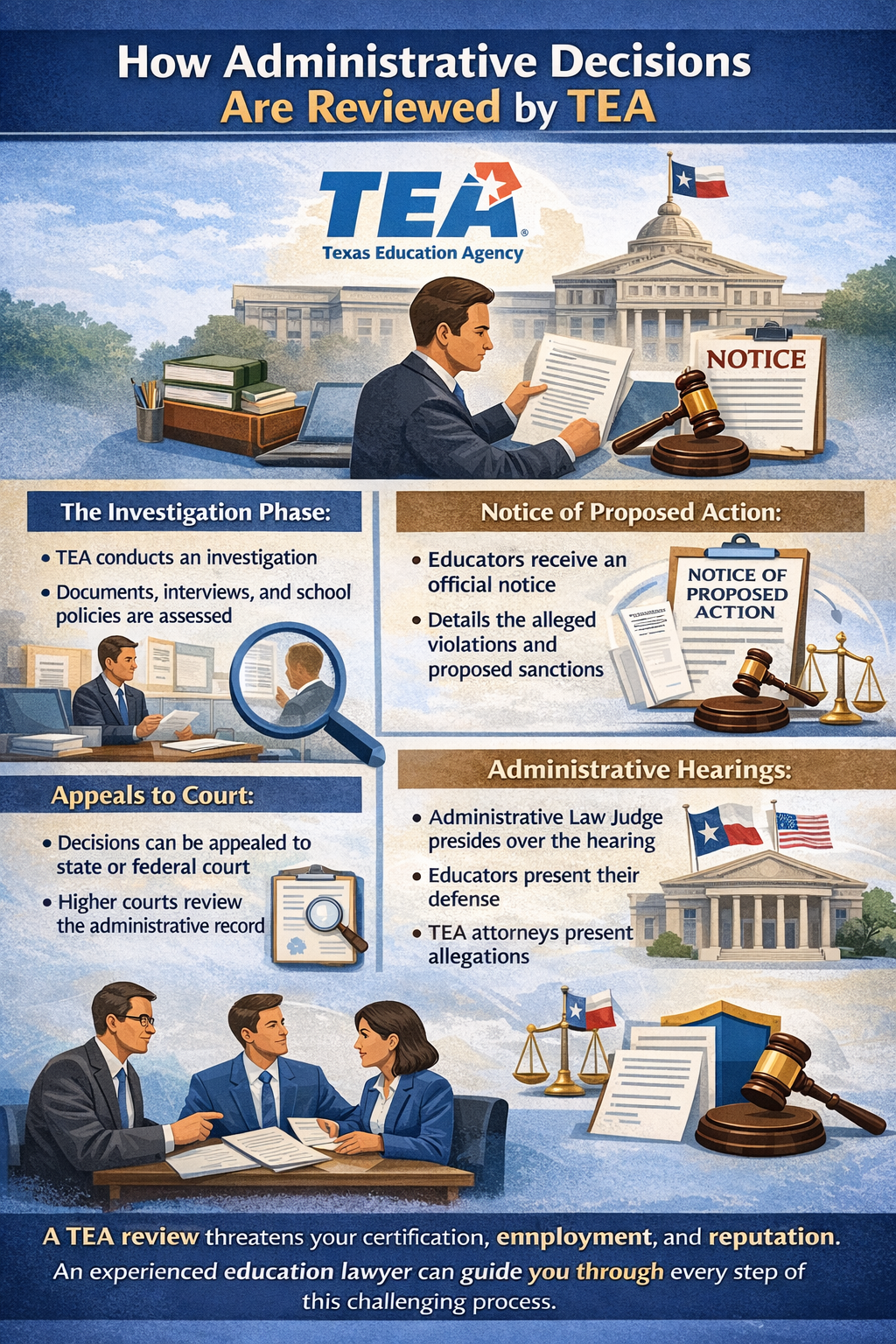
The Investigation Phase Before Formal Review
Before a formal administrative decision is issued, TEA typically conducts an investigation. This process may include reviewing documents, interviewing teachers and students, and analyzing policies such as staff handbooks or discipline procedures. For many educators, this phase feels uncertain and intimidating.
During this time, having
education law attorneys guiding teachers through TEA investigations involved can make a significant difference. Lawyers can help ensure that responses are accurate, that rights are protected, and that the school employees involved understand their obligations. Our attorneys for teachers provide strategic guidance from the earliest stages.
Notice of Proposed Action and Your Rights
If TEA determines that a violation may have occurred, it will issue a notice of proposed action. This document outlines the alleged misconduct and the potential sanctions. It may involve suspension, revocation, or other discipline related to certification.
Under education law, teachers and other educators have due process rights. This means you are entitled to respond, request administrative hearings, and present evidence. The review process is structured, but it requires careful preparation.
Administrative Hearings Before the State Office
Many TEA cases proceed to administrative hearings before an administrative law judge. These hearings function similarly to court proceedings but are governed by agency regulations. Evidence is presented, witnesses testify, and legal arguments are made.
Administrative hearings are a critical stage in the process. They allow teachers, administrators, and other school employees to challenge allegations and present mitigating evidence. Education lawyers in Texas who focus on administrative hearings with years of experience understand how to navigate these formal settings effectively.
The Importance of Due Process in Education Law
Due process is a cornerstone of both state and federal education law. It ensures that individuals are not deprived of certification or employment rights without fair procedures. This protection applies to teachers, administrators, and sometimes even students.
In special education matters, due process hearings may also involve disputes over services for children with disabilities. These process hearings focus on whether educational institutions provided appropriate support and complied with education law and TEA teacher license defense. The same principles of fairness and transparency apply in certification cases.
Title IX and Civil Rights Considerations
Title ix plays a major role in many administrative reviews. Allegations involving harassment, sexual abuse, or discrimination based on protected characteristics can trigger both school level investigations and TEA oversight. Civil rights compliance is taken seriously by state and federal agencies.
Education attorneys must carefully analyze how title ix procedures were handled. If schools fail to follow required steps, this can influence the outcome of administrative hearings. Title IX and TEA teacher license defense representation often intersect with broader civil rights concerns, especially when discrimination is alleged.
Special Education and Administrative Review
Special education compliance is another common source of administrative scrutiny. Schools must provide appropriate educational programs and services for students with disabilities. When parents believe those services were inadequate, they may file complaints or request due process hearings.
Special education law requires careful documentation and adherence to regulations. Administrative review may examine whether schools met individualized education program requirements. Legal protection for teachers in special education disputes frequently involves education lawyers representing both parents and school districts in such matters.
Student Discipline and Certification Risks
Student discipline decisions can also lead to TEA review. If a teacher is accused of excessive force, improper handling of bullying complaints, or violations of student rights, the matter may escalate quickly. Even actions taken in good faith can be misinterpreted.
Administrative decisions in these cases often involve evaluating whether discipline policies were followed. Lawyers assess whether the response was reasonable and consistent with school safety requirements.
Legal protection for teachers facing misconduct allegations requires a strong legal defense grounded in education law.
Appeals to District Court and Federal Court
After administrative hearings, parties may have the right to appeal. In some cases, appeals are filed in district court. Other cases involving constitutional issues or civil rights claims may proceed to federal court.
Appeals require careful review of the administrative record. Courts examine whether the agency followed proper procedures and applied the law correctly.
Texas education lawyers representing teachers in appeals with extensive experience in litigation understand how to present persuasive arguments at this stage.
Representation for Schools and Educators
At Masterly Legal Solutions, we have represented educational institutions, teachers, and administrators across Texas. Our education lawyers understand the challenges facing public education, charter schools, and private schools. We also work with universities and secondary schools dealing with complex regulatory issues.
Representing schools and representing school districts requires a deep understanding of education law and policy development.
Education lawyers providing expert legal support for teachers and schools advise clients on compliance, open meetings requirements, and staff handbooks. Our goal is to prevent disputes whenever possible and defend our clients vigorously when disputes arise.
Employment Issues in Education Settings
Administrative review often intersects with employment concerns. Issues may involve termination, suspension, employee benefits, or workplace discrimination. Schools must comply with state and federal employment laws as well as education specific regulations.
Teachers and other school employees may also file complaints with agencies such as the equal employment opportunity commission. These matters can overlap with TEA investigations. Education law attorneys for teachers and administrators coordinate strategies to address all legal issues efficiently.
Civil Rights and Protected Characteristics
Civil rights protections apply within the education environment. Discrimination based on national origin, disabilities, sex, or other protected characteristics can trigger significant legal matters. Both schools and educators must understand their obligations.
Title ix and other civil rights statutes impose strict requirements on educational institutions. Administrative decisions often evaluate whether schools properly addressed complaints. Lawyers analyze whether the investigation process respected the rights of students and teachers alike.
Universities and Higher Education Oversight
Universities and secondary schools face similar oversight under state and federal law. Title ix compliance, campus safety, and discrimination claims are common areas of review. Universities must maintain policies that align with regulations and constitutional issues.
Education lawyers assist universities in responding to administrative actions and lawsuits. Our attorneys bring years of experience handling complex disputes involving higher education. Whether in federal court or administrative hearings, representation matters.
Supporting Families and Students During Review
Administrative decisions do not affect educators alone. Students, parents, and families may also be impacted by agency findings. Disputes involving children often carry emotional and long term consequences.
Education law recognizes the importance of family involvement and students rights. Lawyers can advocate for fair outcomes that protect educational opportunities. Balancing accountability with fairness is central to the review process.
Strategic Guidance Throughout the Process
Every administrative case is unique. Some involve allegations of personal injury, while others focus on procedural compliance or policy interpretation. Education lawyers provide strategic guidance tailored to the specific circumstances.
With years of experience handling education related disputes, our attorneys understand how agencies evaluate evidence. We prepare clients thoroughly for administrative hearings and appeals. Preparation can make a decisive difference in the outcome.
Why Experience Matters in Education Law
Education law is not a simple area of practice. It blends employment, civil rights, constitutional issues, and regulatory compliance. Attorneys with extensive experience are better equipped to anticipate agency concerns and craft effective defenses.
Our lawyers have handled lawsuits, administrative hearings, and appeals involving schools and universities. We have represented educational institutions as well as individual teachers and administrators.
Legal support for educators facing TEA investigations and license defense reflects this balanced perspective and allows us to serve clients effectively.
Protecting Your Career and Reputation
For many educators, a TEA review threatens more than a job. It can impact certification, future employment, and professional standing. Acting quickly with the support of knowledgeable attorneys can help protect your career.
Education attorneys understand the stakes involved. We work to ensure that our clients receive fair treatment under state and federal law. When your future in education is on the line, having experienced lawyers by your side matters.
The Role of Texas Education Lawyers in Complex School Matters
Texas education lawyers play a critical role in guiding teachers, administrators, and school districts through complicated legal disputes. From certification concerns to compliance investigations, these attorneys understand the detailed framework of education law in Texas. They routinely handle legal issues involving employment disputes, student rights, and regulatory enforcement actions. By working closely with clients and school attorneys, they help ensure that decisions affecting careers and campuses are addressed with precision and strong legal strategy.
Student Services, Disciplinary Hearings, and Legal Oversight
Questions surrounding student services and campus discipline often require careful legal review. When concerns arise about accommodations, safety protocols, or policy enforcement, disciplinary hearings may follow to determine whether rules were properly applied. In these situations, schools frequently consult school attorneys to ensure that procedures comply with state and federal requirements. Experienced legal counsel can help protect the rights of students and educators while navigating complex legal issues involving education policy and administrative standards.
Contact Masterly Legal Solutions for a Free Consultation
If you are facing an administrative review by TEA, you do not have to handle it alone. Education lawyers at Masterly Legal Solutions provide dedicated legal services to teachers, administrators, and school employees across Texas. We also assist school districts, charter schools, private schools, and universities in navigating complex legal matters.
Our attorneys have years of experience in education law, civil rights disputes, title ix proceedings, and administrative hearings. We understand how these cases affect your career, your family, and your future. Let us provide the clarity and strong representation you deserve.
Call (972) 236-5051 for a free consultation. We will listen carefully, explain your options, and outline how we can help you move forward with confidence.
This article is provided for informational purposes only and does not constitute legal advice. Reading this material does not create an attorney client relationship. For guidance regarding your specific situation, please contact a qualified attorney directly.


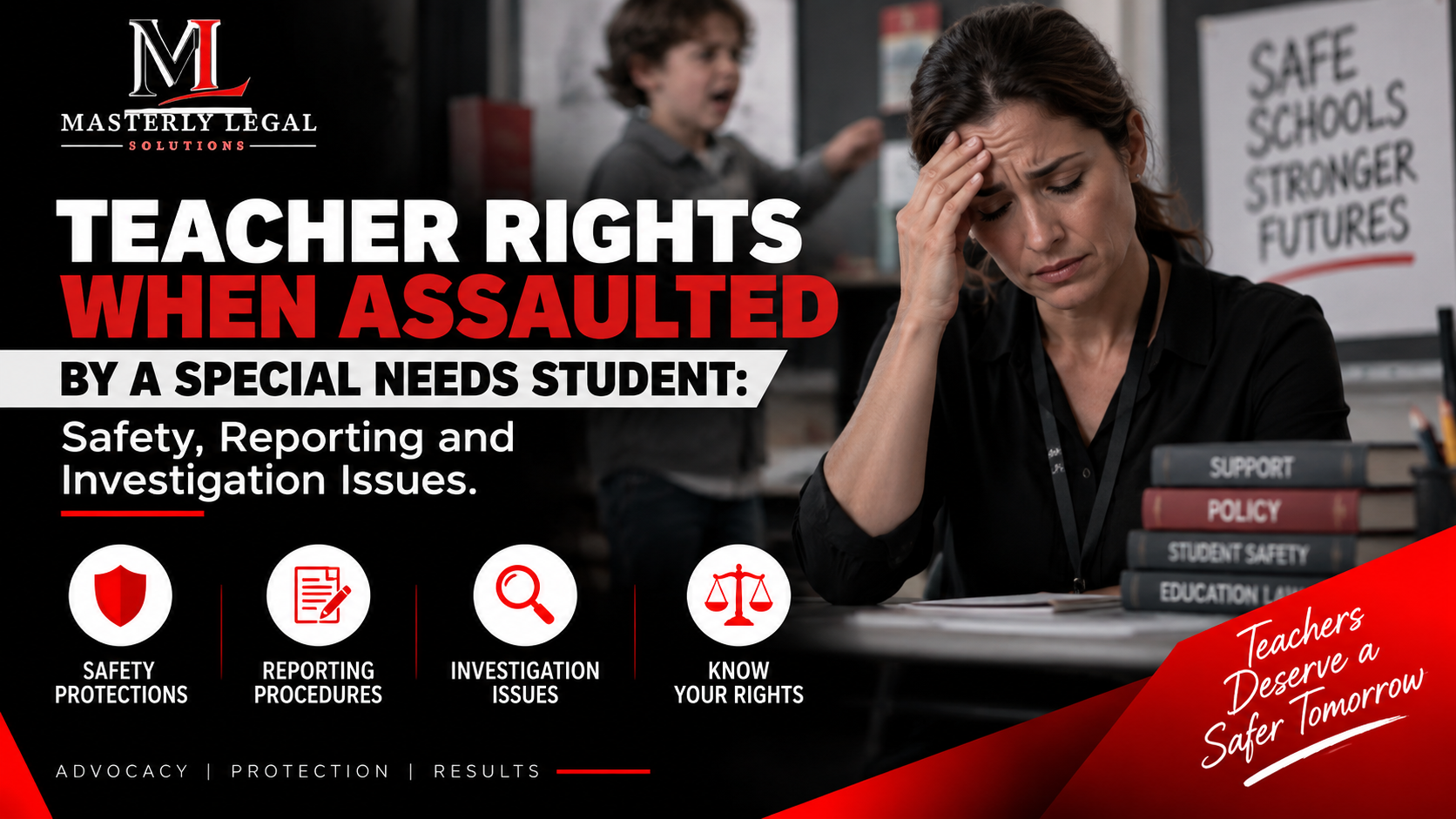
Teacher Rights When Assaulted by a Special Needs Student: Safety, Reporting and Investigation Issues


Looking for Legal & Business Solutions? Contact Us Now
Fill in the form or call us to set up a meeting





