

How CPS Administrative Appeals Can Reverse or Limit Agency Findings
The worst part about a CPS case isn’t always the home visit or the interview. For many families, the hardest moment comes later—when the agency issues a finding that feels final, frightening, and unfair. A single CPS “substantiated” decision can follow you for years, affecting jobs, licenses, custody, and how your family is viewed by schools and professionals. Parents often assume they have no real way to challenge that outcome, especially once child protective services closes the file or moves forward with a case plan. But in many situations, an administrative appeal can create a real opportunity to reverse or limit the damage.
At Masterly Legal Solutions, we routinely speak with parents who only learn about the appeal option after the window is almost gone. CPS administrative reviews are often handled quickly, with strict timelines and procedures that don’t feel intuitive. That’s why early contact with a cps attorney matters. When you understand the rules, preserve the right evidence, and build a structured strategy, administrative appeals can be a powerful tool for protecting your future. These appeals aren’t just paperwork—they can shape what happens in juvenile dependency, future investigations, and even whether a finding is used in court.
This article explains how CPS administrative appeals work, what they can accomplish, and why they matter even if your case is already in court. We also explain the relationship between administrative findings and court orders, and how appeals can support reunification and custody goals. Whether the allegations involved neglect, physical abuse, child abuse, sexual abuse, exploitation, or an accusation that never should have been made, you deserve a fair chance to challenge it. If you’re looking for a path forward that protects your family and your record, understanding appeals is crucial.
What CPS “Findings” Actually Mean for Families
When cps issues a finding, it’s usually their internal decision about whether abuse or neglect is “substantiated,” “inconclusive,” or “unfounded.” These terms sound technical, but the impact is very real. A substantiated finding can be used to justify more services, stricter supervision, or future removal risk. It can also affect your ability to work in certain professions or volunteer in settings involving children.
Many parents are shocked by how little evidence can lead to a negative outcome. CPS decisions may rely on interviews, reports, and impressions formed during a cps investigation. CPS doesn’t always need the same level of proof that a criminal court requires. That gap is why families can feel blindsided—because what CPS believes can become a permanent record even if there are no criminal charges.
Administrative appeals exist because CPS findings can be wrong. Miscommunications happen. Reports can be exaggerated. A rushed investigation can miss context. The appeal process gives families a structured way to challenge the agency’s decision and demand a more objective review.
Why Administrative Appeals Matter Even When Court Is Involved
A common misconception is that if your case is in court, the administrative finding no longer matters. In reality, administrative findings can influence the entire juvenile dependency case. They can shape the agency’s position, the services they demand, and how they present you to the judge. Even if a court is deciding custody and reunification, CPS findings can still affect outcomes behind the scenes.
Administrative findings can also follow you beyond the court case. Even after reunification, future allegations may be evaluated through the lens of past findings. A prior substantiated decision can increase the agency’s risk assessment and escalate their response. That’s why families often want to reverse or limit findings even after the case appears to be “over.”
An appeal can also be a strategic tool. If you can demonstrate that the agency’s decision was not supported by evidence, you may strengthen your position in court. You may also reduce the leverage CPS has when negotiating services or visitation. In many cps cases, an administrative appeal is one of the most overlooked protections.
What Is a CPS Administrative Appeal
A CPS administrative appeal is a process that allows you to challenge an agency finding through internal review procedures. The structure varies by jurisdiction, but it generally involves filing a request for review, presenting evidence, and arguing why the finding is wrong or should be reduced. This is not the same as a court trial, but it can still involve formal rules, deadlines, and written decisions. The outcome may include reversal, modification, or confirmation of the finding.
Administrative appeals may be handled by a specialized department or review unit within the child protection services system. In some cases, an administrative law judge or hearing officer evaluates the evidence. In other cases, the review is handled by a panel or supervisor who was not part of the original investigation. The key is that it creates a structured opportunity to challenge the agency’s conclusion.
Appeals are often time-sensitive. Families who wait too long may lose the right to challenge the finding. That’s why an experienced attorney is so valuable. A well-prepared appeal can change your case trajectory.
Who Can Benefit From an Administrative Appeal
Administrative appeals can benefit many different families, not just those facing removal. Parents who were never taken to court may still have a damaging substantiated finding on record. Families who completed services may still want the finding corrected to protect future employment and reputation. Parents involved in custody disputes may need to limit how a finding is used against them. Even relatives who were caregivers can be affected.
Appeals can also matter for professionals. Teachers, nurses, childcare workers, and other professionals may face licensing or employment consequences if a CPS record exists. A negative finding can trigger background concerns and create long-term stress. If you’re trying to protect your career, appeals may be essential.
Families who believe the allegations were exaggerated, misinterpreted, or false are strong candidates for appeals. This includes cases based on misunderstandings about discipline, home conditions, or parenting decisions. It also includes cases where CPS relied on weak reports without adequate investigation. If fairness matters, an appeal may be the next step.
The Difference Between an Appeal and a Dependency Petition
Families often confuse an appeal with a dependency case. A dependency case is usually initiated by a petition filed in court. That petition asks the court to intervene because CPS believes the child is at risk. A dependency case can involve hearings, court orders, services, and possible removal. The court decides custody and safety conditions.
An administrative appeal, by contrast, focuses on the agency’s finding and record. It challenges whether CPS properly substantiated abuse or neglect. It may not directly change custody in the short term, but it can influence the agency’s stance and long-term consequences. It can also limit the findings CPS relies on during court proceedings.
Both processes can happen at the same time. That’s why coordination matters. A strong attorney ensures your strategy is consistent in both arenas. You don’t want one process to harm the other. You want a plan that protects your family on all fronts.
What CPS Looks At When It Makes Findings
To understand appeals, it helps to understand how CPS makes findings in the first place. CPS typically evaluates allegations using interviews, reports, and observations. They may speak with the child, parents, teachers, doctors, and other professionals. They may review school records, medical records, and prior calls. They may also rely on what the child says, even when the child’s statements are confused or influenced.
CPS also evaluates risk factors, not just facts. They look at household conditions, parental behavior, and safety concerns. Even if no harm occurred, CPS may still issue a finding if they believe risk was high. That is why parents feel the process is not always fair. Risk assessments can feel subjective.
Appeals allow you to counter those subjective impressions. You can present facts, context, and evidence that CPS ignored. You can also challenge whether the investigation was thorough. A strong appeal focuses on what the agency did wrong and why the finding should not stand.
When CPS Believes There Was Neglect
Neglect findings often arise from supervision issues, unsafe conditions, or unmet needs. CPS may claim a parent failed to provide adequate care or allowed dangerous circumstances. Sometimes these cases involve poverty or lack of resources rather than intentional harm. The agency may still treat it as neglect even if the parent was doing their best.
Neglect cases can be complicated because the line between “struggling” and “neglecting” can feel blurry. CPS may not fully consider the parent’s circumstances, support system, or efforts to meet the child’s needs. They may also misunderstand cultural or family practices. That is why appeals can matter so much.
In an appeal, your goal is to demonstrate the full context. You can show safety planning, improvements, documentation, and support. You can also challenge whether CPS used proper standards. A well-built appeal can reduce or reverse neglect findings.
When CPS Allegations Involve Physical Abuse
Physical abuse allegations often trigger aggressive agency action. CPS may claim the child was harmed through discipline or violence. They may interpret bruises, marks, or injuries as evidence of abuse. Sometimes injuries are accidental, misunderstood, or unrelated to the parent. But CPS may still move forward quickly.
Appeals can be crucial in these situations because a substantiated abuse finding is especially damaging. It can affect custody, employment, and future CPS involvement. It can also increase the likelihood of court involvement and service requirements. Parents need a clear defense strategy.
If physical harm is alleged, evidence becomes central. Medical records, photos, timelines, and witness statements can matter. A defense attorney can help you organize evidence and present it properly. Strong cps defense focuses on facts and credibility.
When Allegations Involve Sexual Abuse or Exploitation
Cases involving sexual abuse or exploitation are among the most serious CPS matters. CPS may treat these cases as emergencies and may coordinate with law enforcement. The risk of criminal charges is higher, and the agency may push for removal or strict restrictions quickly. Families often feel shocked and helpless when this happens.
Even when allegations are false, the mere accusation can create devastating consequences. Parents may be restricted from contact. Homes may be disrupted. Children may be interviewed repeatedly, which can be traumatic. An appeal may become a crucial step in correcting the record.
Because these cases are complex, you need careful legal representation. A cps attorney can protect your rights and help coordinate strategy with any criminal defense needs. It is critical to maintain a consistent and careful approach. One misstep can be used against you.
Why Appeals Are Often Missed: Deadlines and Confusion
Administrative appeal rights often come with strict deadlines. Families may be told about the finding in a letter they don’t fully understand. They may be overwhelmed by court dates, services, and daily survival. By the time they realize the long-term consequences, the deadline may have passed. That is one of the most frustrating realities in cps cases.
Even when families know they can appeal, they may not understand how to do it. The filing requirements may be confusing. The appeal request may require specific language or forms. If it is done incorrectly, the agency may deny the request as incomplete.
This is why contacting an attorney early is crucial. A skilled lawyer can ensure filings are timely and correct. They can also create a strategy that supports both court and administrative goals. Timing often determines whether you have real options.
How the Administrative Review Process Typically Works
Most appeal processes begin with a written request for review. You may need to file within a certain number of days after receiving notice. The agency may then schedule a review conference or hearing. You may be allowed to submit documents and evidence. In some cases, witnesses may be allowed.
The review may involve a hearing officer or administrative decision-maker. The agency may present its evidence. You may counter with your evidence and arguments. The decision-maker then issues a written decision confirming, modifying, or reversing the finding. This decision can affect the agency record and how future cases are evaluated.
Throughout the process, organization matters. You must present a coherent narrative. You must address the allegations directly. You must show why the agency’s finding was incorrect or overstated. A strong attorney can build compelling arguments and keep the case focused.
The Role of Evidence in Administrative Appeals
Evidence is the foundation of a successful appeal. This can include medical records, school records, photos, texts, emails, calendars, and witness statements. It can also include proof of services completed, counseling participation, and safety improvements. Evidence helps you demonstrate facts rather than opinions.
Appeals often succeed when CPS relied on assumptions or incomplete information. If you can show that CPS failed to investigate properly, ignored key information, or misinterpreted events, your appeal becomes stronger. The agency’s own records may contain contradictions. That is why obtaining and reviewing the CPS file can be crucial.
A defense attorney can help you identify what evidence matters most. They can also help you present it in a clear and persuasive way. Administrative decision-makers often respond well to organized, factual presentations. Evidence can turn confusion into clarity.
How Attorneys Build Compelling Arguments in Appeals
A successful appeal does not rely on anger or frustration. It relies on structure. Attorneys build appeals by identifying the weaknesses in the agency’s findings and presenting a more accurate narrative. This includes challenging credibility issues, timeline inconsistencies, and unsupported conclusions. It also includes highlighting missing investigation steps.
Compelling arguments often focus on standards and definitions. What counts as neglect? What counts as abuse? Did CPS apply the correct standard? Did CPS rely on hearsay without corroboration? These questions matter. Appeals can succeed when the agency did not meet its own criteria.
A cps defense attorney also focuses on fairness. If the parent complied, sought help, and maintained child safety, that matters. The goal is to demonstrate that the finding is not supported by evidence. A strong appeal is not emotional—it is precise and persuasive.
How CPS Defense Protects Your Parental Rights
Administrative appeals are part of protecting parental rights. When CPS findings stand, they can create a permanent label that follows the family. That label can affect custody decisions, school interactions, and future investigations. Parents deserve a fair process, and appeals can correct errors.
Cps defense also protects children by stabilizing the family. When findings are overstated, families may be forced into unnecessary services or restrictions. Children may experience disruption, supervised visits, or removal risk. Appeals can limit those consequences by correcting the record.
Protecting parental rights is also about protecting the child’s best interest. Healthy, safe families deserve stability. When CPS findings are wrong, the system must be challenged. Legal representation gives families a voice. It ensures they are not steamrolled by a large agency.
Court Orders, Services, and How Findings Shape Case Plans
CPS findings often shape the services demanded in dependency cases. A substantiated abuse finding may lead to parenting classes, counseling, anger management, or supervised visitation. A neglect finding may lead to home visits and monitoring. The agency may argue these services are necessary for safety. But if the finding is wrong, the services may be excessive.
Court orders can reinforce these requirements. Once a judge orders services, the parent must comply. That can be overwhelming and expensive. It can also feel unfair if the parent believes the allegations were false. Appeals can help reduce the weight of the finding and support arguments for less restrictive orders.
Even when services are helpful, parents deserve fairness. Services should match the actual risk. They should not be used as punishment. Appeals can help limit findings so services become more appropriate. That can make reunification faster and less disruptive.
The Role of Confidentiality and Privilege in CPS Matters
Families often worry about confidentiality during CPS cases. They wonder who will see the findings and how the information will be shared. CPS records are often sensitive, but they can be accessed in certain legal contexts. That is why protecting the record matters.
Privilege issues can also arise in counseling and therapy. Parents may be required to attend counseling as part of services. They may assume everything discussed is private. But in some cases, information may be shared with the agency depending on releases and program rules. Parents should understand what they are signing.
A lawyer can help you protect confidentiality where possible. They can also advise you on safe communication practices. The goal is to protect your child and your rights while avoiding unnecessary exposure. These cases are sensitive, and privacy matters.
Removal Risk and Why Appeals Can Reduce Future Harm
Even if your child was never removed, a substantiated finding can increase future removal risk. If another report occurs later, CPS may treat it as a pattern. They may escalate faster. They may argue the parent has a history. That history can affect the agency’s decisions and court presentations.
Appeals can reduce or eliminate that history. Reversing a finding can prevent future overreaction. Limiting a finding can reduce the severity of future risk assessments. This can protect families long after the current case ends.
This is why appeals matter for long-term protection. Families deserve the chance to correct the record. They deserve fairness and accuracy. If a finding is wrong, it should not follow you forever. Appeals are often the pathway to clearing your name.
Reunification Goals and Administrative Appeals
Reunification is often the central goal in juvenile dependency cases. Parents want their children home safely and quickly. CPS may require services and monitoring before reunification occurs. Appeals can support reunification by correcting the underlying agency narrative.
If the agency’s finding is overstated, it can delay reunification. CPS may demand more services or longer supervision. The court may rely on the finding when making decisions. By challenging the finding, you can strengthen your case for reunification. You can also reduce unnecessary burdens.
Reunification also depends on credibility. A well-presented appeal can demonstrate that the parent is responsible, committed, and focused on the child’s best interest. It can show that the parent takes safety seriously while defending against unfair allegations. Appeals can be a strategic tool for reunification.
Geographic Notes: California, Orange County, Riverside, and Beyond
Families often ask how these concepts apply in California systems, including Orange County and Riverside. Administrative procedures can vary across counties and departments, but the core idea is similar: CPS findings can be challenged through review processes. Families in Southern California often face complex juvenile dependency systems and aggressive agency practices. Understanding the process is essential.
Whether a case is in Orange County, Riverside, or another California jurisdiction, the agency’s findings can impact services, custody, and future risk assessments. The court system is formal, and deadlines are strict. Many families feel overwhelmed by the process. That is why early contact with an attorney matters.
Masterly Legal Solutions supports families facing CPS matters in a wide range of contexts. We understand the pressure families face when the agency acts quickly. We help clients build strategies that protect children and parental rights. Our goal is fairness, protection, and long-term stability.
What to Do If You Receive a Notice of Finding
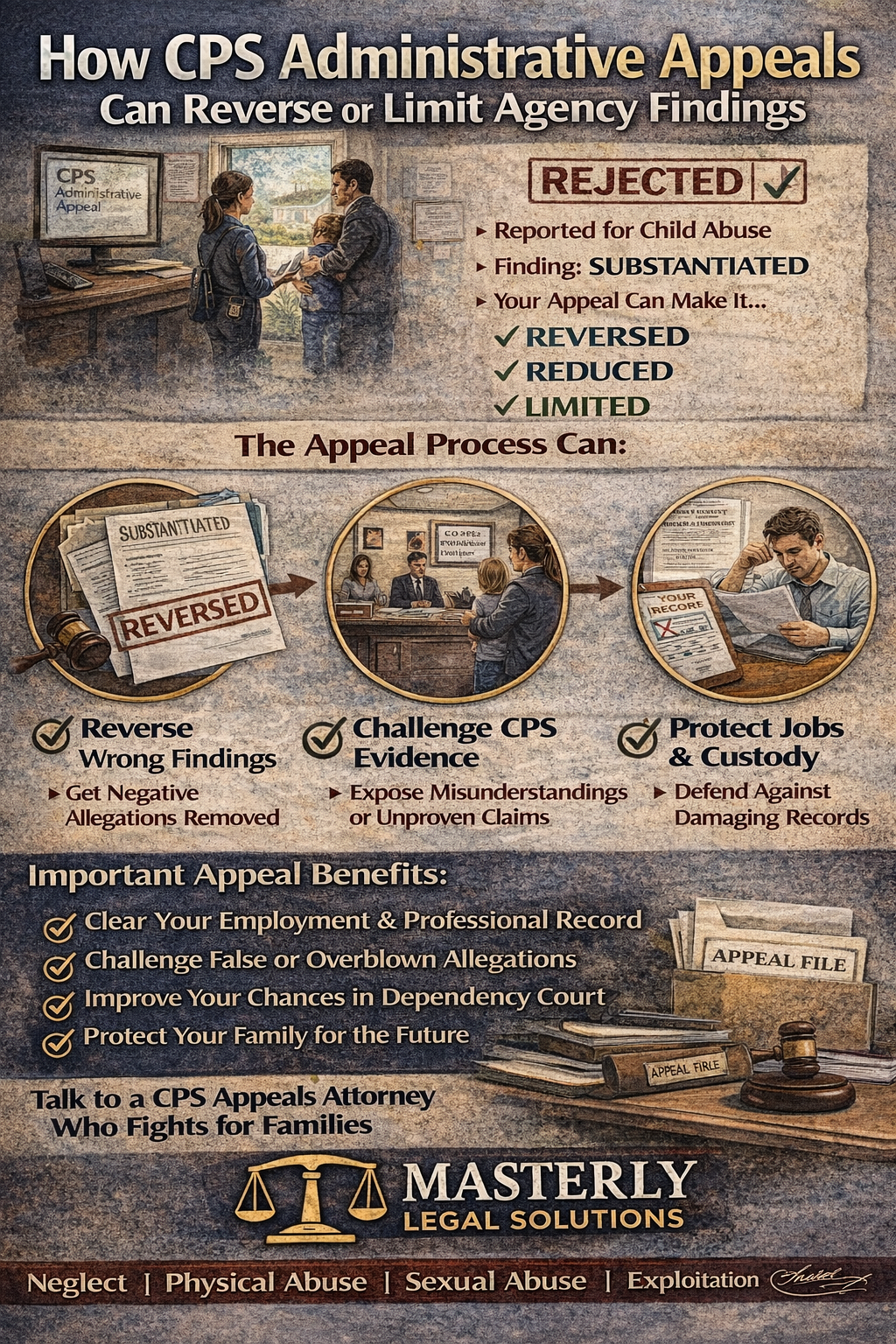
If you receive notice that CPS substantiated allegations, take it seriously. Even if your case feels “over,” the finding can still harm your future. Read the notice carefully and look for appeal deadlines. Do not assume you have plenty of time. This is often where families lose their rights.
Start gathering documents immediately. Save texts, emails, photos, and records that support your story. Write down your timeline while it’s fresh. Identify possible witnesses who can confirm facts. This preparation can be crucial.
Most importantly, contact an attorney quickly. A cps attorney can review the notice and advise on next steps. They can help you file properly and build a strong appeal. Early action gives you the best chance to reverse or limit findings.
How Masterly Legal Solutions Helps Families Fight Back
At Masterly Legal Solutions, we help families challenge CPS findings with precision and strategy. We know how damaging an agency finding can be. We also know how to build a focused appeal that highlights weak evidence, flawed investigation steps, and unfair conclusions. Our team provides legal representation designed to protect your record and your family’s future.
We approach these cases with commitment and compassion. We listen carefully and help clients understand the process. We help gather evidence, build compelling arguments, and present the strongest case possible. We also help families navigate the overlap between administrative review and court proceedings.
You deserve an advocate who takes your case seriously. CPS is a powerful agency, but it is not above review. Families deserve fairness. If a finding is wrong or exaggerated, we help you counter it. Our goal is to protect children, preserve parental rights, and support stability.
Contact Masterly Legal Solutions for a Free Consultation
If CPS has issued a finding against you, or you’re worried that a CPS administrative decision will affect your custody, your reputation, or your ability to move forward, don’t wait. Administrative appeals can be the difference between a permanent record and a corrected outcome, but deadlines can be tight and the process can be confusing. A cps attorney can help you understand your options, preserve your rights, and build a strategy that challenges the agency’s decision with facts and structure.
At Masterly Legal Solutions, we help families fight back against unfair CPS findings and protect what matters most—the safety and stability of their children and their parental rights. If you need support from an experienced attorney who understands CPS defense, juvenile dependency dynamics, and how administrative review can reverse or limit agency findings, call (972) 236-5051 for a free consultation. We’ll listen, explain the next step, and help you protect your family’s future.
Disclaimer: This article is for educational purposes only and does not constitute legal advice or legal guidance. Every situation is different, and reading this article does not create an attorney-client relationship. For advice about your specific circumstances, contact Masterly Legal Solutions directly.




Teacher Rights When Assaulted by a Special Needs Student: Safety, Reporting and Investigation Issues



Looking for Legal & Business Solutions? Contact Us Now
Fill in the form or call us to set up a meeting





