

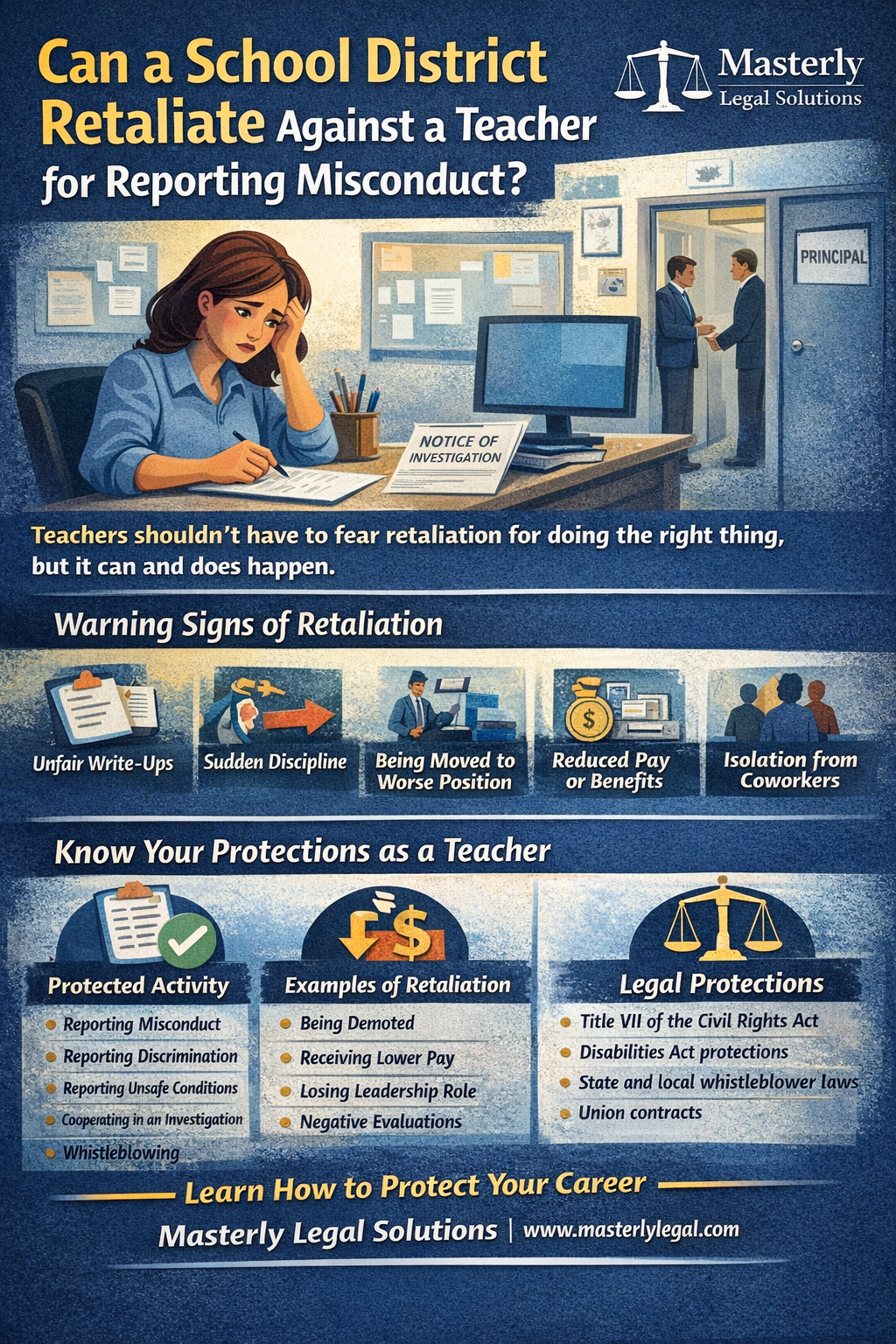
Can a School District Retaliate Against a Teacher for Reporting Misconduct?
Most teachers don’t go into education expecting to become part of a legal dispute. You go into it to teach, mentor, and help students grow. But sometimes you see something that doesn’t sit right—misconduct, unsafe behavior, discrimination, harassment, or a violation of policy—and you feel you have to speak up. That moment can be emotionally heavy because you’re not just thinking about your job, you’re thinking about your students, your license, and your reputation.
If you’ve ever asked yourself, “Can my school district punish me for reporting this?” you’re not being dramatic. You’re being realistic. Retaliation is a real concern in education settings, and it can show up fast, especially when a teacher files a complaint or participates in an investigation.
At Masterly Legal Solutions, we understand how intimidating it feels when the same system you work for suddenly feels like it’s turning against you. This article explains how retaliation works, what legal protections may apply, and what steps teachers can take to protect their career and well being.
Why Teachers Fear Reporting Misconduct in the First Place
Teachers are often told to “report concerns,” but many educators worry that speaking up will backfire. The fear isn’t just about being disliked. It’s about being targeted by the people who control schedules, evaluations, assignments, and disciplinary action.
In a school workplace, power dynamics can be intense. A supervisor may control your classroom assignment, your support staff, your planning time, and even your future opportunities. When a teacher reports misconduct, that report can create tension inside the department and quickly turn into conflict.
That’s why many retaliation cases start with a teacher trying to do the right thing, only to feel like they’re being punished for it.
The Short Answer: A District Should Not Retaliate, But It Can Still Happen
A school district generally should not retaliate against a teacher for reporting misconduct. Many laws prohibit retaliation when a teacher engages in protected activity. However, the fact that retaliation is unlawful does not mean it never happens.
In real life, retaliation can be subtle, disguised, or framed as “performance management.” A district might claim it’s acting for legitimate reasons while the timing and pattern suggest something else. This is why documentation and legal guidance matter so much in education-related retaliation cases.
If you suspect retaliation, it is important to take it seriously early, not after the situation has escalated.
What Counts as Retaliation in a School Workplace?
Retaliation is when an employer takes negative action against an employee because the employee engaged in protected activity. In education, the employer is often the school district, but the actions may come through administrators, principals, HR, or a supervisor.
Retaliation can take many forms. It does not always mean termination, and it does not always happen in one dramatic moment. Sometimes it builds over weeks or months, creating stress and pressure until the teacher feels forced out.
Retaliation in the workplace can be especially damaging for teachers because it can affect future employment, certifications, and professional standing.
Understanding Protected Activity for Teachers
Protected activity is the legal term for actions that the law protects from punishment. Teachers often engage in protected activity without even realizing it. You do not have to be “perfect” in how you report misconduct for the law to recognize your actions.
Protected activity may include:
- Filing a complaint about discrimination or harassment
- Reporting unsafe conditions tied to occupational safety
- Cooperating with an investigation into misconduct
- Reporting wrongdoing through internal school channels
- Speaking up about unfair treatment affecting individual employees
- Participating in interviews, meetings, or written statements
If you reported misconduct in good faith, you may be protected even if the district later claims it “didn’t find enough evidence.” The law focuses on whether you were punished for engaging in protected activity, not whether the district liked the report.
Common Examples of Teacher Misconduct Reports That Trigger Retaliation
Teachers report misconduct for many reasons, and most are trying to protect students and maintain integrity. But those reports can create legal and political consequences inside the system.
Here are a few example situations that often lead to conflict:
- Reporting harassment by an administrator or co worker
- Reporting discrimination against students or staff
- Reporting inappropriate behavior toward students
- Reporting falsified attendance or grade records
- Reporting unsafe campus conditions
- Reporting misuse of funds or resources
- Reporting violations of district policy
If you face retaliation for any such report, a retaliation lawyer can help protect your rights.
Even when a teacher’s report is respectful and factual, the district may respond defensively. That’s when retaliation risks rise.
What Adverse Action Looks Like in Education Settings
An adverse action is a negative job-related decision that could discourage a reasonable person from speaking up. In teacher retaliation cases, adverse action can be obvious or subtle.
Examples of adverse action in a school district can include:
- Being moved to a less desirable position or grade level
- Losing a desirable position, leadership role, or coaching assignment
- Sudden disciplinary action for minor issues
- A negative evaluation that feels out of nowhere
- Being placed on administrative leave
- Being placed on paid administrative leave without explanation
- Losing access to training, committees, or opportunities
- Being excluded from meetings or important communication
Even one action can matter, but patterns matter too. When several actions happen after a complaint, the timing can support a retaliation claim.
Administrative Leave: When It’s Neutral and When It Feels Like Punishment
Administrative leave is one of the most common tools districts use when controversy arises. Sometimes administrative leave is used to separate parties during an investigation. In that context, it may be presented as a standard process.
But administrative leave can also be used to isolate, intimidate, or damage a teacher’s reputation. Even when it’s paid administrative leave, it can feel humiliating, especially when rumors spread and the teacher has no clear timeline.
If you are placed on administrative leave after reporting misconduct, it may be a red flag—especially if the district cannot explain why you, the reporting employee, were removed rather than the person accused.
How Retaliation Can Affect a Teacher’s Career and Well Being
Teachers often feel retaliation in ways that go beyond the paycheck. It can impact mental health, family responsibilities, and long-term career plans. It can also create fear that speaking up will permanently label you as “a problem.”
When retaliation happens, teachers may experience:
- Anxiety about going to work
- Loss of confidence and professional identity
- Strained relationships with a co worker or supervisor
- Fear of future hiring consequences
- Worry about supporting a family member
- Financial stress tied to lost pay or reduced wages
The emotional side of retaliation is real, and it deserves respect. You can care about students and still need to protect yourself.
Discrimination and Retaliation: Why These Issues Often Overlap
Retaliation is frequently connected to discrimination complaints. A teacher may report discrimination and then face backlash for speaking up. The retaliation may be framed as “discipline” or “performance,” but the timeline tells a different story.
Discrimination in school employment may involve:
- Age discrimination
- Disability-related concerns and disabilities
- Unequal treatment connected to Title VII categories
- Harassment that creates a hostile workplace
When discrimination is reported and the teacher is punished afterward, the district may be exposing itself to serious legal risk. The law is designed to protect employees from being punished for asserting rights.
Title VII and the Civil Rights Act in Teacher Retaliation Claims
Title VII is part of the Civil Rights Act and is one of the key federal laws that may apply to workplace discrimination and retaliation. Teachers and school staff may have rights under Title VII depending on the circumstances and the employer’s coverage.
Title VII can protect employees who:
- Report discrimination
- Report harassment
- Participate in an investigation
- File a complaint through appropriate channels
Even if the original complaint is disputed, retaliation can still be unlawful. The goal of these laws is to protect the playing field so employees are not scared into silence.
Disabilities Act Protections and Disability-Related Retaliation
Teachers with disabilities may face discrimination, and they may also face retaliation for requesting accommodations or speaking up about unfair treatment. The disabilities act and related laws can provide protections when a teacher is punished for asserting rights connected to disability needs.
Examples can include:
- Requesting medical accommodations
- Reporting unfair treatment tied to disability status
- Asking for schedule adjustments or support
- Reporting harassment based on disability
Retaliation can happen even when the teacher is simply trying to stay healthy and do their job effectively. These situations require careful documentation and often legal guidance.
Federal and State Laws That May Protect Teachers
Teacher retaliation cases may involve federal and state laws, along with state and local laws and district policies. The exact legal protections depend on what was reported, how it was reported, and how the district responded.
Some teachers assume only federal employees have protections, but that is not always true. State laws and local laws can also protect educators, and some whistleblower laws apply to public sector workers.
Because multiple laws may overlap, it is often best to speak with employment lawyers who understand how these cases work in real school environments.
State and Local Laws and How They Can Apply to School Districts
Many teachers work for public school districts that must follow state and local laws. These laws may include protections related to reporting wrongdoing, employee rights, and retaliation.
Local laws may also create additional rights, depending on the city or county. This matters because what is lawful in one location may be unlawful in another. A teacher’s circumstances, the district’s actions, and the reporting channel can all affect the outcome.
Understanding the mix of state laws and local laws is one reason teachers often choose to hire attorneys rather than trying to interpret everything alone.
Whistleblower Laws and Teacher Misconduct Reports
Whistleblower laws are designed to protect people who report wrongdoing. In education, whistleblower fears are common because teachers worry that administrators will retaliate or blacklist them.
A teacher may be protected under whistleblower laws if they report misconduct such as fraud, abuse, safety issues, or violations of law. The key is that the report is made in good faith and through appropriate channels.
Even when whistleblower laws apply, retaliation can still happen, and teachers may need legal assistance to enforce their rights.
Federal Agencies and the Equal Employment Opportunity Commission
In some cases, teachers may report discrimination or retaliation through external channels. Federal agencies may be involved depending on the issue. One of the most well-known agencies for workplace discrimination complaints is the Equal Employment Opportunity Commission.
The Equal Employment Opportunity Commission may handle certain complaints involving discrimination and retaliation under federal law. Filing with the appropriate agency can be a critical step, but deadlines and rules apply.
This is why getting legal guidance early can help protect your ability to file claims properly and on time.
Immigration Status and Retaliation in School Employment
Some teachers and school workers worry that immigration status will be used against them if they report misconduct. Even the fear of being targeted can silence people who deserve protection.
In many cases, employment laws still apply regardless of immigration status, and retaliation may still be unlawful. Districts should not use immigration status as a weapon to intimidate employees from reporting misconduct or discrimination.
If this is part of your situation, it is important to seek legal assistance quickly and discuss your options privately with a lawyer.
Retaliation Can Happen Through “Paperwork” Instead of Direct Threats
In school settings, retaliation often happens through documentation. A teacher may suddenly receive write-ups, negative memos, or corrective plans that feel unfair or exaggerated. These documents can later be used to justify termination or nonrenewal.
This is why it’s important to treat every write-up seriously. Even if it feels petty, it may be part of a larger pattern. Retaliation cases often involve showing how the district created a trail after the complaint.
If you are dealing with this, keep copies and take notes. Documentation helps establish what changed and when.
Disciplinary Action After a Complaint: Red Flags to Watch For
Disciplinary action is not always retaliation. Sometimes teachers do make mistakes and districts can respond appropriately. But when discipline comes right after protected activity, it deserves attention.
Red flags include:
- Discipline for issues that were previously ignored
- New standards being applied only to you
- Sudden accusations without evidence
- Being singled out while others are treated differently
- A supervisor pushing discipline aggressively after a complaint
If you feel the district is building a case against you, it may be time to speak with employment lawyers before the situation escalates.
How Co Worker Dynamics Can Change After You Report Misconduct
Retaliation is not always carried out directly by administrators. Sometimes the culture shifts and coworkers start treating you differently. A co worker may avoid you, exclude you, or repeat rumors. That can be painful in a school environment where teamwork matters.
This may happen because the district’s leadership sends subtle signals, or because people fear getting involved. Teachers often feel isolated even when they did the right thing.
If coworker behavior becomes harassment, it may strengthen the need to document and seek legal guidance. A workplace should not become hostile because you engaged in protected activity.
Family Responsibilities and the Pressure to Stay Silent
Teachers often carry heavy family responsibilities. Many are supporting children, aging parents, or a family member with medical needs. That pressure can make retaliation even more frightening because losing a job is not just a professional setback—it’s a household crisis. Understanding education law and your legal rights as an educator can be crucial to protecting yourself and your family.
Districts sometimes exploit this reality by making work conditions harder. Schedule changes, extra duties, or administrative leave can disrupt a teacher’s stability and create stress at home.
Retaliation law exists to protect employees from being forced into silence by fear. You have the right to protect your livelihood while still reporting misconduct.
How Retaliation Impacts Pay, Wages, and Financial Stability
Retaliation can hit teachers financially in multiple ways. Sometimes it involves reduced stipends, lost overtime opportunities, or removal from paid roles like coaching. Other times it involves the cost of being placed on administrative leave or losing future contracts.
Financial harm may include:
- Reduced pay through lost assignments
- Lower wages over time due to missed advancement
- Loss of supplemental income roles
- Increased personal expenses due to stress and dealing with the situation
Even when the base salary stays the same, retaliation can still cause financial damage. That’s why compensation may become part of settlement negotiations.
What It Means to Establish a Retaliation Claim
To establish retaliation, a teacher generally needs to show a few key points. The exact legal test can vary, but the core idea stays consistent: protected activity followed by adverse action, connected by timing or evidence.
Factors that may help establish retaliation include:
- The district knew about your complaint
- The adverse action happened soon after
- The district treated you differently than other workers
- The explanation for discipline keeps changing
- The process was inconsistent or rushed
An attorney can help evaluate the factors and determine whether the situation points to unlawful retaliation.
Why Timing Matters in Retaliation Cases
Timing is one of the biggest clues in retaliation cases. If a teacher reports misconduct and then quickly experiences administrative leave, discipline, or negative evaluations, the timing can support a connection.
That doesn’t mean every action after a complaint is retaliation. But when the district’s response is immediate and harsh, it may suggest motive.
The timeline is often one of the first things lawyers and attorneys examine. It helps tell the story of what happened and why.
What “Prohibit Retaliation” Really Means in Practice
Many districts have policies that say they “prohibit retaliation.” That language is important, but it does not always prevent retaliation from happening. A policy is only meaningful when leadership enforces it.
If the district claims it prohibits retaliation but then punishes teachers who file a complaint, that contradiction can be significant. It can also show that the district’s process was flawed or unfair.
Policies can support a claim when they show the district knew better but acted anyway.
How Investigations Should Work in a School District
A fair investigation should be neutral and fact-based. It should gather statements, review records, and treat all parties with respect. In a school setting, an investigation might involve administrators, HR, or outside investigators.
But investigations can also be used as tools of retaliation. A district may claim it is “investigating” but only focus on the reporting teacher. It may ignore the misconduct and instead look for reasons to discipline the teacher.
If you are participating in an investigation, stay calm, be truthful, and keep your own notes. Your words matter, and so does the process.
Filing a Complaint: Internal vs. External Options
Teachers often start by filing a complaint internally, such as with HR or administration. In some situations, external filing may also be appropriate. This can include reporting to state agencies or federal agencies depending on the misconduct.
Filing externally may feel intimidating, but sometimes it is necessary when internal channels fail. Teachers should also be aware that deadlines can apply.
Before filing anything, it helps to speak with a lawyer for guidance. That conversation can help you avoid mistakes and protect your rights.
When Police Reports Become Part of a Teacher Retaliation Situation
Most school retaliation cases are handled through employment processes, but there are circumstances where the police may become involved. This can happen when misconduct involves threats, assault, or criminal behavior.
If a teacher reports misconduct and then experiences retaliation, the case may involve both workplace issues and safety concerns. In those circumstances, documentation is critical and legal guidance is especially important.
No one should be punished for reporting misconduct that affects student safety or involves unlawful behavior.
Retaliation Can Be Unlawful Even When the District Claims It Was “Routine”
School districts often defend their actions by saying they were “routine,” “policy-based,” or “standard procedure.” They may say administrative leave is normal or that discipline is part of professional accountability.
But when those actions are triggered by a complaint, the situation can still be unlawful. Retaliation does not become legal just because it is wrapped in paperwork.
If the district’s actions look like punishment for protected activity, it may be time to explore your options.
Why Teachers Should Not Handle Retaliation Alone
Many teachers try to handle retaliation quietly because they don’t want to make things worse. But staying silent can sometimes give the district more room to escalate. It can also make it harder to prove what happened later.
Employment lawyers can help teachers understand their rights, communicate carefully, and build a strategy. This is especially important when the district is documenting discipline, assigning administrative leave, or threatening nonrenewal.
Seeking legal assistance is not a sign of weakness. It’s a way to protect your career and your future.
How Lawyers Support Teachers Through Retaliation Disputes
Lawyers help teachers in more ways than just filing a lawsuit. In many cases, teachers need guidance on what to say, what to document, and how to respond to district actions without making mistakes.
Attorneys may help with:
- Reviewing the facts and identifying protected activity
- Evaluating whether the district’s actions are adverse action
- Communicating with HR or administration
- Advising on filing deadlines and strategy
- Preparing for settlement negotiations
- Building claims supported by evidence
If you are dealing with retaliation, having a lawyer can make the process feel less overwhelming and more manageable.
Settlement Negotiations and Resolving a Teacher Retaliation Claim
Not every case ends in court. Many retaliation disputes are resolved through settlement negotiations. A settlement may involve compensation, policy changes, neutral references, or other terms depending on the case.
Settlement can be especially helpful when a teacher wants to move forward without prolonged conflict. However, every agreement should be reviewed carefully.
A lawyer can help protect your interests and make sure the settlement terms reflect the reality of what you experienced.
When a Lawsuit May Be the Right Step
Sometimes a lawsuit becomes necessary when the district refuses to stop retaliation or refuses to take accountability. A lawsuit is not always the first step, but it can be a powerful tool to seek justice.
In a lawsuit, evidence matters. That includes documents, witness statements, timelines, and the district’s own policies. In some cases, a jury may evaluate the facts and decide whether retaliation occurred.
The idea is not revenge. It’s accountability and protecting the rights of employees who spoke up.
Protecting the Playing Field for Teachers Who Speak Up
Teachers should not have to choose between doing the right thing and keeping their job. The purpose of retaliation laws is to protect the playing field so educators can report misconduct without fear.
When districts retaliate, it sends a chilling message to everyone. It discourages future reports, harms trust, and damages school culture. Protecting teachers who report misconduct protects students too.
If you are dealing with retaliation, know that your experience matters and your voice deserves protection.
What to Do If You Believe Retaliation Is Happening Right Now
If you suspect retaliation, you do not need to panic, but you should act thoughtfully. Early action can help preserve your rights and strengthen your position.
Here are practical steps that may help protect you:
- Save copies of emails, evaluations, and complaint documents
- Write down dates, names, and details of key events
- Stay professional and avoid emotional messages
- Identify witnesses who saw the change in treatment
- Ask for clarification in writing when discipline seems unfair
- Seek legal guidance before signing anything
Even small steps can make a difference. The goal is to protect your job, your reputation, and your future.
Contact Masterly Legal Solutions for Legal Guidance and Support
If you are a teacher who reported misconduct and now feels targeted, isolated, or punished, you deserve answers. At Masterly Legal Solutions, we help educators and workers understand whether retaliation may be unlawful and what options exist under federal and state laws, state and local laws, and district policies. We approach every case with respect because we know how stressful it is to be the employee who spoke up and then faced backlash.
Call (972) 236-5051 for a free consultation. We can review your situation, discuss your complaint history, and help you protect your rights while you decide the next best step. Whether you are facing administrative leave, disciplinary action, or subtle pressure that is damaging your well being, we are here to provide guidance and legal assistance tailored to your circumstances.
Disclaimer: This article is for educational purposes only and does not constitute legal guidance or legal advice. For advice about your specific situation, contact a qualified lawyer.


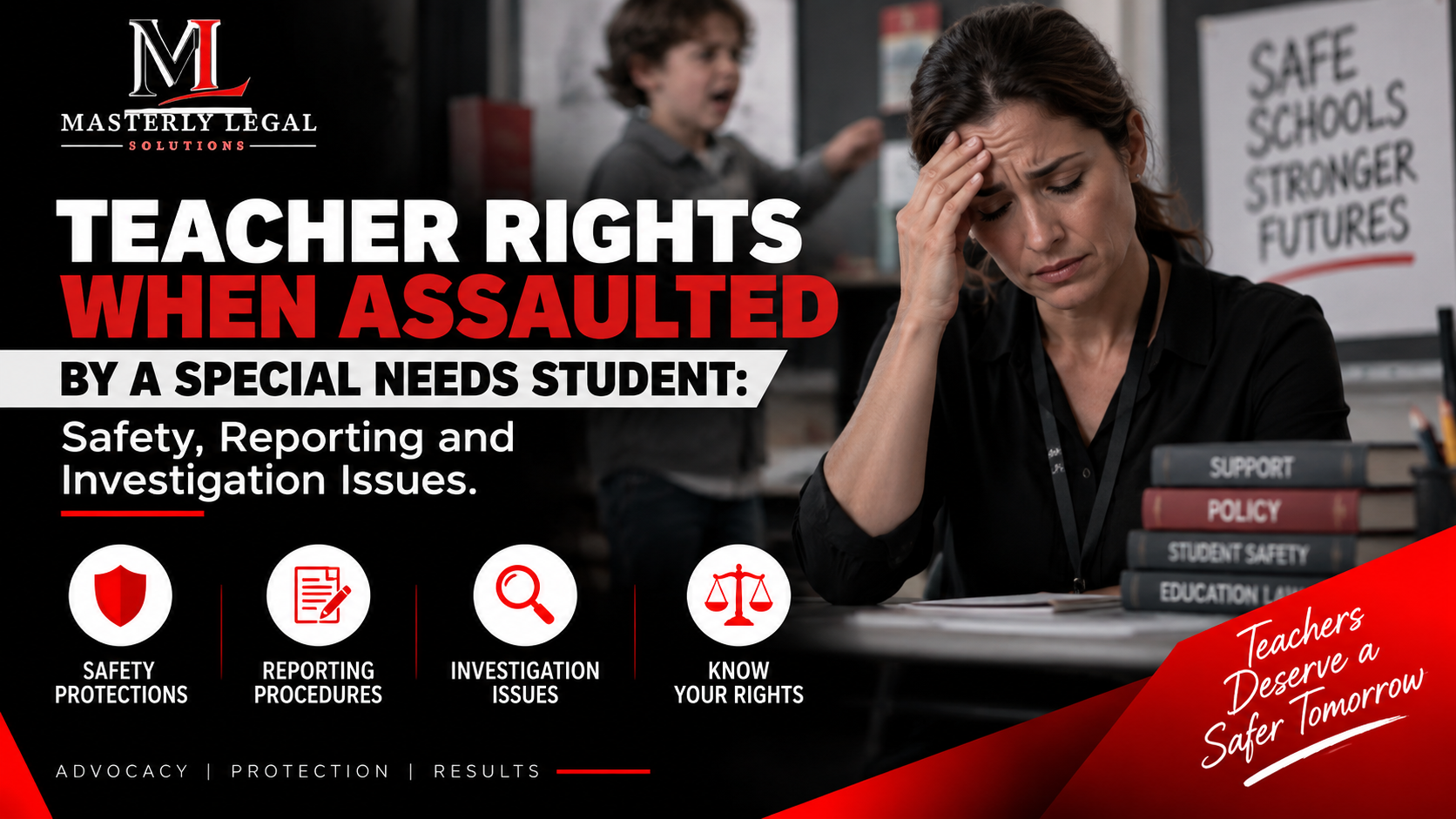
Teacher Rights When Assaulted by a Special Needs Student: Safety, Reporting and Investigation Issues


Looking for Legal & Business Solutions? Contact Us Now
Fill in the form or call us to set up a meeting





