

Texas CPS Administrative Appeals Explained: The Legal Path to Challenge an Unfair Finding
Getting a letter from CPS can feel like your entire world flips upside down. One moment you’re living your normal family life, managing school, work, and responsibilities. The next moment, you’re being investigated by a government agency, asked personal questions, and worried about what will happen to your child. Even when you know the allegations are false or exaggerated, it can feel like you are already being treated as guilty.
For many parents, the most frustrating part is how quickly an investigation can lead to an “unfair finding.” A CPS case may be based on incomplete information, misunderstandings, or a report made in anger. Sometimes the accusation involves child abuse, neglect, or safety concerns, even when the parent has been working hard to protect their child and ensure child safety. And once CPS makes a finding, it can affect your parental rights, custody, and your future.
At Masterly Legal Solutions, we help families fight back when CPS decisions don’t match the facts. This article breaks down CPS administrative appeals in Texas, explains how the process works, and shows the legal path a parent can take to challenge an unfair finding with strong, well-prepared arguments.
Why CPS Administrative Appeals Matter for Parents
When CPS makes a finding against a parent, it doesn’t just stay on paper. It can create real consequences that follow you for years. Parents may worry about being placed on a registry, losing custody, or facing supervised visitation. In some cases, a CPS finding can lead to court intervention or even criminal charges, depending on the allegations.
An administrative appeal gives parents a chance to defend themselves before the finding becomes permanent. It is not just a formality. It can be a critical step in protecting your well being, your reputation, and your relationship with your child.
Many families do not realize they have options until it’s too late. That’s why understanding the process early can make all the difference.
What CPS Is and What CPS Actually Does in Texas
CPS stands for Child Protective Services, which is part of child protective services cps operations in Texas. CPS is responsible for investigating reports of child abuse and neglect and taking action when it believes a child may be at risk. The stated goal is child safety and ensuring child safety, but the process can feel aggressive and overwhelming.
CPS may investigate allegations involving abuse, neglect cases, or abuse or neglect concerns. It may also look at home conditions, supervision, medical care, and a parent’s ability to provide stability. These investigations often involve interviews, home visits, and document requests.
Because CPS has significant authority, parents need to take every CPS investigation seriously, even if they believe the accusations are clearly false.
How CPS Investigations Begin: The Report That Starts Everything
Most CPS cases begin with a report. A report can come from a teacher, doctor, neighbor, family member, or even someone in a custody dispute. CPS is required to respond to many reports, even if they are vague. The agency often starts by investigating reports quickly to determine if the child is safe.
Sometimes the report involves child abuse, child abuse or neglect, or child abuse and neglect claims. Other times it involves neglect, supervision, or unsafe living conditions. In many cases, parents are shocked because the report doesn’t reflect their reality.
Once the report is made, CPS workers may open a case and begin the CPS investigation process.
Understanding the CPS Investigation Process Step by Step
The cps investigation process is designed to gather information, but it can feel one-sided. CPS workers may interview the child, the parent, relatives, and other people connected to the home. They may also review school records, medical records, and prior history.
During a cps investigation, the agency may look for evidence that supports the allegations. Sometimes the parent’s words are taken out of context. Other times, the caseworker relies on assumptions instead of sufficient evidence. This is where strong legal representation can help protect the parent’s rights.
Even if CPS closes the case, the finding may still harm the parent if it is recorded as “reason to believe” or another negative determination.
What It Means When CPS Finds “Abuse or Neglect”
CPS findings are not all the same. Some findings may indicate that CPS believes abuse or neglect occurred. Other findings may suggest concerns without enough proof. The wording matters because it can affect future custody disputes and whether the parent is labeled as a risk.
In many child protective services cases, the difference between “suspected” and “confirmed” can be unclear to families. But CPS decisions can still have serious consequences even when the evidence is weak. This is why challenging an unfair finding is so important.
When a finding is wrong, a parent has the right to defend their name and protect their family.
Why Unfair Findings Happen More Often Than People Think
Parents often assume CPS will only make negative findings when there is clear proof. In reality, unfair findings happen for many reasons. CPS caseworkers may have limited time, heavy caseloads, and incomplete information. Some CPS workers may misunderstand cultural differences or family dynamics.
Unfair findings can also happen when there is pressure to “do something” even without sufficient evidence. In custody disputes, accusations may be used as leverage, leading to investigations based on emotional claims rather than facts. A parent may feel like they are fighting a system that already made up its mind.
This is where a cps defense attorney can help build compelling arguments and push back against weak conclusions.
Administrative Appeals: What They Are and What They Are Not
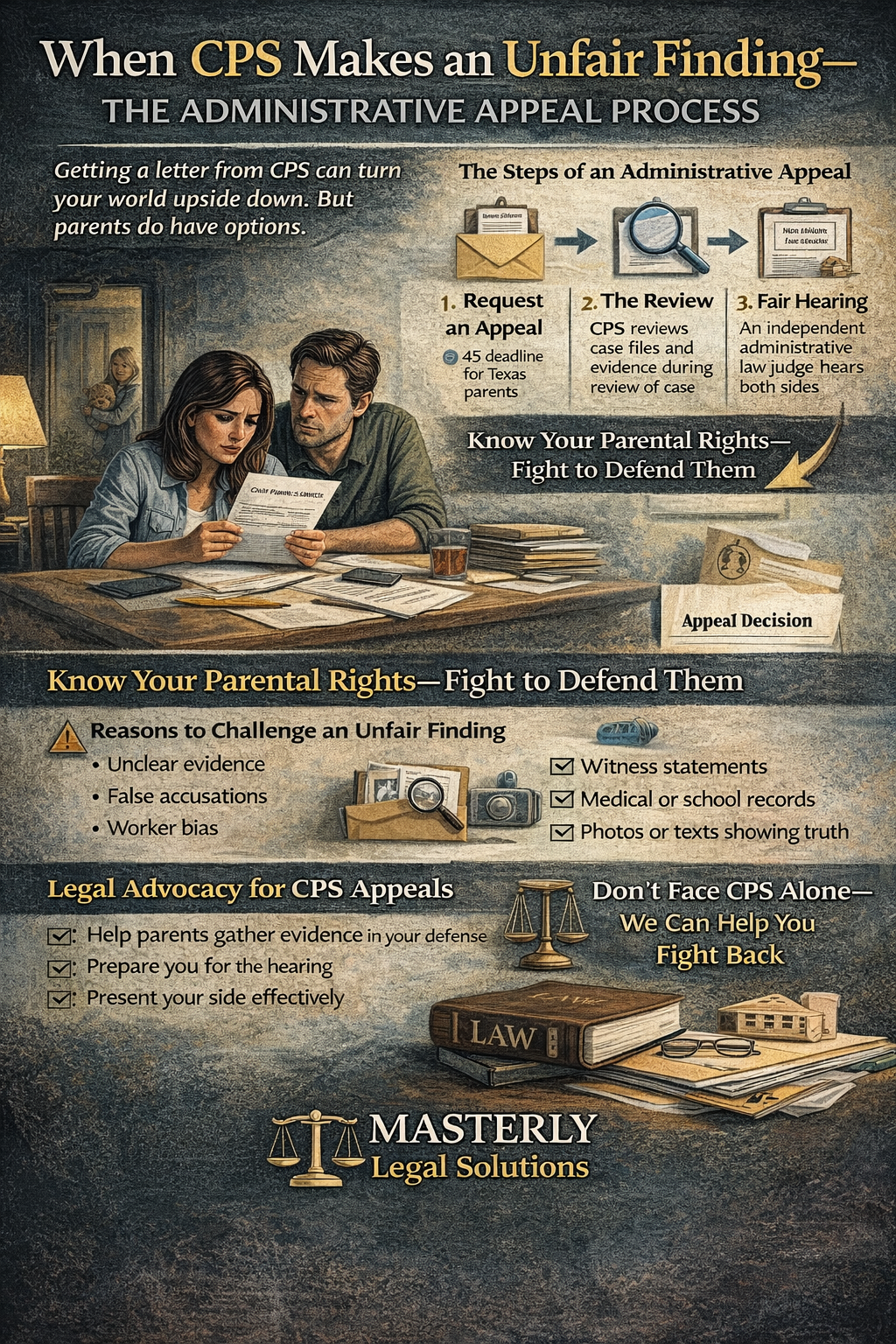
A CPS administrative appeal is not the same as going to court. It is a legal process within the system that allows a parent to challenge a CPS finding. The appeal focuses on whether CPS had enough evidence to support the finding and whether the process was fair.
An administrative appeal can be an important step even if a parent is not currently facing court intervention. It may help prevent future problems with custody, employment, or background checks. It can also help protect parental rights before the damage becomes permanent.
Administrative appeals are often time-sensitive, so parents should seek legal advice quickly.
When a CPS Administrative Appeal May Be the Best Option
Not every case requires an appeal, but many do. If CPS made a finding that you believe is unfair, you may want to challenge it before it becomes part of your record. Parents often appeal when the finding could affect custody or future parenting time.
An appeal may also be important when CPS claims abuse or neglect without strong proof. It can be critical if the parent fears supervised visitation or future restrictions. Even if the child was never removed, the finding can still harm the parent long-term.
The appeal process can feel intimidating, but it is often the best legal path to defend your name.
How the Appeal Process Can Protect Your Parental Rights
Parental rights are fundamental, but CPS cases can put them at risk quickly. A negative finding can influence custody decisions, court orders, and future CPS involvement. It can also affect how judges view a parent in family court.
By filing an administrative appeal, a parent may be able to correct the record and prevent the finding from being used against them later. The appeal process gives the parent a chance to present evidence, challenge accusations, and defend their actions.
For many families, the appeal is about protecting the best interest of the child and keeping the family stable.
What Evidence Matters in a CPS Administrative Appeal
Evidence is the foundation of any appeal. The parent must show why CPS’s finding was not supported or why the process was flawed. Evidence can include documents, witness statements, and records that contradict the allegations.
Examples of helpful evidence may include:
- Medical records showing the child was properly cared for
- School records and attendance reports
- Photos or videos of the home environment
- Text messages or emails showing context
- Statements from relatives or other witnesses
- Counseling records when appropriate
An experienced attorney can help gather evidence, organize it, and present it in a way that strengthens the parent’s position.
The Role of Attorneys in CPS Administrative Appeals
CPS cases are emotionally exhausting, and parents often feel pressured to handle everything alone. But administrative appeals involve legal standards, deadlines, and structured arguments. That’s why many families choose to work with attorneys who understand CPS defense.
A cps defense attorney can help you understand what CPS is alleging, what evidence supports or weakens the claim, and how to respond strategically. Your lawyer can also help prepare you for hearings and communicate with the agency on your behalf.
At Masterly Legal Solutions, our law firm focuses on helping parents defend themselves with clarity and confidence.
Why Hiring a CPS Defense Attorney Can Change the Outcome
Parents sometimes wait too long to get help because they believe the truth will speak for itself. Unfortunately, CPS cases do not always work that way. The system relies on paperwork, timelines, and legal findings, not just personal explanations.
A defense attorney can identify weak points in CPS’s case, challenge assumptions, and present compelling arguments. A lawyer can also help prevent a parent from making statements that are misunderstood or used against them. Strong legal representation can help protect your family life and reduce long-term risk.
If you are searching for lawyers for cps cases, it is usually because you want someone who will fight for your family and defend your name.
Juvenile Dependency and How CPS Cases Can Escalate
Some CPS cases move into juvenile dependency proceedings, especially if CPS believes the child is not safe at home. These cases can involve court intervention, emergency removals, or foster care placements.
Juvenile dependency is one of the most serious outcomes of CPS involvement. It can lead to court orders that restrict contact, require services, or place the child with relatives or foster care. Parents may feel powerless, but legal services can help them respond and defend their rights.
Even if your case is not in court yet, understanding juvenile dependency helps you see what is at stake.
Supervised Visitation and Restrictions on Parenting Time
One of the most painful outcomes for parents is supervised visitation. This can happen when CPS believes there are safety concerns, even if the parent disagrees. Supervised visitation can feel humiliating and emotionally devastating.
Parents may also face restrictions on where visits occur or who can be present. These conditions can affect the child’s well being and the parent-child bond. In many cases, supervised visitation becomes a major issue in custody disputes.
Appealing an unfair finding can be an important step in preventing long-term visitation restrictions.
How CPS Findings Can Affect Custody Disputes
Custody cases often become more complicated when CPS is involved. Even a single CPS finding can influence how a judge views a parent. It can also affect temporary custody orders, visitation schedules, and the overall direction of the case.
A CPS finding may be used as evidence in family court, even if the parent believes it is inaccurate. That is why challenging an unfair finding matters. Parents should not assume the issue will disappear on its own.
A law firm with experience in CPS defense can help protect your custody rights and present your side clearly.
The Risk of Criminal Charges in CPS Cases
Some CPS cases overlap with criminal investigations. This is more likely when allegations involve serious child abuse, physical harm, or sexual abuse claims. In those situations, a parent may face criminal charges in addition to CPS action.
Even if no criminal case is filed, parents should be cautious about what they say during the investigation. Statements made to CPS can sometimes be used later. That’s why having legal representation early is critical.
A cps defense attorney can help protect your rights and guide you through the process safely.
How CPS Workers and Caseworkers Influence the Case
CPS workers play a major role in shaping the case. A cps caseworker may decide what information to include, how to interpret events, and what recommendations to make. Their reports can carry significant weight.
Parents often feel frustrated because they believe the caseworker misunderstood them. Sometimes the caseworker is fair and thorough. Other times the caseworker may rely on limited information or assumptions.
Understanding the caseworker’s role helps parents respond strategically and focus on evidence rather than emotion.
What Parents Should Avoid Doing During an Investigation
When a parent is being investigated, it is normal to feel angry, scared, or defensive. But certain actions can make the situation worse. Parents should be careful about how they communicate and what they share.
Common mistakes include:
- Ignoring CPS contact attempts
- Arguing aggressively with CPS workers
- Posting about the case online
- Letting emotions control written statements
- Signing documents without understanding them
Instead, parents should stay calm, document everything, and seek legal advice early.
What It Means to Be “Committed” to Your Child’s Safety
CPS often evaluates whether a parent is committed to protecting the child and addressing concerns. This can include willingness to cooperate, seek counseling, or use resources that improve stability.
Being committed does not mean admitting guilt. It means showing you are focused on the best interest of your child. Parents can demonstrate commitment through responsible actions, safe planning, and consistent care.
A lawyer can help you show the right message without harming your defense.
How to Prepare for the Administrative Appeal Hearing
Administrative appeal hearings require preparation. Parents should know what CPS is claiming, what evidence exists, and what the legal standard is. You may need to present documents, witnesses, and a clear explanation of events.
Preparation often includes reviewing the CPS file, identifying weak points, and organizing evidence. It also includes practicing how to speak clearly and stay focused during questions. Many parents feel nervous, but preparation can reduce stress.
An experienced attorney can help you prepare so you do not walk into the hearing feeling unprotected.
Presenting Your Case: Building Compelling Arguments
In an appeal, it is not enough to say, “This isn’t true.” You must show why CPS’s finding is unsupported. That means presenting evidence, explaining context, and challenging assumptions.
Compelling arguments often focus on facts, timelines, and inconsistencies. They may also highlight gaps in CPS’s investigation or lack of sufficient evidence. The goal is to show the finding should not stand.
A strong defense attorney can help structure your arguments in a way that is persuasive and clear.
How Judges and Courts Fit Into the Bigger Picture
Even though an administrative appeal is not always in court, court involvement can happen later. CPS cases may lead to court orders, custody restrictions, or juvenile dependency proceedings. A judge may rely on CPS records when making decisions.
That is why administrative appeals matter. They can affect how your case looks if it later enters the court system. The earlier you correct the record, the better your position may be.
Understanding the court process helps families plan for the future and protect their rights.
The Importance of Support During CPS Cases
CPS cases can isolate families. Parents may feel ashamed, judged, or afraid to talk to anyone. But support matters, especially when you are trying to protect your child and keep your life stable.
Support can come from trusted relatives, counselors, and legal professionals. It can also come from a law firm that understands how stressful CPS cases are. Parents deserve to feel heard and respected.
At Masterly Legal Solutions, we work to provide both legal services and steady guidance during a difficult time.
Why Location Confusion Happens: Orange County and Southern California Keywords
Some people searching online for CPS help may see references to orange county or southern california. While those areas have their own systems and procedures, Texas has its own rules and agency structure. That’s why it is important to work with a legal team that understands Texas CPS processes specifically.
The texas department and Texas CPS procedures have their own deadlines, standards, and appeal pathways. Even if information online sounds similar, the legal details can be different. Parents should rely on Texas-focused legal guidance when challenging CPS findings.
If you are unsure what applies to your county, a consultation can provide clarity quickly.
Understanding County Differences and Why They Matter
CPS operates statewide, but county-level practices can vary. Different county offices may have different staffing, resources, and approaches. Some counties move faster, while others take longer.
County differences can affect timelines, communication, and how cases are handled. That is why parents should document everything and stay proactive. Knowing your county’s patterns can help you plan.
A lawyer familiar with CPS defense can help you navigate the county-specific realities while protecting your rights.
What a Proven Track Record Means in CPS Defense
When families look for legal help, they often want someone with a proven track record. In CPS defense, that means understanding how to challenge findings, handle investigations, and advocate effectively.
A proven track record also means knowing how to communicate with CPS, how to present evidence, and how to fight for parental rights. It is not just about being aggressive—it is about being strategic.
Masterly Legal Solutions is committed to defending families with professionalism, preparation, and respect.
How Legal Knowledge Protects Families in CPS Appeals
CPS cases involve legal rules, deadlines, and standards of proof. Parents may not know what the agency must show or what rights they have. That lack of knowledge can create fear and confusion.
Legal knowledge helps parents make better decisions. It helps them understand what matters, what evidence is useful, and what steps to take. It also helps them avoid mistakes that can harm the case.
Working with attorneys who focus on CPS cases can help you feel more in control and less overwhelmed.
Why Families Should Act Quickly After a CPS Finding
Time matters in CPS administrative appeals. Parents may have limited time to request an appeal, gather evidence, and prepare. Waiting too long can reduce options and make the process harder.
Even if you feel exhausted, taking action early can protect your future. It can also help prevent the finding from being used in custody disputes or future CPS cases.
If you believe the finding is unfair, speaking with a lawyer quickly is often the smartest next step.
How Masterly Legal Solutions Helps Parents Fight CPS Findings
At Masterly Legal Solutions, we understand that CPS cases are not just legal battles. They are personal, emotional, and deeply tied to your child’s future. We help parents respond to investigations, challenge unfair findings, and protect parental rights through strategic CPS defense. We also provide legal representation for educators in need of an education law attorney for teachers and administrators.
Our team works with families facing allegations of child abuse, neglect, or abuse or neglect concerns. We help clients understand the cps investigation process, gather evidence, and prepare for appeals. We are committed to protecting your family life and helping you move forward.
When you need guidance, you deserve legal professionals who take your case seriously.
Contact Masterly Legal Solutions for a Free Consultation
If CPS has made an unfair finding against you, you do not have to accept it as your permanent reality. You have the right to challenge the decision, defend your parental rights, and protect your relationship with your child. At Masterly Legal Solutions, we provide legal services for families facing CPS investigations, child protective services cases, and administrative appeals.
Call (972) 236-5051 today for a free consultation. If you are looking for lawyers for cps cases, our team can help you understand your options, prepare your appeal, and fight for the outcome your family deserves. You deserve to be heard, and your child deserves stability, safety, and a future built on truth.
Disclaimer: This article is for educational purposes only and does not constitute legal guidance or legal advice. For advice about your specific situation, contact a qualified attorney.


Teacher Rights When Assaulted by a Special Needs Student: Safety, Reporting and Investigation Issues


Looking for Legal & Business Solutions? Contact Us Now
Fill in the form or call us to set up a meeting





