

Retaliation at Work: What It Looks Like, Why It Happens, and How to Protect Yourself
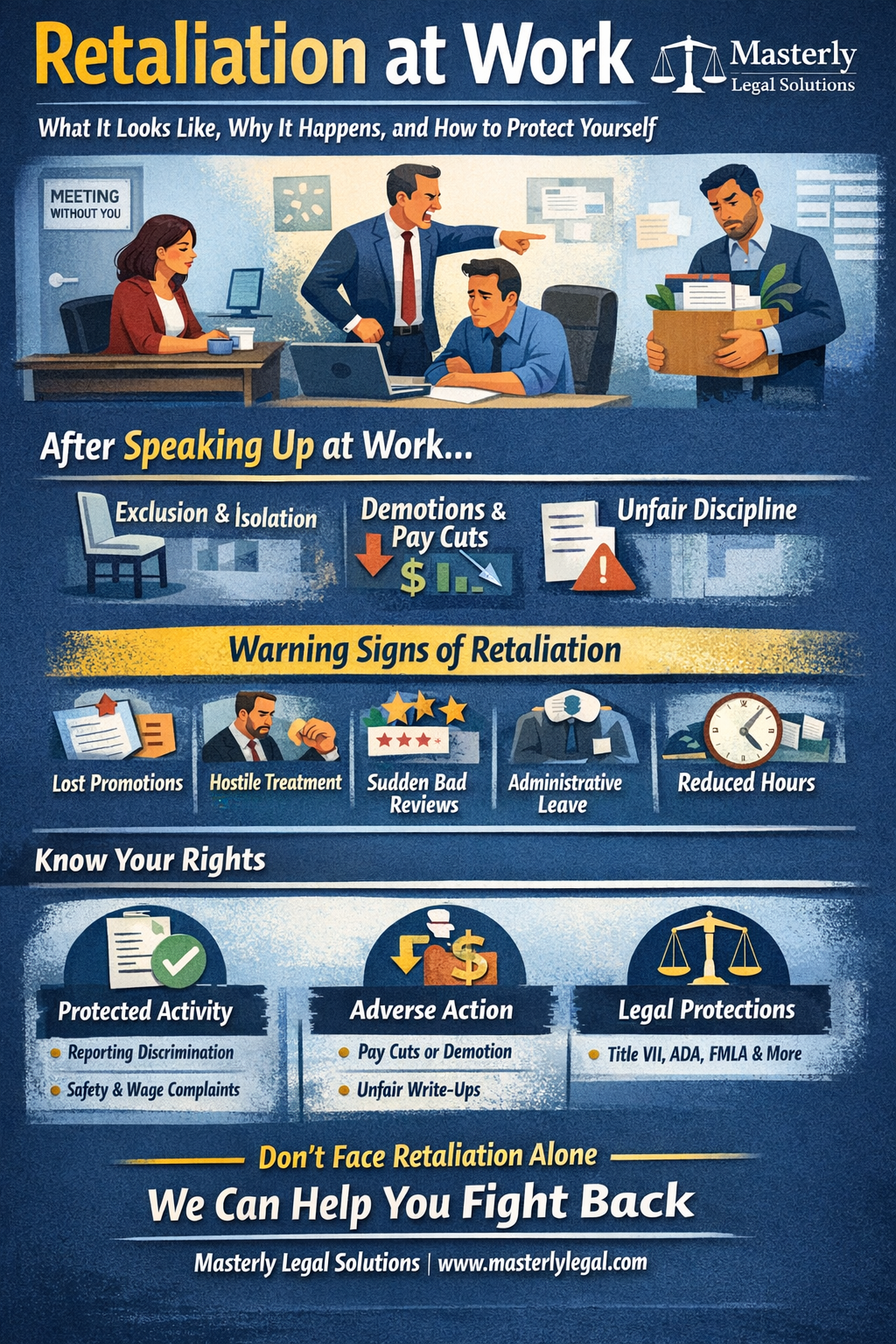
If you’ve ever spoken up at work and suddenly felt like the environment changed overnight, you’re not alone. Many workers describe a moment when they reported something wrong, asked for help, or supported a coworker, and then started getting treated differently. Sometimes it’s subtle, like being excluded from meetings or getting cold responses. Other times it’s obvious, like losing pay, being pushed into a less desirable position, or being threatened with discipline.
Retaliation is one of the most common issues people face in employment disputes because it can happen in almost any workplace and in many different circumstances. It can also be confusing, especially when the employer claims their decision was “just business.” The truth is that retaliation occurs when an employer punishes an employee for engaging in protected activity, and that type of response can be a possible violation of federal and state laws.
At Masterly Legal Solutions, we help workers recognize the warning signs, protect their rights, and take action with confidence. This article explains what retaliation is, how to spot adverse action, what laws may apply, and what steps to take if you believe you are being targeted.
What Retaliation Means in the Workplace
Retaliation is a form of punishment at work that happens after an employee does something the law protects. That “something” is usually a complaint, a report, or participation in an investigation. Even when a worker is polite, professional, and respectful, retaliation can still happen because some supervisors see any complaint as a challenge to authority.
In plain terms, retaliation is not about whether the employee was “likable” or whether the employer was “angry.” It’s about whether the employer took adverse action because the employee engaged in protected activity. If the negative impact on the employee’s job happens because they spoke up, that is when legal protections may come into play.
Retaliation is not always loud or dramatic. In many workplaces, retaliation shows up as small changes that slowly damage a worker’s career, pay, and overall employee morale.
Why Retaliation Happens More Often Than People Expect
Many workers assume retaliation only happens in extreme cases. In reality, retaliation can happen in routine employment situations, including when someone asks questions about wages, overtime pay, or scheduling. It can happen when an employee reports harassment, reporting discrimination, or a safety concern. It can also happen when someone supports a coworker, becomes a witness, or is seen as “too cooperative” with a state agency.
Sometimes retaliation happens because an employer wants to discourage future discrimination complaints from anyone else. Other times it happens because a supervisor feels embarrassed or threatened. In some cases, the retaliation is planned and strategic, such as moving an employee into a less desirable position to force them to quit.
No matter the motivation, the law focuses on whether the employer’s actions would deter a reasonable employee from speaking up again.
Retaliation vs. “Normal Workplace Conflict”
Not every conflict at work is retaliation. Workplaces are stressful, and employees may experience personality clashes, difficult performance reviews, or tension with a supervisor. Employers also have the right to enforce rules, correct performance issues, and make business decisions.
The key difference is the “why.” Retaliation is tied to protected activity. If discipline, demotion, schedule cuts, or termination happen shortly after a complaint or report, that timing matters. If the employer’s response looks like punishment for speaking up, that is a red flag.
A lawyer can help determine whether the facts support a retaliation claim, especially when an employer tries to justify the adverse action with vague explanations.
What Counts as Protected Activity
Protected activity is the foundation of most retaliation cases. It means the employee did something the law encourages or shields from punishment. This includes more than just filing a formal complaint.
Protected activity can include:
- Reporting discrimination or harassment to human resources
- Filing a complaint with a state agency or federal agency
- Participating in an investigation as a witness
- Requesting job protected leave or fmla leave when eligible employees qualify
- Reporting wage issues such as unpaid overtime pay or withheld wages
- Speaking up about workplace safety concerns, including threats of physical harm
- Cooperating with law enforcement or the police when workplace misconduct is involved
- Supporting another employee’s complaint, even if you are not the main victim
It also includes other related protected activity, such as giving truthful information during an internal interview. Even if an employer disagrees with the employee’s concerns, they cannot punish workers simply for participating.
When Retaliation Occurs After Reporting Discrimination
Many retaliation cases begin with reporting discrimination, especially when the employee reports unequal treatment based on age, disability, or another protected characteristic. Once the report is made, the employee may notice the tone of the workplace changes. They might suddenly be labeled “difficult,” “not a team player,” or “a problem.”
This is especially common when the complaint involves:
- Age discrimination
- Disability-related issues under a disabilities act
- Unequal treatment connected to Title VII categories
- Harassment that affects the employee’s ability to work
Retaliation can be direct, like firing, or indirect, like making work conditions so uncomfortable the employee feels forced to resign. The law recognizes that retaliation can be just as harmful as discrimination itself because it discourages people from speaking up.
Understanding Adverse Action and Why It Matters
Adverse action is a legal term that means the employer did something harmful that would matter to a reasonable employee. It is one of the most important parts of a retaliation claim. The action does not always have to be a termination.
Adverse action can include:
- Being fired or laid off
- A reduction in pay or benefits
- Being moved into a less desirable position
- Losing a desirable position opportunity or promotion
- Being assigned worse work hours or undesirable shifts
- Unfair performance reviews or write-ups
- Being excluded from meetings, training, or advancement paths
- Being placed on administrative leave without a fair reason
- Being placed on paid administrative leave in a way that harms reputation or future opportunities
Even if the employee still has a job, adverse action can create long-term negative impact. For example, being removed from a client-facing role can reduce future earning potential, even if wages do not change immediately.
How Administrative Leave Can Become Retaliation
Administrative leave is often described as “neutral,” but it is not always harmless. Sometimes an employer places an employee on administrative leave to separate them from a situation during an investigation. In certain cases, that can be reasonable and appropriate.
However, administrative leave can also be used as punishment. It can damage an employee’s reputation, isolate them from coworkers, and signal that the employer believes they did something wrong. Even paid administrative leave can feel like a career setback if it blocks advancement, reduces responsibilities, or makes the employee look untrustworthy.
In retaliation cases, administrative leave becomes suspicious when it happens right after a complaint, when there is no clear reason, or when the employer treats the employee like they are guilty before any investigation is completed.
What Laws Protect Employees From Retaliation
Retaliation is addressed through a mix of federal laws, state laws, and workplace-specific policies. The exact laws that apply depend on the facts, the type of complaint, and the type of employer.
Some of the most important legal protections come from:
- Title VII of the Civil Rights Act
- Federal and state laws related to discrimination and harassment
- Whistleblower laws protecting workers who report misconduct
- Labor laws involving wages, pay, and overtime pay
- Leave laws such as fmla leave for eligible employees
- Public policy protections in certain employment situations
The goal of these laws is not to make the workplace “perfect.” The goal is to prevent employers from punishing employees for standing up for themselves or others.
Title VII and the Civil Rights Act in Retaliation Claims
Title VII is one of the most well-known federal laws related to workplace discrimination. It is part of the Civil Rights Act and applies to many employers. It protects employees from discrimination and also protects them from retaliation when they report discrimination or harassment.
A worker may have a retaliation claim under Title VII even if the original discrimination claim is disputed. The key question is whether the employee had a good-faith belief they were reporting a violation and whether the employer responded with adverse action.
This is why documenting your complaint and keeping your report professional matters. It helps show that your actions were protected and that retaliation occurs because you exercised your rights.
Disability-Related Retaliation and the Disabilities Act
Retaliation can also happen when an employee requests accommodations or reports disability discrimination. Under disability-related protections, workers may have the right to ask for adjustments that allow them to perform their job safely and effectively.
Examples can include schedule changes, equipment needs, or modified duties. When an employer responds by cutting work hours, reducing pay, or placing the employee on administrative leave, that can raise serious concerns.
A retaliation claim can involve a disabilities act issue when the employee is punished for asserting rights connected to disability-related needs.
Age Discrimination and Retaliation
Age discrimination is another area where retaliation is common. Employees who speak up about being treated unfairly due to age may suddenly be labeled “outdated,” “slow,” or “not a cultural fit.” They may be excluded from projects or pushed into a less desirable position.
Retaliation in these cases may be framed as “performance-based,” but the timing and pattern can reveal a different story. A lawyer can help evaluate whether the employer’s explanation matches the evidence and whether there is a possible violation.
Whistleblower Laws and Reporting Misconduct
Whistleblower laws can protect workers who report illegal or unethical conduct. This can include reporting fraud, safety violations, or other misconduct. It can also include reporting issues to a state agency, a federal agency, or an internal compliance department.
Retaliation in whistleblower cases often looks like:
- Sudden discipline after a report
- Demotion or removal from key projects
- Increased scrutiny from a supervisor
- Threats, intimidation, or isolation
- Administrative leave used as a pressure tactic
Whistleblower retaliation can be especially stressful because the employee may feel like they are fighting both workplace pressure and fear of long-term career damage.
Retaliation Connected to Pay, Wages, and Work Hours
Some retaliation cases have nothing to do with discrimination. Many begin when an employee questions wages, pay practices, or overtime pay. Workers may report unpaid overtime, missing paid time, or improper deductions.
Instead of correcting the problem, some employers respond by cutting work hours, assigning worse shifts, or writing the employee up for minor issues. This can be retaliation if the employee’s complaint is protected under labor laws.
In many workplaces, these disputes can quickly become emotional, but employees should remember that speaking up about lawful pay is not “causing trouble.” It is asserting a right.
Job Protected Leave, FMLA Leave, and Retaliation
Employees who request job protected leave may also face retaliation. For eligible employees, fmla leave may provide time off for serious health conditions, family care, or certain medical situations.
Retaliation in leave-related situations can include:
- Being discouraged from taking leave
- Being punished for requesting leave
- Losing a desirable position after returning
- Being placed on administrative leave upon return
- Being assigned lower-level tasks or fewer opportunities
Employers cannot lawfully punish workers for exercising protected leave rights. If the employer’s actions appear connected to the leave request, it may support a claim.
Employment Contracts and Company Policies
Employment contracts and written policies can play a role in retaliation cases. Even if employment is “at-will,” a contract may include specific rules about discipline, investigations, leave, or termination. It may also include standards for performance reviews or department procedures.
If the employer ignores its own policies after an employee makes a complaint, that inconsistency can be important evidence. Contracts may also outline reporting steps, which can help show the employee acted appropriately.
An employment lawyer can review employment contracts and explain how they affect your options.
How Human Resources Should Respond to Retaliation Complaints
Human resources is often the first place employees go to file a complaint. Ideally, HR should take reports seriously, document concerns, and prevent retaliation from happening.
But in real workplaces, HR responses vary. Sometimes HR protects the employer instead of the employee. Other times HR is helpful but limited by leadership decisions. Either way, an employee should be careful and strategic when communicating with HR.
If you report retaliation to human resources, consider keeping your message clear, factual, and focused on the adverse action. Avoid emotional language and stick to dates, events, and what changed after the protected activity.
The Role of Investigations in Retaliation Cases
An investigation can be helpful when it is done fairly. A proper investigation should gather facts, interview witnesses, review records, and reach conclusions based on evidence.
However, some investigations are rushed or biased. Others are used as a cover for retaliation, especially when the employee is placed on administrative leave immediately after making a complaint.
If you are involved in an investigation, you should assume everything you say may become part of the record. You should also take notes for yourself and keep copies of any documents you are allowed to keep.
How to Recognize the Warning Signs Early
Many employees do not recognize retaliation at first because it can look like ordinary workplace stress. But patterns matter. If you notice a shift right after you engage in protected activity, pay attention.
Common warning signs include:
- Your supervisor becomes hostile or avoids you
- You receive negative performance reviews without explanation
- Your pay or wages change unexpectedly
- You lose benefits or scheduling flexibility
- You are moved to a less desirable position without a valid reason
- You are denied opportunities you previously earned
- You are placed on administrative leave suddenly
- Coworkers are told not to speak with you
Even small actions can add up. A reasonable employee would feel discouraged if speaking up leads to punishment, and that is exactly what retaliation laws aim to prevent.
What to Document If You Suspect Retaliation
Documentation can make or break a retaliation claim. You do not need to create a perfect legal file, but you should keep records that help show the timeline and the changes.
Helpful documentation includes:
- Copies of your complaint to HR or management
- Emails or messages showing you engaged in protected activity
- Notes about conversations with your supervisor
- Records of schedule changes, work hours, or pay reductions
- Performance reviews before and after the complaint
- Names of potential witnesses who saw the behavior change
- Any written warnings or discipline notices
Even if you do not have every piece of evidence, keeping consistent notes helps you recognize patterns and explain what happened clearly.
Potential Witnesses and Workplace Dynamics
Witnesses can be important, but employees often hesitate to involve coworkers. Many workers fear becoming a victim of retaliation themselves, especially in a tense workplace.
Potential witnesses may include:
- Coworkers who saw the harassment or discrimination
- Team members who heard the supervisor make comments
- Managers who were present during key meetings
- HR staff who received the complaint
- Workers who saw the employee moved into administrative leave
A lawyer can help you think through who might be willing to provide information and how to approach witness issues without creating more conflict.
What Employers Often Say to Justify Retaliation
Employers rarely admit retaliation. Instead, they often provide explanations that sound reasonable on the surface. Some common defenses include:
- “The employee had performance issues.”
- “It was a department restructure.”
- “We had to reduce labor costs.”
- “The employee was not a good fit.”
- “We placed them on administrative leave for safety.”
Sometimes these explanations are legitimate. Other times they are excuses. The timing, inconsistency, and lack of documentation can help determine whether the employer’s explanation is believable.
How Retaliation Harms Employee Morale and Workplace Culture
Retaliation does not just affect one employee. It impacts the entire workplace. When workers see someone punished for speaking up, it sends a message that reporting issues is dangerous.
This can lead to:
- Lower employee morale
- Higher turnover
- Increased fear of reporting discrimination
- Reduced trust in human resources
- A culture where harassment becomes normalized
Over time, overall employee morale can drop because workers stop believing fairness exists. That kind of environment hurts productivity and increases legal risk for the employer.
What If the Retaliation Includes Threats or Physical Harm?
Some retaliation cases involve threats, intimidation, or physical harm. While many cases involve paper trails and employment decisions, safety issues should always be taken seriously.
If you believe you are in danger, your safety comes first. In some circumstances, contacting the police may be appropriate. You may also need to report threats to HR, document what happened, and seek legal assistance quickly.
No job is worth risking your well-being, and no employer has the right to create a threatening environment to silence employees.
Can an Employee Still Have a Claim If They Were Wrong About the Original Complaint?
Yes, in many cases. Retaliation law often protects employees who make a complaint in good faith, even if the employer later argues the discrimination claim was unproven.
What matters is whether the employee reasonably believed they were reporting wrongdoing and whether they engaged in protected activity. Retaliation occurs when an employer punishes the act of reporting, not only when the report is ultimately confirmed.
This is why it is important to make reports professionally and truthfully. A reasonable employee should be able to raise concerns without fear.
How a Retaliation Claim Is Usually Evaluated
While every case is different, retaliation claims often focus on a few key questions:
- Did the employee engage in protected activity?
- Did the employer know about the protected activity?
- Did the employer take adverse action?
- Is there a connection between the protected activity and the adverse action?
The connection can be shown through timing, changes in treatment, shifting explanations, or inconsistent enforcement of rules. An attorney can help determine what evidence supports your claim and what steps to take next.
Filing a Complaint With a State Agency or Federal Agency
Some employees choose to file a complaint with a state agency or a federal agency. This may be appropriate depending on the facts, the employer’s size, and the type of discrimination or retaliation involved.
Filing can feel intimidating, but it may be necessary to preserve your rights. There are often deadlines, and missing them can affect your ability to pursue a claim later.
Before you file, it can be helpful to speak with a lawyer so you understand what information is needed, what the process looks like, and what outcomes are possible.
What “Public Policy” Means in Retaliation Situations
Public policy refers to legal principles that protect employees from being punished for doing the right thing. In certain cases, workers may have protections when they refuse to participate in illegal acts or when they report conduct that violates the law.
For example, if an employer pressures a worker to lie, hide records, or ignore safety issues, and the worker refuses, retaliation may trigger legal consequences. Public policy protections vary, but they can be an important part of an employment dispute.
How Paid Time, Benefits, and Scheduling Can Become Retaliation
Retaliation is not always about firing. It can show up in ways that slowly reduce a worker’s quality of life.
This can include:
- Cutting paid time opportunities
- Reducing benefits or eligibility for certain programs
- Assigning inconvenient work hours
- Changing schedules to disrupt family responsibilities, such as caring for a family member
These actions may seem small, but they can create serious negative impact over time. If these changes happen after protected activity, they may support a retaliation claim.
Why Being Moved Into a Less Desirable Position Matters
A transfer can be retaliation even if the employee keeps the same job title. Being moved into a less desirable position can affect career growth, skill development, and reputation.
Examples include being moved:
- From leadership tasks to basic duties
- From a visible role to a back-office role
- From day shifts to late-night shifts
- From a desirable position to one with fewer opportunities
If the move is connected to protected activity, it may be considered adverse action under retaliation laws.
What If the Employer Says It Was “Just an Investigation”?
Employers sometimes place employees on administrative leave and say it is part of an investigation. That can be legitimate in some situations, especially if there is a serious allegation.
But if the investigation is used to punish the employee for reporting discrimination or harassment, it may still be retaliation. A long administrative leave with no updates, no clear process, and no fair evaluation can raise serious concerns.
If you are placed on administrative leave, keep records of what you were told, when you were told, and whether the employer followed consistent procedures.
How Employment Lawyers Help With Retaliation Cases
Retaliation cases are rarely simple. They involve workplace history, timelines, documents, and often conflicting stories. Employment lawyers can help you understand your rights, evaluate your evidence, and build a strategy.
Legal assistance may include:
- Reviewing your complaint history and documentation
- Identifying the strongest adverse action evidence
- Advising you on what to say to HR and what not to say
- Helping you file a claim properly and on time
- Negotiating with the employer or their attorneys
- Preparing for a lawsuit if needed
Even when an employee feels overwhelmed, having legal support can provide clarity and reduce stress.
What to Avoid Doing After Retaliation Starts
When retaliation begins, it’s natural to feel angry, hurt, or anxious. But certain reactions can be used against you later. Staying calm and strategic is often the best approach.
Try to avoid:
- Quitting without getting legal advice first
- Sending emotional emails to HR or your supervisor
- Posting about the situation on social media
- Confronting coworkers aggressively
- Destroying evidence or deleting messages
Instead, focus on documenting, staying professional, and getting legal assistance. Your goal is to protect your future, not just react to the moment.
What Outcomes May Be Possible in a Retaliation Case
Every case is different, but outcomes may include changes to workplace conditions, financial recovery, or other resolutions. Some employees want to stay at their job and stop the retaliation. Others want to leave and move forward with a fair settlement.
Depending on the circumstances, a claim may involve:
- Back pay for lost wages
- Compensation for harm caused by adverse action
- Restoration of benefits or job status
- Policy changes or corrective action
- A lawsuit when necessary to enforce rights
A lawyer can help determine what outcomes are realistic and what steps align with your goals.
You Deserve a Workplace Where Speaking Up Is Safe
No one should feel punished for asking questions, reporting discrimination, or participating in an investigation. Retaliation can make an employee feel isolated and powerless, but you do have rights. The law exists so that workers can report wrongdoing without fear of losing their job, pay, or future opportunities.
If you are dealing with retaliation at work, it is important to trust what you are experiencing and take it seriously. Many employees second-guess themselves because the retaliation is subtle, but patterns matter. When an employer responds to protected activity with adverse action, that is not “normal workplace stress.” That is a legal issue worth addressing.
The Employment Act and How It Applies to Retaliation Claims
When retaliation happens, many people hear legal terms like “employment act” and wonder what it actually means for their situation. Generally, an employment act refers to laws that regulate workplace rights and responsibilities, including protections against unfair treatment after a complaint or report. The subject of these laws is not just discipline or termination, but also whether an employer used retaliation to punish protected activity. At Masterly Legal Solutions, we approach every case with respect for what the employee has been through and focus on the facts that matter most under the law.
Contact Masterly Legal Solutions for Legal Assistance
If you believe retaliation is happening in your workplace, you do not have to figure it out alone. At Masterly Legal Solutions, we help employees understand their legal protections, review the facts of their situation, and decide what steps make the most sense moving forward. Whether you are dealing with harassment, discrimination, administrative leave, or sudden changes to pay and work conditions, we can help you evaluate your options with clarity.
Call (972) 236-5051 today for a free consultation. We will listen to your concerns, gather additional information, and help you determine whether your employer’s actions may be a possible violation of the laws designed to protect workers from retaliation. The sooner you reach out, the sooner you can protect your career, your income, and your peace of mind.
Disclaimer: This article is for educational purposes only and does not constitute legal guidance or legal advice. For advice about your specific situation, contact a qualified lawyer.


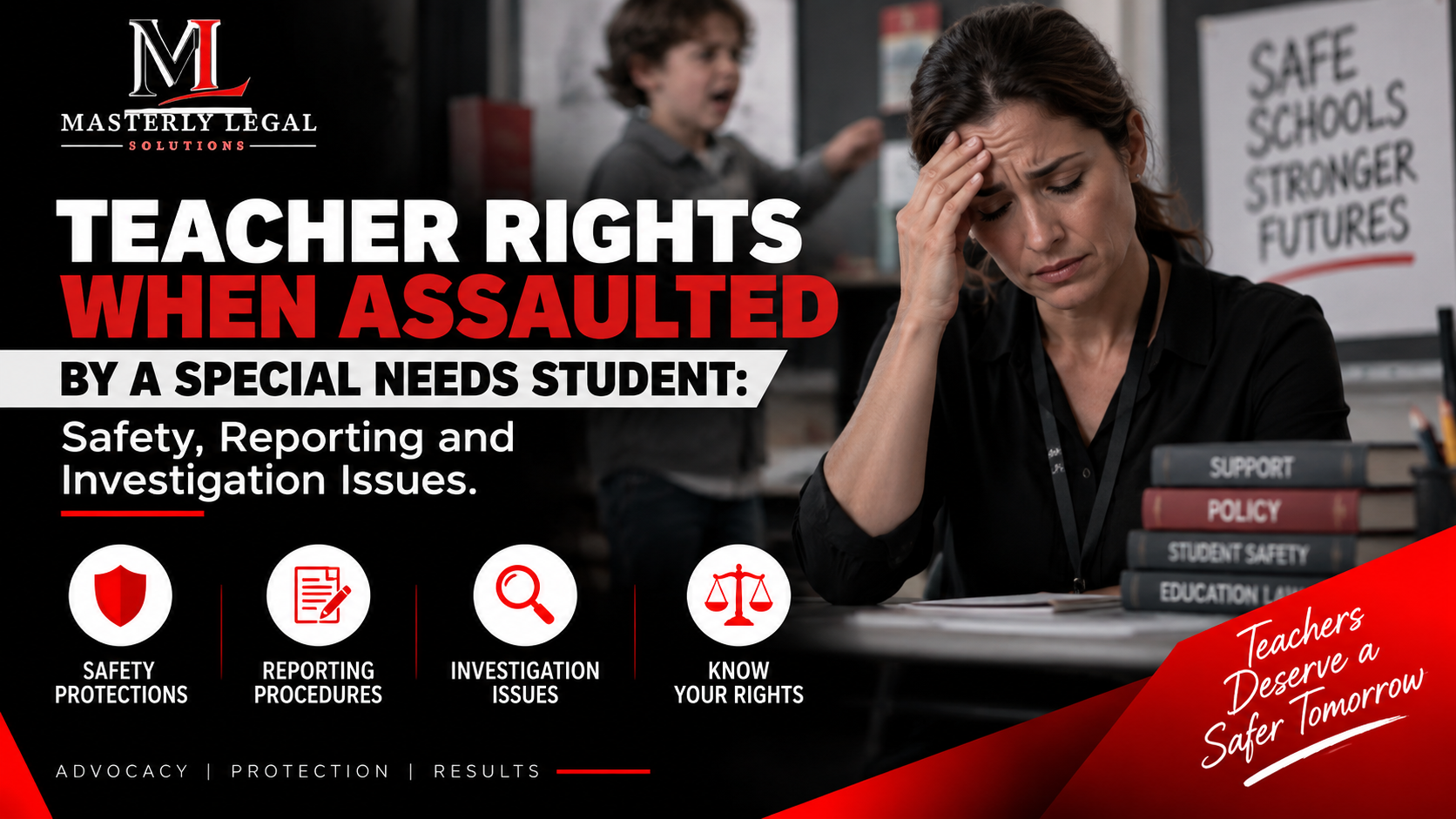
Teacher Rights When Assaulted by a Special Needs Student: Safety, Reporting and Investigation Issues



Looking for Legal & Business Solutions? Contact Us Now
Fill in the form or call us to set up a meeting





