

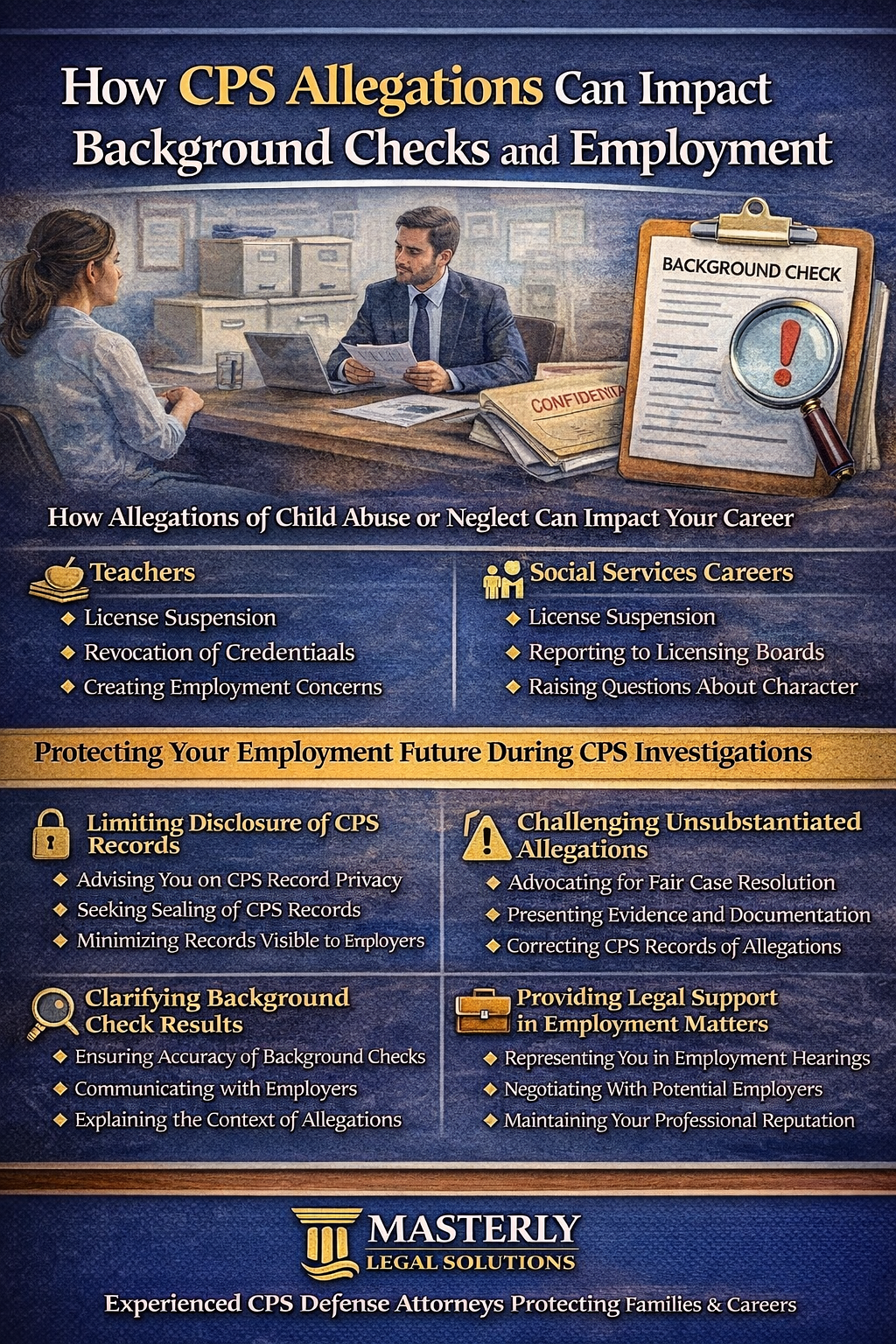
How CPS Allegations Can Impact Background Checks and Employment
For many parents, a CPS investigation feels limited to family matters, custody, and the well-being of their child. What often comes as a shock is how CPS allegations can quietly follow a person into job interviews, background checks, and long-term employment opportunities. Even when no criminal charges are filed and no court order is entered, CPS records can still affect how employers view a candidate. Understanding this risk is critical for protecting both your family and your professional future.
At Masterly Legal Solutions, we work with families who are dealing with CPS cases while trying to safeguard their livelihoods. CPS defense is not only about navigating investigations—it is also about limiting how allegations impact employment, licensing, and future opportunities. Early legal guidance can help prevent CPS involvement from defining your career.
Understanding Child Protective Services and Employment Risk
Child Protective Services is a government agency responsible for investigating reports of child abuse or neglect and ensuring child safety. While CPS focuses on protecting the child, the information gathered during a CPS investigation may be shared with other agencies. Employers, licensing boards, and family services organizations may access certain CPS records depending on the situation.
Many parents assume CPS records are confidential and isolated. In reality, child protective services CPS may release information when background checks involve childcare, healthcare, education, or vulnerable populations. This overlap creates serious employment concerns.
Why CPS Allegations Appear in Background Checks
Background checks often pull information from multiple sources, including government databases. CPS cases, even without court intervention, may appear when employers conduct deeper screenings. This is especially common in positions involving children, families, or caregiving roles.
CPS allegations do not need to be proven to raise concerns. Employers may react to the mere presence of an investigation, regardless of the outcome. A CPS defense attorney helps minimize the likelihood that allegations are misinterpreted or improperly disclosed.
Jobs Most Affected by CPS Investigations
Certain industries rely heavily on background checks that include CPS-related information. These roles often involve trust, safety, and responsibility for others.
Positions commonly affected include:
- Teachers and school staff
- Healthcare and medical workers
- Childcare providers and daycare employees
- Social services professionals
- Foster care and family services roles
For parents working in these fields, CPS defense is essential to protect employment.
The CPS Investigation Process and Employment Records
The CPS investigation process begins when investigating reports of suspected abuse or neglect. A CPS caseworker may interview parents, the child, teachers, doctors, and other individuals. Notes, reports, and findings become part of the CPS file.
Even if CPS determines no abuse occurred, records may still exist. Employers reviewing background checks may not fully understand the context unless legal action is taken to clarify or challenge records.
Allegations Versus Findings in CPS Cases
There is a critical difference between allegations and findings. Allegations are unproven claims that trigger an investigation. Findings occur only when CPS determines abuse or neglect based on sufficient evidence.
Unfortunately, background checks do not always distinguish clearly between allegations and findings. A defense attorney helps address this risk by advocating for accurate documentation and case closure.
How CPS Determines Risk and Its Impact on Employment
CPS determines whether a child is at risk by evaluating safety concerns, evidence, and family circumstances. This determination is meant for child protection, not employment decisions. However, employers may misinterpret CPS determinations.
When CPS determines that services are needed, employers may wrongly assume guilt. Legal representation helps clarify these distinctions and protect parents from unfair employment consequences.
CPS Defense and Protecting Professional Reputation
CPS defense is about more than family court proceedings. It also involves protecting a parent’s reputation and career. Early legal intervention limits unnecessary disclosures and addresses inaccuracies.
A CPS defense attorney communicates with CPS to ensure reports are fair, factual, and complete. This approach helps prevent long-term employment damage.
Child Abuse and Neglect Allegations in Employment Context
Child abuse and neglect allegations carry strong stigma. Even when unfounded, these claims can alarm employers. This is especially true in jobs involving children or families.
A lawyer experienced in child abuse or neglect matters understands how to challenge unsupported claims. Proper CPS defense protects both parental rights and employment prospects.
Criminal Charges Versus CPS Investigations
Not all CPS investigations involve criminal charges. Many parents mistakenly believe that no charges mean no consequences. In reality, CPS records may still affect employment even without criminal court involvement.
Defense attorneys work to ensure CPS investigations do not escalate unnecessarily. Protecting against criminal exposure also helps safeguard employment.
Juvenile Dependency and Employment Risks
Juvenile dependency cases arise when CPS seeks court intervention regarding a child’s care. These cases create court records that may appear during background checks. Employers may view court involvement negatively.
A defense attorney helps limit adverse findings during juvenile dependency proceedings. Protecting the court record protects future employment.
Family Court Proceedings and Job Security
Family court proceedings related to CPS cases can affect work schedules, availability, and stress levels. Employers may become aware of court hearings through scheduling conflicts or disclosures.
Legal guidance helps parents manage family court obligations while protecting their job. Minimizing court intervention reduces professional disruption.
Foster Care Placement and Employment Consequences
When a child is placed in foster care, employment risk increases significantly. Employers may view foster care placement as evidence of serious concerns, regardless of the reasons.
Preventing removal is a core goal of CPS defense. Early action often avoids foster care and protects family life and careers.
Safety Plans and Employer Perception
CPS may implement a safety plan during an investigation. While safety plans are not admissions of guilt, employers may misunderstand them.
A defense attorney explains the limited scope of safety plans and ensures they are not mischaracterized. This protects parents from unfair conclusions.
Protective Services Records and Disclosure
Protective services maintain records of CPS cases. These records may be accessed during background checks depending on the employer and role. Understanding disclosure rules is essential.
Legal services help families limit unnecessary access to CPS records. Proper handling protects privacy and employment.
The Role of Social Services in Employment Screening
Social services agencies sometimes share information with employers or licensing boards. This is common in family services, healthcare, and education sectors.
An experienced attorney understands how social services information flows. Legal representation helps manage and limit exposure.
CPS Caseworkers and Documentation Accuracy
CPS caseworkers document interviews, observations, and conclusions. Errors or assumptions in these reports can follow parents into employment screening.
Defense attorneys review CPS documentation carefully. Correcting inaccuracies early is essential for protecting jobs.
Orange County, Southern California, and Regional Practices
CPS practices vary by region. In Orange County and other parts of Southern California, CPS procedures and disclosure rules may differ. Local knowledge matters.
A law firm familiar with regional CPS practices provides stronger defense. Understanding county-specific processes protects clients more effectively.
Child Safety Versus Employment Fairness
CPS focuses on ensuring child safety, but employment decisions require fairness and context. Employers may act out of caution rather than facts.
Defense attorneys help balance child safety concerns with employment rights. Protecting one does not require sacrificing the other.
Child Support, Custody, and Background Checks
CPS cases may overlap with child support or custody issues. Court records related to custody can appear during background checks.
Legal guidance helps manage how these records are presented. Protecting custody outcomes supports employment stability.
Divorce and CPS Allegations
Divorce can trigger CPS involvement when allegations arise during disputes. These allegations may be strategic rather than factual.
Defense attorneys address CPS allegations in the context of divorce carefully. Preventing misuse protects families and careers.
Counseling and Services Without Admissions
CPS may recommend counseling or services during investigations. Participation is often misinterpreted as guilt by employers.
A defense attorney clarifies that counseling does not equal wrongdoing. Proper documentation protects employment.
Sufficient Evidence and Case Closure
CPS must rely on sufficient evidence to substantiate claims. When evidence is lacking, cases should be closed without findings.
Defense attorneys push for timely case closure. This limits the impact on background checks.
How Employers Interpret CPS Records
Employers often lack training on CPS records. They may assume the worst without understanding legal distinctions.
Legal advocacy helps prevent misinterpretation. Attorneys provide context that protects clients.
The Importance of an Initial Consultation
An initial consultation helps parents understand employment risks early. Many parents wait until job issues arise, which limits options.
Early legal advice protects both family and career. Preparation reduces long-term consequences.
Choosing the Right Lawyer for CPS Cases
Choosing the right lawyer for CPS cases matters when employment is at stake. Experience, strategy, and a proven track record make a difference.
Masterly Legal Solutions focuses on CPS defense that protects families and careers.
How Our Law Firm Protects Employment Futures
Our law firm provides CPS defense with employment implications in mind. We assist clients in navigating investigations, protecting records, and defending against unfair outcomes.
Our law office emphasizes proactive, strategic representation.
Compelling Arguments to Limit Employment Impact
Strong CPS defense relies on compelling arguments supported by evidence. Attorneys present clear explanations to CPS and other agencies.
Effective advocacy reduces employment fallout.
What Parents Should Expect During a CPS Investigation
Parents should expect interviews, document requests, and ongoing communication. Understanding the process reduces fear and mistakes.
Legal guidance helps parents respond appropriately.
Protecting Family Life and Professional Stability
CPS cases affect both family life and work life. Balancing these demands is difficult without support.
Attorneys help families maintain stability during investigations.
When to Contact Masterly Legal Solutions
If you are dealing with a CPS investigation and are concerned about background checks or employment, it is important to act early. Waiting can increase risk.
Timely legal action protects opportunities.
The Role of Child Protection Services in CPS Matters
Child protection services are responsible for responding to reports that raise concerns about a child’s safety, health, or well-being. Their role is to assess whether intervention is necessary and whether additional services or oversight are required. While the mission is to protect children, involvement by child protection services can feel overwhelming for families, especially when employment or custody is affected. Legal guidance helps ensure that interactions remain fair, accurate, and focused on verified concerns.
How Child Protective Services Cases Develop Over Time
Child protective services cases often begin with a single report but can quickly expand into broader investigations. These cases may involve interviews, home visits, and coordination with schools, medical providers, or social services. Even when allegations are unsubstantiated, the existence of a case can have lasting effects on families. Legal representation helps manage child protective services cases strategically to limit unnecessary escalation.
Understanding Child Neglect Allegations
Child neglect allegations do not always involve intentional wrongdoing by parents. Many cases arise from misunderstandings, financial hardship, or differences in parenting standards. CPS may interpret certain situations as neglect without full context unless it is clearly explained. An attorney helps demonstrate how parents are meeting their child’s needs and addressing concerns responsibly.
How Family Law Intersects With CPS Investigations
Family law often overlaps with CPS investigations, especially when issues of custody, visitation, or parental rights are involved. Court proceedings related to divorce or custody disputes can trigger CPS involvement or complicate an ongoing case. Decisions made in family law matters may later influence CPS outcomes or employment considerations. Coordinated legal strategy is essential to protect families on all fronts.
Addressing Sexual Abuse Allegations With Care and Precision
Sexual abuse allegations are among the most serious claims investigated by CPS and require careful, evidence-based handling. These allegations can arise from reports made by third parties or misunderstandings, yet they carry severe consequences. Families facing such claims must balance cooperation with protecting their legal rights. Legal counsel ensures that investigations remain fair and that accusations are not treated as facts before evidence is reviewed.
What CPS Means by Child Maltreatment
Child maltreatment is a broad term used by CPS to describe alleged abuse or neglect. It may include physical harm, emotional concerns, or supervision issues depending on the circumstances. Because the definition is broad, families may be investigated even when no harm has occurred. Legal representation helps clarify how the law defines child maltreatment and challenges overbroad interpretations.
What to Know About a Neglect Case
A neglect case can move quickly and create stress for the entire family. CPS may focus on living conditions, supervision, or access to resources when evaluating neglect concerns. Without legal guidance, parents may struggle to understand what CPS expects. An attorney helps families respond appropriately and work toward resolving the neglect case efficiently.
Navigating CPS While Facing Allegations
Facing allegations from CPS is emotionally exhausting and often confusing. Parents may feel pressure to explain themselves without fully understanding their rights. Statements made early in the investigation can have long-term consequences. Legal guidance provides structure, clarity, and protection during this critical time.
How CPS Views Providing Services to Families
Providing services is one of CPS’s primary tools during an investigation. These services may include counseling, parenting classes, or other support programs designed to address concerns. Accepting services does not always mean admitting wrongdoing, but it can be misunderstood if not handled carefully. An attorney helps families evaluate which services are appropriate and how participation will be documented.
The Judge’s Role in CPS-Related Proceedings
When a CPS case reaches court, a judge plays a central role in reviewing evidence and making decisions that affect custody and parental rights. Judges rely heavily on CPS reports and recommendations when evaluating cases. Presenting accurate information and context is essential. Legal representation ensures that the judge receives a balanced and complete picture of the family’s situation.
How the Department Influences CPS Outcomes
The department overseeing CPS operations establishes policies, procedures, and reporting standards that guide investigations. Actions taken by CPS caseworkers are shaped by departmental rules and internal guidelines. Understanding how the department operates helps families anticipate next steps. Attorneys familiar with departmental practices are better equipped to protect clients and guide cases toward resolution.
Speak With Masterly Legal Solutions Today
If CPS allegations are affecting your employment or future job prospects, Masterly Legal Solutions is here to help. We offer a free consultation to answer your questions, explain the CPS investigation process, and discuss how a lawyer for CPS cases can protect your family, career, and reputation. Our attorneys are committed to defending parents, protecting children, and limiting the long-term impact of CPS involvement. Contact us at (972) 236-5051 to speak with a knowledgeable lawyer and learn how we can help you move forward with confidence.
Disclaimer: This article is for informational purposes only and does not constitute legal guidance or legal advice. Reading this article does not create an attorney-client relationship. For legal advice specific to your situation, consult a qualified attorney.



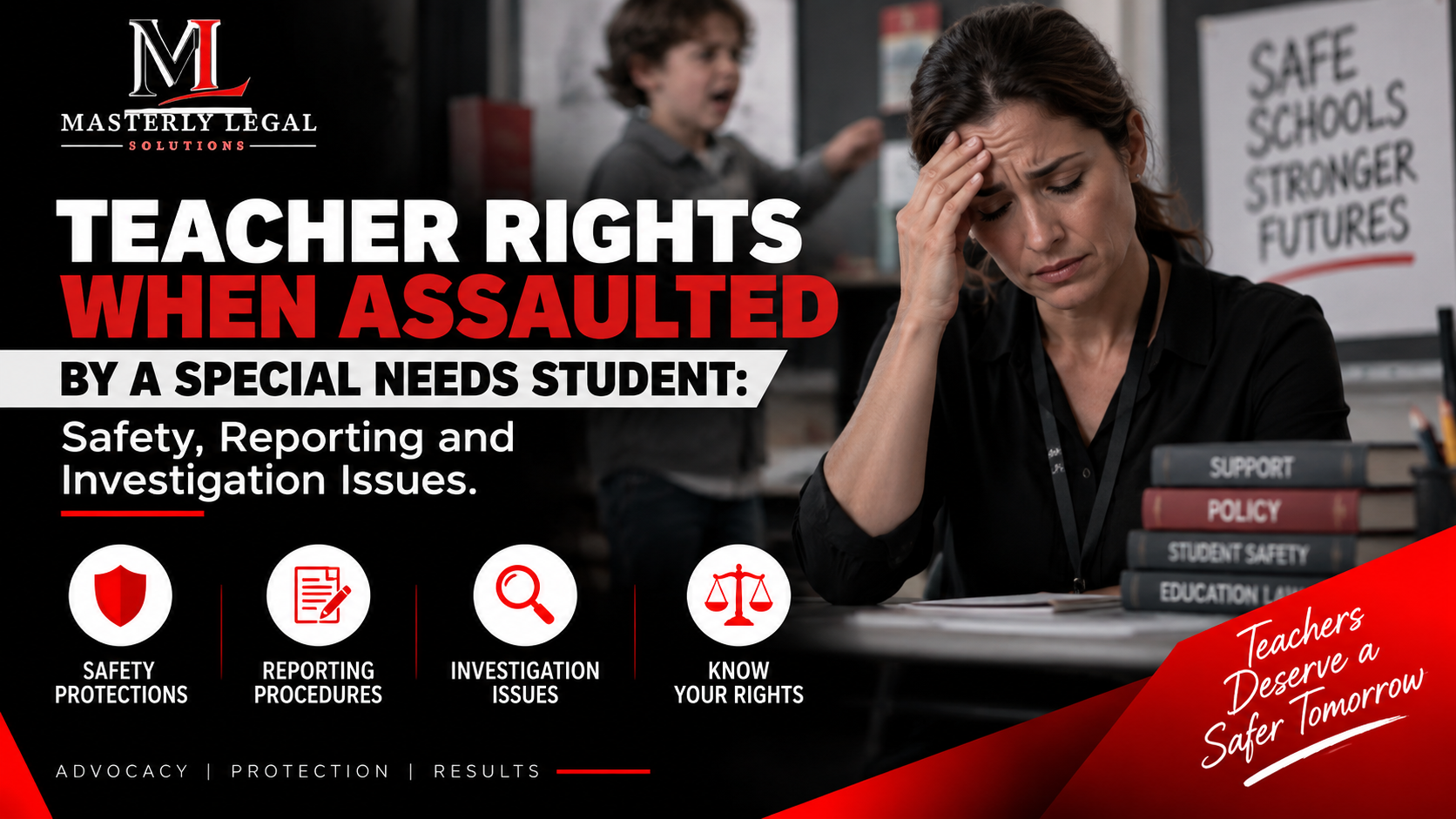
Teacher Rights When Assaulted by a Special Needs Student: Safety, Reporting and Investigation Issues

Looking for Legal & Business Solutions? Contact Us Now
Fill in the form or call us to set up a meeting





