How School Administrators May Retaliate During Ongoing Investigations
Workplace investigations are meant to uncover facts, protect workers, and maintain fairness. In educational workplaces, however, investigations can sometimes trigger unintended consequences for the very individuals who raise concerns. Employees may begin to notice subtle or overt changes in how they are treated once an investigation starts. Understanding how retaliation occurs—and how the law protects workers—is essential for anyone navigating these stressful circumstances.
At Masterly Legal Solutions, we regularly assist workers who believe retaliation at work has followed their participation in an investigation. Retaliation is not always obvious, and it often unfolds gradually within the workplace. Knowing what to watch for, how laws apply, and when to seek legal guidance can protect your career and well-being.
Understanding Retaliation in the Workplace
When an employer takes adverse action against a worker for participating in legally protected activities, it is known as retaliation. In schools and other institutions, this can occur after a complaint, report, or cooperation with an investigation. Retaliation does not need to be extreme to be unlawful; even subtle changes can qualify. What matters is whether the action would discourage a reasonable employee from engaging in protected activity.
Federal and state laws recognize retaliation as a serious issue because it undermines accountability. When retaliation occurs, it affects not only individual employees but also overall employee morale. Workers may become hesitant to speak up, allowing misconduct to continue unchecked.
Why Investigations Often Trigger Retaliation
Investigations can create tension for administrators and supervisors. Allegations of discrimination, harassment, or unsafe conditions may expose an employer to liability or public scrutiny. In response, some administrators react defensively rather than lawfully.
This reaction may lead to adverse action against workers who are engaging in protected activity. While some actions may be framed as routine management decisions, timing and context matter. When changes follow closely after a complaint or report, they may be considered retaliatory.
What Qualifies as Protected Activity
Protected activity includes actions that laws specifically shield from retaliation. Employees do not need to prove wrongdoing to be protected; they only need a good-faith belief that a violation occurred. Reporting concerns is a core right under employment law.
Examples of protected activity include:
- Filing a complaint about discrimination or harassment
- Reporting unsafe conditions related to occupational safety
- Participating in an internal or external investigation
- Requesting accommodations under disability-related laws
- Cooperating with law enforcement or police inquiries
Engaging in these actions is legally protected under multiple statutes. Retaliation for any of these reasons may result in legal consequences for the employer.
Common Forms of Retaliation by School Administrators
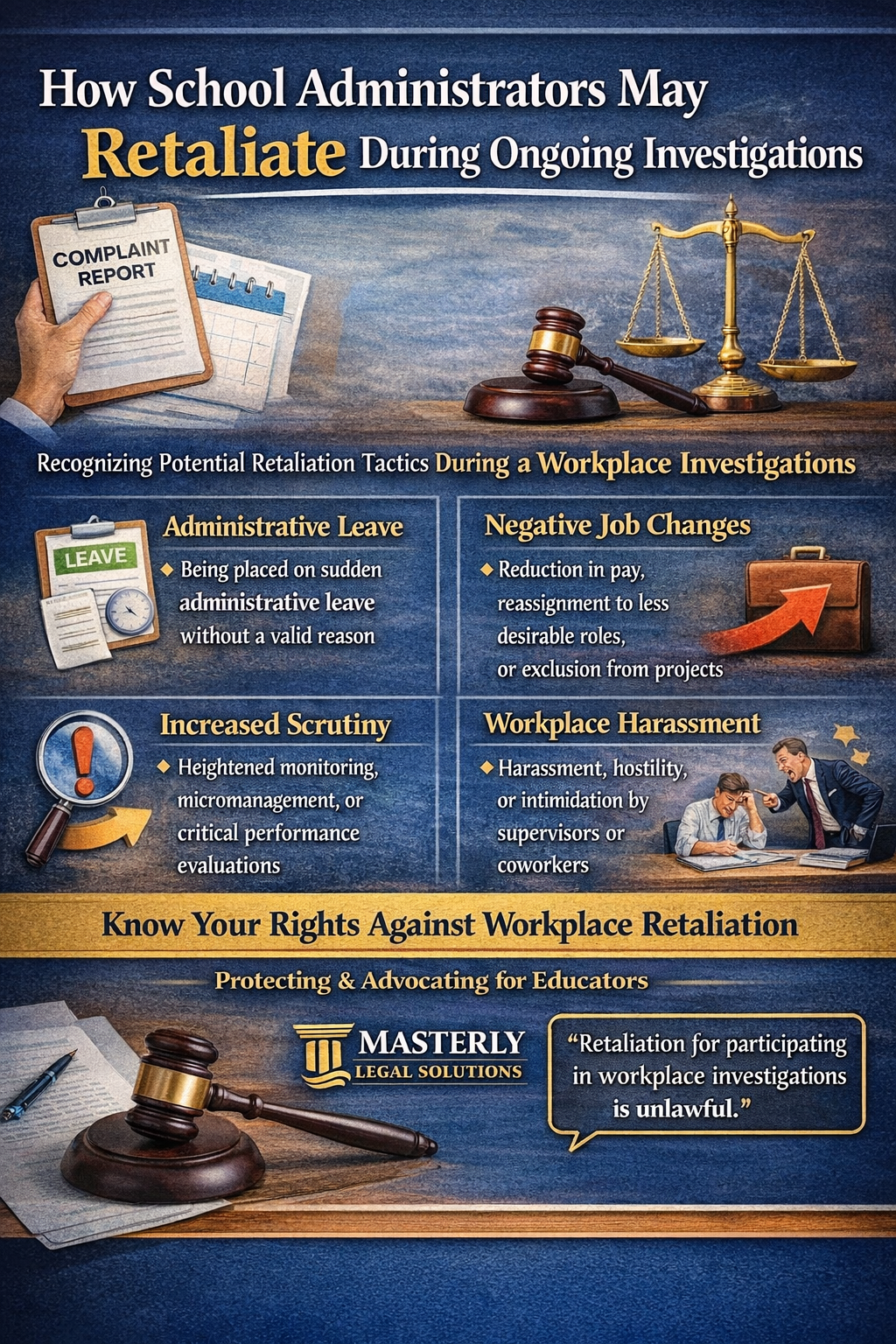
Retaliation can take many forms, and not all are obvious. Administrators may avoid direct punishment while still creating a negative impact on the employee. These actions may affect job security, reputation, or daily working conditions.
Retaliatory conduct may include:
- Sudden placement on administrative leave
- Reassignment to a less desirable position
- Reduction in duties or responsibilities
- Increased scrutiny or disciplinary action
- Changes to schedule, pay, or benefits
Each example can seem minor on its own, but patterns matter. When multiple changes follow protected activity, retaliation may be present.
Administrative Leave as a Retaliatory Tool
Administrative leave is one of the most commonly misused actions during investigations. While administrative leave can be legitimate, excessive or prolonged use raises concerns. When paid administrative leave is imposed without justification, it may still harm the employee’s reputation.
Unpaid or extended administrative leave can affect income, professional standing, and future opportunities. Even when paid time is provided, removal from the workplace can isolate the employee from other employees. Courts and employment lawyers often examine whether administrative leave was necessary or punitive.
Paid Versus Unpaid Administrative Leave
Paid administrative leave is sometimes used to separate parties during an investigation. However, when it lasts too long or is paired with negative messaging, it may be considered retaliatory. Unpaid administrative leave is even more concerning, as it directly affects pay and benefits.
The law looks at how a reasonable employee would view the action. If administrative leave discourages reporting or cooperation, it may violate legal protections. Employers must use administrative leave carefully and consistently.
Adverse Action and Its Legal Meaning
An adverse action is any employer action that negatively affects an employee’s employment. This does not require termination or demotion. Even changes that seem small can qualify if they create a negative impact.
Adverse action may include reduced hours, loss of benefits, unfavorable evaluations, or exclusion from meetings. The key question is whether the action would deter protected activity. Employment lawyers often analyze adverse action within the broader workplace context.
Retaliation Through Job Reassignment
Reassigning an employee during an investigation may appear neutral, but context matters. Moving a worker from a desirable position to a less desirable position can be retaliatory. This is especially true when the new role limits advancement or visibility.
Administrators may justify reassignment as operational necessity. However, when the reassignment follows a complaint or report, it may signal retaliation. The law evaluates motive as well as outcome.
Harassment as a Retaliatory Tactic
Harassment can itself be a form of retaliation. Supervisors or co worker groups may ostracize, ridicule, or undermine the employee who reported misconduct. This behavior may come from a manager, supervisor, or other employees.
Retaliatory harassment often creates a hostile workplace. Federal laws prohibit harassment that is tied to protected activity. When tolerated by the employer, this behavior may escalate legal exposure. Prevent workplace harassment with legal compliance solutions and employee training.
Retaliation Linked to Discrimination Claims
Many investigations involve discrimination allegations under laws such as Title VII, the Civil Rights Act, or the Disabilities Act. When employees report age discrimination, sexual harassment, or discriminatory pay practices, retaliation is strictly prohibited.
Employment discrimination complaints are among the most protected forms of activity. Any adverse response by the employer may trigger scrutiny from the Equal Employment Opportunity Commission. Retaliation claims often accompany discrimination cases.
Sexual Harassment and Retaliation
Reports involving sexual advances or harassment are particularly sensitive. Employees who report such conduct are frequently vulnerable to retaliation. Administrators may attempt to discredit or isolate the reporting employee.
Federal and state laws provide strong legal protections in these circumstances. Retaliation after a harassment complaint may result in additional liability beyond the original allegation.
Whistleblower Laws and School Employees
Whistleblower laws protect workers who report illegal practices, misuse of funds, or safety violations. In educational workplaces, whistleblowers may report misconduct affecting students, workers, or public resources.
Retaliation against whistleblowers is prohibited under both federal and state laws. Employers who punish reporting employees risk lawsuits and regulatory penalties.
Occupational Safety and Retaliation
Employees who report unsafe working conditions are engaging in protected activity. Occupational safety concerns may involve facilities, equipment, or environmental hazards. Retaliation for such reports undermines workplace safety.
Federal regulations protect workers who raise safety issues. Retaliatory actions in response to safety reports may be considered a possible violation of labor laws.
Retaliation Through Performance Reviews
Negative performance reviews issued after a complaint may be retaliatory. Employers sometimes document alleged deficiencies to justify later disciplinary action or termination. Timing is critical when evaluating these reviews.
If positive evaluations suddenly change after protected activity, retaliation may be inferred. Employment attorneys often compare prior records to identify inconsistencies.
Wrongful Termination Following an Investigation
Termination is the most severe form of retaliation. When an employee is fired shortly after engaging in protected activity, wrongful termination may be alleged. Employers must show legitimate, non-retaliatory reasons for termination.
Courts examine whether similarly situated workers were treated differently. Retaliatory firing exposes employers to significant legal risk.
Federal Employees and Retaliation Protections
Federal employees working in educational or related institutions have additional protections. Federal statutes provide specific procedures and remedies for retaliation claims. These workers may have unique filing requirements.
Understanding which laws apply is essential. Legal guidance helps federal employees navigate complex regulations and deadlines.
Filing a Retaliation Complaint
Employees who believe retaliation occurred may file a complaint internally or with external agencies. Filing with the Equal Employment Opportunity Commission is common in discrimination-related cases. State agencies may also accept retaliation claims.
Filing deadlines are strict, and missing them can bar recovery. Employment lawyers help workers determine where and how to file.
The Role of Employment Lawyers
Employment lawyers play a critical role in retaliation cases. They evaluate circumstances, gather evidence, and determine whether actions were legally protected. Lawyers also communicate with employers on behalf of workers.
Having experienced attorneys early in the process can prevent escalation. Legal guidance ensures that rights are preserved and claims are properly framed.
Determining Whether Retaliation Occurred
Not every negative workplace experience is retaliation. Legal professionals assess whether protected activity occurred, whether an adverse action followed, and whether a connection exists. This analysis requires careful review.
Evidence may include emails, timelines, witness statements, and policy documents. Determining retaliation often depends on details.
Laws Governing Retaliation Claims
Retaliation claims are governed by multiple laws and statutes. These include federal laws like Title VII, the Civil Rights Act, and the Medical Leave Act. State laws may provide additional protections.
Understanding overlapping regulations is complex. Attorneys help workers navigate this legal landscape.
The Impact on Employee Morale
Retaliation damages trust within the workplace. When workers see retaliation go unchecked, overall employee morale suffers. Fear replaces engagement, and productivity declines.
Employers who tolerate retaliation harm their own organizations. Protecting workers ultimately benefits the entire workplace.
Retaliation and Workplace Culture
A workplace that allows retaliation discourages reporting and accountability. Workers may stop engaging in protected activity out of fear. This environment enables misconduct to persist.
Strong legal protections exist to counteract this culture. Enforcing these laws promotes fairness and safety.
How Employers Should Respond to Investigations
Employers are expected to remain neutral during investigations. Retaliatory behavior violates this expectation. Proper training and oversight help prevent unlawful responses.
Administrators should focus on compliance rather than punishment. Failure to do so increases legal exposure.
Evidence That Supports a Retaliation Claim
Strong retaliation claims often rely on documentation. Written communications, policy deviations, and witness testimony matter. Patterns of behavior are especially persuasive.
Employment attorneys help organize and present this evidence effectively. Early documentation is critical.
Retaliation and Job Applicants
Retaliation can also affect job applicants. Refusing to hire or blacklisting individuals who previously engaged in protected activity may violate the law. These actions harm career prospects.
Legal protections extend beyond current employees. Applicants have rights as well.
Family and Medical Leave Issues
The Medical Leave Act protects workers who take qualifying leave. Retaliation for requesting or using leave is prohibited. Employers may not punish employees for prioritizing family or health needs.
Claims often arise when leave coincides with investigations. Legal guidance helps clarify rights.
Remedies Available to Workers
Workers who prove retaliation may be entitled to remedies. These may include reinstatement, back pay, or compensation for damages. Courts may also order policy changes.
Each claim depends on circumstances. Attorneys help pursue appropriate relief.
The Importance of Early Legal Guidance
Early legal guidance can prevent mistakes. Workers may unintentionally waive rights or miss deadlines. Consulting attorneys early protects options.
Masterly Legal Solutions focuses on proactive advocacy. Early intervention often leads to better outcomes.
Protecting Yourself During an Investigation
Employees should remain professional and document interactions. Avoid retaliation of your own, as it may complicate claims. Seek legal guidance before making major decisions.
Protecting your rights requires awareness and preparation. Legal support provides clarity.
Why Choose Masterly Legal Solutions
Our lawyers have extensive experience handling retaliation and employment matters. We understand how investigations unfold and how employers may respond. Our firm is committed to protecting workers through tailored strategies.
We focus on practical solutions and clear communication. Clients receive guidance grounded in law and real-world experience.
How the Employment Act Influences Retaliation Claims
The employment act plays an important role in defining employee rights and employer responsibilities during workplace disputes. Under this framework, workers are protected when they engage in actions that the law recognizes as lawful and appropriate, such as reporting misconduct or participating in investigations. Violations of the employment act can occur when an employer responds negatively to these actions instead of addressing the underlying issue. Understanding how this law applies helps employees recognize when retaliation may cross a legal line.
Other Related Protected Activity Employers Must Respect
In addition to formal complaints, other related protected activity can also trigger legal protections. These activities may include supporting a co worker’s complaint, providing truthful information during an internal review, or requesting compliance with workplace safety rules. Even informal actions connected to enforcing legal rights may qualify for protection. Employers are prohibited from punishing workers for participating in these legally supported efforts.
How Related Protected Activity Is Defined Under the Law
Related protected activity refers to conduct that is directly connected to enforcing or supporting workplace rights. This may involve assisting other employees, responding to questions during an investigation, or objecting to practices believed to be unlawful. The law recognizes that workplace accountability depends on employees being able to speak openly without fear. Retaliation linked to related protected activity can expose an employer to serious legal consequences.
When to Contact Legal Support About Retaliation Concerns
Knowing when to contact a legal professional can make a significant difference in retaliation cases. If changes to your job duties, pay, or working conditions follow protected activity, it may be time to seek guidance. Speaking with an attorney early helps preserve evidence and clarify your rights under the law. Timely contact with legal counsel can provide direction, protection, and peace of mind during a stressful workplace situation.
Speak With a Lawyer About Retaliation Concerns
If you believe retaliation at work has affected your employment, Masterly Legal Solutions is here to help. We offer a free consultation to discuss your situation, explain your legal protections, and help determine next steps related to workplace retaliation and ongoing investigations. Our attorneys work with workers across many industries and are committed to protecting your rights and interests. Call (972) 236-5051 to speak with a lawyer and get additional information about your options.
Disclaimer: This article is for informational purposes only and does not constitute legal guidance or legal advice. Reading this article does not create an attorney-client relationship. For advice regarding your specific circumstances, consult a qualified attorney.


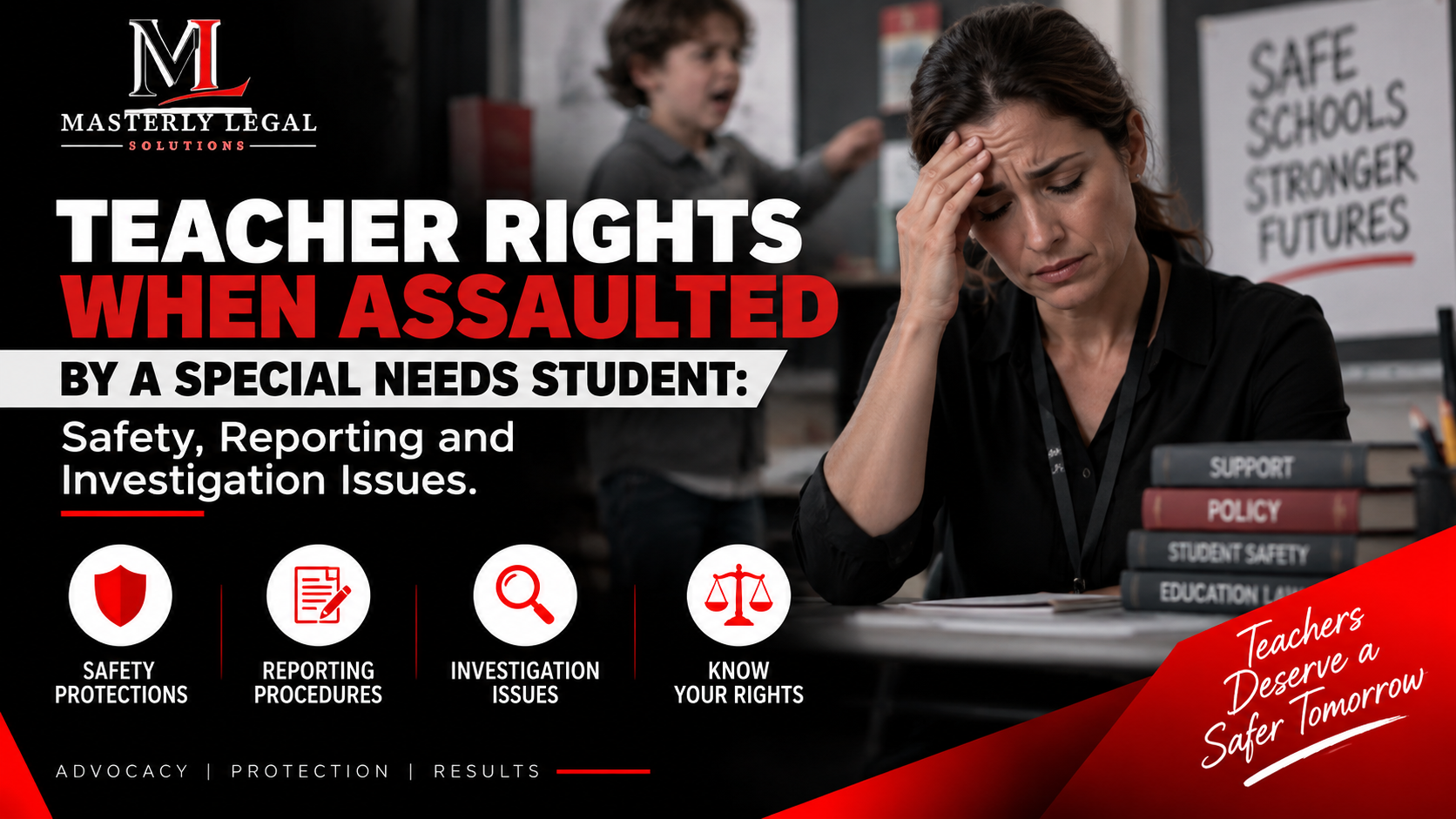
Teacher Rights When Assaulted by a Special Needs Student: Safety, Reporting and Investigation Issues


Looking for Legal & Business Solutions? Contact Us Now
Fill in the form or call us to set up a meeting