
How School Investigations Are Conducted and Where Retaliation at Work Begins
When a workplace investigation begins inside a school, the experience can feel confusing, stressful, and isolating for employees. Teachers, staff, and administrators often believe investigations are neutral processes designed only to find facts. In reality, how an employer conducts an investigation can directly affect employee morale, working conditions, and long-term employment outcomes. At Masterly Legal Solutions, we regularly see situations where a legitimate investigation quietly turns into retaliation.
Understanding how school investigations are conducted and where retaliation occurs is essential for workers who want to protect their careers. This article explains the investigation process, identifies red flags, and shows when employer behavior may cross legal lines. Our goal is not just education, but helping employees recognize when it is time to seek guidance from experienced retaliation attorneys.
The Purpose of School Workplace Investigations
School investigations are typically initiated when a complaint is filed involving harassment, discrimination, safety concerns, or other alleged violations of law or policy. Employers often frame these investigations as necessary steps to ensure compliance with federal and state laws. While investigations can serve an important role, they must be handled carefully to avoid illegal practices.
In an educational workplace, investigations may involve teachers, support staff, supervisors, and other employees. The employer’s responsibility is to conduct the process fairly while protecting individual employees from unfair treatment. Problems arise when investigations are used as a tool to punish or intimidate workers who engage in protected activity.
How Investigations Usually Begin in Schools
Most school investigations begin with a formal or informal complaint. This complaint may come from an individual employee, a parent, a co worker, or even a student. Employers are often required by regulations to take complaints seriously and begin an investigation promptly.
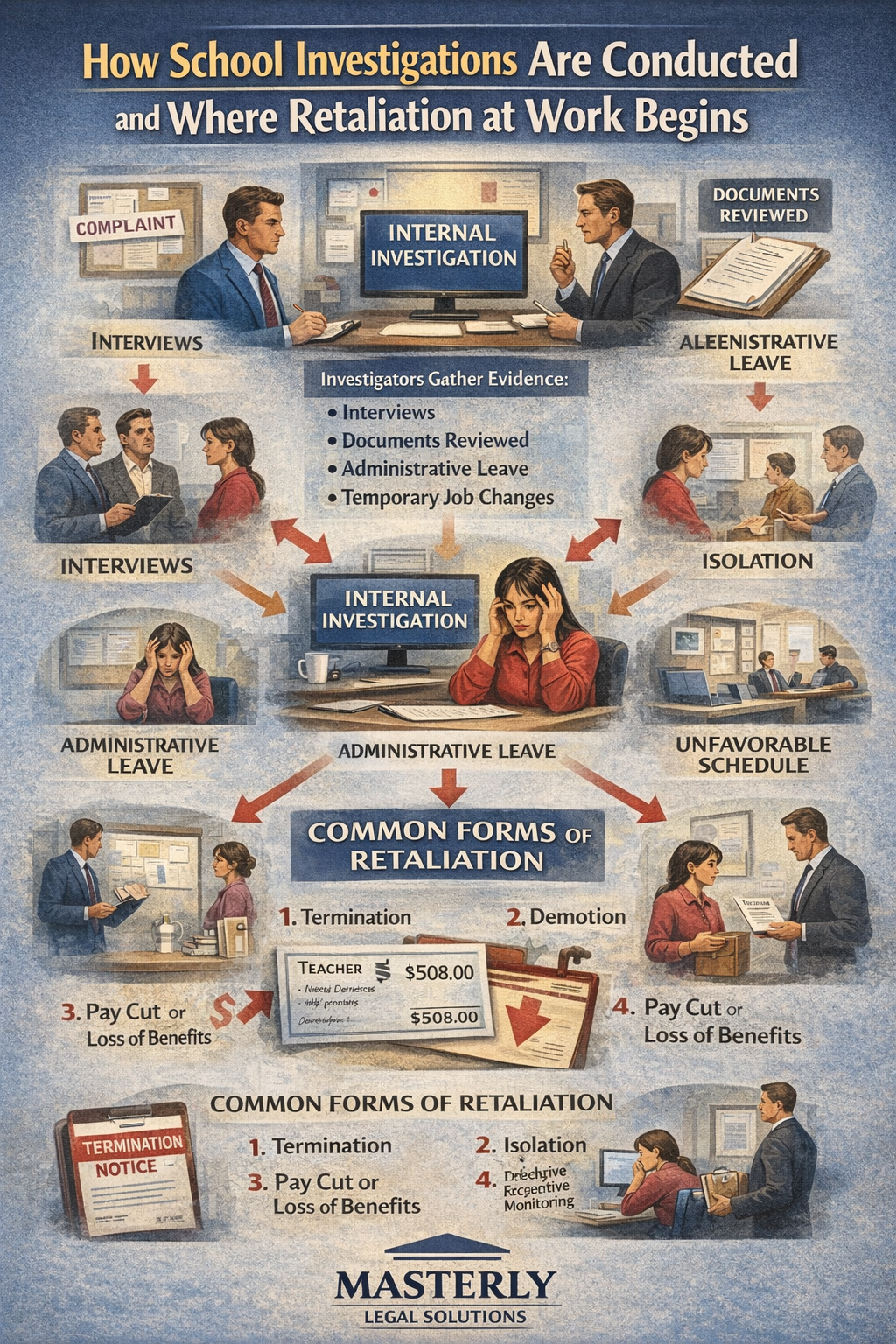
The investigation phase may include interviews, document reviews, and temporary job changes. While this process is intended to gather facts, it also creates opportunities for retaliation if employers misuse their authority.
The Role of Administrative Leave During Investigations
Administrative leave is one of the most common tools used during school investigations. Employers may place an employee on administrative leave to separate parties, preserve evidence, or reduce disruption in the workplace. In some cases, paid administrative leave is appropriate and lawful.
However, excessive or repeated administrative leave can signal retaliation. When administrative leave becomes prolonged, unexplained, or punitive, it may have a negative impact on the worker’s reputation and future employment opportunities.
When Administrative Leave Becomes a Warning Sign
Administrative leave should be temporary and purposeful. When employees are placed on administrative leave without clear explanations or timelines, concerns arise. Extended administrative leave can damage employee morale and overall employee morale across the workplace.
Retaliation occurs when administrative leave is used to punish workers for engaging in legally protected actions. Employers must ensure that administrative leave decisions are consistent and justified, not retaliatory.
Understanding Protected Activity in the School Workplace
Protected activity is at the heart of retaliation law. Employees are protected when they report misconduct, discrimination, harassment, or safety concerns. Filing a complaint, cooperating in an investigation, or reporting possible violations are all examples of protected activity.
Federal and state laws protect workers who engage in protected activity from adverse action. These protections apply regardless of whether the complaint is ultimately substantiated.
Common Examples of Protected Activity
Protected activity can take many forms, including but not limited to:
- Reporting harassment or discrimination
- Filing a complaint with a supervisor or human resources
- Participating in an investigation
- Reporting safety issues related to occupational safety
- Requesting accommodations under the disabilities act
When employees engage in these actions, they are legally protected from retaliation by their employer.
What Retaliation Looks Like in Schools
Retaliation can appear subtle or overt. It may involve changes that seem minor at first but create a negative impact over time. Retaliation occurs when an employer takes adverse action because an employee engaged in protected activity.
Adverse action includes any action that would discourage a reasonable employee from speaking up. This standard focuses on how the action affects the worker, not the employer’s stated intent.
Examples of Adverse Action
Adverse action may include many forms of employer conduct, such as:
- Termination or wrongful termination
- Demotion or reduction in hours
- Pay cuts or changes to wages
- Negative performance reviews
- Unfavorable schedule changes
Even actions that seem administrative on the surface may be considered retaliatory depending on the circumstances.
The Role of Supervisors in Retaliation Claims
Supervisors play a critical role in how investigations unfold. A supervisor’s reaction to a complaint can influence whether retaliation occurs. When supervisors treat complaining employees differently, isolate them, or publicly question their credibility, legal issues may arise.
Employers are responsible for the actions of supervisors. Retaliation by a supervisor can expose the employer to significant legal risk under employment law.
How Harassment Complaints Trigger Retaliation Risks
Harassment complaints often involve sensitive issues and heightened emotions. Employers may act defensively when allegations are raised. Unfortunately, this is when retaliation commonly begins.
Employees who report harassment are frequently subjected to closer scrutiny, increased monitoring, or disciplinary action. When these actions are connected to the complaint, retaliation laws may be violated.
Discrimination Complaints and Retaliation
Discrimination complaints based on age discrimination, disability, or other protected characteristics are legally protected. Title VII of the Civil Rights Act prohibits retaliation against employees who oppose discrimination.
Employers must separate the investigation process from employment decisions. Failure to do so can result in retaliation claims filed with the equal employment opportunity commission.
Federal and State Laws That Protect Workers
Federal and state laws provide overlapping protections against retaliation. These laws apply to public and private school employers and protect individual employees at various levels.
Key laws include Title VII, the Civil Rights Act, whistleblower laws, the medical leave act, and other employment act provisions. Together, these statutes protect workers who report misconduct or exercise legal rights.
The Reasonable Employee Standard Explained
Courts often apply the reasonable employee standard when evaluating retaliation claims. This standard asks whether the employer’s action would discourage a reasonable employee from engaging in protected activity.
This approach recognizes that retaliation does not need to be extreme to be unlawful. Even subtle actions can be considered retaliatory if they create fear or pressure in the workplace.
How Retaliation Impacts the Workplace
Retaliation has far-reaching consequences beyond the individual worker. It undermines trust, damages employee morale, and creates a culture of fear. Other employees may hesitate to report misconduct when they see retaliation go unaddressed.
Employers who tolerate retaliation risk widespread harm to the workplace environment. Over time, this can affect recruitment, retention, and public reputation.
Retaliation Against Federal Employees in Schools
Federal employees working in educational settings face unique rules. Federal protections apply alongside state laws, offering additional safeguards. Retaliation against federal employees can trigger investigations by government agencies.
Understanding these layered protections is essential when determining whether retaliation has occurred. Employment lawyers with experience in both federal and state claims can provide critical guidance.
Filing a Retaliation Claim
Employees who believe retaliation has occurred may have the right to file a claim. Filing may involve internal processes, state agencies, or federal authorities such as the equal employment opportunity commission.
Filing deadlines are strict, and missing them can limit legal options. Consulting lawyers early helps determine the appropriate filing path and protects legal rights.
The Investigation Process After a Retaliation Claim
Once a retaliation claim is filed, an investigation typically follows. This investigation may examine employer actions, timelines, and communications. Investigators look for connections between protected activity and adverse action.
Employers may attempt to justify their actions as legitimate business decisions. Legal professionals help workers challenge these explanations when evidence suggests retaliation.
How Employers Defend Retaliation Claims
Employers often argue that adverse actions were unrelated to protected activity. They may cite performance issues, restructuring, or policy enforcement. Determining whether these reasons are genuine requires careful analysis.
Employment lawyers gather evidence, review records, and identify inconsistencies. This process helps determine whether retaliation occurred under the law.
The Importance of Documentation for Workers
Documentation is critical for workers who suspect retaliation. Keeping records of complaints, emails, schedules, and disciplinary actions can strengthen a claim. Documentation helps establish timelines and connections between events.
Workers should preserve evidence carefully and avoid altering records. Legal guidance ensures documentation is used effectively and lawfully.
When Retaliation Leads to Termination
Being fired after engaging in protected activity is one of the clearest signs of possible retaliation. While employers can terminate employees for legitimate reasons, timing matters. Termination closely following a complaint often raises legal concerns.
Wrongful termination claims may arise when retaliation is the motivating factor. Lawyers analyze the circumstances to determine whether termination violated the law.
Pay, Benefits, and Retaliation
Changes to pay, benefits, or hours can also constitute retaliation. Reductions in wages, loss of paid time, or denial of benefits may discourage employees from exercising rights.
Courts recognize that financial pressure can be a powerful retaliatory tool. These actions are closely examined under employment law standards.
Retaliation Through Increased Scrutiny
Some employers retaliate by increasing scrutiny of an employee’s work. Sudden write-ups, excessive monitoring, or unrealistic expectations may signal retaliation.
When scrutiny begins only after protected activity, it may be considered retaliatory. Legal professionals assess whether such actions are justified or unlawful.
Whistleblower Laws and School Employees
Whistleblower laws protect employees who report illegal practices or safety violations. These protections apply in educational workplaces where employees report misuse of funds, safety risks, or regulatory violations.
Retaliation against whistleblowers is prohibited. Understanding whistleblower protections helps workers protect themselves when reporting serious concerns.
Occupational Safety and Retaliation
Employees who report occupational safety issues are protected from retaliation. Schools must comply with safety regulations to protect workers and students.
Retaliation for safety complaints may involve schedule changes, discipline, or termination. These actions can violate both labor and employment laws.
Retaliation Involving Family and Medical Leave
The medical leave act protects workers who take qualifying leave. Retaliation for using protected leave is unlawful. Adverse actions following leave requests may indicate retaliation.
Employers must carefully justify any employment decisions affecting workers who take protected leave. Legal guidance helps determine whether actions are lawful.
How Retaliation Affects Career Advancement
Retaliation does not always involve termination. Denial of promotions, training opportunities, or leadership roles can also be retaliatory. These actions may limit long-term career growth.
Workers should be aware that retaliation can take many forms. Identifying these patterns early helps protect future employment prospects.
Why Legal Guidance Matters Early
Retaliation cases are complex and fact-specific. Early guidance from employment lawyers helps workers understand their rights and options. Attorneys help determine whether conduct rises to the level of a legal violation.
Waiting too long can limit available remedies. Timely consultation allows workers to make informed decisions.
How Retaliation Attorneys Support Workers
Retaliation attorneys provide strategic guidance throughout the process. They evaluate evidence, communicate with employers, and represent workers in filings and negotiations.
Attorneys protect workers from further harm while pursuing accountability. Their role is to level the playing field between employees and employers.
Choosing the Right Legal Support
Not all lawyers focus on retaliation or employment law. Choosing attorneys with experience in workplace retaliation ensures effective representation. Skilled lawyers understand how employers defend claims and how to counter those defenses.
Legal experience makes a significant difference in outcomes. Workers benefit from attorneys who understand both federal and state frameworks.
Contact Masterly Legal Solutions
If you believe retaliation has occurred in your workplace, you do not have to navigate the situation alone. At Masterly Legal Solutions, we work with employees who have experienced retaliation following school investigations or workplace complaints. Our team understands how retaliation unfolds and how to protect workers under employment law.
We invite you to contact us for a free consultation to discuss your concerns, understand your rights, and explore your options with experienced retaliation attorneys. Call (972) 236-5051 today to schedule a confidential consultation and get the guidance you need.
Disclaimer: This article is for informational purposes only and does not constitute legal guidance or legal advice. Reading this content does not create an attorney-client relationship. For advice specific to your circumstances, consult a qualified attorney.


Teacher Rights When Assaulted by a Special Needs Student: Safety, Reporting and Investigation Issues


Looking for Legal & Business Solutions? Contact Us Now
Fill in the form or call us to set up a meeting