

Legal Support for Teachers Facing Contract Termination: What You Need to Know
Teaching is more than a job for most educators. It is a commitment to students, families, and the broader community that depends on strong public education and ethical leadership. When teachers face contract termination, the experience can feel sudden, confusing, and deeply personal. Many educators are unsure where to turn or how to protect their careers within the education system. Understanding your rights and having strong legal support can make all the difference during this difficult time.
At Masterly Legal Solutions, we focus on supporting teachers who are navigating complex legal issues tied to contract termination. Our work in education law allows us to advocate for educators while helping them understand their options under Texas law. With the right education attorney on your side, contract disputes do not have to define the end of your professional journey.
Understanding Teacher Contract Termination
Contract termination in education can occur for many reasons, some valid and others questionable. Teachers may be told that their employment is ending due to performance concerns, budget changes, or alleged policy violations. In some cases, termination is connected to accusations involving disciplinary actions or administrative matters. These decisions can impact not only employment but also long-term professional reputation.
Educators working in public schools, charter schools, or a private school often face different contract standards. However, every teacher deserves fairness and due process within the school system. Education law exists to ensure that legal matters affecting teachers are handled properly and transparently. Knowing whether a termination is lawful is the first step toward protecting your interests.
Why Contract Termination Can Be Challenged
Many teachers are surprised to learn that contract termination is not always final or legally sound. School districts and educational institutions must follow specific procedures before ending a teaching contract. When these steps are skipped or handled improperly, the termination may be challenged. This is where education lawyers play a critical role.
Challenging termination is not about confrontation for its own sake. It is about protecting teachers’ rights, careers, and future employment opportunities. A knowledgeable education attorney can evaluate whether your school district followed the law and respected your contractual protections. Legal intervention can uncover errors that may otherwise go unnoticed.
The Role of Education Law in Teacher Employment
Education law governs the relationship between teachers, schools, administrators, and governing boards. It covers employment standards, disciplinary proceedings, and the rights of students and staff members. This area of law is especially important in Texas education, where regulations are detailed and often change.
An experienced education law firm understands how employment law intersects with education-specific regulations. Teachers facing termination benefit from legal professionals who understand both systems. Education law matters require focused knowledge, not general advice, especially when contracts and state regulations are involved.
Common Reasons Teachers Face Contract Termination
Teachers may face termination for a variety of reasons, some of which are unclear or unfairly applied. These reasons can include alleged misconduct, performance evaluations, or policy disputes within schools. In more serious cases, allegations may involve physical or sexual abuse, sexual harassment, or Title IX concerns.
Even when accusations are serious, teachers still have rights under the law. Disciplinary hearings and administrative hearings are designed to evaluate evidence fairly. A lawyer can help ensure that allegations are not accepted without proper review or due process.
How School District Policies Affect Termination Decisions
Every school district operates under its own policies, but those policies must still align with state and federal law. Administrators and board members are required to follow established procedures when addressing employment disputes. Failure to do so can create legal issues for the district.
Teachers working in the public school system often face complex internal processes. These processes may involve grievance hearings, disciplinary proceedings, or review by a state board. Legal representation ensures that teachers are not navigating these systems alone or without proper guidance.
The Importance of Due Process for Teachers
Due process is a fundamental principle in education law and employment law. It ensures that teachers are informed of allegations, allowed to respond, and given a fair opportunity to defend themselves. Without due process, termination decisions may violate legal standards.
In some cases, due process hearings or disciplinary hearings are required before termination becomes final. An education attorney can help prepare teachers for these proceedings and advocate on their behalf. Protecting due process is essential for safeguarding careers and professional integrity.
Administrative Hearings and Their Impact
Administrative hearings play a significant role in contract termination cases. These hearings may be conducted by the school system, a board, or another governing authority. Decisions made during administrative hearings can affect licensure, future employment, and professional standing.
Having skilled lawyers present during administrative matters helps ensure that evidence is properly reviewed. Teachers should not assume that these hearings are informal or harmless. They are legal proceedings that require careful preparation and strong advocacy.
The Texas Education Agency and Teacher Contracts
The Texas Education Agency oversees many aspects of Texas education, including standards that affect teacher employment. In certain cases, contract termination issues may involve the Texas Education Agency or related state board oversight. These matters can quickly become complex.
Texas education lawyers understand how agency regulations apply to individual teachers. When a tea license or certification is at risk, legal guidance becomes even more critical. Addressing issues early can prevent long-term damage to a teaching career.
Charter Schools and Contract Differences
Teachers working in charter schools may have contracts that differ from those in traditional public schools. While charter schools have flexibility, they are still bound by education law and employment standards. Termination decisions must still comply with legal requirements.
Education lawyers experienced with charter schools can identify whether contract terms were violated. Teachers should not assume that charter school employment offers fewer protections. Legal services can clarify rights and obligations within these educational institutions.
Private School Employment and Legal Protections
Employment in a private school often involves different contractual language and expectations. While some legal protections differ, private school teachers still have rights under employment law. Contract termination in this setting can still be challenged when unfair practices occur.
An education attorney can review private school contracts to determine whether termination was justified. Legal professionals help teachers understand where private school policies end and legal obligations begin.
Disciplinary Proceedings and Allegations
Disciplinary proceedings can be one of the most stressful aspects of contract termination. These proceedings may involve accusations related to classroom conduct, student interactions, or compliance issues. In severe cases, allegations may involve sexual abuse or other sensitive matters.
Even in these situations, teachers are entitled to fair treatment. Legal representation ensures that disciplinary actions are based on evidence, not assumptions. Protecting teachers during disciplinary proceedings is a core function of experienced education lawyers.
Title IX and Teacher Contract Issues
'Title IX cases' can significantly impact teacher employment, particularly when allegations involve students. These cases often move quickly and carry serious consequences. Schools and universities are required to follow strict procedures under Title IX regulations.
An education attorney with experience in Title IX matters can help teachers navigate these complex legal issues. Proper legal support helps protect both teachers’ rights and students’ rights throughout the process.
Universities and Higher Education Employment
Teachers working at a university or in higher education face unique employment challenges. Universities often have their own boards, policies, and administrative procedures. Contract termination in higher education can involve layered review processes.
Education lawyers familiar with university systems can guide educators through these procedures. Legal matters involving higher education require an understanding of both academic policy and employment law.
The Connection Between Employment Law and Education
Employment law provides a foundation for many teacher contract disputes. However, education adds additional layers of regulation and responsibility. Understanding how these areas of law intersect is critical for effective legal representation.
Education attorneys focus on protecting teachers while respecting the unique environment of schools and universities. This balanced approach supports both educators and the broader education system.
Special Education Responsibilities and Termination Risks
Teachers involved in special education often face heightened scrutiny due to compliance requirements. Special education services, IEP meetings, and the protection of children with disabilities are heavily regulated. Errors or misunderstandings can lead to disciplinary actions.
Legal support in special education law helps teachers respond to concerns related to special education cases. Protecting teachers who work with special needs children is essential for maintaining strong educational support systems.
IEP Meetings and Teacher Accountability
IEP meetings play a central role in special education services. Teachers are expected to follow specific procedures and documentation standards. When disputes arise, these meetings may become part of contract termination discussions.
Education lawyers can help teachers demonstrate compliance and advocate for fairness. Legal professionals understand how IEP meetings fit into broader education law matters.
Civil Rights and Teacher Protections
Civil rights protections apply to teachers as well as students. These protections address discrimination, retaliation, and unfair treatment within schools. Contract termination that violates civil rights laws may be challenged through legal action.
Education attorneys advocate for teachers whose civil rights have been compromised. Protecting civil rights strengthens trust within the education community.
Representing Teachers Through Legal Challenges
Representing teachers requires more than legal knowledge. It requires understanding the realities of classrooms, administrators, parents, and students. Education lawyers act as advocates who protect teachers’ interests while navigating sensitive environments.
At Masterly Legal Solutions, representing teachers is a core part of our practice. We are committed to tailored legal services that reflect each educator’s unique situation.
Protecting Teachers’ Rights and Careers
Teachers’ rights are closely tied to job security, professional reputation, and future employment. Contract termination can threaten all three. Legal support helps teachers protect what they have worked hard to build.
By addressing legal issues early, teachers can avoid long-term consequences. Skilled lawyers provide guidance that supports informed decision-making.
The Role of Parents and the School Community
Parents and the broader community often play a role in contract disputes, especially when student concerns are involved. Balancing the interests of children, parents, and teachers requires careful legal consideration.
Education lawyers help manage these dynamics while focusing on fair outcomes. Protecting the best interests of all involved strengthens trust in the education system.
Students’ Rights and Teacher Advocacy
Students’ rights are central to education law, but protecting those rights does not mean sacrificing fairness for teachers. Both interests can be respected through proper legal processes.
Education attorneys work to ensure that disciplinary actions and employment decisions are balanced and lawful. This approach benefits students, teachers, and schools alike.
Grievance Hearings and Appeals
Grievance hearings provide teachers with an opportunity to challenge termination decisions. These hearings may involve administrators, board members, or external reviewers. Preparation is essential for presenting a strong case.
Legal representation during grievance hearings improves outcomes. Education lawyers understand how to present evidence and arguments effectively.
The Importance of Experienced Legal Professionals
Contract termination cases involve complex legal issues that require extensive experience. Education law is not an area for guesswork or generic advice. Teachers benefit from working with legal professionals who focus on this field.
An experienced lawyer can identify options that may not be obvious. Legal guidance offers clarity during uncertain times.
How Legal Representation Makes All the Difference
Legal representation provides structure, strategy, and support. Teachers facing termination often feel overwhelmed, but having an advocate changes the experience. A strong legal team helps teachers feel heard and protected.
At Masterly Legal Solutions, our law firm is committed to standing with educators. We believe that quality legal services can truly make all the difference.
Choosing the Right Education Law Firm
Not all law firms understand the nuances of education law. Teachers should seek an education law firm with extensive experience representing educators. The right firm focuses on protecting teachers while navigating legal and administrative systems.
Choosing the right legal partner is an important step toward resolution. Education lawyers provide insight, advocacy, and peace of mind.
Moving Forward After Contract Termination
Facing contract termination does not have to define your future. With proper legal support, many teachers find paths forward that protect their careers and professional standing. New challenges can be addressed with confidence and clarity.
Education law exists to support fairness and accountability. Teachers who understand their rights are better equipped to move forward.
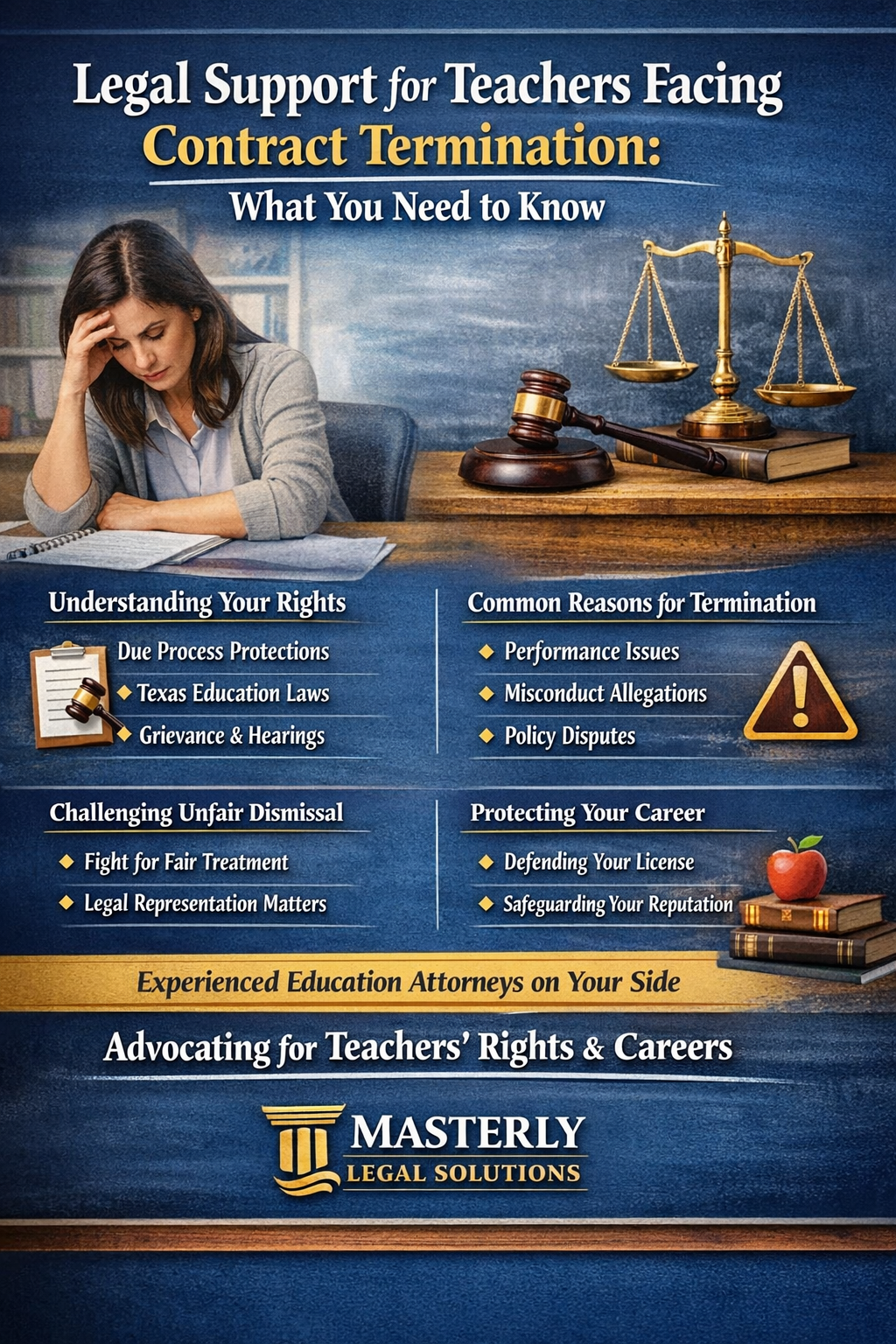
Support for Teachers During Uncertain Times
Teaching is a profession built on commitment and care. When legal issues arise, teachers deserve the same level of support they provide to others. Legal advocacy ensures that educators are treated fairly within the school system.
Masterly Legal Solutions remains committed to protecting teachers, students, and the integrity of education.
Representing Students in Education-Related Legal Matters
In many education-related legal matters, representing students is closely connected to protecting the integrity of the learning environment. When disputes arise involving discipline, accommodations, or access to services, legal advocacy helps ensure that students are treated fairly under the law. Education attorneys who represent both teachers and students understand how decisions affecting one group often impact the other. This balanced approach supports lawful outcomes while strengthening trust across schools, families, and the education system.
Legal Responsibilities Within the Educational Setting
Every educational setting carries unique legal responsibilities for teachers, administrators, and school leaders. Laws governing conduct, safety, and academic access are designed to protect everyone involved, from staff members to students. When conflicts occur, understanding how legal standards apply within a classroom or campus environment is essential. Proper legal guidance helps ensure that actions taken within the educational setting align with established education law and civil rights protections.
Protecting a Child’s Rights in Schools
A child’s rights are a central focus of education law and play a significant role in employment and disciplinary decisions. These rights include access to education, fair treatment, and appropriate support services, especially for children with disabilities or special needs. Legal professionals help ensure that policies and actions within schools respect a child’s rights while maintaining fairness for teachers and administrators. Protecting these rights strengthens the overall education system and supports positive outcomes for students and families.
Contact Masterly Legal Solutions for Support
If you are a teacher facing contract termination or related legal issues, we invite you to reach out to Masterly Legal Solutions. Our team offers a free consultation to discuss your concerns, explain your options, and help you understand how education law applies to your situation. We focus on matters involving teacher contracts, disciplinary proceedings, administrative hearings, and issues connected to the Texas Education Agency and educator licensing. Call (972) 236-5051 to schedule your free consultation and speak with an education attorney who is committed to protecting your career and your rights.
Disclaimer: This article is provided for educational purposes only and does not constitute legal guidance or legal advice. Reading this article does not create an attorney-client relationship. For advice specific to your situation, please consult with a qualified attorney.




Teacher Rights When Assaulted by a Special Needs Student: Safety, Reporting and Investigation Issues

Looking for Legal & Business Solutions? Contact Us Now
Fill in the form or call us to set up a meeting





