

The First 72 Hours of a Texas CPS Investigation
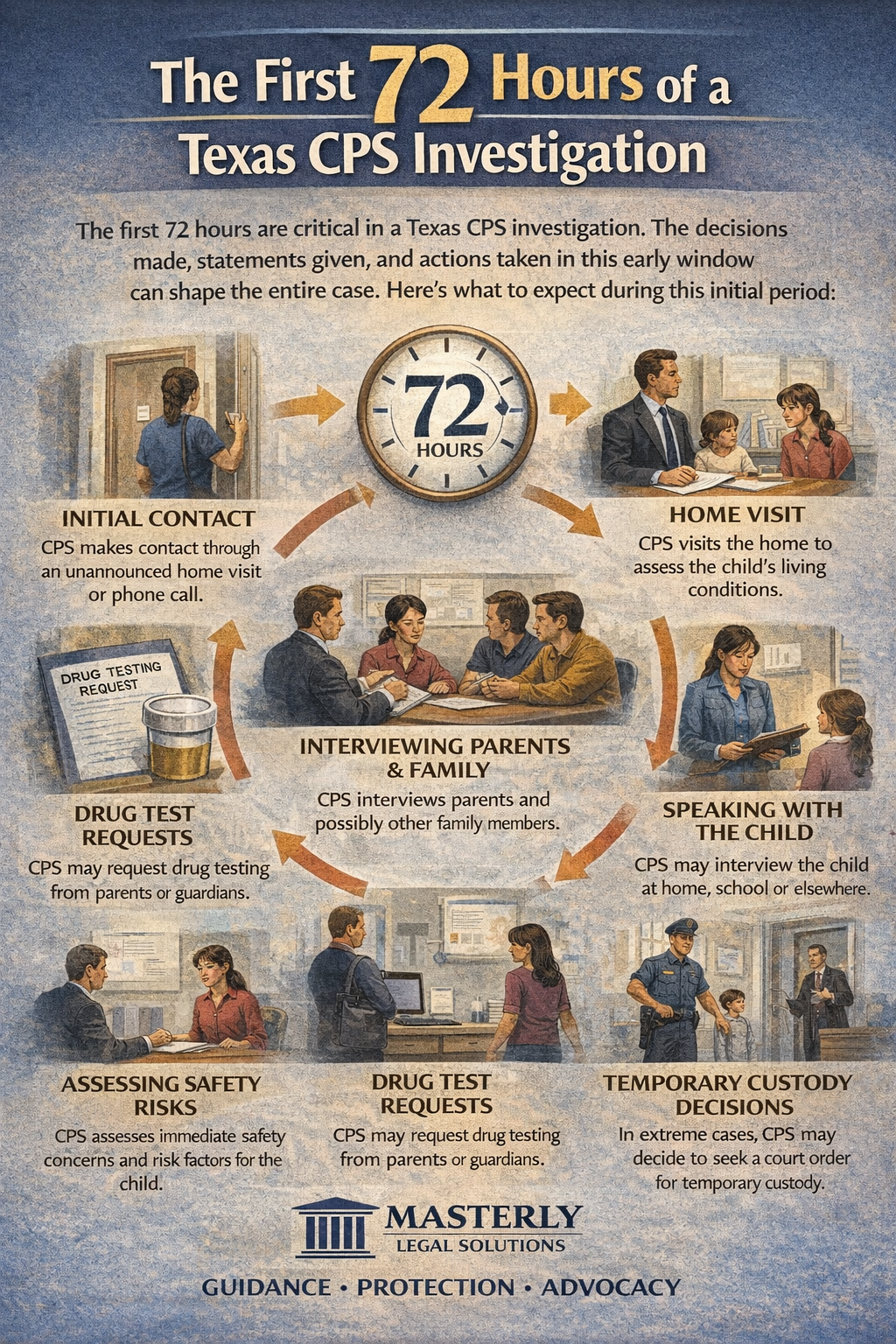
The moment Child Protective Services reaches out, life can feel like it shifts overnight. Parents often describe the first contact as confusing, emotional, and deeply unsettling, especially when they are unsure what prompted the report. The first seventy-two hours of a Texas CPS investigation are not just stressful—they are formative. Decisions made, statements given, and actions taken during this early window can shape the entire cps case.
At Masterly Legal Solutions, we help families across Texas navigate cps investigations with clarity and preparation. While many people search online for the california cps investigation process, Texas child protective services operates under its own rules and procedures. Understanding what happens in the first three days is critical to protecting parental rights, a child’s well being, and the stability of the family.
Understanding Child Protective Services in Texas
Child Protective Services CPS is part of the Texas Department of Family and Protective Services, often referred to as DFPS. This state agency is responsible for receiving reports, investigating allegations, and determining whether abuse or neglect may have occurred. The role of child protective services is administrative, not criminal, but the consequences can still be severe.
Protective services are designed to protect children from immediate danger and long-term risk. However, the investigation process can feel invasive to parents who have never had CPS involvement before. Knowing how CPS functions helps families respond calmly and strategically.
How CPS Investigations Begin
Most cps investigations start with a report to a statewide hotline. The report may come from a teacher, medical provider, neighbor, family member, or anonymous caller. CPS workers are required to investigate reports that meet certain criteria, even when details are limited.
The report itself often contains general allegations rather than proven facts. CPS does not verify the truth of the report before opening a cps case. Instead, the investigation stage is where CPS begins investigating allegations and gathering information.
The Importance of the First Seventy-Two Hours
The first seventy-two hours set the tone for the entire cps investigation process. During this period, cps workers form early impressions about the child’s home, the parents, and the overall level of risk. These impressions often influence later decisions, including safety plans, services, and court involvement.
Parents frequently underestimate how much weight this early period carries. While CPS investigations can last weeks or months, the initial phase is when many outcomes are informally shaped.
Initial Contact From CPS Workers
Initial contact usually comes by phone or an unannounced home visit. CPS workers may say they need to “check on the child” or “follow up on a report.” This contact often feels informal, but it is part of an official investigation.
Anything said during this contact can be documented in the case record. Parents should understand that CPS workers are trained to assess risk factors from the very beginning, including communication style and cooperation.
Home Visits and the Child’s Home Environment
A home visit is one of the first steps in many cps investigations. CPS workers observe the child’s home to evaluate safety issues, supervision, and general living conditions. This visit is not just about cleanliness; it is about perceived risk.
CPS may look at sleeping arrangements, food availability, and interactions between parents and the child. Small misunderstandings can sometimes be interpreted as safety concerns if parents are unprepared.
Interviews With Parents and Family Members
During the first seventy-two hours, CPS workers often interview parents and sometimes other family members. These interviews are part of investigating allegations and determining whether abuse or neglect occurred. Parents may feel pressure to answer questions quickly to show cooperation.
However, it is important to remember that CPS interviews are investigative, not therapeutic. Statements made without preparation can be misunderstood or taken out of context later in the cps case.
Speaking With the Child Early in the Investigation
CPS workers may seek to interview the child early, sometimes at school or another location away from the parents. These interviews are used to assess the child’s safety and gather information about alleged abuse or neglect.
Parents are often surprised by how quickly CPS attempts to speak with the child. Understanding this possibility ahead of time allows families to respond thoughtfully rather than react emotionally.
Assessing Immediate Risk and Safety Concerns
One of CPS’s primary responsibilities is determining whether there is immediate risk to the child. CPS workers conduct a risk assessment based on the report, interviews, and observations. Immediate danger may lead to emergency actions.
If CPS believes a child faces serious harm, they may seek a court order or take steps toward temporary custody. These decisions are often made within the first few days of the investigation.
Allegations of Abuse or Neglect
CPS investigations often involve allegations of child abuse or neglect. These may include physical abuse, sexual abuse, emotional abuse, or various forms of neglect. Alleged abuse does not mean abuse occurred, but CPS must investigate.
Parents should understand that CPS does not require proof at the outset. The investigation is designed to determine whether abuse or neglect occurred and whether the child’s safety is at risk.
When Criminal Investigations Are Involved
In some situations, a cps investigation may overlap with a criminal investigation. Law enforcement may become involved if allegations suggest criminal conduct such as severe physical abuse or sexual abuse. This does not happen in every case, but it can occur.
When both systems are involved, statements made to CPS may later affect a criminal case. This overlap increases the importance of careful communication during the first seventy-two hours.
Safety Plans Introduced Early
A safety plan is often introduced early in cps investigations. CPS may describe the safety plan as voluntary and temporary, designed to protect the child while the investigation continues. In practice, safety plans carry significant weight.
Safety plans may restrict contact between the child and an alleged perpetrator, require supervision, or mandate services. Once agreed to, a safety plan can shape the direction of the entire cps case.
Understanding Voluntary Agreements and Voluntary Services
CPS may offer voluntary services or request a voluntary agreement during the early stages. These may include parenting classes, counseling, drug testing, or other support services. While presented as helpful, these agreements should be understood clearly.
Voluntary placement or voluntary services can still have long-term implications. Parents should recognize that agreeing to services does not automatically end an investigation.
Risk Factors and Ongoing Risk Assessment
CPS workers evaluate multiple risk factors throughout the investigation. These may include past reports, family stressors, substance use concerns, or mental health issues. Risk assessment is ongoing, not limited to one moment.
Early actions by parents can either reduce or increase perceived risk. Calm, informed responses often help clarify misunderstandings before they escalate.
Drug Testing Requests
In some cases, CPS may request a drug test during the first seventy-two hours. These requests are often framed as routine, especially when substance use is alleged. Drug testing can significantly influence investigation results.
Parents should understand the purpose and potential consequences of testing. A drug test result becomes part of the cps case record and may affect decisions about services or custody.
Court Orders and Emergency Actions
If CPS believes a child is in immediate danger, they may seek a court order from juvenile dependency court. Court involvement can happen quickly, sometimes within days. Emergency court hearings are often brief but impactful.
Court orders may authorize temporary custody, foster placement, or specific restrictions. The first seventy-two hours are often when CPS decides whether court action is necessary.
Temporary Custody and Foster Care Decisions
In rare but serious situations, CPS may remove a child and place them in temporary custody. This may involve foster care or placement with approved family members. These decisions are among the most difficult CPS makes.
Removal decisions are heavily influenced by early investigation findings. Preventing unnecessary foster placement often depends on early administrative strategy.
Voluntary Placement With Family Members
Sometimes CPS proposes voluntary placement with relatives as an alternative to foster care. While this may feel less severe, it still involves separation and oversight. Voluntary placement should be carefully considered.
Even voluntary placement can affect parental rights and future case outcomes. Parents should understand how these decisions are documented.
Services Offered During the First Stage
CPS may begin to provide or recommend services early in the investigation. These may include family services, counseling, or referrals to community resources. The goal is often to address perceived risks.
While services can be helpful, they also signal CPS concerns. Accepting services does not mean wrongdoing but does acknowledge CPS authority.
Documentation and the Case Record
Every interaction during the first seventy-two hours contributes to the case record. CPS workers document observations, statements, and actions taken. This record follows the cps case through its entirety.
Parents rarely see the case record immediately. However, what is written early often influences later decisions and investigation results.
Parental Rights During Early CPS Involvement
Parents retain parental rights throughout a cps investigation unless a court orders otherwise. However, many parents are unaware of these rights or feel pressured to waive them.
Understanding parental rights helps families maintain appropriate boundaries while cooperating with CPS. Clear communication can prevent misunderstandings.
Administrative Closure Versus Escalation
Some cps investigations end with administrative closure when allegations are ruled out or risk is assessed as low. Others escalate into ongoing family services or court cases. Early actions often influence which path CPS chooses.
Administrative closure is more likely when CPS determines that the child’s safety is not at risk. Preparation and clarity can support this outcome.
The Role of Family and Community Resources
CPS often evaluates whether families have access to family and community resources. Support systems can reduce perceived risk and demonstrate stability. CPS may ask about relatives, childcare, or other support services.
Having a clear understanding of available resources can help families respond confidently. Community resources are often part of CPS safety planning.
Child and Family Services Beyond CPS
CPS sometimes coordinates with other child and family services agencies. These agencies may provide counseling, education, or support programs. Coordination can continue even after the investigation stage.
Understanding how these services fit into the cps case helps families avoid confusion. Not all services indicate ongoing risk.
Differences Between Texas and Other States
Many families research CPS online and encounter information about southern California or other jurisdictions. While the california cps investigation process may appear similar, Texas procedures differ in meaningful ways.
Texas CPS operates under DFPS policies and Texas family law. Applying out-of-state guidance can create misunderstandings during a Texas investigation.
Legal Representation During the First Seventy-Two Hours
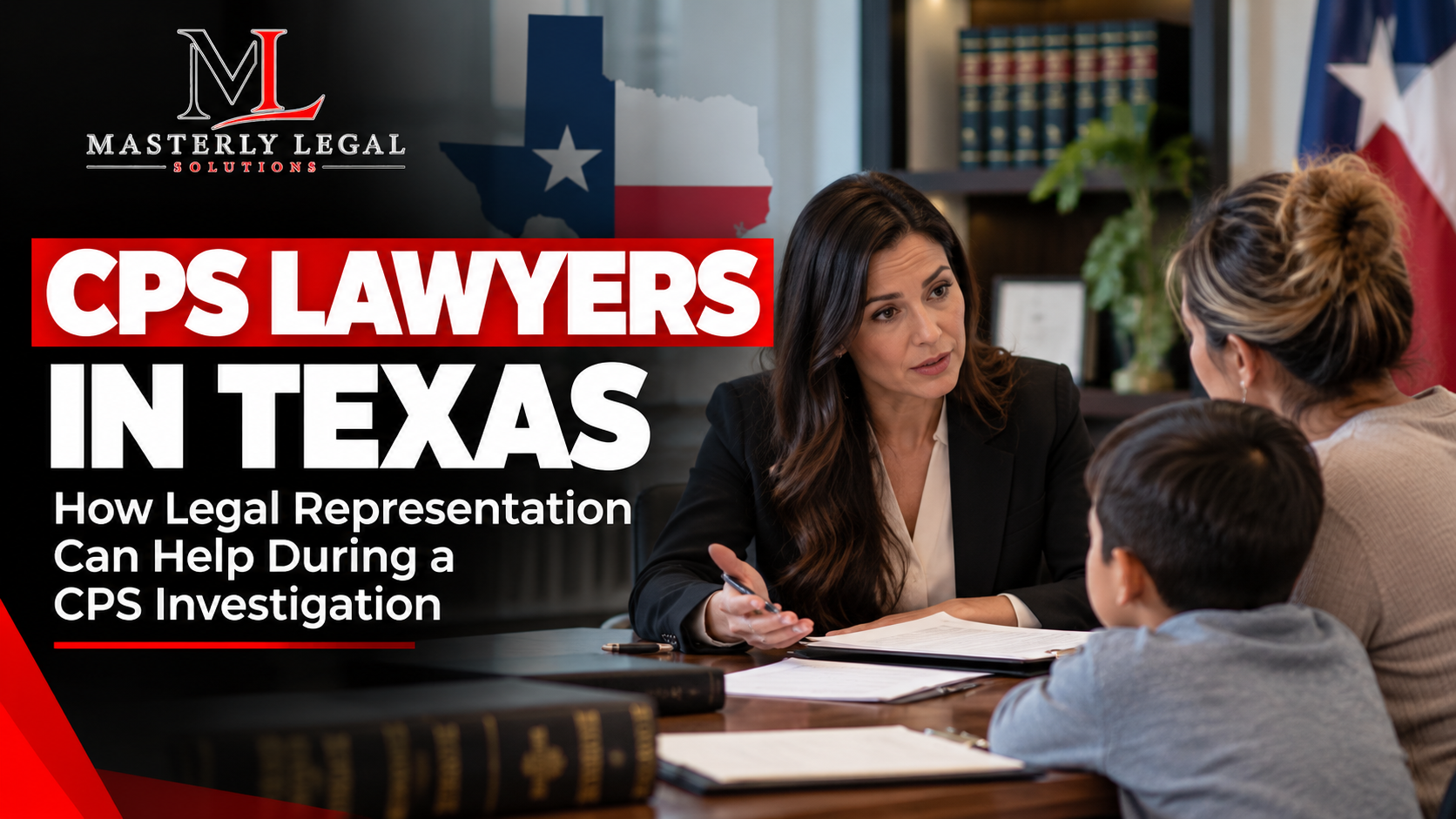
Legal representation during the early stages of cps investigations focuses on preparation and strategy. This is not about courtroom litigation but about administrative guidance. Early legal counsel can help parents understand what to say, what to document, and what to consider carefully.
Having legal representation does not signal guilt. It signals that parents are taking the situation seriously and protecting their rights.
How Masterly Legal Solutions Approaches CPS Defense
Masterly Legal Solutions provides strategic CPS defense for Texas cases only. Our approach is administrative, proactive, and investigation-focused. We do not rely on fear-based tactics or unnecessary court battles.
We help clients understand the cps investigation process, prepare for interactions with cps workers, and respond appropriately to allegations of abuse or neglect.
Protecting the Child’s Safety While Protecting the Family
Protecting children is the stated goal of CPS, and parents share that goal. The challenge is ensuring that protective services actions do not unnecessarily disrupt the family. Early guidance helps balance cooperation with protection.
Our role is to help families protect children while also safeguarding parental rights and family stability.
Long-Term Impact of Early CPS Decisions
Decisions made in the first seventy-two hours can affect the cps case long after the investigation ends. Case records, findings, and service agreements can influence future reports or court involvement.
Understanding this long-term impact helps parents take early stages seriously without panic.
Taking Control During an Uncertain Time
CPS involvement often makes parents feel powerless. Knowledge and preparation restore a sense of control. The first seventy-two hours are about responding thoughtfully rather than reacting emotionally.
Calm, informed actions often lead to better outcomes.
When to Seek Legal Counsel
Parents should consider legal counsel as soon as CPS makes contact. Waiting until court involvement can limit options. Early guidance often prevents escalation.
Legal counsel helps families understand risks, rights, and next steps in real time.
Child Protective Investigations and How Decisions Are Reached
Child protective investigations are administrative processes designed to determine whether allegations of child abuse and neglect require intervention. During these investigations, CPS evaluates reports, interviews involved parties, and reviews available records to assess risk and safety. While these investigations are meant to protect children, they can feel overwhelming for families who are unfamiliar with how quickly conclusions may form. Understanding how CPS conducts these reviews helps parents respond in a way that protects both their child’s care and their long-term rights.
The Role of the Texas Legal Services Center and Outside Assistance
Some families explore resources such as the Texas Legal Services Center when CPS becomes involved. These organizations may offer general information or referrals, but they do not provide case-specific CPS defense or administrative strategy. Relying solely on outside informational resources can leave parents unprepared for the complexity of CPS decision-making. Families facing CPS involvement often need guidance that goes beyond general education and addresses their specific circumstances.
Legal Aid Resources and Their Limitations in CPS Cases
Legal aid programs can be helpful in certain situations, particularly for general family law questions. However, legal aid services are often limited in scope and may not provide ongoing representation during CPS investigations. CPS cases move quickly, and delays or gaps in guidance can affect investigation outcomes. Families should understand the difference between informational assistance and strategic legal support when child safety allegations arise.
How CPS Works to Complete Investigations
CPS is required to complete investigations within specific administrative timeframes. Completing investigations involves gathering statements, reviewing records, and evaluating whether the reported concerns meet CPS standards for action. While the goal is to reach a timely resolution, the process may feel rushed from a parent’s perspective. Early preparation helps ensure that information collected during the investigation accurately reflects the family’s situation.
Evaluating the Child’s Care During CPS Involvement
A central focus of every CPS case is the child’s care. CPS examines daily routines, supervision, medical needs, and emotional well-being to determine whether the child’s needs are being met. These evaluations are not limited to isolated incidents but look at the overall caregiving environment. Parents who understand this broader perspective are better equipped to address CPS questions clearly and calmly.
When CPS Seeks to Provide Services to Families
In many cases, CPS may attempt to provide services as part of an investigation or safety plan. These services may include counseling, parenting education, or referrals to community programs. While services are often presented as supportive, they also signal CPS concerns about risk factors. Understanding the purpose and potential impact of services allows families to make informed decisions.
Reasonable Accommodations in CPS Investigations
CPS investigations may involve parents or children who require reasonable accommodations due to medical conditions, disabilities, or other documented needs. Accommodations can affect how interviews are conducted, how services are offered, and how compliance is evaluated. Families should be aware that accommodations are part of ensuring fairness in the investigation process. Clear communication about these needs is essential early in the case.
When CPS May Order Services as Part of a Case
In some situations, CPS may order services through administrative processes or court involvement. Ordered services carry more weight than voluntary options and often come with specific timelines and compliance requirements. Failure to follow ordered services can affect case outcomes and future CPS involvement. Understanding the difference between recommended and ordered services helps families avoid unintended consequences.
Understanding Allegations of Child Abuse and Neglect
Allegations of child abuse and neglect trigger CPS involvement, but allegations alone do not determine outcomes. CPS must investigate to determine whether abuse occurred or whether neglect occurred under administrative standards. These standards differ from criminal definitions and focus on risk and safety rather than intent. Families benefit from understanding how CPS evaluates allegations and how findings are reached.
Contact Masterly Legal Solutions for CPS Guidance
If CPS has contacted you in Texas and you are searching for information about the california cps investigation process, it is important to speak with professionals who understand Texas child protective services specifically. Masterly Legal Solutions provides strategic CPS defense and administrative appeal representation exclusively for Texas CPS cases.
We help parents, caregivers, and professionals navigate cps investigations with clarity and preparation. Call (972) 236-5051 for a free consultation to discuss your situation and understand your options before critical decisions are made.
Disclaimer: This article is for informational purposes only and does not constitute legal guidance or legal advice. Reading this content does not create an attorney-client relationship. CPS cases are fact-specific, and outcomes depend on individual circumstances. Consult a qualified Texas CPS attorney for advice related to your specific situation. Educators seeking guidance on steps to take after receiving a TEA complaint notice can refer to Texas Educators: What to Do After a TEA Complaint Notice for more information.



Teacher Rights When Assaulted by a Special Needs Student: Safety, Reporting and Investigation Issues



Looking for Legal & Business Solutions? Contact Us Now
Fill in the form or call us to set up a meeting