

How CPS Determines Risk and Child Safety
Few experiences are more frightening for parents than hearing that CPS wants to speak with them about their child. A knock on the door from child protective services can instantly shift a normal day into one filled with anxiety, confusion, and uncertainty. Many families in San Antonio do not realize how quickly a CPS investigation can escalate from a simple home visit to court intervention and even the risk of losing custody.
At Masterly Legal Solutions, we regularly represent parents facing CPS cases throughout Texas. We understand how child protective services CPS evaluates risk, how decisions are made, and what steps can either protect your family or place your parental rights in jeopardy. This article explains how CPS determines child safety, what parents can expect during an investigation, and why working with a CPS lawyer early in the process can significantly change the outcome.
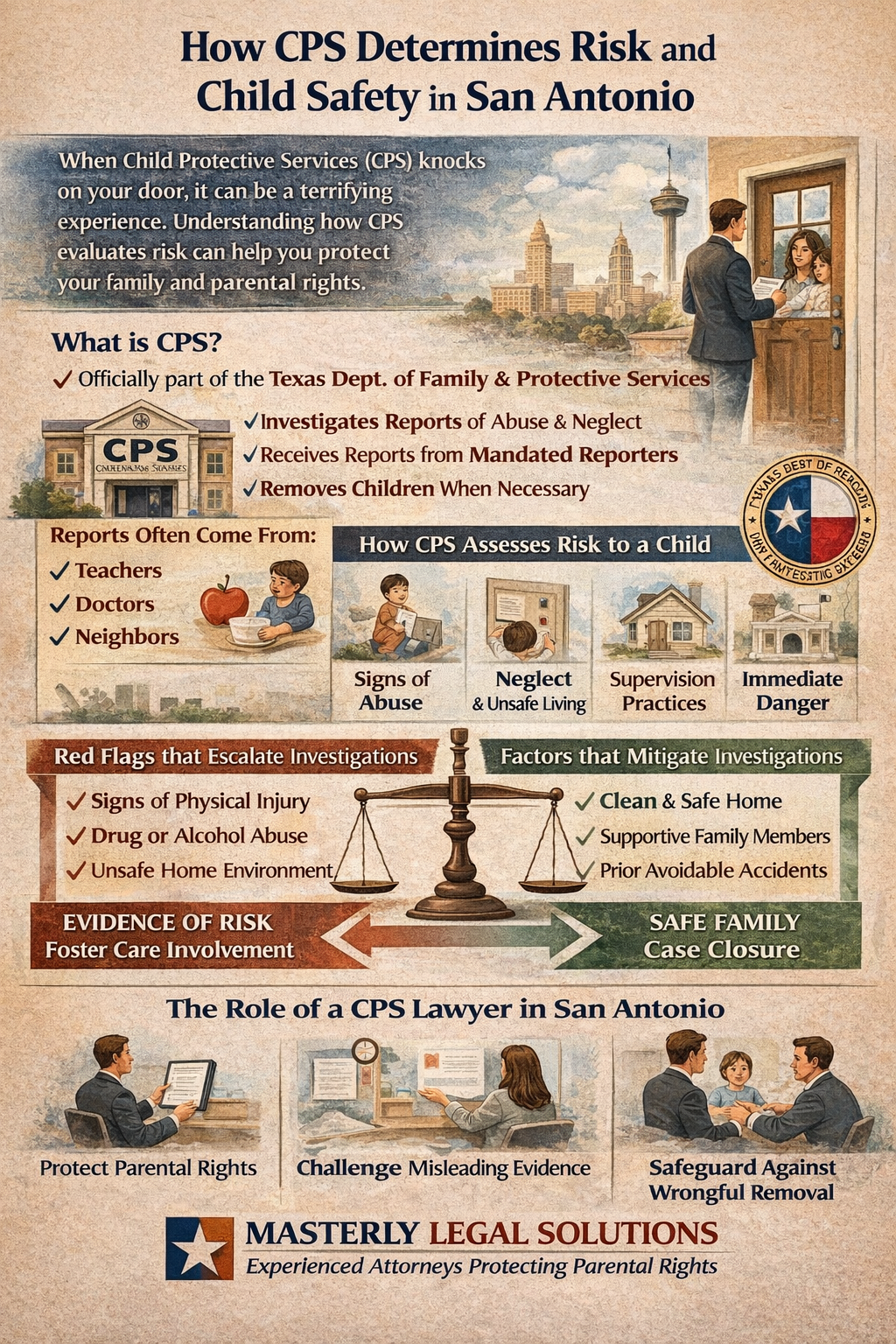
What CPS Is and How It Operates in San Antonio
CPS, formally part of the Texas Department of Family and Protective Services, is the government agency responsible for investigating reports of abuse or neglect. Child protective services receive reports from teachers, doctors, neighbors, and other mandated reporters, and these situations can have serious consequences for teachers and schools needing education law support.. Once a report is made, CPS workers are assigned to begin investigating reports of possible harm to a child.
The Texas Department follows specific procedures outlined by law. These procedures govern how CPS enter a home, interview a child, and determine whether immediate danger exists. While the stated goal is ensuring child safety, the process can feel invasive and overwhelming for parents.
How a CPS Investigation Begins
A CPS investigation often begins with a phone call or unannounced home visit. CPS workers may request to speak with the child privately and ask detailed questions about living conditions, discipline, and family relationships.
Parents are often unsure whether they can refuse entry. In many cases, you can refuse entry unless CPS has a court order or believes a child is in immediate danger. However, refusing entry without understanding the legal implications can escalate CPS involvement.
What CPS Workers Are Looking For
During the investigation, CPS workers evaluate multiple factors, including:
- Signs of physical or emotional abuse
- Evidence of neglect
- The condition of the home
- Supervision practices
- Prior CPS cases
Their focus is on whether there is sufficient evidence of abuse or neglect.
Defining Abuse or Neglect Under Texas Law
Texas law defines child abuse broadly. It may include physical injury, emotional harm, sexual misconduct, or failure to provide necessary care. Neglect can involve inadequate supervision, lack of medical care, or unsafe living conditions.
Even a single allegation can trigger a CPS investigation. In some situations, false allegations arise during custody disputes, domestic violence cases, or conflicts involving relatives.
Risk Assessment and Immediate Danger
CPS must determine whether a child faces immediate danger. If the caseworker believes there is a serious risk, they may seek a court order to remove the child from the home.
Immediate danger findings can lead to foster care placement. This is often described as temporary, but it can significantly disrupt families and parental rights.
A judge later reviews the removal and decides whether the child should remain out of the home.
The Role of Court Intervention
When CPS believes court intervention is necessary, they file a petition in court. The court process in juvenile dependency cases begins quickly, often within days of removal.
Parents may feel unprepared for court hearings. At this stage, having a CPS defense attorney is critical. Without proper legal representation, parents may risk losing custody based on incomplete or misunderstood evidence.
Juvenile Dependency and CPS Cases
Juvenile dependency proceedings focus on whether a child has been abused or neglected. These CPS cases are civil, but they carry serious consequences.
Parents may be investigated, required to complete services, or placed under supervision. In extreme cases, parental rights may be terminated.
The judge in juvenile dependency court evaluates evidence presented by CPS attorneys and defense counsel.
The Importance of Legal Representation Early
Many parents assume they can handle CPS alone. However, CPS defense requires knowledge of court procedures, statutes, and evidentiary rules.
Working with a CPS defense attorney from the beginning can prevent mistakes. A lawyer can attend interviews, advise you before signing documents, and protect your rights if a court order is requested.
At Masterly Legal Solutions, our law firm provides strategic CPS defense to families throughout San Antonio.
When Criminal Charges Are Involved
Some CPS investigations involve criminal charges, particularly in cases of alleged severe child abuse, which can resemble the high‑stakes nature of a Title IX investigation process where respondents must know their rights. While CPS cases are civil, criminal investigations may run parallel.
In these situations, statements made during a CPS investigation can be used in criminal court. This makes early legal counsel even more important.
A CPS lawyer who understands both protective services and criminal defense strategies can help protect you.
False Allegations and Insufficient Evidence
False allegations are more common than many realize. During custody battles or domestic violence disputes, accusations may be made without sufficient evidence in education settings as well.
Even when a claim lacks proof, CPS may continue investigating. If the judge deems the allegations credible, temporary restrictions can be imposed.
A CPS defense attorney works to challenge weak evidence and present the full context of the situation.
Safety Plans and Voluntary Agreements
CPS often proposes safety plans as an alternative to removal. These agreements may require supervision by a family member or restrict certain individuals from the home, which is why understanding tools like a power of attorney for your children can be an important part of overall family protection.
Parents sometimes feel pressured to agree. However, safety plans can limit parental rights and affect future court decisions.
Consulting a lawyer before signing any agreement is essential.
How the Court Determines the Best Interests of the Child
In court, the judge focuses on the best interests of the child. This standard considers safety, stability, and well-being.
The court evaluates testimony from CPS workers, the guardian ad litem, and the parents. Evidence of neglect, abuse, or unsafe conditions is weighed carefully, and the stability provided by essential legal documents for families before age 40 can also factor into perceptions of long‑term child welfare.
An experienced CPS defense attorney can present counter-evidence and advocate for reunification.
Removal and Foster Care
If a child is removed, CPS may place them in foster care or with relatives. Removal is often traumatic for children and families alike.
Parents must comply with court-ordered services, including counseling or parenting classes. Failure to comply may jeopardize reunification efforts.
CPS attorneys present progress reports to the judge during review hearings.
What Parents Should Expect During Court Hearings
Court hearings can feel intimidating. Parents may see CPS lawyers, government agencies, and court staff working together.
Your attorney will present your side of the story. They will cross-examine CPS workers and challenge unsupported claims.
Preparation and strong legal help can significantly influence outcomes.
Comparing San Antonio CPS Cases to Other Jurisdictions
While procedures vary slightly by location, CPS processes in San Antonio share similarities with places like Orange County and other jurisdictions, just as teachers across Texas rely on legal protection to navigate school investigations and discipline.
The key difference often lies in local court culture and judicial discretion. This makes working with CPS lawyers in San Antonio Texas particularly important.
Local knowledge can influence strategy and presentation in court, much like having an expert education lawyer providing legal support for schools and teachers shapes how school‑related investigations and disputes are handled.
How a CPS Lawyer Protects Your Rights
A CPS lawyer’s role is to protect parental rights and challenge unjust findings. This includes reviewing case files, interviewing witnesses, and preparing evidence.
Our defense law firm ensures clients understand every step of the process. We provide confidential consultation to evaluate the situation before making decisions.
A CPS defense attorney can also negotiate service plans and advocate for reunification.
The Risk of Losing Parental Rights
The most serious outcome of CPS involvement is termination of parental rights. This permanently ends the legal relationship between parent and child.
Parents risk losing their children if they do not respond strategically. Early legal representation is the strongest safeguard against this outcome.
At Masterly Legal Solutions, our law firm focuses on defending families facing these life-changing allegations.
Why Early Action Matters
The earliest stages of a CPS investigation often determine the direction of the case. Small decisions can have long-term consequences.
Refusing entry without advice, speaking without preparation, or signing documents without review can escalate the situation.
A CPS defense attorney can guide you through each step and protect your family.
Why Early Legal Guidance Matters in CPS and Child Welfare Cases
When families are facing serious CPS allegations, understanding the difference between a court appointed attorney and a privately retained lawyer can make a meaningful difference in the outcome of child welfare cases. A cps caseworker may begin investigating concerns raised by a school, medical provider, or other mandated reporter, and what starts as a routine inquiry can quickly escalate into court proceedings or even a lawsuit affecting custody and parental rights. During an initial consultation, an experienced attorney can evaluate the specific allegations, explain how family law intersects with CPS procedures, and outline a strategy tailored to your situation, including issues that may overlap with special education law and SPED teachers’ legal responsibilities. While a court appointed attorney may be assigned after formal charges are filed, seeking legal guidance early allows families to respond proactively rather than react under pressure. Taking action at the first sign of CPS involvement helps protect your rights, clarify misunderstandings, and position your case for the strongest possible defense, similar to how early counsel in higher education law matters for schools and universities can prevent small issues from escalating.
Speak With a CPS Defense Attorney in San Antonio
If you are facing a CPS investigation in San Antonio, do not wait for court to seek help. The earlier you involve a lawyer, the better your chances of protecting your child and preserving your parental rights.
At Masterly Legal Solutions, our CPS attorneys understand the stress and uncertainty families experience. We offer a confidential consultation to discuss your situation and outline your options.
Contact our law firm at (972) 236-5051 to schedule your free consultation. Whether you need immediate CPS defense or guidance during an investigation, our team is prepared to defend your rights and protect your family’s future.
Disclaimer: This article is for informational purposes only and does not constitute legal advice. Reading this content does not create an attorney-client relationship. For advice specific to your CPS case, please contact Masterly Legal Solutions directly.

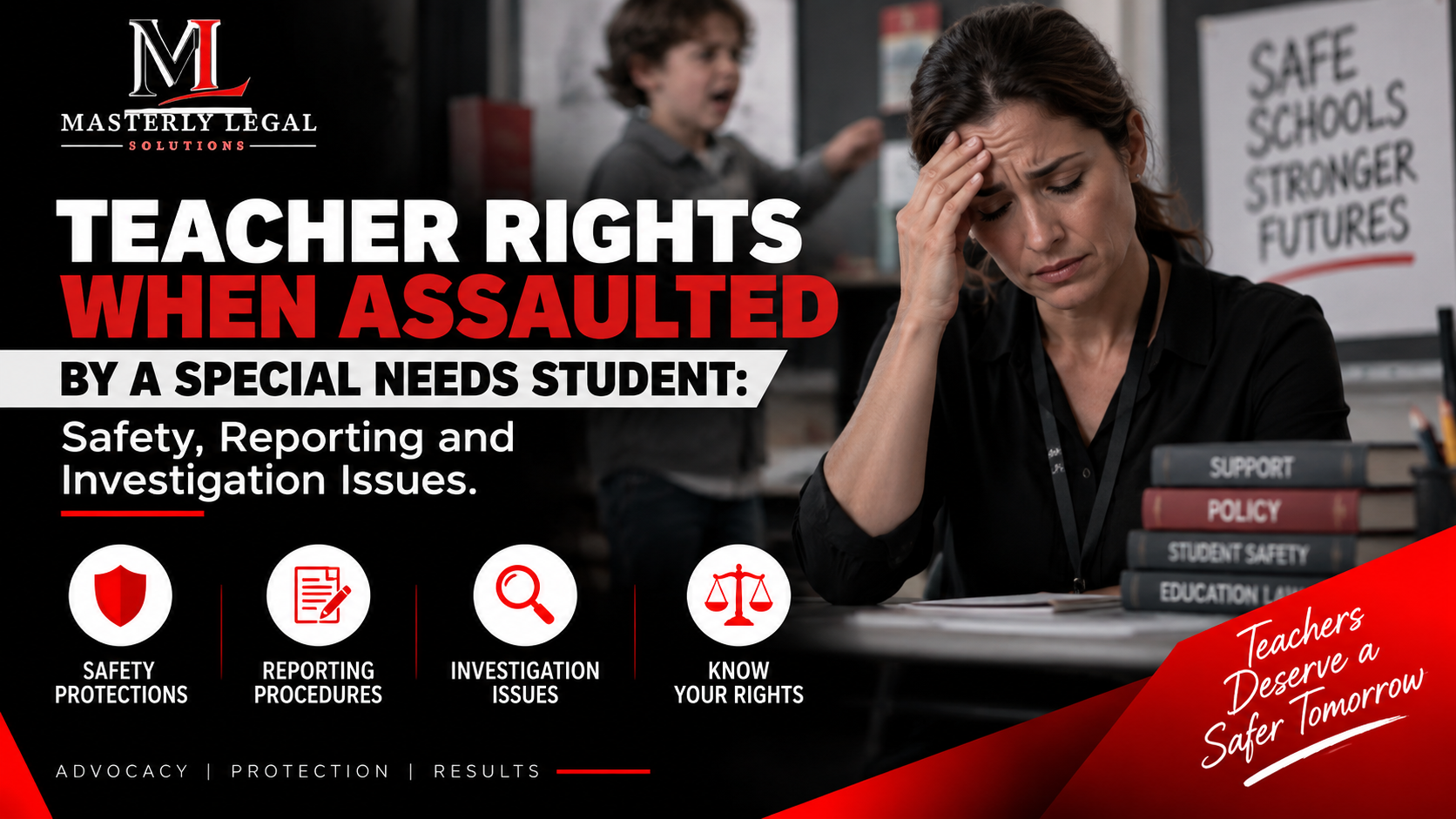
Teacher Rights When Assaulted by a Special Needs Student: Safety, Reporting and Investigation Issues


Looking for Legal & Business Solutions? Contact Us Now
Fill in the form or call us to set up a meeting