

Avoiding Costly Mistakes in School Investigations: Legal Guidance for Administrators
Why School Investigations Carry Serious Legal Risks
Every day, schools across Texas face situations that require immediate attention from administrators, teachers, and district leadership. Allegations involving student misconduct, employee complaints, bullying, discrimination, social media activity, disabilities, or Title IX concerns can quickly escalate into complicated legal matters. What may begin as a routine complaint can rapidly turn into a lawsuit, public controversy, or federal investigation if the school fails to follow the proper process.
Many administrators underestimate how much education law impacts daily decision-making inside schools. A poorly handled investigation may expose school districts, charter schools, private schools, and universities to liability under federal law, state law, and the Texas Education Code. Even well-intentioned administrators can make mistakes when they are under pressure to act quickly.
At Masterly Legal Solutions, we understand that schools are expected to balance safety, fairness, accountability, and due process at the same time. Our law firm works with educators, administrators, teachers, and institutions throughout Texas to help prevent costly errors before they become major legal issues. Preventative legal guidance is often the difference between resolving a complaint professionally and facing years of litigation or administrative hearings.
Strong investigative procedures do more than reduce risk. They also help protect students, preserve employee rights, strengthen public trust, and support a healthy educational environment. Schools that follow clear legal protocols are far more likely to achieve the best possible outcome when difficult situations arise.
The Growing Complexity of Education Law in Texas
The legal landscape surrounding education continues to evolve. Administrators must now navigate federal and state laws involving student rights, employee protections, discrimination claims, free speech concerns, disabilities accommodations, Title IX regulations, and employment disputes. The responsibilities placed on schools have expanded significantly over the past decade.
Texas schools are expected to comply with multiple layers of law simultaneously. This includes federal regulations, state law, district policies, and internal procedures. A single investigation may involve overlapping issues related to employment, student discipline, physical safety, special education, privacy rights, and free speech protections.
The challenge becomes even greater because many school leaders are educators first, not attorneys. While administrators possess extensive knowledge regarding instruction and school administration, most have not received formal training in conducting legally defensible investigations. Unfortunately, failing to understand the legal process can create major problems for schools and universities.
Investigations involving teachers, students, parents, or staff members require careful documentation, procedural fairness, and legal review. Administrators who act too quickly or fail to gather proper evidence may unintentionally violate due process rights or expose their institution to discrimination claims. This is why proactive legal assistance from an education lawyer can be critical during sensitive matters.
How Small Mistakes Become Expensive Legal Problems
Many school investigations begin with good intentions. Administrators often want to resolve concerns quickly to maintain order and protect the school community. However, rushing through an investigation without following proper legal procedures can create significant liability.
Some of the most common mistakes include:
- Failing to interview all relevant witnesses
- Ignoring documentation requirements
- Making assumptions before gathering evidence
- Violating confidentiality protections
- Mishandling complaints involving disabilities
- Overlooking federal and state laws
- Inconsistent discipline practices
- Retaliation against reporting parties
- Poor communication with parents
- Lack of legal representation during serious disputes
These errors may result in lawsuits, employee grievances, appeal process complications, or federal agency complaints. In some situations, investigations may even attract media attention that damages the reputation of schools and administrators alike, underscoring the value of legal protection for teachers and administrators facing disciplinary actions.
An experienced attorney can help schools review procedures before problems escalate. Early intervention with an education lawyer providing expert legal support for teachers and schools often helps protect institutions from avoidable legal exposure while preserving trust within the educational community.
Why Preventative Legal Guidance Matters
Too many schools wait until litigation begins before seeking legal assistance. By that point, the damage may already be done. Preventative legal guidance allows administrators to identify risks early and correct procedural weaknesses before they lead to claims or administrative hearings.
Preventative strategies are especially important in Texas education environments where schools face increasing scrutiny from parents, advocacy groups, and regulatory agencies. Modern investigations require far more than basic fact gathering. Administrators must understand how federal law, state law, and district policies intersect throughout the process.
A proactive lawyer can help administrators:
- Develop legally sound investigation procedures
- Train staff on documentation standards
- Ensure compliance with Title IX regulations
- Address discrimination concerns properly
- Handle employment disputes carefully
- Protect student rights during disciplinary actions
- Review communication practices
- Prepare for process hearings when necessary
Preventative planning reduces confusion during high-pressure situations. Schools that prepare in advance are better equipped to respond professionally, fairly, and lawfully.
Understanding Due Process in School Investigations
Due process is one of the most important legal principles in education law matters. Whether an investigation involves students, teachers, or administrators, schools must provide fair procedures before imposing significant disciplinary actions.
Failing to respect due process can result in lawsuits, appeals, or reversal of disciplinary decisions. Courts frequently examine whether schools provided adequate notice, meaningful opportunities to respond, and unbiased review procedures.
Due process requirements may vary depending on the situation, but administrators should generally ensure that:
- Individuals understand the allegations against them
- Evidence is gathered fairly
- Witnesses are interviewed appropriately
- Decisions are based on facts rather than assumptions
- Policies are applied consistently
- Records are maintained accurately
This is particularly important in cases involving suspension, expulsion, employment termination, or allegations of misconduct. Universities, college programs, and K-12 schools alike must follow established procedures carefully.
When administrators skip important procedural steps, even valid disciplinary decisions may become legally vulnerable.
Investigations Involving Teachers and Employment Concerns
Investigations involving teachers often carry heightened legal risks because employment rights, professional reputations, and certification concerns may all be involved. Complaints against educators can trigger serious consequences under Texas law and the Texas Education Code, making education law services that help protect teacher rights especially important.
School districts must carefully balance the need to protect students with the obligation to provide fair treatment to employees. Administrators who mishandle investigations may face employment disputes, discrimination claims, or challenges during administrative hearings.
Common employment-related investigations include:
- Allegations of misconduct
- Inappropriate communication claims
- Boundary violations
- Harassment complaints
- Social media concerns
- Classroom management disputes
- Retaliation allegations
- Policy violations
Schools should never assume that internal investigations are informal matters. Statements collected during investigations may later become evidence in litigation or state proceedings. An education lawyer can help administrators understand how investigative decisions may affect future legal matters.
In some cases, schools may also need lawyers for teachers when employment disputes escalate into licensing or certification proceedings, including legal support focused on TEA license defense and school investigations. Proper legal review helps ensure investigations remain professional, objective, and compliant with applicable regulations.
The Importance of Documentation During Investigations
Accurate documentation is one of the strongest defenses schools can have during legal disputes. Poor recordkeeping often weakens otherwise valid decisions and creates unnecessary challenges during litigation or appeal process proceedings.
Administrators should maintain detailed records throughout every stage of the investigative process. Documentation should include witness interviews, timelines, evidence review, policy references, and communication logs.
Important documentation practices include:
- Recording investigation dates
- Preserving electronic communications
- Documenting witness statements
- Maintaining confidentiality records
- Tracking parental communication
- Reviewing policy compliance
- Preserving physical evidence
- Documenting accommodations involving disabilities
Clear documentation demonstrates professionalism and procedural consistency. It also helps schools defend their actions if disputes later arise before courts, agencies, or administrative hearings.
A knowledgeable attorney can review documentation practices to ensure schools are meeting both federal and state requirements.
Title IX Investigations Require Specialized Attention
Title IX investigations present unique legal challenges for schools, universities, and college institutions. Allegations involving sexual harassment, gender discrimination, or misconduct require strict compliance with federal regulations, and many higher education institutions benefit from specialized higher education Title IX and compliance counsel.
Schools that mishandle Title IX complaints may risk federal investigations, lawsuits, funding consequences, and reputational harm. Administrators must understand that Title IX requirements continue to evolve, making ongoing legal review extremely important.
Title IX investigations typically involve:
- Formal complaint procedures
- Notice requirements
- Impartial investigations
- Evidence review standards
- Due process protections
- Appeal rights
- Confidentiality concerns
Improper handling of these cases can expose institutions to major legal and financial consequences. Schools receiving federal funding must take Title IX obligations seriously while also respecting the rights of all parties involved.
An education lawyer with extensive experience in Title IX matters can help administrators avoid procedural errors that may compromise investigations.
Protecting Students While Maintaining Fairness
Schools have a legal and ethical responsibility to protect students from harm. However, investigations must also remain fair and objective. Administrators who react emotionally or prematurely may unintentionally violate student rights or create legal exposure for the institution.
Investigations involving children require careful attention because accusations can significantly impact educational opportunities, mental health, and future prospects. Schools must balance safety concerns with fairness throughout the process.
Student investigations may involve:
- Bullying allegations
- Physical altercations
- Threat assessments
- Speech-related incidents
- Harassment complaints
- Disabilities accommodations
- Social media behavior
- Academic misconduct
Administrators should avoid assuming guilt before completing a full investigation. Schools that rush to discipline students without proper review may face complaints involving discrimination, due process violations, or failure to comply with federal and state laws.
A strong legal framework helps schools protect both student safety and individual rights.
Free Speech Issues in Educational Settings
Free speech disputes continue to create legal challenges for schools throughout Texas and across the country. Students, teachers, and college professors often raise concerns regarding speech protections, expression rights, and social media activity.
While schools may impose certain limitations to maintain order and safety, administrators must understand that speech rights are protected under federal law. Misunderstanding these protections can result in lawsuits and public controversy.
Common speech-related disputes include:
- Social media posts
- Political expression
- Student demonstrations
- Classroom discussions
- Employee speech concerns
- Religious expression
- Online commentary
Schools should carefully review policies before imposing discipline involving speech issues. Courts often evaluate whether disciplinary actions were narrowly tailored and legally justified.
An attorney familiar with education law can help administrators evaluate speech-related complaints while minimizing exposure to legal claims.
Investigating Complaints Involving Disabilities
Cases involving disabilities require especially careful handling because schools must comply with multiple federal regulations designed to protect children and students with special needs. Administrators who fail to follow proper procedures may face serious legal consequences.
Investigations involving disabilities often intersect with:
- Section 504 protections
- Individualized Education Programs
- Accommodation disputes
- Discipline limitations
- Behavioral interventions
- Accessibility concerns
Schools must ensure that students with disabilities receive fair treatment throughout the investigative process. Failure to consider accommodations or disability-related factors may create claims involving discrimination or denial of rights.
Administrators should also remember that parents often become highly involved in investigations affecting children with disabilities. Clear communication and procedural fairness are essential to resolving concerns effectively.
A knowledgeable education lawyer can help schools navigate these sensitive matters while protecting compliance obligations. Many administrators rely on an education law attorney experienced with teachers and administrators to provide this guidance.
Why Consistency Matters During Investigations
One of the fastest ways for schools to face allegations of discrimination is inconsistent enforcement of policies. Administrators must apply procedures fairly across all students, teachers, and staff members.
Inconsistent discipline or investigative practices may create claims involving:
- Gender discrimination
- Race discrimination
- Disability discrimination
- Retaliation
- Employment bias
- Unequal treatment
Schools should regularly review policies to ensure consistency throughout the administration process. Similar situations should generally receive similar responses unless there is a documented reason for different treatment.
Consistency also helps strengthen public trust within the community. Parents, educators, and students are more likely to respect investigative outcomes when procedures appear fair and transparent.
The Role of Training in Risk Prevention
Many costly investigation mistakes occur because staff members simply lack proper training. Schools should not assume administrators automatically understand evolving legal requirements involving education, employment, and student rights.
Regular training can help reduce confusion and improve decision-making during high-pressure situations. Effective training programs should address both practical and legal considerations.
Important training topics may include:
- Documentation practices
- Title IX compliance
- Due process standards
- Speech protections
- Disabilities accommodations
- Reporting obligations
- Confidentiality requirements
- Investigation procedures
Training should involve administrators, teachers, school nurse personnel, counselors, and other staff members who may participate in investigations. Preventative education creates stronger institutional protections over time.
Masterly Legal Solutions provides legal guidance and training designed to help schools minimize risk before disputes arise, including experienced education law attorney services and teacher license defense.
How Parents Influence School Investigations
Parents often play a significant role in school investigations, particularly when allegations involve children, safety concerns, or disabilities. Administrators must communicate carefully while maintaining confidentiality and procedural integrity.
Poor communication with parents frequently escalates disputes unnecessarily. Families who feel ignored or excluded are more likely to pursue complaints, legal action, or public criticism.
Administrators should:
- Respond professionally to concerns
- Explain investigative procedures clearly
- Maintain accurate records of communication
- Avoid making premature promises
- Respect confidentiality rules
- Provide appropriate updates when permitted
Parents may also seek outside legal representation if they believe schools are failing to protect their child's rights. Clear communication and consistent procedures often help reduce conflict and preserve working relationships.
Challenges Facing Universities and College Institutions
Universities and college institutions face many of the same investigative challenges as K-12 schools, but the legal stakes are often even higher. College students and employees may raise complex complaints involving Title IX, discrimination, employment disputes, or speech protections.
Universities must often navigate investigations involving:
- Campus safety concerns
- Faculty misconduct allegations
- Student disciplinary disputes
- Employment investigations
- Academic integrity matters
- Free speech controversies
College investigations frequently receive significant public attention, particularly when social media amplifies allegations. Institutions that mishandle complaints may face lawsuits, negative publicity, or federal review.
Strong legal guidance helps universities establish fair investigative procedures that protect institutional integrity while respecting individual rights.
Handling Sexual Harassment Allegations Properly
Allegations involving sexual harassment require immediate attention and careful procedural compliance. Schools that ignore complaints or conduct incomplete investigations may face severe legal consequences under federal law.
Administrators should never minimize harassment allegations or attempt informal resolutions without understanding legal obligations. Proper investigative procedures are critical to protecting students, employees, and institutions alike.
Investigations should focus on:
- Prompt response timelines
- Evidence preservation
- Neutral fact gathering
- Confidentiality protections
- Documentation accuracy
- Retaliation prevention
Schools must also recognize that both complainants and accused individuals possess legal rights during investigations. Fairness and professionalism are essential throughout the process.
An experienced attorney can help schools navigate these highly sensitive matters while protecting institutional compliance.
The Impact of Federal Funding Requirements
Many schools and universities rely heavily on federal funding. This creates additional compliance obligations because institutions receiving federal support must follow numerous federal regulations tied to education and civil rights protections.
Failure to comply with federal requirements may jeopardize funding opportunities and expose schools to agency investigations. Administrators should understand that regulatory compliance is not optional.
Federal oversight may involve:
- Title IX compliance
- Disabilities accommodations
- Discrimination protections
- Reporting obligations
- Safety standards
Schools that proactively review policies and investigative procedures are generally better positioned to maintain compliance and avoid enforcement actions.
Why Administrators Need Legal Support Early
One of the biggest mistakes administrators make is waiting too long to involve an attorney. Early legal guidance often helps schools avoid procedural errors that later become impossible to correct.
An education lawyer can assist administrators by reviewing:
- Investigation procedures
- Documentation practices
- Interview strategies
- Policy interpretation
- Communication plans
- Discipline decisions
- Compliance obligations
Seeking legal assistance early does not mean schools expect litigation. Instead, it demonstrates professionalism and a commitment to following proper procedures.
Preventative legal review is often far less expensive than defending lawsuits after mistakes occur.
The Importance of Neutral Investigations
Investigations should always remain objective and unbiased. Administrators who appear to favor one side may undermine the credibility of the entire process.
Neutrality requires administrators to:
- Gather evidence fairly
- Avoid prejudgment
- Conduct balanced interviews
- Follow written procedures
- Document findings accurately
Schools should also avoid allowing outside pressure from social media, community members, or internal politics to influence investigative decisions. Maintaining professionalism helps strengthen the integrity of the process.
When neutrality becomes difficult, outside legal review may help ensure investigations remain fair and defensible.
Confidentiality and Privacy Concerns
Confidentiality mistakes can create serious legal and reputational consequences for schools. Administrators must carefully manage sensitive information involving students, teachers, and employees.
Improper disclosure of investigative details may violate privacy protections or compromise the investigation itself. Administrators should limit information sharing to individuals with a legitimate need to know.
Confidentiality concerns often arise in cases involving:
- Disabilities
- Student discipline
- Employment investigations
- Harassment allegations
- Medical information
- Physical safety concerns
Schools should establish clear procedures regarding document storage, communication practices, and record access.
Preventing Retaliation Claims
Retaliation claims frequently arise after individuals report misconduct or participate in investigations. Schools must ensure that students, employees, and witnesses are not punished for cooperating in the investigative process.
Retaliation may include:
- Negative employment actions
- Unequal treatment
- Exclusion from opportunities
- Harassment
- Increased scrutiny
Administrators should monitor situations carefully after investigations conclude. Even subtle forms of retaliation may create additional legal issues for schools and universities.
Clear training and policy enforcement help reduce retaliation risks significantly.
Reviewing Policies Before Problems Arise
Policies should not sit untouched for years while laws and regulations continue changing. Schools should regularly review procedures to ensure compliance with current legal standards.
Policy reviews should evaluate:
- Investigation procedures
- Reporting requirements
- Discipline standards
- Accommodation practices
- Documentation expectations
- Appeal process procedures
Regular legal review helps schools identify outdated language or procedural gaps before disputes occur.
Masterly Legal Solutions assists schools throughout Texas with proactive policy review and risk management strategies designed to protect educational institutions.
Building Trust Within the School Community
Investigations affect more than just the individuals directly involved. The way schools handle complaints often shapes public trust throughout the entire community.
Parents, teachers, students, and staff members want to believe investigations will be fair, professional, and thorough. Schools that respond transparently and lawfully are more likely to maintain credibility during difficult situations.
Trust grows when schools:
- Follow consistent procedures
- Respect individual rights
- Communicate professionally
- Demonstrate accountability
- Prioritize safety and fairness
Strong leadership during investigations helps strengthen institutional culture over time.
Why Experience Matters in Education Law Matters
Education law matters are highly specialized. Schools benefit from working with attorneys who possess extensive experience handling investigations involving students, teachers, administrators, universities, and school districts.
An education lawyer understands the unique challenges facing educational institutions in Texas. This includes navigating federal and state laws, administrative regulations, employment concerns, and student rights issues simultaneously.
Masterly Legal Solutions provides legal guidance tailored specifically to educational environments. Our law firm understands the pressures administrators face and works diligently to help clients resolve disputes while minimizing risk, while also offering legal protection for teachers and adjunct faculty navigating employment disputes.
We believe preventative guidance is one of the most effective ways to protect schools, educators, and students from unnecessary legal exposure.
Supporting Educators While Protecting Institutions
Teachers and educators often feel overwhelmed when investigations arise. Allegations alone can impact careers, reputations, and professional opportunities. Education law attorneys who guide teachers through investigations and disciplinary proceedings can provide critical support during these times. Schools should approach investigations with fairness, professionalism, and respect for all parties involved.
Administrators must balance institutional responsibilities with employee rights throughout the process. Fair investigations help protect both educational institutions and the individuals working within them.
This balance is especially important in employment-related investigations where careers and certifications may be at stake, such as when Texas teachers are placed on administrative leave and must navigate next steps.
Creating a Safer Educational Environment
Strong investigative procedures ultimately help create safer learning environments for children, students, teachers, and staff members. Schools that prioritize fairness, compliance, and accountability are better equipped to respond effectively when concerns arise.
Preventative legal planning is not about creating fear. It is about helping schools prepare responsibly so they can focus on their primary mission of education and student success.
By investing in proper procedures, training, and legal guidance, schools can reduce risks while strengthening their ability to serve the community effectively.

How an Education Lawyer Can Advocate for Your School During Sensitive Investigations
When serious allegations arise inside schools, administrators often need a strong advocate who understands both education law and the realities of modern school operations. An experienced education lawyer can act on behalf of schools, educators, and administrators during the investigative process to help reduce risk and protect institutional interests. Legal guidance becomes especially important when investigations involve student discipline, employee disputes, discrimination claims, or concerns related to a child's case. Schools must carefully evaluate the following matters during investigations, including due process protections, documentation requirements, policy compliance, and communication with parents. At Masterly Legal Solutions, our team works closely with schools throughout Texas to educate administrators on preventative legal strategies while helping them maintain safety, accountability, and procedural fairness. We also assist institutions with referral resources, policy review, campus security concerns, and formal request procedures designed to improve compliance with federal and state regulations. Proper legal guidance can help schools preserve freedom of speech protections, respond effectively to legal challenges, and strengthen confidence within the educational community.
Speak With Masterly Legal Solutions About School Investigation Concerns
School investigations can become complicated quickly, especially when they involve employment disputes, disabilities, Title IX concerns, discrimination allegations, or student discipline matters. Administrators and educators should never feel forced to navigate these situations alone without proper legal support.
At Masterly Legal Solutions, our team understands the unique challenges facing Texas schools, universities, teachers, and administrators. We work closely with clients to help protect institutions, reduce liability risks, and ensure investigations follow appropriate legal standards under federal and state laws.
Whether your school needs assistance reviewing policies, conducting investigations, responding to complaints, or preparing for administrative proceedings, our firm is ready to provide experienced guidance tailored to your specific requirements. We are committed to helping educational institutions resolve complex legal issues while protecting the interests of students, teachers, administrators, and the broader educational community.
Contact Masterly Legal Solutions at (972) 236-5051 for a free consultation. Our team can answer your questions, review your concerns, and help your school move forward with confidence before small problems become major legal disputes.
Disclaimer: This article is for informational and educational purposes only and should not be considered legal guidance or legal advice. Reading this article does not create an attorney-client relationship with Masterly Legal Solutions. Individuals and institutions should consult a qualified attorney regarding specific legal matters or concerns.


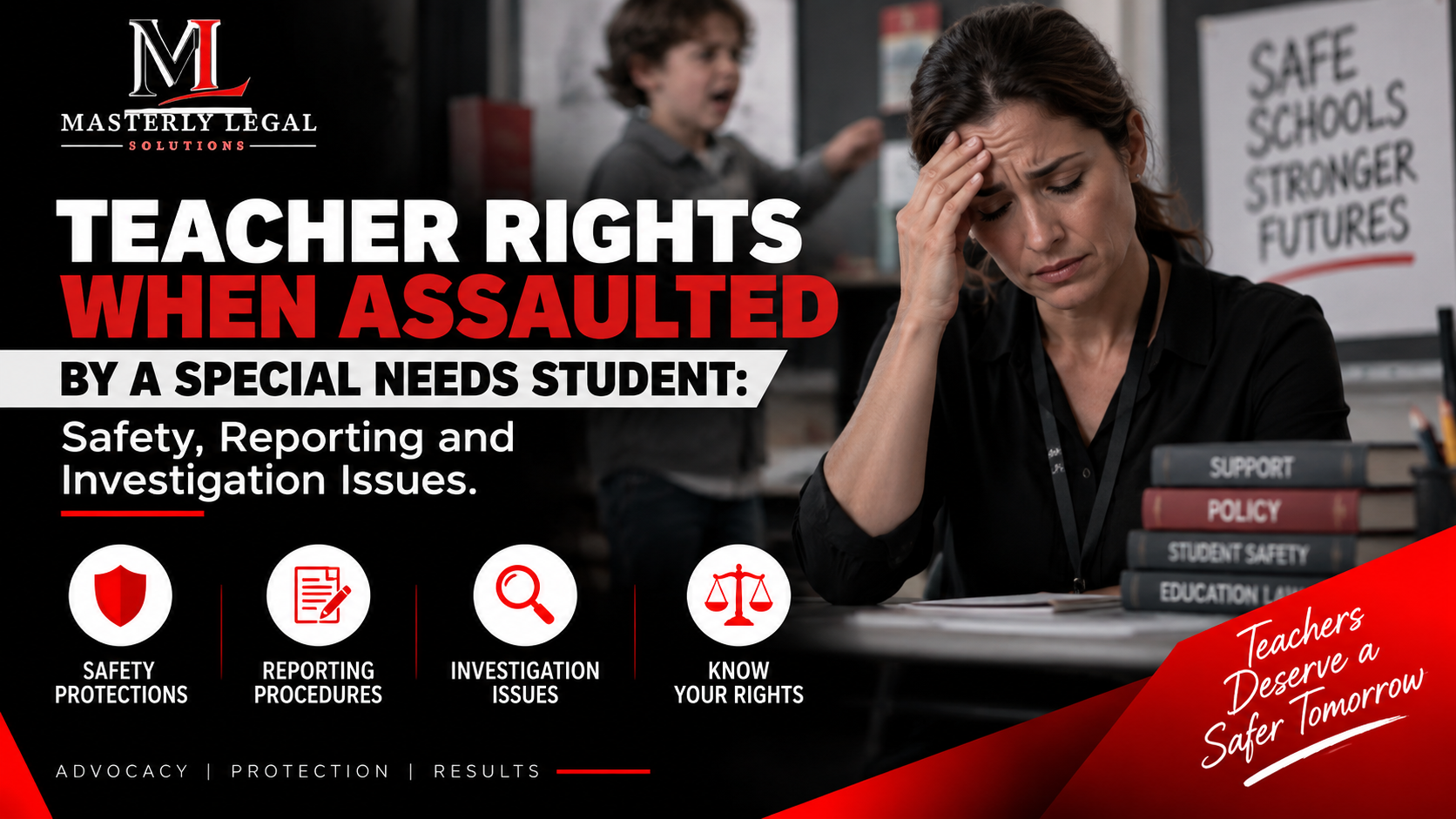
Teacher Rights When Assaulted by a Special Needs Student: Safety, Reporting and Investigation Issues


Looking for Legal & Business Solutions? Contact Us Now
Fill in the form or call us to set up a meeting





