How CPS Uses Compliance Reports to Shape Investigation Outcomes
When families hear the words “CPS investigation,” most people immediately think about interviews, home visits, and the fear of what might happen next. What many parents don’t realize is that the CPS process is also heavily shaped by paperwork—especially the written documents that follow the case from start to finish. One of the most influential documents is the compliance report, because it can shape how risk is perceived, how decisions are justified, and what the agency recommends.
At Masterly Legal Solutions, we know how stressful it is to feel like your family is being evaluated by strangers who are writing down every detail. Parents often feel like they’re being judged without context, and sometimes that feeling is accurate. A compliance report may be treated as a “neutral” summary, but the report’s content can influence decisions at every investigation stage, including whether the case escalates to court. If you are facing child protective services involvement, understanding how these reports work can help you protect your rights and your child’s safety.
This article breaks down how CPS uses compliance reporting, why it matters, and how legal representation can help families respond strategically. The goal is not to scare you—it’s to give you clarity, so you can act with confidence instead of panic.
What a Compliance Report Means in a CPS Case
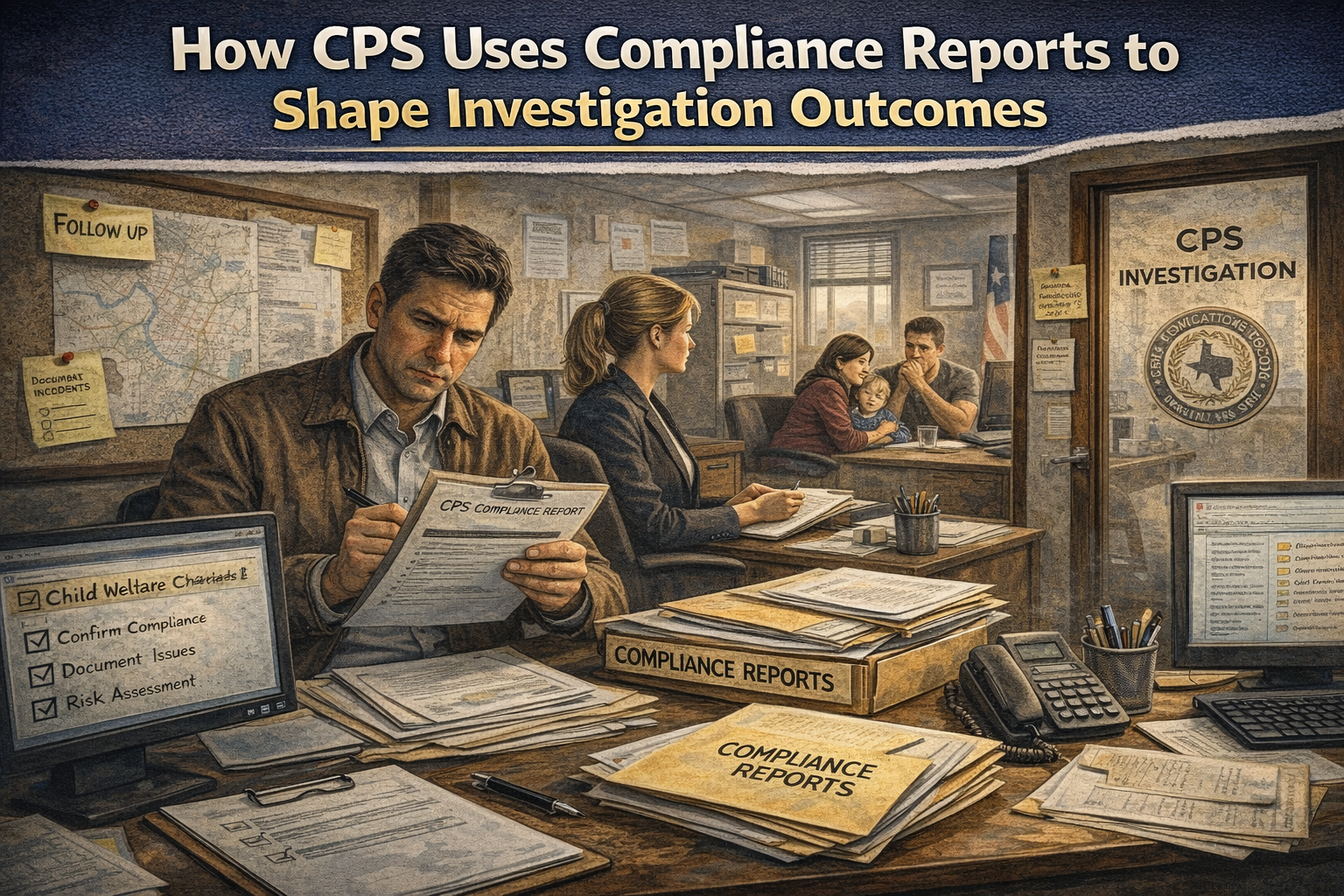
A compliance report is a written record that documents whether a family is meeting expectations during a CPS case. Those expectations can involve safety steps, participation in services, communication, and follow-through on requirements. CPS may use the report to show whether the family is cooperating and whether protective services should remain involved.
In many cases, the compliance report becomes a snapshot of the family’s situation. It can be referenced by supervisors, legal teams, and even the court. When the report is written carefully and accurately, it can help show progress. When it is incomplete or misleading, it can create long-term damage.
Why Child Protective Services Relies So Heavily on Written Reports
Child protective services handles high caseloads, strict timelines, and complex family situations. Because CPS workers cannot always be physically present, documentation becomes the system’s “memory.” The compliance report is often used to justify decisions, support recommendations, and explain actions taken.
The problem is that written reports do not always capture the full story. Tone, wording, and missing details can change how a family appears on paper. A report can create a narrative that follows the family, even if the reality is more nuanced. This is why parents should take the reporting process seriously from day one.
How Compliance Reports Can Influence the Entire CPS Process
A compliance report can influence whether CPS views a situation as improving or escalating. It can affect risk scoring, placement decisions, and whether the agency recommends court involvement. Even when a family is doing everything they can, the report can still frame the situation negatively if it is written through a strict or biased lens.
The cps process often depends on “documentation over discussion.” That means what is written may matter more than what you said in a stressful meeting. A report may also impact whether CPS recommends voluntary services or pushes toward more formal intervention. Understanding that reality helps parents respond strategically.
The Compliance Reporting Process: What Gets Documented
The compliance reporting process often includes data collection, interviews, and follow-up notes. CPS may document missed appointments, late paperwork, or incomplete service participation. It may also include observations about the child’s home, family interactions, and alleged safety risks.
This reporting process can feel intrusive, but it is how CPS builds a case record. The compliance team may also request documents from various departments and outside providers. When those records are compiled, they become part of a larger narrative about the family. That is why it is important to ensure accuracy early.
Reporting Process vs. Reality: Why Families Feel Misunderstood
The reporting process is not always built to reflect real life. Families may be juggling work, transportation, childcare, and emotional stress while trying to comply with CPS expectations. But the compliance report may not reflect those realities, especially if the report focuses only on what wasn’t completed.
Even small issues can be framed as “non compliance issues” if the report is written without context. For example, missing a meeting because of a sick child may be recorded as “failed to cooperate.” A missed call might be described as “unresponsive.” These details can snowball if they are not addressed.
The Role of Risk Assessment in CPS Decision-Making
CPS uses risk assessment tools to determine how serious a case is and what level of intervention is needed. These assessments may consider the type of allegation, family history, and risk factors like instability or unsafe conditions. The compliance report often supports the risk assessment by documenting behavior and follow-through.
Risk assessment is not just about what happened in the past—it’s about what CPS believes could happen next. That is why compliance status matters so much. If CPS believes the risk is increasing, the agency may escalate the case quickly. Parents should understand that risk scoring can change based on documentation.
Risk Factors CPS May Highlight in a Compliance Report
Risk factors can include concerns about supervision, substance use, unsafe housing, or repeated allegations. They can also include references to criminal history or prior CPS involvement. Even if those issues are not current, they may still appear in the report and influence how the case is viewed.
A compliance report may also include subjective statements that suggest risk, such as “parent lacks insight” or “home environment appears unstable.” Those phrases can be damaging because they sound official. Families should take these descriptions seriously and address them with legal counsel when needed.
Compliance Status and How CPS Labels Family Progress
A family’s compliance status is often described as cooperative, partially compliant, or noncompliant. That label can influence the next steps in the case. A positive compliance status can support closure or reduced involvement. A negative compliance status can support escalation.
Parents should understand that compliance status is not always fair. It can be shaped by scheduling issues, misunderstandings, or miscommunication. Once a negative label appears in the record, it can be difficult to remove. That is why early action matters.
The Organization’s Compliance Status: CPS as a System
When people hear “compliance,” they often think about businesses and regulations. But CPS is also an organization that tracks its own compliance posture. The organization's compliance status may involve meeting regulatory requirements, reporting deadlines, and documenting actions taken.
CPS documentation is designed to show that protective services followed procedures. That can include internal controls, timelines, and records of decisions. In some cases, the system’s focus on regulatory adherence can feel more important than the family’s reality. Parents should understand that documentation is not just about you—it’s also about the agency protecting itself.
Compliance Team and Compliance Managers in CPS Workflows
Many CPS offices rely on a compliance team, supervisors, and compliance managers to review documentation quality and case progress. These roles help ensure the agency meets regulatory requirements and internal standards. They may also evaluate whether the reporting process is consistent.
This means multiple people may rely on the compliance report without meeting the family. Decisions may be influenced by paperwork alone. That is why families must treat the report like a serious legal document. A well-written report can help you, but a poorly written one can hurt you.
Effective Compliance Reporting Can Change Case Outcomes
Effective compliance reporting should be accurate, detailed, and balanced. It should include both progress and concerns, not just negative points. When reporting is fair, it can help CPS make better decisions and reduce unnecessary escalation. It can also support the child’s safety without punishing families unfairly.
But when reporting is biased or incomplete, it can create a distorted picture. Families may feel trapped in a system that doesn’t listen. This is where legal representation becomes important. An attorney can help you respond to inaccuracies and protect your parental rights.
Detailed Compliance Reports and the Power of Small Details
Detailed compliance reports often include dates, times, missed appointments, and observations. Those details can be used to support recommendations like continued monitoring, safety plans, or court involvement. Even minor errors can become major issues when repeated in official records.
A compliance report may also document who said what, which can become important later. If a CPS worker misquotes you or misunderstands your words, that can change the narrative. Families should keep their own records of communications and services completed. Your documentation can help protect you.
Comprehensive Compliance Report: What CPS Uses to Justify Decisions
A comprehensive compliance report often includes an overview of the case history, risk assessment findings, and compliance status updates. It may also include recommendations for next steps. This report can be shared with relevant stakeholders, including supervisors and legal teams. In some cases, it may be referenced in court filings.
Because of its influence, the comprehensive report should be accurate. Parents should not assume the report is correct simply because it looks official. If you believe the report is wrong, you should act quickly. Silence can be interpreted as acceptance.
Audit Findings and Regulatory Adherence in CPS Documentation
CPS agencies are often monitored by regulatory bodies and internal auditors. Audit findings may influence how CPS documents cases and how strict the compliance processes become. The agency may emphasize documentation to show regulatory adherence and avoid criticism.
This can lead to a “paper-first” culture where documentation becomes the priority. Families may feel like they are being processed rather than helped. Understanding this helps you respond more strategically. You can focus on what CPS will document and how it will be interpreted.
Regulatory Requirements and Why CPS Documentation Is So Strict
CPS must follow regulatory requirements related to child safety, timelines, and reporting obligations. These requirements can include safety planning, service referrals, and documentation of actions taken. The compliance reporting process helps CPS show that these requirements were met.
But strict documentation can also create rigidity. Families may feel like CPS does not see them as individuals. Instead, they feel like a checklist. That is why legal counsel can be important—an attorney can help ensure your situation is presented accurately, not just as a compliance score.
Data Collection: How CPS Builds the Case Record
CPS relies on data collection to build case records. This can include interviews, school records, medical records, and provider reports. It may also include notes from CPS workers about visits and observations. This data becomes part of the compliance report and influences risk assessment.
Data collection is not always neutral. What is collected, what is excluded, and how it is interpreted can shape outcomes. Families should be aware that CPS may rely on data sources that do not tell the full story. This is why parents should keep copies of documents and service completion records.
Relevant Data vs. Assumptions
A strong compliance report should be based on relevant data, not assumptions. But in real cases, assumptions can slip into the narrative. A CPS worker may interpret stress as “anger,” or poverty as “neglect.” These interpretations can be unfair and damaging.
Parents should understand that the report’s content can include subjective opinions. Those opinions can influence decisions even when they are not supported by facts. Legal representation helps challenge assumptions and refocus the record on relevant data.
Data Privacy Reports and Protecting Sensitive Information
CPS records often include highly personal information about families. That can include medical history, mental health details, and allegations of abuse or neglect. In modern systems, CPS may also generate data privacy reports and track access to sensitive records. This is tied to data protection laws and internal controls.
Parents have a right to be concerned about protecting sensitive information. Data breaches and unauthorized access can cause harm beyond the CPS case itself.
Families should understand how data privacy works and what protections may exist. Legal counsel can help address privacy concerns and requests for records.
Data Protection Laws and Data Security Concerns
Data protection laws exist to protect private information, but CPS systems can still be vulnerable. Data security matters because CPS records can contain allegations, family history, and sensitive details about a child’s home. If data is mishandled, it can cause long-term damage.
Families should be aware of data breaches and privacy risks. Even accidental disclosure can harm a family’s reputation. Protecting sensitive information should be part of risk management. A careful legal strategy can help families request clarity about how records are handled.
Reduce Human Error in Compliance Reporting
Human error is a real problem in CPS cases. A missed note, a wrong date, or an incorrect statement can change the case trajectory. A compliance report may contain errors that are repeated across documents. That repetition can make the error look like truth.
CPS systems aim to reduce human error through templates and internal controls. But mistakes still happen, especially when CPS workers are overloaded. Families should not assume errors will be corrected automatically. If something is wrong, it must be addressed.
Child Protective Investigations and the Role of Safety Plans
In child protective investigations, CPS may require a safety plan to reduce perceived risk. A safety plan may include supervision rules, contact limitations, or service participation. The compliance report will often document whether the safety plan is being followed. This can heavily influence compliance status.
Safety plans can feel intrusive, but they are often used as a tool to avoid immediate removal. Parents should take safety plans seriously and comply when possible. But they should also understand the legal implications. A safety plan can become evidence in court if the case escalates.
Child’s Safety and the CPS Perspective
CPS frames decisions around the child's safety, and that is the central justification for protective services involvement. The agency may argue that strict documentation is necessary to ensure accountability. In many cases, CPS workers believe they are acting in the child’s best interest.
However, families may feel that CPS overlooks context and progress. A compliance report may focus on flaws rather than improvement. Parents should understand that CPS is trained to prioritize risk prevention. That can create a bias toward caution, even when the family is safe.
Abuse or Neglect Allegations and How Reports Frame Them
Allegations of abuse or neglect can range from serious harm to misunderstandings. CPS documentation often categorizes allegations in ways that sound severe. Even when the allegation is unproven, the report may still describe it in official language. That language can shape investigation outcomes.
Abuse or neglect allegations may involve physical concerns, supervision issues, or emotional harm. They may also involve child abuse allegations or claims of sexual abuse, which can escalate quickly. Families need to respond carefully, because the report can shape how CPS and the court view the situation.
Alleged Perpetrator Language and Why It Matters
When CPS uses the term alleged perpetrator, it can create immediate stigma. That label may appear in a compliance report even before any finding is made. The alleged perpetrator may be a parent, a caregiver, or another household member. That designation can affect safety planning and placement decisions.
Parents should understand that “alleged” does not mean proven. But the label still influences perception. This is why legal representation is critical in serious cases. An attorney can help challenge inaccurate labels and protect parental rights.
Criminal History and How It Influences Risk Scoring
A reference to criminal history can increase perceived risk, even if the history is old or unrelated. CPS may document criminal history as part of data collection and risk assessment. This can shape the compliance report and compliance status.
Families should not assume criminal history automatically means removal or court action. Context matters. Rehabilitation, time passed, and current behavior all matter. Legal counsel can help present the full picture and reduce unfair assumptions.
Foster Care Decisions and Documentation Pressure
When CPS believes risk is high, foster care placement may be considered. Foster care decisions are often influenced by documentation, including the compliance report. If the report suggests ongoing risk or non compliance issues, the agency may argue removal is necessary. This is one of the most frightening outcomes for families.
Parents should understand that foster care is not always inevitable. A strong safety plan, clear compliance efforts, and legal representation can change the outcome. The key is acting early, before the narrative becomes fixed.
Voluntary Services and How CPS Uses Them
CPS may offer voluntary services as an alternative to court involvement. These services may include counseling, parenting classes, or resource referrals. The compliance report will often document whether the family participated. Participation can improve compliance status and reduce risk.
However, voluntary services can still feel mandatory. Families may fear that refusal will be used against them. This is why it’s important to understand your rights and options. Legal counsel can help you evaluate what to accept and what to challenge.
Family and Community Resources as Protective Factors
CPS may look at family and community resources as protective factors that reduce risk. Strong family support, stable housing, and access to community resources can help show the child’s home is safe. These details should be documented in the compliance report. If they are not, the report may appear more negative than reality.
Families should communicate clearly about available support. If a trusted relative can help, that matters. If you have stable childcare or a safe home environment, that matters too. These facts can influence investigation outcomes.
Community Resources and Why They Should Be Documented
Community resources like counseling centers, parenting support, and faith-based services can help families demonstrate stability. CPS may recommend these services, but families may already be using them. If so, it should be documented. This can strengthen compliance status and show proactive behavior.
Documentation is not about bragging. It is about ensuring the record reflects reality. If the compliance report ignores your progress, you may be unfairly treated as noncompliant. Legal representation can help ensure the record includes your positive steps.
Responsible Parties and Stakeholder Influence
CPS often identifies responsible parties in a case, which may include parents, caregivers, or other adults in the child’s home. The compliance report may describe who is responsible for meeting compliance obligations. It may also be shared with relevant stakeholders, including supervisors and legal teams. These stakeholders may never meet you, but they may still influence decisions.
This is why compliance reports matter so much. They are not just notes—they are decision tools. When the report is incomplete, responsible parties may be blamed unfairly. Families should understand that they are being evaluated through documentation.
Ensuring Accountability in CPS Reporting
CPS systems emphasize ensuring accountability through documentation and internal controls. This is part of risk management and regulatory adherence. In theory, it helps protect children and prevent mistakes. In reality, it can also create rigidity and over-documentation that harms families.
Accountability should apply to CPS too. Families deserve accurate reporting and fair treatment. If a compliance report is wrong, accountability means correcting it. Legal counsel can help families push back respectfully and effectively.
Business Operations, Compliance Posture, and CPS Systems
CPS agencies function like large organizations with structured business operations. They track compliance posture, reporting deadlines, and regulatory requirements. Their systems may resemble corporate compliance programs, including compliance initiatives and audit-style reviews. The compliance report becomes part of this structure.
This is why the language can feel cold and formal. Families may feel reduced to a risk score. Understanding that CPS operates with risk management frameworks helps families respond strategically. You can focus on what CPS needs to document to close the case safely.
Financial Compliance Reports and Operational Compliance Reports
In broader compliance systems, organizations use financial compliance reports and operational compliance reports to track adherence and risk. CPS case reporting is different, but the concept is similar: documentation is used to measure compliance posture and justify decisions. The compliance report becomes the operational record of the family’s progress.
This is why compliance reporting can feel like a performance review. The system rewards documented compliance efforts and penalizes gaps. Families should not ignore paperwork requests or service participation records. Those records shape the narrative.
Compliance Program Thinking and Risk Management Strategy
CPS documentation reflects a compliance program mindset. The agency tracks compliance processes, compliance posture, and whether regulatory requirements were met. This mindset is tied to risk management and accountability. It also shapes how CPS workers write and interpret reports.
Parents should understand that compliance reporting is an ongoing process, not a one-time event. Every interaction can be documented. Every missed appointment can be recorded. That is why families should treat the process like a legal matter from the start.
Compliance Efforts and How They Should Be Presented
Your compliance efforts matter, but they must be documented clearly. Completing services, following safety plans, and cooperating with CPS should be reflected in the compliance report. If CPS does not document it, it may not “count” in the official narrative. This is frustrating, but it is the reality of the system.
Families should keep their own records. Save certificates, appointment confirmations, and provider letters. These documents can provide valuable insights and support your case. Legal representation can help you organize and present this information effectively.
Compliance Obligations and Compliance Processes for Families
Families often feel overwhelmed by compliance obligations. CPS may require classes, evaluations, home conditions, or contact restrictions. These obligations can feel endless, especially when parents are working and caring for children. But compliance processes must be taken seriously.
Parents should ask for clarity about expectations. If something is unclear, request it in writing. Misunderstandings can become non compliance issues in the report. The clearer the expectations, the safer the family’s position becomes.
Report’s Content and the Power of Language
The report’s content matters because it shapes perception. Words like “uncooperative,” “unsafe,” or “minimizing” can create a negative impression. Even if those words are subjective, they can influence supervisors and courts. Parents should understand that language can be as powerful as facts.
This is why legal counsel can be so helpful. An attorney can identify harmful language and respond strategically. The goal is not to fight CPS—it is to protect your family and ensure the record is accurate.
Court Order Risks and When Cases Escalate
If CPS believes risk remains high, the agency may seek a court order. Court involvement can change everything. It can lead to supervised visitation, temporary placement, or long-term restrictions. The compliance report often becomes a key exhibit in court proceedings.
Families should never assume court escalation will not happen. If you are at risk of court involvement, legal representation becomes urgent. An attorney can help you respond before the case reaches that point. Early action can prevent long-term consequences.
Legal Representation and Why It Matters Early
Legal representation helps families navigate the CPS process with clarity. It helps ensure compliance reports are accurate, safety plans are reasonable, and parental rights are protected. Legal representation also helps families avoid mistakes that can be misinterpreted. When families have counsel, they often feel less trapped.
Legal representation can also help address false assumptions and incomplete reporting. An attorney can request records, respond to allegations, and protect the family’s position. This is not about creating conflict—it is about protecting your child and your future.
Legal Counsel and Protecting Parental Rights
Parents have parental rights, even during CPS involvement. Those rights include fair process, accurate documentation, and the ability to challenge decisions. Legal counsel helps ensure those rights are respected. Without counsel, families may feel pressured into agreements they don’t fully understand.
Legal counsel also helps families communicate effectively. What you say matters, and how it is documented matters even more. Counsel can help you stay calm and strategic. That can protect your well being and your child’s safety.
Ensuring Accuracy and Protecting Sensitive Information
Families should prioritize ensure accuracy in every document and communication. Errors can become permanent if not corrected early. Keep your own records and review what you can. If something is wrong, address it quickly through proper channels.
Families should also focus on protecting sensitive information. CPS records may include private details that should not be shared unnecessarily. Protecting sensitive information is part of data protection and risk management. A careful legal strategy helps keep your family’s privacy protected.
Contact Masterly Legal Solutions for a Free Consultation
If you’re involved with child protective services and you’re worried about how a compliance report is shaping your case, you are not overreacting. Compliance reports often influence risk assessment, compliance status, safety plans, and whether CPS seeks a court order. When the report’s content is incomplete or unfair, families can feel powerless—even when they are doing everything possible to protect their child’s safety.
Masterly Legal Solutions provides legal representation for families navigating CPS investigations and protective services involvement. We help parents understand the compliance reporting process, respond to allegations of abuse or neglect, and challenge non compliance issues that may be based on human error or missing context. Whether you’re facing concerns about foster care, safety planning, or inaccurate documentation, our team can provide guidance and help you protect your parental rights.
Call (972) 236-5051 today to contact Masterly Legal Solutions for a free consultation about your compliance report and your CPS case.
Disclaimer: This article is for general educational purposes only and does not constitute legal advice or legal guidance. Reading this article does not create an attorney-client relationship. For advice regarding your specific situation, consult a qualified attorney.
Teacher Rights When Assaulted by a Special Needs Student: Safety, Reporting and Investigation Issues

Looking for Legal & Business Solutions? Contact Us Now
Fill in the form or call us to set up a meeting