

How Quickly CPS Safety Concerns Turn Into Formal Cases in Dallas
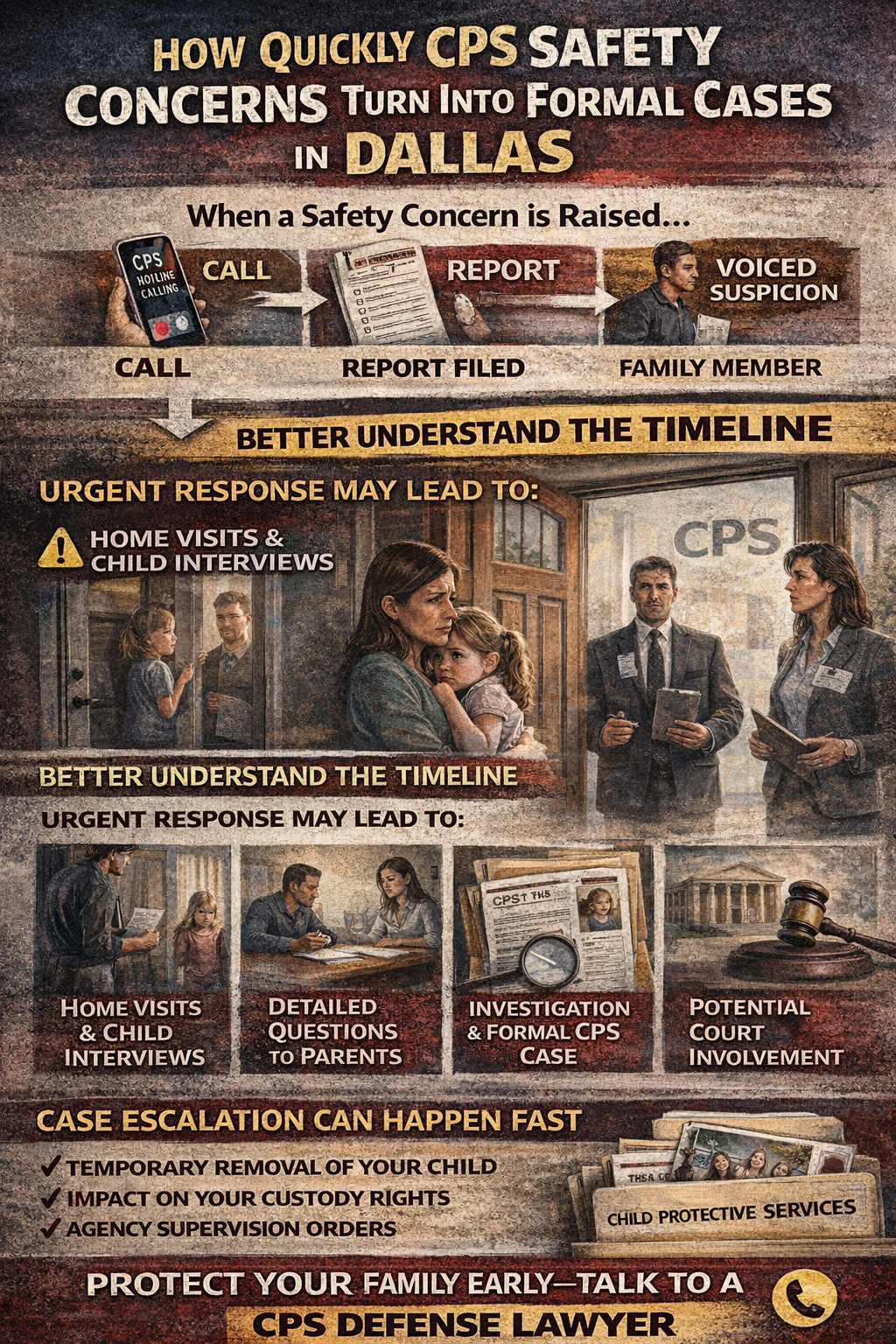
The moment someone raises a safety concern about a child, life can shift from “normal” to urgent in a matter of hours. A worried neighbor makes a call, a school files a report, or a family member voices suspicions, and suddenly the situation feels out of your control. In Dallas, these concerns can move fast because agencies are trained to respond when a child’s safety may be at risk. Families often feel stunned by how quickly a phone call turns into interviews, paperwork, and pressure.
At Masterly Legal Solutions, we regularly speak with parents who never expected to deal with child protective services. Many were trying their best, handling a tough season, or dealing with misunderstandings that escalated. When the process begins, it can feel like the system already made up its mind. Knowing what happens next—and how quickly things can become a formal case—helps you protect your family and avoid costly mistakes.
What “Safety Concerns” Mean in Real Life
Safety concerns can involve a wide range of situations, from allegations of child abuse to claims of neglect or unsafe living conditions. Sometimes the concern is serious and immediate, and sometimes it’s based on incomplete information. Either way, the agency’s job is to assess risk to the child and decide what steps are necessary. That assessment can trigger an investigation even if no one has been arrested and no court paperwork exists yet.
Many parents assume a report must be proven true before anything happens. In reality, reports can lead to action before facts are fully verified. If the agency believes there is an immediate risk, the response can be rapid. That speed is one reason families should take every report seriously.
The Role of Child Protective Services in Texas
In TX, the state’s child welfare system falls under the Texas Department responsible for family and protective services. You may hear people use different names for the same system, including child protective services cps or simply cps. The core purpose is to investigate allegations of abuse and neglect, and to determine whether intervention is needed. That can include services to support the family, safety plans, or, in extreme situations, removal.
Because the agency’s mission is focused on the child, it may move quickly even when parents feel the situation is being misunderstood. The process is not designed to wait until everyone feels ready. That urgency can be unsettling, but it also means your response matters from the very beginning.
How Reports Start the Process
A case often begins with reports made by a school employee, medical provider, neighbor, or someone within the family. These reports may go directly to the Texas Abuse Hotline, which is a common entry point for allegations. Some reports are detailed and specific, while others are vague. Even if the report is short, the agency may still open a file to evaluate risk.
Once the report is logged, the department decides whether the allegation meets the threshold for action. If it does, the agency may begin an investigation quickly, sometimes the same day. Families are often surprised that the first contact happens without warning.
Why Dallas Cases Can Move So Fast
Dallas is a major metro area with high call volume and structured response protocols. When the agency flags urgent or emergency situations, it may dispatch a worker rapidly. That response can feel sudden, but it follows internal triage procedures. The faster the agency believes a risk exists, the quicker it may attempt contact with the parents and the child.
In practice, speed often depends on the nature of the allegation and the perceived level of harm. Claims involving very young children, injuries, or alleged sexual abuse tend to move with heightened urgency. Cases involving repeated reports may also move faster due to pattern concerns. Even when the allegation is wrong, the timeline may still be aggressive.
When a Concern Becomes a CPS Investigation
A formal cps investigation generally begins once the agency assigns a worker and initiates contact or records investigative steps. That can include phone calls, requests for information, and attempts to schedule a visit. You may feel like you’re just answering questions, but the file may already be building a narrative. This is one reason it is risky to treat early contact casually.
Investigations can be stressful because they often start before you fully understand the allegations. The caseworker may ask questions that feel accusatory or overly broad. A parent may want to explain everything immediately, but rushing can create confusion or unintended admissions. A measured, prepared approach can reduce risk.
Who Shows Up and What They Can Ask
Most families first encounter a cps caseworker who is assigned to gather facts and assess safety. This person may request interviews, documentation, and access to the home. They may also speak with teachers, doctors, or other people involved in the child’s daily life. The goal is to understand whether abuse or neglect is happening and whether intervention is needed.
The caseworker may ask to speak with the child privately. They may ask about discipline, supervision, school attendance, medical care, and household conditions. They may also ask about the adults living in the home and who has access to the child. When you understand the process, you can better protect your rights while still addressing safety concerns.
Home Visits and What They Signal
A home visit is one of the most stressful parts of the process for many parents. It can feel like an inspection, even when the concern is minor. The agency may look for hazards, sleeping arrangements, food access, and signs of unsafe conditions. The visit can also include discussions about who lives in the home and how the family functions day-to-day.
A home visit does not automatically mean your child will be removed. However, it does indicate the agency is actively assessing risk. The condition of the home and how you respond can influence the next steps. Being calm, organized, and aware of your legal options is critical.
The Difference Between Support and Escalation
Not every case is handled the same way. In some situations, the agency offers services designed to help the family stabilize, such as parenting classes or counseling. In other situations, the agency moves toward more serious intervention, including safety plans or court action. The line between “support” and “escalation” can be thin, and it depends on how risk is evaluated.
Families should understand that accepting voluntary services may still create a record. That record can later influence employment background checks, custody disputes, or future agency interactions. This does not mean you should refuse help automatically. It means you should understand the consequences before agreeing to anything.
Emergency Situations and Immediate Actions
Some cases are treated as emergency situations when the agency believes serious harm may occur. These may include allegations involving severe physical injury, threats, or unsafe supervision. If the agency believes there is an immediate risk, it may seek fast intervention. In certain urgent contexts, the agency may work with law enforcement or pursue emergency legal steps.
Emergency interventions can be terrifying for a family because the timeline is compressed. Parents may have little time to gather documents, contact supporters, or understand what is happening. That is exactly why early legal advice can be so important. When time is short, preparation protects you.
Court Orders and When the Court Gets Involved
Not every case goes to court, but some do. If the agency believes it needs authority beyond voluntary cooperation, it may seek a court order. That can involve orders related to access, evaluations, or placement. When the court process starts, the situation becomes more formal and the stakes rise.
Court involvement can lead to hearings, deadlines, and legal requirements that are difficult to navigate alone. A family may feel overwhelmed by the paperwork and the pace. Understanding what the court can do—and what your rights are—helps you make better decisions. Legal representation can be especially valuable once court involvement begins.
What “Formal Case” Means for Families
A formal case is more than a stressful interaction with an agency. It can become an official matter involving ongoing oversight, recorded findings, and required steps. It may include safety plans, monitored services, or referrals to other programs. It may also create long-term consequences, even if the family believes the allegations were exaggerated.
A formal case can affect a parent’s confidence, stability, and reputation. It can also affect the child emotionally, especially if interviews and monitoring continue. The family’s daily routine may change quickly. Knowing how fast the system can formalize concerns helps families respond before the situation escalates.
How “Abuse” and “Neglect” Are Evaluated
The term abuse is broad and can include physical injury, emotional harm, or sexual abuse. The term neglect can include lack of supervision, unsafe conditions, or failure to provide basic needs. These definitions are guided by Texas law and agency policies, but they can still be applied differently depending on circumstances. That variability is one reason families sometimes feel the process is unfair.
Even when a parent believes they acted reasonably, the agency may view the same decision as risky. A misunderstanding can grow when communication breaks down. The agency may also consider patterns, not just single events. What seems like an isolated issue can be treated as a bigger concern if there are prior reports.
When Safety Plans Become Pressure
Safety plans are often presented as a way to keep the child safe without immediate removal. On paper, that sounds reasonable. In practice, safety plans can feel like forced agreements that restrict the parent’s choices. Some plans require a certain adult to leave the home or require supervision rules that disrupt work and family life.
A safety plan can also become evidence in later proceedings. If you sign a plan without understanding it, you may unintentionally admit facts you disagree with. This is where legal support can protect you. You can take safety seriously without signing away your rights.
Foster Care and the Fear of Removal
The possibility of foster care is what many families fear most. Removal can occur when the agency believes the child’s safety cannot be protected in the home. It can also happen when the agency believes serious harm is likely or has occurred. Even when removal does not happen, the fear can be emotionally exhausting.
Families should know that removal is not supposed to be the default. However, it can become more likely when communication breaks down or when the agency believes the parent is not cooperating. Cooperation does not mean giving up rights. It means being strategic, informed, and prepared.
What Parents Should Expect From Interviews
Interviews are a standard part of an investigation. The agency may speak with the parents, the child, and other people involved in the child’s life. These interviews may cover discipline methods, household routines, and supervision. They may also cover personal relationships, mental health concerns, and stressors. For many families, these questions feel intrusive.
It is natural to want to defend yourself in detail. But long, emotional explanations can create confusion. Clear, calm, and consistent communication is safer. Speaking with an attorney early can help you prepare and avoid missteps.
The Importance of Documentation
Documentation can shape the outcome of a case. That includes school attendance records, medical records, text messages, and proof of stable living arrangements. It can also include evidence of support systems, such as involved relatives or community resources. A parent who is organized can often reduce concerns more effectively than a parent who is overwhelmed and reactive.
Documentation can also protect you if allegations are exaggerated. If the agency claims something happened and you have records showing otherwise, that matters. In many cases, the facts are not as clear as the report made them sound. Evidence helps bring clarity.
When Allegations Involve Disabilities or Special Needs
Some cases involve children with disabilities or medical complexities. These situations can be misunderstood by people unfamiliar with the child’s needs. A bruising issue, a behavioral outburst, or a medical condition can trigger suspicion. Families may feel judged for issues that are not actually abuse.
If the agency does not understand the child’s condition, it may interpret normal challenges as neglect. That is why education and documentation are important. Medical documentation and expert support can make a difference. Legal guidance can help ensure the agency considers the full context.
How Personal Life Becomes Part of the File
Many families are shocked by how much the agency may ask about personal relationships. Your personal history, living arrangements, and support network may all be examined. The agency may ask who lives in the home and who has access to the child. It may ask about prior incidents, past relationships, or stressors.
This can feel humiliating, but it is part of how risk is assessed. Still, families have rights, and the questions are not always unlimited. Understanding what is relevant helps you respond appropriately. A knowledgeable advocate can help you draw boundaries while still addressing safety concerns.
The Role of the Texas Department of Family and Protective Services
In TX, the Texas Department of Family and the broader department of family structure oversee protective investigations and ongoing case management. You may hear references to the Texas Department of Family and family and protective services interchangeably. The names can be confusing, but the practical effect is the same: the agency investigates, documents, and determines next steps. This system is large, procedural, and often fast-moving.
Because the system is standardized, families can feel like they are being processed instead of heard. That feeling is common, especially when the caseworker has a heavy caseload. But the system still makes decisions based on what is in the file. Your response helps shape what goes into that file.
Protective Services Are Not Only About Removal
The phrase protective services can sound like it only refers to removal or punishment. In reality, it can include a range of support programs aimed at preventing harm. That might include referrals, counseling, or parenting resources. It can also include monitoring and compliance requirements that feel strict.
The key is that protective services decisions are often driven by risk level and documented concerns. If the agency views the situation as higher risk, its response becomes more intense. That intensity can feel like enforcement rather than assistance. Understanding the agency’s lens helps families respond more effectively.
Why “Cooperation” Needs to Be Strategic
Families are often told to cooperate, but that word can be misleading. Cooperation does not mean agreeing with everything. It does not mean signing every paper or answering every question immediately. It means being respectful, organized, and thoughtful about how you engage.
Some parents overexplain because they want to be understood. Others refuse to speak because they feel attacked. Both extremes can create problems. A balanced approach is usually best. Speaking with an attorney can help you find that balance.
How Quickly a Case Can Escalate After a Hotline Report
A call to the Texas Abuse Hotline can trigger action quickly, especially in urgent scenarios. If the report alleges serious injury, a weapon, or a lack of supervision, the agency may move immediately. If the report suggests immediate danger, response time can shrink dramatically. In some cases, the first contact happens before a parent even realizes a report was made.
This rapid pace is why families should not delay once they learn about an allegation. Even if you believe the report is false, the system still moves. The agency’s priority is safety, and it may act before you feel ready. Early legal support can help you respond with clarity.
When Serious Harm Is Alleged
Claims involving serious harm change everything. Even if the facts are disputed, the agency may treat the case as high priority. The agency may seek medical records, photograph injuries, or involve additional officials. It may also increase the intensity of interviews and monitoring.
Parents often feel accused and panicked in these situations. But panic can lead to mistakes. The best approach is to remain calm, gather documentation, and seek advice. Protecting the child and protecting your rights can happen at the same time.
Physical Harm Allegations and the Need for Context
Allegations of physical harm can arise from injuries that have innocent explanations. Kids fall, sports injuries happen, and accidents occur. Still, the agency may treat visible injuries as red flags. Context matters, and documentation matters. Medical records can help clarify what occurred.
A parent should not assume the agency will interpret an injury fairly without evidence. If you have already sought medical care, that can support your credibility. If you did not, the agency may ask why. Understanding how the agency thinks helps you respond.
The Importance of Child’s Safety Language
During an investigation, you may hear repeated references to the child’s safety. This phrase is central to the agency’s mission. It also shapes decisions about home visits, safety plans, and follow-up. If the agency believes safety is uncertain, it may increase its involvement.
Parents can help by demonstrating safe routines, supervision plans, and stable support. Showing that you take safety seriously can reduce concerns. But you should still be careful about assumptions and admissions. Professional guidance can help you communicate effectively.
How Job and Pay Issues Can Surface
Many parents in Dallas worry about losing their job when a case starts. If a parent’s work involves children, healthcare, or licensing, the fear can be intense. Pay and scheduling changes can also happen when the family is forced into meetings or supervision requirements. Some parents lose overtime opportunities or miss work hours due to appointments.
When income is disrupted, the family’s stability can suffer. Stability is often a factor the agency considers. That creates a stressful cycle. Getting organized and supported early helps protect your household and reduce risk.
Work Hours, Paid Time, and the Scheduling Trap
Investigations can require meetings during business hours, which can strain families. Parents may burn through paid time or use unpaid time off to attend appointments. Some are expected to be available with short notice. If you have limited leave, that pressure can become severe. It also affects childcare, transportation, and job expectations.
These logistics matter because they affect your ability to comply. Families should plan proactively and document scheduling conflicts. You should not let logistics become the reason the agency claims you are not cooperating. Support and planning can prevent misunderstandings.
The Caseworker’s Caseload and What It Means for You
A caseworker may be responsible for many families at once. That can affect communication and speed. Sometimes families receive rapid contact, and sometimes they experience delays. Delays can be frustrating because uncertainty is stressful. But delays also mean the case is still open and active.
Because of caseload pressure, misunderstandings can happen. Notes can be brief, and conclusions can be based on incomplete information. That is why written documentation and careful communication are important. You want your side recorded accurately.
How Families Become Involved Without Expecting It
Many families become involved after a third party report. A neighbor hears an argument, a teacher notices behavior, or a doctor asks questions. Sometimes the report is well-intended; other times it is motivated by conflict. Family disputes can also trigger reports, especially during custody disagreements. Once the report is made, the system moves.
Being involved does not mean guilt. It means the agency has a duty to assess. But families must respond thoughtfully. The way you respond influences what happens next.
What a CPS Case Can Mean Long-Term
A cps case can create long-term effects depending on outcomes and findings. Even if the case closes, records may exist. Those records can influence future investigations, custody disputes, or professional licensing issues. Families sometimes feel relief when a case ends, but later discover lingering impacts.
This is why early decisions matter. The first statements, the first documents, and the first visits shape the file. If the file is misleading, it can affect future interactions. Protecting the record is part of protecting your family.
How Protective Services Decisions Are Made
The agency typically evaluates risk based on allegations, interviews, observations, and documentation. It considers the child’s age, the severity of alleged abuse, and the family’s stability. It also considers whether the parent has support and whether safety measures can be implemented. These decisions can feel subjective, but they are guided by policy.
When the agency determines risk is high, it may recommend more intense services. When it believes risk is low, it may close the case or offer voluntary support. Either way, your documentation and communication matter. Being prepared helps you influence the outcome.
Resources That Can Help Families Stay Safe
Families often need practical support during an investigation. That might include counseling, parenting education, or community assistance. It may also include legal guidance to protect rights and prevent miscommunication. Using resources is not a sign of failure. It can be a sign that you are taking the matter seriously.
Resources can also help demonstrate stability. Stability is often a key factor in risk assessment. When families show they are proactive, it can help reduce concerns. The goal is to keep the child safe while preserving family integrity.
Why Hiring an Attorney Early Can Change the Tone
Many parents wait to contact an attorney until they feel the situation is “serious enough.” In reality, cases can become serious quickly, especially in urgent scenarios. Early support can help you respond calmly and avoid accidental admissions. It can also help you understand what is being requested and what your options are.
A lawyer can also help you prepare for interviews and visits. Preparation reduces stress and improves consistency. A clear strategy can prevent escalation. In many cases, early guidance helps families resolve cases faster and more favorably.
What to Expect From a Law Office Consultation
A good law office consultation should be focused, practical, and confidential. You should be able to discuss the allegations, your family situation, and the timeline. You should also receive a clear explanation of next steps and what to avoid. Even a single conversation can help you feel more grounded.
A consultation can also help you identify what evidence matters. It can help you organize documents and plan for future contact. When you are prepared, you are less likely to panic. That preparation can protect your family.
How Masterly Legal Solutions Supports Dallas Families
At Masterly Legal Solutions, we work with families who feel blindsided and worried about losing their child. We focus on helping clients understand the process, respond strategically, and protect their rights. Our experience includes guiding families through investigations, home visits, and agency communications. In addition to our child welfare advocacy, we also help clients with estate planning and trusts to secure their family's future. We know how quickly a concern can become a formal case.
We also understand how personal this is. When your family is being investigated, it does not feel like a simple administrative issue. It feels like your life is being evaluated. Our role is to bring clarity, calm, and advocacy during a stressful time.
Staying Prepared Without Panicking
It is possible to take this seriously without falling apart. Most parents love their child and want them to stay safe. The challenge is communicating that effectively in a system that moves fast and documents everything. Preparation helps you show stability, consistency, and care.
If you are being investigated, keep your focus on organization and clarity. Avoid arguments with the caseworker and avoid emotional overexplaining. Document what happens and seek advice early. Your child deserves calm leadership during a stressful season.
A Practical Checklist Before You Speak Further
If you have already been contacted, or you expect contact soon, these steps can help you protect your family:
- Gather school, medical, and childcare records related to the child
- Write a timeline of key events and dates of reports or contact
- Make a list of adults who regularly help with supervision or support
- Keep communication respectful and in writing when possible
- Avoid discussing the case widely, especially on social media
- Schedule legal guidance before signing any plans or admissions
This checklist is not about hiding information. It is about being prepared and reducing confusion. Clear facts protect you and your child.
When a Case Moves Toward the Courtroom
When a CPS matter escalates, families may find themselves preparing for the courtroom, where decisions can move quickly and the stakes feel overwhelming. Even if you believe the situation is based on misunderstandings, court procedures can be complex, and deadlines often leave little room for trial-and-error. This is one reason many parents choose to speak with a legal team early, so they don’t feel unprepared if the case shifts from an investigation into formal litigation.
High-Stakes Allegations Involving Death
In rare but extremely serious situations, an investigation can involve allegations connected to an injury or even a death, which can trigger immediate, intense action by the agency and outside authorities. These cases often involve heightened scrutiny, fast-moving decisions, and serious claims that can permanently affect a family’s future. When the facts are still unfolding, the right legal strategy matters from the very first interaction.
Understanding the CPS Division Handling Your Case
Many families don’t realize their case may be routed through a specific division within the agency depending on the nature of the allegations and the level of perceived risk. That internal structure can influence how quickly tasks are assigned, how information is reviewed, and how decisions are made. Knowing which division is involved helps families understand why requests may feel urgent and why the process may look different from what others have experienced.
Legal Expertise That Helps Families Feel Prepared
Legal expertise is not just about knowing statutes—it’s also about knowing how agencies work, how cases are documented, and how decisions are made behind the scenes. Families often feel calmer when they have someone who can explain the process clearly and anticipate what may happen next. With the right guidance, parents can respond thoughtfully instead of reacting under pressure.
Having Someone to Represent You Early
One of the biggest advantages of hiring counsel early is having someone to represent you during critical conversations and formal steps. When a caseworker asks for interviews, documentation, or agreements, parents can feel pressured to comply immediately. Having representation helps ensure you understand what you are agreeing to and helps prevent miscommunication that can later be used against you.
Why Every Page of Paperwork Matters
In many CPS cases, a single page of paperwork can shape the direction of the case because the file becomes the official record of what “happened.” Parents are often surprised that small details—like wording in a safety plan or notes from a visit—can carry long-term consequences. Reviewing paperwork carefully and responding strategically can help prevent misunderstandings from becoming permanent.
Why the Process Can Feel So Complex
Even families with stable homes can find the system complex because there are multiple moving parts, including policies, timelines, and agency protocols. Investigations may involve interviews, documents, referrals, and follow-ups that happen simultaneously. When families understand the process, they are less likely to be caught off guard by sudden requests or escalating steps.
Decades of Perspective Can Change the Outcome
When you are dealing with a high-stakes family matter, decades of experience can make a real difference in how a strategy is built and how risks are assessed. Experienced legal teams often recognize patterns in how cases escalate and can help families avoid common pitfalls. That perspective can be especially valuable when the situation is moving quickly and emotions are high.
How We Assist Families Through Every Step
At Masterly Legal Solutions, our goal is to assist families in making informed decisions during a stressful time, whether the matter remains at the investigation stage or moves toward court involvement. We help clients understand what the agency is asking, why it matters, and how to respond in a way that protects their rights and their family’s stability. Even one well-timed conversation can help reduce confusion and restore a sense of control.
Contact Masterly Legal Solutions for a Free Consultation
If you are dealing with a child protective services matter in cps dallas, you do not have to guess your way through the process. A safety concern can turn into a formal case quickly, especially when reports involve urgent claims, repeated allegations, or concerns about harm. The sooner you understand what the agency is doing and why, the more control you can regain.
At Masterly Legal Solutions, we offer a free consultation so you can ask questions, share details, and get a clear sense of next steps. We can help you understand your rights, prepare for the investigation process, and protect your family’s stability. Call (972) 236-5051 to schedule your free consultation and get answers before uncertainty turns into a decision made without you.
Disclaimer: This article is for educational and informational purposes only and does not constitute legal advice or legal guidance. Reading this article does not create an attorney-client relationship. For legal advice about your specific situation, contact Masterly Legal Solutions directly.



Teacher Rights When Assaulted by a Special Needs Student: Safety, Reporting and Investigation Issues



Looking for Legal & Business Solutions? Contact Us Now
Fill in the form or call us to set up a meeting