

How Parents Get Cornered Into Agreements That Hurt Their CPS Case
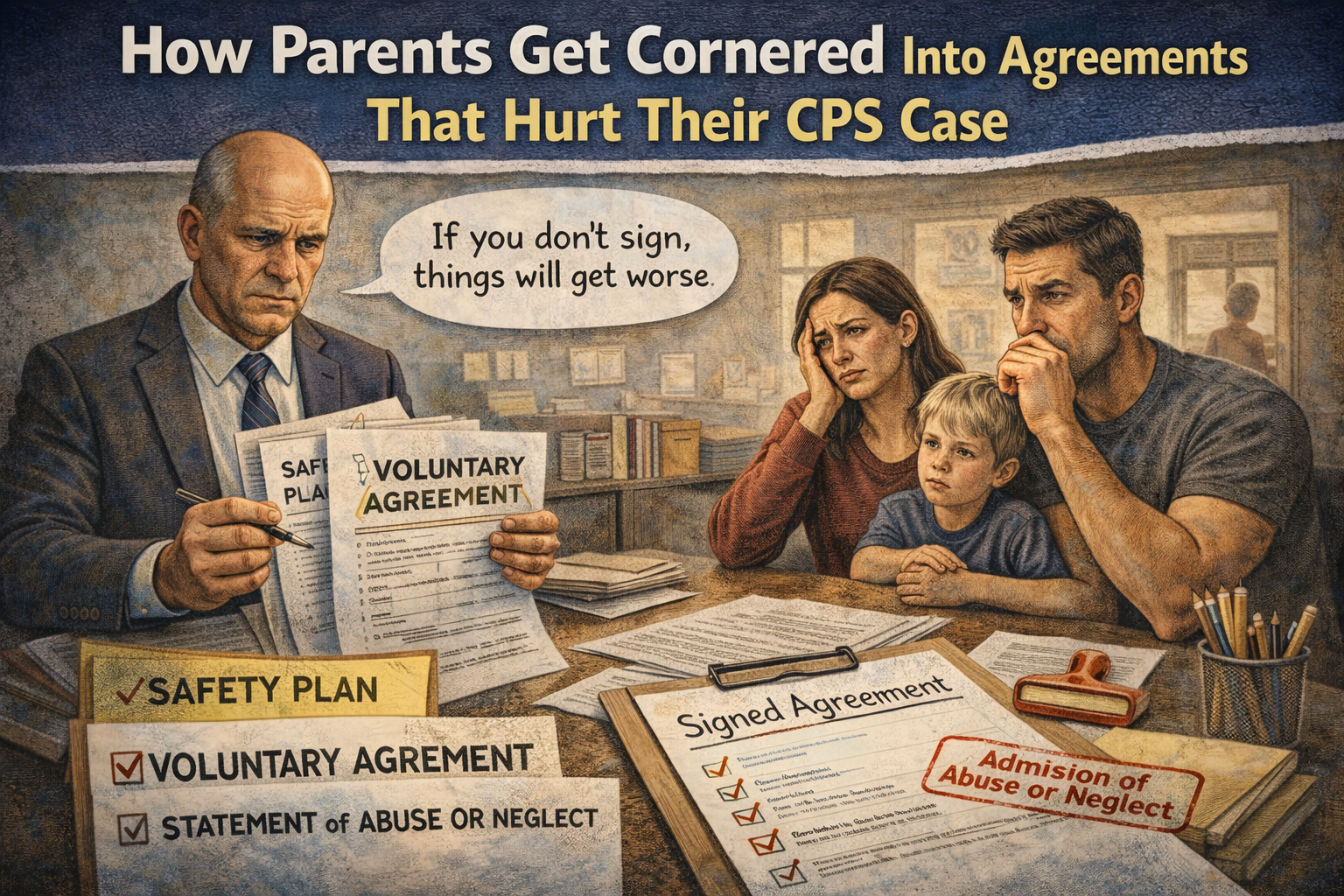
The scariest part of a CPS case often isn’t the first phone call. It’s the moment a parent is handed paperwork and told, “If you don’t sign this, things will get worse.” In that moment, many parents aren’t thinking like negotiators or legal strategists—they’re thinking about their child getting taken, their family's life being turned upside down, and whether they’ll ever feel normal again. That fear is exactly what makes rushed agreements so common during cps investigations.
At Masterly Legal Solutions, we routinely speak with parents who signed something they didn’t fully understand because they felt trapped. Sometimes it was a “voluntary” safety plan, sometimes a voluntary agreement, and sometimes it was language that functioned like an admission that abuse or neglect occurred. These documents can shape the entire cps case, affect juvenile dependency court outcomes, and influence whether a judge issues a court order. If you’re facing child protective services involvement, learning how these agreements work—and when to pause before signing—can protect your parental rights and your child’s well being.
This article explains how parents get cornered, what to watch for at each investigation stage, and how legal representation can help you respond without making your situation worse. We’ll also address the california cps investigation process because families often read about CPS online and assume the same rules apply everywhere. While every state has its own structure, the pressure tactics and paperwork risks during child protective services cps cases can feel very similar across the country.
Why CPS Agreements Feel “Mandatory” Even When They Aren’t
Many CPS documents are presented as if there is only one path forward. A CPS worker may say the agreement is “just a formality,” or that signing will “show cooperation.” But families are rarely told what the document could mean in court proceedings or how it can later be used to argue ongoing risk to a child.
When parents are scared, they often accept the framing without question. The problem is that a signed agreement can create a record that CPS later relies on. It can also shift the burden onto you to prove you’re safe, rather than CPS proving danger. If you’re unsure, this is where legal counsel matters.
The Initial Contact Sets the Tone of the CPS Process
The initial contact is usually fast, emotional, and confusing. A CPS worker may arrive at the child's home, call you at work, or contact a school. You may be told there’s a report of suspected child abuse or suspected abuse, and you may not be given the details right away. That uncertainty creates panic, and panic is when parents sign paperwork without thinking.
From the beginning, understand that CPS documentation is part of the investigation process. Notes, signatures, and verbal statements can shape the record. The earlier you slow down and document your own version of events, the better you can protect your rights. This is also the point when an experienced attorney can make the biggest difference.
The CPS Investigation Timeline Creates Pressure by Design
The cps investigation timeline can move quickly because CPS is required to assess safety, gather information, and decide next steps. Parents often interpret speed as certainty—like CPS must already “know” what happened. But speed often reflects policy deadlines, not proof. Still, the rushed pace pushes families toward quick decisions.
During cps investigations, parents may be asked to schedule interviews, attend meetings, complete services, and sign agreements. That can happen while you’re trying to keep your child calm, protect your job, and manage daily life. The system often doesn’t account for how overwhelming it is. When parents feel they must cooperate instantly, agreements get signed too fast.
How CPS Workers Use Language to Corner Parents
Many cps workers are trained to obtain cooperation quickly. That cooperation isn’t always about truth—it’s often about compliance. They may say, “This will help your child stay home,” or “If you refuse, we may seek a court order.” Even when those statements aren’t false, they can be used in a way that corners families.
Some parents are told the agreement is “voluntary,” but the tone is coercive. Others are told they can “fix this quickly” if they sign now. In reality, the cps process can continue for weeks or months. A signature today can shape the narrative for the entire cps case.
Voluntary Services and Voluntary Agreements Can Still Carry Real Consequences
Voluntary services can be helpful for families who truly need support and want resources. But signing up for services can also be interpreted as an acknowledgment that neglect occurred or that safety risks exist. In other words, voluntary services can look like proof of wrongdoing when the record is reviewed later. That’s why parents need to understand how participation is documented.
A voluntary agreement may include restrictions on who can be around your child, where your child can sleep, or whether you can be alone with your child. It can also include expectations that are hard to meet. If you miss a step, CPS may claim you are noncompliant. Then the next step may be a court petition.
Safety Plans Are Often Written Like Temporary Court Orders
A safety plan is one of the most common documents parents are pressured to sign. It may sound like a short-term measure to address safety concerns, but it often functions like a contract that shapes the case. A safety plan can limit contact between a child and an alleged perpetrator, require supervision, or demand housing changes. The plan can also become the basis for a court order later.
Safety plans are often presented as “either sign or we remove the child.” That pressure is terrifying for parents. But a safety plan can also be unrealistic, vague, or unfair. If it isn’t workable, you may be set up to fail. That is why legal representation is so important before you sign.
Why CPS Focuses on the Child’s Safety—And How That Gets Used
CPS will always center the child's safety as the justification for action. That is part of child welfare, and it is also a legal strategy. Once the case is framed as preventing immediate danger or serious harm, CPS can argue for restrictions even when facts are unclear. This framing can influence a judge and impact juvenile dependency court decisions.
Parents should not argue against safety itself. Instead, the goal is to show that your child is safe with appropriate supports and accurate facts. That means challenging exaggerations and documenting real conditions in the child's home. It also means avoiding agreements that suggest danger when none exists.
Risk Assessment Tools Can Turn Minor Issues Into Major Risk Factors
CPS often relies on risk assessment tools that score a family based on alleged events, home conditions, and history. These tools consider risk factors such as instability, prior reports, and concerns about supervision. The problem is that risk tools often treat uncertainty as risk. If CPS cannot verify something, it may still be documented as a concern.
Risk assessment affects decisions about removal, services, and court involvement. A signed safety plan can be interpreted as a risk confirmation. That can increase the risk score and make CPS more likely to escalate the case. This is why parents must understand how paperwork interacts with risk assessments.
Child Protective Investigations Can Expand Without Parents Realizing It
During child protective investigations, the focus can expand from one allegation to multiple concerns. A report of alleged abuse may lead to questions about discipline, supervision, the home environment, and relationships. CPS may also ask about domestic conflict and prior reports. Each question creates new documentation.
Parents may answer casually, not realizing their words can be interpreted harshly. If you say, “We argue sometimes,” it can become “domestic violence concerns.” If you say, “My child gets bruises easily,” it can become “possible abuse.” This expansion often leads to more agreements and more pressure.
Abuse or Neglect Allegations Are Often Blended Together
Many families are accused of abuse or neglect even when the issue is not intentional harm. Neglect allegations can involve supervision disputes, poverty-related issues, or parenting conflicts. Abuse allegations may involve discipline reports, injury concerns, or claims of emotional harm. Sometimes CPS blends the language so the case sounds more severe than the facts.
When CPS uses the phrase child abuse or neglect, that wording can shape how your case is treated. It can also shape how you’re viewed in court. If the allegation involves child abuse, sexual abuse, or serious harm, the stakes become even higher. Parents should be careful not to sign documents that treat allegations as proven facts.
Alleged Perpetrator Labels Can Reshape the Entire Family’s Life
CPS may label one person as the alleged perpetrator. That label can immediately change living arrangements and contact rules. Parents may be pressured to remove the alleged perpetrator from the home or to agree to no-contact conditions. If you sign those conditions without clarity, it can be treated as confirmation of wrongdoing.
These decisions can split families apart and cause long-term emotional harm to the child. They can also impact your legal strategy later. The point is not to ignore safety, but to ensure restrictions are appropriate, temporary, and not based on assumptions. This is where legal counsel can help protect the whole family.
Domestic Violence Allegations Can Trigger Rapid Escalation
Even when the CPS report is not about domestic violence, the investigation can shift in that direction. CPS workers may ask about arguments, police calls, protective orders, or relationship conflict. If they suspect domestic violence, they may demand safety plan changes immediately. Some parents sign just to make the meeting end.
Domestic violence allegations can be complicated because they involve safety, credibility, and the child’s emotional well being. They can also influence whether CPS seeks a court order or removal. Parents should be cautious about agreeing to statements that aren’t accurate. Agreement language matters in court.
When a Criminal Investigation Runs Parallel to CPS
In some cases, CPS involvement overlaps with a criminal investigation. This may happen in cases of suspected child abuse, serious injuries, or sexual abuse. Parents may be questioned by CPS while also facing law enforcement attention. That is a high-risk situation where you should not sign anything without advice.
Statements made to CPS can sometimes be shared or referenced later. Parents often assume CPS is “separate,” but parallel investigations can exist. The safest approach is to seek legal representation early and be careful with statements. Protecting your rights does not mean you don’t care about your child’s safety.
Temporary Custody, Voluntary Placement, and Foster Care Pressure
Parents may be pressured into temporary custody arrangements that feel “voluntary” but function as removal. A parent might be told, “Let the child stay with a relative for now.” That can become voluntary placement, and it can later be framed as the parent agreeing they cannot safely care for the child. Once that record exists, it can affect reunification decisions.
If CPS believes the child cannot remain at home, foster care or foster placement may be considered. Foster care decisions are influenced by documentation, risk assessments, and perceived cooperation. Parents who feel cornered may agree to placement thinking it will be brief. But placement can become extended when the record suggests ongoing risk.
Child’s Removal Can Happen Faster Than Parents Expect
If CPS claims the child is in immediate danger or faces immediate risk, the agency may push for quick action. That action can include seeking a court order, emergency detention, or removal. Parents who are terrified often sign safety plans just to avoid removal. But a safety plan should not be a blank check for CPS.
If removal becomes a threat, it’s important to understand your options. Removal should be based on evidence, not fear. Parents should seek legal representation immediately when removal is mentioned. Your child’s placement can shape everything that follows.
Juvenile Dependency Court and How Agreements Get Used Against Parents
Once a case enters juvenile dependency court, agreements become powerful evidence. Judges often review safety plans, voluntary agreements, and service participation records. If you signed a document that implies abuse or neglect occurred, it can be used to support court findings. Even if you intended it as temporary cooperation, the court may view it as proof.
Juvenile dependency court procedures can be complex and intimidating. Parents may face court hearings, deadlines, and required appearances. The court order may impose restrictions that are hard to change once issued. Early legal representation can help prevent damaging documents from shaping court outcomes.
Court Orders and Written Notice: The Documents That Change Everything
A court order can limit where your child lives, who can supervise, and whether you can have contact. Court orders may also require classes, counseling, or monitoring. Parents often receive written notice that includes legal language that is hard to understand. If you’re overwhelmed, you may miss deadlines or misunderstand the requirements.
Written notice is not just paperwork—it’s the official record. If you don’t respond properly, CPS may argue you are uncooperative. That can affect investigation results and long-term outcomes. A lawyer can help you interpret the notice and respond strategically.
CPS Determines Outcomes Based on Documentation and Compliance
In many cases, cps determines what to recommend based on a combination of facts, documentation, and compliance. Parents may think the truth will “win,” but the system often rewards clear documentation and service completion. This is why the reporting process matters. Your compliance becomes part of the narrative.
CPS may also decide whether to close the case through administrative closure or escalate. Administrative closure can sound positive, but it depends on the record. Parents should not assume closure means the record disappears. How the case was documented can still matter later.
CPS Decides Services and Plans Based on Their Version of the Story
Often, cps decides what services you must complete based on their assessment of risk. If CPS believes future abuse could occur, they may require classes and monitoring even when allegations are unproven. Parents sometimes accept services just to end the stress. But services can also reinforce the narrative that the parent was at fault.
This doesn’t mean services are always bad. Support services can help families, and some services are genuinely valuable. But parents should be careful about how services are described in the record. Your participation should not be treated as an admission that neglect occurred.
The Child’s Education and School Contacts Can Affect the Case
Schools often become part of the CPS case record. CPS may talk to teachers, counselors, or administrators about the child’s behavior, attendance, or emotional state. This can affect how child welfare is assessed. The child’s education environment can be used to support claims of stability or risk.
Parents should communicate carefully with schools during CPS cases. If a school staff member misunderstands the situation, it can be documented incorrectly. The child’s home environment and school environment are often discussed together. Clear documentation and calm communication matter.
Family Members, Community Members, and Support Networks
CPS may ask about family members who can help with childcare, supervision, or housing. They may also consider community members who are trusted and reliable. Strong support networks can reduce risk and support safety planning. But these supports should be documented clearly.
Parents should consider building a support plan early. Family and community resources can show stability and reduce perceived risk. Community resources, including counseling and parenting support, can also strengthen the record. The key is to show that your child’s safety is protected without unfair restrictions.
Family and Community Resources That Can Strengthen Your Case
Family and community resources can include relatives, childcare providers, faith leaders, counselors, or community programs. These supports can help families comply with safety plans and reduce stress. CPS often treats strong support networks as protective factors. That can improve risk assessment outcomes.
Parents should not wait until CPS demands a plan. Proactive planning can change how CPS views your family. But the plan should be realistic and sustainable. A safety plan that relies on impossible promises can backfire.
The CPS Investigation Process and the “California vs. Texas” Confusion
Families often google CPS and read about the california cps investigation process while they’re actually dealing with a different system. Policies, timelines, and court structures can vary. The key point is that the pressure tactics and document risks are similar: parents are often pushed to sign quickly. The law may differ, but the human experience is consistent.
In Texas, certain procedures may intersect with the texas family code, while other states use different rules. If you’re in Texas, a parent might also look for resources like the texas legal services center or legal aid. Those resources can help, but they may not provide the individualized strategy needed in high-stakes cases. When your child’s placement and parental rights are on the line, tailored legal representation matters.
Legal Aid vs. Legal Representation: Why Strategy Matters
Some families qualify for legal aid, and that can be helpful for basic guidance. But CPS cases often move quickly and require strategic decision-making. You need someone who can review documents, attend hearings, and respond to shifting claims. Legal representation includes proactive strategy, not just information.
Parents should also understand that the attorney client relationship matters. Speaking with a lawyer early helps prevent mistakes and protects confidentiality. It also helps you avoid signing harmful agreements out of fear. If you want to protect your child’s well being, legal strategy is part of that protection.
The Role of a CPS Investigator and CPS Workers in Shaping the Narrative
A cps investigator and other cps workers often control the narrative through documentation. They decide what gets written, what gets emphasized, and how your cooperation is described. Even if they are well-intentioned, their record becomes the official story.
Parents should remain calm and respectful, but also careful. If you disagree with something, address it professionally and document your position. Your own notes can become valuable evidence if the case escalates. Do not assume the record will “fix itself.”
Agreements That Hurt Parents the Most
Some agreements are more dangerous than others because they create admissions or long-term restrictions. Parents often sign them quickly because they think it will “end the case.” But the effect can be the opposite: it can extend the case and increase court involvement.
Common risky agreements include:
- Safety plans with vague or impossible conditions
- Voluntary placement agreements that resemble removal
- Written statements that imply abuse or neglect occurred
- Agreements limiting contact without clear timelines
- Service plans that treat allegations as proven facts
These documents should never be signed casually. They can shape investigation results and court outcomes.
Investigation Results and Complete Investigations: What Parents Expect vs. Reality
Parents often think CPS will “complete investigations” quickly and close the case if nothing is proven. Sometimes that happens, but many cases involve ongoing monitoring, extended services, and repeated check-ins. Investigation results can be “inconclusive” but still treated as risk. That can lead to ongoing protective services involvement.
Even after closure, the record can remain. Future reports may reference prior investigations, even if the case was not substantiated. That is why protecting the record matters now. You are not just dealing with today’s case—you are protecting your future.
Reasonable Accommodations and Parents With Disabilities
Parents with disabilities may need reasonable accommodations to participate in services, meetings, or court hearings. Without accommodations, parents may be unfairly labeled as noncompliant. This can impact the risk assessment and the compliance narrative. Parents should request accommodations in writing when needed.
CPS cases move fast, and the system can be rigid. But parents still have rights. A lawyer can help ensure those rights are respected and documented. A disability should not be used as a reason to assume unsafe parenting.
Parental Rights and How to Protect Them Under Pressure
Your parental rights include the right to understand what CPS is asking, the right to legal representation, and the right to challenge unfair decisions. Parents often feel powerless, but rights exist even in stressful investigations. The problem is that pressure can make you forget those rights. That is why preparation matters.
Protecting parental rights means slowing down, documenting, and seeking advice. It also means refusing to sign documents you don’t understand. You can cooperate with CPS while still protecting yourself. Legal representation helps you do that without escalating conflict.
When an Experienced Attorney Can Change the Outcome
An experienced attorney can help you understand what CPS is really asking and what the consequences are. They can review safety plans, evaluate court order risks, and protect your child’s placement. They can also help you respond to allegations of abuse or neglect without creating admissions. This support can protect your well being and your child’s safety.
Legal representation can also help manage the tone of the case. When CPS believes a parent is unrepresented, pressure tactics are easier. When legal counsel is involved, CPS often becomes more careful with language and demands. That shift can protect your family’s future.
How Child and Family Services and Family Services Approach Investigating Allegations
When child and family services steps in, parents often expect a single “CPS worker” to handle everything, but many cases involve multiple family services units working together behind the scenes. Depending on the facts, the texas department connected to the case may coordinate referrals, interviews, documentation, and safety planning while investigating allegations to decide what steps they believe are needed for a child’s safety. Because these cases can move quickly, families sometimes agree to terms that unintentionally weaken their position, even when they are doing their best to protect their child. That is why family law principles matter in CPS-related matters—your rights, responsibilities, and options often overlap with court procedures, custody concepts, and the long-term structure of your family’s life.
Having an attorney explain the legal protections available to you can help you respond strategically while still cooperating in a way that supports your child’s care and well-being. Ultimately, the goal should always be to support families, preserve stability, and ensure the best possible outcome for the child’s care without parents being pressured into unfair or confusing agreements.
Contact Masterly Legal Solutions for a Free Consultation
If you feel like child protective services is pressuring you to sign a safety plan, accept voluntary services, or agree to terms that don’t feel fair, you’re not alone. During cps investigations, parents are often cornered into agreements that later harm their cps case, affect juvenile dependency court decisions, and increase the risk of a court order or removal. The safest time to get help is before you sign anything that could reshape your family’s life.
Masterly Legal Solutions provides legal representation for families dealing with child protective services cps involvement, allegations of abuse or neglect, and high-stakes decisions about a child’s home and placement. Whether you’re trying to understand the cps investigation process, the cps investigation timeline, or how CPS determines risk, we can help you protect parental rights and respond strategically. If you’re reading about the california cps investigation process but dealing with a different state system, we can also help clarify what applies to your situation and what steps protect your child’s well being.
Call (972) 236-5051 to contact Masterly Legal Solutions for a free consultation.
Disclaimer: This article is for general educational purposes only and does not constitute legal advice or legal guidance. Reading this article does not create an attorney-client relationship. For advice about your specific situation, consult a qualified attorney.


Teacher Rights When Assaulted by a Special Needs Student: Safety, Reporting and Investigation Issues



Looking for Legal & Business Solutions? Contact Us Now
Fill in the form or call us to set up a meeting





