

How Teachers Lose Their Jobs Without Ever Being Formally Fired
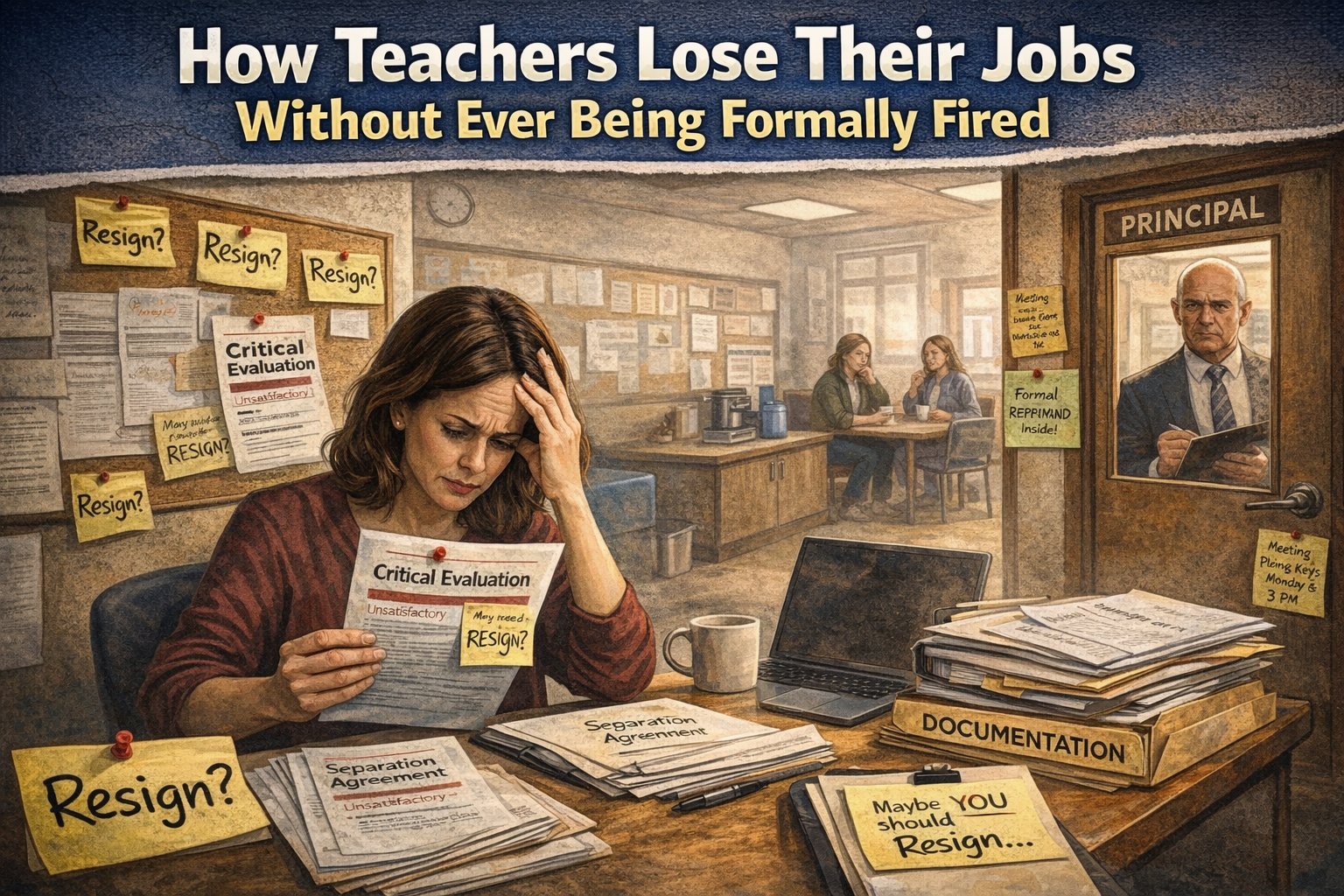
Most teachers don’t walk into a principal’s office and get told, “You’re fired.” What usually happens is quieter, slower, and far more confusing. A teacher is pushed out through pressure, isolation, shifting expectations, and paperwork that makes resignation feel like the only “reasonable” option. When that happens, you can lose your job and your income without a formal termination ever appearing on paper.
This is the reality of constructive discharge and forced resignation in schools across texas. The employer may say you “chose” to leave, but the conditions inside the workplace tell a different story. If you’re experiencing this, it’s not just a professional setback—it’s a legal issue, and it can involve serious law, claims, and long-term consequences for your career and well being. At Masterly Legal Solutions, we help educators recognize what’s happening early and build a plan to protect their future.
The Pressure Campaign That Ends Careers Without a Termination Letter
A forced exit rarely starts with one big event. It usually begins with subtle changes: a different schedule, an unreasonable directive, and the feeling that your employer has decided you’re “the problem.” These tactics often create fear, confusion, and exhaustion that weaken a teacher’s ability to push back. When the stress becomes unbearable, resignation starts to feel like relief—even though it may harm your long-term interests.
Constructive discharge is the concept that an employer can make working conditions so intolerable that a reasonable person would feel forced to resign. While the words sound technical, the experience feels personal. You might feel disrespected, targeted, or set up to fail. And by the time the resignation happens, the district may try to frame it as voluntary.
What “Constructive Discharge” Really Means in Education
Constructive discharge is not simply quitting because you’re frustrated. It is a pattern of conduct that effectively removes your ability to keep your job without sacrificing dignity, safety, or basic fairness. The legal process often focuses on what the workplace conditions were, how long they lasted, and whether the employer knew what was happening.
In practical terms, constructive discharge often overlaps with discrimination, harassment, or retaliation. A teacher might be targeted after reporting misconduct, requesting accommodations, or challenging unfair discipline. If your resignation was the predictable result of ongoing pressure, the law may treat it differently than a normal resignation. That difference can matter in litigation, settlement negotiations, and future employment.
The Quiet “Forced Resignation” Script Schools Use
Forced resignation often follows a recognizable script. A supervisor implies you should “do what’s best for yourself,” or says they can’t “guarantee” what will happen if you stay. You may be told that resigning will “look better,” or that the district will “keep it private” if you leave. These lines are designed to control the narrative and protect the company or district’s business interests.
Sometimes the resignation is pushed through paperwork pressure. You might be told to sign a document “just acknowledging” a meeting, or to agree to a “performance plan” that isn’t realistic. In other cases, a sudden investigation appears with vague allegations and little clarity. The goal is often the same: create enough discomfort that you walk out on your own.
Why Teachers Are Especially Vulnerable to Constructive Discharge
Teachers are mission-driven, and that commitment can be used against them. Educators often try to “stay professional” and absorb pressure so students are not affected. But a toxic workplace can drain you fast, especially when the people controlling your schedule and evaluations are also building a paper trail. The pressure isn’t always loud—it’s constant.
Many districts also know teachers fear licensing issues, bad references, and reputational harm. A single allegation can feel career-ending, even when it’s unfair. That fear can push teachers into resignation before they’ve had competent counsel review their options. The earlier you recognize the strategy, the more power you have to respond.
The Difference Between Resigning and Being Terminated
A resignation can look “clean” on a résumé, but it can also create hidden problems. Some districts code resignations in a way that raises red flags for future administrators. Others attach separation agreements that restrict what you can say or do. A resignation can also affect unemployment eligibility depending on state laws and the surrounding facts.
Termination is formal, and districts sometimes avoid it because it triggers hearings, documentation requirements, and public scrutiny. Forced resignation allows the employer to avoid a direct fight while still removing the teacher. That is why understanding your legal protections matters. Sometimes, the smartest move is not quitting quickly—it’s getting advice first.
The Paper Trail That Turns Into a Trap
Schools often build a “file” before pressuring a resignation. It may include sudden write-ups, critical emails, and negative observations that feel out of character compared to your history. This paper trail is not always about accuracy; it is often about creating plausible justification. Once the file exists, it becomes the foundation for future claims or defenses in litigation.
A paper trail can also be used to pressure you emotionally. Teachers may be told they are “on thin ice” or that they could face more serious action. The goal is to make you believe resignation is safer than challenging the narrative. Skilled attorneys and well versed lawyers know how to dissect this trail, identify inconsistencies, and build a clearer record.
Harassment That Doesn’t Look Like Harassment at First
Workplace harassment in education isn’t always screaming or overt insults. It can be constant micromanagement, targeted criticism, or public humiliation disguised as “feedback.” It can be a principal who shows respect to everyone but you, or a team that suddenly freezes you out. Over time, it can destroy your confidence and well being.
Harassment also shows up through unrealistic expectations. You may receive impossible deadlines, excessive documentation demands, or constant classroom drop-ins. If the pressure is tied to a protected trait or retaliation, it can become a serious legal dispute. That is where employment law and school realities collide.
Discrimination Patterns That Push Teachers Out
Many constructive discharge cases involve discrimination, even when the teacher doesn’t label it that way at first. You might notice you’re treated differently after returning from medical leave, after disclosing a disability, or after a pregnancy-related request. You might be singled out because of age, gender, race, or national origin. The pattern matters as much as any single incident.
Federal and state laws can prohibit discrimination and require fair treatment in the workplace. Teachers often feel guilty for even considering a complaint, but these laws exist for a reason. If the district’s conduct is designed to make you quit, that can be evidence. Strong counsel can help connect the dots and build the story in a way that is credible and actionable.
Title VII and the Civil Rights Act Still Apply in Schools
Title vii and the civil rights act are not only for big corporations. They are federal standards that can apply to public and many private employers, including school districts. They address workplace discrimination, hostile environment harassment, and retaliatory conduct tied to protected activity. Understanding the scope of these laws can help teachers recognize when “school politics” has crossed into unlawful territory.
In many cases, districts rely on teachers not knowing their rights. That knowledge gap makes pressure tactics more effective. But when you understand the law, you can respond differently—more calmly, more strategically, and with documentation that anticipates what matters later. Federal frameworks can shape negotiations, agency complaints, and litigation strategy.
Disabilities Act Issues and “Accommodation Punishment”
Teachers who request accommodations can become targets. Under the disabilities act, employers may have obligations to engage in a process and provide reasonable support. But in real life, some teachers experience subtle punishment after requesting help. Suddenly, they’re labeled “not a team player,” or their performance is questioned unfairly.
This is where constructive discharge can develop quickly. If your workplace becomes hostile after you request accommodations, that may be evidence of discrimination or retaliation. It may also undermine the district’s later claim that you resigned voluntarily. A careful legal approach can help protect your interests and preserve key records.
Age Discrimination and the “New Direction” Excuse
Age discrimination can appear as comments about “energy,” “fresh ideas,” or “new direction.” Sometimes a teacher with deep experience is treated as outdated, even when results are strong. Schools may try to replace seasoned educators with cheaper labor or different personalities. That can be framed as “culture,” but it can still be unlawful.
If older educators are pressured out through write-ups and forced plans, constructive discharge may be part of the story. The key is documenting comparative treatment: who gets disciplined, who gets coached, and who gets protected. In complex disputes, details matter more than assumptions. The right lawyers can help you see what should be documented and why.
Retaliation Cases Often Start With “Doing the Right Thing”
Some of the most painful teacher exits begin after the teacher speaks up. Reporting a safety issue, challenging unethical behavior, or refusing to falsify data can trigger retaliation. The teacher becomes “difficult,” meetings multiply, and the blame starts to shift. These retaliation cases are common because organizations often protect hierarchy over truth.
Retaliation can also follow a report of harassment or discrimination. Teachers may believe HR will fix it, but sometimes HR’s priority is protecting the employer. If your workplace becomes worse after a report, that may not be a coincidence. Federal protections can prohibit retaliation, and the facts can matter in settlement negotiations or a formal complaint.
The Investigation That Exists to Create Leverage
Not every school investigation is illegitimate, but some are launched in a way that creates leverage rather than clarity. A vague accusation appears, and suddenly you are asked for a statement without knowing what the allegation is. You may be told to avoid discussing it, leaving you isolated. This can set up a forced resignation by increasing fear and uncertainty.
If an investigation is used to push you out, it may become relevant in later litigation. The timeline, the people involved, and the shifting explanations can all matter. Experienced litigators know how to compare the district’s story against its paperwork. That’s why early counsel is so valuable.
Employment Contracts and How Schools Use Them Against You
Many teachers have employment contracts, and districts understand the power of those documents. A contract can include deadlines, performance expectations, and provisions for nonrenewal. Sometimes administrators weaponize these rules to create pressure, especially close to contract renewal season. A teacher may be told “resign now or we’ll nonrenew you,” as if those are the only two options.
Contracts also become important when separation agreements appear. You might be asked to sign a release, a confidentiality clause, or a non-disparagement agreement. Before you sign anything, you should understand how it affects your future. A good law firm can review the contract terms, the risks, and whether the district is overreaching.
The Legal Process Behind “Voluntary” Resignations
The legal process often asks whether the resignation was truly voluntary. That includes reviewing the context: threats, pressure, isolation, and the reasonableness of the teacher’s choices. The law is not blind to coercion, but the evidence must be built carefully. This is why documentation and timeline discipline matter.
When teachers resign, districts often move quickly to close the file. But closure on the district’s side does not mean you have no options. In the right circumstances, a resignation can be challenged legally. The question is not just what happened, but how it can be proven.
Workplace Isolation and the “Unspoken” Termination
One of the most effective constructive discharge tools is isolation. You stop being invited to meetings, resources disappear, and colleagues avoid you. Your classroom support shrinks, and your supervisor acts like you’re invisible. The workplace becomes emotionally unsafe even if no one uses profanity.
Isolation can also be paired with constant surveillance. The teacher is observed excessively while others are not, creating stress and building a selective record. Over time, many educators resign to protect their mental health. That is a real human reaction—but it may also be a legally relevant outcome.
When Family and Family Law Concerns Become Part of the Story
Teachers are not robots, and districts sometimes exploit personal stress. If you have a family member with health needs or childcare demands, the district may become less flexible. That lack of flexibility can contribute to the pressure that drives resignation. Even neutral policies can become discriminatory if applied selectively.
Sometimes educators are navigating divorce or custody issues, and workplace stress makes everything worse. While family law is its own practice area, it can intersect with employment pressure when scheduling, leave, and retaliation appear. A comprehensive firm that understands multiple practice areas can help teachers see the full picture. It’s not about drama—it’s about protecting your stability.
The Employer’s “Offer” That Feels Like a Threat
Teachers are often presented with an “offer” to resign with a neutral reference. It may be framed as kindness, but it can function as pressure. The message is: accept this now, or risk something worse later. Sometimes the district implies criminal exposure, licensure action, or reputational harm.
This is where you need calm counsel. A lawyer can evaluate whether the threats are real or exaggerated, and whether the district is trying to avoid due process. A strong response can change the tone of negotiations quickly. When districts realize you have support, pressure tactics often lose power.
Claims That Commonly Appear in Constructive Discharge Cases
Constructive discharge can involve multiple legal theories, depending on the facts. Not every teacher will have the same claims, but there are common categories. The goal is to determine which claims are supported and how to present them effectively.
Examples of common claim pathways include:
- Discrimination-based constructive discharge
- Hostile environment harassment claims
- Retaliation for protected reporting
- Contract or policy breaches tied to employment contracts
- Agency complaints under federal standards
These claims are often connected, and districts may fight hard. That’s why it’s important to develop a winning strategy early, not after the resignation is final.
Breach of Contract and Policy Breach in Teacher Exits
A constructive discharge story often includes breach issues. That can involve breach of an employment contract, breach of policy promises, or breach of due process expectations. Even when a district claims broad discretion, it still must follow certain rules. A breach can strengthen leverage in disputes and settlement negotiations.
Breaches also matter because they help prove the resignation was not truly voluntary. If the district violated its own steps, that can undermine its credibility. Teachers should keep copies of policies, evaluations, and communications. Those documents can become central in litigation later.
Arbitration and Why Some Disputes Don’t Go Straight to Court
Some disputes may involve arbitration, depending on the contract, the district’s policies, or the context of the employment relationship. Arbitration can move differently than court, and it may limit discovery or appeals. Teachers sometimes feel blindsided by these provisions after the dispute begins. That is why it’s helpful to understand your contract early.
Arbitration can also be used strategically by districts to contain exposure. But arbitration is not always bad for teachers; it depends on the facts and the forum. A strong law firm can advise whether arbitration is required and how to prepare. Good lawyers tailor strategy to the reality of the forum, not the fantasy of a perfect process.
Litigation as Leverage, Not Just a Last Resort
Teachers often fear litigation, but sometimes it is the tool that forces accountability. Litigation does not always mean a dramatic courtroom battle. It can mean using formal pressure to obtain documents, challenge narratives, and build leverage for settlement negotiations. When done correctly, it can protect your interests and restore a sense of justice.
In complex disputes, the threat of trial can motivate resolution. Districts may want to avoid publicity, attorney’s fees exposure, and internal scrutiny. The right strategy focuses on outcomes, not ego. Masterly Legal Solutions approaches these matters with a practical plan built around your goals.
Trial Reality and What a Trial Lawyer Actually Does
A trial is a structured process where evidence and credibility matter. A trial lawyer is trained to present facts clearly, cross-examine witnesses, and build a compelling narrative. Even when cases settle, trial readiness strengthens your position. It signals that your team can go the distance if needed.
Teachers deserve lawyers who can handle pressure and complexity. Constructive discharge cases can involve mixed motives, layered documentation, and conflicting accounts. That’s why experienced litigators matter. Deep experience can shift how the other side evaluates risk.
Commercial Litigation and Why It Shows Up in Teacher Cases
You might wonder why commercial litigation matters for teachers. The answer is that many law firms handle disputes across multiple arenas, and the skills overlap: evidence analysis, strategy, negotiation, and courtroom preparation. Commercial litigation also teaches lawyers how organizations protect themselves, which is useful when a district behaves like a risk-focused business.
At Masterly Legal Solutions, our litigation mindset supports teachers in high-stakes disputes. We understand how institutions position narratives and manage liability. Whether the dispute looks like employment, contract, or broader legal conflict, the strategy needs discipline. That’s what strong counsel brings.
Business Disputes, Partnership Disputes, and Fiduciary Duty Lessons That Translate
Schools are not traditional businesses, but they often operate with business logic. Concepts that arise in business disputes, partnership disputes, and fiduciary duty cases can help explain how power works in organizations. Decisions may be about reputation, budgets, and political interests rather than fairness. Teachers feel the consequences even when they never see the boardroom discussion.
Understanding institutional incentives can help you respond smarter. It’s not about becoming cynical; it’s about being realistic. In disputes, clarity is power. The more clearly you see the incentives, the more effectively your lawyers can build leverage.
Business Torts, Trade Secrets, and the “Information Control” Instinct
While business torts and trade secrets are more common in corporate fights, the same “information control” instinct can appear in school disputes. Districts may restrict what you can say, warn you about confidentiality, or try to limit your ability to gather records. They may demand you return materials or avoid discussing facts. The goal is to control the story.
Teachers should not destroy records or violate lawful directives, but they should also not assume every threat is valid. Some warnings are exaggerated to intimidate you into silence. The key is to preserve your rights while remaining professional. This is where well versed counsel makes a difference.
Deceptive Trade Practices and Why Some Firms Mention It
You may see legal marketing that references deceptive trade practices in broad dispute contexts. While that concept is more common in consumer and business litigation, it reflects a wider theme: organizations must not misrepresent material facts. In employment-style conflicts, misrepresentation can still matter, especially when a district misstates your performance or uses misleading paperwork to force resignation.
The practical point is this: documentation matters, and truth matters. If the narrative being built about you is false or manipulated, it must be addressed carefully. A strong legal strategy focuses on proving facts, not trading insults. That approach protects your credibility.
White Collar Litigation and “Serious Allegations” Used as Pressure
Some teacher exits are driven by allegations that sound criminal or unethical. Even when no charges exist, the implication alone can pressure resignation. The tactics can resemble the pressure dynamics seen in white collar litigation, where reputational risk is a weapon. Teachers may be told resignation is “best” to avoid embarrassment.
If you are facing serious allegations, do not assume resignation will make it disappear. It may follow you in references, internal coding, or licensure reporting. The better approach is to get counsel, determine what is real, and respond with structure. Protecting your name is part of protecting your future.
Supreme Court Standards and the “Reasonable Person” Lens
Constructive discharge analysis often uses a “reasonable person” standard—whether conditions were so intolerable that a reasonable person would resign. While each case is fact-specific, courts—including the supreme court in related contexts—have emphasized objective framing over pure emotion. That does not mean your experience doesn’t matter; it means the evidence must translate your experience into clear facts.
A good legal team helps you do that translation. You tell the story as a human, but you prove it like a case. That combination is how you build justice. It is also how you protect your credibility.
Attorney’s Fees and Why Strategy Matters From Day One
Teachers often worry about money, and that fear can push them into bad agreements. But certain claims can involve potential recovery of attorney's fees, depending on the facts and the statutes involved. That can affect leverage in settlement negotiations. It can also influence whether the district chooses to fight or resolve.
Strategy matters because fees are not automatic. They depend on the claim type, the proof, and the procedural path. A smart approach evaluates the likely outcomes and the risks. That’s how you avoid unnecessary litigation while still protecting your rights.
The Employment Act, Federal Standards, and State Laws Working Together
Teachers may hear references to an employment act, federal frameworks, and state laws all at once. That can feel overwhelming, but the concept is simple: multiple rules can protect employees. Federal standards can address discrimination, harassment, and retaliation, while state rules may govern contracts, due process, and additional protections. The best plan accounts for all of it.
A district may rely on confusion to push a resignation. If you don’t know what rules apply, you may assume you have no options. But you often do. The key is getting informed counsel quickly.
Employment Law Is Not Just for Corporate Workers
Some educators feel uncomfortable seeking help because they think employment disputes are “for businesses.” That’s not true. Employment law exists because employees in every field can be treated unfairly. Teachers deserve the same legal protections as workers in any other workplace.
Your career matters, your reputation matters, and your future earning power matters. When those are threatened, it becomes a legal issue—not just a workplace issue. Masterly Legal Solutions helps teachers see the difference between normal stress and unlawful pressure. That clarity is the beginning of control.
Why “Find Lawyers” Searches Matter, and What to Look For
When teachers are under pressure, they often start by trying to find lawyers online. That makes sense, but it can also be confusing because search results mix marketing with real capability. You may see phrases like “super lawyers,” “recognized,” or “deep experience,” and wonder what actually matters. The truth is you need a firm with strong litigation skills and real knowledge of how employers operate.
Look for counsel who is well versed in disputes, documentation strategy, and negotiation. Look for attorneys who can talk to you like a human while still thinking like litigators. Teachers don’t need empty hype; they need a plan. That’s what a good consultation should provide.
Frisco Lawyers and the Value of Local Strategy
If you’re searching for frisco lawyers, you’re likely looking for counsel who understands how local employers behave and how disputes are resolved in the region. Local strategy can matter in negotiation tone, procedural expectations, and how fast a case can move. But what matters most is capability: the ability to analyze facts, build leverage, and protect your career. A strong firm doesn’t guess; it proves.
At Masterly Legal Solutions, we approach disputes with litigation discipline and client-focused clarity. We have represented clients in tough conflicts where the other side expected silence. Our goal is to help you protect your interests and move forward with respect and stability.
What a Law Firm Does Differently Than “Advice From a Friend”
Friends may tell you to “just resign” or “wait it out,” but they don’t carry the consequences. A law firm evaluates facts against the law, identifies claims, and builds a strategy that protects you. Good counsel helps you avoid emotionally driven mistakes that harm your case. It also helps you document properly and communicate professionally.
If you’re under pressure, the biggest risk is acting alone. Even one poorly worded email can become evidence. Strong counsel helps you choose the words and actions that protect you. That is a real form of support.
Winning Strategy in Constructive Discharge Disputes
A winning strategy is not just filing a lawsuit. It’s building leverage, protecting your record, and shaping the narrative so the employer cannot dismiss you as “unstable” or “unprofessional.” It includes documentation, timing, and a clear theory of the case. It also includes deciding whether negotiation, agency action, or litigation is the best path.
Strategy also means keeping your long-term interests in view. You may need references, future employment, or a clean separation that doesn’t harm your license. Your strategy should reflect your goals, not someone else’s pride. Good lawyers build plans around real life.
Settlement Negotiations and the Power of Readiness
Many disputes resolve through settlement negotiations, but negotiations are only strong when the other side believes you can prove your case. That’s why trial readiness matters, even if you never go to trial. Preparation changes the leverage dynamic. It can lead to better terms, cleaner records, and less damage to your reputation.
A settlement can include confidentiality, reference language, neutral separation terms, or other protective measures. But those terms must be negotiated carefully. Without counsel, teachers often accept terms that seem fine but cause problems later. The goal is to protect your future, not just end the stress.
Commercial Litigation Skills That Help in School Disputes
Commercial litigation teaches lawyers how to handle complex disputes with multiple moving parts. It involves evidence, credibility, document strategy, and negotiation discipline. Those are the same tools needed in constructive discharge cases. When a district behaves like a company protecting its business interests, litigation experience becomes invaluable.
This is why firms with broad practice areas can bring an advantage. They recognize institutional tactics and can build a stronger response. Whether the conflict looks like employment, contract, or policy breach, the litigation mindset helps. It’s about executing a plan, not reacting in panic.
Freeman Law, Online Comparisons, and Choosing the Right Counsel
Teachers sometimes compare firms online and see names like freeman law mentioned in discussions about litigation and disputes. Online comparisons can be helpful, but they can also distract you from what matters: your facts, your timeline, and your goals. The right counsel is the one who can build a strategy for your situation. That means listening carefully, analyzing documents, and explaining options plainly.
At Masterly Legal Solutions, we focus on outcomes and clarity. We don’t treat you like a file; we treat you like a person whose career is on the line. We’ve represented clients who felt cornered and helped them regain control. Your case deserves that attention.
“Enough Good Things” Isn’t a Strategy—Proof Is
You may hear people say, “I’ve heard enough good things about this person or that firm.” Reputation matters, but results come from preparation and proof. Constructive discharge cases require documentation discipline and a coherent theory of how the employer pushed you out. The case is built on facts, not feelings. Your story matters, but it must be provable.
That’s why the consultation is so important. A real consultation doesn’t just reassure you; it gives you steps. It tells you what to preserve, what to stop doing, and what to do next. That’s the difference between comfort and counsel.
Practical Steps Teachers Can Take Before Resigning
If you feel resignation pressure, you can take steps that protect you without escalating drama. The point is not to start a fight; it is to preserve your options and protect your record. These steps can support a future claim or strengthen negotiation leverage.
Consider actions like these:
- Save relevant emails, evaluations, and directives in an organized folder
- Write a private timeline of key events, meetings, and witnesses
- Avoid emotional messages and keep communication professional
- Ask for clarification in writing when instructions are vague
- Speak with counsel before signing separation documents
These steps support you whether you negotiate, file a complaint, or pursue litigation. They also help you feel less helpless during a stressful period.
Practice Areas That Often Intersect With Teacher Disputes
Teacher forced resignation cases can touch more than one practice area. Practice areas may include employment disputes, contract claims, discrimination, retaliation, and sometimes related family concerns. In some situations, issues like divorce stress and scheduling conflicts can make workplace pressure more intense. That does not mean the case becomes family law, but family law realities can shape the facts.
A firm that can see the whole picture can advise more effectively. The goal is not to complicate matters; it’s to protect you. When multiple interests overlap, a coordinated approach is safer. That is what experienced attorneys are trained to do.
Partners, Interests, and Why Institutions Close Ranks
In many organizations, decision-makers operate like partners protecting shared interests. When a dispute arises, people may close ranks to protect each other, not to find the truth. That dynamic can make a teacher feel isolated and powerless. But those incentives can also be exposed through careful documentation and legal strategy.
Your interests matter too—your career, your reputation, and your ability to provide for your family. A strong legal approach asserts those interests with professionalism and proof. That’s how you pursue justice without chaos. The system may be uncomfortable, but it is not unbeatable.
Litigation, Trial, and What “Standing Up” Really Looks Like
Standing up for yourself doesn’t require loud confrontation. It requires clear steps and strong strategy. Sometimes that means a carefully written demand, a structured response to an investigation, or a negotiation plan. Sometimes it means filing formal claims and preparing for litigation. Either way, the decision should be informed, not forced by fear.
If trial becomes necessary, preparation matters. Evidence, credibility, and consistency are everything. Teachers who act early have more evidence and better stories. That is why timing is one of the most powerful tools you have.
Contact Masterly Legal Solutions for a Free Consultation
If you’re being pushed to resign, pressured through paperwork, or worn down by a hostile workplace, you may be dealing with constructive discharge—even if no one says the words out loud. You deserve answers before you make a decision that could affect your job, your reputation, and your future. Masterly Legal Solutions helps teachers and other employees understand their options, assess their claims, and build a strategy that protects their interests.
If you’re searching for frisco lawyers or you need an attorney frisco educators can rely on for serious disputes, we’re here to help. Our team has represented clients in complex disputes involving discrimination, harassment, retaliation, contract issues, and litigation strategy, and we approach every matter with respect and clarity. A consultation is not just a conversation—it’s a chance to map out the next step with real counsel and a plan.
Call (972) 236-5051 to schedule a consultation and speak with our team.
Disclaimer: This article is for general educational purposes only and is not legal advice or legal guidance. Reading this article does not create an attorney-client relationship. For advice about your specific situation, speak with a qualified attorney.



Teacher Rights When Assaulted by a Special Needs Student: Safety, Reporting and Investigation Issues



Looking for Legal & Business Solutions? Contact Us Now
Fill in the form or call us to set up a meeting