

Retaliation Lawyer Dallas What Teachers Should Do If Their School Turns on Them
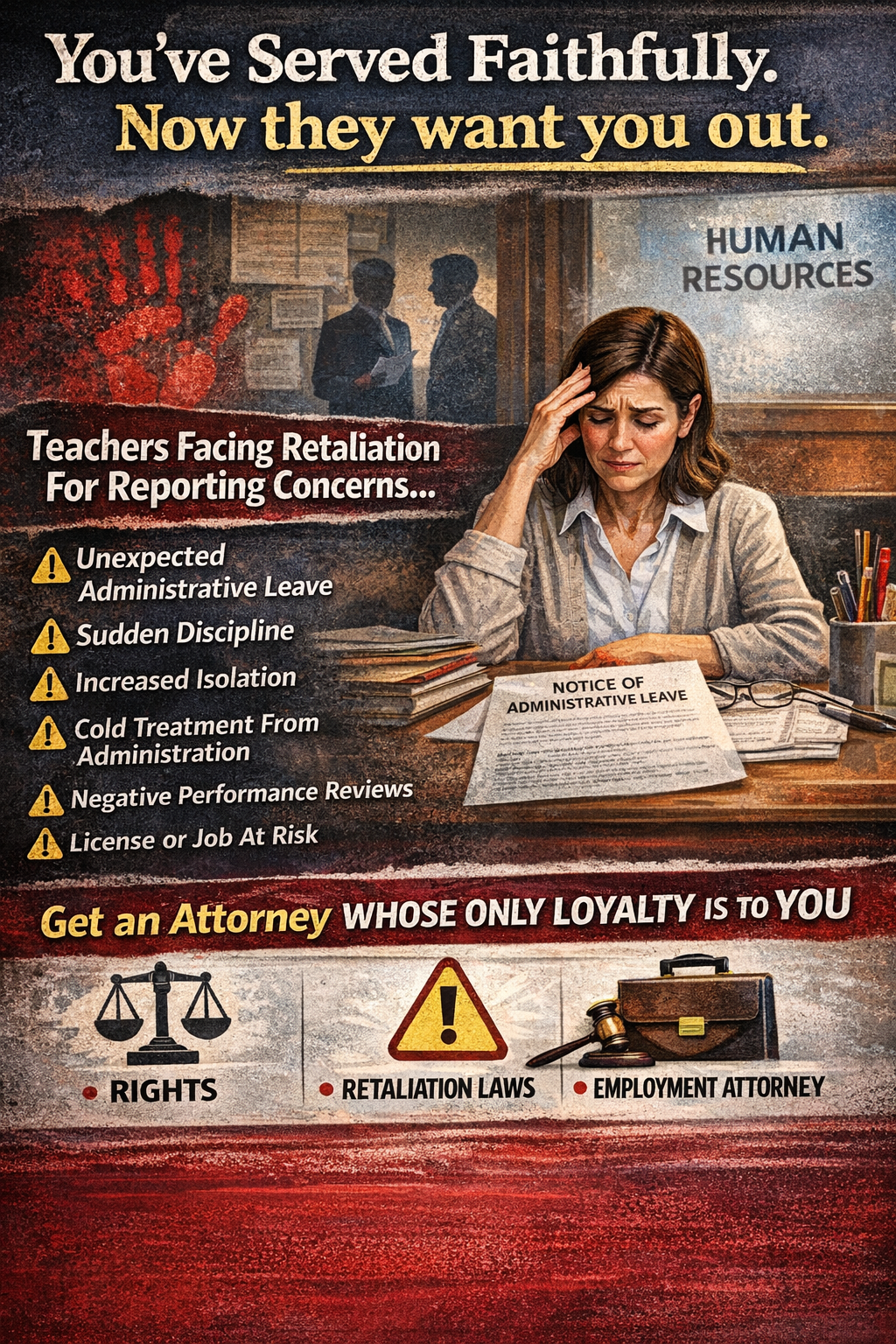
There are few things more painful for a teacher than feeling like the place you served faithfully has suddenly become the place trying to push you out. Many educators go into teaching because they believe in doing the right thing, even when it’s difficult. So when you report a concern, cooperate in an investigation, or speak honestly to administrators, you may expect support or at least fairness. Instead, some teachers experience something very different: silence, coldness, sudden discipline, or an unexpected placement on administrative leave.
If you are reading this and thinking, “That sounds like what’s happening to me,” you are not alone. Teachers across North Texas are facing increased scrutiny, shifting expectations, and pressure from human resources departments that seem more focused on protecting the district than protecting the people doing the work. The hard truth is that workplace retaliation can begin quietly and escalate fast. That is why speaking with a retaliation lawyer dallas teachers can trust may be the difference between saving your career and watching it unravel.
At Masterly Legal Solutions, we help teachers respond strategically when the tone changes, the support disappears, and the district begins treating them like the problem. This article is designed to help you understand what retaliation can look like, why it happens, and what steps you can take before the situation gets worse.
Why Teachers Feel Betrayed During School Investigations
When a school investigation starts, teachers often believe the process will be professional and objective. They may assume the district is looking for truth, fairness, and solutions. Unfortunately, some investigations are more about damage control than integrity. The teacher becomes a convenient scapegoat, especially when the district is under pressure from parents, media, or internal leadership needing to adhere to legal compliance.
This is where workplace retaliation can enter the picture. A teacher who raised concerns or cooperated in an inquiry may suddenly be treated like a liability. Even if you did nothing wrong, the district may act as if your honesty created a problem rather than exposed one. That emotional whiplash is what many educators describe as betrayal.
What Workplace Retaliation Means in a School Setting
In simple terms, workplace retaliation happens when an employer punishes an employee for engaging in protected activity. Teachers may not realize that protected activity includes more than filing a lawsuit. It can include reporting misconduct, participating in an investigation, or requesting help under certain workplace protections.
Retaliation is not always loud or obvious. Sometimes it is a slow tightening of pressure that makes your job feel unbearable. The goal may be to force you to resign, accept a demotion, or stop speaking up. In education, retaliation often hides behind “policy enforcement” or “professional expectations,” even when the timing makes it suspicious.
Why Retaliation Often Happens After You “Do the Right Thing”
Teachers are often trained to follow rules, document concerns, and communicate issues up the chain. That is why retaliation can feel so shocking. You did what you were told to do, and now you’re being treated like you committed alleged misconduct. In many cases, retaliation is rooted in fear and control, not justice.
Administrators may worry about liability, public perception, or internal conflict. Some districts want to discourage other employees from speaking up, so they make an example of one teacher. Others may retaliate because your report disrupted relationships, exposed illegal acts, or challenged the status quo. Even a good faith belief that something was wrong can trigger backlash if leadership feels threatened.
The Legal Foundation: Federal and State Protections for Teachers
Teachers are not powerless. Many federal and state laws exist to protect employees from retaliation and discrimination. These protections are not just abstract concepts; they apply in real workplaces, including schools. In many cases, your rights are tied to the civil rights act, the employment act, and provisions in the united states code.
A teacher may have protections under most anti discrimination laws, especially when retaliation connects to workplace discrimination. Laws may also apply if the retaliation involves sexual harassment, disability issues under the disabilities act, or unfair treatment tied to age or identity. The key is recognizing the issue early enough to respond with strategy instead of panic.
Protected Activity: The Trigger That Often Leads to Retaliation
Protected activity is one of the most important terms a teacher can understand when facing retaliation. It refers to actions the law protects, meaning your employer should not punish you for doing them. Teachers engage in protected activity more often than they realize, especially in today’s environment of increased reporting and accountability.
Protected activity may include reporting safety issues, discrimination concerns, or misconduct. It can also include cooperating with internal investigators or speaking honestly to external agency officials. Even refusing to participate in wrongdoing can be protected in certain circumstances. When your school reacts negatively after protected activity, it may signal retaliation.
Common Retaliation Scenarios Teachers Face
Teachers often ask, “How do I know if this is retaliation or just normal workplace conflict?” That is a fair question, because schools are stressful environments and misunderstandings happen. But retaliation usually has patterns, especially when the district changes its behavior suddenly after you speak up. The timeline often tells the story.
Here are common signs of workplace retaliation teachers report experiencing:
- Sudden write-ups after years of positive performance
- Increased scrutiny of lesson plans or classroom management
- A surprise placement on paid administrative leave
- Removal from committees or leadership roles
- Unfair classroom or duty assignments
- Pressure to resign “for your own good”
- Being isolated from other employees and co-workers
- A shift to a hostile work environment
These actions may qualify as adverse employment action depending on severity and context. Even when a district claims it is “standard procedure,” the timing and inconsistency can point toward retaliation.
Understanding Adverse Employment Action in Education
An adverse employment action is a negative change in the terms or conditions of your job. In schools, it can include demotion, suspension, termination, or loss of opportunities. It can also include changes that make your job harder, less stable, or less respected. Many teachers don’t realize that retaliation does not always require firing.
For example, moving you out of your employee's current position into a less desirable role can be adverse. Cutting responsibilities, restricting professional development, or giving you a damaging evaluation can also qualify. When the action follows protected activity, it becomes even more legally significant.
Administrative Leave: Why It Happens and Why It Matters
Few words create panic in a teacher’s life like “You’re being placed on administrative leave.” Sometimes this leave is presented as neutral, but teachers often feel immediately branded as guilty. Districts may claim they are simply protecting students or preserving the investigation. But for teachers, leave can feel like public punishment without due process.
Many districts grant administrative leave quickly, sometimes without explaining the allegations clearly. In some cases, the leave is paid and framed as routine. In other situations, it becomes a pathway to discipline or termination. Either way, the moment administrative leave begins is often the moment a teacher needs legal guidance.
Paid Administrative Leave vs. Investigative Leave
Teachers should understand the difference between paid administrative leave and other types of leave. While paid leave may sound like a break, it often comes with restrictions and long-term consequences. You may be told not to contact staff, enter campus, or discuss the situation. That isolation can make you feel powerless.
Some districts classify the situation as investigative leave, which is a type of administrative leave used while they gather facts. This can last for brief or short periods, or it can drag on for weeks or months. Even when the district says it is temporary, the leave can harm your reputation and future job prospects. It is not something to treat casually.
Notice Leave and the “Quiet Discipline” Strategy
Some districts use what feels like unofficial discipline before formal discipline begins. Teachers may receive notice leave instructions, meaning they are told not to report to campus or not to perform certain duties. The district may frame it as administrative procedure, but the teacher experiences it as punishment.
In practice, notice leave can function as a warning shot. It can be used to create fear, silence, and compliance. If you feel your district is escalating pressure through leave tactics, it may be time to speak with an employment lawyer about whether retaliation is involved.
How Human Resources Can Shift From Support to Control
Teachers often believe human resources exists to protect employees. In reality, HR typically exists to protect the employer. That does not mean every HR department acts unfairly, but it does mean teachers should approach HR meetings carefully. When an investigation starts, HR may focus on reducing district liability.
This is why so many retaliation cases involve HR decisions. HR may recommend discipline, draft documentation, or guide administrators on how to justify adverse actions. They may also encourage teachers to sign statements, accept corrective plans, or resign quietly. A teacher who walks into HR unprepared can unintentionally strengthen the district’s case.
Retaliatory Acts That Teachers Don’t Recognize at First
Not all retaliation looks like termination. In many schools, retaliation is subtle and disguised as management decisions. It can involve workload changes, denial of support, or sudden enforcement of minor rules. Teachers often sense something is wrong but can’t prove it immediately.
Retaliatory acts may include being denied resources, moved to a harder classroom assignment, or criticized publicly. They may also involve increased observation, unrealistic deadlines, or pressure that harms your mental health. Over time, this can create a hostile environment that pushes a teacher to quit.
Workplace Discrimination and Retaliation Often Overlap
Retaliation is often connected to workplace discrimination. A teacher may face discrimination based on age, disability, race, national origin, religion, sex, or sexual orientation. If the teacher reports it, retaliation may follow. That is why discrimination and retaliation claims are frequently linked.
Teachers may also face sexual harassment or gender-based mistreatment that worsens during an investigation. If a teacher rejects harassment, reports it, or participates in an inquiry, the district may respond with punitive action. These situations can lead to discrimination claims and retaliation claims at the same time.
Anti Discrimination Laws That May Protect Teachers
Anti discrimination laws exist to prevent employers from treating employees unfairly based on protected characteristics. These laws apply to public school systems and many private educational institutions. In many cases, teachers are protected under federal law, including Title VII and related civil rights statutes.
Most anti discrimination laws also prohibit retaliation for reporting discrimination. That means you may have rights even if the district claims your complaint was “unfounded.” A key factor is whether you acted with a good faith belief that discrimination occurred. That good faith belief can be central to establishing a viable legal claim.
What Makes a Viable Retaliation Claim
A viable retaliation claim generally requires showing that you engaged in protected activity and then suffered an adverse action because of it. Teachers often assume they need direct proof, like an email saying “we’re punishing you.” In reality, retaliation is often proven through timing, patterns, and inconsistent treatment.
If the district treated you well until you reported something, and then the discipline began, that shift matters. If other employees did the same thing but were not punished, that inconsistency matters. If the district’s reasons keep changing, that instability matters. A skilled attorney can help evaluate whether the facts support a legal claim.
Unlawful Retaliation: When “Policy” Becomes a Weapon
Unlawful retaliation happens when an employer uses power to punish protected conduct. Schools may claim they are enforcing standards, but the standards may only be enforced against certain people. A teacher may suddenly be accused of minor violations that were previously ignored. The district may create documentation to justify discipline after the fact.
This is why teachers should take retaliation seriously even when it appears small at first. What begins as “just a write-up” can become termination later. It can also become a barrier to future employment. Retaliation often grows when a teacher does not push back early.
Wrongful Termination and Forced Resignation
In extreme cases, retaliation ends in wrongful termination. But many teachers are not fired outright. Instead, they are pressured to resign, retire early, or accept a settlement. This can happen after prolonged administrative leave, repeated discipline, or constant threats.
Teachers often feel trapped, especially when they fear losing income or benefits. Some districts create conditions that make staying unbearable. When resignation is coerced, it may still be part of a retaliation claim. The details matter, and legal counsel can help protect your options.
The Role of the Texas Workforce Commission
The texas workforce commission may be involved in certain employment disputes, including wage issues and unemployment matters. Teachers sometimes interact with the Commission after termination or resignation. While not every retaliation case goes through this agency, it can become relevant depending on the situation.
Teachers should be careful with what they submit to agencies, because statements can be used later. A consistent, strategic narrative is important. Legal guidance can help you avoid contradictions that weaken your position.
The Equal Employment Opportunity Commission and Teacher Rights
The equal employment opportunity commission is a federal agency that handles many workplace discrimination and retaliation matters. Teachers may file claims with the EEOC in situations involving discrimination, harassment, or retaliation. This is especially important when the case involves protected classes or Title VII issues.
Timing is critical with EEOC matters. Teachers often wait too long because they hope things improve. But deadlines can pass quickly, especially when the district keeps the process quiet. Consulting an attorney early helps ensure you do not lose the right to pursue claims.
Authorized Agency Officials and External Reporting
Some cases involve reports to authorized agency officials or other authorized agency officials. For example, a teacher may report misconduct to a regulatory body, a compliance office, or another oversight group. When the employer reacts negatively, it can create a retaliation scenario.
Teachers should not assume external reporting is automatically safe. Even when reporting is lawful, districts may respond aggressively. They may claim insubordination, breach of loyalty, or disruption. Knowing your rights before making reports can help you protect your career.
Agency Policies and How They Affect Investigations
Many school districts operate like agencies, with structured policies and procedures. Agency policies often guide how investigations are conducted, how leave is granted, and how discipline is issued. Teachers may be told “this is just how we do things,” even when the process feels unfair.
In some settings, an agency head or superintendent has significant discretion. The agency's mission may be cited as justification for aggressive discipline. But agency mission does not override employee rights. When policies are applied inconsistently, it may support retaliation or discrimination arguments.
Personnel Management and Internal Policies
Retaliation is often hidden behind personnel management language. Administrators may claim they are improving performance or maintaining standards. But when these actions follow protected activity, the motive becomes questionable. Teachers may be placed on improvement plans, subjected to constant monitoring, or denied support.
Some districts claim they issue internal policies consistent with legal requirements, but practice may differ from paper. A teacher may be treated differently than others in similar situations. That difference can be a key part of proving employer retaliation.
Employer Retaliated: How Teachers Recognize the Pattern
Teachers often say, “I can’t prove it, but I know my employer retaliated.” That instinct matters. Teachers know their workplaces, and they know when behavior shifts. The most common sign is timing: you speak up, and suddenly you become the problem.
Other signs include sudden documentation, selective discipline, and being excluded from normal communication. You may be treated as guilty before any facts are confirmed. When the employer retaliated, it often shows through inconsistency and escalation. The earlier you recognize it, the better your chances of protecting yourself.
Employer Retaliation vs. Legitimate Discipline
Not every disciplinary action is retaliation. Schools have the right to address performance and misconduct. But discipline becomes suspicious when it is selective, inconsistent, or tied to protected activity. Teachers should not dismiss concerns just because the district uses official language.
A teacher may face discipline for “professionalism” while others are not held to the same standard. A teacher may be written up for minor issues after making a complaint. The key question is whether the discipline is fair and consistent. If not, retaliation may be at play.
Legitimate Fears Teachers Have During Retaliation Situations
Teachers often experience legitimate fears when retaliation begins. They fear losing income, losing benefits, and damaging their reputation. They worry about their license, their future, and their ability to support their family. They may also fear being labeled as difficult or disloyal.
These fears are real, and they are often why teachers stay silent. But silence can allow retaliation to grow. A careful legal strategy can help you protect yourself without escalating conflict unnecessarily. The goal is stability, clarity, and control.
How Administrative Leave Can Become a Long-Term Threat
A teacher placed on administrative leave may initially be told it is temporary. The district may say it will only last a few days. But the leave can stretch into weeks, and the teacher’s role becomes uncertain. In some cases, the teacher is replaced quietly while still on leave.
This is why administrative leave must be taken seriously. Even if the leave is paid, the long-term impact can be severe. Your professional identity can be damaged, and your future opportunities can shrink. An attorney can help ensure the district follows proper procedure and does not abuse the leave process.
Paid Leave and the Hidden Costs
Paid leave can feel like a relief at first. Teachers may think, “At least I’m still getting paid.” But the hidden cost is the stigma and uncertainty. A teacher on paid leave may be treated as guilty by coworkers, parents, or students. The district may also restrict communication, leaving the teacher isolated.
Paid leave can also be used to delay resolution while the district builds a case. Teachers should not assume paid leave means fairness. It may simply be the first step in a process that leads to discipline.
Excused Absence and Safety Leave in School Settings
Some leave situations are framed as an excused absence or safety leave. The district may claim the leave protects the teacher or the school community. In reality, it may function as discipline without due process. Teachers may be told it is required, even when they did not request it.
Safety leave can also be used after conflicts, allegations, or reporting. Teachers should document what they are told and what restrictions are placed on them. These details may matter later in a legal claim.
Brief Periods of Leave and the “Reset” Myth
Districts sometimes say leave will be for brief periods, implying the teacher will return quickly. Teachers often hope it will blow over. But the situation rarely resets cleanly. The teacher may return to a colder environment, increased scrutiny, and new restrictions.
Even short leave can be used as a tool to disrupt a teacher’s stability. It can affect assignments, evaluations, and relationships. If you return and immediately face discipline, the leave may have been part of a retaliation plan.
Employment Law Issues That Affect Teachers Beyond Retaliation
Retaliation often intersects with broader employment law concerns. Teachers may face wage issues, unfair scheduling, and denial of legally protected benefits. For example, some teachers may have disputes involving minimum wage for certain duties or unpaid work beyond contract hours.
Other teachers face issues tied to leave rights, such as the medical leave act. If you request leave and the district punishes you, retaliation may be involved. These issues are complex, but they are not uncommon in modern school environments.
Reasonable Accommodation and Disability-Related Retaliation
Teachers with medical conditions may request a reasonable accommodation. This could involve scheduling adjustments, workload modifications, or temporary support. Schools are required to consider reasonable accommodations under disability laws. But some districts respond with hostility or skepticism.
If a teacher requests accommodation and then faces discipline, it may support retaliation or discrimination arguments. The district may claim undue burden or deny the request without proper review. Legal guidance can help ensure the district follows the law and respects your rights.
Sexual Harassment and Retaliation in Schools
Sexual harassment remains a serious issue in many workplaces, including schools. Teachers may experience inappropriate comments, pressure, or unwanted attention. When a teacher reports sexual harassment, retaliation can follow quickly. The teacher may be labeled as disruptive, emotional, or difficult.
Retaliation after harassment reports is not rare. It may include isolation, discipline, or removal from opportunities. Teachers should know they have rights, and they should not be punished for speaking up. Legal support can help protect the teacher’s position and dignity.
Discrimination Based on Identity and Retaliation
Discrimination based on race, national origin, age, disability, or sexual orientation can occur in subtle ways. It may involve unequal discipline, biased evaluations, or denial of opportunities. When teachers report it, retaliation may occur through increased scrutiny or negative action.
Teachers should not ignore patterns of unequal treatment. Even if the district claims it is performance-based, the pattern may tell a different story. Retaliation can be the district’s way of discouraging future complaints. Recognizing it early is key.
Employer’s Discrimination and the “Cover Story” Problem
Some teachers face situations where the employer’s discrimination is masked by a cover story. The district may claim budget cuts, restructuring, or policy enforcement. But the real motive may be discriminatory or retaliatory. Teachers often sense this but feel powerless to prove it.
This is where documentation matters. A lawyer can help you identify inconsistencies and build a timeline. When the district’s story does not match the facts, that mismatch can support legal action.
What Teachers Should Do Immediately If Retaliation Starts
When retaliation begins, teachers often want to react emotionally. That is understandable, because the situation feels unfair. But the best approach is calm, strategic, and documented. Your actions in the first days can shape the entire outcome.
Here are steps many teachers should consider:
- Save emails, messages, and written directives
- Keep a timeline of events and key conversations
- Request clarification in writing when instructions are vague
- Avoid venting on social media or to coworkers
- Do not sign documents without understanding them
- Speak with an attorney before making statements
These steps are not about being confrontational. They are about protecting yourself in a process that may already be moving against you.
Why “Waiting It Out” Can Be Risky
Many teachers hope retaliation will fade. They try to stay quiet and keep their head down. But retaliation often escalates when the district sees no resistance. A teacher who waits may lose evidence, miss deadlines, or accept damaging documentation without realizing it.
Some teachers wait until termination is imminent. By then, options may be limited. Early legal guidance can help preserve choices, protect reputation, and stop the district from controlling the narrative.
How an Employment Lawyer Helps Teachers Respond Strategically
A skilled employment lawyer does more than file lawsuits. They help teachers understand their rights, evaluate risk, and plan next steps. They can guide how to respond to HR meetings, investigation interviews, and written accusations. They can also help prevent missteps that the district may exploit.
Legal counsel can also help determine whether you have a viable retaliation claim. They can identify whether actions qualify as adverse employment action and whether protected activity is involved. This clarity can reduce stress and restore confidence.
Why a Workplace Retaliation Attorney Matters in Dallas
Teachers in Dallas and surrounding areas face unique pressures, including heightened oversight and aggressive district responses. A workplace retaliation attorney understands the local landscape, common district tactics, and the legal standards applied in these cases. They can help you respond without overreacting or underreacting.
A workplace retaliation attorney can also help you avoid traps, such as signing agreements under pressure. They can advise on whether to pursue internal grievance processes, agency filings, or settlement options. The right guidance can change the outcome.
Dallas Employment Issues and Teacher Careers
Teachers are part of the broader workforce, and the same principles of dallas employment law apply. When districts act unfairly, teachers have rights like other professionals. Retaliation is not “part of the job,” even if it feels normalized. Teachers should not be expected to tolerate mistreatment.
Many dallas workers face retaliation in different industries, but teachers often face it in more public and emotionally charged settings. That makes legal support even more important. Protecting your name matters when your career is built on trust.
Settlement Negotiations and Quiet Resolutions
Not every retaliation case ends in a courtroom. Many disputes are resolved through settlement negotiations. These negotiations may involve reinstatement, resignation terms, compensation, or neutral references. The goal is often to protect the teacher’s future and reduce ongoing harm.
But teachers should not enter negotiations without counsel. Districts often have experienced legal teams. Without guidance, a teacher may accept terms that limit future opportunities or waive important rights. Legal representation helps ensure the teacher is treated fairly.
When Legal Action Becomes Necessary
Sometimes, internal processes fail. The district refuses to correct wrongdoing, and the retaliation continues. In these situations, legal action may be necessary to protect the teacher’s career. Legal action may involve agency filings, negotiation demands, or court claims depending on the facts.
A legal claim may also be needed when the district’s actions are severe, such as wrongful termination or sustained harassment. The decision to take legal action should be thoughtful and strategic. The goal is to protect your future, not create chaos.
What Teachers Should Know About Agency Judgments
When cases involve agencies, outcomes can be influenced by agency judgments. Agencies may review evidence, timelines, and documentation to decide whether retaliation occurred. Teachers should not assume agencies will “just know” what happened. They must be shown clearly.
This is why preparation matters. A clear timeline, consistent narrative, and supporting evidence can strengthen your position. Agency processes can be complex, and legal guidance can help you navigate them effectively.
Presidential Directive and Federal Policy References
Some teachers hear references to federal policy, including a presidential directive or presidential memorandum, in broader workplace discussions. These references can relate to agency guidance, workplace expectations, or enforcement priorities. While not every teacher case involves these policies directly, they reflect the broader framework of employee rights.
The key takeaway is that workplace protections are not optional. They exist because retaliation and discrimination have long harmed workers. Teachers deserve those protections just as much as any other employee.
What If Your Employer Denies Retaliation?
It is common for a district to deny retaliation. They may say discipline was performance-based or “unrelated.” But denial does not mean the retaliation didn’t happen. Many cases involve employers who deny wrongdoing even when the pattern is obvious.
A teacher does not need to accept the district’s explanation at face value. A legal review can examine timing, inconsistencies, and comparative treatment. The truth often shows itself through documentation and patterns, not just statements.
Protecting Your Reputation While Protecting Your Rights
Teachers often worry that hiring a lawyer will make them look guilty. In reality, hiring counsel is a professional step, not an admission of wrongdoing. It signals that you take the situation seriously and want to protect your career. It can also prevent the district from taking advantage of your silence.
Your reputation is one of your most valuable assets. A retaliation situation can damage it quickly. Legal representation helps you respond with strength, clarity, and professionalism.
How Masterly Legal Solutions Helps Teachers Facing Retaliation
At Masterly Legal Solutions, we understand how personal these situations feel. Teaching is not just a job; it is often a calling. When a school turns on a teacher, it can feel like losing a community and identity at the same time. We do not take that lightly.
We help teachers evaluate whether they are facing workplace retaliation, workplace discrimination, or both. We guide communication with HR, help protect documentation, and support strategic decision-making. Our goal is to protect your career, your peace of mind, and your future.
Contact Masterly Legal Solutions for a Free Consultation
If you believe your school is retaliating against you after you reported concerns, cooperated in an investigation, or stood up for what was right, do not wait until the situation becomes irreversible. Retaliation often escalates behind the scenes, and teachers are frequently pressured into decisions before they understand their rights.
At Masterly Legal Solutions, we help teachers take control of the situation with clarity and strategy. Whether you were placed on administrative leave, pressured by human resources, or facing an adverse employment action that feels unfair, we are here to help you understand your options. Call (972) 236-5051 today for a free consultation, and let’s talk about how to protect your career before the district’s next move becomes your last chance to respond.
Disclaimer: This article is for educational and informational purposes only and does not constitute legal advice or legal guidance. Reading this article does not create an attorney-client relationship. For advice about your specific situation, contact Masterly Legal Solutions directly.



Teacher Rights When Assaulted by a Special Needs Student: Safety, Reporting and Investigation Issues



Looking for Legal & Business Solutions? Contact Us Now
Fill in the form or call us to set up a meeting