

How School Districts in Austin Coordinate With TEA During Investigations
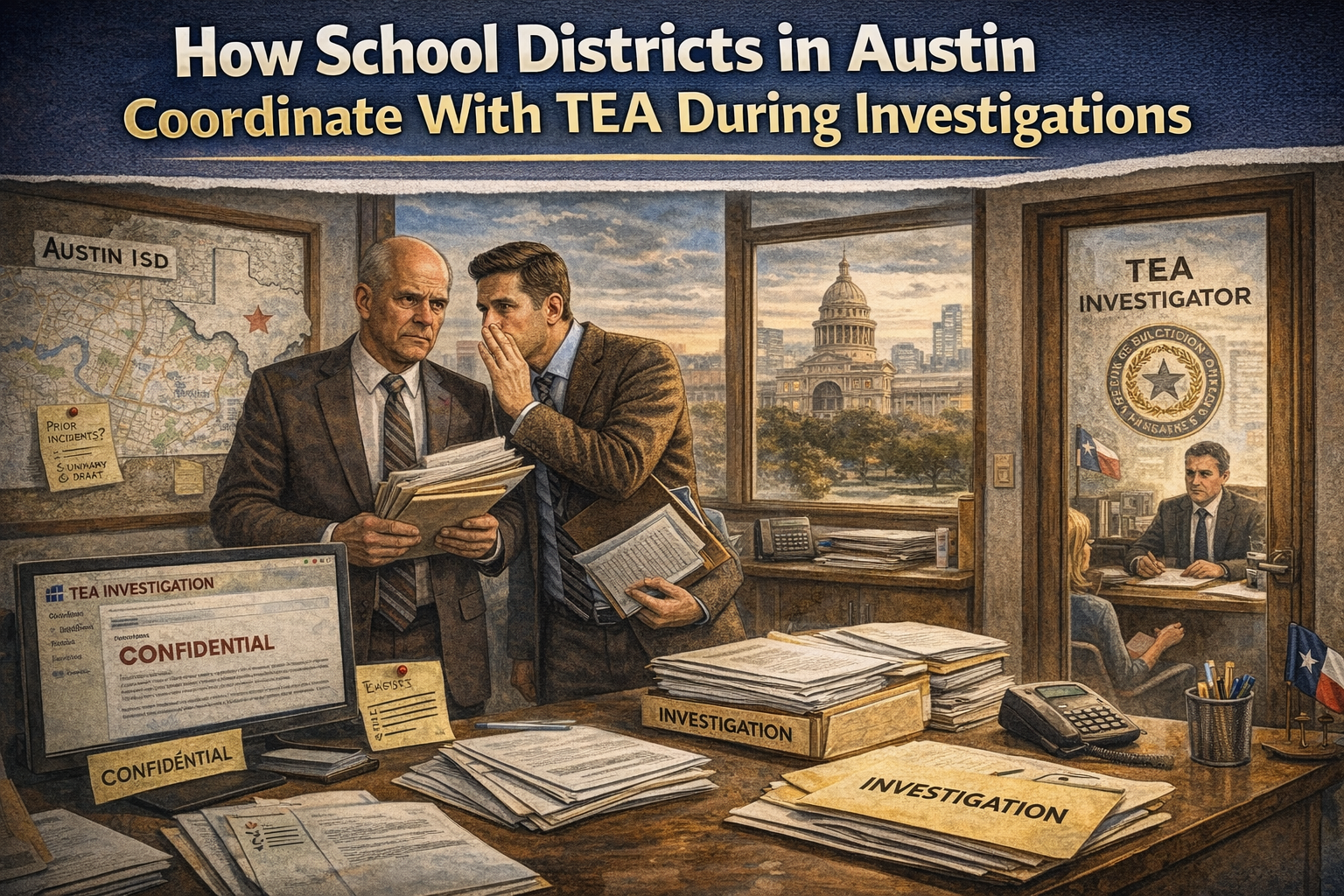
A TEA investigation can feel like it starts with a single email or a quiet meeting in the front office. One day you’re teaching, planning lessons, and handling a classroom like you always have, and the next day your employer is “looking into concerns” while you’re told to keep things confidential. Many educators assume the district is simply following procedure. What they don’t see—until it’s too late—is how quickly the district and TEA can move in sync behind the scenes.
For teachers in austin, the most dangerous part of an investigation often isn’t the allegation itself. It’s the coordination that happens while the teacher is still trying to figure out what’s even being claimed. When districts build narratives early, decisions can be made long before you’re given a real chance to respond. That is why working with an experienced employment lawyer can be the difference between protecting your certificate and being pushed out based on a partial story. If you’re facing false accusations, it’s critical to get legal advice early.
At Masterly Legal Solutions, we understand how investigations unfold in texas and why teachers need a strategy early. This article explains how districts coordinate with TEA, how that coordination can trigger retaliation, and what you can do to protect your legal rights and career.
What Teachers Don’t See: The Two-Track Investigation
In many cases, an investigation moves on two tracks at the same time. The district runs an internal inquiry while TEA processes a complaint and evaluates whether educator discipline is warranted. The teacher is often caught in the middle without full information, while the employer's actions shape the record.
The district’s internal track can include interviews, documentation collection, and administrative decisions that affect your daily work. TEA’s track may involve requests for records, statements, or summaries. This dual process is common in austin employment disputes and can create pressure that feels coordinated even when the teacher is not told what is happening. It is one reason employment law becomes so relevant in educator cases.
The “Confidential” Label and Why It Can Work Against Employees
Teachers are often told the matter is confidential and that discussing it could be “insubordination.” Confidentiality is sometimes appropriate, but it can also isolate you and keep you from getting support. It may prevent you from clarifying facts with witnesses or responding to rumors in the workplace.
When teachers are isolated, districts control the story. Statements from administrators and selected staff become “evidence,” while the teacher is expected to stay silent. That silence can later be used as a false reason to suggest the teacher was uncooperative. A confidential investigation should never mean you lose your ability to defend yourself.
How School Districts Build a Narrative Before TEA Ever Contacts You
One of the most overlooked dynamics is how early narratives get created. Districts often write summaries, incident reports, and internal memos that frame the teacher’s intent and credibility. These documents may later be sent to TEA or referenced as “objective” records, even though they were drafted by the employer.
Teachers frequently believe they will be asked for their side first. In reality, many investigations begin with staff interviews and paperwork that does not include the teacher’s perspective. Once that narrative is in place, it can be hard to correct. This is why early guidance from an employment attorney matters.
What Coordination With TEA Often Looks Like Behind the Scenes
Coordination can include document sharing, timeline updates, and district legal teams advising how information should be presented. It can also include discussions about whether to place a teacher on leave, recommend discipline, or initiate nonrenewal. In many cases, the district’s legal team functions like a law firm inside the organization.
Coordination also affects what TEA sees first. TEA may receive a package that includes selected emails, reports, and interviews. The teacher may not know what was submitted, which makes responding difficult. If you suspect the district is shaping the record, you need counsel who knows how to determine what evidence exists and how to respond.
Why This Process Can Create Workplace Retaliation
When an investigation begins, a teacher’s standing in the workplace can shift overnight. Administrators may stop communicating normally, colleagues may avoid you, and your duties may be changed. These changes can become workplace retaliation, even if the district claims they are “routine precautions.”
Workplace retaliation occurs when a teacher faces negative treatment because they engaged in protected activity—such as reporting discrimination, reporting harassment, requesting accommodations, or participating in an investigation. A district may deny it, but patterns are often visible through emails, scheduling changes, and discipline timelines. Retaliation can show up in many forms, and the earlier it is documented, the stronger your position becomes.
Protected Activity and Why It Matters in Austin Teacher Investigations
A key issue in many TEA-related disputes is whether the teacher engaged in protected activity. Protected activity can include filing a complaint, cooperating with an inquiry, raising safety concerns, or opposing unlawful conduct. Under state and federal laws, an employer may be prohibited from punishing an employee for protected activity.
Teachers often think protected activity only applies to corporate jobs. That is not true. These concepts apply broadly in employment law, including education workplaces. If a district is retaliating, understanding protected activity is the foundation of a retaliation case.
Retaliation in the Workplace Can Be Subtle and Still Illegal
Retaliation isn’t always a dramatic firing. It can be a slow squeeze: fewer resources, harsh observations, unfair write-ups, and constant “performance concerns.” It can be exclusion from meetings, reassignment to difficult duties, or changes that disrupt your life.
This is why the term adverse actions is used in the law. Adverse actions can include anything that would discourage a reasonable employee from speaking up again. When districts coordinate with TEA and also apply pressure internally, teachers may face both professional risk and employment harm at the same time.
Negative Employment Action and the Paper Trail Problem
A negative employment action might include suspension, demotion, reduction in duties, or nonrenewal. In education, it can also include disciplinary plans or sudden evaluation changes that hurt your future opportunities. The district may claim the action is based on performance, but the timing may tell another story.
A paper trail can be built quickly during investigations. Teachers may be written up for minor issues that were tolerated before. Then the district uses those forms as justification for later discipline. This pattern is common in retaliation claims and employment law cases involving teachers.
Wrongful Termination Without a Formal “Firing”
Many teachers lose their position through nonrenewal, coerced resignation, or forced transfers. That can still be wrongful termination depending on the facts and the reason. Some teachers are effectively wrongfully terminated because the district manufactures a rationale rather than addressing the real issue.
Districts sometimes push educators out with a “resign now or we’ll recommend termination” approach. That pressure can be tied to retaliation, discrimination, or an attempt to protect the district’s public image. The law looks closely at motive, timing, and credibility, which is why evidence matters.
Unlawful Retaliation and What the Law Prohibits
Unlawful retaliation occurs when an employee faces retaliation for protected activity. Retaliation can be prohibited under multiple legal frameworks, including federal law and the texas labor code. It can also be linked to discrimination statutes if the underlying complaint involved protected traits.
The problem is that districts rarely admit retaliation. They offer a false reason, such as “performance,” “communication problems,” or “failure to follow protocol.” That is why documentation is critical. An experienced employment lawyer can help identify the real sequence of events and challenge the employer’s narrative.
Unlawful Discrimination and How It Can Intertwine With TEA Cases
Some investigations include allegations that are rooted in discrimination. That discrimination may involve race, sex, age, religion, disability, or national origin. In those cases, the teacher may face both TEA scrutiny and workplace discrimination problems at the same time.
Discrimination issues can also lead to retaliation if the teacher complains. A teacher who reports unequal treatment might suddenly receive negative evaluations or be targeted during an investigation. This is where employment law and TEA procedures overlap in a way that often works against employees. Teachers need to understand both systems to protect themselves.
Disability and Accommodation Issues in School Investigations
Teachers with a disability may need accommodations, and requesting them can trigger conflict. Some districts treat accommodation requests as inconvenience rather than a legal obligation. When a teacher’s request is ignored or punished, the situation can escalate into discrimination and retaliation.
The disabilities act can apply when employees seek accommodations. If your workplace response changes after a request, that shift may become evidence. Teachers should document requests, responses, and any retaliating behavior that follows.
The Role of the Equal Employment Opportunity Commission
Many teachers do not realize that the equal employment opportunity commission may be relevant to their situation when discrimination or retaliation is involved. The eeoc can handle workplace claims connected to discrimination and retaliation, which can run parallel to a TEA matter depending on the facts.
This is not about creating more conflict. It is about protecting your legal rights and your livelihood. Filing decisions should be made carefully with counsel, especially because deadlines and procedural rules can be strict.
Filing: Why Timing Matters More Than Most Teachers Expect
Filing a complaint, a grievance, or an EEOC charge may have specific deadlines. Waiting too long can limit options, even if the underlying story is strong. That is why teachers should seek advice early, not after the damage is done.
Filing also requires careful wording. A rushed complaint can leave out key facts or misstate the timeline. That can weaken your leverage and your credibility. Strategic filing supports your case; impulsive filing can create problems.
Employer Actions That Can Signal Coordinated Pressure
Teachers should watch for patterns, not isolated moments. Some employer actions are normal during an investigation, but others signal that the district is building leverage. These signals can include sudden changes in duties, forced meetings, and repeated demands for written statements.
Examples of employer actions that may raise concerns include:
- Sudden reassignment without a clear explanation
- Increased classroom observations that don’t match past practice
- New disciplinary forms appearing after protected activity
- Threats about termination or certification consequences
- Pressure to resign “to avoid bigger problems”
These patterns can support retaliation claims and help show how coordination with TEA affects the teacher’s employment outcome.
Retaliating Through Isolation and Professional Reputation Attacks
Retaliating behavior isn’t always a formal discipline. It can be isolation, exclusion, and subtle reputation damage. You may be treated like a risk, not a professional, even before any finding exists. Colleagues may be instructed not to discuss the case, leaving you socially and professionally alone.
This type of retaliation in the workplace can damage your confidence, mental health, and ability to function. It can also pressure you into resignation. A strong legal approach recognizes that retaliation is not just what happens on paper—it’s what happens in real life.
The Texas Board and Certification Risk
Many teachers fear the texas board and certification consequences, and districts know that fear. Even a hint that your certificate could be affected can push teachers into silence or resignation. When the district suggests that TEA will “come down hard,” the teacher may believe there is no point in defending themselves.
But certification outcomes are not automatic. They depend on facts, documentation, and how the case is presented. Teachers should never assume the district’s framing is accurate. An experienced attorney can help you evaluate what is actually at stake and how to respond.
Evidence: Your Most Important Defense Tool
Evidence is not just dramatic proof. It’s the small details that establish patterns. It includes emails, evaluation history, schedules, meeting notes, witness names, and policy references. In retaliation cases, evidence often comes from timing and comparison.
Teachers should preserve evidence in a calm, organized way. Do not rely on memory alone. Evidence helps determine whether the employer’s reason makes sense or is a false reason. It also helps build a credible narrative if legal action becomes necessary.
Asserting Your Rights Without Escalating the Conflict
Teachers often fear that asserting rights will “make it worse.” The goal is not to escalate, but to protect yourself while staying professional. A good strategy can include measured communication, written clarification requests, and careful documentation.
Asserting your rights is sometimes as simple as asking for the allegation in writing, requesting the policy basis for discipline, or clarifying deadlines. It can also include requesting representation in meetings. The key is doing it in a way that anticipates how the district and TEA may interpret your conduct.
Why an Austin Retaliation Lawyer Can Help Early
An austin retaliation lawyer can help teachers recognize when the process has shifted from investigation into retaliation. Early legal guidance can prevent damaging statements and help teachers respond in a way that protects their future. It also helps identify whether workplace conduct is prohibited under state and federal laws.
Teachers often wait until termination is imminent. By then, the district may have built months of documentation. Early counsel helps you act while you still have options.
What Austin Employment Lawyers Focus On in These Cases
Strong austin employment lawyers focus on patterns, evidence, and strategy. They evaluate whether protected activity occurred, whether adverse actions followed, and whether the employer’s explanation is credible. They also look at how the district’s coordination with TEA impacts employment decisions.
Employment lawyers also help teachers avoid common mistakes, like oversharing in statements or signing agreements under pressure. These cases require careful handling because what you do now can affect your license, your job, and your future earnings.
Employment Law Attorneys and the Value of a Coordinated Strategy
When TEA issues overlap with employment disputes, a coordinated strategy matters. Employment law attorneys can evaluate both the workplace side and the retaliation or discrimination side. That can help prevent a teacher from defending one issue while unknowingly creating risk in another.
A coordinated approach also helps protect your record. It can shape how you respond to interviews and how you frame your position in writing. The goal is to protect your career, not just survive the week.
Employment Lawyer Support During Meetings and Statements
An employment lawyer can help you prepare for investigative meetings and written statements. These meetings often feel informal, but they are not. Anything you say can become a record used by the employer or shared with TEA.
Legal support helps you answer truthfully without volunteering unnecessary details. It also helps ensure your tone remains professional. When teachers have counsel, districts often act more carefully because they know the process is being monitored.
Financial Compensation and Why It Matters to Teachers
Many educators hesitate to consider financial remedies because they feel it’s “not who they are.” But when retaliation or discrimination harms your career, financial loss is real. Teachers can lose pay, benefits, and future earning potential. Some also deal with unpaid wages or disputes about compensation.
In certain circumstances, financial compensation may be part of resolving the harm. This is not about greed—it is about fairness and restoring what you lost. A well-handled legal approach can protect both your professional reputation and your financial stability.
Court Isn’t Always the Goal, But It Can Be the Leverage
Not every case belongs in court, but sometimes formal legal action is the only way to stop a harmful pattern. Legal action can include negotiations, agency filing, internal grievance processes, or litigation. The right path depends on the facts and your goals.
The key is not to wait until you have no leverage. The earlier you build evidence and assert rights, the more options you preserve. A law firm can help determine what approach fits your situation.
Extensive Experience Matters When Employers Coordinate With Agencies
When districts coordinate with TEA, the teacher is not just dealing with one decision-maker. You may be dealing with administrators, HR, district counsel, and external investigators. That complexity can overwhelm teachers who are trying to stay calm and keep teaching.
That is why extensive experience in employment disputes is important. At Masterly Legal Solutions, we understand how employer actions, documentation, and procedural moves fit together. Our job is to help you protect your rights and position, even when the system feels stacked against you.
Attorney Client Relationship and Confidential Support
Teachers often fear that even asking for help will “get out.” But an attorney client relationship provides confidentiality so you can speak openly. You can share what happened, what you suspect, and what you fear without guessing who will repeat it.
This confidentiality is more than comfort. It allows your legal team to build an accurate strategy. It also helps you stop making decisions from panic. When you have counsel, you can act with clarity.
How Masterly Legal Solutions Can Represent Employees
Masterly Legal Solutions works to represent employees facing retaliation, discrimination, wrongful termination pressure, and complex investigation dynamics. We understand how employers coordinate internal and external processes. We also understand what teachers risk when they respond without guidance.
We focus on protecting your license, your job, and your future. That includes evaluating evidence, identifying protected activity, and building a strategy that fits your goals. We take your career seriously because we know how much you’ve invested in it.
A Practical Checklist When You Suspect Coordination Is Working Against You
You don’t need to become a legal expert overnight. But you do need to act intentionally. If you suspect coordination is working against you, focus on clarity and documentation.
Practical steps include:
- Save emails, directives, and evaluation records
- Write a timeline of key events and interactions
- Keep communication professional and calm
- Ask for allegations and expectations in writing
- Avoid discussing the matter broadly at work
- Speak with an employment lawyer before signing forms
These steps help protect you whether you pursue a retaliation case, a discrimination claim, or a negotiation strategy.
Contact Masterly Legal Solutions for a Free Consultation
If you work in school districts in austin and you suspect your district is coordinating with TEA in a way that is shaping the story against you, you deserve clear answers before the process gets further out of your control. TEA investigations move fast, and workplace retaliation can escalate quietly through adverse actions, negative employment action, and pressure that makes teachers feel trapped. You don’t have to navigate this alone.
Masterly Legal Solutions is a law firm that helps educators and other employees understand their options under employment law, federal law, and the texas labor code. Whether you’re dealing with retaliation in the workplace, unlawful discrimination, a wrongful termination threat, or a full retaliation case involving protected activity and evidence, we can provide guidance and help you protect your career. If you’ve been retaliated against for reporting discrimination, or you’re facing employer actions based on a false reason, we can help you evaluate whether legal action is appropriate.
Call (972) 236-5051 to contact Masterly Legal Solutions for a free consultation.
Disclaimer: This article is for general educational purposes only and does not constitute legal advice or legal guidance. Reading this article does not create an attorney-client relationship. For advice about your specific situation, consult a qualified attorney.




Teacher Rights When Assaulted by a Special Needs Student: Safety, Reporting and Investigation Issues



Looking for Legal & Business Solutions? Contact Us Now
Fill in the form or call us to set up a meeting