

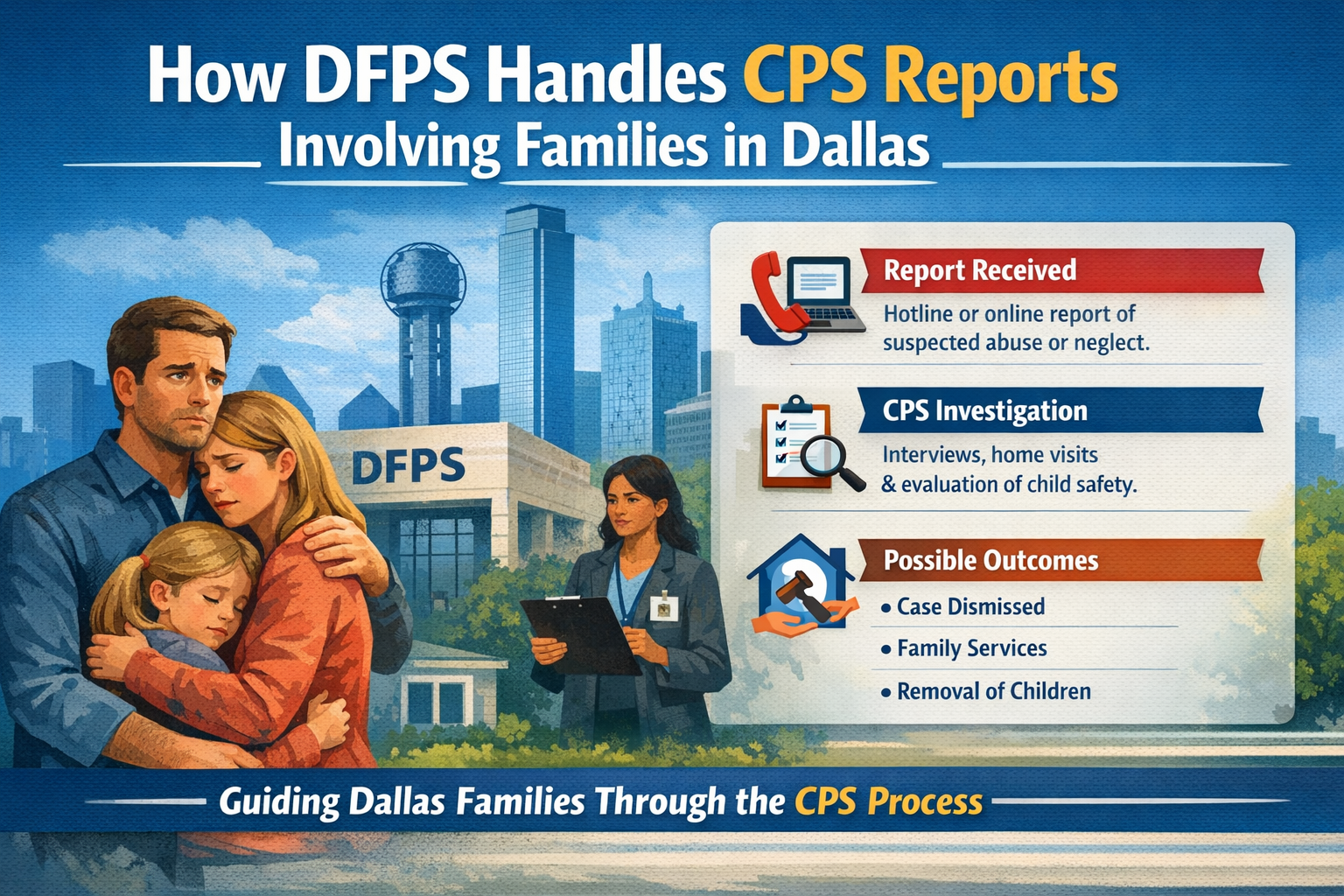
How DFPS Handles CPS Reports Involving Families in Dallas
When a parent in Dallas learns that Child Protective Services CPS has received a report about their family, the experience can feel overwhelming. Many parents immediately worry about their children, their parental rights, and what might happen next. Fear, confusion, and frustration are common, especially when allegations of abuse or neglect seem unclear or exaggerated.
At Masterly Legal Solutions, we work with clients across Dallas who are dealing with CPS cases and investigations by the Texas Department of Family and Protective Services.. Our goal is not only to explain the cps process, but to stand beside families during one of the most stressful times of their lives. Understanding how family and protective services handle reports can help you feel more prepared and better equipped to protect your children and your future.
Understanding the Role of DFPS and CPS in Texas
The Texas Department of Family and Protective Services, often shortened to DFPS or the texas department of family and protective services, is the state agency responsible for protecting children from abuse and neglect. Within that agency, child protective services cps is the division that handles reports involving children and investigates concerns about their safety.
In Dallas and throughout Texas, cps has the authority to review reports, conduct an investigation, and determine whether children are at risk. The agency’s main focus is the child’s safety. However, the way cps cases are handled can deeply affect parents and the entire family.
How Reports Are Made to CPS in Dallas
The Texas Abuse Hotline and Online Reporting
Most CPS reports begin with a call to the texas abuse hotline or an online submission through the DFPS website. Anyone can submit a report, including teachers, doctors, neighbors, family members, or other concerned individuals. Some professionals are required by law to report suspected abuse or neglect.
When a person contacts the texas abuse hotline, they provide relevant information about the child involved, the parents, and the concerns they believe may put the child’s safety at risk. The hotline staff then reviews the details and decides whether the allegations meet the criteria for further action.
What Information Must Be Provided
To open a case, DFPS needs specific information, such as:
- The name and age of the children
- The address or location in Dallas
- A description of the alleged abuse or neglect
- The names of parents or caregivers involved
Without enough relevant information, the agency may not move forward. However, once a report meets the legal standard, CPS will begin the cps process.
Screening and Assignment of the Report
After a report is received, DFPS officials screen it to determine the level of risk. Not every report leads to a full investigation. The agency must determine whether the allegations suggest immediate danger, ongoing neglect, or another form of abuse.
If the concerns appear serious, the report is assigned to CPS caseworkers in Dallas. The urgency of the response depends on the level of danger described in the report. In emergency situations, CPS may respond within hours.
The CPS Investigation Process in Dallas
Initial Contact with Parents
Once assigned, CPS caseworkers typically make contact with the parents. This can happen at home, at a child’s school, or another location. The purpose is to begin the investigation and assess the child’s safety.
Caseworkers may interview children separately from parents. They may also speak with teachers, medical providers, or other family members. While this can feel intrusive, the agency claims it is necessary to assess the situation.
Interviews and Home Visits
During the investigation, CPS will:
- Interview the child involved
- Speak with parents and caregivers
- Inspect the home environment
- Gather records or documentation
The investigation focuses on determining whether abuse or neglect occurred and whether the children are currently safe. CPS must assess both past harm and ongoing risk.
Allegations of Abuse and Neglect
Alleged abuse can include physical abuse, emotional abuse, or sexual abuse. Neglect may involve failing to provide proper supervision, medical care, food, or shelter.
In many cps cases in Dallas, allegations arise from misunderstandings, custody disputes, or anonymous reports. Unfortunately, accusations alone can trigger a full investigation. Parents often feel shocked to learn that someone has reported their family.
Emergency Situations and Immediate Removal
When CPS Can Remove Children
In emergency situations where CPS believes children are in immediate danger, the agency has the authority to remove them from the home without a court order. This is often referred to as an emergency removal.
Removal is one of the most serious actions CPS can take. The agency must later justify its decision in a court hearing. The judge will review whether the removal was necessary to protect the child from harm.
Placement in Foster Care or with Family Members
If children are removed, they may be placed in foster care or temporarily with family members. DFPS generally prefers placement with relatives when possible.
Even temporary placement in foster care can be traumatic for children and parents. That is why taking action sooner rather than later is critical when dealing with CPS in Dallas.
The Adversary Hearing in Dallas Courts
After removal, a hearing is scheduled quickly. This court hearing gives parents the opportunity to respond to the allegations and challenge the agency’s actions.
At this stage, having a family law attorney or experienced attorney is essential. The judge will consider whether CPS had sufficient evidence of abuse or neglect and whether children can safely return home.
Parental Rights and the Law
Parents in Texas have strong parental rights under state law. However, those rights can be limited or even terminated if the court finds severe abuse or neglect.
Understanding your rights during the cps process is critical. Parents have the right to be informed of allegations, to attend hearings, and to present evidence. They also have the right to seek legal representation.
Ongoing CPS Cases and Service Plans
Providing Services to the Family
If the court allows children to remain in the home or orders reunification, CPS often creates a service plan. This plan outlines steps parents must complete to address concerns.
Providing services may include:
- Parenting classes
- Counseling
- Substance abuse treatment
- Psychological evaluations
Providing services is intended to reduce risk and improve child safety. However, failing to comply can negatively affect the outcome of cps cases.
Monitoring and Review Hearings
CPS caseworkers continue monitoring the family during the case. The court holds periodic hearings to review progress. Judges will determine whether parents are complying with services and whether children remain safe.
The Risk of Termination of Parental Rights
In the most serious cases, DFPS may seek termination of parental rights. This permanently ends the legal relationship between parents and children.
Termination cases often involve repeated abuse, severe neglect, or failure to complete services. The burden is high, but the consequences are life-changing. Parents deserve strong legal representation in these proceedings.
How CPS Determines Findings
At the end of an investigation, CPS will determine whether the allegations are:
- Ruled out
- Unable to determine
- Reason to believe abuse or neglect occurred
These findings can affect employment, future custody matters, and reputation. Because reports are confidential, not all details are publicly available, but they may still appear in certain background checks.
Dealing with False Accusations in Dallas
False accusations can arise during custody disputes, neighbor conflicts, or misunderstandings. Even when allegations are untrue, CPS must investigate.
Dealing with false reports requires careful documentation and calm communication. Speaking with an attorney early can help protect your parental rights and ensure your side of the story is heard.
The Role of Caseworkers and the Agency
CPS caseworkers are representatives of the agency and have significant authority. They can request interviews, inspect living conditions, and obtain records relevant to the investigation.
While caseworkers are tasked with protecting children, they also make judgments that affect families. It is important to remain respectful while also understanding your rights under Texas law.
How to Respond When CPS Contacts You
If CPS contacts you in Dallas:
- Stay calm and polite
- Ask for identification
- Listen carefully to the concerns
- Consider contacting an attorney before answering detailed questions
You have the right to legal guidance. Calling a knowledgeable attorney can help you avoid mistakes that might increase risk to your case.
The Importance of Early Legal Assistance
The sooner you seek assistance, the better prepared you will be. Early legal involvement can shape how the investigation unfolds and how you present evidence.
Our firm works closely with clients to review reports, assess allegations, and prepare for hearings. We understand the local Dallas courts and how family and protective services operates..
Protecting Your Children and Your Future
Every parent wants to protect their children. When CPS becomes involved, it can feel like your family is under a microscope. However, being informed and proactive makes a difference.
You deserve to understand the process, your rights, and your options. With professional guidance, you can address concerns, comply with required services, and work toward a stable outcome.
Access to Resources and Support
Navigating CPS cases requires access to reliable resources. This may include counseling providers, parenting programs, or medical professionals.
Working with an attorney ensures you have someone who can explain each step, discuss strategy, and help you prepare for every hearing.
Why Families in Dallas Choose Masterly Legal Solutions
At Masterly Legal Solutions, we recognize that no two families are alike. Each case involves unique details, emotions, and challenges.
Our office is committed to offering clear communication, strategic representation, and compassionate service. We understand how quickly allegations can arise and how serious the consequences can be.
When you work with our firm, you are not just another case. You are a parent fighting to protect your children and your rights.
Speak With a CPS Defense Attorney Today
If you are facing a CPS investigation in Dallas, do not wait. Calling our office can provide clarity and direction during a confusing time. We are prepared to discuss your concerns, review your situation, and help you determine the next steps.
Every moment matters in cps cases. The sooner you act, the stronger your position may be when dealing with DFPS and the courts.
CPS Dallas: What Parents Should Know About Local Investigations
When dealing with CPS Dallas cases, it is important to understand how local procedures and court systems operate. While the Texas Department of Family and Protective Services oversees investigations statewide, each Dallas case may involve specific judges, caseworkers, and timelines that affect how matters move forward.
Parents should take every contact seriously and respond carefully to protect their rights. Speaking with an experienced attorney early can help you prepare for interviews, hearings, and any services that may be required.
Understanding Allegations of Child Abuse
Allegations of child abuse are among the most serious claims that can be made against a parent or caregiver. Even if the report is based on a misunderstanding or false accusation, CPS is required to investigate thoroughly. These investigations often include interviews with children, parents, teachers, and medical professionals.
Because findings can impact custody, employment, and reputation, parents should approach child abuse allegations with caution and obtain legal guidance as soon as possible.
The Message You Send During a CPS Investigation
Every action you take during a CPS investigation sends a message to caseworkers and, potentially, to the court. Remaining calm, cooperative, and respectful can demonstrate that you are focused on your child’s well-being. At the same time, it is critical not to volunteer unnecessary information without first understanding your legal rights. With proper legal support, you can communicate clearly while also protecting your interests.
Why the Subject of the Investigation Matters
The subject of a CPS investigation is typically the parent or caregiver accused of abuse or neglect. However, the investigation may also examine other adults living in the home or regularly involved in the child’s life. Understanding who is considered the subject helps clarify whose actions and background will be reviewed. An attorney can help you determine how being named as the subject of a report may affect your case and what steps to take next.
Focusing on Protection for Children and Families
The stated goal of CPS is the protection of children from harm. While child safety is the priority, families also deserve fair treatment and respect for their rights. True protection means ensuring that children are safe without unnecessarily disrupting stable homes. By working with knowledgeable legal counsel, parents can advocate for balanced solutions that protect both their children and their parental rights.
Contact Us for a Free Consultation
If CPS has contacted you, if you have received notice of a hearing, or if you simply have questions about how family and protective services handles reports in Dallas, we are here to help. Contact Masterly Legal Solutions at (972) 236-5051 for a free consultation..
When you call, we will listen carefully, answer your questions, and explain how Texas law applies to your situation. Your family deserves informed, strategic representation. Reach out today so we can help you protect what matters most.
Disclaimer: This article is for informational purposes only and is not legal guidance. Every CPS case is different. For advice about your specific situation, please contact a qualified attorney directly.


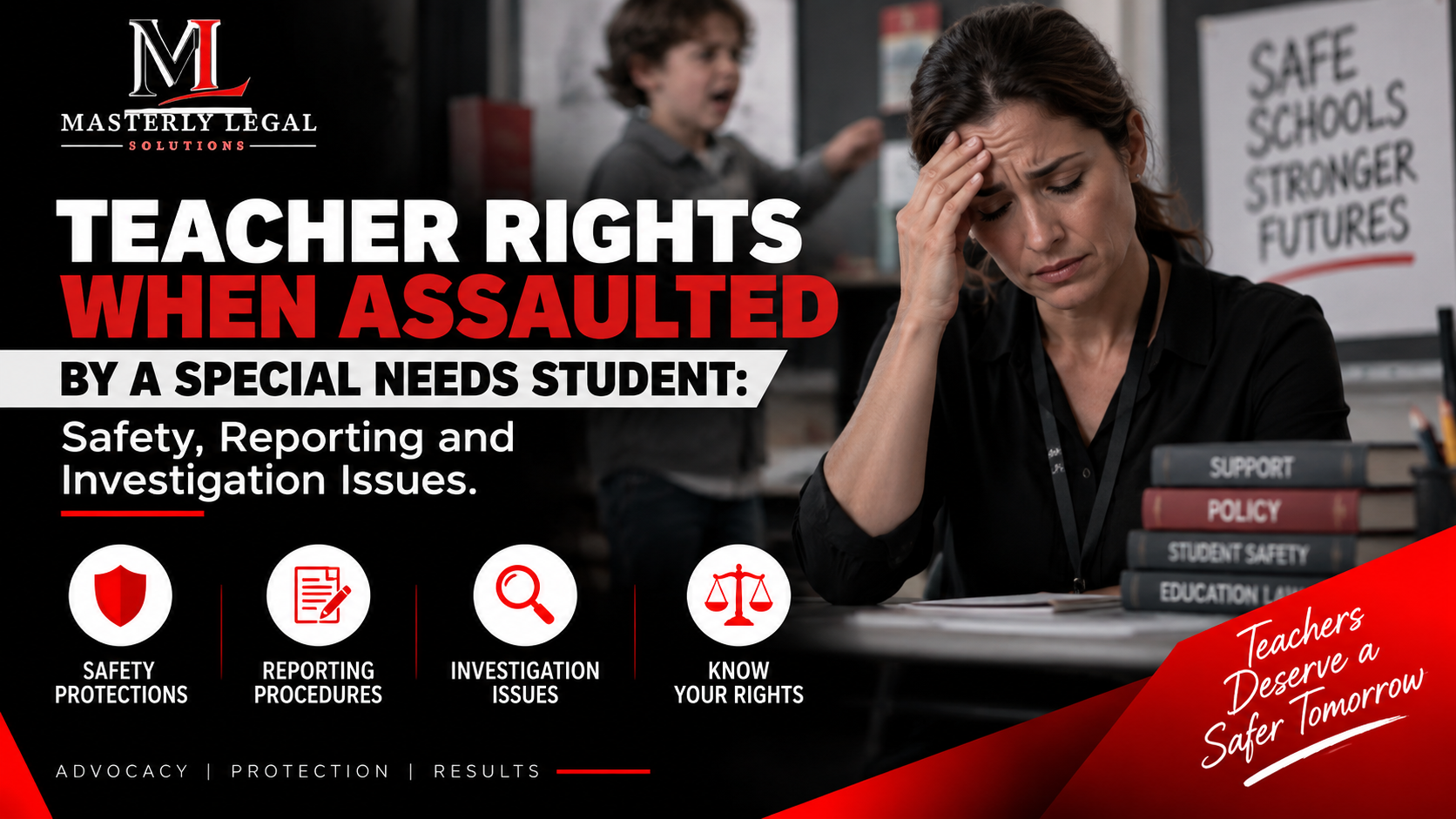
Teacher Rights When Assaulted by a Special Needs Student: Safety, Reporting and Investigation Issues



Looking for Legal & Business Solutions? Contact Us Now
Fill in the form or call us to set up a meeting