How Early Legal Intervention Can Stop a Civility Policy Violation from Escalating
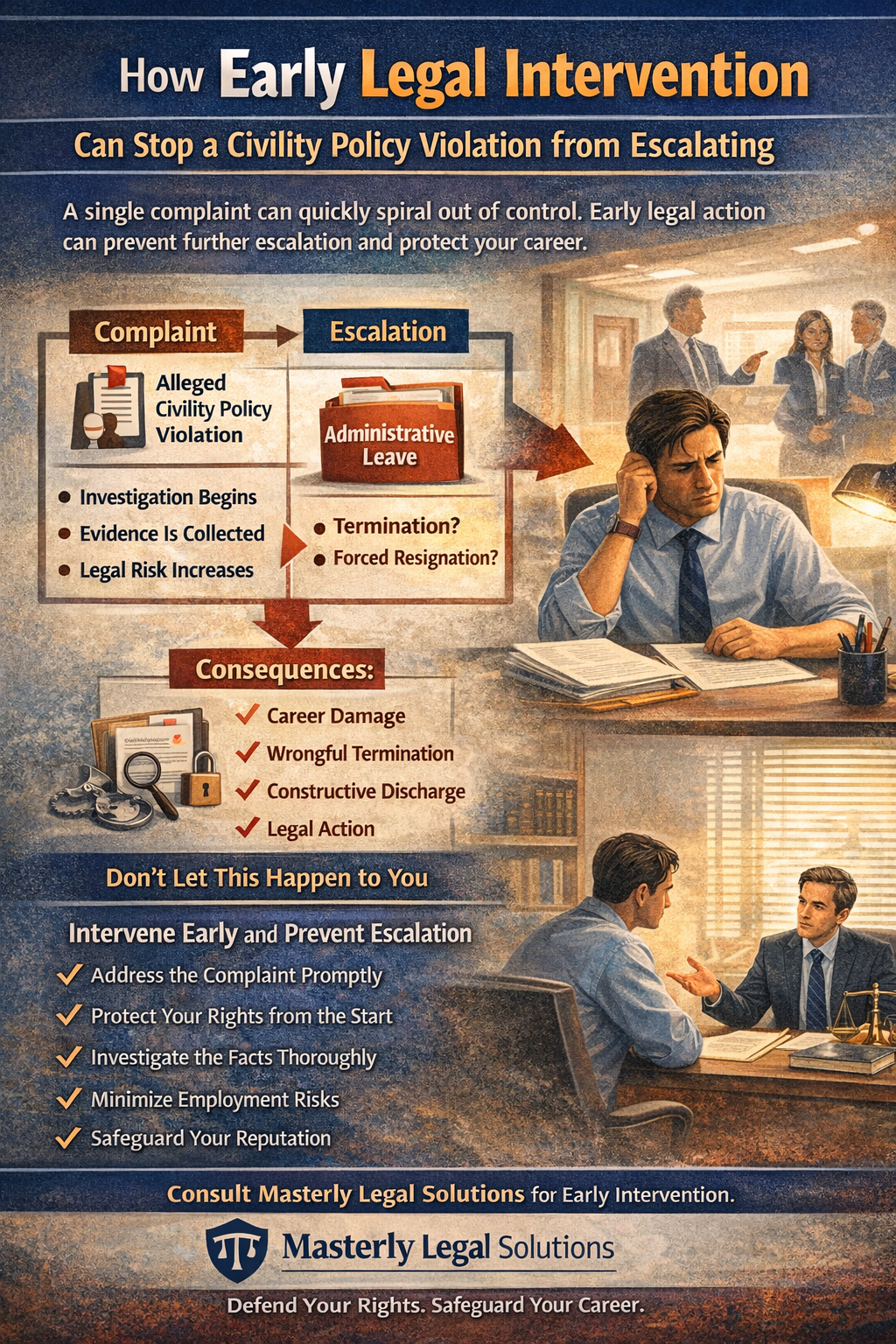
A single complaint about workplace behavior can change everything. What may begin as a misunderstanding under a civility or conduct policy can quickly escalate into administrative leave, formal discipline, or even termination. Many employees do not realize how fast the process can move once an employer determines that a violation may have occurred. Early legal intervention can be the difference between a manageable situation and a career-ending event.
At Masterly Legal Solutions, we approach these matters with urgency and strategy. Our focus is not only on defending against a claim but also on stopping escalation before it results in wrongful termination, constructive discharge, or a forced resignation. We understand how internal policies, public policy considerations, and employment law intersect. Most importantly, we know how to protect the employee before the damage becomes permanent.
Understanding Civility Policy Violations
Civility policies are designed to promote respectful conduct in the workplace. They often address communication, professional boundaries, and behavior that could create a hostile work environment. While these policies serve an important purpose, they can sometimes be applied too broadly or subjectively.
An employer may interpret tone, disagreement, or personality conflicts as a violation. In some cases, allegations of harassment or sexual harassment become tied to civility complaints. Without careful review, what was a minor issue can transform into a serious legal claim.
How a Simple Complaint Becomes Administrative Leave
When an allegation is made, an agency or employer may quickly place an employee on administrative leave. This action is often described as temporary, but it carries serious implications. Being placed on administrative leave signals that the employer views the situation as significant.
Sometimes the leave is paid administrative leave for brief or short periods. In other situations, the agency head may grant administrative leave on a time limited basis while an investigation unfolds. Even when labeled as an excused absence, administrative leave can damage reputation and professional standing..
The Different Types of Leave an Agency May Use
Not all leave is the same. Depending on agency policies and opm regulations, an employee may be placed on investigative leave, notice leave, safety leave, or paid leave. Some forms of leave are specifically authorized under statutory provisions or executive order authority.
For example, safety leave may be used when the agency determines the employee’s presence could disrupt the agency's mission. Notice leave may be applied when termination is pending. Investigative leave may be used while agency officials gather facts. Each type of administrative leave has different legal implications.
Why Early Action Matters
The moment administrative leave begins, the legal process is already in motion. Agency judgments about conduct are being formed. Statements are collected, and documentation is created.
Without early intervention, an employee may unknowingly make statements that harm their defense. A reasonable employee might believe cooperation alone will resolve the issue. However, early legal guidance ensures responses are strategic and consistent with public policy and employment law protections.
Administrative Leave and the Risk of Escalation
Administrative leave often feels like a pause, but it can be the first step toward termination. If the agency head concludes that the violation is directly related to performance issues or internal policies, further disciplinary action may follow.
When an agency determines that separation is appropriate, termination or forced resignation may occur. That progression can happen quickly, especially if the employer views the conduct as serious or disruptive to the agency's mission.
From Administrative Leave to Termination
Termination decisions are not always immediate. Some agencies grant administrative leave for brief periods before issuing notice leave. During this stage, the employee’s current position may already be at risk.
If the employer fired the employee after administrative leave, questions arise about wrongful termination or wrongful discharge. Early legal intervention allows counsel to evaluate whether the agency followed statutory provisions and internal policies consistent with public policy.
Constructive Discharge and Constructive Dismissal
Not all separations are labeled termination. In some cases, working conditions become so difficult that the employee quits. This may give rise to constructive discharge or constructive dismissal claims.
Constructive discharge occurs when a reasonable employee would feel forced to resign due to intolerable working conditions. A hostile work environment, ongoing harassment, or retaliatory actions can contribute to this claim. Constructive dismissal may also apply when the employer makes significant changes to the employee's current position.
Forced Resignation and Its Legal Implications
A forced resignation is not always voluntary. If an employee is told to resign or face immediate termination, that worker's resignation may still support a legal claim. Courts, including the Supreme Court, have recognized that forced resignation can amount to constructive discharge under certain circumstances.
When termination is presented as the only alternative, the resignation may not be truly voluntary. Early legal intervention can help prevent an employee from being pushed into a decision that harms future career opportunities.
Wrongful Termination Cases and Civility Allegations
Wrongful termination cases often begin with what appears to be a policy violation. If the employer relies on vague standards or applies rules inconsistently, the termination may conflict with state law or federal law.
Wrongful termination can arise when public policy is violated, when discrimination is involved, or when retaliation follows protected activity. A civility policy violation should not automatically lead to wrongful discharge without careful review.
Workplace Discrimination and Harassment Concerns
Civility complaints sometimes mask deeper issues. Workplace discrimination or harassment may underlie the conflict. For example, an employee who reports sexual harassment in a school or higher education setting may later face scrutiny under civility policies..
If an employer disciplines the reporting employee instead of addressing the original concern, the situation may involve workplace retaliation. Early legal review helps determine whether the agency’s actions are consistent with public policy and statutory right protections..
Agency Policies and Internal Procedures
Agencies are required to issue internal policies consistent with statutory provisions and executive order mandates. These agency policies should be clear, fair, and applied consistently, often with support from legal services for corporations, nonprofits, and individuals..
However, some agencies rely on ad hoc interpretations when handling civility complaints. When procedures are not specifically authorized or clearly documented, the risk of wrongful termination increases, especially when agencies lack HR consulting services and training on employment laws..
The Role of the Agency Head
The agency head often plays a central role in determining whether to grant administrative leave or move toward termination. Agency judgments at this level can significantly impact the employee’s future.
When the agency determines that conduct undermines the agency's mission, the agency head may authorize investigative leave or notice leave. Legal counsel can present mitigating evidence and protect the employee’s interests before final decisions are made.
Investigative Leave and Due Process
Investigative leave is typically used while facts are gathered. Under opm regulations and opm guidance, investigative leave may be granted for brief periods, often limited within a calendar year.
Although investigative leave may appear neutral, it can still signal serious concern. The employee should understand their rights under employment law and the united states code before participating in interviews or submitting written statements.
When Conduct Is Alleged to Be Illegal
Some civility violations are framed as illegal conduct. This language raises the stakes dramatically, particularly in higher education institutions navigating complex legal obligations. Allegations of illegal behavior can damage reputation even if no criminal charges are filed..
Legal counsel can assess whether the allegation truly involves illegal conduct or whether it is a misunderstanding of policy. Early action helps prevent exaggerated claims from gaining momentum.
The Impact of At Will Employment Laws
Under at will employment laws, an employer generally may terminate an employee for lawful reasons. However, termination cannot violate public policy or statutory right protections.
Even in at will employment situations, wrongful termination and constructive discharge claims may still arise. Early intervention ensures that the employee’s rights under state law and federal law are preserved.
Notice Leave and Imminent Separation
Notice leave often signals that termination is imminent. During notice leave, the employee may be removed from duties while final separation paperwork is prepared.
At this stage, it is critical to evaluate whether wrongful discharge or constructive dismissal is occurring. Legal counsel may negotiate alternatives or challenge procedural violations before termination becomes final.
Public Policy and Employee Protections
Public policy plays a central role in employment disputes. Employers must balance organizational interests with statutory provisions and fairness.
If an employee is punished for refusing to participate in misconduct or for reporting harassment, public policy concerns arise. These circumstances may support a legal claim for wrongful termination or retaliation.
How a Hostile Work Environment Develops
A hostile work environment does not appear overnight. It may develop through repeated harassment, unfair scrutiny, or forced administrative leave without explanation.
When working conditions become intolerable, constructive discharge claims may follow. The law considers whether a reasonable employee would feel compelled to resign under those circumstances.
Personnel Management and Fair Treatment
Personnel management decisions should be grounded in objective standards. When agency officials rely on subjective impressions, errors can occur.
Administrative leave should not be used as a shortcut to avoid fair evaluation. Grant administrative leave only when specifically authorized and justified under agency policies.
Examples of Escalation Without Legal Guidance
Consider an example where an employee is accused of rude communication. The agency places the employee on paid administrative leave for short periods. During interviews, the employee apologizes without understanding the legal implications, which is especially risky for Texas teachers placed on administrative leave..
Later, the agency determines the conduct violated policy and moves toward termination. Without early legal advice, that employee may lose the opportunity to challenge the narrative effectively.
The Dangers of Refusing to Seek Help
Some employees delay contacting counsel because they believe the issue will resolve on its own. Unfortunately, by the time termination occurs, critical evidence may be lost—and similar delays in preparing essential legal documents for families can also create long‑term risks..
A claim for wrongful termination or constructive discharge is stronger when preparation begins early. Waiting until the employer fired the employee limits options.
Executive Orders and Presidential Directives
Certain federal agencies operate under executive order authority or presidential directive requirements. These mandates may address administrative leave, safety leave, or other provision concerns, including when to use outside counsel for internal investigations..
Understanding how these executive order frameworks interact with public policy is essential. Opm regulations and presidential memorandum guidance may also influence agency decisions.
Blood Donations and Officially Sponsored Leave
Some agencies grant administrative leave for officially sponsored activities such as blood donations. These examples show how leave can be used appropriately.
However, misuse of investigative leave or notice leave for punitive purposes can raise legal issues. Not every absence labeled as administrative leave is neutral.
Agency Interests Versus Employee Rights
An agency’s mission and organizational interests are important. However, employee rights under employment law cannot be ignored.
Balancing these interests requires careful analysis. Early legal intervention ensures that agency judgments do not unfairly override statutory right protections.
Constructive Discharge and Worker’s Resignation
When an employee quits due to intolerable working conditions, courts analyze whether constructive discharge occurred. The worker's resignation may still support a legal claim if the resignation was effectively forced, particularly for university employees facing termination or dismissal..
A forced resignation can follow repeated administrative leave placements, demotions, or public accusations. Addressing the situation early can prevent circumstances from reaching that point.
Sexual Harassment Allegations and Retaliation
Sexual harassment complaints must be handled carefully. When an employee reports harassment and then faces administrative leave, questions of retaliation may arise.
Employment law prohibits punishment for reporting misconduct. Early legal involvement can clarify whether the agency’s actions are consistent with public policy.
Preventing Wrongful Discharge Before It Happens
The best way to handle wrongful termination cases is to prevent them. Early review of agency policies, investigative leave decisions, and notice leave procedures can stop escalation.
A proactive strategy may include written responses, documentation, and communication with authorized agency officials. Acting quickly protects the employee’s interests before termination becomes inevitable.
The Importance of Strategy in Each Calendar Year
Some opm regulations limit investigative leave within a calendar year. Agencies must determine whether additional leave is justified or if alternative measures are required.
Monitoring these limits is part of strategic legal planning. Early intervention ensures compliance with statutory provisions while protecting the employee’s position.
When to Seek Immediate Legal Guidance
If you are placed on administrative leave, notice leave, or investigative leave, do not wait. If termination, forced resignation, or constructive dismissal is mentioned, urgency is critical.
Even brief periods of leave can signal deeper issues. Acting quickly may prevent wrongful termination and preserve your employee rights under law.
Protect Your Career Before Administrative Leave Becomes Termination
Being placed on administrative leave can feel isolating and uncertain. You may worry about your employee record, your future, and whether termination is next. The truth is that early action can make a measurable difference.
At Masterly Legal Solutions, we focus on stopping escalation. Our approach is urgency-driven but solution-focused, designed to protect your interests before a violation becomes a wrongful termination claim or constructive discharge situation.
Contact Masterly Legal Solutions for Immediate Guidance
If you are currently on administrative leave or facing the possibility of termination, now is the time to act. Early legal intervention can protect your rights, clarify your options, and help prevent a forced resignation or wrongful discharge. We understand how quickly these matters can escalate and how deeply they affect your career and well-being.
Our team is prepared to review your situation, evaluate agency policies, and determine whether public policy, statutory right protections, or employment law concerns are involved. We provide strategic guidance tailored to your specific circumstances, with the goal of protecting your employee rights and professional future.
Call Masterly Legal Solutions at (972) 236-5051 to schedule a free consultation. Let us help you address administrative leave concerns before they turn into termination, constructive dismissal, or long-term damage to your career.
This article is provided for informational purposes only and does not constitute legal advice. Reading this material does not create an attorney-client relationship. For advice about your specific situation, please contact Masterly Legal Solutions directly for a personalized consultation.


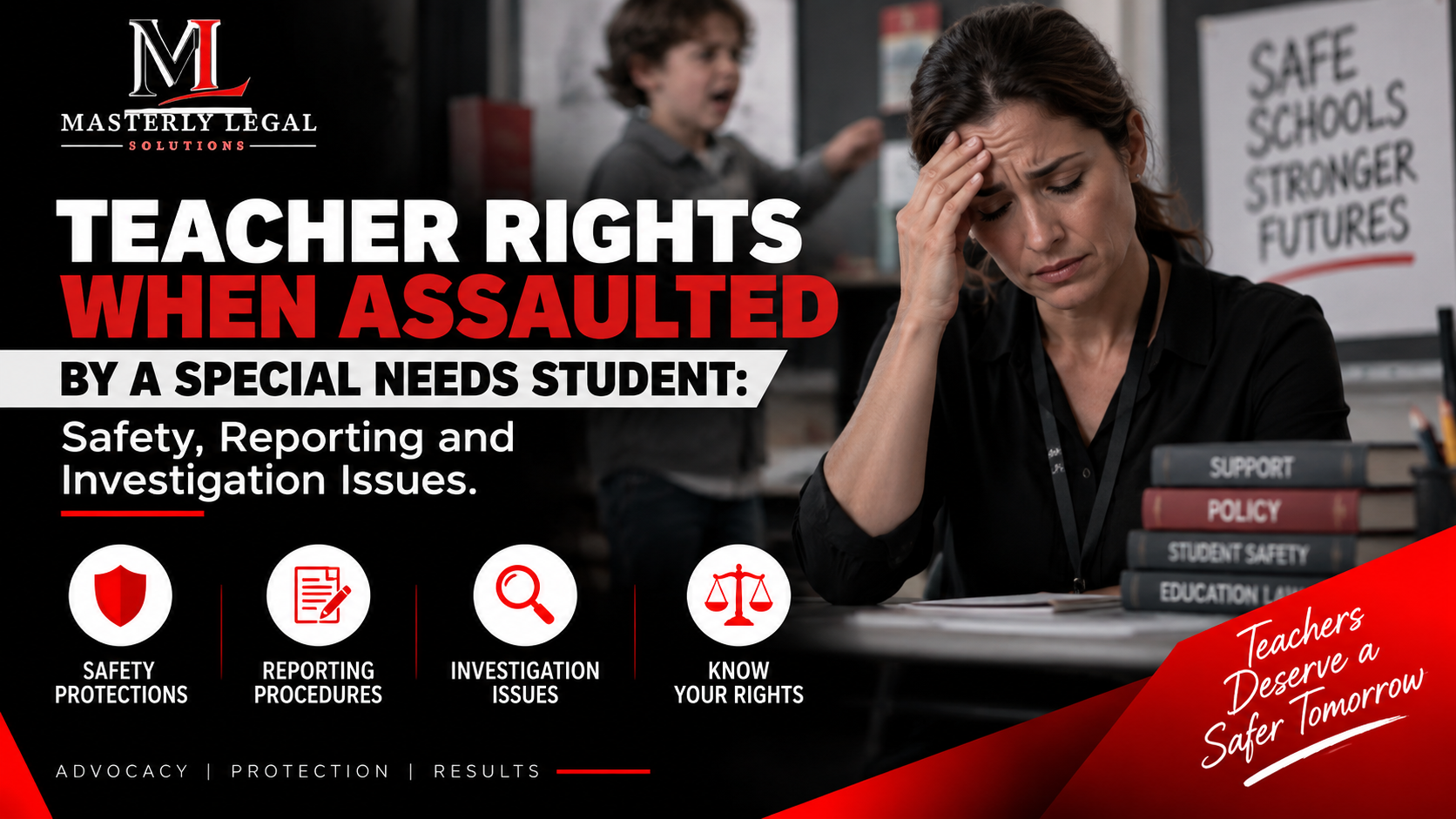
Teacher Rights When Assaulted by a Special Needs Student: Safety, Reporting and Investigation Issues



Looking for Legal & Business Solutions? Contact Us Now
Fill in the form or call us to set up a meeting