

How DFPS Handles CPS Reports in San Antonio
When a CPS Report Suddenly Enters a Family’s Life
Few events disrupt a household more quickly than a report made to CPS. For many families in San Antonio, the moment they learn that Child Protective Services has become involved, fear and confusion follow immediately. Parents often have little warning before a CPS investigation begins, and many do not fully understand how the system works or what their rights are under Texas law.
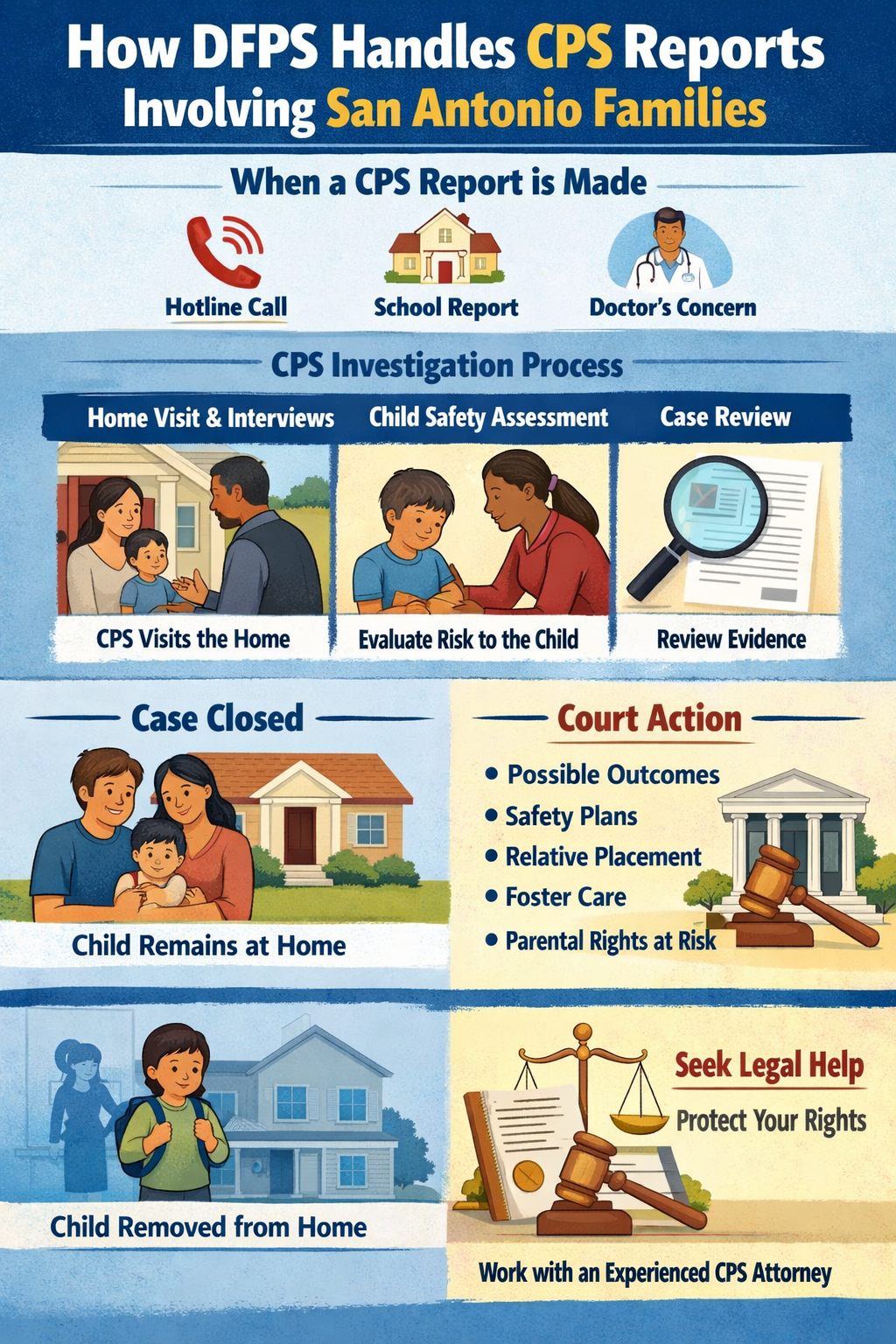
A report to Child Protective Services CPS may begin with a phone call to a state hotline, a report from a school, or a concern raised by medical professionals. Once a complaint is received, the Texas Department responsible for protective services must begin investigating reports that may involve child abuse, neglect, or potential danger to a child. This early stage can feel overwhelming because families may not yet know what the process will involve or whether the investigation could eventually lead to a court order.
Understanding how CPS works and how San Antonio CPS lawyers assist parents can help families prepare for what lies ahead.
The Role of Child Protective Services in Texas
The mission of Child Protective Services is to protect children and investigate claims that a child may be abused or neglected. The agency operates under the Texas Department of Family and Protective Services and works alongside other government agencies when responding to reports.
When CPS receives a complaint, officials must determine whether the report contains enough information to justify an investigation. If the claim suggests that a child could face immediate danger, the agency may act quickly and begin an urgent response.
Many families believe that once CPS becomes involved, the outcome has already been decided. In reality, the investigation process is designed to gather evidence, review the circumstances, and determine whether the allegations are supported by facts.
How CPS Investigations Begin
A CPS investigation usually starts after someone reports possible child abuse or neglect. Teachers, doctors, counselors, and other professionals are often legally required to report suspected harm involving a child.
Once the report is received, the Texas Department may assign a CPS caseworker or one of the agency’s social workers to begin investigating reports. These investigators may contact the parents, speak with the child, and examine the living conditions inside the home.
Many families are surprised when CPS enter their daily lives so quickly. In many situations, the agency attempts to visit the home within a short period after receiving the report.
What Happens During a CPS Home Visit
During the early phase of the investigation, CPS workers often conduct home visits. These visits allow investigators to observe the environment where the child lives and evaluate whether any signs of abuse or neglect are present.
A home visit may involve several steps:
- Interviewing the parents
- Speaking privately with the child
- Reviewing sleeping arrangements and living conditions
- Observing the home for possible safety risks
- Asking questions about family life
Although these visits may seem routine, they are part of a formal CPS investigation that can eventually influence court hearings or other legal decisions.
Do Parents Have the Right to Refuse Entry?
Many parents do not realize that they may have certain rights during a CPS investigation. In many circumstances, parents may choose to refuse entry to their home unless investigators obtain a court order.
However, the situation can become complicated if CPS believes a child is in immediate danger. In those situations, investigators may seek court intervention to authorize further action.
Because the law governing protective services investigations can be complex, many families speak with a CPS lawyer before deciding whether to allow investigators into their home.
The Purpose of CPS Investigations
The goal of CPS investigations is not always to remove a child from their home. Instead, investigators often attempt to assess whether the child faces real harm and whether parents can address the concerns raised in the report.
During the investigation, the agency may review multiple sources of evidence, including statements from teachers, doctors, neighbors, and family members. Investigators must determine whether the allegations involve credible risk.
When CPS concludes that the child is safe, the case may close without further action.
Situations That May Lead to Court Intervention
Not every CPS investigation ends with the case being dismissed. In some situations, the agency may believe the child is still at risk even after reviewing the initial evidence.
When investigators believe that safety concerns remain, they may seek court intervention. This step usually involves asking a judge to approve a court order allowing CPS to take certain actions.
These actions may include:
- Requiring services for the parents
- Supervising the family’s living arrangements
- Temporarily placing the child with relatives
- In extreme situations, placing the child in foster care
Because these decisions can affect parental rights, many families seek help from a CPS defense attorney during this stage.
The Possibility of Child Removal
In serious situations, the agency may ask the court for permission to remove a child from the home. These cases usually involve allegations of severe child abuse, ongoing neglect, or domestic violence that places the child in danger.
Removal typically requires a court order issued by a judge. The court must review the available evidence and decide whether removal is necessary for child safety.
If the judge deems the situation dangerous, the removal may involve removal of the child into foster care or placement with trusted relatives.
The Role of Court Hearings in CPS Cases
Once a child is removed, the case moves into the legal system and becomes part of the court process. Several court hearings may occur to review the status of the child and the family
.
During these hearings, the judge reviews the evidence, listens to testimony, and decides whether the court order should remain in place. Attorneys representing parents, the child, and the agency may present arguments.
These hearings are critical because they influence decisions about custody, services, and the future of the child.
The Role of a Guardian Ad Litem
In many juvenile dependency proceedings, the court appoints a guardian ad litem to represent the best interests of the child. This individual may be a trained advocate or an attorney.
The guardian ad litem investigates the circumstances of the family, reviews evidence, and reports findings to the judge. Their responsibility is to help ensure that decisions made by the court prioritize the child’s safety and well-being.
When CPS May Seek to Terminate Parental Rights
One of the most serious outcomes in CPS cases involves efforts to terminate parental rights. This step permanently removes a parent’s legal relationship with their child.
The court will only approve termination if the agency presents sufficient evidence showing that returning the child home would place them in danger. The judge must carefully evaluate the evidence before making such a decision.
These child welfare cases are among the most emotionally difficult legal proceedings families face.
False Allegations and Misunderstandings
Not every report made to CPS is accurate. Some families encounter false allegations made by neighbors, acquaintances, or individuals involved in disputes.
Even when claims are untrue, the agency may still conduct a full investigation. The presence of false allegations does not always prevent the case from moving forward.
Because CPS allegations can threaten parental rights, many parents seek help from a Texas-based law firm offering broad legal services and San Antonio CPS lawyers who understand how to challenge inaccurate claims.
The Importance of Legal Representation
Facing a CPS investigation without guidance can be extremely stressful. Many parents do not realize how complex these cases become once the court becomes involved.
A CPS lawyer can review the evidence, advise clients, and develop strategies to defend the family. A CPS defense attorney may also represent parents during court hearings and negotiate with the agency.
Working with experienced San Antonio CPS lawyers at a comprehensive Texas law firm like Masterly Legal Solutions can help families understand their options while protecting their parental rights.
How Attorneys Defend Families in CPS Cases
At a skilled defense law firm, attorneys work diligently to protect the rights of families facing CPS involvement. Lawyers analyze every stage of the investigation, challenge weak evidence, and advocate for fair treatment.
A CPS defense strategy may involve reviewing the actions taken by investigators and examining whether the agency followed proper procedures.
Attorneys also work diligently to present evidence that supports the family’s ability to care for the child safely.
Why Early Legal Guidance Matters
The earliest stages of a CPS investigation often shape the outcome of the entire case. Statements made during interviews, documents gathered by investigators, and observations from home visits can all influence the direction of the investigation.
Because these early steps are critical, many families choose to contact a CPS lawyer as soon as possible. Early legal counsel can help parents understand their rights and avoid mistakes during the process.
When a Court Appointed Attorney May Become Involved in CPS Cases
In some CPS cases, a court appointed attorney may be assigned to represent a parent who cannot afford private representation. This typically occurs once the case reaches the court stage and the judge determines that legal representation is necessary to protect the rights of the parents. These attorneys work within the family law system and help ensure that the legal process remains fair while the investigation continues. Their role often includes reviewing the evidence, appearing at court hearings, and advocating for the parent’s position during the case. Even when a court appointed attorney is available, many families still seek additional guidance from experienced lawyers who focus specifically on CPS defense or other complex legal matters such as higher education, labor, and internal investigations.
When CPS Allegations Can Lead to Criminal Charges
Although many CPS investigations focus on the safety and well-being of a child, some situations may escalate into potential criminal charges. If investigators believe that serious child abuse, severe neglect, or other unlawful conduct occurred, law enforcement may become involved alongside Child Protective Services. When this happens, the case may involve both a court proceeding related to the child and a separate criminal matter. Parents facing these circumstances should understand that the stakes are significantly higher because criminal penalties may accompany the CPS case. In these situations, seeking experienced legal help becomes especially important.
The Role of Family Law in CPS Investigations
Most CPS cases fall within the broader field of family law, which governs disputes involving parents, children, and custody decisions, and often overlaps with essential legal documents for families such as wills, trusts, and powers of attorney. Courts handling juvenile dependency proceedings must balance the legal rights of parents with the responsibility of ensuring child safety, issues that frequently intersect with education law, estate planning, and broader family-focused legal services. Judges review reports from CPS, testimony from witnesses, and recommendations from attorneys before issuing a court order. The family law framework also determines how long a child may remain outside the home and what steps parents must complete to reunify their family. Understanding how family law procedures work can help families better prepare for the legal process.
How CPS Procedures Compare to Other Regions
Although CPS procedures in Texas follow state law, many of the investigative steps resemble those used in other jurisdictions across the country, where organizations also rely on outside counsel to conduct impartial internal investigations. For example, counties in other states—such as Orange County—often follow similar approaches when responding to reports involving a child. Investigators typically conduct home visits, interview family members, and evaluate whether a child may be abused or neglected. Courts in these regions also review evidence and issue court orders when necessary to protect a child’s safety. Recognizing that these procedures are part of a broader national framework can help families understand why the process follows certain legal standards.
Why an Initial Consultation With a CPS Lawyer Matters
For many families, speaking with a CPS lawyer or education lawyer experienced in school investigations and teacher defense during an initial consultation can provide clarity during an extremely stressful situation. During this first conversation, attorneys review the circumstances of the CPS investigation, discuss possible legal strategies, and explain how the court process may unfold. An initial consultation can also help parents understand their rights when dealing with investigators and social workers. Early legal guidance allows families to ask questions and receive practical advice before the case progresses further. This early step can make a meaningful difference in how the situation develops.
When Parents Risk Losing Parental Rights
One of the most serious outcomes in a CPS investigation is the possibility that parents may risk losing their parental rights. When the agency believes a child faces ongoing danger, the court may consider long-term placement options or even attempt to terminate parental rights. These decisions are never made lightly and require substantial evidence presented during multiple court hearings. However, once the process begins, families often feel enormous pressure and uncertainty about the future. Understanding that a case may risk losing parental rights is one reason many families seek immediate legal guidance.
The Importance of Seeking Legal Help Early
Many parents initially try to handle a CPS investigation on their own, hoping the situation will resolve quickly. Unfortunately, misunderstandings during the process can sometimes make matters worse. Seeking legal help early allows families to understand what investigators are allowed to do and how to respond appropriately. Attorneys experienced in CPS defense can help review the allegations, evaluate the available evidence, and guide parents through each stage of the court process. Early legal help can provide families with greater confidence and preparation during a difficult time.
Filing Documents and Responding to CPS Actions
During a CPS case, various legal documents must be submitted to the court, and the filing of these records can significantly influence the direction of the case, much like in education law matters where legal support for educators during school investigations and TEA proceedings is critical. Attorneys may assist parents with filing motions, responses, or other documents that challenge the actions taken by the agency. Proper filing ensures that the family’s perspective is officially included in the court record. In many situations, timely legal filings help present important evidence or arguments that support the parent’s position. Understanding how these filings work is another reason families benefit from working with experienced CPS lawyers and, in institutional settings, with higher education law services focused on compliance and risk management.
Speak With a CPS Lawyer San Antonio Families Trust
If CPS has opened an investigation involving your family, it is important to understand your rights and options. A CPS lawyer San Antonio families rely on can help evaluate the allegations, review the evidence, and guide you through the legal process.
At Masterly Legal Solutions, our law firm understands how overwhelming CPS cases can be for parents and families. Our attorneys work diligently to protect the rights of our clients, defend against unsupported allegations, and help families navigate difficult court proceedings.
If you are facing a CPS investigation, you do not have to handle the situation alone. Our lawyers are prepared to provide a confidential consultation to discuss your situation and explain how we may assist.
To speak with a member of our legal team, contact Masterly Legal Solutions at (972) 236-5051 for a confidential consultation. Our attorneys are committed to helping families understand the process, protect their parental rights, and pursue the best possible outcome.
Disclaimer: This article is provided for informational purposes only and does not constitute legal advice. Reading this material does not create an attorney-client relationship. Individuals facing legal concerns should consult qualified legal counsel regarding their specific situation.







Looking for Legal & Business Solutions? Contact Us Now
Fill in the form or call us to set up a meeting





