

Administrative Leave vs Suspension: What Texas Teachers Must Understand During a School Investigation
When a Teacher Is Suddenly Removed From the Classroom
Few moments in a teaching career feel as unsettling as being told to leave the classroom while an investigation takes place. For many educators, the notice arrives unexpectedly and with very little explanation. A school employer may place an employee on administrative leave after a complaint, allegation, or internal report is made. The situation can feel confusing because the teacher has not yet been formally disciplined or terminated.
Educators often wonder whether administrative leave means they have already been found guilty of misconduct. In reality, the agency responsible for the investigation may still be gathering facts and determining whether a violation of policy or law occurred. During this period, teachers may be asked not to contact students, coworkers, or parents while the matter is reviewed. Understanding what administrative leave means—and how it differs from suspension or termination—is critical for any employee facing a school investigation.
Understanding Administrative Leave in School Investigations
Administrative leave is commonly used by school districts when a complaint is made about a teacher’s conduct. The school employer may temporarily remove the employee from the classroom while the agency responsible for reviewing the matter evaluates the situation. This step is generally taken when administrators believe an investigation should occur before deciding whether discipline is appropriate.
Many teachers are placed on paid administrative leave while the investigation continues. During this period, the employee may continue to receive pay and sometimes maintain access to certain benefits. However, the teacher is usually prohibited from performing normal job duties or entering school property.
Even though administrative leave may appear procedural, the decision often signals that the school agency believes a serious allegation exists. The investigation may involve questions about policy violation, potential illegal conduct, or disputes involving workplace discrimination or sexual harassment. Teachers should recognize that what happens during this stage can strongly influence whether the case escalates toward termination or disciplinary action.
Why School Districts Use Administrative Leave
School districts often place a teacher on administrative leave to maintain order while an investigation unfolds. The school employer may believe removing the employee from the workplace will prevent interference with witnesses or evidence. In many cases, administrators claim that the step is meant to protect both students and staff.
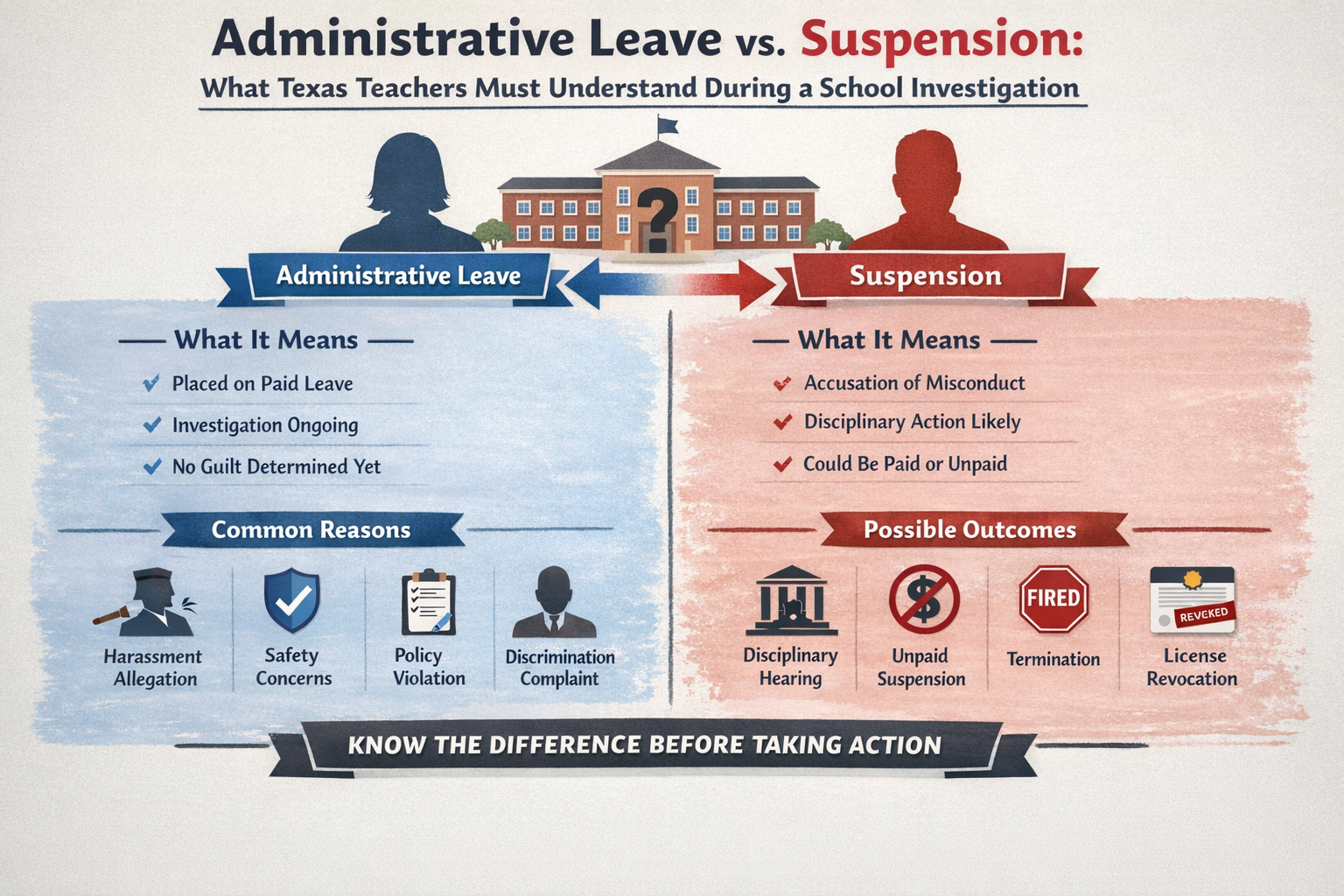
Several situations may trigger administrative leave, including allegations involving:
- Sexual harassment
- Illegal activity
- Reports involving student safety
- Complaints about inappropriate conduct
- Allegations involving workplace discrimination
These complaints may be reviewed by a district agency, a regulatory authority, or in some circumstances a government investigator. While administrative leave does not automatically mean a teacher will be fired, it is often the beginning of a serious investigative process.
Administrative Leave Does Not Always Mean Discipline
One important detail teachers should understand is that administrative leave does not necessarily mean guilt. In many investigations, administrators simply need time to review facts and determine whether a violation occurred. During this period, the agency responsible for the investigation gathers evidence, interviews witnesses, and reviews documents.
However, educators should not assume that the situation will resolve on its own. A school employer may eventually decide that disciplinary action is necessary. If investigators believe the employee engaged in misconduct or violated school regulation, the case may progress toward suspension or termination.
Understanding this progression can help teachers protect their legal interests and avoid mistakes that could worsen the situation, especially when they seek guidance from an experienced education law attorney for teachers.
What Suspension Means in a School Investigation
Unlike administrative leave, suspension typically signals that administrators believe a teacher has violated policy or school rules. A suspension may occur after the initial investigation identifies evidence suggesting misconduct occurred.
In some cases, suspension may still include pay, while other suspensions may be unpaid depending on the circumstances and applicable law. The school agency responsible for discipline may view suspension as an intermediate step before deciding whether to terminate the employee.
For teachers, the difference between administrative leave and suspension can be significant. Administrative leave generally occurs during the investigation stage, while suspension usually occurs after investigators believe a policy violation may have happened.
When Administrative Leave Leads to Termination
In some investigations, the outcome of administrative leave may ultimately be termination. If the agency reviewing the complaint believes the employee violated school policy or engaged in illegal conduct, the district may move forward with disciplinary action.
The employer may review several factors before making this decision, including the seriousness of the alleged conduct, the available evidence, and the extent of potential harm. School administrators may also evaluate whether the alleged violation of public policy creates liability for the district.
Once a school decides to end the employee's job, the situation may raise questions about wrongful termination or wrongful discharge. Teachers who believe the termination was unfair or motivated by improper reasons may consider seeking guidance from an employment lawyer or employment attorney, such as an education lawyer offering expert legal support for teachers and schools.
The Connection Between Administrative Leave and Wrongful Termination
Teachers often believe their removal from the classroom automatically means they will be fired. While that is not always the case, some investigations eventually lead to wrongful termination disputes.
A wrongful termination claim generally involves allegations that the employer fired the employee for reasons that violate law or public policy. For example, if a teacher was disciplined after reporting illegal activity, that action may be viewed as a violation of public policy.
Courts reviewing wrongful termination cases often examine whether the termination violated a statutory right or other legal provision. These disputes may involve questions about retaliation, discrimination, or punishment for refusing to participate in misconduct.
Constructive Discharge and Forced Resignation in School Investigations
Not every teacher investigation ends with direct termination. In some cases, the school employer creates pressure that leads an employee to resign instead. This situation may raise questions about constructive discharge or constructive dismissal.
A constructive discharge occurs when a reasonable employee feels the working conditions have become so difficult that continuing the job is impossible. The employee quits, believing that staying would subject them to intolerable working conditions.
This form of forced resignation may occur when administrators create pressure through repeated discipline, investigations, or other actions that affect the employee's job, raising issues similar to those discussed when asking whether an employer can force you to resign or quit your job. In some situations, the teacher’s worker's resignation may be treated similarly to wrongful discharge if the employer intentionally created those circumstances.
How Public Policy Violations Affect Teacher Termination Cases
Many wrongful termination claims focus on whether the employer's termination decision violated public policy. Courts often analyze whether the employee was punished for exercising a statutory right or reporting misconduct.
A violation of public policy can occur in several situations, including when an employee is disciplined for refusing to participate in illegal activity. For instance, a teacher who reports student safety concerns may be protected under public policy principles.
Courts frequently recognize four categories of public policy violation claims, and understanding these categories is an important part of why every teacher needs a lawyer for legal protection. These include situations where an employee is fired for reporting misconduct, refusing to engage in illegal acts, exercising a statutory right, or performing a civic obligation.
The Role of Public Policy in Employment Law
In many employment law disputes, public policy serves as a critical protection for workers. Courts may review whether the employer's conduct violated established public policy principles designed to protect employees.
For example, if a teacher was disciplined after reporting misconduct to a regulatory agency, the termination may raise serious legal concerns. In these situations, courts may consider whether the employer acted in a way that undermines the public policy interests of protecting whistleblowers, a concern that education-focused practitioners address as part of their work as an education law attorney for teachers and administrators.
A strong public policy argument may allow a teacher to pursue legal action and seek damages. These cases sometimes involve compensation for lost wages, emotional distress, and in some circumstances punitive damages.
Evidence and Proof in Wrongful Termination Claims
Teachers who pursue a wrongful termination claim must usually prove that the employer acted unlawfully. This often requires demonstrating that the termination was motivated by retaliation or a violation of public policy.
Evidence may include emails, witness statements, investigative records, or other documentation showing how the agency handled the complaint, and preserving this material is critical when working with an experienced education law attorney and lawyer. Courts and administrative bodies frequently review whether the employer fired the employee for legitimate reasons or improper motives.
In some wrongful termination cases, a jury may be asked to determine whether the employer's conduct violated law. The jury will often examine the circumstances surrounding the investigation and the extent to which the teacher’s rights were affected.
When Teachers Consider Legal Assistance
Teachers facing administrative leave, suspension, or termination often wonder whether they should seek help from an employment attorney. Many educators hesitate because they hope the investigation will resolve quickly.
However, once a school agency begins reviewing allegations, the stakes can become significant, and Texas teachers on leave should understand the steps to take while on administrative leave. A teacher’s professional reputation, future employment, and financial stability may all be affected.
An experienced employment lawyer can help evaluate whether the situation involves potential wrongful termination, constructive discharge, or a violation of public policy, particularly when Texas Education Agency proceedings threaten a teacher’s license and require focused TEA investigation and license defense. Legal guidance may also help teachers avoid mistakes that could complicate their defense.
Protecting Teachers During School Investigations
Educators facing administrative leave should remember that the investigation process is often complex, and many turn to a Texas firm that focuses on legal support for educators in school investigations. Decisions made during this period can affect the teacher’s job, professional reputation, and future employment opportunities.
A school employer may gather evidence, interview witnesses, and review documents before making a final decision. The agency responsible for the investigation may also evaluate whether the alleged conduct violated school regulation or broader law.
Because these investigations can have long-term consequences, teachers should carefully consider their legal interests before responding to investigators or making statements.
Speak With Masterly Legal Solutions About Administrative Leave
Being placed on administrative leave can feel overwhelming for any educator. Many teachers initially believe the situation is temporary, only to discover that the investigation could lead to suspension or termination.
At Masterly Legal Solutions, our agency of experienced legal professionals understands the stress teachers face when their job and reputation are at risk and offers access to an expert education lawyer providing legal support for schools and teachers. Our team regularly provides assistance to educators navigating complex investigations involving administrative leave, disciplinary action, and employment disputes.
If you have been placed on administrative leave, suspended, or believe your employer is considering termination, speaking with an attorney may help you understand your rights and options. Early guidance can sometimes make a significant difference in protecting your career and future.
To discuss your situation confidentially, contact Masterly Legal Solutions at (972) 236-5051 for a free consultation. Our team can help review your circumstances, explain possible strategies, and provide the support educators need when facing serious school investigations.
Disclaimer: This article is provided for informational purposes only and does not constitute legal advice. Reading this material does not create an attorney-client relationship. Laws and regulations may change, and each situation is unique. Individuals facing legal concerns should consult a qualified attorney to receive advice specific to their circumstances.








Looking for Legal & Business Solutions? Contact Us Now
Fill in the form or call us to set up a meeting





