

How Paid Administrative Leave Can Lead to Termination Without Warning
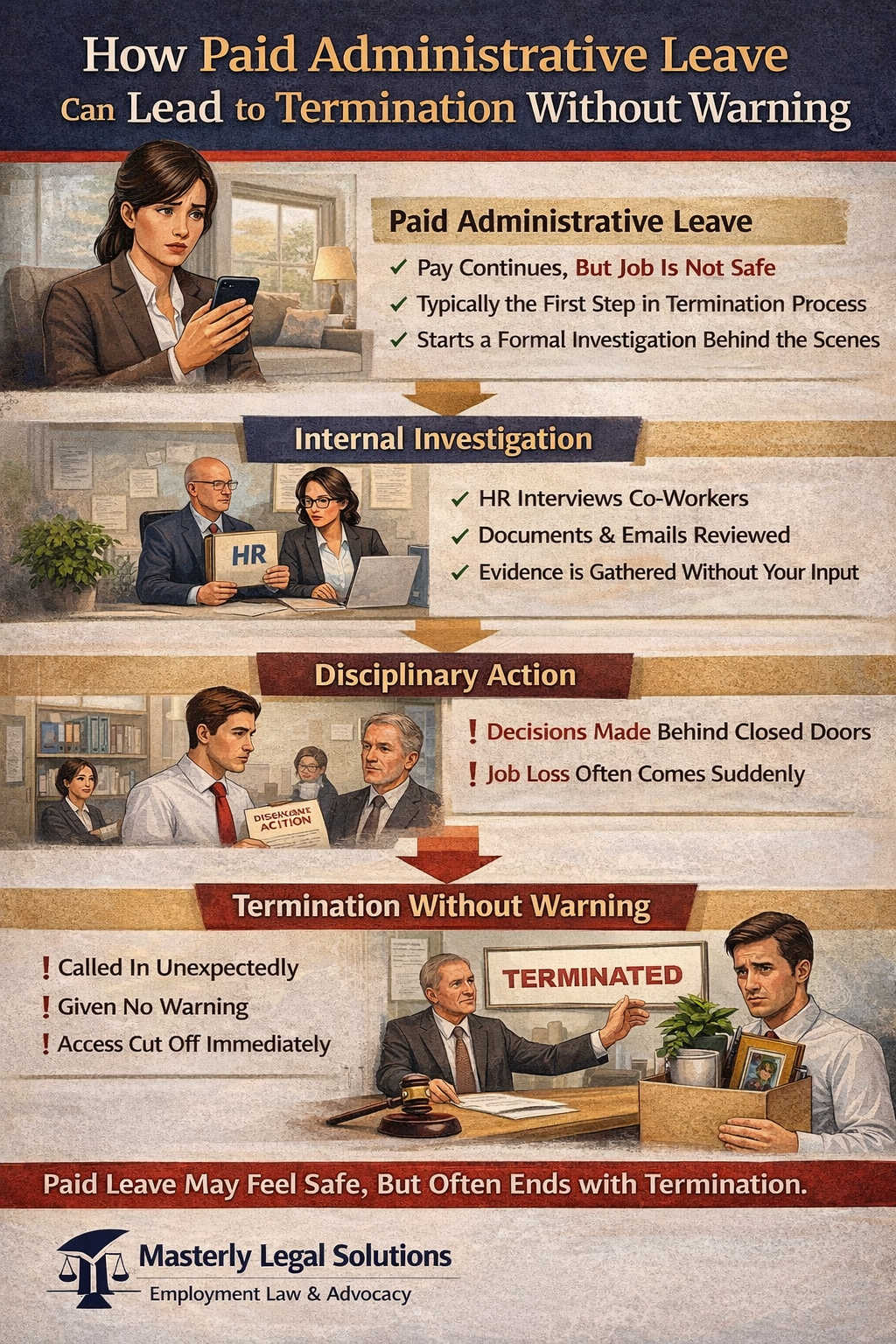
Being placed on paid administrative leave often sounds reassuring at first. Many employees, especially teachers, assume that being paid means their job is secure and that the situation will resolve quietly. In reality, paid administrative leave is frequently the beginning of a structured process that can end in termination without warning. At Masterly Legal Solutions, we regularly speak with educators who never expected leave to turn into job loss until it was too late.
Administrative leave creates a pause, not protection. During that pause, employers investigate, document, and prepare next steps that employees rarely see. Understanding how this process unfolds is critical for protecting your career, income, and professional reputation.
What Paid Administrative Leave Really Means
Paid administrative leave is a temporary removal from duties while an employer conducts an investigation or reviews alleged issues. While employees continue to receive pay and benefits, they are often barred from returning to the workplace or contacting colleagues. This separation can feel neutral, but it is rarely accidental.
Employers use administrative leave to control the environment, limit communication, and gather information. The fact that pay continues does not limit the employer’s authority to take later adverse actions.
Why Paid Does Not Mean Safe
Many employees believe that if they are being paid, no serious disciplinary action is planned. This assumption can be dangerous. Paid time away from work is often used to avoid immediate conflict while the employer builds a case.
By the time the leave ends, decisions may already be made. Without legal guidance, employees may miss opportunities to protect themselves early.
The First Step Toward Termination
Paid administrative leave often marks the first formal step in a termination process. Employers may frame the leave as precautionary, but internal procedures often begin immediately. Human resources teams document timelines, gather complaints, and consult legal counsel.
This early stage is critical. What happens during leave can shape the final outcome more than the alleged incident itself.
Internal Investigations Begin Quietly
Once leave starts, an internal investigation usually follows. Human resources departments coordinate interviews, review emails, and analyze performance reviews. Potential witnesses may be questioned without the employee’s knowledge.
The employee on leave is rarely informed of the scope of the investigation. This imbalance allows the employer to control the narrative.
Administrative Leave and Evidence Collection
Administrative leave creates space for employers to collect evidence without interference. This may include statements from supervisors, coworkers, or even outside parties. The absence of the employee can make it easier for assumptions to go unchallenged.
Without guidance from a lawyer, employees may not know what evidence is being collected or how it is being interpreted.
How Policies Are Used During Leave
Employers often rely on policies to justify actions taken during administrative leave. These policies may be broad, subjective, or inconsistently applied. Alleged violations are framed as serious concerns requiring discipline.
Understanding whether a policy was applied fairly requires legal analysis under federal and state laws.
The Role of Human Resources During Leave
Human resources departments act on behalf of the employer, not the employee. While HR may appear supportive, their primary role is to protect the company. Communications during leave are often carefully scripted.
Employees should be cautious about informal conversations with HR. Statements made during leave can later be used as evidence.
Silence Can Be Misinterpreted
Employees are often instructed not to discuss the situation while on leave. While silence may seem safe, it can be misinterpreted as acceptance or admission. Employers may proceed without hearing the employee’s side fully.
Legal advice helps determine when and how to respond appropriately.
Paid Administrative Leave and Reporting Obligations
In some cases, employers must report certain issues to a state agency or regulatory body. Paid administrative leave may occur while these reports are prepared. Once filed, the matter may escalate beyond the employer’s control.
Employees are often unaware that reporting has occurred until much later.
When Leave Turns Into Discipline
After an investigation, employers may impose disciplinary action. This can range from written warnings to termination. Paid administrative leave does not prevent discipline; it simply delays it.
Employees may be surprised by the severity of the outcome, especially if they believed the issue was minor.
Termination Without Warning
Termination following administrative leave often occurs suddenly. Employees may be called into a meeting or receive notice without prior indication. The decision may already be finalized.
At this stage, options become limited. Early intervention is far more effective than reacting after termination.
Wrongful Termination Risks
Not all terminations are lawful. Wrongful termination occurs when an employer violates employment law, employment contracts, or public policy. Paid administrative leave does not shield employers from liability.
An employment lawyer can assess whether termination was lawful under federal laws and state laws.
Retaliation Often Follows Protected Activity
Retaliation occurs when an employer punishes an employee for engaging in protected activity. Reporting discrimination, harassment, or safety concerns may trigger retaliation disguised as administrative leave.
Whistleblower laws and civil rights protections exist to address this behavior, but they must be asserted properly.
Reporting Discrimination During Leave
Employees who report discrimination during administrative leave may face increased scrutiny. Employers sometimes frame subsequent actions as unrelated, even when retaliation is present.
Filing a retaliation complaint with the equal employment opportunity commission may be appropriate in these circumstances.
Harassment Allegations and Administrative Leave
Harassment allegations often result in immediate administrative leave. Employers act quickly to demonstrate compliance with federal and state laws. However, investigations may focus more on liability than fairness.
Employees accused of harassment need legal guidance to protect their rights during this process.
Discrimination Claims and Unequal Treatment
Discrimination based on age, disabilities, or other protected characteristics may be masked as performance issues. Administrative leave can be used to separate employees while the employer builds justification.
The disabilities act and civil rights act provide legal protections that apply even during leave.
Age Discrimination and Career Impact
Age discrimination can surface when experienced employees are treated differently from younger colleagues. Administrative leave may be used to sideline older employees before termination.
Employment law prohibits this conduct, but evidence must be carefully documented.
Disability-Related Leave Issues
Employees with disabilities may require accommodations under federal law. When employers fail to provide reasonable accommodations, administrative leave may follow.
The medical leave act and fmla leave provide additional protections for eligible employees.
Job Protected Leave vs Administrative Leave
Job protected leave differs from administrative leave. While job protected leave ensures reinstatement, administrative leave does not. Confusing these concepts can lead to serious misunderstandings.
Employees should clarify their status early to avoid false assumptions.
Pay, Benefits, and Financial Stress
During paid administrative leave, employees continue to receive pay and benefits. However, uncertainty about future income creates stress. Overtime pay opportunities may disappear.
Termination can abruptly end financial stability, affecting families and personal obligations.
The Impact on Employee Morale
Administrative leave affects employee morale, even when pay continues. Isolation, anxiety, and fear of termination take a toll. This stress can affect health and decision-making.
Legal support provides clarity during uncertain periods.
Performance Reviews and Retrospective Justification
Employers may reexamine performance reviews during leave. Past issues may be reframed as justification for termination. Employees often have little opportunity to respond.
Legal counsel can challenge unfair reinterpretation of records.
The Importance of Legal Protections
Legal protections exist to balance power between employers and employees. Federal and state laws regulate how investigations and terminations occur.
Understanding these protections is essential before making decisions during leave.
Why Early Legal Guidance Matters
Consulting employment lawyers early can change outcomes. Labor and employment lawyers understand how administrative leave fits into broader employment processes.
An initial consultation provides clarity and strategy.
How Lawyers Protect Employees During Leave
A lawyer can communicate with the employer, ensure compliance with law, and prevent missteps. Employment attorneys help protect rights before termination occurs.
This proactive approach is often the difference between resolution and job loss.
Mediation and Alternative Resolution
Some disputes can be resolved through mediation. Addressing concerns early may prevent escalation to termination or lawsuit.
Legal guidance ensures mediation is approached strategically.
Litigation as a Last Resort
When termination occurs unlawfully, litigation may be necessary. Lawsuits seek remedies such as reinstatement, compensation, or punitive damages.
Filing a claim requires careful preparation and evidence.
Resources for Employees on Leave
Employees should seek reliable resources during administrative leave. Legal counsel, documentation, and support networks are essential.
Waiting without action increases risk.
Recognizing Warning Signs Early
Employees should recognize early signs that administrative leave may lead to termination. Limited communication, extended investigations, and vague explanations are red flags.
Early action protects future options.
Protecting Your Career and Reputation
Administrative leave can affect future employment opportunities. Employers may disclose leave or termination to prospective employers.
Legal guidance helps protect reputation and career prospects.
How the Employment Act Shapes Administrative Leave Decisions
The employment act establishes standards that employers must follow when making decisions about administrative leave and termination. While many workers are unaware of its protections, the law plays a key role in determining whether actions taken during investigations are lawful. Individual employees benefit from these standards when employers exceed their authority. Understanding how the employment act applies helps workers recognize when leave is being used improperly.
Preventing Future Discrimination Through Early Legal Action
Future discrimination often begins with unchallenged administrative decisions. When an employee remains silent during leave, patterns of unfair treatment may continue. Addressing problems early helps stop escalation before it becomes normalized. Legal guidance can help protect against future discrimination that grows out of unresolved workplace conflicts.
Why Federal Employees Face Unique Administrative Challenges
Federal employees are subject to different procedures, yet many of the same risks exist during administrative leave. These workers often face layered oversight and stricter reporting requirements. Even so, federal employees are still protected under employment law and civil rights statutes. Understanding these protections is essential when leave becomes prolonged or disciplinary.
Addressing Physical Harm and Workplace Safety Concerns
Administrative leave may follow incidents involving physical harm or allegations of unsafe conduct. Employers must consider occupational safety obligations when evaluating these situations. Workers should not be penalized for raising legitimate safety concerns. Employment law provides safeguards when safety issues intersect with discipline.
Protecting Individual Employees From Administrative Overreach
Individual employees often feel powerless when placed on leave. Employers control access to information, timelines, and decision-making. Legal representation helps restore balance by ensuring rights are respected. Protecting individual employees requires active advocacy, not passive waiting.
Title VII and Discrimination Protections During Leave
Title VII prohibits discrimination based on protected characteristics and applies throughout the employment relationship. Administrative leave does not suspend these protections. When employers rely on vague allegations, Title VII analysis becomes critical. Legal review helps determine whether discrimination influenced the decision.
What Super Lawyers Recognition Signals to Employees
The term super lawyers refers to attorneys recognized for professional achievement and peer respect. While recognition alone does not decide cases, it reflects experience in complex matters. Employees benefit from working with lawyers who understand nuanced employment disputes. Reputation can influence how employers approach negotiations.
When Administrative Leave Affects a Family Member
Employment decisions can impact more than the worker alone. Loss of income or benefits may affect a family member who relies on stability. Employers are expected to consider lawful obligations tied to family responsibilities. Legal guidance helps protect both employment and family interests.
Examples That Show How Leave Turns Into Termination
An example often seen involves workers placed on leave while an investigation quietly expands. Another example includes performance issues being reframed after the fact. A third example occurs when complaints trigger discipline unrelated to the original concern. Each example shows how leave can evolve into termination without warning.
How Administrative Leave Impacts Workers Across Industries
Workers in education, healthcare, and public service face similar risks during administrative leave. Employers may use leave to control communication and limit defense. Workers often underestimate how quickly decisions are made. Legal support helps workers understand what is happening behind the scenes.
Why Additional Information Matters During Investigations
Employees are often told little while on leave. Seeking additional information can clarify timelines and expectations. Without clarity, workers may miss critical opportunities to respond. Legal counsel helps request and interpret additional information appropriately.
Knowing When to Hire Legal Representation
Many workers delay seeking help, hoping issues resolve themselves. Deciding when to hire a lawyer can determine the outcome. Early involvement allows attorneys to shape the process. Waiting until termination reduces available options.
Administrative Leave as a Business Decision
Employers often frame administrative leave as a neutral business decision. In reality, business interests may drive outcomes more than fairness. Cost control, liability avoidance, and public perception influence decisions. Legal review ensures business priorities do not override lawful obligations.
Police Involvement and Administrative Leave
In some cases, police involvement coincides with administrative leave. Employers may contact police even when allegations are unproven. Police reports can influence employment decisions regardless of criminal outcomes. Legal guidance is critical when police are involved during leave.
What Employees Should Generally Understand About Administrative Leave
Generally, administrative leave is not a vacation or a guarantee of job security. Generally, it signals an active review process. Generally, the employer controls the timeline and outcome unless challenged. Understanding these realities helps employees make informed decisions.
Contact Masterly Legal Solutions
If you are on paid administrative leave or facing an investigation, now is the time to act. At Masterly Legal Solutions, we offer a free consultation to help you understand your rights, assess your situation, and determine next steps. Our team is committed to protecting employees before leave turns into termination. Contact us at (972) 236-5051 to schedule your free consultation and get answers to your questions.
Disclaimer: This article is for informational purposes only and does not constitute legal guidance or legal advice. Reading this content does not create an attorney-client relationship. For advice specific to your situation, or to learn more about legal services for higher education institutions, consult a qualified attorney.



Teacher Rights When Assaulted by a Special Needs Student: Safety, Reporting and Investigation Issues



Looking for Legal & Business Solutions? Contact Us Now
Fill in the form or call us to set up a meeting