How a Civility Policy Violation Notice Can Trigger a Full TEA Investigation
Receiving a civility policy violation notice can feel sudden, confusing, and deeply personal for any employee in the education system. Many educators initially assume the notice is a minor workplace issue that can be resolved with a short explanation or informal conversation. In reality, this document often represents the first formal step in a process that can escalate into a full Texas Education Agency investigation. At Masterly Legal Solutions, we regularly see teachers underestimate how quickly these matters move and how serious the consequences can become.
A civility policy violation notice is not just a workplace warning. It is a written record that can trigger reporting obligations, administrative review, and disciplinary action that may affect your job, your professional reputation, and your future employment. Understanding how escalation occurs is essential for protecting your legal rights and making informed decisions early in the process.
Understanding What a Civility Policy Violation Notice Really Is
A civility policy violation notice is typically issued when an employer believes an employee has engaged in conduct that violates workplace standards related to professionalism, communication, or behavior. While the language may appear subjective, the notice itself becomes an official document in your employment record. Once issued, it can justify further investigation into alleged misconduct.
School districts often rely on civility policies as broad tools to regulate employee behavior. These policies are sometimes applied inconsistently, leaving teachers vulnerable to unfair interpretations. What may feel like a misunderstanding between a co worker or supervisor can quickly become a formal violation with lasting implications.
Why Teachers Often Underestimate the Risk
Many employees believe that cooperation alone will resolve the issue. Teachers frequently assume that responding honestly and promptly will prevent further action. Unfortunately, even well-intentioned responses can be used as evidence to justify escalation.
In some circumstances, the notice becomes the foundation for placing an employee on administrative leave. This step signals that the employer is treating the matter seriously and may already be preparing for broader reporting or disciplinary measures.
How School Districts Escalate Civility Allegations
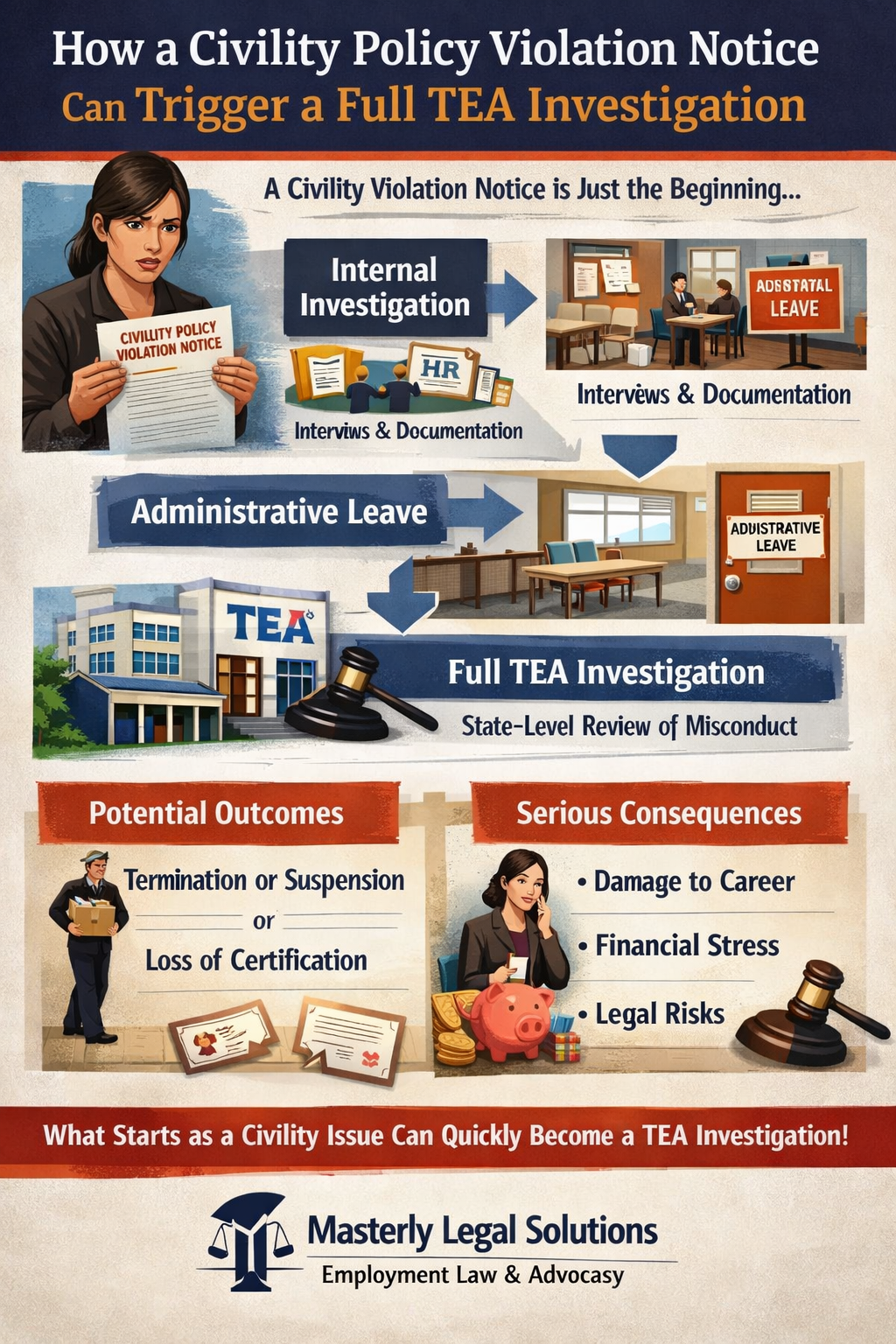
Once a civility policy violation notice is issued, school districts may initiate an internal investigation. Human resources departments often coordinate interviews, document reviews, and reporting procedures. This process may seem routine, but it creates a record that can later be shared with outside agencies.
If the employer determines that the alleged misconduct implicates professional standards, student welfare, or public policy, reporting obligations may arise. At that point, the issue may move beyond the district and into state-level oversight.
The Connection Between Internal Investigations and TEA Oversight
The Texas Education Agency has jurisdiction over educator conduct and certification matters. When a school district believes a violation may reflect unprofessional behavior, ethical concerns, or statutory obligations, it may report the employee to TEA.
What begins as a civility issue can quickly evolve into a formal investigation by the agency. Teachers are often surprised to learn that internal findings, even if incomplete, can be forwarded to TEA as strong evidence supporting further review.
Administrative Leave as a Warning Sign
Being placed on administrative leave is a critical moment in the escalation process. Administrative leave may be paid or unpaid, depending on the circumstances and district policy. Paid administrative leave is often presented as neutral, but it typically signals that the employer is assessing whether termination or other disciplinary action is warranted.
During this period, employees are frequently restricted from accessing school property, communicating with other employees, or participating in daily duties. These limitations can feel isolating and may contribute to emotional distress.
When Paid Leave Turns Into Something More Serious
Paid leave does not guarantee job security. In many cases, paid administrative leave transitions into unpaid leave or termination after the investigation concludes. The employer may claim that continued employment is no longer viable due to the violation.
For teachers, this transition can be sudden and financially stressful. Pay interruptions, loss of benefits, and uncertainty about future employment often follow.
How Civility Allegations Can Lead to Termination
Termination is not always immediate, but it becomes more likely once a civility policy violation is documented. Employers may argue that the violation demonstrates unprofessional conduct incompatible with the job. In at will employment environments, employers often believe they have broad authority to terminate employees without cause.
However, termination based on illegal reasons, retaliation, or discrimination may violate employment laws. Teachers should not assume that termination is automatically lawful simply because a policy violation is cited.
Constructive Discharge and Forced Resignation Risks
Some employees are not formally terminated but instead feel pressured to resign. Forced resignation often occurs when working conditions become intolerable due to ongoing investigation, administrative leave, or reputational harm. This situation may qualify as constructive discharge or constructive termination under certain circumstances.
Constructive dismissal occurs when a reasonable person would feel they have no choice but to resign. This may involve threats of termination, loss of pay, or damage to professional standing. Understanding these concepts is critical before deciding to resign or accept separation agreements.
How Reporting Obligations Affect Escalation
School districts may be required to report certain conduct to state authorities. Reporting does not require proof beyond doubt. Even allegations of misconduct may be enough to trigger agency review.
Once reporting occurs, the teacher loses control over the process. TEA investigators may request documents, statements, and interviews, relying heavily on the employer’s internal findings.
The Role of Alleged Misconduct in Agency Review
Alleged misconduct does not need to involve criminal behavior to warrant agency involvement. Civility-related issues may be framed as ethical concerns or violations of professional standards. These interpretations often rely on subjective assessments rather than clear rules.
Teachers are often shocked to learn how broadly misconduct can be defined. What seemed like a disagreement or tone issue may be portrayed as a serious violation affecting public trust.
Why Early Legal Guidance Matters
Consulting an employment attorney early can change the outcome of a civility policy violation matter. An employment lawyer can help you understand your legal rights, evaluate the strength of the employer’s claim, and guide your response strategy.
Early guidance can prevent statements or actions that unintentionally strengthen the employer’s case. It also allows for proactive defense before the situation escalates further.
How Employers Build a Case Using Documentation
Employers rely heavily on documentation. Emails, meeting notes, witness statements, and performance reviews may all be used to support disciplinary action. Even minor incidents may be aggregated to show a pattern of conduct.
Employees should be cautious about providing written statements without understanding how they may be interpreted. Once documented, these materials become difficult to challenge.
The Impact on Future Employment Opportunities
A civility policy violation notice can follow you beyond your current job. Former employers may reference disciplinary records when contacted by prospective employers. Even if termination does not occur, the record may affect future employment prospects.
In some cases, agency findings may be accessible to other districts, further limiting opportunities.
Emotional and Financial Consequences for Teachers
Investigations often create significant emotional distress. Uncertainty, isolation, and fear about job security can take a toll on mental health. Financial strain may arise from reduced pay, loss of benefits, or legal expenses.
Medical care and support services may become necessary during prolonged investigations. These personal impacts underscore why early assistance is so important.
When Retaliation Becomes a Concern
Some teachers receive civility policy violation notices after engaging in protected activity. Reporting safety concerns, discrimination, or illegal activity may trigger retaliation disguised as a policy violation.
Retaliation is prohibited under many employment laws. Identifying whether retaliation is involved requires careful legal analysis and documentation.
Discrimination and Unequal Enforcement Issues
Employment discrimination may occur when civility policies are enforced unevenly against certain employees. Other employees engaging in similar conduct may not face discipline, raising concerns about fairness.
These patterns can support a wrongful termination claim or other legal action if termination occurs.
Wrongful Termination and Wrongful Discharge Risks
Wrongful termination occurs when an employer fired an employee for unlawful reasons. Wrongful discharge claims may arise when termination violates public policy, contractual obligations, or statutory protections.
Constructive termination and wrongful discharge claims often hinge on whether the employer’s actions were reasonable and lawful.
Understanding Public Policy and State Law Considerations
Public policy protects employees from being terminated for refusing to engage in illegal activity or for reporting violations. State law may provide additional protections depending on the circumstances.
An experienced employment attorney can assess whether public policy exceptions apply to your case.
The Importance of Evidence and Witness Support
Strong evidence is essential in challenging escalation. Emails, timelines, and witness statements may support your defense. A union representative may also provide support during internal proceedings.
However, relying solely on internal processes without legal guidance can be risky.
When Legal Action Becomes Necessary
In some cases, legal action may be the only way to protect your interests. This may include filing a claim, negotiating a resolution, or challenging agency findings.
Legal strategies should be tailored to the specific facts and jurisdiction involved.
How Masterly Legal Solutions Supports Educators
At Masterly Legal Solutions, we understand the unique challenges teachers face during investigations. Our founding partner and legal team focus on protecting employees from unnecessary escalation and career-ending consequences.
We work closely with clients to evaluate their options, provide guidance, and advocate for fair treatment.
Taking Control Before the Situation Escalates Further
The earlier you seek assistance, the more options you have. Waiting until termination or agency action occurs limits your ability to influence outcomes.
Proactive support can help you navigate reporting, investigations, and employment decisions with confidence.
Why Silence or Delay Can Be Harmful
Delaying action may allow the employer to control the narrative. Missed deadlines, incomplete responses, or uninformed statements can weaken your position.
Taking timely steps protects your interests and preserves your rights.
Protecting Your Career and Professional Standing
Your teaching career represents years of education, experience, and dedication. A civility policy violation notice should never be ignored or minimized.
Understanding the escalation pathways allows you to make informed decisions and protect what you have worked so hard to build.
Contact Masterly Legal Solutions for Trusted Support
If you have received a civility policy violation notice or are facing an internal school investigation, you do not have to navigate the process alone. At Masterly Legal Solutions, we offer a free consultation to help you understand your situation, assess your options, and determine the best path forward. Our goal is to provide clear guidance and practical assistance tailored to your unique circumstances. Contact us at (972) 236-5051 to schedule your free consultation and take the first step toward protecting your career.
Disclaimer: This article is for informational purposes only and does not constitute legal guidance or legal advice. Reading this article does not create an attorney-client relationship. For advice specific to your situation, consult with a qualified attorney.


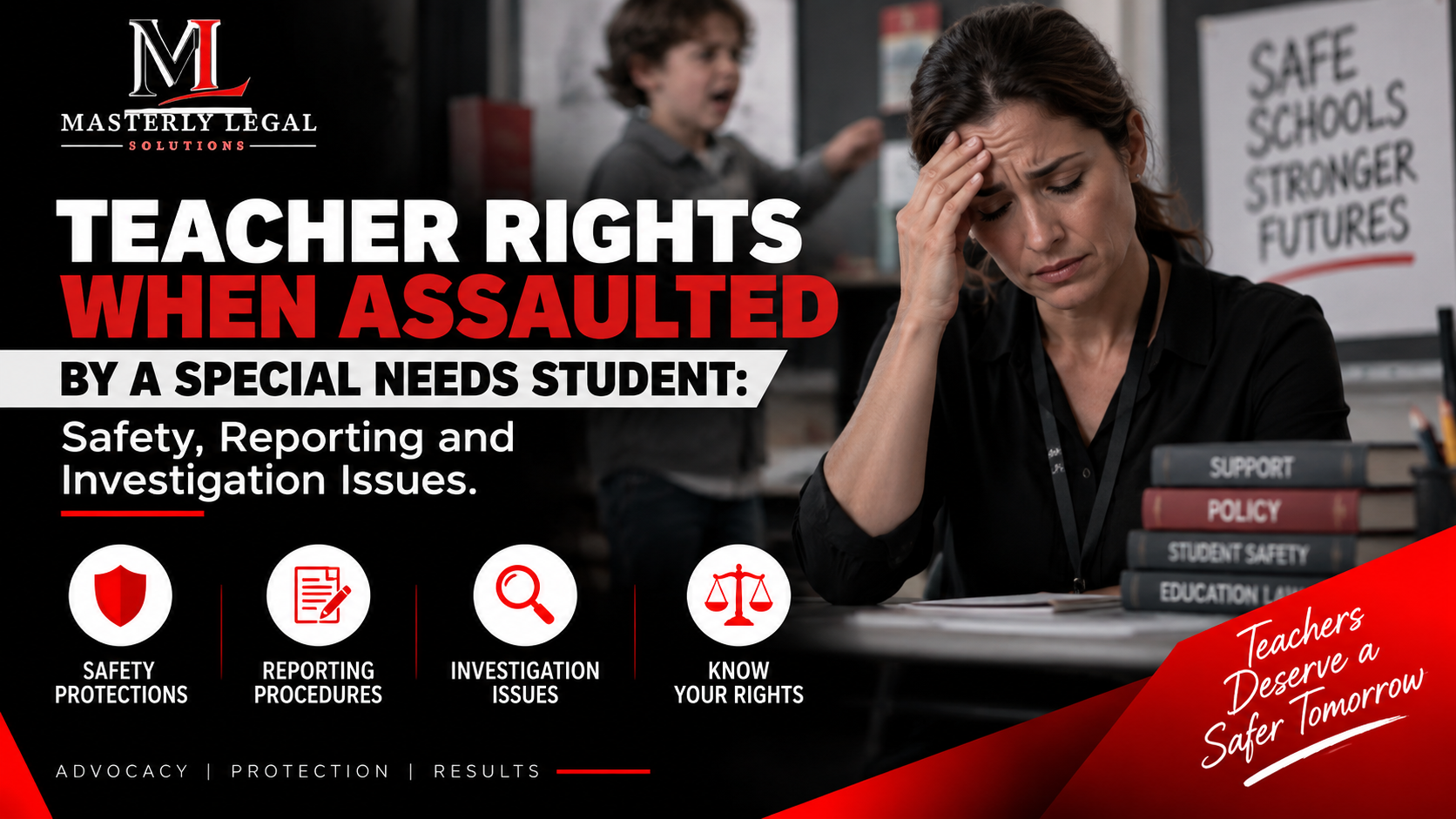
Teacher Rights When Assaulted by a Special Needs Student: Safety, Reporting and Investigation Issues



Looking for Legal & Business Solutions? Contact Us Now
Fill in the form or call us to set up a meeting