

Understanding the Administrative Side of Washington County CPS Investigations
Understanding the Administrative Side of Washington County CPS Investigations
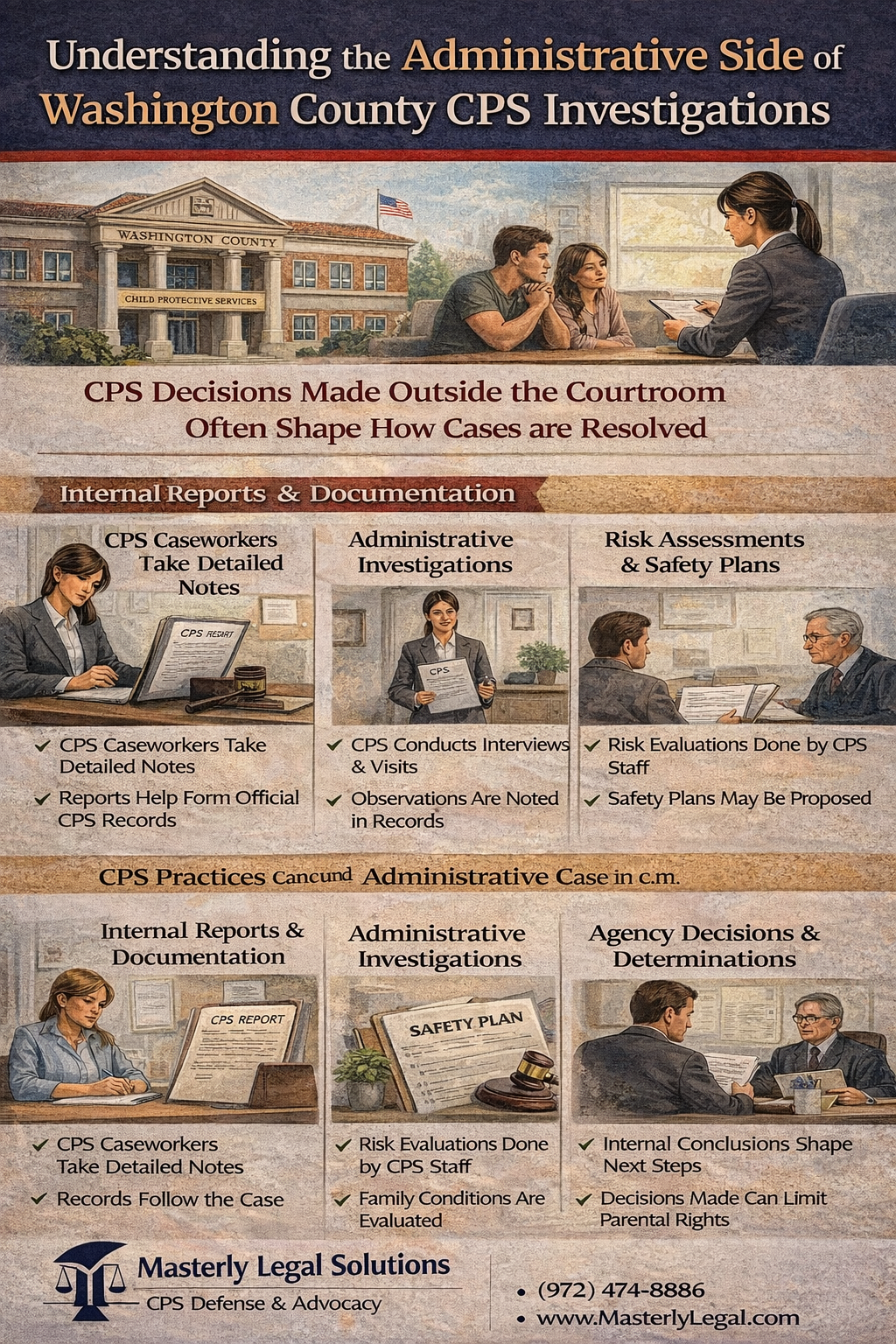
When families hear that Child Protective Services is involved, many assume the matter will immediately end up in a courtroom. In reality, most CPS cases are shaped long before a judge ever sees them. Decisions are often made administratively, through internal reviews, reports, and agency determinations that happen quietly and quickly. At Masterly Legal Solutions, we help families understand how the administrative side of CPS investigations works and why early action matters.
CPS investigations can feel overwhelming because much of the process happens behind the scenes. Parents may not realize how much influence interviews, reports, and internal assessments carry. Understanding this side of the process gives families the ability to respond thoughtfully instead of reactively. Knowledge is often the strongest form of protection.
What CPS Investigations Look Like Outside the Courtroom
Most CPS investigations begin and progress outside formal court proceedings. The CPS investigation process relies heavily on internal decision-making, documentation, and agency standards. These administrative steps often determine whether court intervention will even occur.
During this phase, CPS gathers information, evaluates risk, and decides how to proceed. Families who assume nothing is happening because there are no court hearings are often mistaken.
The Role of Child Protective Services in Administrative Decisions
Child protective services operates as a government agency with authority to investigate allegations involving children. The agency’s stated mission is ensuring child safety, but how that goal is pursued depends on administrative judgment. Protective services use internal guidelines to assess child abuse, neglect, and safety concerns.
These determinations influence whether a case closes, remains open, or escalates. Administrative conclusions often shape the future of the family’s case.
How CPS Determines Risk Without Court Involvement
CPS determines risk using reports, interviews, and observations. CPS caseworkers document conditions in the home, family dynamics, and explanations provided by parents. These notes become part of the official record.
Even without a court order, CPS may recommend services, supervision, or restrictions. Families should understand that these decisions carry weight even when no judge is involved.
Investigating Reports and Intake Decisions
Every CPS investigation starts with investigating reports made to the agency. These reports may involve alleged abuse or neglect, domestic violence, or physical injuries. CPS does not require proof at this stage, only sufficient concern to justify review.
Administrative intake decisions decide how quickly CPS responds and how serious the case is treated. This initial evaluation can set the tone for the entire investigation.
The Importance of CPS Caseworkers
A CPS caseworker plays a central role in administrative investigations. Caseworkers gather facts, conduct interviews, and prepare reports that supervisors rely on. Their impressions often guide agency decisions.
While CPS workers may appear supportive, their primary responsibility is reporting findings to the department. Families should remember that everything shared may be documented.
CPS Interviews and Administrative Evidence
Interviews are one of the main tools CPS uses outside the courtroom. Statements from parents, children, and relatives are summarized in reports. These summaries become administrative evidence.
Even without testimony before a judge, these records influence CPS cases significantly. What is said early can affect the entire process.
How Administrative Records Follow Families
Administrative CPS records do not disappear when a case closes. These records may affect future investigations, services, or decisions. Families are often surprised to learn how long records are retained.
Understanding this helps parents take interviews and interactions seriously from the start.
Child Abuse and Neglect Assessments
Child abuse and neglect assessments are central to CPS investigations. CPS evaluates physical, emotional, and environmental factors. Abuse or neglect does not require criminal charges to be substantiated administratively.
Neglect case determinations often rely on subjective standards. This makes early advocacy especially important.
Abuse Allegations Without Criminal Charges
Not all abuse allegations result in criminal charges. CPS may substantiate abuse or neglect administratively even when law enforcement does not pursue a case. These findings can still impact custody and family life.
Families should not assume that avoiding criminal court means the matter is resolved.
Juvenile Dependency and Administrative Findings
Juvenile dependency cases often begin with administrative CPS findings. CPS may determine that court oversight is necessary based on internal conclusions. These decisions happen before formal filings.
Once dependency proceedings start, reversing early findings becomes more difficult. Administrative defense matters early.
Parental Rights in the Administrative Phase
Parental rights exist even before court involvement. Parents have the right to understand allegations, participate in services, and seek legal help. However, these rights are not always clearly explained.
An experienced attorney can help protect parental rights during the administrative stage.
Protective Services and Voluntary Agreements
Protective services may propose voluntary service plans. These plans are often presented as cooperative solutions. However, they can carry obligations that affect custody or supervision.
Families should understand the long-term implications before agreeing.
Supervised Visitation Without Court Orders
In some CPS cases, supervised visitation is recommended administratively. This can occur without a judge’s involvement. Parents may feel pressured to accept these terms.
Understanding how to address these recommendations is critical to protecting family relationships.
Child Safety Plans and Their Impact
Child safety plans are another administrative tool used by CPS. These plans outline restrictions or requirements intended to reduce perceived risk. While labeled temporary, they can last longer than expected.
Once in place, safety plans influence future decisions.
How Counties Influence CPS Processes
CPS practices can vary by county. Washington County CPS investigations may follow state guidelines but still reflect local procedures. County-level practices affect timelines and expectations.
Families should understand how county involvement shapes their case.
Multi-County and Regional Considerations
Some CPS cases involve multiple counties, such as Orange County or neighboring jurisdictions. Coordination between counties can complicate investigations. Administrative records may be shared.
This makes early consistency in responses important.
Confusion Around Washington DC CPS Searches
Families sometimes search for “washington dc cps” when trying to understand CPS processes. While understandable, CPS procedures differ by state and county. Texas CPS operates under different rules than Washington, DC.
Working with a law firm familiar with Texas CPS procedures is essential.
The Role of Legal Representation Early On
Legal representation is not only for court. A cps defense attorney can help families during the administrative phase. This guidance helps shape how information is shared and documented.
Early legal help often prevents unnecessary escalation.
How CPS Defense Works Administratively
CPS defense focuses on responding strategically to investigations. A defense attorney reviews reports, identifies weaknesses, and helps families address concerns appropriately. CPS defense is proactive rather than reactive.
This approach protects families before court intervention becomes necessary.
The Value of an Experienced Attorney
An experienced attorney understands how CPS workers and supervisors make decisions. This knowledge allows for targeted responses and compelling arguments. Experience matters most when cases are still administrative.
At Masterly Legal Solutions, we focus on early defense.
Proven Track Record in CPS Defense
A proven track record demonstrates consistent success navigating CPS investigations. Families benefit from working with a law firm that understands administrative CPS processes. This experience builds confidence and clarity.
Results often depend on early strategy.
Guardian ad Litem and Administrative Input
In some cases, a guardian ad litem may be appointed. While often associated with court, their input can influence administrative recommendations. Their observations may be shared with CPS.
Understanding this role helps families prepare.
When Court Intervention Becomes Likely
Administrative findings often determine whether court intervention follows. CPS may file paperwork based on internal conclusions. By the time court hearings begin, much has already been decided.
This is why administrative defense is critical.
Court Hearings Built on Administrative Records
Court hearings rely heavily on CPS records created during investigations. Judges often review summaries rather than hearing full narratives. Early inaccuracies can be difficult to undo.
Administrative accuracy matters.
The Judge’s Role After Administrative Decisions
A judge ultimately reviews CPS filings, but those filings are shaped administratively. Judges rely on CPS to present sufficient evidence. Administrative findings influence judicial decisions.
Families should not wait for court to act.
Foster Care as an Administrative Outcome
In serious cases, CPS may recommend foster care placement. This often follows administrative conclusions about safety. Families are often shocked by how quickly this can occur.
Early defense helps reduce this risk.
Best Interest Standard and CPS Decisions
CPS decisions are framed around the best interest of the child. This standard is applied administratively before court review. How CPS defines best interest matters.
Families should understand how this standard is used.
Supporting Family Life During Investigations
CPS investigations disrupt family life significantly. Stress, uncertainty, and fear can affect everyone involved. Support and clear guidance help families stay grounded.
Professional assistance makes a difference.
Addressing Allegations Thoughtfully
Allegations should be addressed carefully, not emotionally. Administrative responses should focus on facts and context. Rushed reactions often cause harm.
Strategic handling protects families.
Evidence Review Outside the Courtroom
Evidence in CPS cases is not limited to court exhibits. Administrative evidence includes interviews, photos, and reports. These materials influence decisions daily.
Families should treat every interaction as important.
Responsibilities of CPS and Families
CPS has authority and responsibilities under the law. Families also have responsibilities to engage appropriately. Understanding both sides leads to better outcomes.
Balance is key.
When Legal Help Changes Outcomes
Legal help during the administrative phase often prevents court escalation. A cps defense attorney helps families defend themselves early. This reduces stress and uncertainty.
Early action is often the most effective.
How Masterly Legal Solutions Supports Families
Masterly Legal Solutions is committed to guiding families through CPS investigations with clarity and professionalism. Our law firm focuses on administrative defense, not fear-driven litigation. We provide services designed to protect families and parental rights.
Our knowledge and experience help families navigate complex processes.
Taking Control of the Administrative Process
Families are not powerless during CPS investigations. Understanding the administrative side restores a sense of control. With the right guidance, families can respond confidently.
Preparation changes outcomes.
Contact Masterly Legal Solutions for a Free Consultation
If your family is involved in a CPS investigation in Washington County or elsewhere in Texas, understanding the administrative side is critical. Masterly Legal Solutions offers a free consultation to help families understand CPS processes, protect parental rights, and respond strategically before court involvement. Our team is committed to providing clear legal help and proactive CPS defense services.
Contact us at (972) 236-5051 to schedule your free consultation and get informed support.
Disclaimer: This article is for informational purposes only and does not constitute legal guidance or legal advice. Reading this content does not create an attorney-client relationship. For advice specific to your situation—including legal services for higher education institutions—consult a qualified attorney.

Teacher Rights When Assaulted by a Special Needs Student: Safety, Reporting and Investigation Issues


Looking for Legal & Business Solutions? Contact Us Now
Fill in the form or call us to set up a meeting