
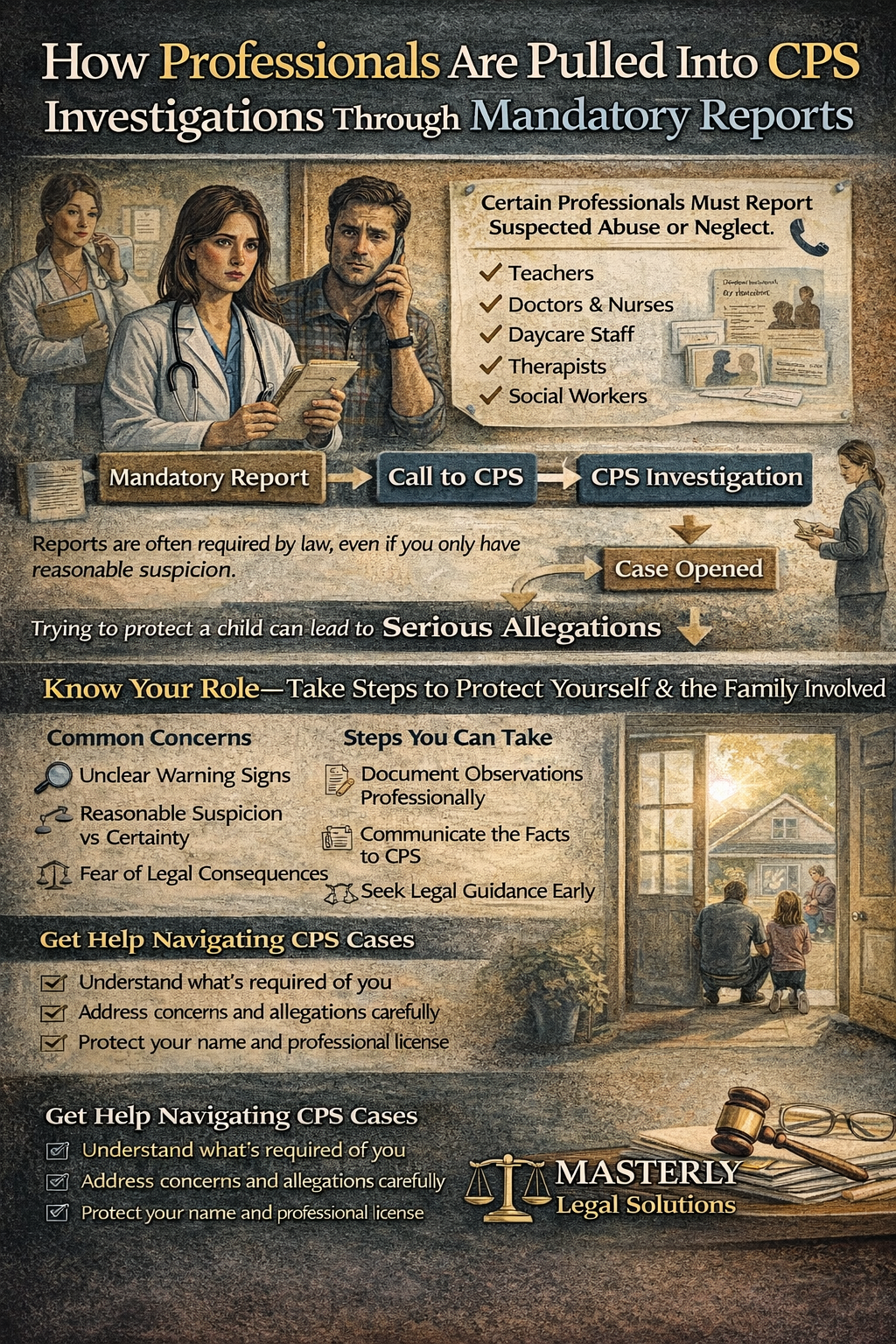
How Professionals Are Pulled Into CPS Investigations Through Mandatory Reports
Most professionals don’t expect their workday to end with a CPS phone call. You may be a teacher, nurse, therapist, daycare provider, counselor, or someone who works in a role that supports children and families. Your job is to help, protect, and serve, not to become part of an investigation. But when mandatory reporting rules apply, even a routine interaction can lead to a report that triggers a CPS investigation.
For many professionals, the shock is not just that CPS gets involved. It’s how quickly the situation can escalate. A single report can lead to interviews, paperwork, and serious allegations involving child abuse, neglect, or safety concerns. Even when you acted responsibly and in good faith, you may find yourself investigated and stressed, trying to understand how your name became connected to a case.
At Masterly Legal Solutions, we help professionals and families navigate the child protective system with clarity and confidence. This article explains how mandatory reports work, why professionals get pulled into CPS cases, and what steps you can take to protect yourself and the child involved.
What Mandatory Reporting Really Means for Professionals
Mandatory reporting means certain professionals are legally required to report suspected abuse or neglect. The purpose is to protect the child, especially when there may be danger that isn’t obvious to others. These laws exist because children may not be able to speak for themselves, and adults in trusted roles may be the first to notice warning signs.
Mandatory reporting can apply in many settings, including schools, hospitals, clinics, and counseling environments. A professional does not have to “prove” abuse to make a report. In many cases, they only need a reasonable suspicion.
That’s where things get complicated. A report made out of caution can lead to an investigation that affects families, careers, and reputations.
Why Mandatory Reports Often Lead to CPS Involvement
Once a report is made, CPS may be required to respond. Child protective services is designed to assess safety, investigate allegations, and decide whether protective services are needed. This process is meant to protect children, but it can feel harsh and intrusive to parents and professionals.
In many cases, the report is based on limited information. A professional may only see a child for a short time, and they may not know the full home situation. Still, the report can trigger interviews, home visits, and follow-ups.
When the system moves fast, misunderstandings can lead to major consequences. That is why it is important to understand how child protective services cps processes work.
How Professionals Become Part of the CPS Investigation Story
Professionals often become part of CPS cases because their report is treated as the starting point. CPS may view the reporter as a key witness. They may ask the professional to explain what they saw, what was said, and why they believed abuse or neglect might be happening.
Even when the professional acted with care, their statements can influence the direction of the investigation. CPS may also request records, notes, or documentation depending on the role and the situation. This can put professionals in a difficult position, especially if they feel unsure about the validity of the concerns.
A professional may feel torn between their commitment to child safety and the fear of being blamed. That emotional tension is common and understandable.
Common Professionals Who Are Required to Report
Mandatory reporting rules can apply to a wide range of roles. Many people don’t realize how broad the reporting requirements can be until they are in the middle of a case.
Some common mandatory reporters include:
- Teachers and school staff
- Doctors, nurses, and medical professionals
- Counselors and therapists
- Daycare workers and childcare providers
- Social services staff
- Coaches and youth program leaders
- Guardians or professionals working with a guardian
Because these professionals often interact with families during vulnerable moments, reports can arise even when no one intended harm.
The Difference Between a Concern and an Allegation
Professionals may feel like they are simply sharing a concern. CPS may treat the report as an allegation that must be investigated. That shift in language matters because it changes how everyone responds.
A concern might be something like unexplained bruising, poor hygiene, or a child expressing fear. An allegation may be framed as child abuse, neglect, exploitation, or unsafe home conditions. Once the allegation is in the system, it can follow the family for a long time.
This is why professionals should document carefully and communicate clearly. The words used in reports can lead to outcomes that no one expected.
What CPS Looks For During an Investigation
A CPS investigation is focused on the child’s safety and the child’s health. CPS will typically assess whether the child is at risk and whether the home environment is stable. The agency may look at living conditions, supervision, medical care, and the parent’s ability to provide consistent support.
CPS may also evaluate whether the child is experiencing neglect or abuse. Neglect can involve lack of supervision, lack of medical care, unsafe housing, or failure to meet basic needs. Abuse can include physical harm, emotional harm, or sexual exploitation.
Even when a parent believes they are doing their best, CPS may interpret the situation differently. That difference in perspective can lead to conflict and stress.
Why Neglect Is One of the Most Common CPS Allegations
Neglect is one of the most frequently reported issues in child protective services cases. It is also one of the most misunderstood. Many families associate neglect with intentional harm, but CPS may view neglect as a pattern of unmet needs, even when parents are trying.
Neglect allegations may involve lack of food, unsafe living conditions, missed medical appointments, or a child being left unsupervised. Some cases involve poverty, lack of resources, or overwhelming life circumstances. Others involve more serious safety concerns.
Because neglect can be interpreted broadly, professionals and parents should take these allegations seriously and respond carefully.
How Abuse Allegations Can Escalate Quickly
Abuse allegations tend to escalate fast because they are treated as urgent. If CPS believes the child may be in danger, it may move quickly to interview the child, contact the parents, and assess the home.
Professionals may be asked follow-up questions about what they observed. Parents may feel blindsided and defensive. The speed of the process can create panic, especially when families worry about custody or court involvement.
In some cases, CPS may request immediate safety plans or changes in the home. Even if no abuse occurred, the system may treat the situation as high risk until it is resolved.
The Role of Protective Services in Ongoing Cases
Protective services may include monitoring, services, counseling, or other interventions designed to improve safety. The goal is often to prevent removal, but families may feel pressured to comply with recommendations they don’t understand.
Protective services can involve parenting classes, home visits, therapy, or supervised contact. Sometimes these services are helpful. Other times they feel like punishment for a misunderstanding.
Professionals should understand that CPS involvement can lead to long-term requirements. Families often need legal advice to make informed decisions about what they agree to and why.
When CPS Interviews the Child at School or Workplaces
One of the most upsetting moments for many parents is learning CPS interviewed their child at school. Professionals may also be involved when CPS visits a workplace or requests information during business hours.
CPS has authority to investigate, but the way interviews happen can create confusion. A child may feel scared, embarrassed, or unsure how to answer. A professional may feel caught between supporting the child and staying neutral.
If a child is interviewed, parents should ask questions about what was discussed and what the next steps are. The more informed you are, the better you can protect your child and your rights.
How CPS Involvement Impacts Families Emotionally
Even when a case is minor, the emotional impact can be huge. Families often feel judged, embarrassed, and afraid. Parents may worry about losing custody or being labeled as abusive.
Professionals may feel guilt or fear, especially if they believe the report was misunderstood. They may worry about being dragged into court or blamed for the case’s outcome. This stress can affect work performance, sleep, and mental health.
These cases are not just paperwork. They affect real people, real homes, and real children.
What Professionals Should Document After Making a Report
Professionals should document their observations clearly and professionally. Documentation should focus on facts, not assumptions. The goal is to record what was seen or heard, not to diagnose a situation.
Helpful documentation may include:
- Dates and times of observations
- Exact statements made by the child
- Visible injuries or behaviors observed
- Steps taken to provide care or support
- Any resources offered to the family
Good documentation can protect the professional and support the child’s safety. It can also help prevent misunderstandings during the investigation.
How CPS Workers Use Professional Statements
CPS workers rely heavily on professional statements. A report from a teacher or medical provider may be treated as highly credible. That can be helpful when abuse is real, but it can also create problems when the situation is unclear.
CPS may use a professional’s statement to justify opening a case, creating a safety plan, or seeking court involvement. This is why professionals should be careful with language. Overstating certainty can harm families, while understating concerns can put a child at risk.
A balanced, factual report is usually the best approach.
What Parents Should Do When They Learn a Mandatory Report Was Made
Parents often feel angry when they learn someone reported them. That reaction is human, especially when you believe the report is false. But parents should focus on protecting the child and responding strategically.
Parents should:
- Stay calm and avoid confronting the reporter
- Ask CPS what the allegations are
- Document all interactions with CPS
- Gather records related to the child’s care
- Consider speaking with an attorney early
A parent’s conduct during the first days of a CPS investigation can shape the outcome. Staying respectful and organized can protect your position.
The Risk of Misinterpretation in Mandatory Reporting
Mandatory reporting is designed to protect children, but it can also lead to misinterpretation. A bruise from sports, a child’s emotional statement, or a temporary family crisis can be interpreted as abuse or neglect.
Sometimes the report is made by someone who doesn’t know the family well. Other times it is made during a custody conflict. In rare cases, reports are made maliciously.
Regardless of intent, CPS must investigate. That is why families need to understand the process and respond with care.
Exploitation Allegations and Why They Trigger Serious Responses
Exploitation allegations often trigger intense CPS involvement. These cases may involve concerns about sexual exploitation, trafficking, or inappropriate supervision. Even vague concerns can lead to major investigation steps.
Professionals may feel overwhelmed because exploitation is a serious subject with high stakes. Parents may feel terrified because the accusation alone can damage their reputation.
These cases require careful handling, strong evidence review, and legal support. Families should not assume CPS will “figure it out” without help.
When CPS Cases Lead to Court
Not every case goes to court, but some do. If CPS believes the child is unsafe, it may seek court involvement. A court can issue orders related to custody, visitation, and services.
Court involvement changes the situation dramatically. Parents may face restrictions, required programs, or even removal of the child. Professionals may be asked to testify or provide records.
This is why early legal help can be critical. Once a case enters court, the consequences become more serious and harder to reverse.
The Role of a Guardian in CPS Matters
A guardian may become involved in CPS cases when parents are unavailable, when the child is placed with relatives, or when a legal guardian is already part of the child’s life. Guardians may also be part of safety planning.
Guardians often feel overwhelmed because they are suddenly responsible for decisions and services. They may need counseling support and legal advice to understand what CPS expects.
A guardian should also document interactions and keep records. The more organized the guardian is, the better they can protect the child and the home environment.
Why County and Department Practices Can Feel Different
CPS practices can vary depending on the county and the department handling the case. Some counties move quickly and aggressively. Others focus more on services and support.
Families may feel confused because the rules seem inconsistent. Professionals may also feel uncertain because different offices respond differently. That is why it helps to work with an attorney who understands how local processes work.
Even if the laws are statewide, the experience can feel different depending on where the case is investigated.
Orange County, Irvine, and Out-of-State Search Confusion
Many people searching for help online will see references to orange county or irvine, especially in articles that discuss CPS cases in other states. Some may even see southern-focused content or different agency names.
In reality, CPS systems vary by state, and the rules can change significantly. Even though the term child protective services is used widely, the legal process depends on the state and county.
That is why families should seek local legal guidance and not rely solely on generalized online information.
Why Experience Matters in CPS Defense
CPS cases move fast and can affect a child’s future. Families need legal professionals who understand how CPS works, what evidence matters, and how to respond strategically.
An experienced attorney can identify weaknesses in allegations, help you communicate properly, and defend your rights. Experience also matters because CPS cases often involve emotional families, high pressure, and complicated facts.
At Masterly Legal Solutions, we bring knowledge, expertise, and a proven track record of helping clients navigate protective services cases.
What CPS Lawyers Do for Professionals and Families
CPS lawyers support families and professionals through the investigation and any related court process. They help clients understand what CPS is alleging, what steps are required, and what rights exist.
An attorney may:
- Review the allegations and evidence
- Communicate with CPS on your behalf
- Help prepare for interviews
- Protect your custody rights
- Defend against false accusations
- Build a plan to protect the child and family
Having legal support can reduce stress and help you avoid mistakes during critical moments.
When You Should Hire an Attorney in a CPS Case
Many families wait too long to hire a lawyer because they think cooperation is enough. Cooperation can help, but it is not a legal strategy by itself. If allegations are serious or unclear, early legal help can protect your family.
You may want to hire an attorney if:
- CPS claims child abuse or serious neglect
- Your child may be removed from the home
- CPS is requesting a safety plan you don’t understand
- You are being pressured into services unfairly
- Your custody situation is at risk
The sooner you get legal advice, the more options you may have.
How to Defend Yourself Without Making the Situation Worse
Defending yourself in a CPS case requires calm and strategy. Parents should avoid emotional arguments and focus on facts, records, and stability. Professionals should focus on documentation and truthful statements.
Defending yourself may involve gathering resources, showing a safe home, and demonstrating consistent care. It may also involve correcting misinformation and challenging the validity of allegations.
A good defense attorney helps you fight smart, not just fight hard.
The Importance of Counseling and Support Services
CPS often recommends counseling, parenting classes, or other services. Sometimes these services are helpful for families dealing with stress, trauma, or conflict. Other times families feel forced into them.
Parents should understand what services are voluntary and what services are required. Professionals should also understand that service recommendations may become part of the record.
Legal advice can help families choose the right path without admitting to accusations they dispute.
How Mandatory Reporting Can Affect Your Work and Career
Professionals who are pulled into CPS cases may worry about their job, licensing, or reputation. A report can lead to workplace investigations or disciplinary action, especially in education or healthcare settings.
Even when the professional did nothing wrong, being connected to a CPS investigation can create stress at work. The professional may fear being blamed or misunderstood.
This is why professionals should document carefully and seek legal advice if they feel exposed or vulnerable.
The Reality: CPS Investigations Are Stressful Even When You’re Innocent
CPS involvement can make good parents feel like criminals. It can make professionals feel like they triggered a disaster. The truth is that the system is designed to respond quickly, and sometimes it moves faster than the facts.
Families should remember that being investigated does not automatically mean guilt. It means CPS is gathering information. Still, the process is stressful and can feel unfair.
That is why families need clear guidance, strong advocacy, and support.
Contact Masterly Legal Solutions for a Free Consultation
If you are a professional pulled into a CPS investigation through a mandatory report, or if your family is facing protective services involvement, you deserve answers and a plan. At Masterly Legal Solutions, we help clients understand the child protective process, respond strategically, and protect what matters most—the child, the home, and the family’s future.
Call (972) 236-5051 for a free consultation. Whether you found us while searching for child protective services nc charlotte information or you are dealing with CPS in your county right now, we are here to provide guidance, defend your rights, and support your next step with clarity and confidence.
Disclaimer: This article is for educational purposes only and does not constitute legal guidance or legal advice. For advice about your specific situation, contact a qualified attorney.
Teacher Rights When Assaulted by a Special Needs Student: Safety, Reporting and Investigation Issues


Looking for Legal & Business Solutions? Contact Us Now
Fill in the form or call us to set up a meeting