
How to Respond When CPS Wants an Interview: Strategic Scripted Answers That Reduce Risk

March 24, 2026

When a parent first hears that child protective services cps wants to conduct an interview, the reaction is often immediate fear and confusion. Many people assume that cooperating fully and speaking openly will resolve everything quickly. However, the reality is far more complicated. A cps investigation can escalate quickly, and what you say in the early stages can shape the outcome of your entire cps case.


At Masterly Legal Solutions, we have worked with families navigating cps investigations across different jurisdictions, including situations similar to a cps investigation michigan case. We understand how overwhelming this process can feel. The truth is that your words matter, your timing matters, and your strategy matters. Knowing how to respond during a CPS interview is one of the most important steps you can take to protect your parental rights and your child’s safety.


Understanding the Purpose of a CPS Interview


Why CPS Wants to Speak With You

When child protective services initiates contact, it is usually because of a report involving child abuse or neglect. This does not mean the allegations are true, but it does mean that social workers are required to investigate.


The purpose of the interview is to gather information, assess risk factors, and determine whether the child’s home environment presents any safety concerns. During this investigation process, every statement you make becomes part of the official record.


What CPS Is Evaluating

During a cps case, the agency is not just listening to your answers—they are conducting a risk assessment. They are looking at:

  • The overall well being of the child
  • Any signs that abuse or neglect may have occurred
  • Whether there is an immediate risk to the child
  • The stability of the child’s family


These factors influence whether cps determines that further action is necessary.


The Hidden Risks of Speaking Without Preparation


Why Honest Answers Can Still Hurt You

Many parents believe that telling the truth is enough. While honesty is important, unstructured answers can create misunderstandings. A poorly worded statement can be interpreted as evidence of neglect occurred or even alleged abuse.


In some cases, parents unintentionally provide information that supports the cps investigator’s concerns, even when no wrongdoing occurred.


How Statements Are Used Against You

Everything said during a CPS interview can be documented and later used in:

  • Court proceedings
  • A potential criminal investigation
  • Decisions involving temporary custody or foster care


This is why having legal representation early in the cps investigation process is critical, especially from a firm experienced in labor, employment, and internal investigations for individuals and organizations.


The Importance of Strategic, Scripted Responses


What “Scripted Answers” Really Mean

Strategic responses do not mean being dishonest. Instead, they involve answering questions carefully, clearly, and without providing unnecessary details.

An experienced attorney at a Texas-based law firm offering a broad range of legal and business services can help you prepare responses that:

  • Address the question directly
  • Avoid speculation or assumptions
  • Protect your legal protections


The Goal of Controlled Communication

The goal is to ensure that your statements reflect your position accurately without creating unintended risks. This approach is commonly used in family law and other sensitive legal matters.


The Initial Contact: Setting the Tone


How to Respond When CPS First Reaches Out

The initial contact from child protective services cps is a critical moment. How you respond can influence the direction of the entire cps case.

A calm and measured response is essential. You are not required to answer every question immediately, especially without legal counsel.


Example of a Safe Initial Response

For example, instead of answering questions right away, you might say:

  • “I understand your concerns and want to cooperate, but I would like to speak with an attorney before providing detailed information.”


This type of response shows cooperation while protecting your rights.


Preparing for the CPS Interview


Understanding the Investigation Stage

The investigation stage is where most decisions begin to take shape. During this phase, child protective investigations focus on gathering facts and evaluating risk factors.


Parents should take time to prepare before any home visit or interview, and many benefit from working with a full-service law firm that can guide them through related legal issues.


What You Should Do Before the Interview

Preparation may include:

  • Reviewing the allegations of abuse or neglect
  • Gathering relevant documents
  • Consulting with an experienced attorney


This preparation helps ensure that your responses align with your situation.


Common Questions CPS May Ask


What Investigators Are Looking For

During a cps investigation, questions often focus on daily routines, discipline methods, and the child’s basic needs.

They may ask about:

  • The child’s home environment
  • Interactions with family members
  • Any history of domestic violence or criminal history


How to Answer Safely

When responding, it is important to:

  • Stay calm and composed
  • Avoid guessing or speculating
  • Stick to facts


This helps prevent misinterpretation during the investigation process.


Understanding the Role of Safety Plans


What Is a Safety Plan

A safety plan is often introduced when child protective services identifies potential risks, much like how a thoughtfully structured estate planning trust to protect family assets can provide long-term stability for a child’s future. It outlines steps to ensure the child safe environment.

These plans may involve family and community resources or temporary changes in living arrangements.


When to Agree or Decline

While some plans may seem reasonable, others can have long-term consequences. Before agreeing to a service plan or safety plan, it is important to consult with legal representation, similar to how organizations rely on outside counsel for impartial internal investigations when serious allegations arise.


The Risk of Temporary Custody Decisions


When CPS Removes a Child

If CPS believes there is immediate danger, they may seek a court order for temporary custody. This is one of the most serious outcomes of a cps case.


What Happens Next

After removal, the case may proceed to court hearings, where a judge evaluates the situation. The court evaluates evidence, including witness statements and investigation results.


How CPS Determines the Outcome


The Decision-Making Process

Once the investigation is complete, cps decides whether the allegations are substantiated. This decision is based on the risk assessment and gathered evidence.


Possible Outcomes

Outcomes may include:

  • Administrative closure if no issues are found
  • Implementation of voluntary services
  • Referral for further court proceedings


Each outcome has different implications for your parental rights.


The Overlap With Criminal Investigations


When a CPS Case Becomes Criminal

In some situations, a cps case may overlap with a criminal case, especially in allegations involving sexual abuse, physical abuse, or sexual exploitation.


Why This Raises the Stakes

Once a criminal investigation is involved, statements made during the CPS interview can be used in both civil and criminal contexts. This significantly increases the importance of having legal counsel.


The Importance of Legal Representation


Why You Should Not Face CPS Alone

Navigating a cps investigation timeline without guidance can lead to mistakes that are difficult to correct. An experienced attorney understands the cps process and how to protect your rights.


How Legal Representation Helps

Legal professionals at firms with experience in education law, compliance, and professional license defense can:

  • Prepare you for interviews
  • Review your responses
  • Advocate for your child’s safety and well being


Protecting Your Parental Rights


What Is at Stake

A cps case can impact your ability to make decisions for your child, including custody and visitation.


Taking Proactive Steps

Protecting your parental rights requires early action, careful communication, and strategic planning, just as families benefit from preparing essential legal documents like wills and powers of attorney before crises occur.


Long-Term Effects of CPS Investigations


Impact on Families

Even after complete investigations, the effects of a CPS case can linger. It can influence future interactions with family and protective services and other agencies.


Preventing Future Issues

Working with professionals can help address concerns and prevent future abuse allegations or misunderstandings.


Support Systems and Resources


The Role of Community Support

Programs involving family and community resources can help support families during difficult times, and many parents also choose to establish a power of attorney to protect their children’s medical and financial decisions.


Services Provided by CPS

In some cases, CPS may provide services designed to improve conditions and ensure the child’s safety.


Taking Control of the Situation


Why Strategy Matters

The way you respond during a CPS interview can determine the direction of your cps case. Strategic communication reduces risk and protects your position.


Moving Forward With Confidence

Understanding the process allows you to make informed decisions and avoid common pitfalls.
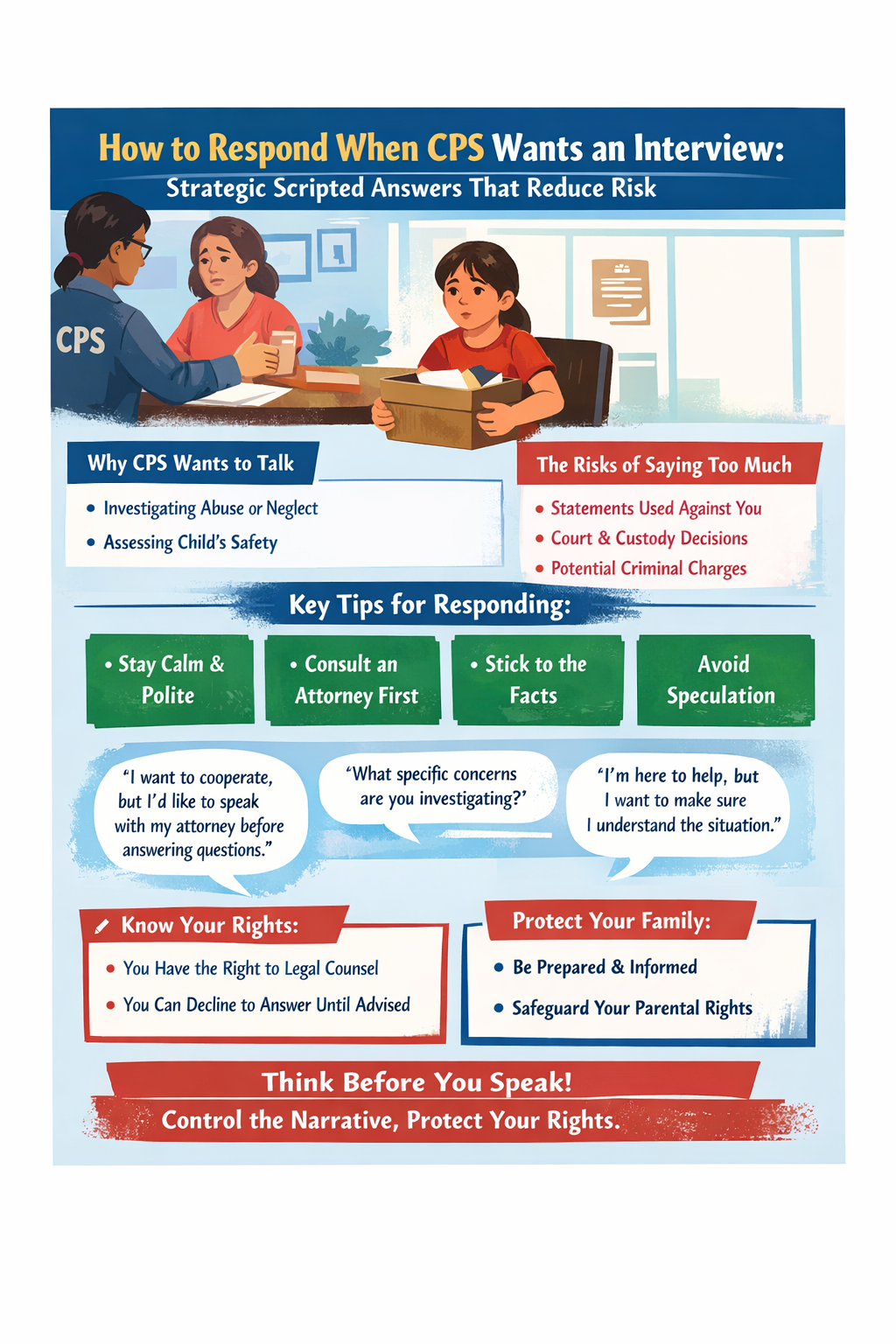
How to Respond When CPS Wants an Interview: Strategic Scripted Answers That Reduce Risk.” The visual shows a parent speaking with a CPS worker and a child nearby, illustrating the interview setting. It explains that CPS interviews are used to investigate abuse or neglect and assess a child’s safety, while warning that statements can be used in court, custody decisions, or criminal cases. Key tips include staying calm, consulting an attorney first, sticking to facts, and avoiding speculation. Example scripted responses emphasize requesting legal counsel before answering questions. The graphic also highlights parental rights and encourages preparation to protect family and legal interests.


Understanding the Role of Human Services and State Agencies

In many cases, human services agencies play a central role in responding to reports of suspected abuse. In Texas, the texas department responsible for these matters operates under the guidelines of the texas family code, which outlines how investigations must be conducted and how families are protected. When investigating allegations, the agency evaluates the situation carefully to determine whether there is a risk of serious harm to the child. This process is structured to ensure that both the alleged victim and the alleged perpetrator are treated fairly while prioritizing the child’s safety.


The Importance of Family Assessment and Case Evaluation

A key part of the investigation process is the family assessment, which focuses on understanding the home environment and identifying any concerns. During this stage, investigators gather information about the child’s living conditions, relationships, and overall well-being. The goal is not only to determine whether abuse occurred but also to decide if further intervention is necessary. This evaluation helps authorities decide whether to close the case or continue monitoring the situation through additional services or legal steps.


What Happens After the Investigation

Once the investigation is complete, families typically receive a written notice outlining the findings and any next steps. If the agency determines that concerns are not substantiated, the case may be closed without further action. However, if risks are identified, the agency may recommend services or take additional measures to protect the child. While every situation is different, there are many success stories where early intervention and proper guidance helped families resolve concerns and move forward in a healthier and more stable environment.


Speak With a Legal Team That Understands CPS Cases

If you are facing a cps investigation michigan situation or dealing with child protective services cps, it is important to understand that every conversation matters. The interview process is not just a formality—it is a critical stage that can shape the outcome of your case and your family’s future.


At Masterly Legal Solutions, we help parents navigate the complexities of cps investigations, protect their parental rights, and respond strategically during every phase of the investigation process, drawing on our experience also defending educators in school and TEA-related investigations. Our team understands how to approach these cases with care, precision, and a focus on protecting your child’s safety and your family’s stability.


Call us today at (972) 236-5051 for a free consultation. We will listen to your situation, help you understand your options, and guide you through the next steps with clarity and confidence. Taking action early can make all the difference in protecting your family and your future.


Disclaimer: This article is for informational purposes only and does not constitute legal advice. Every CPS case is unique, and you should consult with a qualified attorney to receive guidance specific to your circumstances.
(972) 236-5051
November 5, 2026
A complaint at a Texas charter school can quickly place an educator's employment, professional reputation, and future career opportunities at risk. A written allegation, unexpected leave notice, or contract dispute may leave teachers and staff unsure about their rights or what the school can legally require. Unlike traditional public school districts, Texas charter schools operate under different governance and employment rules. These differences can affect how investigations proceed, whether an employee has certain contract protections, and which grievance procedures apply. Understanding texas charter school educator investigation rights is important for certified teachers, administrators, and noncertified employees facing workplace allegations. A charter school investigation may involve internal policies, employment agreements, state education regulations, or professional certification concerns. The applicable rules depend on the school's structure and the employee's position. Masterly Legal Solutions provides legal guidance for Texas educators facing investigations, employment disputes, and professional disciplinary concerns. Early consultation allows an attorney to examine the relevant documents, identify possible deadlines, and assess the educator's legal options before important decisions are made. How Charter School Governance and Employment Documents Differ From Traditional Districts Texas open-enrollment charter schools are public schools, but their employment relationships do not automatically follow the same rules as independent school districts (ISDs). Traditional school districts generally employ certain educators under probationary, term, or continuing contracts governed by the Texas Education Code. These arrangements provide statutory rights and procedures that may apply to contract renewal, termination, or other employment decisions. Charter schools often operate differently. Some charter schools use written employment agreements with specific terms. Others employ staff under at-will arrangements, subject to applicable laws and contractual limits. As a result, an educator should not assume that the protections available to an ISD teacher automatically apply to a charter school position. Why Charter School Employment Agreements Matter A charter school's governing documents, employment agreement, and adopted policies may help determine: Whether employment is at-will or governed by a fixed-term agreement. Who has authority to investigate or make employment decisions. What procedures apply to employee complaints or discipline. Whether an employee has internal appeal or grievance rights. How contract renewal, nonrenewal, or termination decisions are handled. Whether specific notice requirements or deadlines apply. The school's legal structure also matters. An open-enrollment charter school, a district-authorized charter campus, and a campus operated through a district partnership may involve different legal arrangements. Charter schools are not simply private schools. They operate within Texas public education and remain subject to applicable state and federal requirements. However, public school s tatus does not automatically provide every employment protection available in a traditional district. Masterly Legal Solutions c an review the educator's employment relationship and applicable school policies to determine which legal protections may apply to the dispute. Early Steps After an Educator Misconduct Complaint, Temporary Removal, or Written Allegation An educator may first learn about an investigation through an email from human resources, a meeting request, a written complaint, or a notice of temporary administrative leave tied to alleged educator misconduct. Sometimes, the notice provides little information about the allegations, including claims involving abuse, and being placed on leave is not a final determination. The school may ask for a written statement, request an interview, restrict campus access, or place the employee on leave while reviewing the complaint. These actions can create serious uncertainty, which is why immediate legal review is often critical. Why an Investigation Notice Deserves Legal Attention Temporary removal does not automatically mean an employee has committed misconduct. Schools may use administrative leave while collecting information or reviewing complaints involving alleged educator misconduct or suspected abuse. However, the terms of that leave may affect compensation, benefits, access to records, and employment status, and leave is not a final determination. An attorney may need to determine whether the notice is consistent with the employee's agreement, applicable policies, and due process protections. Legal review is especially important when the allegations involve: Student safety or inappropriate conduct. Professional boundary concerns. Workplace harassment, discrimination, or civil rights complaints. Failure to follow school policies. Alleged contract violations or performance concerns. Misuse of school resources or confidential information. Conduct that could trigger a report to the Texas Education Agency. Certified educators may face concerns beyond their current employment. Certain misconduct allegations can lead to review by the Texas Education Agency (TEA), and the available evidence may affect possible action involving the State Board for Educator Certification (SBEC) and an educator's certificate. Noncertified employees may also face state-level employment eligibility concerns in certain misconduct cases. An internal school investigation and a state regulatory investigation are separate matters. Their legal standards, procedures, and possible consequences may differ, especially where Texas law, state law, or school district reporting requirements may require a principal or superintendent to provide notice, ensure a report is filed within seven business days, or address related reports while administrators comply with agency rules. Obtaining legal advice before providing a detailed written response can help an educator understand which process is involved, protect process rights, prepare for possible disciplinary actions or administrative hearings, and assess whether allegations tied to children, special education services, procedural errors, or other issues could expand beyond an internal employment matter. What to Preserve: Contract, Handbook, Assignment, Communications, and Notices Texas charter school educator investigation rights often depend on documents that explain the employee's responsibilities, the school's policies, and the decisions made during an investigation. A legal consultation becomes more useful when counsel can examine reliable records rather than relying only on verbal descriptions. Several categories of documents may be especially important. Employment Contracts and Appointment Documents Signed contracts, offer letters, renewal agreements, and employment amendments can establish the terms of the working relationship. These records may show whether employment is at-will, whether notice provisions apply, and what contractual obligations exist. They can also help counsel evaluate allegations involving contract violations or termination. Employee Handbooks and Governance Policies Employee handbooks may explain workplace conduct rules, investigation procedures, grievance processes, and disciplinary standards. The version in effect when the relevant events occurred may be particularly important. An attorney can examine whether the school's actions are consistent with applicable policies and whether those policies create enforceable obligations. Job Assignments and Performance Records Job descriptions, assignment letters, duty schedules, evaluation records, and previous performance notices may help explain an educator's responsibilities. These materials can provide context when an allegation concerns supervision, workplace expectations, professional duties, or performance. Emails, Messages, and Written Communications Relevant communications may include messages from administrators, human resources personnel, supervisors, and other individuals involved in the matter. Dates, wording, and context may help establish a timeline. Educators should preserve records they are legally permitted to retain. They should not access restricted systems, remove confidential student information, or forward protected records to personal accounts without proper authorization. Investigation Notices, Disciplinary Actions, and Contract Actions Written allegations, leave notices, meeting invitations, disciplinary letters, proposed separation agreements, and termination notices may establish important facts and deadlines. These documents can help counsel determine whether immediate legal action or a timely response may be necessary. Related reports or other evidence tied to the communication chain may also matter when evaluating the investigation timeline, response, and any resulting disciplinary actions, including situations where school action may continue after a resignation. Preserving records does not mean collecting every school document . It means identifying relevant, lawfully accessible information while respecting student privacy and confidentiality requirements. Masterly Legal Solutions can help educators determine which materials are relevant to their legal circumstances and whether additional records should be requested through appropriate procedures. Questions for Counsel Before a Written Statement or Grievance Decision An educator may feel pressure to respond immediately after receiving an allegation. However, statements made during an employment investigation can become part of the school's decision-making record. In some circumstances, information may also be reviewed by outside agencies. Before responding, legal counsel can examine the allegations, the employment relationship, and any deadlines. Does the Charter School Have Authority to Take the Proposed Action? A lawyer can review whether the relevant administrator or governing body has authority under the school's policies and employment arrangements. The review may also address whether required notices or procedures apply. Is a Written Statement Required? The answer depends on the applicable employment terms, policies, and legal circumstances. Counsel can assess the request, the scope of the allegations, and the potential consequences of providing a statement. The goal is to make an informed decision without overlooking an existing duty to cooperate or respond. Is a Formal Grievance the Appropriate Response? Not every employment dispute follows the same grievance route. Texas charter schools may maintain their own employee complaint procedures, with specific filing requirements and deadlines. TEA directs many local employment concerns to the school or charter operator's internal grievance process rather than handling the underlying workplace dispute itself. Missing an applicable deadline can limit available options. An attorney can review whether a grievance, contractual claim, agency complaint, or another legal process may be appropriate. Could the Investigation Affect Professional Certification or Texas Education Agency Reporting? Certified educators should consider whether the allegations may involve TEA or SBEC review. An employment decision and a certification matter can have different consequences. Counsel can evaluate the relationship between these proceedings and help determine what representation or response may be needed.  Why Legal Representation Matters Before a Decision An employment investigation can involve several connected issues, including contracts, workplace policies, regulatory duties, and professional reputation. Without a careful legal review, an educator may misunderstand which procedures apply or overlook a significant provision in an employment agreement. Masterly Legal Solutions provides individualized legal guidance based on the educator's documents, allegations, and professional circumstances. The firm can assess applicable rights, explain available legal options, and assist with appropriate responses or proceedings based on the scope of representation.
Texas paraprofessional misconduct investigation and legal defense.
November 4, 2026
Facing a Texas paraprofessional misconduct investigation? Understand allegations, reporting requirements, and how experienced legal counsel can protect your rights.
STAAR testing irregularity investigation involving Texas educators and test security allegations.
November 3, 2026
Facing a STAAR testing irregularity investigation? Masterly Legal Solutions defends Texas teachers, coordinators, and campus administrators facing allegations.
Business ethics training on workplace policies and compliance.
October 26, 2026
Business Ethics Training: Turn workplace policies into defensible practices. Explore compliance, employee conduct, and training needs with Masterly Legal Solutions.
Misappropriation of funds legal guidance and financial records review.
October 21, 2026
Understand what misappropriation of funds involves, how to preserve financial records, and when to seek experienced legal guidance before taking appropriate action.
NIL law, athlete contracts, and school compliance guidance
October 20, 2026
Explore NIL law in school athletics, institutional compliance, contract concerns, and when schools may need experienced legal guidance to protect their interests.
Texas Medical Board complaint, physician license defense, and legal guidance.
October 19, 2026
Texas Medical Board Complaint. Convert licensed physicians facing TMB complaint notices. Explore practical next steps and request a confidential consultation.
Title IX lawyer consultation, case review, and legal guidance.
October 19, 2026
Learn when a Title IX lawyer can help with allegations, interviews, case preparation, legal options, and next steps toward a confidential legal consultation.

Looking for Legal & Business Solutions? Contact Us Now

Fill in the form or call us to set up a meeting

(972) 236-5051
A black and white drawing of a straight line on a white background.