

How to Stay Calm and Protected During CPS Contact in Texas
When CPS Shows Up: What You Need to Know First
Few moments feel as overwhelming as a knock on the door from child protective services. For many families in Texas, that first contact creates fear, confusion, and a rush of questions about what comes next. Whether the concern involves suspected child abuse or general safety concerns, the situation can escalate quickly if not handled carefully.
It is important to understand that child protective services cps does not automatically mean wrongdoing has occurred. CPS investigations are often triggered by reports that must be reviewed, even if they turn out to be unfounded. Staying calm and informed during this time can make a meaningful difference in how your cps case develops.
Knowing your rights, your responsibilities, and the cps process can help you protect your family’s future while ensuring your child’s safety remains the priority.
Understanding the Role of Child Protective Services
What CPS Is Responsible For
Child protective services is part of a broader system designed to protect children from abuse or neglect. Their primary goal is to assess whether a child’s well being is at risk and to determine if intervention is necessary.
CPS workers are trained to evaluate risk factors, conduct interviews, and gather information about a child’s home environment. They are not there to immediately remove children but to investigate concerns and determine whether further action is required.
How CPS Investigations Begin
Most cps investigations start with a report of suspected abuse or neglect. This could come from a teacher, medical professional, or even a concerned neighbor. Once a report is made, the texas department responsible for child welfare assigns a cps investigator to begin the case.
The cps investigation process includes reviewing the report, contacting the family, and conducting a risk assessment to determine the level of danger to the child.
The Initial Contact With CPS
What Happens During First Interaction
The initial contact is often unexpected. A cps investigator may visit your child’s home or request to speak with your child and family members. This is part of the investigation stage and is meant to gather information about the situation.
During this time, cps workers may ask questions about your family’s daily life, your child’s care, and any concerns related to abuse or neglect. Remaining calm and cooperative while protecting your rights is key.
Staying Calm Under Pressure
It is natural to feel defensive or anxious. However, reacting emotionally can complicate the cps process. Taking a measured approach helps ensure that communication remains clear and productive.
If you are unsure how to respond, this is a good time to consider legal counsel. An experienced attorney can guide you through what to say and how to protect your parental rights.
Understanding the CPS Investigation Process
Steps Involved in a CPS Case
The cps investigation process typically includes several phases:
- Review of the initial report
- Interviews with the child, parents, and others
- Evaluation of the child’s home
- Risk assessment and findings
Each cps case is unique, but understanding these steps can reduce uncertainty.
The CPS Investigation Timeline
The cps investigation timeline varies depending on the severity of the allegations. Some cases are resolved quickly, while others take longer due to complexity.
During this period, cps determines whether abuse or neglect occurred and what actions, if any, are necessary to protect the child.
Common Allegations in CPS Investigations
Types of Concerns CPS Reviews
CPS investigations may involve a wide range of allegations, including:
- Physical or emotional harm
- Sexual abuse
- Domestic violence in the home
- Neglect related to a child’s basic needs
Each allegation is taken seriously and evaluated based on available evidence.
The Role of the Alleged Perpetrator
In every cps case, there is often an alleged perpetrator identified. This individual may be a parent, guardian, or another person with access to the child.
Understanding your position in the investigation, whether as a parent or alleged perpetrator, is important for building an effective response.
Risk Assessment and Safety Concerns
How CPS Evaluates Risk
Risk assessment is a critical part of cps investigations. CPS workers look at factors such as the child’s environment, history, and current safety concerns.
They may also review criminal history or past involvement with protective services. This helps determine whether immediate action is needed.
Protecting the Child’s Safety
The focus of every cps case is the child’s safety. CPS will assess whether the child faces serious harm or potential future abuse.
If risks are identified, CPS may recommend or require certain actions to ensure the child’s well being.
Safety Plans and Voluntary Services
What Is a Safety Plan?
A safety plan is an agreement between CPS and the family designed to address safety concerns. It may include specific steps the family must follow to protect the child.
Safety plans are often used as an alternative to removing a child from the home.
Voluntary Services and Support
In some cases, CPS offers voluntary services to support families. These may include counseling, parenting classes, or other support services.
Voluntary placement or a voluntary placement agreement may also be considered if temporary changes are needed.
When Court Orders Become Involved
Understanding Court Intervention
If CPS believes the child is at significant risk, they may seek a court order. This allows them to take actions such as removing the child or requiring certain conditions.
Court orders are serious and often lead to involvement in juvenile dependency court.
Temporary Custody and Court Proceedings
In more severe cases, CPS may request temporary custody of the child. This can lead to court proceedings where a judge determines the next steps.
Parents should seek legal representation immediately if court involvement begins.
The Role of Juvenile Dependency Court
What Happens in Court
Juvenile dependency court handles cases involving child welfare and CPS involvement. Judges review evidence, hear testimony, and make decisions about the child’s placement.
Court hearings may determine whether a child remains in the home, enters foster care, or is returned to the family.
Protecting Parental Rights in Court
Parental rights are a critical part of these proceedings. Having strong legal representation ensures that your voice is heard and your rights are protected.
An experienced attorney can advocate on your behalf and guide you through each stage of the legal process.
Legal Representation During CPS Cases
Why Legal Help Matters
CPS cases can quickly become complex, especially when they involve legal issues such as abuse or neglect allegations. Having an experienced attorney provides clarity and direction.
Legal representation ensures that your rights are protected and that you understand every step of the cps process.
Working With an Experienced Attorney
An attorney with experience in family law and CPS cases can help you respond effectively. They can review your case, advise on strategy, and represent you in court proceedings if necessary.
Legal aid and resources such as the texas legal services center may also provide additional support.
The Impact on Families and Daily Life
Emotional and Practical Challenges
A cps case affects more than just legal standing. It impacts the entire family’s life, including stress levels, routines, and relationships.
Parents may struggle with uncertainty while trying to maintain stability for their children.
Supporting Children Through the Process
Children may not fully understand what is happening during cps investigations. Providing reassurance and maintaining normal routines can help protect their well being.
Parents should focus on creating a safe and supportive environment during this time.
Understanding Possible Outcomes
When CPS Closes a Case
If CPS determines that no abuse or neglect occurred, the case may end in administrative closure. This means no further action is required.
This outcome allows families to move forward without additional involvement.
When Services Are Required
In some cases, CPS may recommend ongoing family services or monitoring. These services are designed to support families and prevent future abuse.
Complying with these recommendations can help resolve the case more quickly.
How to Protect Yourself During CPS Contact
Practical Steps to Take
There are several steps families can take during CPS contact:
- Stay calm and respectful during interactions
- Document all communication with CPS workers
- Seek legal counsel early in the process
These actions can help protect your rights and strengthen your position.
Avoiding Common Mistakes
Avoid making statements without understanding their impact. Do not sign documents or agree to plans without reviewing them carefully.
Legal guidance can help you avoid decisions that may negatively affect your cps case.
The Importance of Early Legal Strategy
Acting Before Issues Escalate
Early action can significantly influence the outcome of a cps case. Addressing concerns quickly helps prevent escalation.
An attorney can develop a strategy that protects your interests from the beginning.
Building a Strong Defense
A strong defense involves gathering evidence, understanding the allegations, and preparing for each stage of the process.
Working with legal professionals ensures that your case is handled effectively.
How CPS and Law Enforcement May Work Together
When Investigations Overlap
In some situations, a cps and law enforcement investigation may occur simultaneously. This happens when allegations involve potential criminal activity.
These cases are more complex and require careful handling.
Navigating Dual Investigations
Families must be cautious when dealing with both CPS and law enforcement. Statements made in one investigation may impact the other.
Legal representation is essential in these situations to ensure proper protection.
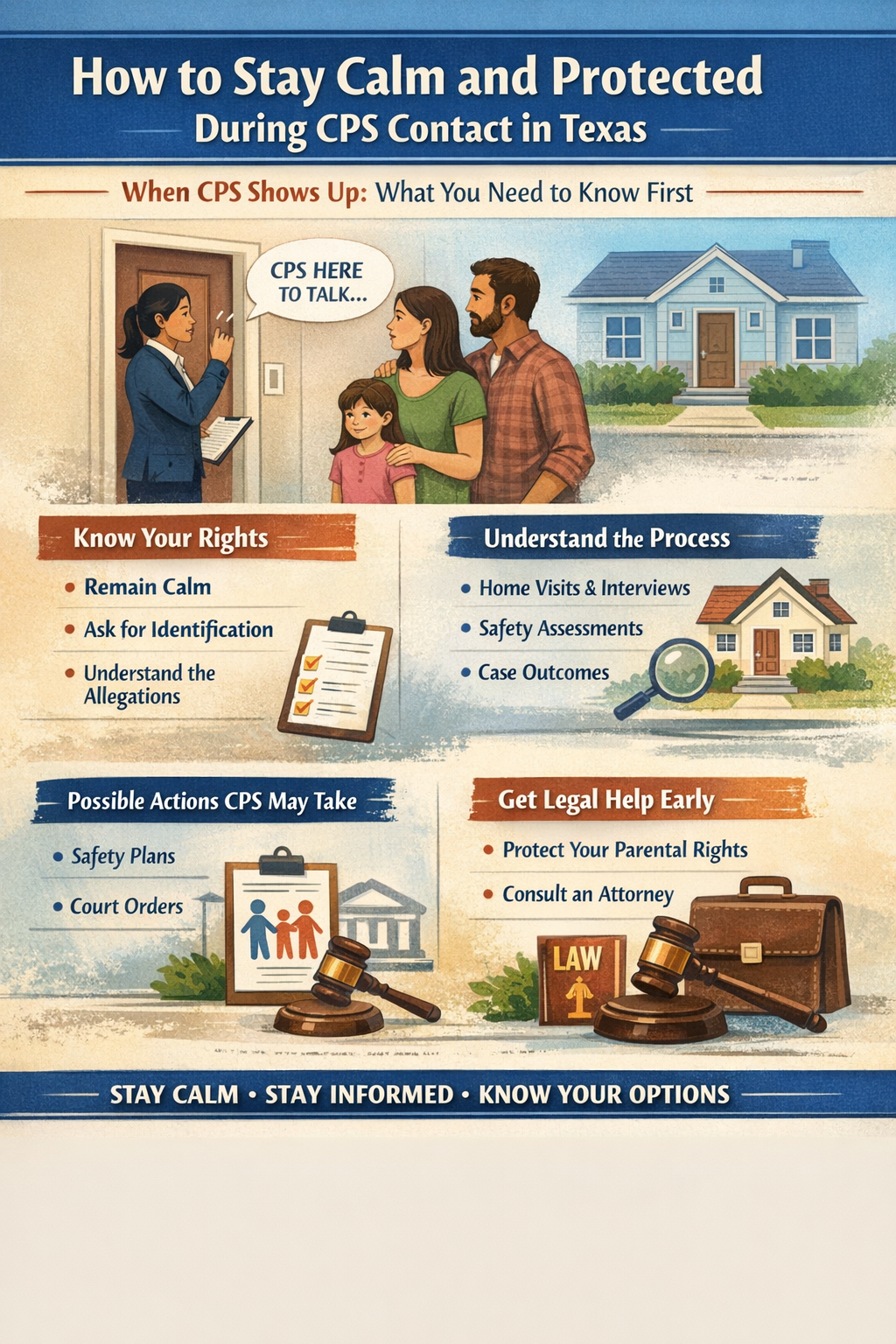
Understanding Child Protective Investigations and Your Legal Protections
Child protective investigations are a formal part of the process used to evaluate concerns involving child abuse or neglect under the Texas Family Code. During these cases, child and family services and family and protective services agencies work together to complete investigations that assess the child’s home, safety, and overall well being. A cps case may involve identifying an alleged victim and reviewing any claims of alleged abuse, often through a detailed family assessment that considers the child’s family dynamics and available support systems. In some situations, CPS may coordinate with law enforcement if a criminal investigation is necessary, especially when serious allegations arise.
Throughout this process, parents should be aware of their legal protections, including the right to receive written notice of actions taken and the right to seek legal representation. CPS may also connect families with family and community resources and community resources designed to stabilize the home, support the child’s education, and provide necessary services provided through a structured service plan. In more serious cases, CPS may consider the child’s removal if immediate safety concerns exist, but this step typically requires strong justification and court involvement. Understanding these steps helps families stay informed, respond appropriately, and protect their rights during every stage of the investigation.
Contact Masterly Legal Solutions for Guidance
If you are facing a CPS investigation, you do not have to navigate this situation alone. At Masterly Legal Solutions, we understand how stressful and overwhelming CPS contact can be for families. Our team is committed to helping you stay calm, informed, and protected every step of the way.
We provide guidance in cps and law enforcement investigation matters, helping families understand their rights, respond effectively, and protect what matters most. Whether you are dealing with a new cps case or ongoing court proceedings, our experienced attorneys are here to support you.
Contact us at (972) 236-5051 for a free consultation. We will take the time to understand your situation, answer your questions, and help you move forward with confidence.
Disclaimer: This article is for informational purposes only and does not constitute legal advice. Reading this content does not create an attorney-client relationship. For legal advice specific to your case, please consult a qualified attorney.







Looking for Legal & Business Solutions? Contact Us Now
Fill in the form or call us to set up a meeting