

Internal Investigations Attorney: What to Do the Moment Employee Misconduct Is Reported
When a Workplace Complaint Changes the Direction of Your Organization
There is a moment every employer hopes never comes—the moment a complaint of employee misconduct lands on your desk. It may start quietly, with a conversation or an email, but it can quickly grow into something much more serious. What initially seems like a small issue can turn into a full workplace investigation with legal consequences, reputational risks, and operational disruption.
In that moment, how your organization chooses to respond matters more than most realize. Decisions made in the early stages of an internal investigation can shape the final outcome, influence potential claims, and determine whether your company is seen as fair and compliant. This is where having guidance from an internal investigations attorney becomes not just helpful, but essential.
Why Immediate Response Matters in a Workplace Investigation
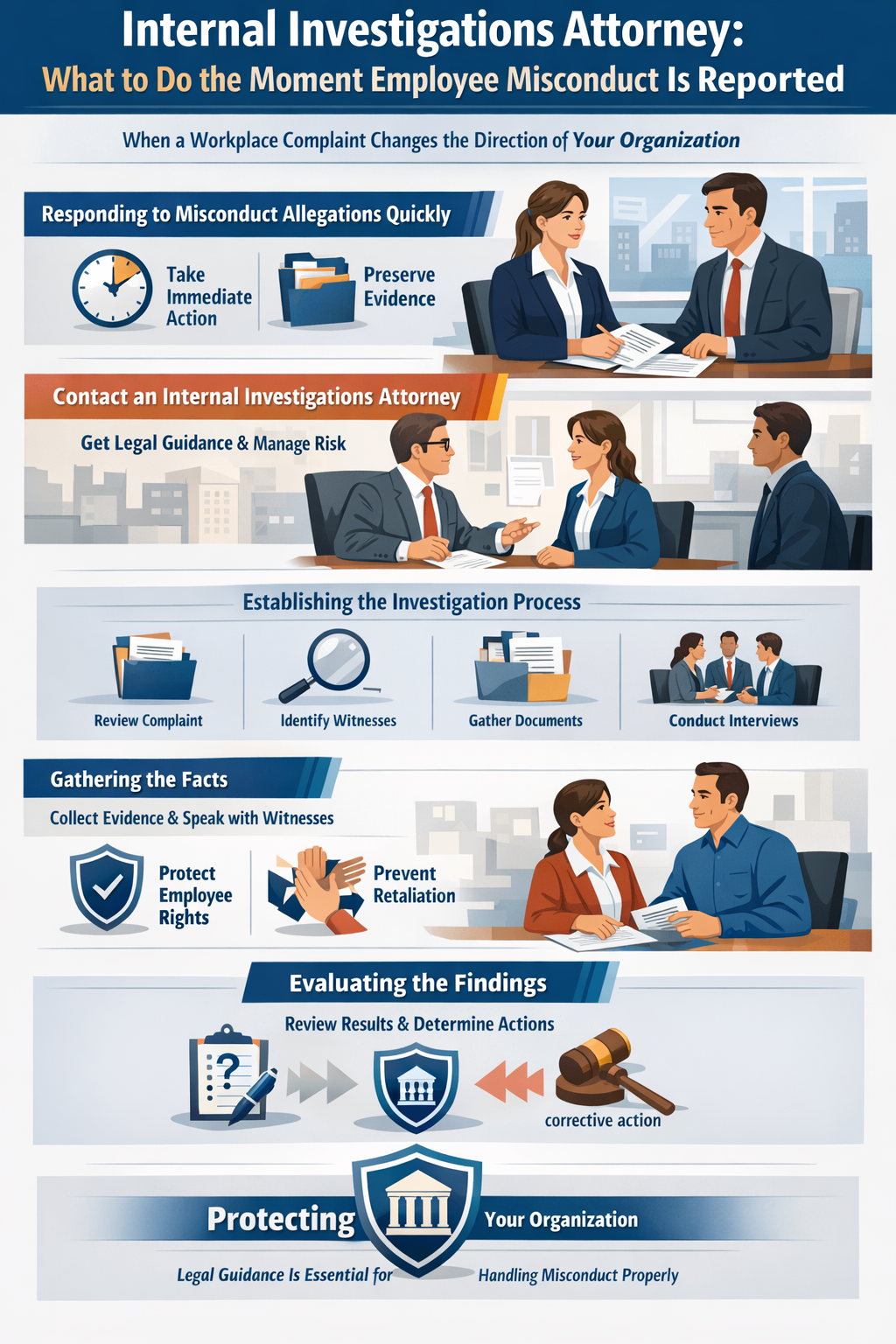
The first hours after becoming aware of allegations are critical. Delaying action can result in lost evidence, miscommunication between employees, and confusion about what actually happened. A structured response helps protect your company while also ensuring the integrity of the investigation process.
Employers who act promptly are better positioned to gather facts, preserve relevant information, and maintain control over the situation. Without a plan, even well-intentioned responses can lead to mistakes that create exposure to civil litigation or regulatory scrutiny from government agencies.
Understanding the Nature of the Allegations
Not All Complaints Are the Same
Every complaint should be taken seriously, but not all allegations carry the same level of risk. Some may involve minor workplace disagreements, while others may include serious accusations such as sexual harassment training and prevention responsibilities, discrimination, or even criminal misconduct.
Understanding the type of allegation helps determine how the investigation should proceed. For example, a complaint involving policy interpretation may require a different approach than one involving wrongdoing that could lead to legal consequences.
Identifying Key Details Early
At the start of the inquiry, it is important to identify the complaining party, the individuals involved, and the timeline of events. Gathering these details early helps establish a clear factual basis for the internal investigation.
This early clarity ensures that your response is measured and aligned with both company policies and employee handbook procedures and applicable federal rules.
The Role of an Internal Investigations Attorney
Why Legal Guidance Is Essential
An experienced internal investigations attorney helps guide your company through each stage of the investigation process. They ensure that your actions comply with many laws, protect your business, and maintain fairness for all parties.
Their role is not limited to legal advice. They help structure the process, oversee the handling of evidence, and ensure that all employees are treated fairly.
Protecting Your Organization From Risk
Without proper guidance, companies may unintentionally create exposure to retaliation claims, wrongful termination, or other legal challenges. An attorney helps you avoid these risks by ensuring that your workplace investigation is conducted properly.
This level of oversight is particularly important when allegations could lead to involvement from agencies such as the exchange commission or other regulators.
Establishing a Clear Investigation Process
Creating Structure From the Beginning
A successful internal investigation begins with a clear structure. This includes defining the scope, identifying the parties involved, and outlining how the investigation will proceed.
A defined structure ensures consistency and helps your organization remain focused on the facts rather than assumptions.
Key Steps in the Process
A well-managed workplace investigation typically includes:
- Reviewing the initial complaint
- Identifying potential witnesses
- Creating a witness list
- Collecting relevant documents
- Conducting structured interviews
Each step plays a role in building a complete understanding of what happened.
Gathering Evidence and Relevant Information
The Importance of Accurate Data Collection
Collecting accurate evidence is a cornerstone of any thorough investigation. This includes reviewing emails, internal communications, and even text messages when relevant, especially when investigating potential misappropriation of funds and other financial misconduct.
The goal is to ensure that the information gathered reflects reality, not speculation. Proper documentation strengthens your findings and supports your final decisions.
Working With Witnesses
Speaking with witnesses is another key part of the investigation with outside counsel support. These individuals may provide insights that clarify events or reveal patterns of conduct.
Engaging with other witnesses also helps ensure that the investigator has a balanced perspective on the situation.
Conducting Effective Interviews
Preparing for Interviews
Interviews are one of the most important steps in the investigation process. Preparation is critical to ensure that each conversation is focused and productive.
An experienced investigator will review the available evidence, understand the context, and develop questions designed to uncover the truth.
Best Practices During Interviews
When conducting interviews, it is important to:
- Allow individuals to fully answer questions
- Encourage participants to share details openly
- Avoid leading or biased questions
- Document responses accurately
These practices help ensure fairness and credibility.
Ensuring Fair Treatment Throughout the Investigation
Protecting Employee Rights
Every internal investigation must respect employee rights and uphold workplace rights. This includes maintaining a respectful work environment and ensuring that all participants are treated fairly.
Maintaining absolute confidentiality helps protect sensitive information and builds trust in the process.
Preventing Retaliation
One of the most significant risks during an investigation is retaliation against employees who report concerns. Employees who raise concerns should not face negative consequences for doing so.
Failing to address this issue can result in additional claims and damage your company’s reputation.
Evaluating Findings and Determining Outcomes
Reviewing the Investigation Findings
Once all evidence has been collected, the next step is to evaluate the investigation findings. This involves analyzing the information gathered and determining whether the allegations are supported.
The goal is to reach a conclusion based on facts and a clear factual basis.
Determining Appropriate Actions
The outcome of the investigation will vary based on the severity of the situation. Some cases may require no action, while others may lead to disciplinary action or other corrective actions.
Taking the right steps ensures accountability and protects your organization.
Addressing Policy Violations and Misconduct
Taking Corrective Actions
When policy violations are identified, it is important to respond appropriately. This may include training, policy updates, or disciplinary measures.
These corrective actions demonstrate a commitment to addressing wrongdoing and improving workplace practices.
Strengthening Company Policies
After the investigation, companies should review their company policies, including sexual harassment training and prevention protocols, to identify areas for improvement. Strengthening policies can help prevent future issues and support a healthier work environment.
The Role of HR Teams and Leadership
Collaboration With HR Teams
HR teams and HR consulting partners play a critical role in supporting the investigation process. They help coordinate communication, manage documentation, and ensure compliance with internal policies.
However, complex cases often require additional support from legal counsel.
Leadership Responsibility
Leaders must ensure that the organization responds appropriately to allegations. This includes maintaining transparency, protecting employees, and following established procedures.
Practical Tips for Employers Facing Allegations
Staying Prepared and Proactive
Being prepared can make a significant difference when allegations arise. Consider these practical tips:
- Document all actions taken during the investigation
- Maintain clear communication with all parties
- Follow established procedures consistently
- Seek guidance from an experienced attorney
Preparation helps reduce uncertainty and improves outcomes.
Why a Thorough Investigation Is Critical
Protecting Your Organization and Employees
A thorough investigation protects both your organization and your employees. It ensures that decisions are based on facts and that all individuals are treated fairly.
Handled correctly, an internal investigation can strengthen trust and credibility within your company.
Supporting Long-Term Success
Beyond resolving the immediate issue, a well-managed investigation helps your company maintain compliance and avoid future risks as part of a broader strategy of comprehensive legal and training services. It also reinforces your commitment to fairness and accountability.
Speak With Masterly Legal Solutions Today
If your business is facing allegations of employee misconduct, taking the right steps early can make all the difference. A properly handled workplace investigation protects your company, your employees, and your reputation. Waiting too long or handling the situation without guidance can lead to serious consequences that are difficult to reverse.
At Masterly Legal Solutions, we understand how quickly these situations can escalate and how important it is to respond with clarity and precision. Our team works closely with companies to guide them through every stage of the internal investigation, ensuring that the process is fair, thorough, and legally sound.
Call (972) 236-5051 to contact us for a free consultation. Let us help you protect your organization, navigate the investigation process, and move forward with confidence.
Disclaimer: This post does not establish an attorney-client relationship; it is merely meant to be informative. It shouldn't be regarded as legal counsel. Please speak with an experienced lawyer for advice tailored to your circumstances.



Looking for Legal & Business Solutions? Contact Us Now
Fill in the form or call us to set up a meeting





