
Long-Term Effects of CPS Compliance Records on Families
Understanding the Lasting Impact of a CPS Record
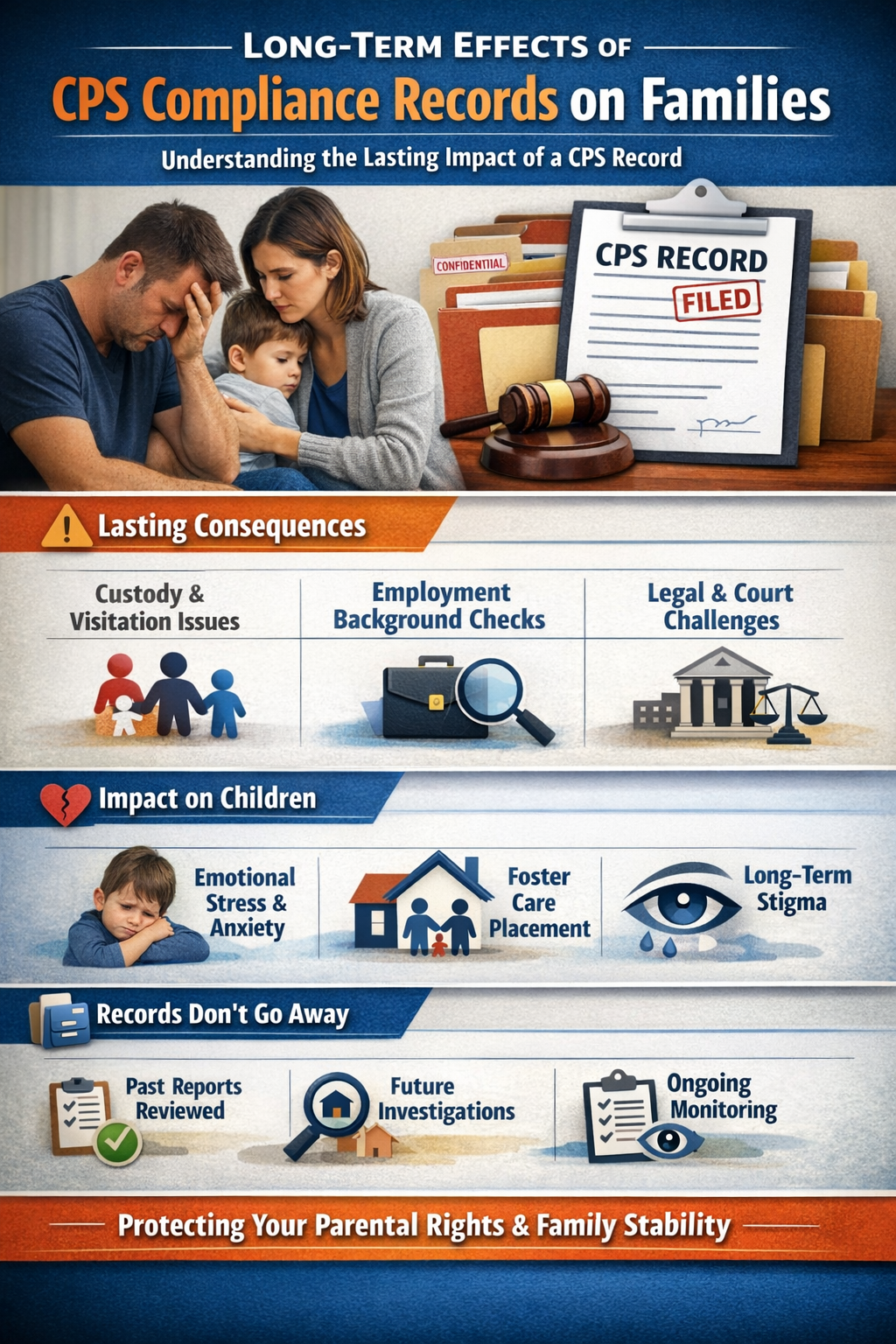
When a family becomes involved with child protective services, many parents focus on the immediate investigation and how to resolve the situation quickly. What is often overlooked is how a compliance report can continue to influence a family long after the investigation process is complete. These records do not simply disappear; they can shape future decisions, opportunities, and legal outcomes in ways that families may not anticipate.
A single report tied to allegations of abuse or neglect can follow parents and affect their ability to move forward confidently. Even when no abuse occurred or when neglect occurred due to misunderstandings, the presence of documentation can still carry weight. Understanding how these records function is essential for protecting both parental rights and the long-term stability of the child and family.
What Is a CPS Compliance Record?
A compliance report is a formal document created during child protective investigations. It contains relevant data gathered throughout the investigation process, including findings related to child abuse or neglect, interviews with family members, and any safety plan implemented to address child safety issues.
This report reflects the organization’s compliance posture and evaluates whether parents complied with recommendations or court order requirements. It often includes:
- Risk assessment findings
- Evidence collected during the investigation
- Notes from each home visit
- Statements from the alleged victim and alleged perpetrator
- Details about services provided and referrals to community resources
Because this document is part of the official record, it may be stored in a central registry and accessed during future cps investigations.
The Role of Child Protective Services in Documentation
Child protective services are tasked with ensuring a child remains safe while also supporting families through difficult circumstances. During an investigation, protective services rely heavily on data collection, interviews, and evidence to determine whether abuse or neglect has occurred.
The investigation stage is critical because every interaction contributes to the final compliance report. From the first home visit to the final administrative closure, the documentation becomes part of a permanent record that may influence future decisions involving the child’s family.
How Risk Assessment Shapes the Outcome
A key component of any compliance report is the risk assessment. This process evaluates risk factors that may affect a child’s safety, such as living conditions, parental behavior, and any prior criminal history.
Risk managers and investigators review these findings to determine the appropriate risk level and whether intervention is necessary. The results of this assessment can impact:
- Whether the child remains in the child’s home
- Whether temporary custody or foster care is recommended
- Whether a safety plan must be implemented
- Whether court hearings will be required
Even after the case is complete, the risk assessment remains part of the record and can influence future investigations.
The Long-Term Presence of a Compliance Report
Many parents assume that once an investigation is resolved, the report will no longer affect them. However, compliance status and documentation can remain accessible to human services agencies for years.
This means that if a new report is filed, prior investigation results may be reviewed alongside current allegations. The organization’s adherence to past recommendations can also be evaluated to determine whether patterns of behavior exist.
Effects on Future CPS Investigations
A prior compliance report can significantly impact how future cps investigations are handled. Investigators often review previous records to determine if there are recurring concerns related to abuse or neglect.
If a family has a history of reports, even if they were resolved, it may lead to:
- Faster escalation during the investigation process
- Increased scrutiny during home visits
- More intensive risk assessment procedures
- Greater likelihood of court order involvement
This ongoing process can place additional pressure on parents and affect how protective services approach each new case.
Influence on Court Decisions
When a case reaches court hearings, the compliance report becomes a powerful piece of evidence. Judges may review prior findings, safety plans, and compliance status when making decisions about parental rights and custody.
A documented history of abuse or neglect allegations can influence:
- Custody arrangements
- Visitation rights
- Requirements for ongoing services
- Decisions regarding foster care placement
Even if previous allegations were unsubstantiated, the existence of multiple reports can still raise concerns.
Impact on Parental Rights
One of the most serious long-term effects of a CPS record is its potential impact on parental rights. Courts may rely on compliance reports to determine whether parents are capable of providing a safe environment.
Repeated findings or concerns related to child abuse or neglect can lead to restrictions or, in severe cases, termination of parental rights. This underscores the importance of addressing each investigation carefully and seeking legal representation early.
Emotional and Psychological Effects on Families
Beyond legal implications, CPS involvement can have lasting emotional effects on the child and family. The stress of an investigation, combined with ongoing documentation, can create anxiety and uncertainty for parents and children alike.
Family members may feel stigmatized or judged, particularly if the report becomes known within the community. The child’s well being can also be affected, especially if they experience separation through foster care or temporary custody arrangements.
How Compliance Status Affects Future Opportunities
A compliance report can also influence opportunities outside of the legal system. For example, certain professions that involve working with children may require background checks that include information from the central registry.
Parents may face challenges when:
- Applying for jobs in human services
- Volunteering in schools or community programs
- Seeking housing or financial assistance
These indirect effects can make it difficult for families to rebuild after an investigation.
The Role of Data Collection and Data Privacy
During child protective investigations, extensive data collection occurs. Investigators gather relevant data from various data sources, including interviews, medical records, and school reports.
While data privacy laws are designed to protect sensitive information, compliance reports are still accessible to certain agencies and relevant stakeholders. Understanding how this information is stored and shared is critical for families navigating the system, and many families turn to client-focused legal services for individuals and businesses to help them understand broader compliance and privacy obligations.
Safety Plans and Their Lasting Impact
A safety plan is often implemented when investigators identify risk factors that could affect a child’s safety. These plans outline specific steps parents must take to ensure the child remains safe.
Even after the case is closed, the existence of a safety plan in the compliance report can influence future decisions. It may be used as evidence of past concerns, even if the parents successfully completed all requirements.
Administrative Closure Does Not Mean Erasure
When a case reaches administrative closure, it simply means that the investigation has been completed. It does not mean the report is removed or erased from records.
The documentation remains part of the family’s history and can be referenced in later stages if new concerns arise. This ongoing process highlights the importance of ensuring accuracy in every report.
The Connection Between Criminal Investigations and CPS Cases
In some situations, a CPS investigation may overlap with a criminal investigation. If allegations involve serious abuse or neglect, law enforcement may become involved.
A criminal case can further complicate matters, as findings from both investigations may be included in the compliance report. This can significantly affect the family’s legal standing and future outcomes, just as overlapping regulatory and disciplinary processes in higher education law and compliance matters can shape how institutions and individuals are treated over time.
How Foster Care Placement Affects Families Long-Term
When a child is placed in foster care, the effects can be long-lasting. The separation can impact the child’s emotional well being and the parent-child relationship.
Additionally, the compliance report will document the reasons for placement, which can influence future decisions regarding reunification and parental rights.
The Importance of Effective Compliance Reporting
Effective compliance reporting is essential for ensuring fairness and accuracy. Errors or incomplete information in a report can have serious consequences for families.
This is why it is critical for parents to:
- Understand the investigation process
- Review findings carefully
- Address inaccuracies promptly
- Seek legal counsel when necessary
Accurate reporting helps protect both the child and the family.
Risk Management and Family Stability
Risk management plays a significant role in child protective cases. Investigators aim to identify and reduce risk factors to ensure a child remains safe.
However, overly cautious assessments can sometimes lead to unnecessary interventions. This can disrupt family stability and create long-term challenges for parents trying to maintain a safe and supportive environment, similar to how employers must balance careful HR compliance and workplace investigations with preserving a stable work environment.
The Role of Community Resources
Community resources and family and community resources are often recommended to support families during and after an investigation. These may include counseling, parenting classes, and financial assistance programs.
While these services are designed to help, participation is often documented in the compliance report and may influence how future cases are evaluated, just as organizations may document their use of specialized legal and training services to address systemic issues.
How Reports Influence Organizational Compliance Posture
The organization’s compliance posture and overall compliance posture are shaped by how cases are handled and documented. Agencies rely on compliance reports to demonstrate adherence to legal requirements and policies.
This focus on documentation can sometimes prioritize record-keeping over individualized support, which may affect how families experience the process.
Challenges in the Investigation Process
The investigation process can be complex and stressful for families. It involves multiple steps, including interviews, evidence gathering, and risk assessment.
Each stage contributes to the final report, making it essential for parents to remain engaged and proactive throughout the process.
The Importance of Legal Representation
Legal representation is one of the most effective ways to protect your rights during a CPS case. An experienced attorney can help ensure that the compliance report accurately reflects the facts and that your parental rights are protected.
Legal counsel from a full-service law firm like Masterly Legal Solutions can also assist in navigating court order requirements, court hearings, and interactions with protective services.
How Evidence Shapes the Outcome
Evidence plays a central role in determining the outcome of an investigation. Investigators rely on documentation, witness statements, and physical evidence to determine whether abuse or neglect occurred.
Ensuring that all relevant data is considered is critical for achieving a fair outcome, and in complex cases organizations may benefit from outside counsel for internal investigations to ensure that evidence is gathered and evaluated impartially.
The Role of the Alleged Perpetrator and Alleged Victim
In every case, the alleged perpetrator and alleged victim are central to the investigation. Their statements and experiences are documented in the compliance report and can influence the final findings.
Understanding how these roles are defined and evaluated is important for parents navigating the process.
Long-Term Monitoring and Follow-Up Services
Even after a case is closed, families may continue to receive services provided by human services agencies. This ongoing process is intended to support the child and family, but it also means continued oversight.
These services may include counseling, parenting support, and monitoring to ensure compliance with previous recommendations, while families may simultaneously need to address broader planning issues such as preparing essential legal documents for families to protect their long-term stability.
Variations in Outcomes Based on Circumstances
The impact of a compliance report can vary depending on the specific circumstances of each case. Factors such as the severity of allegations, the evidence presented, and the family’s response can all influence the outcome.
Understanding these variables can help parents make informed decisions throughout the process.
Protecting Your Family’s Future
Taking proactive steps during an investigation can help minimize long-term effects. This includes cooperating with investigators, documenting your own evidence, and seeking legal guidance when necessary.
Protecting your family’s future requires careful attention to every detail of the compliance report.
When to Seek Legal Help
If you are involved in a CPS investigation, it is important to seek legal representation as early as possible. An attorney can help you understand your rights, navigate the investigation process, and ensure that your compliance status is accurately represented.
Addressing Alleged Abuse and Ongoing Safety Concerns
When a report involves alleged abuse, investigators must act quickly to evaluate safety concerns and ensure the child remains protected at all times. This often includes immediate intervention, interviews with family members, and a detailed review of the child’s home environment. The goal is to keep the child safe while gathering enough evidence to support accurate findings. Even if the allegations are later unsubstantiated, the documentation of alleged abuse and safety concerns can remain part of the record and influence how future investigations are handled, similar to how educator misconduct defense for North Carolina teachers focuses on managing records and findings that may follow professionals throughout their careers.
Ensuring Agencies Complete Investigations Thoroughly
It is critical that agencies complete investigations with accuracy, consistency, and attention to detail. A rushed or incomplete investigation process can lead to misunderstandings that affect families long after the case is closed. When agencies take the time to properly evaluate evidence, interview all relevant parties, and document findings, it helps ensure that the final report reflects the true circumstances. Complete investigations not only protect the child but also help prevent unnecessary long-term consequences for parents.
Identifying Significant Issues That Affect Case Outcomes
During the investigation process, certain findings may be classified as significant issues, which can heavily influence the final compliance report. These may include repeated allegations, evidence of ongoing neglect, or concerns about the child’s well being. When significant issues are identified, they often lead to increased oversight, additional services, or even court involvement. Understanding how these issues are documented is important, as they can shape both immediate outcomes and long-term implications for the family.
Compliance Standards and the Influence of the Sarbanes Oxley Act
While the Sarbanes Oxley Act is primarily associated with corporate compliance, its principles of accountability, transparency, and accurate reporting can also influence how agencies approach documentation and oversight. In the context of child protective cases, maintaining accurate records and ensuring organizational compliance posture is essential. These standards encourage thorough documentation, proper data handling, and responsible decision-making, all of which play a role in how compliance reports are created and maintained.
Creating a Child Safe Environment Through Intervention
A primary objective of any CPS investigation is to create a child safe environment where the child’s needs are prioritized. This may involve implementing a safety plan, monitoring the home, or providing access to supportive services. Ensuring that a child remains safe requires cooperation between parents, investigators, and service providers. Even after a case is closed, efforts to maintain a child-safe environment can continue to influence how the family is viewed in future interactions with protective services.
Coordination Across Various Departments
Child protective cases often require coordination across various departments, including law enforcement, human services, and community-based organizations. Each department plays a role in gathering relevant data, assessing risk, and determining appropriate interventions. This collaboration helps create a more complete picture of the situation, but it also means that information may be shared among multiple entities. As a result, the compliance report may reflect input from several sources, which can impact how the case is evaluated over time, much like how businesses rely on outside general counsel services to coordinate legal obligations across different departments.
How Agencies Provide Services to Support Families
In many cases, agencies provide services aimed at helping families address concerns and prevent future issues. These services may include counseling, parenting programs, substance abuse treatment, or access to community resources. While these efforts are designed to support the family, participation is often documented in the compliance report. This documentation can demonstrate a parent’s willingness to cooperate, but it can also be referenced in future investigations when determining patterns or compliance status, much like how educators rely on legal support for school investigations and license defense to protect their professional standing when services and interventions are formally recorded.
Contact Masterly Legal Solutions for Guidance
If your family is facing a CPS investigation or dealing with the long-term effects of a compliance report, you do not have to handle it alone. At Masterly Legal Solutions, we understand how overwhelming these situations can be and how much is at stake for you and your child.
Our team works closely with parents to review compliance reports, challenge inaccuracies, and protect parental rights at every stage of the process. Whether you are in the early investigation stage or dealing with later stages of a case, we are here to help you make informed decisions.
We offer free consultations so you can ask questions, understand your options, and develop a strategy tailored to your situation. Call us today at (972) 236-5051 to speak with a legal professional who is ready to advocate for your family.
Disclaimer: This article is provided for educational purposes only and is not legal advice. Every CPS case is unique, and you should consult with qualified legal counsel to discuss your specific circumstances.
Teacher Rights When Assaulted by a Special Needs Student: Safety, Reporting and Investigation Issues


Looking for Legal & Business Solutions? Contact Us Now
Fill in the form or call us to set up a meeting